Congenital Hyperinsulinism Epidemiology
- Congenital Hyperinsulinism is primarily caused by mutations in genes such as ABCC8 and KCNJ11, which regulate insulin release. Disease severity ranges from mild, transient hypoglycemia to severe, recurrent episodes with risk of permanent neurological damage.
- Infants with congenital hyperinsulinism are often identified early due to recurrent or persistent low blood glucose levels, particularly in the neonatal period, which may present with symptoms such as lethargy, poor feeding, seizures, or irritability.
- There are multiple forms of congenital hyperinsulinism, broadly classified into focal and diffuse types, depending on the distribution of abnormal insulin-secreting cells in the pancreas. Additional classifications are based on the underlying genetic mutation, which influences disease severity and treatment response.
- The hallmark feature of the disease is hyperinsulinemic hypoglycemia, where insulin levels remain inappropriately elevated despite low blood glucose. This suppresses ketone production and alternative energy sources, increasing the risk of brain injury if untreated.
- Disease severity varies significantly depending on the genetic defect and the extent of pancreatic involvement. Severe cases may lead to long-term complications, including developmental delays, epilepsy, and cognitive impairment due to repeated hypoglycemic episodes.
- Diagnosis of congenital hyperinsulinism involves a comprehensive approach, including clinical evaluation, biochemical testing during hypoglycemia (critical sample), and genetic analysis. Imaging techniques such as 18F-DOPA PET/CT scans may be used to differentiate focal from diffuse disease.
- Early and accurate diagnosis is essential to ensure timely intervention, prevent irreversible neurological damage, and guide appropriate therapeutic strategies for affected infants and children.
Congenital Hyperinsulinism Epidemiology Forecast in the 7MM
- 2025 Total Diagnosed Prevalent Cases of Congenital Hyperinsulinism: ~ 15,700
- Congenital Hyperinsulinism Growth Rate (2026–2036): 0.5% CAGR
DelveInsight's ‘Congenital Hyperinsulinism – Epidemiology Forecast – 2036’ report delivers an in-depth understanding of congenital hyperinsulinism, historical and forecasted epidemiology of the United States, EU4 (Germany, Spain, Italy, and France), and the United Kingdom, and Japan.
Geography Covered
|
Study Period |
2022–2036 |
|
Historical Year |
2022–2025 |
|
Forecast Period |
2026–2036 |
|
Base Year |
2026 |
|
Geographies Covered |
|
|
Congenital Hyperinsulinism Epidemiology CAGR (Study period/Forecast period) |
0.5% (2026–2036) |
|
Congenital Hyperinsulinism Epidemiology Segmentation Analysis |
Patient Burden Assessment
|
Congenital Hyperinsulinism Understanding and Diagnosis Algorithm
Congenital Hyperinsulinism Overview
Congenital Hyperinsulinism is a rare, inherited metabolic disorder characterized by inappropriate and excessive insulin secretion from pancreatic β-cells, leading to persistent hypoglycemia. The condition is primarily driven by genetic mutations, most commonly in ABCC8 and KCNJ11, that disrupt normal regulation of insulin release. Clinically, it presents early in life, often in the neonatal or infancy period, with symptoms such as poor feeding, lethargy, seizures, or irritability due to low blood glucose levels. The disease exhibits significant heterogeneity, with forms broadly classified as focal or diffuse, and severity ranging from transient, manageable hypoglycemia to severe, recurrent episodes that can result in irreversible neurological damage if not promptly treated.
Congenital Hyperinsulinism Diagnosis
Diagnosis is primarily based on the identification of persistent hypoglycemia in neonates or infants, along with biochemical evidence of inappropriate insulin secretion. During hypoglycemic episodes, key findings include elevated insulin levels, low blood ketones, and suppressed free fatty acids, indicating excess insulin activity. Further evaluation involves a critical sample test (blood collected during hypoglycemia) to confirm hyperinsulinemic hypoglycemia. Imaging techniques such as 18F-DOPA PET/CT scans may be used to differentiate between focal and diffuse forms of the disease, which is crucial for treatment planning. In addition, genetic testing plays a central role in confirming the diagnosis by identifying mutations in genes such as ABCC8 and KCNJ11.
Further details are provided in the report.
Congenital Hyperinsulinism Epidemiology
Key Findings from Congenital Hyperinsulinism Epidemiological Analysis and Forecast
- The total diagnosed prevalent cases of congenital hyperinsulinism in the 7MM were ~15,700 cases in 2025, which is expected to increase during the forecast period (2026–2036).
- The highest number of prevalent cases was observed in the United States. On the other hand, within the EU4 and the UK, Germany accounted for the highest number of congenital hyperinsulinism cases, with approximately 2,800 cases reported in 2025.
- In Japan, the ABCC8 and KCNJ11 gene mutations have the highest contribution, followed by the other gene mutations.
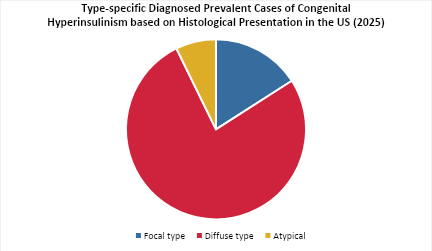
- In 2025, France reported nearly 1,750 cases of diffuse congenital hyperinsulinism, 360 focal cases, and 165 atypical cases. This distribution highlights the variability of the disorder. Projections suggest these numbers are anticipated to rise by 2036, emphasizing the need for improved diagnostics.
Scope of the Report
- The report covers a segment of a descriptive overview of congenital hyperinsulinism, explaining its causes, signs and symptoms, and pathogenesis.
- Comprehensive insight has been provided into the epidemiology segments and forecasts, the future growth potential of the diagnosis rate, and disease progression.
Report Insights
Congenital Hyperinsulinism Patient Population Forecast
Report Key Strengths
- Epidemiology‑based (Epi‑based) bottom‑up forecasting
- 11-year forecast
- Patient Burden trends (by geography)
FAQs
- What are the disease risks, burdens, and unmet needs of congenital hyperinsulinism? What will be the growth opportunities across the 7MM concerning the patient population with congenital hyperinsulinism?
- What is the historical and forecasted congenital hyperinsulinism patient pool in the US, EU4 (Germany, France, Italy, and Spain), the UK, and Japan?
Reasons to Buy
- Insights on patient burden/disease prevalence, evolution in diagnosis, and factors contributing to the change in the epidemiology of the disease during the forecast years.
- To understand key opinion leaders’ perspectives on the diagnostic challenges to overcome barriers in the future.
- Detailed insights into various factors hampering disease diagnosis and other existing diagnostic challenges.