Glioblastoma Multiforme Market Summary
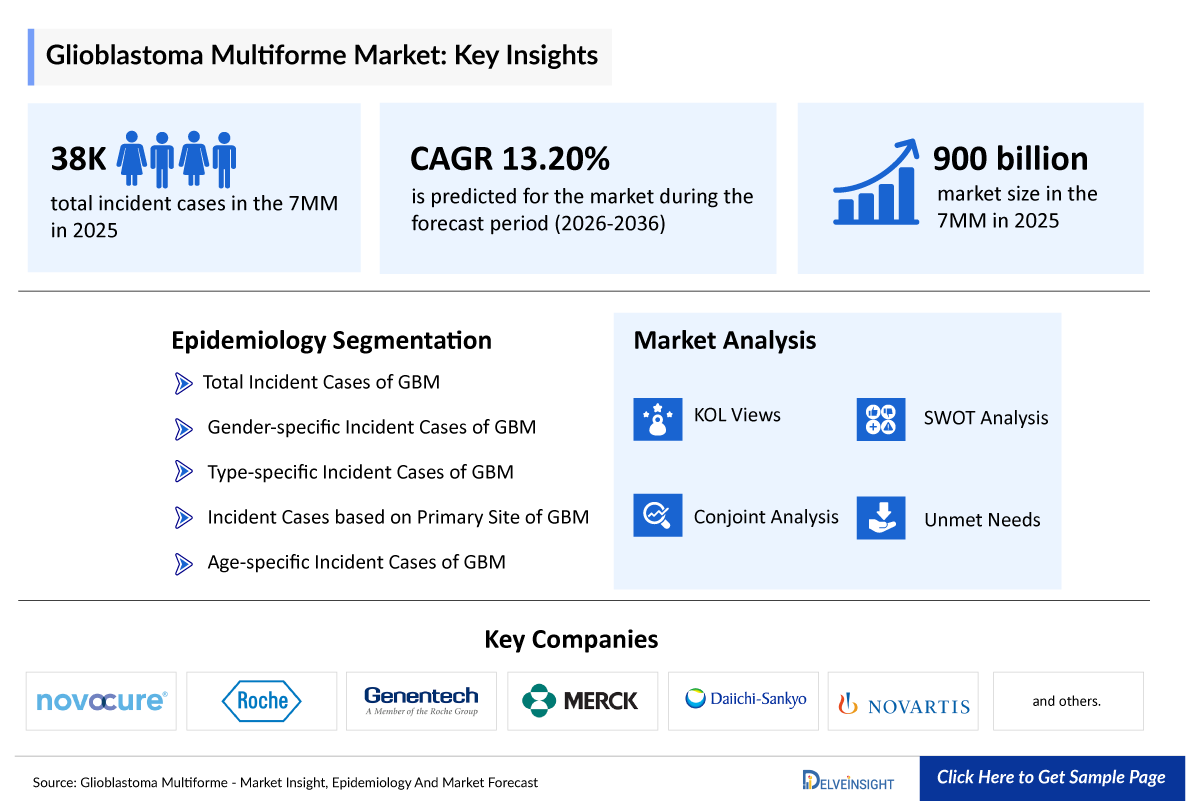
- According to DelveInsight’s analysis, the Glioblastoma Multiforme Market Size was found to be ~USD 900 million in the leading markets (the United States, the EU4 (Germany, France, Italy, and Spain), the United Kingdom, and Japan) in 2025.
- The leading Glioblastoma Multiforme Companies such as Novocure, Roche/Genentech, Merck, Daiichi Sankyo, Novartis, Bayer, Avita Biomedical, TAE Life Sciences, Northwest Therapeutics and Advent BioServices, Orbus Therapeutics, TVAX Biomedical, Laminar Pharmaceuticals, Vigeo Therapeutics, Biohaven Pharmaceuticals, Eli Lilly and Company, Merck, Eisai, and others.
Glioblastoma Multiforme Market Insights and Trends
- GBMs can be classified into primary and secondary GBMs. Primary GBM occurs de novo without evidence of a less malignant precursor, while secondary GBM develops from initially low-grade diffuse Astrocytoma (WHO grade II diffuse astrocytoma) or anaplastic astrocytoma (Grade III).
- Despite advancements in characterizing GBM pathogenesis and potential therapeutic vulnerabilities, the standard of care for newly diagnosed GBM of maximally safe surgery followed by radiation therapy with concurrent and adjuvant temozolomide chemotherapy has remained largely unchanged for decades.
- Upon recurrence, only about one in four patients can undergo repeat surgery due to concerns of morbidity, and other treatment options include repeat chemoradiation, anti-angiogenic agents (bevacizumab), tumor treating field therapy, and inclusion into clinical trials.
- GBM therapy development faces significant hurdles, with few FDA approvals in two decades. Challenges include the blood-brain barrier's protective role and the tumor microenvironment's immunosuppressive effects, limiting the clinical translation of novel discoveries.
- The FDA granted a fast-track designation to olaptesed pegol with bevacizumab and radiotherapy for patients with newly diagnosed glioblastoma that is resistant to chemotherapy and where measurable tumor remains after surgery.
- Novocure’s new FDA-approved Head Flexible Electrode (HFE) arrays for OPTUNE GIO offer enhanced comfort with a lighter, thinner design.
- Targeted therapies for GBM often focus on molecular pathways like EGFR, mTOR, PI3K, and VEGF Inhibitor. AVASTIN (bevacizumab), a VEGF inhibitor, has five FDA-approved biosimilars, including MVASI, ZIRABEV, ALYMSYS, VEGZELMA (launched), and AVZIVI (approved December 2023).
- According to the Italian Association of Medical Oncology guidelines, STIVARGA (Regorafenib) is the preferred treatment for recurrent GBM.
- Encouraging results have sparked hope for GBM immunotherapy, including checkpoint inhibitors, CAR T cells, oncolytic virotherapy, and vaccines, with ongoing studies exploring combinations to enhance efficacy and reduce side effects.
- Numerous cancer vaccines for 1L and 2L+ GBM are in the development phases. Northwest Biotherapeutics, TVAX Biomedical, Aivita Biomedical, Inovio Pharmaceuticals, and many others are developing cancer vaccines for GBM.
Glioblastoma Multiforme Market Size and Forecast in the 7MM
- 2025 GBM Market Size: ~USD 900 million
- 2036 Projected GBM Market Size: ~USD 4,800 million
- GBM Growth Rate (2026–2036): 13.2% CAGR
Request for Unlocking the Sample Page of the "Gliolastoma Multiforme Treatment Market"
Key Factors Driving the Growth of Glioblastoma Multiforme Market by DelveInsight
-
Rising Incidence of Glioblastoma Multiforme
The increasing prevalence of Glioblastoma Multiforme, one of the most aggressive and fatal forms of brain cancer, is a major factor driving market growth. The growing burden of primary brain tumors worldwide continues to create substantial demand for advanced therapeutic options and improved disease management strategies.
-
Advancements in Targeted Therapies and Immunotherapies
Rapid progress in precision medicine, targeted therapies, CAR-T Cell Therapies, Immune checkpoint inhibitors, cancer vaccines, and gene therapies is significantly transforming the Glioblastoma Multiforme treatment landscape. Ongoing research efforts aimed at improving survival outcomes are accelerating market expansion.
-
Increasing Clinical Trial Activities
The Glioblastoma Multiforme market is witnessing a surge in clinical development programs focused on novel therapeutics, combination treatment strategies, and innovative drug delivery technologies. Growing participation from pharmaceutical and biotechnology companies is further strengthening pipeline activity.
-
Growing Adoption of Advanced Diagnostic Technologies
Technological advancements in neuroimaging techniques, molecular diagnostics, genomic profiling, and biomarker-based testing are improving early diagnosis, tumor classification, and personalized treatment planning for GBM patients.
-
Expanding Use of Combination Therapies
The growing utilization of multimodal treatment approaches, including surgery, radiation therapy, chemotherapy, tumor treating fields (TTFields), and immunotherapy combinations, is improving patient management and supporting market growth.
-
Growing Awareness and Healthcare Infrastructure Development
Improved healthcare infrastructure, increasing awareness regarding brain cancer symptoms, and rising access to specialized neuro-oncology care are contributing to earlier diagnosis and enhanced treatment adoption globally.
DelveInsight's ‘Glioblastoma Multiforme Market Insights, Epidemiology and Market Forecast – 2036’ report delivers an in-depth understanding of the GBM, historical and forecasted epidemiology, as well as the GBM therapeutics market trends in the United States, EU4 (Germany, Spain, Italy, and France) and the United Kingdom, and Japan.
The Glioblastoma Multiforme Treatment Market Report delivers a comprehensive analysis of the current treatment landscape, including standards of care, clinical practices, and evolving therapeutic algorithms. It evaluates, GBM patient burden trends, revenue & market share dynamics, peak patient share & therapy uptake analysis, and provides an in-depth market size assessment, and growth rate projections (Historical & Forecast 2022–2036) across global regions. The report highlights key unmet medical needs in GBM and maps the competitive and clinical landscape to uncover high‑value opportunities, providing a clear outlook on future market growth potential.
Scope of the Glioblastoma Multiforme Market Report | |
| Study Period | 2022–2036 |
| Historical Year | 2022–2025 |
| Forecast Period | 2026–2036 |
| Base Year | 2026 |
| Geographies Covered |
|
|
Glioblastoma Multiforme Market CAGR (Study period/Forecast period) | 13.2% (2025–2036) |
| Glioblastoma Multiforme Epidemiology Segmentation Analysis |
Patient Burden Assessment
|
| Glioblastoma Multiforme Companies |
|
| Glioblastoma Multiforme Therapies |
|
| Glioblastoma Multiforme Market |
Segmented by
|
| Glioblastoma Multiforme Analysis |
|
Glioblastoma Multiforme Understanding
Glioblastoma Multiforme Overview and Diagnosis
GBM is often located in a region of the forebrain known as the cerebrum, which controls some of the most advanced processes such as speech and emotions. While GBM is highly locally invasive (invading normal brain tissue), it rarely spreads to other organs beyond the brain. A highly aggressive, fast-growing cancer, and treatment is often limited by the tumor location and the ability of a patient to tolerate surgery. Consequently, it is a particularly difficult cancer to treat. GBM may develop due to abnormal changes in the structure and orientation of cells secondary to oncogenes or the loss of tumor suppressor genes.
A patient with any neurological symptoms will first be given a physical exam that includes neurologic function tests (reflexes, muscle strength, eye and mouth movement, coordination, and alertness). If a tumor is suspected, the patient will have imaging tests so that doctors can look into the brain for any abnormality. Procedures that can be used for this purpose include MRI, CT, and MR spectroscopy. Surgical biopsy is also used for the diagnosis of GBM.
Current Glioblastoma Multiforme Treatment Landscape
Glioblastoma Multiforme treatment usually includes a combination of surgery, chemotherapy, radiation, or stereotactic radiosurgery. Surgery is usually one of the most important aspects of treatment, although rarely used alone. Since glioblastomas develop very rapidly, they are often difficult to remove in their entirety. Therefore, surgery is performed to achieve a maximum safe resection - removing as much of the tumor as possible while preserving the patient’s brain function and sparing healthy tissues.
Residual cancer cells can be targeted with additional treatments, such as chemotherapy or radiation therapy, after surgery. Radiation therapy and chemotherapy usually follow surgery once the diagnosis or name of the tumor is determined. These treatments are called adjuvant treatments. Because this multispecialty approach can cause several side effects, steroids are often provided as another essential part of glioblastoma treatment, used to help alleviate the side effects of other therapies. Steroid treatment can be used to reduce swelling or anti-seizure medication.
Glioblastoma Multiforme Unmet Needs
The section “unmet needs of Glioblastoma Multiforme” outlines the critical gaps between the current state of patient care, diagnosis, and the ideal & effective management of the disease. It highlights the obstacles experienced by patients, clinicians, and researchers and identifies potential solutions for future progress.
- Lack of effective treatment options
- Lack of diagnostic accuracy
- High clinical trial failure rate and lack of larger multicenter studies with a wide patient pool
- Need for successful target inhibition and drug delivery strategies
- Low overall survival, and others…
Glioblastoma Multiforme Epidemiology
The Glioblastoma Multiforme epidemiology section provides insights about the historical and current Glioblastoma Multiforme patient pool and forecasted trends for individual seven major countries. It helps to recognize the causes of current and forecasted trends by exploring numerous studies and views of key opinion leaders. This part of the Glioblastoma Multiforme market report also provides the diagnosed patient pool and their trends along with assumptions undertaken.
Key Findings from Glioblastoma Multiforme Epidemiological Analysis and Forecast
- According to DelveInsight’s estimates, the total number of Glioblastoma Multiforme Incident Cases in the 7MM was nearly 38,000 cases in 2025 and is projected to increase during the forecasted period.
- The total number of Glioblastoma Multiforme Incident Cases in the United States was nearly 15,500 in 2025.
- In 2025, BRAF V600E mutation cases accounted for the largest share of incident GBM cases in the United States.
- The total number of cases of Primary GBM was found to be higher than Secondary GBM in the United States and was estimated to be nearly 14,000 in 2025
- GBM is associated with a higher disease burden in men than in women. Roughly 60% of the total GBM cases in the United States are men. When compared with the adults, Glioblastoma in children is relatively rare.
Glioblastoma Multiforme Epidemiology Segmentation in the 7MM
- Total Glioblastoma Multiforme Incident Cases
- Glioblastoma Multiforme Gender-specific Incident Cases
- Glioblastoma Multiforme Type-specific Incident Cases
- Glioblastoma Multiforme Incident Cases based on Primary Site
- Glioblastoma Multiforme Age-specific Incident Cases
- Glioblastoma Multiforme Incident Cases based on Histologic Classification
- Unmethylation of the MGMT Gene Promoter Cases
- BRAF V600E Mutation Cases in Glioblastoma Multiforme
- Glioblastoma Multiforme Line-wise Treated Pool
Glioblastoma Multiforme Market Recent Breakthroughs and Developments
- In July 2026, BNOS meeting, Northwest Biotherapeutics presented updated Phase III data for its personalized glioblastoma vaccine, DCVax-L. By applying advanced statistical matching (PSM and IPW) to individual patient-level data rather than original cohort-level controls, independent analyses revealed that the vaccine’s median survival advantage extends up to 6.3 months—nearly doubling original estimates and strengthening its current UK regulatory application.
- In July 2026, Laminar Pharma announced that the final patient completed their last visit in the pivotal Phase 2b/3 clinical trial evaluating its lead asset, LAM561, for newly diagnosed glioblastoma. This milestone concludes the active clinical monitoring phase for the trial, which explores LAM561's novel membrane lipid therapy approach to combat aggressive brain cancer. The company will now proceed with data collection, unblinding, and analysis to assess safety and efficacy parameters, bringing the therapy closer to potential regulatory filings and providing hope for patients facing limited treatment options.
- In June 2026, Knoa Pharma and the Global Coalition for Adaptive Research (GCAR) announced a major clinical milestone on June 24. The first newly diagnosed glioblastoma patient has been randomized to the tinostamustine arm within the seamless Phase 2/3 GBM AGILE master protocol, while the first recurrent patient has successfully been dosed. Tinostamustine is a first-in-class investigational therapy that combines DNA alkylating activity and HDAC inhibition to target aggressive brain cancer, offering renewed hope for patients facing limited therapeutic alternatives.
- In May 2026, BioLineRx Ltd. and Hemispherian AS announced that two abstracts highlighting new preclinical data for GLIX1 will be featured at the 2026 ASCO Annual Meeting. GLIX1 is a first-in-class, orally administered, brain-penetrating small molecule that targets the cellular DNA damage response by activating the TET2 pathway, which is typically suppressed in aggressive tumors. The newly released data demonstrate robust, dose-dependent anti-tumor activity across multiple in-vivo glioblastoma (GBM) models. This includes a newly completed patient-derived xenograft model resistant to standard temozolomide (TMZ) chemotherapy. Preclinical results showed that GLIX1 efficiently penetrates the blood-brain barrier and induces tumor-selective DNA breaks, leading to apoptotic cancer cell death. Furthermore, the drug demonstrated favorable safety and tolerability in animal models. These compelling findings provide a strong clinical rationale for its ongoing first-in-human Phase 1/2a clinical trial, currently recruiting patients with recurrent or progressive GBM.
- In May 2026, Northwestern University initiated a clinical trial to evaluate the safety, feasibility, and therapeutic potential of administering immune-modulating agents in patients with glioblastoma. Eligible patients will undergo implantation of the SonoCloud-9 device within 1–5 weeks following completion of radiotherapy. Approximately 1–3 weeks after surgery, participants will receive sonication along with intravenous administration of balstilimab, botensilimab, and liposomal doxorubicin to assess treatment effectiveness against glioblastoma.
- In May 2026, Centre Antoine Lacassagne announced the PAZOGLIO Phase I/II clinical study evaluating pazopanib in combination with temozolomide in patients with newly diagnosed Glioblastoma Multiforme following surgery and radiochemotherapy (RT-CT). Glioblastoma remains the most common and highly aggressive primary brain tumor with an extremely poor prognosis. The current standard treatment approach includes maximal surgical resection followed by concomitant radiochemotherapy using temozolomide and subsequent maintenance therapy, which has demonstrated improved median overall survival compared to radiotherapy alone.
Glioblastoma Multiforme Drug Analysis & Competitive Landscape
The GBM drug chapter provides a detailed, market-focused review of approved therapies and the emerging pipeline across Phase I/II–II clinical trials. It covers mechanism of action, clinical trial data, regulatory approvals, patents, collaborations, strategic partnerships upcoming Key catalyst for each therapy, along with their advantages, limitations, and recent developments. This section offers critical insights into the Glioblastoma Multiforme Treatment Landscape, supporting market assessment, competitive analysis, and growth forecasting for the GBM therapeutics market.
Glioblastoma Multiforme Approved Therapies
-
TEMODAR/TEMODAL (temozolomide): Merck
The active pharmaceutical ingredient in TEMODAR/TEMODAL is an imidazotetrazine derivative of the alkylating agent dacarbazine. It is used for treating several brain cancer forms, e.g., as a second-line treatment for astrocytoma and a first-line treatment for GBM. The therapeutic benefit of TEMODAR is its ability to alkylate/methylate DNA. This alkylation/methylation destroys the DNA and triggers the death of the tumor cells.
TEMODAR targets tumoral tissues selectively; it has an anti-neoplastic effect; it has minimum influence on adjacent brain tissues; it has no severe systemic toxicity; and it is eliminated rapidly. In March 2005, the US FDA approved TEMODAR for the treatment of adult patients with newly diagnosed GBM concomitantly with radiotherapy and then as maintenance treatment.
GBM Marketed/Approved Therapies | ||||||
|
Drug/Therapy |
Company |
Indication |
Molecule Type |
MoA |
RoA |
Marketed Region (First approval) |
|
OPTUNE GIO |
Novocure |
Recurrent and newly diagnosed GBM |
Small molecule |
TTFields |
|
US: 2011 (initially approved for rGBM), 2015 (expanded approval in newly diagnosed GBM), 2024 (new HFE transducer arrays) |
|
TAFINLAR + MEKINIST |
Novartis |
BRAF, wild-type BRAF, and CRAF kinase inhibitor |
Small molecule |
Solid tumors with BRAF V600E mutation |
Oral |
US: 2022 |
Glioblastoma Multiforme Pipeline Analysis
-
AV-GBM-1: Aivita Biomedical and TAE Life Sciences
AV-GBM-1 is a personalized dendritic cell–based immunotherapy developed by AIVITA Biomedical, designed to generate a broad, patient-specific immune response by targeting multiple tumor-associated antigens derived from autologous glioblastoma tumor-initiating cells. Administered as a series of subcutaneous injections, the therapy is being evaluated as an adjunct to standard-of-care treatment in newly diagnosed glioblastoma (GBM).
- As of 2025, AV-GBM-1 is under investigation in a randomized Phase III clinical trial initiated in 2024, with large-scale patient enrollment and overall survival as a key endpoint. The study remains ongoing, with completion timelines extending toward 2028, and no Phase III efficacy results have been disclosed to date.
- In parallel, AIVITA Biomedical and TAE Life Sciences are collaborating to address challenges related to the availability and quality of glioblastoma tumor tissue, aiming to enhance the development and manufacturing of advanced, patient-specific therapies such as AV-GBM-1.
-
Eflornithine: Orbus Therapeutics
Eflornithine (α-difluoromethylornithine, DFMO) is an irreversible inhibitor of ornithine decarboxylase, a key enzyme involved in polyamine synthesis that supports tumor cell proliferation and survival. By selectively targeting this single enzyme, eflornithine differs from multi-targeted kinase inhibitors and has demonstrated the ability to suppress tumor growth and enhance the activity of cytotoxic therapies in preclinical models, including high-grade gliomas.
As of 2025, Orbus Therapeutics is actively evaluating eflornithine in glioblastoma (GBM). A Phase Ib clinical study initiated in 2023 is investigating the combination of eflornithine with temozolomide in patients with newly diagnosed GBM. The study remains ongoing, with no efficacy results publicly reported to date, confirming that the drug is still in active clinical development for GBM but not approved. From a regulatory standpoint, eflornithine was granted Orphan Medicinal Product designation for glioma by the European Medicines Agency (EMA) (via CHMP), which remains valid and supports its development in rare brain tumors.
Regarding intellectual property, previously granted patents covering oral formulations and therapeutic use of eflornithine in gliomas in both the US and Europe remain part of the asset’s protection strategy; however, no major new patent announcements specific to GBM have been publicly disclosed in 2025 updates.
Competitive Landscape of Pipeline Drugs | ||||||
|
Drug Name |
Company |
Highest Phase |
Indication |
RoA |
MoA |
Anticipated Launch in the US |
|
Eflornithine |
Orbus Therapeutics |
III |
Newly diagnosed GBM |
Oral |
Ornithine decarboxylase inhibitor |
2027 |
|
LAM561 (2-OHOA) |
Laminar Pharmaceuticals |
II/III |
Newly diagnosed GBM |
Oral |
Activator of sphingomyelin synthase I (SMSI) and inactivating key Ras-dependent proliferation pathways |
Information is available in the full report |
|
Dordaviprone (ONC201) |
Chimerix |
II |
rGBM |
Oral |
A highly selective antagonist of dopamine receptor DII (DRDII) and ClpP agonist |
Information is available in the full report |
Glioblastoma Multiforme Companies, Market Leaders and Emerging Companies
- Novocure
- Roche/Genentech
- Merck
- Daiichi Sankyo
- Novartis
- Bayer
- Avita Biomedical
- TAE Life Sciences
- Northwest Therapeutics and Advent BioServices
- Orbus Therapeutics
- TVAX Biomedical
- Laminar Pharmaceuticals
- Vigeo Therapeutics
- Biohaven Pharmaceuticals
- Eli Lilly and Company
- Merck
- Eisai, and others
Glioblastoma Multiforme Market Outlook
Unfortunately, there is no cure for glioblastoma. Glioblastoma treatment is quite challenging as some cells may respond well to certain therapies while others may not be affected at all. Because of this, the treatment plan for glioblastoma may combine several approaches. The treatment often comprises a combination of several therapies, including surgery, chemotherapy, radiation, or stereotactic radiosurgery, followed by additional/adjuvant treatments, such as chemotherapy or radiation therapy, after surgery.
Most chemotherapy drugs are cytotoxic drugs; cytotoxic drugs are designed to destroy tumor cells and work by making them unable to reproduce. Carmustine (BCNU), Lomustine (CCNU), or Gleostine (Generic), Gliadel wafer (biodegradable discs infused with BCNU), Temozolomide (Temodar), Cisplatin, Carboplatin, Etoposide, and Irinotecan are examples of cytotoxic drugs. They may be given as a single agent or combination, i.e., PCV (Procarbazine, CCNU, and Vincristine), Carboplatin/Etoposide.
Regorafenib is the first-choice Glioblastoma Multiforme Treatment according to Italian Association of Medical Oncology guidelines; regorafenib has been approved by the Italian Medicines Agency (AIFA) for its use in rGBM as of October 2019, while bevacizumab, although approved by FDA, is not recommended by AIFA and EMA. Key Glioblastoma Multiforme Companies like Bayer, Chimerix, Aivita Biomedical, Denovo Biopharma, Northwest Therapeutics, and others are evaluating their lead candidates in different stages of clinical development.
- The United States contributes the highest Glioblastoma Multiforme Therapeutics Market Size in the 7MM. The total market size of glioma in the United States was around USD 900 million in 2025.
- Among the current therapies for glioma Optune ± TMZ captured the highest revenue in 2025 in the United States.
- Among the EU4 and the UK, Germany had the highest market size in 2025, while Spain had the lowest market size.
- The expected launch of potential therapies may increase the market size in the coming years, assisted by an increase in the incident population of GBM. The market is expected to witness a significant positive shift owing to the positive outcomes of several products during the developmental stage by key players such as Bayer, Chimerix, Denovo Biopharma, and others.
Glioblastoma Multiforme Drug Class/Insights into Leading Emerging and Marketed Therapies (2022–2036 Forecast)
The landscape of GBM drug development involves Multi-kinase inhibitors, PI3K pathway inhibitors, CDK4/6 inhibitors etc. Multi-kinase inhibitor that potently blocks multiple protein kinases involved in tumor angiogenesis (VEGFR1, -2, -3, TIE2), oncogenesis (KIT, RET, RAF-1, BRAF), metastasis (VEGFR3, PDGFR, FGFR) and tumor immunity (CSF1R). It is an inhibitor of multiple membrane-bound and intracellular kinases involved in normal cellular functions and pathologic processes such as oncogenesis, tumor angiogenesis, and maintenance of the tumor microenvironment. Cyclin-dependent kinases (CDK) 4/6 are activated by binding to D-cyclins.
Glioblastoma Multiforme Drug Uptake
This section focuses on the uptake rate of potential Glioblastoma Multiforme drugs expected to be launched in the market during the forecast period (2026–2036). The analysis covers the GBM drug’s uptake, performance at peak, factors affecting performance during prime years of growth, patient uptake by therapy, and anticipated sales generated by each drug.
SurVaxM by MimiVax is a first-of-its-kind, patented peptide mimic immunotherapeutic vaccine (immunotherapy) that targets survivin, a cell-survival protein in 95% of Glioblastoma Multiforme and other cancers. The drug is expected to enter the US market by 2026, followed by the EU4 and the UK, and Japan.
The GBM pipeline is robust and possesses multiple potential drugs in late and mid-stage developments, which are yet to be launched. The pipeline involves drugs with varied mechanisms of action along with different routes of administration, ranging from oral, IV, intratumoral, SC, etc. It is interesting to note that the emerging market of GBM includes vaccine/immunotherapy candidates such as DCVax-L, VBI-1901, AV-GBM-1, SurVaxM, TVI-Brain-1, VBI-1901, AV-GBM-1, and SurVaxM respectively.
Glioblastoma Multiforme Market Access and Reimbursement of Approved Therapies
The report further provides detailed insights on the country-wise accessibility and reimbursement scenarios, cost-effectiveness scenario of approved therapies, programs making accessibility easier and out-of-pocket costs more affordable, insights on patients insured under federal or state government prescription drug programs, etc.
GBM carries a high economic burden for patients and caregivers associated with initial surgery. The high cost of care could also be attributed to the high cost of drugs, the various treatments available for GBM, and the additional costs incurred during the care of the patients.
AVASTIN
With the Genentech Oncology Co-pay Assistance Program, eligible patients with commercial insurance could pay as little as USD 0 per treatment for AVASTIN. Co-pay assistance of up to USD 25,000 is provided per calendar year.
Genentech Patient Foundation
- The Genentech Patient Foundation gives free AVASTIN to people who have been prescribed this medicine and do not have insurance or who have financial concerns and meet specific eligibility criteria.
- The patients are eligible if their insurance coverage and income match one of these situations:
- Uninsured patients with incomes under USD 150,000.
- Insured patients without coverage for AVASTIN with incomes under USD 150,000.
- Novartis Oncology Universal Co-pay Program
- Patients may be eligible for immediate co-pay savings on their next prescription:
- Eligible patients with private insurance may pay USD 0 per month (USD 0 per month for a 30-day supply of TAFINLAR and USD 0 for a 30-day supply of MEKINIST). Co-pay of USD 0 is only for the TAFINLAR + MEKINIST combination therapy.
- Novartis will pay the remaining co-pay, up to USD 15,000 per calendar year per product.
Patient Assistance Now Oncology (PANO)
PANO is a support center consisting of insurance specialists and case managers who provide access to information regarding an array of services. PANO is considered the first stop for information about Novartis Oncology Patient Support programs.
Support for patients includes:
- Insurance benefits verification, including information on prior authorizations and denial appeals.
- Information about financial assistance that may be available.
- A combination of PANO case managers and/or field reimbursement managers are available to help, depending on the complexity of a patient’s case.
Reimbursement is a crucial factor that affects the drug’s access to the market. Often, the decision to reimburse comes down to the price of the drug relative to the benefit it produces in treated patients. To reduce the healthcare burden of these high-cost therapies, many payment models are being considered by payers and other industry insiders.
Glioblastoma Multiforme Therapies Price Scenario & Trends
Pricing and analogue assessment of GBM therapies highlights evolving price dynamics structures. This section summarizes the cost of approved treatments, closest and most appropriate analogue selection for emerging therapies, and understanding of how pricing influences market access, adherence, and long-term uptake.
Pricing of Glioblastoma Multiforme-Approved Drugs
Kazia Therapeutics is developing paxalisib, a PI3K pathway inhibitor. To estimate the cost of paxalisib, it is benchmarked against approved PI3K pathway inhibitors used in various oncology indications. We calculated the average monthly price by considering the WAC of UKONIQ at USD 15,900, ZYDELIG at USD 11,771, and COPIKTRA at USD 13,617 for a 30-day supply. This average price serves as an analogue for the cost of paxalisib.
Industry Experts and Physician Views for Glioblastoma Multiforme
To keep up with GBM market trends, we take Key Opinion Leaders (KOLs) and Subject Matter Experts (SMEs) opinions working in the domain through primary research to fill the data gaps and validate our secondary research. Industry Experts were contacted for insights on the GBM emerging therapies, evolving treatment landscape, patient adherence to conventional therapies, therapy switching trends, drug adoption and uptake, accessibility challenges, and epidemiology and real-world prescription patterns in GBM, including MD, Ph.D, Instructor, Postdoctoral Researcher, Professor, Researcher, and others.
DelveInsight’s analysts connected with 15+ KOLs to gather insights at country level. Centers such as the Ohio State University, Norris Comprehensive Cancer Center, and University of Southern California, etc. were contacted. Their opinion helps understand and validate current and emerging GBM therapies, highlight unmet medical needs, provide epidemiological context, and support strategic decisions for market access, therapy adoption, and pipeline prioritization in GBM.
| Region | Key Opinion Leaders (KOLs) and Subject Matter Experts (SMEs) |
|
United States |
“Palliative care should be initiated at diagnosis, with ongoing sensitive and empathetic discussions concerning goals of care and wishes throughout the continuum of care. Effective symptom management, a focus on improved quality of life, and novel therapeutic treatment approaches may offer renewed hope to patients with GBM and their families.” |
|
Germany |
“Elderly patients with glioblastoma (≥65 years) benefit from GTR, methylated MGMT promoter status, and hypofractionated radiation. Molecular pathways should be targeted for affecting PFS in the future.” |
Glioblastoma Multiforme Market Report Qualitative Analysis: SWOT and Conjoint Analysis
We perform qualitative and market Intelligence analysis using various approaches, such as SWOT analysis and conjoint analysis. In the SWOT analysis of GBM, strengths, weaknesses, opportunities, and threats in terms of disease diagnosis, patient awareness, patient burden, competitive landscape, cost-effectiveness, and geographical accessibility of therapies are provided. Conjoint analysis analyzes emerging therapies based on relevant attributes such as safety, efficacy, frequency of administration, route of administration, and order of entry. Scoring is given based on these parameters to analyze the effectiveness of therapy.
The team of analysts analyzes promising emerging therapies based on relevant attributes such as safety, efficacy, frequency of administration, route of administration, and order of entry. In efficacy, the trial’s primary and secondary outcome measures are evaluated, whereas the therapies’ safety is evaluated, wherein the acceptability, tolerability, and adverse events are majorly observed. In addition, the scoring is also based on the route of administration, order of entry, probability of success, and the addressable patient pool for each therapy. According to these parameters, the final weightage score and the ranking of the emerging therapies are decided.
Scope of the Glioblastoma Multiforme Market Report
- The Glioblastoma Multiforme Therapeutics Market Report covers a segment of key events, an executive summary, a descriptive overview of Glioblastoma Multiforme, explaining their causes, signs and symptoms, pathogenesis, and currently available treatments.
- Comprehensive insight has been provided into the epidemiology segments and forecasts, the future growth potential of the diagnosis rate, and disease progression along treatment guidelines.
- Additionally, an all-inclusive account of both the current and emerging treatments, along with the elaborative profiles of late-stage and prominent therapies, will have an impact on the current treatment landscape.
- A detailed review of the Glioblastoma Multiforme market, historical and forecasted Glioblastoma Multiforme treatment market size, market share by therapies, detailed assumptions, and rationale behind our approach is included in the report, covering the 7MM drug outreach.
- The Glioblastoma Multiforme Therapeutics Market Report provides an edge while developing business strategies by understanding trends through SWOT analysis and expert insights/KOL views, patient journey, and treatment preferences that help in shaping and driving the 7MM Glioblastoma Multiforme market.
Glioblastoma Multiforme Market Report Insights
- Glioblastoma Multiforme Patient Population Forecast
- Glioblastoma Multiforme Therapeutics Market Size
- Glioblastoma Multiforme Pipeline Analysis
- Glioblastoma Multiforme Market Size and Trends
- Glioblastoma Multiforme Market Opportunity (Current and forecasted)
Glioblastoma Multiforme Market Report Key Strengths
- Epidemiology‑based (Epi‑based) Bottom‑up Forecasting
- Artificial Intelligence (AI)-enabled Market Research Report
- 11-year forecast
- GBM Market Outlook (North America, Europe, Asia-Pacific)
- Patient Burden Trends (by geography)
- Glioblastoma Multiforme Treatment Addressable Market (TAM)
- Glioblastoma Multiforme Competitive Landscape
- Glioblastoma Multiforme Major Companies Insights
- Glioblastoma Multiforme Price Trends and Analogue Assessment
- Glioblastoma Multiforme Therapies Drug Adoption/Uptake
- Glioblastoma Multiforme Therapies Peak Patient Share Analysis
Glioblastoma Multiforme Markey Report Assessment
- Glioblastoma Multiforme Current Treatment Practices
- Glioblastoma Multiforme Unmet Needs
- Glioblastoma MultiformeClinical Development Analysis
- Glioblastoma Multiforme Emerging Drugs Product Profiles
- Glioblastoma Multiforme Market Attractiveness
- Glioblastoma Multiforme Qualitative Analysis (SWOT and conjoint analysis)
Key Questions Answered in the Glioblastoma Multiforme Market Report
Glioblastoma Multiforme Market Insights
- What was the Glioblastoma Multiforme Treatment Market Size, the market size by therapies, Glioblastoma Multiforme Drugs Market Share (%) distribution in 2025, and what would it look like by 2036? What are the contributing factors for this growth?
- What are the anticipated pricing variations among different geographies for the emerging therapies in the future?
- What can be the future treatment paradigm of GBM?
- What impact will patent expiry have on the GBM therapy market?
- What are the disease risks, burdens, and unmet needs of GBM? What will be the growth opportunities across the 7MM concerning the patient population with GBM?
- Who is the major future competitor in the market, and how will the competitors affect their market share?
- What are the current options for the treatment of GBM? What are the current guidelines for treating GBM in the US, Europe, and Japan?
Reasons to Buy the Glioblastoma Multiforme Market Forecast Report
- The Glioblastoma Multiforme Therapeutics Market Report will help in developing business strategies by understanding the latest trends and changing treatment dynamics driving the Glioblastoma Multiforme Drugs Market.
- Bottom up forecasting builds from the affected population to product forecasts, delivering a robust, data driven approach ideal for new therapies and novel classes.
- Insights on patient burden/disease Glioblastoma Multiforme Incidence, evolution in diagnosis, and factors contributing to the change in the epidemiology of the disease during the forecast years.
- Understand the existing market opportunities in varying geographies and the growth potential over the coming years.
- Identifying strong upcoming players in the Glioblastoma Multiforme Drugs Market will help devise strategies to help get ahead of competitors.
- Detailed analysis and ranking of class-wise potential current and emerging therapies under the conjoint analysis section to provide visibility around leading classes.
- To understand KOLs’ perspectives on the accessibility, acceptability, and compliance-related challenges of existing treatment to overcome barriers in the future.
- Detailed insights on the unmet needs of the existing Glioblastoma Multiforme Drugs Market so that the upcoming players can strengthen their development and launch strategy.
- This Artificial Intelligence (AI) enabled report summarize and simplify complex datasets within the report into clear, actionable insights for stakeholders, investors, and healthcare providers, enabling faster, data driven decisions.
Stay updated with us for Recent Articles
- 13 of the most commonly asked questions about Glioblastoma Multiforme
- Glioblastoma Multiforme: Advancements in the Treatment Paradigm of the Malignant Condition
- Glioblastoma Multiforme Market: Emerging Pipeline Therapies To Keep A Keen Eye On
- Huge Unmet Needs in the Glioblastoma Multiforme Treatment Market Driving the Market Size Growth
- Glioblastoma Multiforme Market Infographics
- New DelveInsight Blogs

-pipeline.png&w=256&q=75)