polymyalgia rheumatica pipeline insight
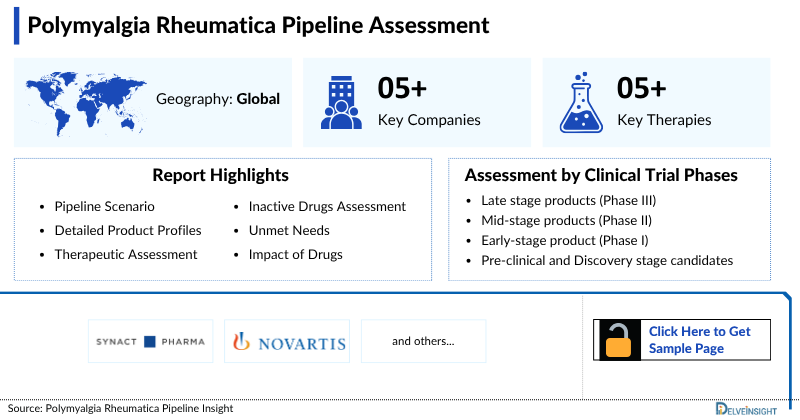
DelveInsight’s, “Polymyalgia Rheumatica Pipeline Insight, 2026” report provides comprehensive insights about 5+ companies and 5+ pipeline drugs in Polymyalgia Rheumatica pipeline landscape. It covers the pipeline drug profiles, including clinical and nonclinical stage products. It also covers the therapeutics assessment by product type, stage, route of administration, and molecule type. It further highlights the inactive pipeline products in this space.
Geography Covered
- Global coverage
Polymyalgia Rheumatica Understanding
Polymyalgia Rheumatica Overview
Polymyalgia rheumatica (PMR) is a rheumatic disorder characterized by pain and stiffness around the neck, shoulder, and hip area that significantly impacts quality of life. This disorder is more common in white adults over 50 years of age. It is an inflammatory condition associated with an elevation of erythrocyte sedimentation rate (ESR) and C-reactive protein (CRP), being the typical findings. Patients with PMR can develop or have concomitant giant cell arteritis (GCA), also known as Horton disease. Some authors consider GCA an extreme entity of the same spectrum of disorders as PMR.
The symptoms of PMR typically develop gradually over several days to weeks and are characterized primarily by bilateral pain and stiffness affecting the shoulder and hip girdles. Patients commonly experience aching discomfort in the neck, shoulders, upper arms, hips, thighs, and lower back, with symptoms usually being worse in the morning or after periods of inactivity. Morning stiffness lasting longer than 45 min is a hallmark feature and can significantly impair mobility and daily functioning, making activities such as getting out of bed, dressing, climbing stairs, or lifting the arms difficult.
PMR is an immune-mediated disorder, and elevated inflammatory markers are common. IL-6 is key in mediating inflammation and is elevated in both PMR and GCA. Interferon (IFN) may be present in temporal artery biopsies in patients with GCA but not in patients with PMR, suggesting its role in the development of arteritis. An elevated IgG4 level was found in patients with PMR but less frequently in patients with GCA. The same study discovered an increased number of patients with PMR features without elevation of IgG4 disease to have simultaneous GCA. Patients with PMR have a decreased number of circulating B cells compared to healthy adults. The circulating B cell number inversely correlates with ESR and CRP. This altered distribution of B cells possibly contributes to the IL-6 response in PMR. Autoantibodies with a significant role in pathogenesis are not a feature of PMR. Like GCA, patients with PMR also have decreased regulatory T (Treg) cells and T helper (Th)1 cells and increased Th17 cells. Some studies have suggested a cyclical pattern of GCA and PMR in seasonal variation and incidence, implying possible environmental triggers. Increased expression of toll-like receptors 7 and 9 in peripheral blood monocytes suggests the role of innate immunity in pathogenesis as well.
Diagnosis of PMR is primarily based on clinical presentation, inflammatory laboratory markers, imaging findings, and exclusion of other rheumatologic or musculoskeletal disorders. Elevated erythrocyte sedimentation rate (ESR) and C-reactive protein (CRP) are common laboratory abnormalities and reflect underlying systemic inflammation, although some patients may present with normal or mildly elevated ESR values. Additional laboratory findings may include normocytic anemia, thrombocytosis, and occasionally elevated liver enzymes, while autoimmune serologic markers such as rheumatoid factor (RF), antinuclear antibodies (ANA), and anti-citrullinated protein antibodies are typically negative. Creatine phosphokinase levels generally remain normal, helping differentiate PMR from primary muscle disorders.
Treatment of PMR primarily involves oral glucocorticoids, particularly prednisone, which effectively reduces inflammation and rapidly improves pain and stiffness. Therapy is usually started at moderate doses and gradually tapered over time based on symptom control and inflammatory markers such as ESR and CRP. Because relapses are common, some patients may require temporary dose increases and slower tapering schedules. Regular monitoring is important to assess disease activity and minimize long-term steroid-related complications. In patients at high risk of relapse or corticosteroid-related adverse effects, steroid-sparing agents such as methotrexate may be added, while leflunomide or azathioprine can be considered in selected cases. Biologic therapies targeting interleukin-6, including tocilizumab and sarilumab, have also shown benefit in refractory or relapsing disease.
"Polymyalgia Rheumatica Pipeline Insight, 2026" report by DelveInsight outlays comprehensive insights of present scenario and growth prospects across the indication. A detailed picture of the Polymyalgia Rheumatica pipeline landscape is provided which includes the disease overview and Polymyalgia Rheumatica treatment guidelines. The assessment part of the report embraces, in depth Polymyalgia Rheumatica commercial assessment and clinical assessment of the pipeline products under development. In the report, detailed description of the drug is given which includes mechanism of action of the drug, clinical studies, NDA approvals (if any), and product development activities comprising the technology, Polymyalgia Rheumatica collaborations, licensing, mergers and acquisition, funding, designations and other product related details.
Polymyalgia Rheumatica Pipeline Report Highlights
The companies and academics are working to assess challenges and seek opportunities that could influence Polymyalgia Rheumatica R&D. The therapies under development are focused on novel approaches to treat/improve Polymyalgia Rheumatica.
Polymyalgia Rheumatica Emerging Drugs Analysis
This segment of the Polymyalgia Rheumatica report encloses its detailed analysis of various drugs in different stages of clinical development, including phase II, I, preclinical and Discovery. It also helps to understand clinical trial details, expressive pharmacological action, agreements and collaborations, and the latest news and press releases.
Polymyalgia Rheumatica Emerging Drugs
Resomelagon: SynAct Pharma AB
Resomelagon (AP1189), is a once-daily oral selective melanocortin agonist. Resomelagon selectively stimulates the MC1R and MC3R on target cells in the immune system that are directly involved in inflammation and its resolution. As the compound doesn’t stimulate MC2R, the anti-inflammatory and immune resolution effects (restoring the balance of the immune system) are not unwanted increase in the cortisol level, as seen with adrenocorticotropic hormone (ACTH) based therapies as induction of cortisol levels will induce side effects as seen following GC treatment. Currently, the drug is being evaluated in the Phase II stage of its development for the treatment of Polymyalgia Rheumatica.
Further product details are provided in the report……..
Polymyalgia Rheumatica Drug Therapeutic Assessment
This segment of the report provides insights about the different Polymyalgia Rheumatica drugs segregated based on following parameters that define the scope of the report, such as:
Major Polymyalgia Rheumatica Players in Polymyalgia Rheumatica
There are approx. 5+ key companies which are developing the therapies for Polymyalgia Rheumatica. The companies which have their Polymyalgia Rheumatica drug candidates in the mid stage, i.e. Phase II include, SynAct Pharma AB.
Polymyalgia Rheumatica Clinical Trial Phases
DelveInsight’s report covers around 5+ products under different phases of clinical development like
- Late stage products (Phase III)
- Mid-stage products (Phase II)
- Early-stage product (Phase I) along with the details of
- Pre-clinical and Discovery stage candidates
- Discontinued & Inactive candidates
Polymyalgia Rheumatica Drug Route of Administration
Polymyalgia Rheumatica pipeline report provides the therapeutic assessment of the pipeline drugs by the Route of Administration. Products have been categorized under various ROAs such as
- Oral
- Intravenous
- Subcutaneous
- Parenteral
- Topical
Polymyalgia Rheumatica Product Molecule Type
Products have been categorized under various Molecule types such as
- Recombinant fusion proteins
- Small molecule
- Monoclonal antibody
- Peptide
- Polymer
- Gene therapy
Polymyalgia Rheumatica Product Type
Drugs have been categorized under various product types like Mono, Combination and Mono/Combination.
Polymyalgia Rheumatica Clinical Trial Activities
The Polymyalgia Rheumatica pipeline report provides insights into different Polymyalgia Rheumatica Clinical Trial within phase II, I, preclinical and discovery stage. It also analyses Polymyalgia Rheumatica therapeutic drugs key players involved in developing key drugs.
Polymyalgia Rheumatica Pipeline Development Activities
The Polymyalgia Rheumatica Clinical Analysis report covers the detailed information of collaborations, acquisition and merger, licensing along with a thorough therapeutic assessment of emerging Polymyalgia Rheumatica drugs.
Polymyalgia Rheumatica Pipeline Report Insights
- Polymyalgia Rheumatica Pipeline Analysis
- Polymyalgia Rheumatica Therapeutic Assessment
- Polymyalgia Rheumatica Unmet Needs
- Impact of Polymyalgia Rheumatica Drugs
Polymyalgia Rheumatica Pipeline Report Assessment
- Polymyalgia Rheumatica Pipeline Product Profiles
- Polymyalgia Rheumatica Therapeutic Assessment
- Polymyalgia Rheumatica Pipeline Assessment
- Polymyalgia Rheumatica Inactive drugs assessment
- Polymyalgia Rheumatica Maket Unmet Needs
Key Questions Answered in the Polymyalgia Rheumatica Pipleine Report
- Current Treatment Scenario and Emerging Therapies:
- How many companies are developing Polymyalgia Rheumatica drugs?
- How many Polymyalgia Rheumatica drugs are developed by each company?
- How many emerging drugs are in mid-stage, and late-stage of development for the treatment of Polymyalgia Rheumatica?
- What are the key collaborations (Industry–Industry, Industry–Academia), Mergers and acquisitions, licensing activities related to the Polymyalgia Rheumatica therapeutics?
- What are the recent trends, drug types and novel technologies developed to overcome the limitation of existing therapies?
- What are the clinical studies going on for Polymyalgia Rheumatica and their status?
- What are the key designations that have been granted to the emerging drugs?
Polymyalgia Rheumatica Key Players
- SynAct Pharma AB
- Novartis
Polymyalgia Rheumatica Key Products
- Resomelagon
- AIN457