Exocrine Pancreatic Insufficiency Market Summary
- With the rising prevalence, the Exocrine Pancreatic Insufficiency Market Size is expected to increase in the forecast period (2024-2036).
- In the 7MM, the highest prevalent cases of exocrine pancreatic insufficiency were observed in the United States in 2023.
- Among all the exocrine pancreatic insufficiency patients, the highest prevalent cases of causative indications were Type 2 diabetes mellitus in the 7MM.
- Acute pancreatitis, chronic pancreatitis, cystic fibrosis, and unresectable pancreatic cancer are assumed to play the foremost role in the development of exocrine pancreatic insufficiency.
- The mainstay of treatment for exocrine pancreatic insufficiency is pancreatic enzyme replacement therapy (PERT). Many countries have developed different guidelines regarding dosing and administration of PERT.
Request for Unlocking the CAGR of the Exocrine Pancreatic Insuffiency Drugs Market
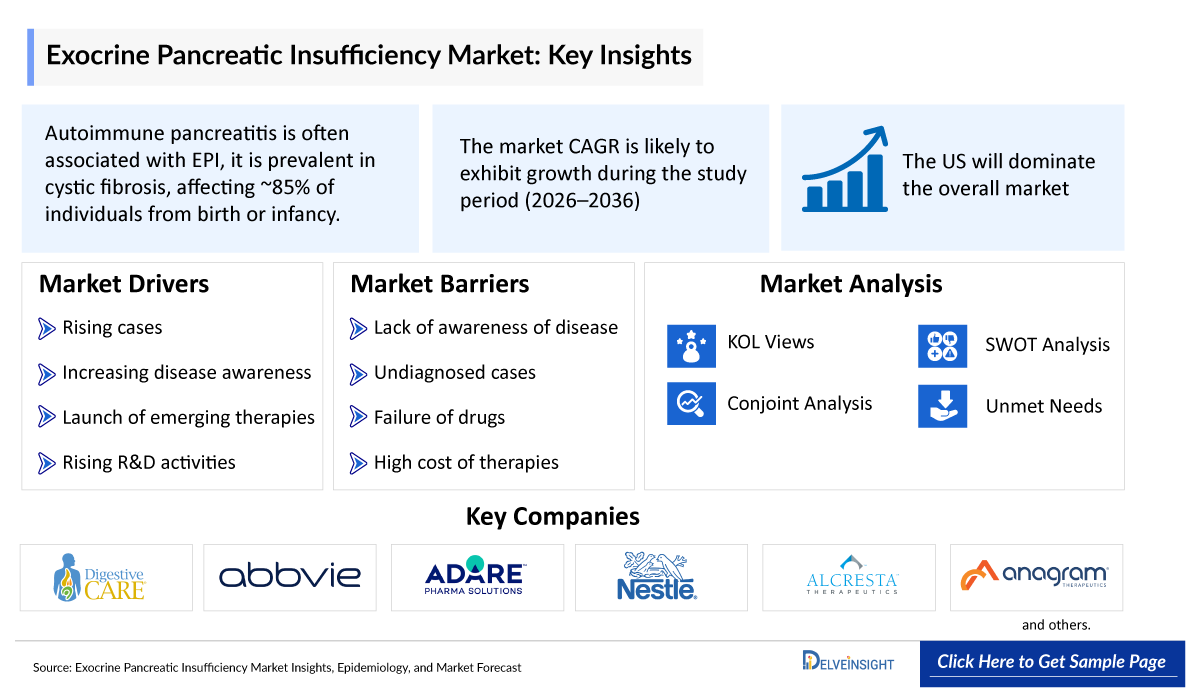
DelveInsight’s "Exocrine Pancreatic Insufficiency Market Insight, Epidemiology, and Market Forecast – 2036" report delivers an in-depth understanding of exocrine pancreatic insufficiency, historical and forecasted epidemiology as well as the exocrine pancreatic insufficiency market trends in the United States, EU4 (Germany, France, Italy, and Spain) and the United Kingdom, and Japan.
The Exocrine Pancreatic Insufficiency Drugs Market report provides current treatment practices, emerging drugs, Exocrine Pancreatic Insufficiency market share of individual therapies, and current and forecasted exocrine pancreatic insufficiency market size from 2022 to 2036, segmented by seven major markets. The report also covers current exocrine pancreatic insufficiency Treatment Market practices/algorithms and Exocrine Pancreatic Insufficiency unmet needs to curate the best of the opportunities and assess the underlying potential of the Exocrine Pancreatic Insufficiency Drugs Market.
|
Study Period |
2022 to 2036 |
|
Forecast Period |
2024 to 2036 |
|
Geographies Covered |
|
|
Exocrine Pancreatic Insufficiency Drugs Market |
|
|
Exocrine Pancreatic Insufficiency Market Size | |
|
Exocrine Pancreatic Insufficiency Companies |
|
Exocrine Pancreatic Insufficiency Understanding
Exocrine Pancreatic Insufficiency Overview
Exocrine pancreatic insufficiency occurs when the small intestine can’t digest food completely because of problems with enzymes produced by the pancreas. Complications of exocrine pancreatic insufficiency can include malnutrition, low bone mass, and problems with growth in children. Symptoms of exocrine pancreatic insufficiency may include bloating, cramps or pain in the abdomen and diarrhea. Exocrine pancreatic insufficiency may be caused by diseases and conditions such as pancreatitis, cystic fibrosis, pancreatic cancer, and surgery of the pancreas or upper gastrointestinal tract.
Exocrine Pancreatic Insufficiency Diagnosis
Diagnosing exocrine pancreatic insufficiency involves a comprehensive approach by the healthcare provider. A thorough physical examination may follow, aimed at identifying any signs or symptoms indicative of pancreatic insufficiency. To confirm the diagnosis, the doctor will likely order specific tests. These may include a stool elastase test, which measures the levels of elastase. Blood tests may also be conducted to assess various pancreatic enzymes and other markers of pancreatic function. Additionally, a pancreatic function test might be performed, which can involve different methods such as the secretin stimulation test or the direct pancreatic function test, to evaluate the overall function of the pancreas. These diagnostic measures collectively help in accurately identifying exocrine pancreatic insufficiency, enabling the healthcare provider to tailor an appropriate treatment plan to manage the condition effectively.
Further details related to diagnosis will be provided in the report...
Exocrine Pancreatic Insufficiency Treatment
Treatment for exocrine pancreatic insufficiency includes support to stop smoking and alcohol consumption, dietary consultation, enzyme replacement therapy, and a structured follow-up of nutritional status and the effect of treatment. Pancreatic enzyme replacement therapy is administered in the form of enteric-coated mini microspheres during meals. The dose should be in proportion to the fat content of the meal, usually 40-50000 lipase units per main meal, and half the dose is required for a snack. In cases that do not respond to initial treatment, the doses can be doubled, and proton inhibitors can be added to the treatment. To treat exocrine pancreatic insufficiency, doctors typically prescribe PERT. PERT involves taking pills that contain pancreatic enzymes. PERT can improve symptoms.
Exocrine Pancreatic Insufficiency Epidemiology
The exocrine pancreatic insufficiency epidemiology chapter in the report provides historical as well as forecasted epidemiology segmented by the Total Prevalent Cases of Causative Indications of Exocrine Pancreatic Insufficiency, Total Prevalent Cases of Exocrine Pancreatic Insufficiency, and Treated Cases of Exocrine Pancreatic Insufficiency in the 7MM covering the United States, EU4 (Germany, France, Italy, and Spain) and the United Kingdom, and Japan from 2022 to 2036.
Key findings from Exocrine Pancreatic Insufficiency Epidemiological Forecast and Analysis
- In the 7MM, the highest Exocrine Pancreatic Insufficiency Prevalent Cases were observed in the United States in 2023 and are expected to increase during the forecast period (2024–2036).
- Several indications such as mild acute pancreatitis, moderate to severe acute pancreatitis, chronic pancreatitis, and a few others form the major causative agents for exocrine pancreatic insufficiency in the United States.
- Among EU4 and the UK, Spain has consistently shown the lowest treated cases.
- Among all the exocrine pancreatic insufficiency patients, the highest prevalent cases of causative indications were Type 2 diabetes mellitus in the 7MM.
Unlock comprehensive insights! Click Here to Purchase the Full Epidemiology Report @ Exocrine Pancreatic Insufficiency Prevalence
Exocrine Pancreatic Insufficiency Drugs Analysis
The drug chapter segment of the Exocrine Pancreatic Insufficiency Drugs Market Report encloses a detailed analysis of the late-stage (Phase III ) and mid-stage (Phase II/III and Phase II) Exocrine Pancreatic Insufficiency pipeline drugs. The current key Exocrine Pancreatic Insufficiency Companies include Anagram Therapeutics (ANG003), and First Wave Biopharma (FW-EPI). The drug chapter also helps understand the Exocrine Pancreatic Insufficiency clinical trials details, pharmacological action, agreements and collaborations, approval, and patent details, and the latest Exocrine Pancreatic Insufficiency news and press releases.
Exocrine Pancreatic Insufficiency Marketed Drugs
PERTZYE: Digestive Care
PERTZYE is a pancreatic enzyme preparation consisting of pancrelipase, an extract derived from porcine pancreatic glands. Pancrelipase contains multiple enzyme classes, including porcine-derived lipases, proteases, and amylases. In July 2012, PERTZYE was approved by the US FDA in patients with exocrine pancreatic insufficiency due to cystic fibrosis or other conditions. Further, in October 2016, the drug received FDA approval for an infant-specific dose of PERTZYE in a 4,000 USP lipase units capsule. The new capsule strength will enable guideline-recommended dosing and administration of PERTZYE for infants (up to 12 months) with exocrine pancreatic insufficiency.

CREON: Solvay Pharmaceuticals
It is a pancreatic enzyme preparation consisting of a combination of lipases, proteases, and amylases and is an extract derived from porcine pancreatic glands. In May 2013, CREON received the US FDA approval for the commercial availability of a new, higher-dose variant of CREON delayed-release capsules to treat patients with EPI due to cystic fibrosis, swelling of the pancreas that lasts a long time (chronic pancreatitis), removal of some or all of the pancreas (pancreatectomy), or other conditions. In April 2011, CREON was approved in Japan under the brand name LIPACREON.
Comparison of Exocrine Pancreatic Insufficiency Marketed Drugs | ||||
|
Product |
Company |
MoA |
RoA |
Approval Year |
|
PERTZYE |
Digestive Care |
Hydrolysis of fats and proteins |
Oral |
2012 (US) |
|
CREON |
Solvay Pharmaceuticals |
Hydrolysis of fats and proteins |
Oral |
2013 (US) |
Exocrine Pancreatic Insufficiency Emerging Drugs
FW-EPI (adrulipase): First Wave Biopharma
FW-EPI is a recombinant lipase enzyme administered as an oral, non-systemic biologic capsule for the treatment of exocrine pancreatic insufficiency associated with cystic fibrosis and chronic pancreatitis. It is derived from the Yarrowia lipolytica yeast lipase and is designed to break up fat molecules in the digestive tract of exocrine pancreatic insufficiency patients so that they can be absorbed as nutrients. In developing adrulipase, First Wave is seeking to provide cystic fibrosis and chronic pancreatitis patients with a safe and effective therapy to control exocrine pancreatic insufficiency that is non-animal derived, offers the potential to dramatically reduce their daily pill burden, and can be manufactured on demand at high volumes safely and with a high degree of reproducibility. First Wave is developing adrulipase as a monotherapy and in combination with PERT.
ANG003: Anagram Therapeutics
ANG003 is a novel broadspectrum orally delivered enzyme replacement therapy for the treatment of malabsorption and exocrine pancreatic insufficiency. The drug is currently in Phase I trial for adult subjects with CF-related EPI.
Comparison of Exocrine Pancreatic Insufficiency Emerging Therapies | ||||
|
Emerging Drug |
Company |
Molecule Type |
MoA |
RoA |
|
FW-EPI |
First Wave Biopharma |
Recombinant lipase enzyme |
Histamine antagonist |
Oral |
|
ANG003 |
Anagram Therapeutics |
Protein |
Lipase stimulant |
Oral |
Exocrine Pancreatic Insufficiency Market Outlook
The Exocrine Pancreatic Insufficiency Treatment Market Landscape majorly includes pancreatic enzyme replacement therapy, lifestyle modifications (e.g., avoidance of fatty foods, limitation of alcohol intake, cessation of smoking, and consumption of a well-balanced diet), and vitamin supplementation (primarily the fat-soluble vitamins A, D, E, and K). PERT is the first-line therapeutic mainstay that is prescribed to patients. The pancreatic enzyme products used for PERT are extracts of porcine pancreas that contain all three pancreatic enzymes (i.e., amylase, protease, and lipase) in varying proportions. However, it is lipase that plays a paramount role in therapy. Pharmacological therapies are the mainstay treatment option followed by patients with exocrine pancreatic insufficiency. The market of exocrine pancreatic insufficiency includes the use of the drugs either as monotherapy and are not interchangeable. There are several approved drugs in the market of different classes. The following PEPs have been approved by the FDA for the treatment of maldigestion in patients whose bodies do not produce sufficient pancreatic enzymes: CREON, PANCREAZE, PERTZYE, VIOKACE, and ZENPEP. Some medicines are needed to treat pain.
Key findings from Exocrine Pancreatic Insufficiency Market Forecast Report
- With the rising prevalence, the Exocrine Pancreatic Insufficiency Market Size is expected to increase in the forecast period (2024-2036).
- Limited Exocrine Pancreatic Insufficiency therapies are available for the treatment and diagnosis of exocrine pancreatic insufficiency; thus providing profitable opportunities for emerging Exocrine Pancreatic Insufficiency therapies.
- The exocrine pancreatic insufficiency pipeline is very narrow which signifies a major unmet need for the research and development of new therapies that can fill the gap.
Exocrine Pancreatic Insufficiency Drug Uptake
First Wave is seeking to provide cystic fibrosis and chronic pancreatitis patients with a safe and effective therapy to control exocrine pancreatic insufficiency that is non-animal derived, offers the potential to dramatically reduce their daily pill burden, and can be manufactured on demand at high volumes safely and with a high degree of reproducibility.
Exocrine Pancreatic Insufficiency Clinical Trial Activities
The Exocrine Pancreatic Insufficiency drugs market report provides insights into therapeutic candidates in different stages. It also analyzes key Exocrine Pancreatic Insufficiency Companies involved in developing targeted therapeutics. Exocrine Pancreatic Insufficiency Companies like First Wave Biopharma, Anagram Therapeutics, and others actively engage in late and mid-stage research and development efforts for exocrine pancreatic insufficiency. The Exocrine Pancreatic Insufficiency pipeline possesses a few potential drugs. However, there is a positive outlook for the Exocrine Pancreatic Insufficiency therapeutics market, with expectations of growth during the forecast period (2024–2036).
Exocrine Pancreatic Insufficiency Pipeline Development Activities
The Exocrine Pancreatic Insufficiency market report covers information on collaborations, acquisitions and mergers, licensing, and patent details for emerging Exocrine Pancreatic Insufficiency therapy.
Take Your Research to the Next Level! Click Here to Get Access to the Full Pipeline Report @ Exocrine Pancreatic Insufficiency Drugs
Latest KOL Views on Exocrine Pancreatic Insufficiency
To keep up with current Exocrine Pancreatic Insufficiency Market Trends, we take KOLs and SMEs’ opinions working in the domain through primary research to fill the data gaps and validate our secondary research. Industry Experts contacted for insights on exocrine pancreatic insufficiency’s evolving treatment landscape, patient reliance on conventional therapies, patient therapy switching acceptability, and drug uptake, along with challenges related to accessibility, including MDs, hematologists, ophthalmologists, and others.
DelveInsight’s analysts connected with 30+ KOLs to gather insights; however, interviews were conducted with 15+ KOLs in the 7MM. The opinion helps understand and validate current and emerging therapy treatment patterns or exocrine pancreatic insufficiency market trends. This will support the clients in potential upcoming novel treatments by identifying the overall scenario of the market and the unmet needs.
What KOLs are saying on Exocrine Pancreatic Insufficiency Patient Trends? | |
|
United States |
“It is important to review the predisposing conditions that may lead to the diagnosis of EPI. These conditions include cystic fibrosis, chronic pancreatitis, acute pancreatitis, previous pancreatic surgery, history of pancreatic cancer (or suspicion for new pancreatic cancer), history of diabetes, celiac disease, history of luminal surgeries (including bariatric surgery), and inflammatory bowel disease.” |
|
United Kingdome |
“The diagnosis of pancreatic insufficiency, in my mind, needs to start with assessing the pre-test probability of the patient having EPI, since testing could lead to a false positive. The test of choice in most scenarios for diagnosing pancreatic insufficiency is a stool test known as the fecal elastase. It is a measurement of pancreatic elastase in the stool. The test itself is a concentration.” |
Exocrine Pancreatic Insufficiency Qualitative Analysis
We perform Qualitative and Exocrine Pancreatic Insufficiency Market Intelligence analysis using various approaches, such as SWOT and Conjoint Analysis. In the SWOT analysis, strengths, weaknesses, opportunities, and threats in terms of disease diagnosis, patient awareness, patient burden, competitive landscape, cost-effectiveness, and geographical accessibility of therapies are provided. These pointers are based on the Analyst’s discretion and assessment of the patient burden, cost analysis, and existing and evolving treatment landscape.
Exocrine Pancreatic Insufficiency Market Access and Reimbursement
CREON: According to France’s HAS, in March 2022, a favorable opinion for reimbursement of CREON in pancreatic enzyme replacement therapy in exocrine pancreatic insufficiency associated with cystic fibrosis and other diseases (for example, chronic pancreatitis, pancreatectomy or pancreatic cancer) was given.
In the US, the Lowest Branded Co-Pay means CREON is in the formulary tier status designated by the insurer as the lowest branded co-pay in the therapeutic class. It is also covered by Medicare prescription drug coverage.
Other than this in the US AbbVie also provides patients that require CREON with a patient assistance program.
Exocrine Pancreatic Insufficiency Market Report Scope
- The Exocrine Pancreatic Insufficiency therapeutics market report covers a segment of key events, an executive summary, and a descriptive overview, explaining its causes, signs, symptoms, pathogenesis, and currently used therapies.
- Comprehensive insight into the epidemiology segments and forecasts, disease progression, and Exocrine Pancreatic Insufficiency treatment market guidelines has been provided.
- Additionally, an all-inclusive account of the emerging therapies and the elaborative profiles of late-stage and prominent therapies will impact the current Exocrine Pancreatic Insufficiency treatment market landscape.
- A detailed review of the Exocrine Pancreatic Insufficiency therapeutics market, historical and forecasted Exocrine Pancreatic Insufficiency market size, market share by therapies, detailed assumptions, and rationale behind our approach is included in the report, covering the 7MM drug outreach.
- The patient-based Exocrine Pancreatic Insufficiency Market forecasting report provides an edge while developing business strategies by understanding trends through SWOT analysis and expert insights/KOL views, patient journey, and treatment preferences that help shape and drive Exocrine Pancreatic Insufficiency.
Exocrine Pancreatic Insufficiency Market Report Insights
- Patient-based Exocrine Pancreatic Insufficiency Market Forecasting
- Exocrine Pancreatic Insufficiency Therapeutic Approaches
- Exocrine Pancreatic Insufficiency Pipeline Analysis
- Exocrine Pancreatic Insufficiency Market Size
- Exocrine Pancreatic Insufficiency Market Trends
- Existing and Future Exocrine Pancreatic Insufficiency Therapeutics Market Opportunity
Exocrine Pancreatic Insufficiency Market Report Key Strengths
- 11 Years Exocrine Pancreatic Insufficiency Market Forecast
- The 7MM Coverage
- Exocrine Pancreatic Insufficiency Epidemiology Segmentation
- Key Cross Competition
- Exocrine Pancreatic Insufficiency Drugs Uptake
- Key Exocrine Pancreatic Insufficiency Market Forecast Assumptions
Exocrine Pancreatic Insufficiency Market Assessment
- Current Exocrine Pancreatic Insufficiency Treatment Market Practices
- Exocrine Pancreatic Insufficiency Unmet Needs
- Exocrine Pancreatic Insufficiency Pipeline Product Profiles
- Exocrine Pancreatic Insufficiency Therapeutics Market Attractiveness
- Qualitative Analysis (SWOT and Conjoint Analysis)
Frequently Asked Questions from Exocrine Pancreatic Insufficiency Market
- What was the Exocrine Pancreatic Insufficiency market size, the market size by therapies, market share (%) distribution in 2023, and what would it look like by 2036? What are the contributing factors for this growth?
- What can be the future treatment paradigm for Exocrine Pancreatic Insufficiency?
- What are the disease risks, burdens, and unmet needs of Exocrine Pancreatic Insufficiency? What will be the growth opportunities across the 7MM concerning the patient population with Exocrine Pancreatic Insufficiency?
- What are the current options for the treatment of Exocrine Pancreatic Insufficiency? What are the current guidelines for treating Exocrine Pancreatic Insufficiency in the 7MM?
- What are the recent novel therapies, targets, mechanisms of action, and technologies being developed to overcome the limitations of existing therapies?
- What is the patient's share of Exocrine Pancreatic Insufficiency?
Reasons to Buy Exocrine Pancreatic Insufficiency Market Report
- The Exocrine Pancreatic Insufficiency Therapeutics Market Report will help develop business strategies by understanding the latest trends and changing treatment dynamics driving Exocrine Pancreatic Insufficiency.
- Insights on patient burden/disease Exocrine Pancreatic Insufficiency prevalence, evolution in diagnosis, and factors contributing to the change in the epidemiology of the disease during the forecast years.
- Understand the existing Exocrine Pancreatic Insufficiency Treatment Market opportunities in varying geographies and the growth potential over the coming years.
- Identifying strong upcoming Exocrine Pancreatic Insufficiency companies in the Market will help devise strategies to help get ahead of competitors.
- Detailed analysis ranking of class-wise potential current and emerging therapies under the analyst view section to provide visibility around leading classes.
- Highlights of access and reimbursement policies of current therapies, barriers to accessibility of expensive off-label therapies, and patient assistance programs.
- To understand Key Opinion Leaders’ perspectives around the accessibility, acceptability, and compliance-related challenges of existing treatment to overcome barriers in the future.
- Detailed insights on the unmet needs of the existing Exocrine Pancreatic Insufficiency Treatment Market so that the upcoming players can strengthen their development and launch strategy.
-pipeline.png&w=256&q=75)