Nausea and Vomiting Induced by Motion Sickness Market Positioned for Accelerated Development Through 2034, DelveInsight Finds
Get a Sneak Peek at the Latest nausea and vomiting induced by motion sickness market insights Report
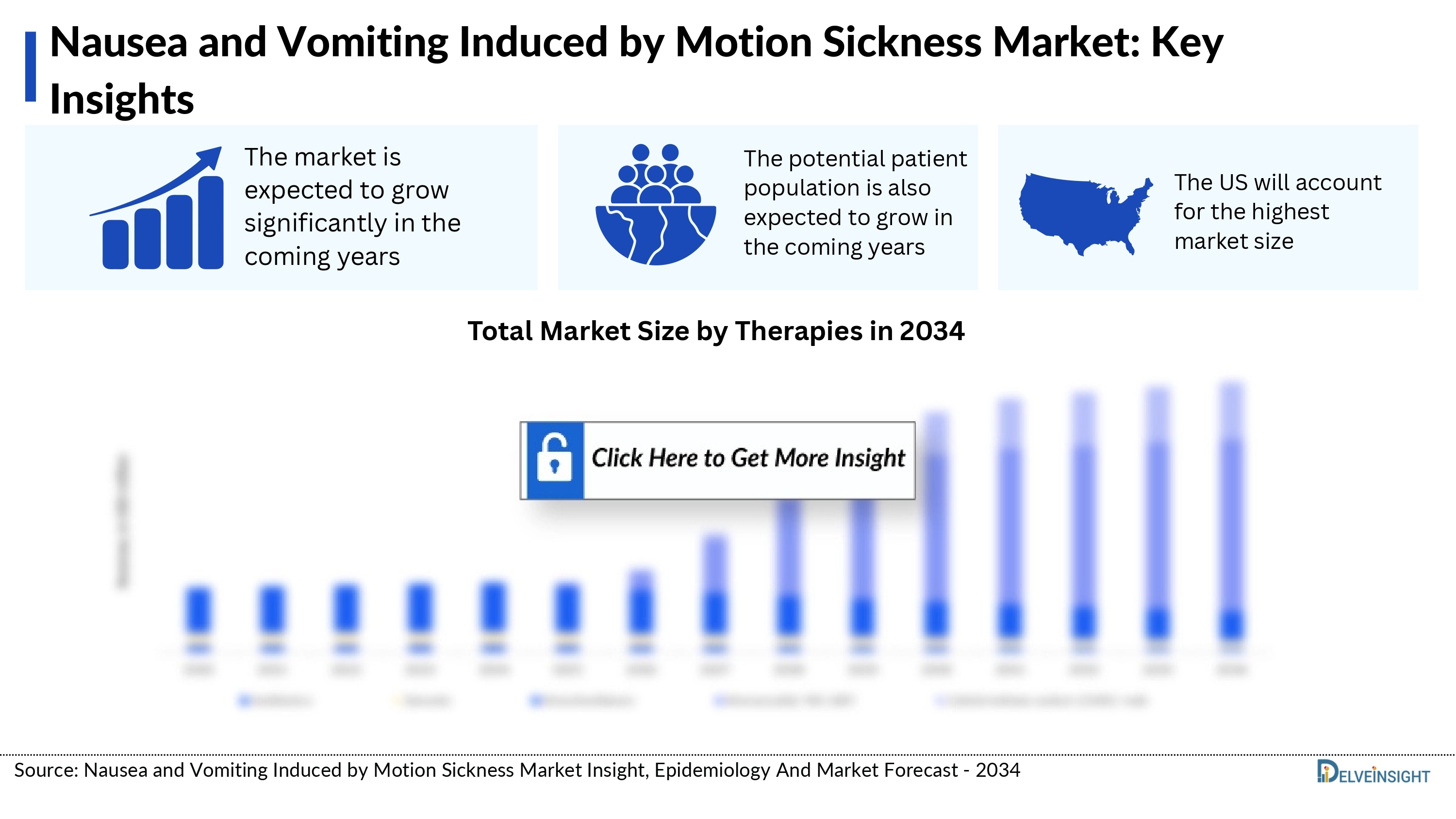
The nausea and vomiting induced by motion sickness market is projected to grow at a robust CAGR during the forecast period (2025–2033). DelveInsight's comprehensive market research provides critical insights into such market trends, enabling stakeholders to understand growth drivers, emerging opportunities, and potential challenges within the motion sickness landscape.
By analyzing historical data, current market dynamics, and future projections, DelveInsight equips pharmaceutical companies, investors, and healthcare professionals with actionable intelligence to make informed strategic decisions, identify investment opportunities, optimize product positioning, and plan research and development initiatives effectively.
The nausea and vomiting induced by motion sickness market is increasingly guided by advanced neurokinin-1 receptor antagonists. NEREUS represents a highly lucrative emerging therapeutic segment, highlighted by the historic FDA approval in December 2025 marking the first new pharmacological treatment for motion sickness in over four decades. NEREUS (tradipitant), licensed by Vanda Pharmaceuticals from Eli Lilly, is projected to generate significant revenue with potential sales exceeding USD 100 million annually at peak levels in the United States alone.
DelveInsight's report, "Nausea and Vomiting Induced by Motion Sickness Market Insights, Epidemiology, and Market Forecast-2034," provides a comprehensive analysis of the nausea and vomiting induced by motion sickness landscape. The report delivers detailed insights into the disease, including historical and projected epidemiology, helping stakeholders understand the prevalence, incidence, and patient demographics across key regions.
Additionally, it examines motion sickness market dynamics, offering a thorough assessment of current and emerging market trends, treatment patterns, and therapeutic developments. The analysis spans major markets, including the United States, EU4 (Germany, France, Italy, and Spain), the United Kingdom, and Japan, equipping decision-makers with actionable intelligence for strategic planning, investment, and research initiatives.
To know in detail about the nausea and vomiting induced by motion sickness market outlook, drug uptake, treatment scenario and epidemiology trends, visit Nausea and Vomiting Induced by Motion Sickness Market Forecast
Some of the key facts of the Nausea and Vomiting Induced by Motion Sickness Market Report:
- Key Motion Sickness Companies: Vanda Pharmaceuticals, Viatris Inc., Teva Pharmaceutical Industries Ltd., Amneal Pharmaceuticals Inc., Baxter International Inc., Novartis AG, Abbott Laboratories, Sun Pharmaceutical Industries Ltd., Zydus Lifesciences Ltd., Prestige Consumer Healthcare Inc., GlaxoSmithKline, Pfizer, Reliefband Technologies, WellSpring Pharmaceutical Corporation, Johnson & Johnson, and others
- Key Motion Sickness Therapies: NEREUS (tradipitant), TRANSDERM SCOP (scopolamine patch), Dimenhydrinate, Meclizine, Promethazine, Cinnarizine, Cyclizine, Ginger supplements, and others
- The nausea and vomiting induced by motion sickness market is expected to surge due to the disease's increasing prevalence and awareness during the forecast period. Furthermore, launching various multiple-stage motion sickness pipeline products will significantly revolutionize the motion sickness market dynamics.
Nausea and Vomiting Induced by Motion Sickness Overview
Nausea and vomiting induced by motion sickness is a physiologic response that occurs when there is a sensory conflict between the eyes, inner ear, and proprioceptors, creating mixed neural signals that result in disorientation and nausea mediated by a chemical called substance P.
Motion sickness is characterized by symptoms such as nausea, increased salivation, belching, sweating, dizziness, and discomfort that affect individuals during multi-axial motion or acceleration. It affects individuals of all ages and genders, with particular impact on travelers, military personnel, astronauts, and patients undergoing medical procedures. The condition can cause temporary sensation and anxiety, particularly impacting pregnant women, children, and cancer patients undergoing chemotherapy.
Motion sickness is caused by various risk factors, including susceptibility to vestibular stimulation, sudden changes in acceleration, and environmental triggers such as motion-provoking activities in vehicles, vessels, or aircraft. The condition is easier to prevent than to cure, and early intervention through pharmacological and behavioral interventions significantly improves patient outcomes and quality of life.
Key Trends in Nausea and Vomiting Induced by Motion Sickness Therapeutics Market:
- Rising Adoption of Neurokinin-1 Receptor Antagonists: Increasing use of NK-1 receptor antagonists such as tradipitant as targeted therapies for motion sickness-induced nausea and vomiting.
- Shift from Anticholinergics to Modern Therapies: Growing transition from older anticholinergic agents to novel formulations with improved safety and efficacy profiles.
- Non-Pharmacological Integration: Expanding adoption of wearable neuromodulation devices and acupressure bands as adjunctive therapies to pharmaceutical treatments.
- Pipeline Innovation: Development of next-generation antiemetics with reduced sedation and improved tolerability profiles.
- Market Growth in Emerging Regions: Rising motion sickness awareness and improved healthcare infrastructure driving adoption in Asia-Pacific and emerging markets.
- Combination Therapy Approaches: Increasing use of combination packs pairing antihistamines with botanical extracts to optimize therapeutic outcomes.
Nausea and Vomiting Induced by Motion Sickness Epidemiology
The report on nausea and vomiting induced by motion sickness epidemiology provides a comprehensive analysis of the disease's prevalence, incidence, and patient demographics. It includes age- and gender-specific distribution, regional and global trends, and data on disease severity patterns across different transportation modalities. The report also highlights risk factors, disease burden, and projections for future trends, helping stakeholders understand the scope of motion sickness and plan targeted interventions, research, and treatment strategies.
Nausea and Vomiting Induced by Motion Sickness Epidemiology Segmentation:
The nausea and vomiting induced by motion sickness market report proffers epidemiological analysis for the study period 2020–2034 in the 7MM segmented into:
- Total Prevalence of Motion Sickness
- Prevalent Cases of Motion Sickness by severity
- Gender-specific Prevalence of Motion Sickness
- Age-specific Prevalence of Motion Sickness by demographics
Motion sickness is reported to affect 35%–43% of children prior to puberty, with approximately 25% of adolescents and young adults experiencing symptoms during travel. The prevalence increases during high-stimulus motion environments such as prolonged sea voyages, air travel, and road journeys exceeding four hours.
Download the report to understand which factors are driving nausea and vomiting induced by motion sickness epidemiology trends @ Nausea and Vomiting Induced by Motion Sickness Epidemiology Forecast
Recent Developments In The Motion Sickness Treatment Landscape:
- In December 2025, the U.S. Food and Drug Administration (FDA) approved NEREUS™ (tradipitant), an oral neurokinin-1 (NK-1) receptor antagonist developed by Vanda Pharmaceuticals, for the prevention of vomiting induced by motion. This approval marks the first new pharmacological treatment for motion sickness in over four decades, representing a significant advancement in the understanding and management of motion sickness. The approval was based on three pivotal clinical trials, including two Phase III real-world studies conducted on boats, where NEREUS significantly reduced the incidence of vomiting compared to placebo. Analyst estimates suggest peak annual sales could exceed USD 100 million in the United States alone.
- In November 2025, Vanda Pharmaceuticals announced positive results from a Phase II study evaluating tradipitant for the prevention of nausea and vomiting induced by glucagon-like peptide receptor agonists (GLP-1 RAs), expanding the potential therapeutic applications of this novel compound beyond motion sickness.
- In January 2024, the FDA rejected Defender Pharmaceuticals' nasal gel formulation of scopolamine, citing insufficient evidence for efficacy and safety, despite the compound's long-established use in transdermal patches approved since 1979.
- In July 2024, Amneal Pharmaceuticals launched FOCINVEZ, the first ready-to-use injectable formulation of fosaprepitant, an antiemetic indicated for the prevention of acute and delayed nausea and vomiting associated with moderately and highly emetogenic chemotherapy, broadening treatment options for patients experiencing chemotherapy-induced nausea and vomiting related to motion-sensitive conditions.
Nausea and Vomiting Induced by Motion Sickness Drugs Uptake and Pipeline Development Activities
The drugs uptake section focuses on the rate of uptake of the potential drugs recently launched in the motion sickness market or expected to get launched during the study period. The analysis covers motion sickness market uptake by drugs, patient uptake by therapies, and sales of each drug.
Moreover, the therapeutics assessment section helps understand the drugs with the most rapid uptake and the reasons behind the maximal use of the drugs. Additionally, it compares the drugs based on market share.
The report also covers the nausea and vomiting induced by motion sickness pipeline development activities. It provides valuable insights about different therapeutic candidates in various stages and the key companies involved in developing targeted therapeutics. It also analyzes recent developments such as collaborations, acquisitions, mergers, licensing patent details, and other information for emerging therapies.
Nausea and Vomiting Induced by Motion Sickness Therapies and Key Companies
- NEREUS (tradipitant): Vanda Pharmaceuticals / Eli Lilly and Company
- TRANSDERM SCOP (scopolamine patch): Viatris Inc.
- Dimenhydrinate: Teva Pharmaceutical Industries Ltd. / Amneal Pharmaceuticals Inc.
- Meclizine: Johnson & Johnson / McNeil
- Promethazine: Baxter International Inc. / Abbott Laboratories
- Cinnarizine: Sun Pharmaceutical Industries Ltd. / Zydus Lifesciences Ltd.
- Cyclizine: GlaxoSmithKline / Pfizer
- FOCINVEZ (fosaprepitant injection): Amneal Pharmaceuticals Inc.
- Ginger-based Antihistamine Combinations: Prestige Consumer Healthcare Inc. / WellSpring Pharmaceutical Corporation
- Reliefband (neuromodulation device): Reliefband Technologies
- Novartis AG: Pipeline development for motion sickness therapies
- Wellspring Pharmaceutical Corporation: Development of combination antiemetic therapies
To know more about motion sickness companies working in the treatment market, visit @ Nausea and Vomiting Induced by Motion Sickness Clinical Trials and Therapeutic Assessment
Nausea and Vomiting Induced by Motion Sickness Market Drivers
- Increasing prevalence of motion sickness globally with up to 78 million adults affected in the United States alone, driving demand for effective preventive therapies
- Growth of pharmaceutical innovations addressing unmet needs in motion sickness treatment, particularly the FDA approval of tradipitant after 40 years without new options
- Rapid expansion of global travel and tourism industry, increasing exposure to motion-provoking environments
- Rising awareness and education among travelers and healthcare professionals regarding motion sickness prevention and management options
- Growing adoption of combination therapies and non-pharmacological interventions for enhanced therapeutic outcomes
- Development of reduced-sedation formulations and next-generation antiemetics improving patient tolerability and compliance
Nausea and Vomiting Induced by Motion Sickness Market Barriers
- High cost of prescription therapies limiting patient access, particularly in emerging markets with lower healthcare expenditure
- Complex regulatory approval processes, as evidenced by the 40-year gap between new pharmacological approvals
- Significant side effects associated with existing anticholinergic and antihistamine therapies, including drowsiness, dry mouth, and impaired cognitive function
- Limited awareness and accessibility of approved therapies in certain geographic regions
- Variable patient response due to individual susceptibility differences and environmental factors
- Preference for over-the-counter and herbal remedies despite potentially lower efficacy, driven by cost considerations and accessibility
Scope of the Nausea and Vomiting Induced by Motion Sickness Market Report
- Study Period: 2020–2034
- Coverage: 7MM [The United States, EU4 (Germany, France, Italy, and Spain), the United Kingdom, and Japan]
- Key Motion Sickness Companies: Vanda Pharmaceuticals, Viatris Inc., Teva Pharmaceutical Industries Ltd., Amneal Pharmaceuticals Inc., Baxter International Inc., Novartis AG, Abbott Laboratories, Sun Pharmaceutical Industries Ltd., Zydus Lifesciences Ltd., Prestige Consumer Healthcare Inc., GlaxoSmithKline, Pfizer, Reliefband Technologies, WellSpring Pharmaceutical Corporation, Johnson & Johnson, and others
- Key Motion Sickness Therapies: NEREUS (tradipitant), TRANSDERM SCOP (scopolamine patch), Dimenhydrinate, Meclizine, Promethazine, Cinnarizine, Cyclizine, FOCINVEZ (fosaprepitant injection), Ginger-based Antihistamine Combinations, Reliefband (neuromodulation device), and others
- Motion Sickness Therapeutic Assessment: Motion sickness current marketed and motion sickness emerging therapies
- Motion Sickness Market Dynamics: Motion sickness market drivers and motion sickness market barriers
- Competitive Intelligence Analysis: SWOT analysis, PESTLE analysis, Porter's five forces, BCG Matrix, Market entry strategies
- Motion Sickness Unmet Needs, KOL's views, Analyst's views, Motion Sickness Market Access and Reimbursement
Discover more about therapies set to grab major nausea and vomiting induced by motion sickness market share @ Nausea and Vomiting Induced by Motion Sickness Treatment Market
Need more?
- ✅ Connect with our analyst to learn how this research was developed
- ✅ Expand the scope with additional segments or countries through free customization
- ✅ Discover how this report can directly influence your business growth
Related Reports
Nausea and Vomiting Induced by Motion Sickness - Market Insight, Epidemiology And Market Forecast - 2032
DelveInsight's Nausea and Vomiting Induced by Motion Sickness Market Insights, Epidemiology, and Market Forecast-2032" report delivers an insight..
