
Acute Liver Failure Market
Key Highlights
- Acute liver failure (ALF), also known as fulminant hepatic failure, is the sudden development of severe hepatic dysfunction due to death or damage of liver cells. The American Association for the Study of Liver Diseases (AASLD) defines it as the evidence of coagulation abnormality, usually an international normalized ratio above 1.5, and any degree of mental alteration (encephalopathy) in a patient without preexisting liver disease and with an illness of less than 26 weeks' duration.
- ALF is classified based on the time between jaundice and encephalopathy onset: hyperacute (<7 days), acute (8–28 days), and subacute (5–12 weeks). It can result from various causes, including drugs (e.g., acetaminophen, amanita phalloides), viral infections (Hepatitis A, B, E), vascular events (shock, heat stroke, hepatic tumors), metabolic disorders (Wilson's disease, acute fatty liver of pregnancy), and autoimmune hepatitis. In some cases, the underlying cause remains unidentified.
- With no approved therapies available for ALF, early recognition and close monitoring of disease progression are crucial for effective management. Supportive treatments like N-acetyl cysteine (NAC) for drug-induced cases, antivirals for hepatitis B-related ALF, and mannitol for intracranial hypertension offer limited benefit. In severe cases, liver transplantation remains the only life-saving intervention, highlighting the urgent need for targeted and effective therapies.
- The pipeline for ALF treatment remains limited and is still in preclinical stages, with only a few companies, such as SeaBeLife with SBL01 and bit.bio with bbHEP01, exploring their candidates in early development.
Request for unlock CAGR of Acute Liver Failure Market
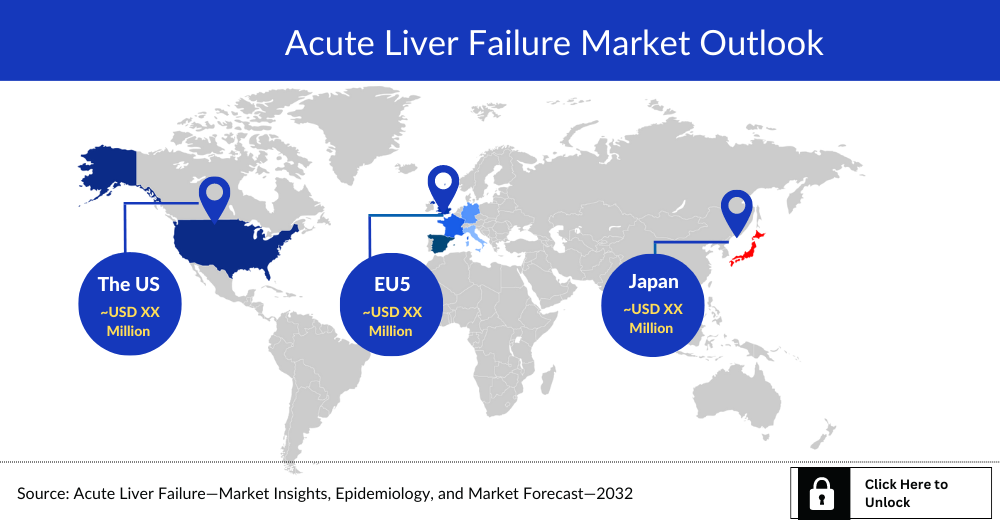
DelveInsight’s “Acute Liver Failure – Market Insights, Epidemiology, and Market Forecast – 2036” report delivers an in-depth understanding of the Acute Liver Failure, historical and forecasted epidemiology as well as the Acute Liver Failure market trends in the United States, EU4 (Germany, France, Italy, and Spain) and the United Kingdom, and Japan.
The Acute Liver Failure market report provides current treatment practices, emerging drugs, the Acute Liver Failure market share of the individual therapies, and current and forecasted Acute Liver Failure market size from 2020 to 2036, segmented by the seven major markets. The report also covers current Acute Liver Failure treatment practices/algorithms and unmet medical needs to curate the best of the opportunities and assess the underlying potential of the market.
Geography Covered
- The United States
- EU4 (Germany, France, Italy, and Spain) and the United Kingdom
- Japan
Study period: 2022–2036
Key Factors Shaping the ALF Market
- Rapid Disease Progression and High Mortality ALF presents with rapid deterioration and high mortality, driven by complications like coagulopathy and multiorgan failure. The speed of progression leaves a narrow window for clinical intervention, making early detection and prompt treatment initiation critically important for improving patient survival.
- Limited Targeted Therapies and Reliance on Supportive Care Despite improvements in supportive care, treatment for ALF remains largely symptomatic, with very few targeted therapies available. There are currently no approved pharmacological treatments specifically for ALF, which limits the options available to clinicians and highlights the urgent need for disease-modifying interventions.
- Transplantation as the Primary Life-Saving Option — With Access Constraints Liver transplantation remains the mainstay intervention for irreversible ALF cases. However, its widespread application is significantly constrained by organ shortages, delayed patient referrals to transplant centers, and stringent eligibility criteria, leaving a substantial proportion of patients without access to this life-saving procedure.
- Diagnostic Challenges and Lack of Predictive Tools Diagnostic challenges and the absence of reliable predictive tools hinder early intervention in ALF. The condition can initially present with non-specific symptoms, and without accurate biomarkers or validated diagnostic algorithms to differentiate ALF from other liver disorders, timely diagnosis remains difficult across clinical settings.
- Emerging Therapies and Liver Support Systems Still in Development The ALF pipeline remains sparse, with emerging therapies and artificial liver support systems still in early stages of development. Only a few candidates — notably SBL01 (SeaBeLife) and bbHEP01 (bit.bio) — are being explored, both at initial clinical phases. This reinforces the significant unmet need and opportunity for innovation in this space.
- Rising Incidence of Drug-Induced Liver Injury (DILI) The market is anticipated to grow during the forecast period (2026–2036), driven by the rising incidence of drug-induced liver injury, particularly from acetaminophen overdose. Growing drug use, substance abuse patterns, and increasing use of dietary supplements and over-the-counter medications are reinforcing DILI's dominant role as a cause of ALF.
- Need for Stratified Care Pathways and Collaborative Innovation Stratified care pathways based on etiology and prognosis could enhance treatment precision. Collaborative efforts between research centers and transplant networks are essential to drive innovation and improve patient outcomes. Accelerating clinical development of novel therapies and expanding access to artificial liver support may help bridge patients to recovery or transplant.
Acute Liver Failure Market: Understanding and Treatment Algorithm
DelveInsight’s Acute Liver Failure market report gives a thorough understanding of Acute Liver Failure by including details such as disease definition, symptoms, causes, pathophysiology, diagnosis, and treatment.
Acute Liver Failure is the development of sudden, severe hepatic dysfunction from an acute insult to the liver, associated with the onset of hepatic encephalopathy and coagulation abnormalities. American Association for the Study of Liver Diseases (AASLD) defines it as the evidence of coagulation abnormality, usually an international normalized ratio above 1.5, and any degree of mental alteration (encephalopathy) in a patient without preexisting liver disease and with an illness of fewer than 26 weeks’ duration.
The condition is categorized into three categories based on the interval between the development of jaundice and the onset of encephalopathy. The first is a hyperacute liver failure in which the onset of encephalopathy is within seven days after the development of jaundice. Second, acute liver failure in which the onset of encephalopathy is within eight to 28 days after the development of jaundice, and the third, sub-acute liver failure in which the onset of encephalopathy is in more than 5 weeks but less than 12 weeks after the development of jaundice.
A diverse array of insults can cause Acute Liver Failure which includes drugs and toxins like Acetaminophen, and Amanita phalloides; viral infections like Hepatitis A, B, and E; vascular problems like shock, heat stroke, tumors infiltrating the liver; metabolic etiologies like Wilson’s disease, acute fatty liver of pregnancy, autoimmune hepatitis and others. Also, in many cases, the cause of the acute liver failure remains unknown.
The illness often begins with nonspecific symptoms, including malaise, fatigue, nausea, and abdominal discomfort. Jaundice (yellowing of the skin) and scleral icterus (yellowing of the eyes) are often present, but may not be initially noted by patients or their families until relatively late in the course of the illness. Encephalopathy, the cognitive dysfunction that is a sine qua non of Acute Liver Failure, may also initially be quite subtle. Minor personality changes, particularly irritability, inattentiveness, mild memory lapses, and insomnia may be the first signs. However, the severity of encephalopathy may dramatically and suddenly worsen, culminating in a full-blown hepatic coma in a relatively short time.
Acute Liver Failure Diagnosis
Diagnosis of Acute Liver Failure involves obtaining detailed and accurate historical information, performing a physical exam on the patient-focused primarily on determining the stage of encephalopathy, excluding stigmata of chronic liver disease, and looking for hints regarding the etiology of Acute Liver Failure (e.g., Kaiser-Fleisher rings in Wilson disease), undergoing extensive blood and urine testing both to grade the severity of the liver failure and to determine the etiology. Also, an abdominal ultrasound is performed to assess the size, configuration, and texture of the liver, to verify that its vascular supply is intact, and to rule out masses or other problems.
Acute Liver Failure Treatment
There is no proven therapy for Acute Liver Failure and hence understanding the progression of Acute Liver Failure helps in disease management. The treatment of Acute Liver Failure is supportive and symptomatic management to identify and treat the underlying etiology, like Acetaminophen-induced hepatotoxicity, drug-induced hepatotoxicity, mushroom poisoning, and viral hepatitis, The treatment involves management of neurological dysfunction i.e. hepatic encephalopathy (HE), prevention and treatment of cerebral edema and intracranial hypertension, management of coagulopathy, renal dysfunction, correction of metabolic abnormalities and providing nutritional support.
For drug-induced hepatotoxicity, intravenous N-acetylcysteine (NAC) is used, whereas acute hepatitis B-induced Acute Liver Failure patients benefit from antiviral agents, while osmotic agents such as mannitol are the first-line therapy of intracranial hypertension in patients with Acute Liver Failure. Liver transplantation has improved survival in Acute Liver Failure.
Acute Liver Failure Epidemiology
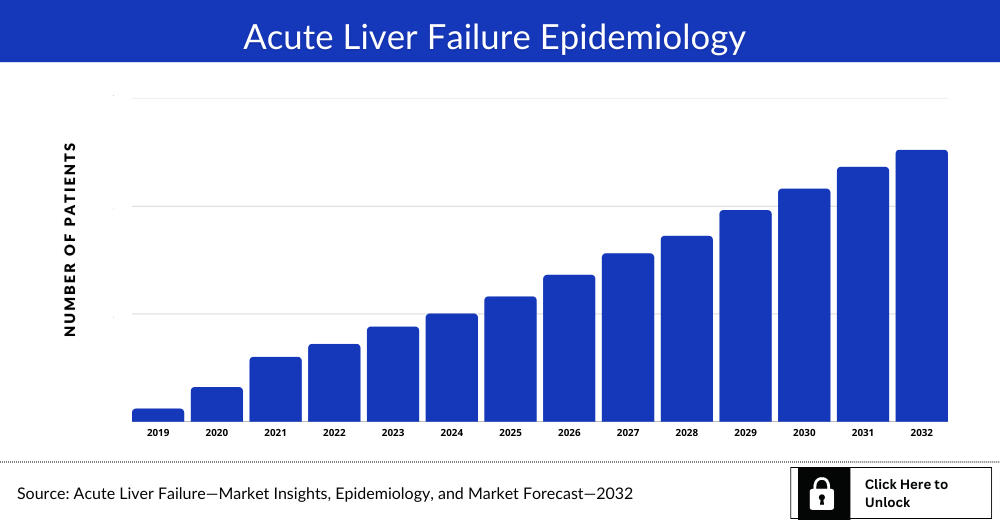
The Acute Liver Failure epidemiology section provides insights into the historical and current Acute Liver Failure patient pool and forecasted trends for the seven individual major countries. It helps recognize the causes of current and forecasted trends by exploring numerous studies and views of key opinion leaders. This part of the Acute Liver Failure report also provides the prevalent patient pool, its trends, and assumptions undertaken.
Key findings
- ALF is a rare yet life-threatening condition, with approximately 3,000 cases reported annually in North America, accounting for about 4–5% of all liver transplants.
- It was found that ALF affects more women than men in the US, with females accounting for 54% of cases compared to 46% in males.
- Drug-induced liver injury (DILI) was found to be responsible for nearly 50% of ALF cases in the US, with a wide range of agents—including over-the-counter medications, dietary supplements, weight loss products, and prescription drugs—identified as potential contributors.
- In the US and Europe, hepatitis B virus accounts for approximately 8% of ALF cases, a smaller proportion compared to paracetamol toxicity, DILI, or autoimmune hepatitis, yet it remains a significant and easily identifiable cause.
Learn more about the evolving epidemiology trends and key developments: Acute Liver Failure Epidemiology Forecast
Acute Liver Failure Drug Chapters
The drug chapter segment of the Acute Liver Failure report encloses a detailed analysis of Acute Liver Failure marketed drugs and late-stage (Phase III and Phase II) Acute Liver Failure pipeline drugs. It also helps understand the Acute Liver Failure clinical trial details, expressive pharmacological action, agreements and collaborations, approval and patent details, advantages and disadvantages of each included drug, and the latest news and press releases.
Emerging Acute Liver Failure Drugs
The report details the emerging Acute Liver Failure therapies under the late and mid-stage of development for Acute Liver Failure treatment.
SBL01: SeaBeLife
SBL01 is a first-in-class small molecule that targets and inhibits both necroptosis and ferroptosis, two regulated cell death pathways critically involved in the sudden cell degeneration seen in ALF. By specifically blocking the activation cascade of these pathways, SeaBeLife’s molecule protects liver cells and supports liver regeneration.
bbHEP01: bit.bio
bit.bio’s lead therapy candidate, bbHEP01, is being developed to treat ALF, a serious and often fatal condition. It uses encapsulated allogeneic hepatocyte-like cells created with bit.bio’s advanced cell programming technology. The therapy provides temporary liver function support to help the patient’s own liver recover or to bridge the time until a transplant. Supported by strong preclinical and clinical research, bbHEP01 is expected to start clinical trials in 2025, with early results anticipated in 2026.
Acute Liver Failure Market Outlook
The Acute Liver Failure market outlook of the report helps to build a detailed comprehension of the historical, current, and forecasted Acute Liver Failure market trends by analyzing the impact of current therapies on the market, unmet needs, and demand for better technology.
This segment gives a thorough detail of the Acute Liver Failure market trend of each marketed drug and late-stage pipeline therapy by evaluating their impact based on the annual cost of therapy, inclusion and exclusion criteria, mechanism of action, compliance rate, growing need for the market, increasing patient pool, covered patient segment, expected launch year, competition with other therapies, brand value, their impact on the market and view of the key opinion leaders. The calculated market data are presented with relevant tables and graphs to give a clear view of the market at first sight.
According to DelveInsight, the Acute Liver Failure market in the 7MM is expected to witness a major change in the study period 2022–2036.
Key findings
This section includes a glimpse of the Acute Liver Failure market in the 7MM.
The United States: Acute Liver Failure Market Outlook
- This section provides the total Acute Liver Failure market size and market size by therapies in the United States.
EU4 and the United Kingdom: Acute Liver Failure Market Outlook
- The total Acute Liver Failure market size and market size by therapies in Germany, France, Italy, Spain, and the United Kingdom are provided in this section.
Japan: Acute Liver Failure Market Outlook
- The total Acute Liver Failure market size and market size by therapies in Japan are also mentioned.
Acute Liver Failure (ALF) Drug Uptake
This section focuses on the rate of uptake of the potential drugs recently launched in the Acute Liver Failure market or expected to get launched in the market during the study period 2022–2036. The analysis covers the Acute Liver Failure market uptake by drugs, patient uptake by therapies, and sales of each drug.
This will help in understanding the Acute Liver Failure drugs with the most rapid uptake and the reasons behind the maximal use of new drugs and allows the comparison of the drugs based on market share and size, which again will be useful in investigating factors important in the market uptake and in making financial and regulatory decisions.
Acute Liver Failure Pipeline Development Activities
The report provides insights into different therapeutic candidates in Phase II, and Phase III stages. It also analyses Acute Liver Failure’s key players involved in developing targeted therapeutics.
Acute Liver Failure Clinical Trial Development Activities
The report covers detailed information on collaborations, acquisitions, and mergers, licensing patent details, and other information on Acute Liver Failure emerging therapies.
Learn more about the emerging therapies and key companies active in the therapeutics segment: Acute Liver Failure Pipeline Insight
Acute Liver Failure Reimbursement Scenario
Approaching reimbursement proactively can have a positive impact both during the late stages of product development and well after product launch. In a report, we consider reimbursement to identify economically attractive indications and market opportunities. When working with finite resources, the ability to select the markets with the fewest reimbursement barriers can be a critical business and price strategy.
KOL Views
To keep up with current epidemiology and market trends, we take KOLs and SMEs' opinions working on the Acute Liver Failure domain through primary research to fill the data gaps and validate our secondary research. Their opinion helps to understand and validate current and emerging therapies and treatment patterns along with Acute Liver Failure market trends. This will support the clients in potential upcoming novel treatments by identifying the overall scenario of the market and the unmet needs.
Competitive Intelligence Analysis
We perform competitive and market intelligence analysis of the Acute Liver Failure market by using various competitive intelligence tools that include – SWOT analysis, PESTLE analysis, Porter's five forces, BCG Matrix, Market entry strategies, etc. The inclusion of the analysis entirely depends upon the data availability.
Scope of the Acute Liver Failure Market Report
- Descriptive overview of Acute Liver Failure, disease overview, patient journeys, treatment algorithms, diagnosis, and currently available therapies
- Comprehensive insight into the Acute Liver Failure epidemiology and forecasts in the 7MM
- An all-inclusive account of both the current and emerging therapies for Acute Liver Failure, along with the assessment of new therapies, expected to have an impact on the current treatment landscape
- Exhaustive analysis of the Acute Liver Failure market; historical and forecasted covering drug outreach in the 7MM
- Detailed Patient Based Market Forecasting determines the trends shaping and driving the global Acute Liver Failure market
Acute Liver Failure Market Report Highlights
- In the coming years, the Acute Liver Failure market is set to change due to the rising awareness of the disease and incremental healthcare spending across the world; which would expand the size of the market to enable the drug manufacturers to penetrate more into the market
- The companies and academics are working to assess challenges and seek opportunities that could influence Acute Liver Failure R&D. The therapies under development are focused on novel approaches to treat/improve the disease condition
- Major players are involved in developing Acute Liver Failure therapies. The launch of emerging therapies will significantly impact the Acute Liver Failure market
- A better understanding of Acute Liver Failure pathogenesis will also contribute to the development of novel therapeutics for Acute Liver Failure
- Our in-depth analysis of the Acute Liver Failure pipeline assets across different stages of development (Phase III and Phase II), emerging trends, and comparative analysis of pipeline products with detailed Acute Liver Failure clinical trial profiles, key cross-competition, launch date along with product development activities will support the clients in the decision-making process regarding their therapeutic portfolio by identifying the overall scenario of the research and development activities
Acute Liver Failure Report Insights
- Patient Based Market Forecasting
- Therapeutic approaches
- Acute Liver Failure pipeline analysis
- Acute Liver Failure market size and trends
- Acute Liver Failure market opportunities
- Impact of upcoming therapies
Acute Liver Failure Report Key Strengths
- 11 years forecast
- The 7MM Coverage
- Acute Liver Failure epidemiology segmentation
- Key cross competition
- KOL views
- Acute Liver Failure drugs uptake
Acute Liver Failure Report Assessment
- Current treatment practices
- Unmet needs
- Acute Liver Failure pipeline product profiles
- Acute Liver Failure market attractiveness
Key Questions
Acute Liver Failure market insights:
- What would be the Acute Liver Failure market growth till 2036, and what will be the resultant market size in 2036?
- What was the Acute Liver Failure drug class share (in percentage) distribution in 2022, and how would it look in 2036?
- What would be the Acute Liver Failure total market size and market size by therapies across the 7MM during the forecast period (2026–2036)?
- What are the key findings of the market across the 7MM, and which country will have the largest Acute Liver Failure market size during the forecast period (2026–2036)?
- How would the unmet needs affect the Acute Liver Failure market dynamics and subsequent analysis of the associated trends?
Acute Liver Failure Epidemiology Insights:
- What are the disease risk, burden, and regional/ethnic differences of Acute Liver Failure?
- What is the historical and forecasted Acute Liver Failure patient pool in the 7MM, and where can one observe the highest patient population and growth opportunities?
- What are the key factors driving the epidemiology trends for the seven major markets covering the United States, EU4 (Germany, France, Italy, and Spain) and the United Kingdom, and Japan?
Current Treatment Scenario, Marketed Drugs, and Emerging Therapies
- What are the current treatment guidelines and treatment options, in addition to approved therapies for Acute Liver Failure in the United States, Europe, and Japan?
- What are the key collaborations (Industry–Industry, Industry-Academia), mergers and acquisitions, and licensing activities related to Acute Liver Failure therapies?
- What are the recent novel therapies, targets, mechanisms of action, and technologies being developed to overcome the limitation of existing therapies?
- What are the clinical studies going on for Acute Liver Failure and its status, along with the challenges faced?
Reasons to Buy
- The patient-based market forecast analysis will help in developing business strategies by understanding trends shaping and driving the Acute Liver Failure market
- Organize sales and marketing efforts by identifying the best opportunities for Acute Liver Failure in the United States, EU4 (Germany, France, Italy, and Spain) and the United Kingdom, and Japan
- Identification of strong upcoming players in the market that will help devise strategies that will help in getting ahead of competitors