
Acute Lymphocytic Leukemia Market Summary
Acute Lymphocytic Leukemia (ALL) Insights and Trends
- According to DelveInsight’s analysis, Acute Lymphocytic Leukemia (ALL) market size was found to be ~USD 1,900 million in the leading markets (the United States, the EU4 (Germany, France, Italy, and Spain), the United Kingdom, and Japan) in 2025
- The treatment landscape of Acute Lymphocytic Leukemia has evolved considerably with the introduction of targeted therapies and immunotherapies; however, multi-agent chemotherapy continues to remain the backbone of frontline treatment across most patient populations.
- Current treatment approaches include chemotherapy, tyrosine kinase inhibitors, monoclonal antibodies, bispecific antibodies, CAR-T cell therapies, and hematopoietic stem cell transplantation for eligible high-risk patients.
- Targeted immunotherapies such as Blinatumomab (BLINCYTO), Inotuzumab ozogamicin (BESPONSA), Tisagenlecleucel (KYMRIAH), and Brexucabtagene autoleucel (TECARTUS) have improved remission rates and survival outcomes in relapsed/refractory Acute Lymphocytic Leukemia, particularly in B-cell Acute Lymphocytic Leukemia populations.
- Tisagenlecleucel (KYMRIAH) and Brexucabtagene autoleucel (TECARTUS) have established CAR-T as a transformative option in relapsed/refractory B-cell Acute Lymphocytic Leukemia, while both therapies remain clinically important, KYMRIAH has faced recent commercial pressure and declining uptake due to increasing competition from newer CAR-T and bispecific therapies.
- The introduction of CAR-T cell therapies has transformed the treatment paradigm for relapsed/refractory B-cell Acute Lymphocytic Leukemia, although high treatment costs, manufacturing complexity, and limited treatment center availability continue to restrict broader market penetration.
- Pharmaceutical companies are actively investing in next-generation CAR-T platforms, off-the-shelf allogeneic cell therapies, and novel bispecific antibodies to address relapse, durability, and safety limitations associated with currently available therapies.
- The Acute Lymphocytic Leukemia pipeline remains highly competitive, with companies such as Amgen, Novartis, Bristol Myers Squibb, AstraZeneca, Cellectis, Orca Bio, and Autolus Therapeutics developing next-generation CAR-T therapies, bispecific antibodies, and targeted therapies to improve treatment durability and safety.
- Despite recent advances, Acute Lymphocytic Leukemia continues to represent a significant unmet medical need due to disease relapse, treatment resistance, long-term chemotherapy-associated toxicities, and the need for safer and more durable therapeutic options.
Acute Lymphocytic Leukemia (ALL) Market Size and Forecast in the 7MM
- 2025 Acute Lymphocytic Leukemia Market Size: ~1900 million
- 2036 Projected Acute Lymphocytic Leukemia Market Size: ~USD XX million
- Acute Lymphocytic Leukemia Growth Rate (2026–2036): XX% CAGR
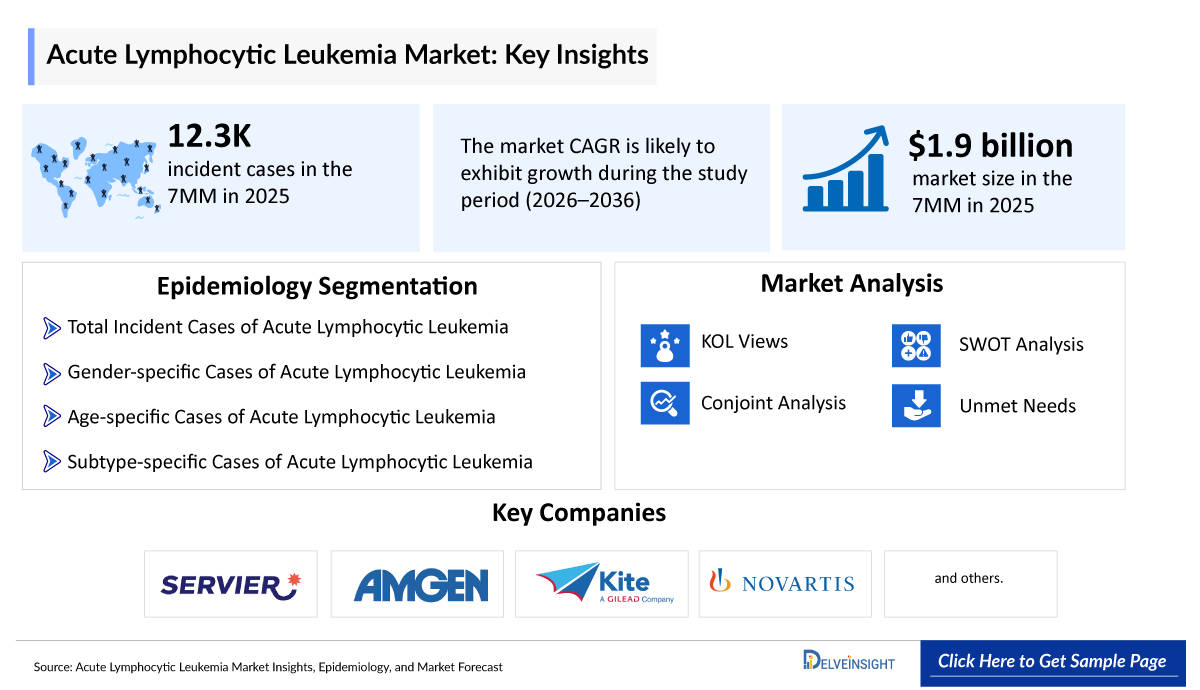
DelveInsight's ‘Acute Lymphocytic Leukemia (ALL) – Market Insights, Epidemiology and Market Forecast – 2036’ report delivers an in-depth understanding of the Acute Lymphocytic Leukemia, historical and forecasted epidemiology, as well as the Acute Lymphocytic Leukemia market trends in the United States, EU4 (Germany, Spain, Italy, and France), and the United Kingdom, and Japan.
The Acute Lymphocytic Leukemia market report delivers a comprehensive analysis of the current treatment landscape, including standards of care, clinical practices, and evolving therapeutic algorithms. It evaluates Acute Lymphocytic Leukemia patient burden trends, revenue & market share dynamics, peak patient share & therapy uptake analysis, and provides an in-depth market size assessment, and growth rate projections (Historical & Forecast 2022–2036) across global regions. The report highlights key unmet medical needs in Acute Lymphocytic Leukemia and maps the competitive and clinical landscape to uncover high‑value opportunities, providing a clear outlook on future market growth potential.
|
Study Period |
2022–2036 |
|
Historical Year |
2022–2025 |
|
Forecast Period |
2026–2036 |
|
Base Year |
2026 |
|
Geographies Covered |
|
|
Acute Lymphocytic Leukemia (ALL) Market CAGR (Forecast period) |
XX% (2026–2036) |
|
Acute Lymphocytic Leukemia (ALL) Epidemiology Segmentation Analysis |
Patient Burden Assessment
|
|
Acute Lymphocytic Leukemia (ALL) Companies |
|
|
Acute Lymphocytic Leukemia (ALL) Therapies |
|
|
Acute Lymphocytic Leukemia (ALL) Market |
Segmented by
|
|
Analysis |
|
Key Factors Driving the Acute Lymphocytic Leukemia (ALL) Market
- Increasing Disease Burden
Improved diagnosis rates, better access to molecular testing, and increasing survival have expanded the overall treatable population of Acute Lymphocytic Leukemia (ALL), particularly in relapsed/refractory and adult patient populations where unmet need remains high.
- Advancements in Targeted and Immunotherapies
The introduction of targeted therapies, bispecific antibodies, antibody-drug conjugates, and CAR-T cell therapies has significantly improved remission and survival outcomes in Acute Lymphocytic Leukemia (ALL), driving rapid evolution of the treatment landscape.
- Rising Adoption of CAR-T Cell Therapy
CD19-directed CAR-T therapies have demonstrated durable responses in relapsed/refractory B-cell Acute Lymphocytic Leukemia (ALL), particularly in pediatric and young adult patients, supporting increased physician adoption and market growth.
Acute Lymphocytic Leukemia Understanding and Treatment Algorithm
Acute Lymphocytic Leukemia Overview and Diagnosis
Acute Lymphocytic Leukemia is a rapidly progressing hematologic malignancy characterized by the uncontrolled proliferation of immature lymphoid cells in the bone marrow, blood, and other organs. Acute Lymphocytic Leukemia originates from abnormal B-cell or T-cell lymphoblasts, with B-cell Acute Lymphocytic Leukemia accounting for the majority of cases. It is the most common pediatric leukemia but also occurs in adolescents and adults, where outcomes are generally poorer. The disease is associated with multiple genetic and molecular abnormalities, including the Philadelphia chromosome (BCR-ABL1), which plays an important role in prognosis and risk stratification. Common symptoms include fatigue, fever, recurrent infections, bruising, bleeding, lymphadenopathy, hepatosplenomegaly, and bone pain.
Diagnosis of Acute Lymphocytic Leukemia involves clinical evaluation along with hematologic, immunophenotypic, cytogenetic, and molecular assessments. Initial investigations include complete blood count (CBC) and peripheral blood smear analysis, which may reveal anemia, thrombocytopenia, leukocytosis, and circulating lymphoblasts. Definitive diagnosis is confirmed through bone marrow aspiration and biopsy demonstrating ≥20% lymphoblasts. Flow cytometry is used to classify B-cell and T-cell Acute Lymphocytic Leukemia subtypes, while cytogenetic and molecular testing help identify abnormalities such as BCR-ABL1 and other high-risk mutations. Minimal residual disease (MRD) monitoring is increasingly used for prognostic assessment and relapse risk evaluation.
Further details are provided in the report.
Acute Lymphocytic Leukemia (ALL) Treatment
The treatment landscape of Acute Lymphocytic Leukemia has evolved significantly, with therapy selection guided by patient age, immunophenotype, cytogenetic/molecular abnormalities, and Philadelphia chromosome (Ph) status. Chemotherapy remains the treatment backbone and is administered through induction, consolidation, and maintenance phases using agents such as vincristine, daunorubicin, cytarabine, and asparaginase-based regimens. In high-risk or relapsed disease, hematopoietic stem cell transplantation (HSCT) is often considered to improve long-term outcomes.
The incorporation of targeted therapies and immunotherapies has transformed Acute Lymphocytic Leukemia management. Tyrosine kinase inhibitors (TKIs) have improved outcomes in Ph+ Acute Lymphocytic Leukemia (ALL), while monoclonal antibodies, BiTEs, and CD19-directed CAR-T cell therapies have shown strong efficacy in relapsed/refractory B-cell Acute Lymphocytic Leukemia However, disease relapse, particularly after CAR-T therapy, remains a major challenge, highlighting the ongoing need for more durable and safer therapies.
Further details related to country-based variations are provided in the report.
Acute Lymphocytic Leukemia (ALL) Unmet Needs
The section “Unmet Needs of Acute Lymphocytic Leukemia (AL)” outlines the critical gaps between the current state of patient care, diagnosis, and the ideal & effective management of the disease. It highlights the obstacles experienced by patients, clinicians, and researchers and identifies potential solutions for future progress.
- High relapse and poor outcomes in relapsed/refractory Acute Lymphocytic Leukemia (ALL)
- Limited durability of response after CAR-T cell therapy
- Significant treatment-related toxicity
- Poor prognosis in adult and high-risk patient populations
- Need for more effective and durable targeted therapies, and others…..
Note: Comprehensive unmet needs insights in Acute Lymphocytic Leukemia (ALL) and their strategic implications are provided in the full report.
Acute Lymphocytic Leukemia (ALL) Epidemiology
Key Findings from Acute Lymphocytic Leukemia Epidemiological Analysis and Forecast
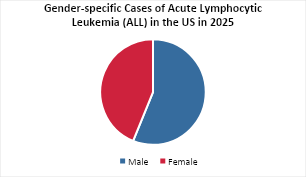
- According to DelveInsight estimates, there were approximately ~12,300 incident cases of Acute Lymphocytic Leukemia (ALL) in 2025, with nearly 58% of total cases originating from the United States.
- In the United States, individuals younger than 20 years of age accounted for the majority of Acute Lymphocytic Leukemia (ALL) cases, representing approximately 55% of the affected population in 2025.
- Amongst EU4 and the UK, Germany had highest incidence cases of Acute Lymphocytic Leukemia (ALL) i.e., ~1100. On the other hand, Spain had the lowest incident cases of Acute Lymphocytic Leukemia (ALL) in 2025.
- Among the type-specific cases of Acute Lymphocytic Leukemia (ALL) among the 7MM, the incident cases of B- Acute Lymphocytic Leukemia (ALL) accounted for nearly ~9%, while those of T- Acute Lymphocytic Leukemia (ALL) accounted for nearly ~11% in the Germany in 2025.
- SEER data reported a 5-year relative survival rate of approximately 72–73% for Acute Lymphocytic Leukemia, although survival remains significantly lower in adult and elderly patient populations compared with pediatric patients.
Acute Lymphocytic Leukemia (ALL) Drug Analysis & Competitive Landscape
The Acute Lymphocytic Leukemia (ALL) drug chapter provides a detailed, market-focused review of approved therapies and the emerging pipeline across Phase I–III clinical trials. It covers the mechanism of action, clinical trial data, regulatory approvals, patents, collaborations, and strategic partnerships for each therapy, along with their advantages, limitations, and recent developments. This section offers critical insights into the Acute Lymphocytic Leukemia (ALL) treatment landscape, supporting market assessment, competitive analysis, and growth forecasting for the Acute Lymphocytic Leukemia (ALL) therapeutics market.
Approved Therapies for Acute Lymphocytic Leukemia (ALL)
Blinatumomab (BLINCYTO): Amgen
Blinatumomab is the first globally approved BiTE immuno-oncology therapy that targets CD19 surface antigens on B cells. In June 2024, US FDA approved blinatumomab for the treatment of adult and pediatric patients with CD19-positive Philadelphia chromosome-negative B-cell precursor acute lymphoblastic leukemia (B-ALL). It received Breakthrough Therapy and Priority Review designations by the US FDA. Blinatumomab has a direct competitor inotuzumab ozogamicin (BESPONSA) by Pfizer in the US and UK. Amgen in its 2025 annual report mentioned that Blinatumomab grew to USD 1.6 billion in sales.
Tisagenlecleucel (KYMRIAH): Novartis
Tisagenlecleucel was developed in collaboration with the University of Pennsylvania. It became the first chimeric antigen receptor T cell (CAR-T) therapy to receive regulatory approval in August 2017 for the treatment of patients up to 25 years of age with B-cell precursor acute lymphoblastic leukemia (B-ALL) that is refractory or in second or later relapse. The FDA approval of tisagenlecleucel was based on the results of the Phase II ELIANA trial. Novartis in its 2025 annual report stated that KYMRIAH’s net sales were USD 381 million. The sales of KYMRIAH declined across most markets due to continued competition.
Note: Detailed marketed therapies assessment of therapies will be provided in the final report.
|
Table 1: Acute Lymphocytic Leukemia (ALL) Marketed/Approved Therapies | ||||||
|
Drug/Therapy |
Company |
Indication |
Molecule Type |
MoA |
RoA |
Marketed Region |
|
Blinatumomab (BLINCYTO) |
Amgen |
Acute Lymphocytic Leukemia (ALL) |
Bispecific monoclonal antibody |
CD19-directed CD3 bispecific T-cell engager immunotherapy |
IV infusion |
US: 2014; EU: 2015; JP: 2018 |
|
Tisagenlecleucel (KYMRIAH) |
Novartis |
Acute Lymphocytic Leukemia (ALL) |
CAR-T cell therapy |
CD19-directed CAR-T cell therapy |
IV infusion |
US: 2017; EU: 2018; JP: 2019 |
|
Brexucabtagene autoleucel (TECARTUS) |
Gilead Sciences (Kite) |
Relapsed/refractory B-cell ALL |
CAR-T cell therapy |
CD19-directed CAR-T cell therapy |
IV infusion |
US: 2021; EU: 2022 |
|
Calaspargase pegol (ASPARLAS) |
Servier |
Acute Lymphocytic Leukemia (ALL) |
Pegylated enzyme therapy |
Asparagine depletion therapy |
IV infusion |
US: 2018 |
Epilepsy Pipeline Analysis
Orca-T: Orca Biosystems
Orca-T is currently studied in multiple trials in Phase Ib/III for Acute Lymphoblastic Leukemia (ALL). It is an investigational allogeneic T-cell immunotherapy. Orca-T was granted the BLA Priority Review with a Prescription Drug User Fee Act (PDUFA) target action date of April 6, 2026 by the US FDA.
In April 2026, Orca Bio announced that the US FDA has extended the review timeline for the Biologics License Application (BLA) of Orca-T for patients with hematologic malignancies. The revised Prescription Drug User Fee Act (PDUFA) target action date has been set for July 6, 2026.
UCART22 (Lasme-cel): Cellectis
UCART22 is an allogeneic CAR T-cell product candidate targeting CD22 and evaluated in BALLI-01, a Phase I/II open-label dose-escalation and dose-expansion study, designed to evaluate the safety, expansion, persistence, and clinical activity of UCART22 in patients with r/r ALL. In June 2024, Cellectis received Orphan Drug Designation (ODD) from the European Commission for UCART22 for the treatment of Acute Lymphocytic Leukemia.
|
Table 2: Competitive Landscape of Pipeline Drugs | ||||||
|
Drug Name |
Company |
Highest Phase |
Indication |
RoA |
MoA |
Anticipated Launch in the US |
|
Orca-T |
Orca Biosystems |
III |
Acute Lymphocytic Leukemia (ALL) |
IV infusion |
Allogeneic T-cell immunotherapy |
Information is available in the full report |
|
Olverembatinib (HQP1351) |
Ascentage |
III |
Acute Lymphocytic Leukemia (ALL) |
Oral |
BCR-ABL inhibitor |
Information is available in the full report |
|
UCART22 (Lasme-cel) |
Cellectis |
II |
Acute Lymphocytic Leukemia (ALL) |
IV infusion |
Allogeneic CD22-specific CAR-T |
Information is available in the full report |
|
AZD0486 (Surovatamig) |
AstraZeneca |
I/II |
Acute Lymphocytic Leukemia (ALL) |
IV infusion |
CD19xCD3 bispecific T-cell engager (TCE) |
Information is available in the full report |
|
Obecabtagene autoleucel |
Autolus Therapeutics |
II |
B-Acute Lymphocytic Leukemia (ALL) |
IV infusion |
CD19-directed CAR-T cell therapy |
Information is available in the full report |
|
Soficabtagene geleucel (WU-CART-007) |
Wugen |
I/II |
T- Acute Lymphocytic Leukemia (ALL) |
IV infusion |
Anti- CD7 CAR-T |
Information is available in the full report |
|
Note: Launch insights are provisional and may change with future report updates or the occurrence of major key catalysts. | ||||||
Note: Detailed emerging therapies assessment will be provided in the final report.
Acute Lymphocytic Leukemia (ALL) Key Players, Market Leaders, and Emerging Companies
- Amgen
- Novartis
- Kite
- Servier
- Orca Biosystems
- Cellectis
- AstraZeneca, and others
Epilepsy Drug Updates
- Cellectis announced that Pivotal Phase II first interim analysis for UCART22 is anticipated in Q4 2026.
- On May 12, 2026, Cellectis announced that clinical data from the Phase I BALLI-01 study evaluating lasme-cel in relapsed/refractory B-cell Acute Lymphocytic Leukemia (ALL), will be presented at the EHA 2026 Annual Congress.
- On April 2026, AstraZeneca highlighted in its corporate presentation that clinical data for AZD0486 is anticipated in 2027 from the Phase I/IIb SYRUS trial evaluating the asset in relapsed/refractory B-cell acute lymphoblastic leukemia (R/R B-ALL).
Drug Class Insights
Acute Lymphocytic Leukemia (ALL) Market Outlook
The Acute Lymphocytic Leukemia market is evolving rapidly with the transition from conventional multi-agent chemotherapy-based regimens toward more targeted and immunotherapy-driven treatment approaches. Although chemotherapy remains the backbone of frontline therapy, the incorporation of tyrosine kinase inhibitors (TKIs), monoclonal antibodies, bispecific T-cell engagers (BiTEs), and CAR-T cell therapies has significantly improved treatment outcomes, particularly in Philadelphia chromosome-positive (Ph+) and relapsed/refractory B-cell Acute Lymphocytic Leukemia. Despite major therapeutic advances, disease relapse, treatment resistance, and therapy-associated toxicities continue to represent significant unmet clinical challenges.
The current treatment landscape is increasingly focused on achieving deeper and more durable responses through minimal residual disease (MRD)-guided treatment strategies, next-generation immunotherapies, and precision medicine approaches. TKIs have transformed outcomes in Ph+ Acute Lymphocytic Leukemia, while agents targeting CD19, CD20, and CD22 have expanded therapeutic options in relapsed/refractory settings. In recent years, CD19-directed CAR-T cell therapies have demonstrated remarkable efficacy in heavily pretreated B-cell Acute Lymphocytic Leukemia patients; however, limited long-term durability, antigen escape, cytokine release syndrome, and high treatment costs remain important barriers to broader adoption.
The market is expected to witness continued growth driven by increasing adoption of targeted therapies, rising utilization of MRD testing, and expanding research into novel cellular and antibody-based therapies. In addition, ongoing clinical development of next-generation CAR-T therapies, dual-targeted immunotherapies, and safer chemotherapy-sparing regimens is expected to further reshape the Acute Lymphocytic Leukemia treatment landscape during the forecast period.
- The global Acute Lymphocytic Leukemia market is expected to expand steadily due to increasing adoption of targeted therapies and immunotherapies across frontline and relapsed/refractory settings.
- Relapsed/refractory Acute Lymphocytic Leukemia continues to represent a major unmet need owing to poor long-term outcomes and high relapse rates following available therapies.
- MRD-guided treatment approaches and precision medicine strategies are expected to gain increasing clinical importance in treatment optimization and relapse prevention.
- CAR-T cell therapies are expected to maintain a significant role in relapsed/refractory B-cell Acute Lymphocytic Leukemia, despite challenges related to durability, toxicity, and accessibility.
- Ongoing development of next-generation immunotherapies, antibody-drug conjugates, and chemotherapy-sparing regimens is expected to drive future market growth and therapeutic innovation.
Further details will be provided in the report….
Drug Class/Insights into Leading Emerging and Marketed Therapies in Acute Lymphocytic Leukemia (2022–2036 Forecast)
The Acute Lymphocytic Leukemia (ALL) treatment landscape comprises cytotoxic chemotherapies, small molecule targeted therapies, monoclonal antibodies, bispecific T-cell engagers, antibody-drug conjugates, and cellular therapies, all aimed at achieving remission, MRD negativity, and preventing relapse in a risk-adapted manner.
- Tyrosine kinase inhibitors (TKIs) therapies: TKIs remain a standard treatment for Ph+ Acute Lymphocytic Leukemia (ALL) by improving survival outcomes through BCR-ABL inhibition. Future growth is expected from pipeline therapies such as Olverembatinib (HQP1351) from Ascentage Pharma, which may address resistance-associated mutations in relapsed/refractory settings.
- CD20-directed Therapies: CD20-directed therapies continue to support treatment of CD20+ B-cell Acute Lymphocytic Leukemia by improving immune-mediated leukemic cell clearance. Rituximab (RITUXAN/MabThera) remains widely used, while future growth is expected through next-generation anti-CD20 antibodies and combination strategies.
- CAR-T Therapies: CAR-T therapies have transformed relapsed/refractory Acute Lymphocytic Leukemia treatment through durable responses. Marketed therapies such as Tisagenlecleucel (KYMRIAH) from Novartis and Brexucabtagene autoleucel (TECARTUS) from Kite Pharma remain key therapies in the treatment landscape, although KYMRIAH sales have recently declined amid growing competition in the CAR-T space. Meanwhile, pipeline assets including UCART22 (Lasme-cel), Obecabtagene autoleucel and Soficabtagene geleucel (WU-CART-007) are anticipated to improve accessibility, manufacturing efficiency and safety profiles of next-generation CAR-T therapies.
- Bispecific T-cell engagers (BiTEs): The BiTE segment is led by Blinatumomab (BLINCYTO) from Amgen, which has strong uptake due to survival benefits in Acute Lymphocytic Leukemia. Future expansion is expected from pipeline agents such as Surovatamig (AZD0486) from AstraZeneca, designed to improve efficacy and tolerability.
- Antibody-drug conjugates (ADCs): ADCs continue to demonstrate strong efficacy in relapsed/refractory Acute Lymphocytic Leukemia through targeted cytotoxic delivery. Inotuzumab ozogamicin (BESPONSA) from Pfizer remains a key marketed therapy, while next-generation ADC technologies are expected to improve future treatment outcomes and safety profiles.
Overall, Acute Lymphocytic Leukemia (ALL) management is anchored by chemotherapy, while TKIs, immunotherapies (, BiTEs, ADCs), and CAR-T therapies have transformed outcomes in high-risk and relapsed/refractory disease through precision and immune-based mechanisms.
Acute Lymphocytic Leukemia (ALL) Drug Uptake
This section focuses on the uptake rate of potential drugs expected to be launched in the market during the forecast period (2026–2036). The analysis covers the Acute Lymphocytic Leukemia (ALL) drug’s uptake, performance at peak, factors affecting performance during prime years of growth, patient uptake by therapy, and anticipated sales generated by each drug.
The treatment uptake landscape in Acute Lymphoblastic Leukemia (ALL) is increasingly shifting toward targeted immunotherapies and cellular therapies, although multi-agent chemotherapy continues to remain the standard backbone across frontline treatment settings. Market competition is expected to intensify as companies focus on improving remission durability, reducing relapse, and minimizing treatment-related toxicities.
Among targeted therapies, tyrosine kinase inhibitors (TKIs) including imatinib, dasatinib, and ponatinib are expected to continue strong uptake in Philadelphia chromosome-positive (Ph+) Acute Lymphocytic Leukemia (ALL), supported by robust survival and molecular remission data. Competition within this segment is expected to increase with the development of next-generation TKIs targeting resistant mutations such as T315I.
The immunotherapy segment is expected to remain one of the fastest-growing areas within the Acute Lymphocytic Leukemia (ALL) market. Blinatumomab has established a strong competitive position in MRD-positive and relapsed/refractory B-cell Acute Lymphocytic Leukemia (ALL) due to its demonstrated ability to achieve deep molecular responses and improve survival outcomes. Its increasing use in earlier treatment lines is expected to further expand market penetration.
Similarly, inotuzumab ozogamicin continues to demonstrate significant uptake in relapsed/refractory B-cell Acute Lymphocytic Leukemia (ALL) as an effective bridge-to-transplant therapy. However, competition between bispecific antibodies and ADCs is expected to increase as physicians increasingly evaluate treatment sequencing, safety profiles, and durability of response.
The CAR-T therapy market is expected to remain highly competitive but concentrated within specialized treatment centers. Tisagenlecleucel and Brexucabtagene autoleucel have transformed outcomes in relapsed/refractory B-cell Acute Lymphocytic Leukemia (ALL) with durable remission benefits in heavily pretreated patients. Nevertheless, broader adoption continues to be constrained by high treatment costs, manufacturing complexity, limited treatment center accessibility, cytokine release syndrome (CRS), and neurologic toxicities.
Future market competition is expected to be driven by the development of next-generation CAR-T therapies, allogeneic/off-the-shelf cell therapies, dual-targeting CAR-Ts, and novel bispecific antibodies aimed at improving scalability, reducing relapse, and enhancing safety. Companies including Amgen, Novartis, Bristol Myers Squibb, AstraZeneca, Autolus Therapeutics, Cellectis, and Ascentage Pharma are actively advancing pipeline assets to capture share within the evolving Acute Lymphocytic Leukemia (ALL) treatment landscape.
Detailed insights of emerging therapies' drug uptake is included in the report.
Market Access and Reimbursement of Acute Lymphocytic Leukemia (ALL)
Reimbursement is a crucial factor that affects the drug’s access to the market. Often, the decision to reimburse comes down to the price of the drug relative to the benefit it produces in treated patients. To reduce the healthcare burden of these high-cost therapies, many payment models are being considered by payers and other industry insiders.
NOTE: Further Details are provided in the final report….
Acute Lymphocytic Leukemia (ALL) Therapies Price Scenario & Trends
Pricing and analogue assessment of Acute Lymphocytic Leukemia (ALL) therapies highlights evolving price dynamics structures. This section summarizes the cost of approved treatments, the closest and most appropriate analogue selection for emerging therapies, and understanding of how pricing influences market access, adherence, and long-term uptake.
Further details are provided in the final report….
Industry Experts and Physician Views for Acute Lymphocytic Leukemia (ALL)
To keep up with Acute Lymphocytic Leukemia (ALL) market trends, we take Key Opinion Leaders (KOLs) and Subject Matter Experts (SMEs) opinions working in the domain through primary research to fill the data gaps and validate our secondary research. Industry experts were contacted for insights on the emerging Acute Lymphocytic Leukemia (ALL) therapies, evolving treatment landscape, patient adherence to conventional therapies, therapy switching trends, drug adoption and uptake, accessibility challenges, and epidemiology and real-world prescription patterns in Acute Lymphocytic Leukemia (ALL), including MD, PhD, Instructor, Postdoctoral Researcher, Professor, Researcher, and others.
DelveInsight’s analysts connected with 10+ KOLs to gather insights at the country level. Centers such as the Primary Children’s Hospital and Huntsman Cancer Institute, Medical Director, Northside Hospital and University of Utah, United States etc., were contacted. Their opinion helps understand and validate current and emerging Acute Lymphocytic Leukemia (ALL) therapies, highlight unmet medical needs, provide epidemiological context, and support strategic decisions for market access, therapy adoption, and pipeline prioritization in Acute Lymphocytic Leukemia (ALL).
|
Region |
Key Opinion Leaders (KOLs) and Subject Matter Experts (SMEs) |
|
Japan |
“While a significant number of Acute Lymphoblastic Leukemia (ALL) patients experience relapse, the demand for effective treatments in this population remains unmet. However, there has been rapid progress in the development of newer therapies.” |
|
Germany |
“Obe-cel is effective treatment for R/R adult B- Acute Lymphocytic Leukemia (ALL) , with better outcomes observed in patients with lower leukemic burden at lymphodepletion; longer follow-up is required.” |
Qualitative Analysis: SWOT and Conjoint Analysis
We perform qualitative and market Intelligence analysis using various approaches, such as SWOT analysis and conjoint analysis.
In the SWOT analysis of Acute Lymphocytic Leukemia (ALL), strengths, weaknesses, opportunities, and threats in terms of disease diagnosis, patient awareness, patient burden, competitive landscape, cost-effectiveness, and geographical accessibility of therapies are provided.
Conjoint analysis analyzes emerging therapies based on relevant attributes such as safety, efficacy, frequency of administration, route of administration, and order of entry. Scoring is given based on these parameters to analyze the effectiveness of therapy.
The team of analysts analyzes promising emerging therapies based on relevant attributes such as safety, efficacy, frequency of administration, route of administration, and order of entry. In efficacy, the trial’s primary and secondary outcome measures are evaluated, whereas the therapies’ safety is evaluated, wherein the acceptability, tolerability, and adverse events are majorly observed. In addition, the scoring is also based on the route of administration, order of entry, probability of success, and the addressable patient pool for each therapy. According to these parameters, the final weightage score and the ranking of the emerging therapies are decided.
Scope of the Report
- The report covers a segment of key events, an executive summary, a descriptive overview of Acute Lymphocytic Leukemia (ALL), explaining their causes, signs and symptoms, pathogenesis, and currently available treatments.
- Comprehensive insight has been provided into the epidemiology segments and forecasts, the future growth potential of the diagnosis rate, and disease progression along treatment guidelines.
- Additionally, an all-inclusive account of both the current and emerging treatments, along with the elaborate profiles of late-stage and prominent therapies, will have an impact on the current treatment landscape.
- A detailed review of the Acute Lymphocytic Leukemia (ALL) market, historical and forecasted market size, market share by therapies, detailed assumptions, and rationale behind our approach is included in the report, covering the 7MM drug outreach.
- The report provides an edge while developing business strategies by understanding trends through SWOT analysis and expert insights/KOL views, patient journey, and treatment preferences that help in shaping and driving the 7MM Acute Lymphocytic Leukemia (ALL) market.
Report Insights
- Acute Lymphocytic Leukemia (ALL) Patient Population Forecast
- Acute Lymphocytic Leukemia (ALL) Therapeutics Market Size
- Acute Lymphocytic Leukemia (ALL) Pipeline Analysis
- Acute Lymphocytic Leukemia (ALL) Market Size and Trends
- Acute Lymphocytic Leukemia (ALL) Market Opportunity (Current and forecasted)
Report Key Strengths
- Epidemiology‑based (Epi‑based) Bottom‑up Forecasting
- Artificial Intelligence (AI)-Enabled Market Research Report
- 11-Year Forecast
- Acute Lymphocytic Leukemia (ALL) Market Outlook (North America, Europe, Asia-Pacific)
- Patient Burden Trends (By Geography)
- Acute Lymphocytic Leukemia (ALL) Treatment Addressable Market (TAM)
- Acute Lymphocytic Leukemia (ALL) Competitive Landscape
- Acute Lymphocytic Leukemia (ALL) Major Companies Insights
- Acute Lymphocytic Leukemia (ALL) Price Trends and Analogue Assessment
- Acute Lymphocytic Leukemia (ALL) Therapies Drug Adoption/Uptake
- Acute Lymphocytic Leukemia (ALL) Therapies Peak Patient Share Analysis
Report Assessment
- Acute Lymphocytic Leukemia (ALL) Current Treatment Practices
- Acute Lymphocytic Leukemia (ALL) Unmet Needs
- Acute Lymphocytic Leukemia (ALL) Clinical Development Analysis
- Acute Lymphocytic Leukemia (ALL) Emerging Drugs Product Profiles
- Acute Lymphocytic Leukemia (ALL) Market Attractiveness
- Acute Lymphocytic Leukemia (ALL) Qualitative Analysis (SWOT and conjoint analysis)
FAQs
Market Insights
- What was the Acute Lymphocytic Leukemia (ALL) market size, the market size by therapies, the market share (%) distribution in 2025, and what would it look like by 2036? What are the contributing factors for this growth?
- What are the anticipated pricing variations among different geographies for the emerging therapies in the future?
- What can be the future treatment paradigm of Acute Lymphocytic Leukemia (ALL)?
- What are the disease risks, burdens, and unmet needs of Acute Lymphocytic Leukemia (ALL)? What will be the growth opportunities across the 7MM concerning the patient population with Acute Lymphocytic Leukemia (ALL)?
- Who is the major future competitor in the market, and how will the competitors affect their market share?
- What are the current options for the treatment of Acute Lymphocytic Leukemia (ALL)? What are the current guidelines for treating Acute Lymphocytic Leukemia (ALL) in the US, Europe, and Japan?
Reasons to Buy
- The report will help in developing business strategies by understanding the latest trends and changing treatment dynamics driving the Acute Lymphocytic Leukemia (ALL) market.
- Bottom-up forecasting builds from the affected population to product forecasts, delivering a robust, data-driven approach ideal for new therapies and novel classes.
- Insights on patient burden/disease incidence, evolution in diagnosis, and factors contributing to the change in the epidemiology of the disease during the forecast years.
- Understand the existing market opportunities in varying geographies and the growth potential over the coming years.
- Identifying strong upcoming players in the market will help devise strategies to help get ahead of competitors.
- Detailed analysis and ranking of class-wise potential current and emerging therapies under the conjoint analysis section to provide visibility around leading classes.
- To understand KOLs’ perspectives on the accessibility, acceptability, and compliance-related challenges of existing treatment to overcome barriers in the future.
- Detailed insights into the unmet needs of the existing market so that the upcoming players can strengthen their development and launch strategy.
- This Artificial Intelligence (AI)-enabled report summarizes and simplifies complex datasets within the report into clear, actionable insights for stakeholders, investors, and healthcare providers, enabling faster, data-driven decisions.