
Acute Ocular Pain Market
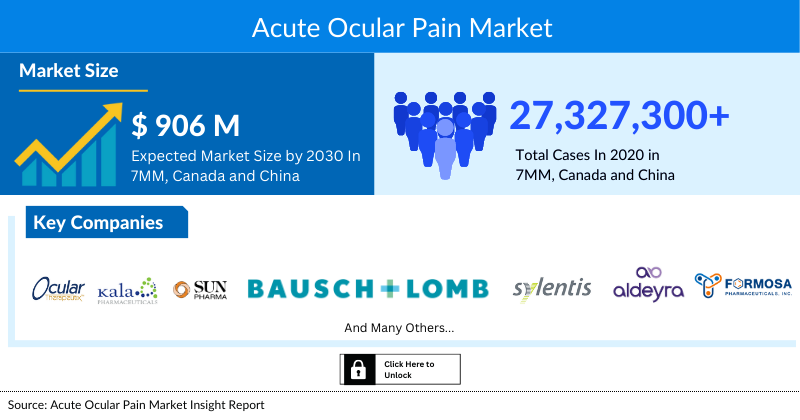
DelveInsight’s ‘Acute Ocular Pain Market Insights, Epidemiology, and Market Forecast – 2032’ report deliver an in-depth understanding of the historical and forecasted epidemiology as well as the market trends of acute ocular pain (AOP) in the United States, EU5 (Germany, Spain, Italy, France, and United Kingdom), Canada and South Korea.
The acute ocular pain (AOP) market report provides current treatment practices, emerging drugs, market share of the individual therapies, and current and forecasted acute ocular pain (AOP) market size from 2019 to 2032, segmented by 6MM + Canada + South Korea. The report also covers the current acute ocular pain (AOP) treatment practice/algorithm, market drivers, market barriers, and unmet medical needs to curate the best opportunities and assesses the underlying market potential.
Geographies Covered
- The United States
- EU5 (Germany, France, Italy, Spain, and the United Kingdom)
- Canada
- South Korea
Study period: 2019–2032
Acute Ocular Pain (AOP): Disease Understanding and Treatment Algorithm
Acute Ocular Pain (AOP) Overview
The International Association for the Study of Pain (IASP) defines pain as “an unpleasant sensory and emotional experience associated with actual or potential tissue damage,” and pain is commonly stratified into two broad groups—nociceptive and neuropathic pain. Nociceptive pain refers to the direct activation of nociceptors due to actual or threatened damage to non-neural tissue and implies an intact somatosensory nervous system. This is typically associated with transient pain following injury, surgery, or infection in the eye. In contrast, neuropathic pain is caused by a lesion or disease of the intrinsic somatosensory nervous system, often in the absence of other tissue injuries.
Ocular pain is a myriad of symptoms ranging from acute sharp pain in the eye to mild discomfort or itching in the eyes. As the spectrum of symptom presentation varies with eye pain, the cause of these pains may vary from straightforward refractive errors to potentially sight-threatening disorders like glaucoma and uveitis. Most ophthalmologic conditions producing ocular pains are associated with symptoms and signs like red eye, photophobia, vision loss, or diplopia. Sometimes it poses a challenge to physicians when the pain is associated with a quiet or “white eye.”
Diagnosis of AOP is based on previous medical and medication history and physical examination of the eye, which is then confirmed by tests like computed tomography (CT), magnetic resonance imaging (MRI), histopathologic examination for the detection of cancers, and culture of the eye to check for a bacterial infection.
Approaches to treating ocular pain come from neuroscience, neurology, and pain management rather than the field of ophthalmology. Clinicians should be alert and attuned to the possibility that a patient might have a pain syndrome rather than a report of physiologic nociception. Symptoms are the manifestation of signaling and should be the focus of treatment. Continued signaling converts peripheral-to-centralized pain and acute-to-chronic pain, so the goal of ocular pain management must be to reduce signaling, and various research focusing on new therapeutic entities may reduce the conversion of acute-to-chronic pain is underway.
Acute Ocular Pain (AOP) Diagnosis and Treatment
It covers the details of conventional and current medical therapies and diagnoses available in the acute ocular pain (AOP) market to treat the condition. It also provides country-wise treatment guidelines and algorithms across the United States, Europe, Canada, and South Korea.
Acute Ocular Pain (AOP) Epidemiology
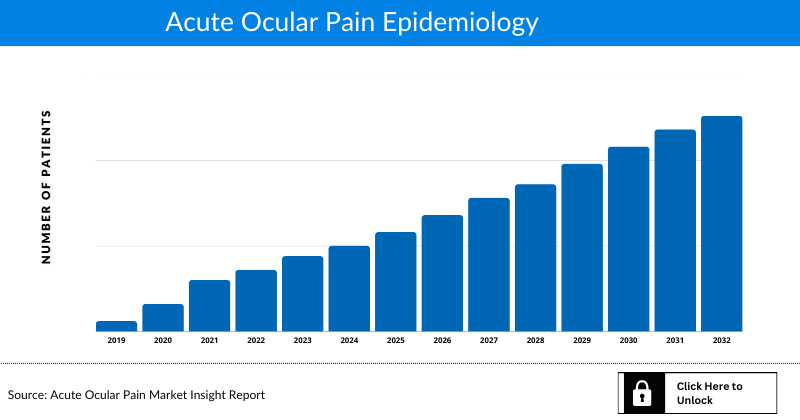
The acute ocular pain (AOP) epidemiology division provides insights into the historical and current patient pool and the forecasted trend for every 6MM + Canada + South Korea. It helps recognize the causes of current and forecasted trends by exploring numerous studies and views of KOL. The report also provides the prevalent patient pool, trends, and assumptions.
Key Findings
The disease epidemiology covered in the report provides historical and forecasted acute ocular pain (AOP) epidemiology segmented as the number of cases of major eye disorders and the number of cases of acute ocular pain (AOP) in major eye disorders. The report includes the number of cases of acute ocular pain (AOP) scenario in the 6MM + Canada + South Korea from 2019 to 2032.
Country-wise Acute Ocular Pain (AOP) Epidemiology
The epidemiology segment also provides the acute ocular pain (AOP) epidemiology data and findings across the United States, EU5 (Germany, France, Italy, Spain, and the United Kingdom), Canada, and South Korea.
The total number of cases of acute ocular pain (AOP) in the 6MM + Canada + South Korea countries was more than 9 million cases in 2021.
As per the estimates, the US had the highest acute ocular pain (AOP) patient population in 2021. Among the EU5 countries, Germany had the highest number of cases of acute ocular pain (AOP), with over 1 million cases, followed by France in 2021. On the other hand, Spain had the lowest number of cases of acute ocular pain (AOP), with approximately 540,000 cases in 2021.
Get a more detailed overview of How Acute Ocular Pain Epidemiology will evolve by 2032: Acute Ocular Pain Epidemiology Forecast
Acute Ocular Pain (AOP) Drug Chapters
The drug chapter segment of the acute ocular pain (AOP) report encloses a detailed analysis of acute ocular pain (AOP) marketed drugs and late-stage (Phase III, Phase II/III, and Phase II) pipeline drugs. It also helps understand the acute ocular pain (AOP) clinical trial details, expressive pharmacological action, agreements and collaborations, approval and patent details, advantages and disadvantages of each included drug, and the latest news and press releases.
Current therapeutic options in the AOP setting are limited. Moreover, the lack of a therapeutic pipeline, robust efficacy, and safety data, together with the paucity of guidelines, has left AOP treatment up to individual practitioners with much variability and without consistency. Inconsistency in treatment also makes it difficult to understand the general treatment pattern followed in the case of postoperative AOP. The lack of approved therapies for glaucoma and corneal aberration postoperative pain management also depicts a loophole in the current treatment management; therefore, more studies examining the existing therapies and evaluating new therapies are needed for acute pain management in the ocular indication.
Products detail in the report…
Acute Ocular Pain (AOP) Emerging Drugs
Drug developers are gradually shifting their attention toward acute ocular pain (AOP) to meet the patient pool’s current demands and counter the unmet needs of the therapeutic market.
Several companies are working robustly on many new therapies, such as OCS-01 (Oculis SA), SURF (Surface Ophthalmics), APP13007 (Formosa Pharmaceuticals), SVT-15473 (Salvat Laboratories), SDN-037 (Visiox Pharma), DEXYCU (EyePoint Pharmaceuticals).
OCS-01 (Oculis SA) is a novel formulation of dexamethasone using Oculis’ proprietary Solubilizing Nanoparticle (SNP) technology. Additionally, SNP technology increases the solubility and residence time of the active drug on the eye’s surface, aiming to deliver an improved and clinically effective anti-inflammatory effect while reducing the frequency of topical administration. The drug candidate is currently in Phase III development in the US for treating inflammation and pain following cataract surgery and has completed a Phase II trial.
SURF (Surface Ophthalmics) is 0.2% betamethasone, a unique and potent corticosteroid formulated as a solution in surface’s patented Klarity vehicle and intended to provide improved efficacy and safety compared to currently used corticosteroids. SURF-201 marks the first ophthalmic therapeutic in the United States to utilize betamethasone and the first preservative-free unit dose therapy for treating postoperative pain and inflammation. Recently, a Phase II clinical study was completed by the company.
APP13007 (Formosa Pharmaceuticals) is a nanoparticle formulation of the corticosteroid clobetasol in development for treating postoperative inflammation of the eye. Activus initially developed APP13007 by applying its patented proprietary Activus Pure Nanoparticle Technology (APNT) to the corticosteroid clobetasol propionate to create a novel nanoparticle formulation for treating postoperative inflammation of the eye. Response rate strongly suggests APP13007 outperforms competitors in reducing inflammation and pain for critical Phase III endpoints.
Products detail in the report…
Acute Ocular Pain (AOP) Market Outlook
The report’s acute ocular pain (AOP) market outlook builds a detailed comprehension of the historical, current, and forecasted acute ocular pain (AOP) market trends by analyzing the impact of current therapies on the market, unmet needs, and demand for better technology.
This segment gives a thorough detail of the acute ocular pain (AOP) market trend of each marketed drug and late-stage pipeline therapy by evaluating their impact based on the annual cost of therapy, inclusion and exclusion criteria, mechanism of action, compliance rate, growing need for the market, increasing patient pool, covered patient segment, expected launch year, competition with other therapies, brand value, their impact on the market, and KOL view. The calculated market data are presented with relevant tables and graphs to give a clear view of the market at first sight.
As per DelveInsight, the acute ocular pain (AOP) market in 6MM, Canada, and South Korea is expected to change in 2019–2032.
Key Findings
This section includes a glimpse of the acute ocular pain (AOP) market in 6MM, Canada, and South Korea. In the 6MM, Canada and South Korea, the acute ocular pain (AOP) market size was approximately USD 265 million in 2021.
The United States: Acute Ocular Pain Market Outlook
This section provides the total acute ocular pain (AOP) market size. It also provides the market size of acute ocular pain (AOP) by therapies in the United States.
The United States accounts for the highest market size of acute ocular pain (AOP) than the EU5 (the United Kingdom, Germany, Italy, France, and Spain), Canada, and South Korea.
EU5 Countries: Acute Ocular Pain Market Outlook
This section provides the total acute ocular pain (AOP) market size. It also provides acute ocular pain (AOP) market size by therapies in Germany, France, Italy, Spain, and the United Kingdom.
Canada Acute Ocular Pain Market Outlook
This section provides the total acute ocular pain (AOP) market size. It also provides the market size of acute ocular pain (AOP) by therapies in Canada.
South Korea Acute Ocular Pain Market Outlook
This section provides the total acute ocular pain (AOP) market size. It also provides the market size of acute ocular pain (AOP) by therapies in South Korea.
Acute Ocular Pain (AOP) Drugs Uptake
This section focuses on the uptake rate of potential Acute Ocular Pain drugs launched or expected to be launched in the market during 2019–2032. The analysis covers acute ocular pain (AOP) market uptake by drugs, patient uptake by therapies, and sales of each drug.
This helps in understanding the drugs with the most rapid uptake and the reasons behind the maximal use of new drugs and allows the comparison of the drugs based on market share and size, which again will be useful in investigating factors important in the market uptake and making financial and regulatory decisions.
Acute Ocular Pain (AOP) Pipeline Development Activities
The report provides insights into different therapeutic candidates in Phase III, Phase II/III, Phase II, and Phase I/II. It also analyses Acute Ocular Pain (AOP) companies involved in developing targeted therapeutics.
Major Acute Ocular Pain (AOP) companies in the market include Oculis SA, Surface Ophthalmics, Formosa Pharmaceuticals, Salvat Laboratories, Visiox Pharma, and EyePoint Pharmaceuticals, and others.
Pipeline Development Activities
The report covers collaborations, acquisitions, mergers, licensing, and patent details for emerging acute ocular pain (AOP) therapies.
Get a more detailed overview of the Acute Ocular Pain companies and emerging therapies: Acute Ocular Pain Pipeline Insight
KOL Views
To keep up with current market trends, we take KOLs and SMEs’ opinions working in the acute ocular pain (AOP) domain through primary research to fill the data gaps and validate our secondary research. Their opinion helps understand and validate current and emerging treatment patterns or acute ocular pain (AOP) market trends. This will support the clients in potential novel treatments by identifying the overall scenario of the market and the unmet needs.
Competitive Intelligence Analysis
We perform a competitive and market intelligence analysis of the acute ocular pain (AOP) market using various competitive intelligence tools: SWOT analysis, PESTLE analysis, Porter’s five forces, BCG Matrix, Market entry strategies, etc. The inclusion of the analysis entirely depends upon the data availability.
|
Report Metrics |
Details |
|
Study Period |
2019 to 2032 |
|
Forecast Period |
2023 to 2032 |
|
Market CAGR | Request Sample to Know |
|
Acute Ocular Pain Market Size | USD XX million by 2032 |
|
Key Acute Ocular Pain Companies | Ocular Therapeutix, Kala Pharmaceuticals, Sun Pharmaceutical, Bausch & Lomb, Formosa Pharmaceuticals, Aldeyra Therapeutics, Sylentis, and several other |
Scope of the Acute Ocular Pain Market Report
- The report covers the descriptive overview of acute ocular pain (AOP), explaining its causes, signs and symptoms, pathophysiology, and currently available therapies
- Comprehensive insight is provided into the acute ocular pain (AOP) epidemiology and treatment in the 6MM, Canada, and South Korea
- Additionally, an all-inclusive account of both the current and emerging therapies for acute ocular pain (AOP) is provided, along with the assessment of new therapies that will impact the current treatment landscape
- A detailed review of the acute ocular pain (AOP) market, historical and forecasted, is included in the report, covering drug outreach in the 6MM, Canada, and South Korea
- The report provides an edge while developing business strategies by understanding trends shaping and driving the global acute ocular pain (AOP) market
Acute Ocular Pain Market Report Highlights
- Recently, the acute ocular pain (AOP) market is set to change due to the rising awareness of the disease and incremental healthcare spending worldwide; which would expand the size of the market to enable the drug manufacturers to penetrate more into the market
- The companies and academics are working to assess challenges and seek opportunities that could influence acute ocular pain (AOP) R&D. The therapies under development are focused on novel approaches to treat/improve the disease condition
- Several major Acute Ocular Pain (AOP) companies are involved in developing therapies for better treatment outlook. The launch of emerging therapies will significantly impact the acute ocular pain (AOP) market
- For acute ocular pain (AOP), a better understanding of disease pathogenesis will also contribute to developing novel therapeutics
- Our in-depth analysis of the pipeline assets across different stages of development (Phase III and Phase II), different emerging trends, and comparative analysis of pipeline products with detailed clinical profiles, key cross-competitor, launch date along with product development activities will support the clients in the decision-making process regarding their therapeutic portfolio by identifying the overall scenario of the R&D activities
Acute Ocular Pain (AOP) Report Insights
- Acute Ocular Pain (AOP) Patient Population
- Acute Ocular Pain (AOP) Therapeutic Approaches
- Acute Ocular Pain (AOP) Pipeline Analysis
- Acute Ocular Pain (AOP) Market Size and Trends
- Acute Ocular Pain (AOP) Market Opportunities
- Impact of Upcoming Acute Ocular Pain (AOP) Therapies
Acute Ocular Pain (AOP) Report Key Strengths
- 10-year Forecast
- 6MM, Canada, and South Korea Coverage
- Acute Ocular Pain (AOP) Epidemiology Segmentation
- Key Competitors
- Highly Analyzed Acute Ocular Pain Market
- Acute Ocular Pain (AOP) Drugs Uptake
Acute Ocular Pain (AOP) Report Assessment
- Current Acute Ocular Pain (AOP) Treatment Practices
- Acute Ocular Pain (AOP) Unmet Needs
- Acute Ocular Pain (AOP) Pipeline Product Profiles
- Acute Ocular Pain Market Attractiveness
Key Questions
Acute Ocular Pain Market Insights:
- What was the Acute Ocular Pain market share percentage distribution, and how would it look by 2032?
- What would be the total Acute Ocular Pain market size and market size by therapies across the 6MM, Canada, and South Korea forecast period (2019–2032)?
- What are the key findings about the Acute Ocular Pain market across 6MM, Canada, and South Korea, and which country will have the largest acute ocular pain (AOP) market size during the forecast period (2019–2032)?
- At what CAGR is the acute ocular pain (AOP) market expected to grow in the 6MM, Canada, and South Korea forecast period (2019–2032)?
- What would be the acute ocular pain (AOP) market outlook across the 6MM, Canada, and South Korea forecast period (2019–2032)?
- What would be the acute ocular pain (AOP) market growth until 2032 and the resultant market size by 2032?
- How would future opportunities affect the Acute Ocular Pain market dynamics and subsequent analysis of the associated trends?
Acute Ocular Pain Epidemiology Insights:
- What are the disease risk, burdens, and unmet needs of acute ocular pain (AOP)?
- What is the historical patient pool of acute ocular pain (AOP) covering the United States, EU5 (Germany, Spain, France, Italy, UK), Canada, and South Korea?
- What would be the forecasted patient pool of acute ocular pain (AOP) covering the United States, EU5 (Germany, Spain, France, Italy, UK), Canada, and South Korea?
- What will be the growth opportunities in the 6MM, Canada, and South Korea concerning the patient population of acute ocular pain (AOP)?
- Out of all the 6MM, Canada and South Korea, which country would have the highest number of cases of acute ocular pain (AOP) during the forecast period (2019–2032)?
- At what CAGR is the population expected to grow in the 6MM, Canada, and South Korea forecast period (2019–2032)?
Current Treatment Scenario, Marketed Drugs, and Emerging Therapies:
- What are the current options to treat acute ocular pain (AOP)?
- What are the current treatment guidelines for treating acute ocular pain (AOP) in the US, Europe, Canada, and South Korea?
- What are the acute ocular pain (AOP) marketed drugs and their MOA, regulatory milestones, product development activities, advantages, disadvantages, safety, efficacy, etc.?
- How many companies are developing therapies to treat acute ocular pain (AOP)?
- How many therapies are developed by each company to treat acute ocular pain (AOP)?
- How many emerging therapies are in the mid-stage and late stages of development to treat acute ocular pain (AOP)?
- What are the key collaborations (Industry–Industry, Industry–Academia), Mergers and acquisitions, and licensing activities related to acute ocular pain (AOP)?
- What are the recent novel therapies, targets, mechanisms of action, and technologies developed to overcome the limitation of existing therapies?
- What are the clinical studies for acute ocular pain (AOP) and its status?
- Which key designations have been granted for the emerging therapies for acute ocular pain (AOP)?
- What are the global historical and forecasted acute ocular pain markets?
Reasons to buy
- The report will help in developing business strategies by understanding trends shaping and driving the acute ocular pain (AOP) market
- To understand the future market competition in the acute ocular pain (AOP) market and an insightful review of the key market drivers and barriers
- Organize sales and marketing efforts by identifying the best opportunities for acute ocular pain (AOP) in the US, Europe (Germany, Spain, Italy, France, and the United Kingdom), Canada, and South Korea
- Identifying upcoming solid players in the market will help devise strategies that will help get ahead of competitors
- Organize sales and marketing efforts by identifying the best opportunities for the acute ocular pain (AOP) market
- To understand the future market competition in the acute ocular pain (AOP) market