Adrenal Crisis Market Summary
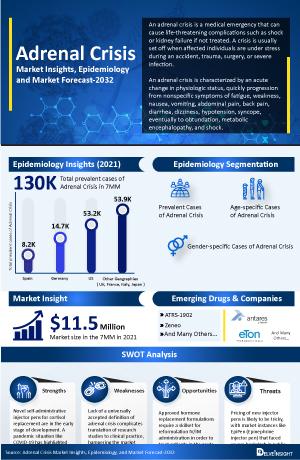
- Adrenal Crisis market size in the seven major markets was USD 11.5 million in 2021.
- The total number of prevalent cases of Adrenal Crisis in 7MM countries was 130,175 in 2021.
- Adrenal Crisis Companies are Antares Pharma, Eton Pharmaceuticals, Pfizer Inc, Takeda Pharmaceutical Company Limited, and others.
Adrenal Crisis Market Insight and Trends
- Epidemiological growth factors for adrenal crisis include increased awareness, advancements in diagnosis, an aging population with chronic illnesses, rising medication usage, and improved access to healthcare. Understanding these factors is crucial for developing effective preventive measures and improving outcomes.
- As per analysis, more than 400 patients with Adrenal Insufficiency, a prevalence of 8 adrenal crises per 100 patient-years.
- The prevalence rates of approximately 38% for primary artificial insufficiency, 57% for secondary artificial insufficiency, and 6% for congenital adrenal hyperplasia (CAH) among the considered patient population has been observed. Additionally, conventional hydrocortisone replacement therapy is likely to be more commonly utilized compared to prednisolone, while dexamethasone usage is the least prevalent.
- According to our analysis, it was found that the female gender was more frequent in comparison with males in all artificial insufficiency population.
- The acquisition of Antares Pharma by Halozyme has left the fate of ATRS-1902 uncertain, as no further updates on its development have been provided, though it remains in the company's pipeline.
- Increased awareness of this unique histology has allowed the development of drugs that are specific to Adrenal Crisis and has begun to shed light on the similarities and possible unique aspects. These factors, along with the expected development and entry of emerging therapies, will boost the future market.
Request a sample to unlock the CAGR for Adrenal Crisis Market.
Factors affecting Adrenal Crisis Market Growth:
Rising Incidence of Adrenal Insufficiency
Conditions like Addison’s disease and secondary adrenal insufficiency increase the risk of adrenal crises.
Growing Awareness of Endocrine Disorders
Education campaigns and physician awareness improve early recognition and treatment.
Advancements in Diagnostic Tools
Improved cortisol assays and point-of-care testing enable timely diagnosis.
Development of Novel Therapeutics
Availability of synthetic glucocorticoids and adrenal hormone replacement therapies drives market growth.
Increasing Geriatric Population
Older adults with comorbidities are more susceptible to adrenal crises.
Expansion of Emergency and Critical Care Services
Better hospital infrastructure facilitates rapid intervention.
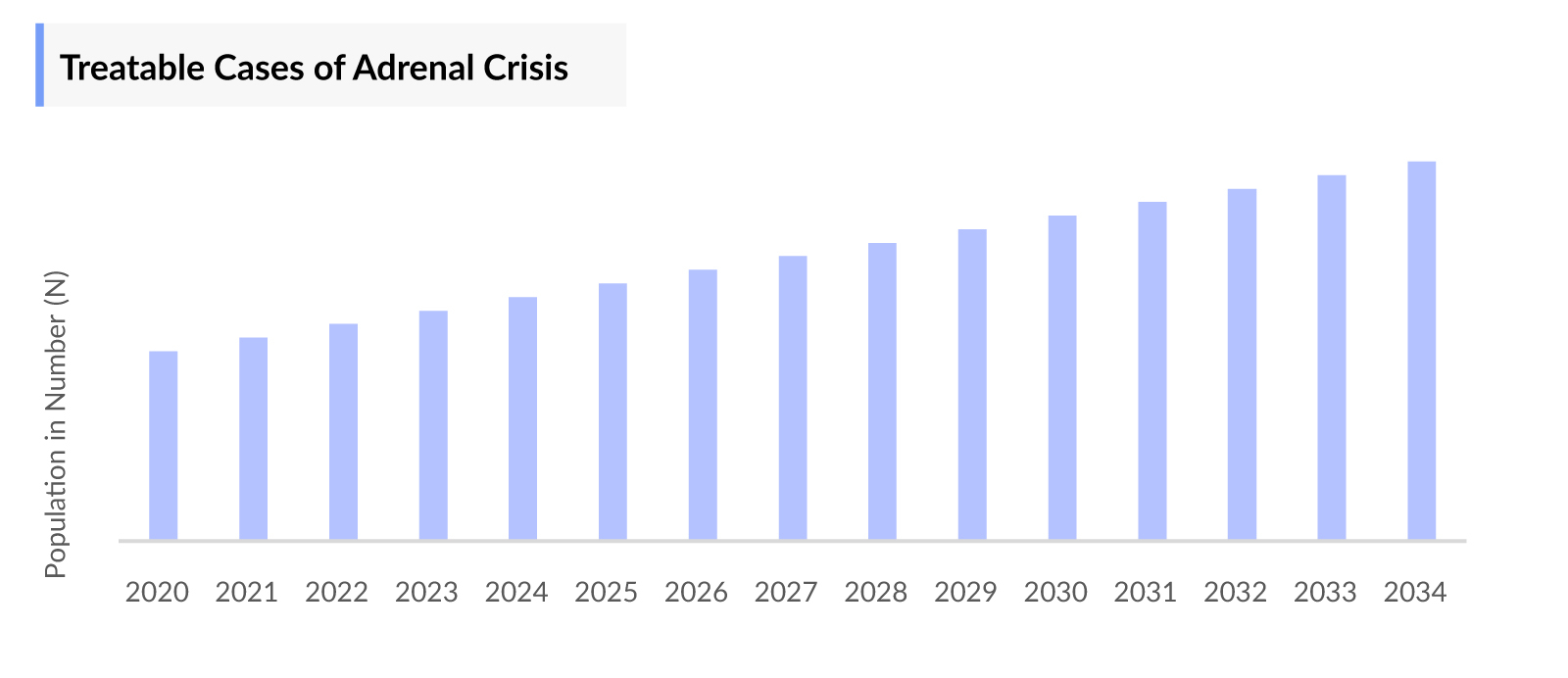
DelveInsight’s comprehensive report titled “Adrenal Crisis Market Insights, Epidemiology, and Market Forecast 2034” offers a detailed analysis of Adrenal Crisis. The report presents historical and projected epidemiological data covering Total Diagnosed Prevalent Cases of Adrenal Insufficiency, Type-specific Diagnosed Prevalent Cases of Adrenal Insufficiency, Total Diagnosed Prevalent Cases of Adrenal Crisis, Gender-specific Diagnosed Prevalent Cases of Adrenal Crisis, and Treatable Cases of Adrenal Crisis. In addition to epidemiology, the market report encompasses various aspects related to the patient population. These aspects include the diagnosis process, prescription patterns, physician perspectives, market accessibility, treatment options, and prospective developments in the market across seven major markets: the United States, EU4 (Germany, France, Italy, and Spain), the United Kingdom, and Japan, spanning from 2020-2034.
The Adrenal Crisis market report analyzes the existing treatment practices and unmet medical requirements in Adrenal Crisis. It evaluates the market potential and identifies potential business prospects for enhancing therapies or interventions. This valuable information enables stakeholders to make well-informed decisions regarding product development and strategic planning for the market.
Adrenal Crisis Disease Understanding
Adrenal Crisis, also referred to as Addisonian crisis is a life-threatening condition characterized by insufficient production of cortisol and occasionally aldosterone, a condition commonly termed Adrenal Insufficiency. Patients may experience dizziness, weakness, sweating, abdominal pain, dehydration, low blood pressure, nausea, vomiting, or even loss of consciousness.
Adrenal insufficiency can be categorized into primary, secondary, and tertiary causes. Primary adrenal insufficiency arises from underlying issues affecting the adrenal gland directly. Secondary adrenal insufficiency occurs due to diminished levels of adrenocorticotrophic hormone (ACTH) released from the pituitary gland. Tertiary adrenal insufficiency arises from decreased levels of corticotrophin-releasing hormone (CRH) released from the hypothalamus.
Adrenal Crisis Diagnosis and Treatment Algorithm
Diagnosis of Adrenal Crisis may be difficult due to the presence of non-specific symptoms, Gastroenteritis and the Syndrome of Inappropriate Secretion of Antidiuretic Hormones (SIADH) are the most frequently reported misdiagnosis in patients with adrenal insufficiency (AI). However, the following tests can help properly diagnose adrenal crisis. Such tests are Adrenocorticotropic hormone (ACTH) blood tests, Blood tests, Cortisol tests, and Potassium and Sodium blood tests.
The definitive treatment of Adrenal Crisis includes the administration of GCs, specifically hydrocortisone. In adults, the recommended treatment regimen includes administering an initial dose of 100 mg of hydrocortisone through intravenous or intramuscular (IV/IM) bolus injection.
Adrenal Crisis Epidemiology
The epidemiology section on the Adrenal Crisis market report offers information on the patient populations, including historical and projected trends for each of the seven major markets. Examining key opinion leader views from physicians or clinical experts can assist in identifying the reasons behind historical and projected trends. The diagnosed patient pool, their trends, and the underlying assumptions are all included in this section of the report.
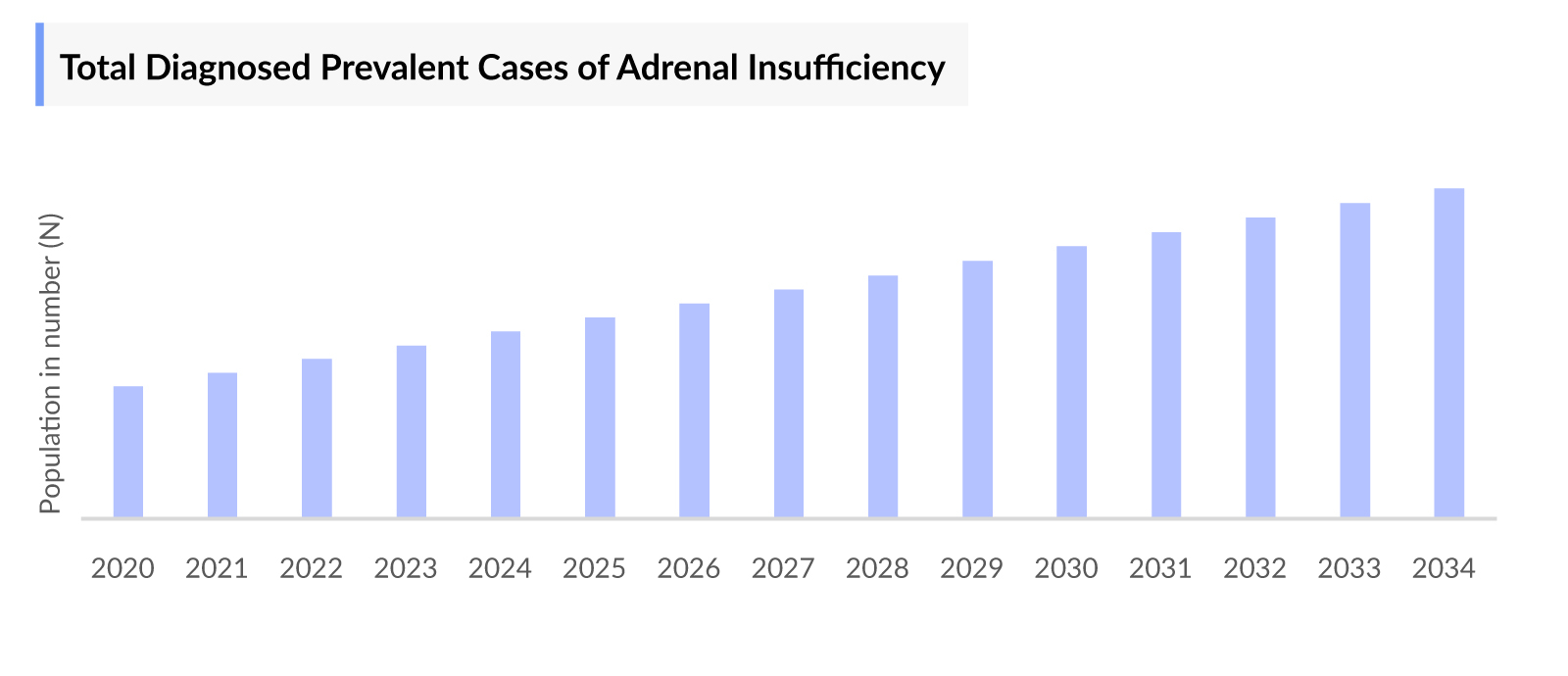
This section also presents the data with relevant tables and graphs, offering a clear and concise view of the prevalence of Adrenal Crisis. Additionally, the report discloses the assumptions made during the analysis, ensuring data interpretation and presentation transparency. This epidemiological data is valuable for understanding the disease burden and its impact on the patient population across various regions.
Key Findings from Adrenal Crisis Diagnosis Epidemiological Analyses and Forecast
- In the year 2019–2020 a prevalence ranging from 5.2 to 8.3 per 100 patient-years was estimated for adrenal crisis along with a postal survey of over 1000 patients with PAI reported an 8% annual frequency of adrenal crisis.
- Patients diagnosed with adrenal insufficiency are estimated to experience an adrenal crisis in approximately 6-8% of cases each year.
- As per analysis, more than 400 patients with Adrenal Insufficiency, a prevalence of 8 adrenal crises per 100 patient-years.
- The prevalence rates of approximately 38% for primary artificial insufficiency, 57% for secondary artificial insufficiency, and 6% for congenital adrenal hyperplasia (CAH) among the considered patient population has been observed. Additionally, conventional hydrocortisone replacement therapy is likely to be more commonly utilized compared to prednisolone, while dexamethasone usage is the least prevalent.
- According to our analysis, it was found that the female gender was more frequent in comparison with males in all artificial insufficiency population.
Adrenal Crisis Market Outlook
In addressing adrenal crisis, current treatment strategies primarily rely on established glucocorticoid replacement therapies like hydrocortisone, prednisolone, and dexamethasone, which serve as foundational treatments for adrenal insufficiency. These medications play a crucial role in providing essential cortisol replacement to mitigate the risk of adrenal crises and effectively manage associated symptoms. Additionally, mineralocorticoid replacement therapy, typically with fludrocortisone, may be prescribed to restore electrolyte balance and blood pressure regulation, especially in individuals with primary adrenal insufficiency.
Innovations in drug delivery systems have emerged to enhance treatment efficacy and patient convenience. Long-acting formulations of glucocorticoids, such as once-daily hydrocortisone preparations and modified-release prednisolone tablets, offer improved pharmacokinetics and potentially better symptom control compared to traditional regimens. Emergency treatment protocols include the immediate administration of parenteral hydrocortisone via bolus injection, followed by maintenance doses to stabilize the patient's condition. The current industry standard for managing acute adrenal crises is Solu-Cortef Act-O-VIAL, an emergency anti-inflammatory glucocorticoid.
While traditional glucocorticoid replacement therapies remain fundamental, ongoing advancements in drug delivery, adjunctive therapies, and digital health solutions are shaping a more comprehensive and patient-centric approach to preventing and managing adrenal crises. These innovations reflect a commitment to improving the quality of life and long-term outcomes for individuals with adrenal insufficiency. Looking ahead, with continued research and dedication, there is optimism for even more effective treatments and, ultimately, a cure for this challenging condition, as evidenced by projected market growth in the Adrenal Crisis market in the coming years.
Adrenal Crisis Drug Analysis
Marketed Adrenal Crisis Drugs
-
SOLU-CORTEF: Pfizer Inc.
Solu-Cortef Act-O-VIAL is a brand name for hydrocortisone sodium succinate, a medication commonly used in the treatment of adrenal crisis. It is available in a powder form for reconstitution and administration via intravenous (IV) or intramuscular (IM) injection. Solu-Cortef Act-O-VIAL is a vital component of emergency treatment protocols for adrenal crisis, providing immediate cortisol replacement to stabilize patients at risk of life-threatening complications. Its rapid action and availability in a convenient vial format make it a preferred choice for healthcare providers managing adrenal insufficiency emergencies.
Note: Detailed marketed therapies assessment and a full list of therapies will be provided in the final report.
Emerging Adrenal Crisis Drugs
The Adrenal Crisis market is expected to experience gradual changes, mainly due to the limited availability of emerging therapies in this area. Key Adrenal Crisis companies are Antares Pharmaceuticals and others, which are actively working on novel treatments
-
ATRS-1902: Antares Pharmaceuticals
A noteworthy candidate in the pipeline is ATRS-1902 by Antares Pharma, which was in the Phase III stage of development. This therapy, designed for use during the adrenal crisis, received FDA Fast Track designation in January 2022. Positive results from a Phase I study for ATRS-1902, focusing on adrenal crisis rescue, were announced by the company in the same month. The study demonstrated that ATRS-1902 (100 mg) delivered a comparable pharmacokinetic profile and was safe and well-tolerated.
It is essential to highlight that Antares Pharma, the company developing ATRS-1902, underwent an acquisition by Halozyme. As of the latest available information, no further updates on the development of ATRS-1902 have been provided, however, the drug is on the company's pipeline.
Adrenal Crisis Market Segmentation
DelveInsight’s ‘Adrenal Crisis Market Insights, Epidemiology, and Market Forecast – 2034’ report provides a detailed outlook of the current and future Adrenal Crisis market, segmented within countries, by therapies, and by classes. Further, the market of each region is then segmented by each therapy to provide a detailed view of the current and future market share of all therapies.
Adrenal Crisis Market Size by Countries
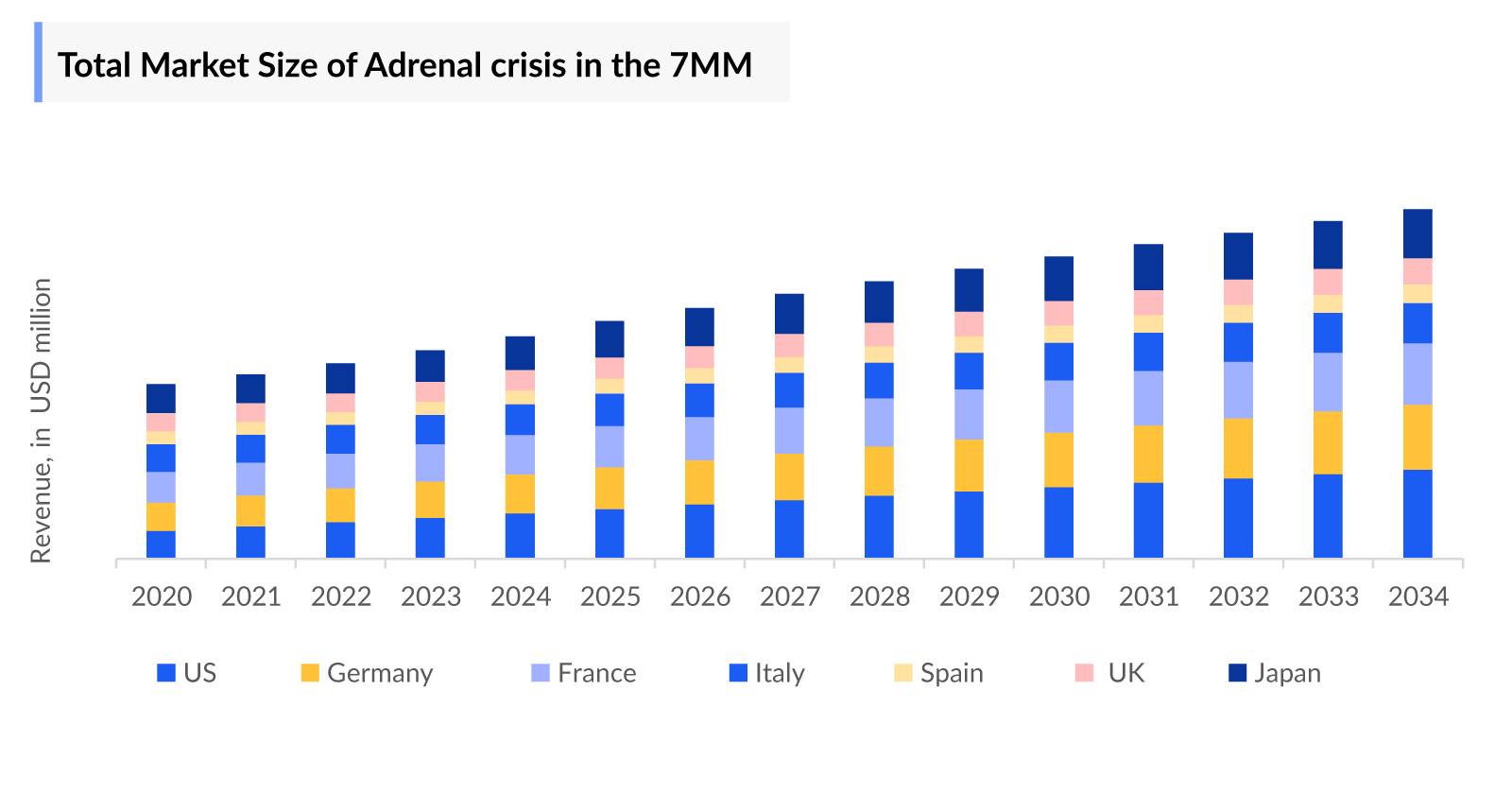
The Adrenal Crisis market size is assessed separately for various countries, including the United States, EU4 (Germany, France, Italy, and Spain), the UK, and Japan. In 2023, the United States held a significant share of the overall 7MM (Seven Major Markets) Adrenal Crisis market, primarily attributed to the country's higher prevalence of the condition and cost of the available treatments. This dominance is projected to persist, especially with the potential early introduction of new products.
Adrenal Crisis Market Size by Therapies
The current landscape for emerging therapies addressing Adrenal Crisis reveals a notable scarcity, emphasizing the urgent unmet need for advancements in this area. The absence of approved therapies highlights a critical gap, and the development and introduction of novel treatments are crucial to address this deficiency.
Adrenal Crisis Market Size by Therapies is categorized into current and emerging markets for the study period 2020–2034. One of the emerging drugs anticipated to launch during the forecast period is ATRS-1902 under the developmental pipeline of Antares Pharma.
Adrenal Crisis Drugs Uptake
This section focuses on the sales uptake of potential Adrenal Crisis drugs that have recently been launched or are anticipated to be launched in the Adrenal Crisis market between 2020 and 2034. It estimates the market penetration of Adrenal Crisis drugs for a given country, examining their impact within and across classes and segments. It also touches upon the financial and regulatory decisions contributing to the probability of success (PoS) of the drugs in the Adrenal Crisis market.
Note: Detailed assessment of drug uptake will be provided in the full report on Adrenal Crisis.
Adrenal Crisis Market Access and Reimbursement
DelveInsight’s ‘Adrenal Crisis Market Insights, Epidemiology, and Market Forecast 2034’ report provides a descriptive overview of the market access and reimbursement scenario of Adrenal Crisis.
This section includes a detailed analysis of the country-wise healthcare system for each therapy, enlightening the market access, reimbursement policies, and health technology assessments.
Latest KOL Views on Adrenal Crisis
To keep up with current Adrenal Crisis market trends and fill gaps in secondary findings, we interview KOLs and SMEs working in the Adrenal Crisis domain. Their opinion helps understand and validate current and emerging therapies and treatment patterns or Adrenal Crisis market trends. This will support the clients in potential upcoming novel treatments by identifying the overall scenario of the market and the Adrenal Crisis unmet needs.
Adrenal Crisis: KOL Insights
DelveInsight’s analysts connected with 50+ KOLs to gather insights; however, interviews were conducted with 15+ KOLs in the 7MM. These KOLs were from organizations, institutes, and hospitals, such as the Boston Children’s Hospital in the US, CIBER de Enfermedades Cardiovasculares (CIBERCV) in Spain, Oita University, Yufu in Japan, University Children’s Hospital, Magdeburg, in Germany, and organizations like Adrenal Crisis Research Foundation, International Adrenal Crisis Registry, among others.
“Adrenal crisis can be life-threatening. It is important to educate patients about proper medication and dosage importance.”
Note: Detailed assessment of KOL Views will be provided in the full report on Adrenal Crisis.
Adrenal Crisis Competitive Intelligence Analysis
We conduct a Competitive and Market Intelligence analysis of the Adrenal Crisis Market, utilizing various Competitive Intelligence tools such as SWOT analysis, Conjoint Analysis, and Market entry strategies. The inclusion of these analyses is contingent upon data availability, ensuring a comprehensive and well-informed assessment of the market landscape and competitive dynamics.
The emerging Adrenal Crisis therapies are analyzed based on various attributes such as safety and efficacy in randomized clinical trials, order of entry and other market dynamics, and the unmet need they fulfill in the Adrenal Crisis market.
Note: Detailed assessment of SWOT analysis and Conjoint analysis will be provided in the full report on Adrenal Crisis
Adrenal Crisis Clinical Trial Analysis
The Adrenal Crisis market report offers an analysis of therapeutic candidates in Phase II and III stages and examines companies involved in developing targeted therapeutics for Adrenal Crisis. It provides valuable insights into the advancements and progress of potential treatments in clinical development for this condition.
Adrenal Crisis Pipeline Development Activities
The Adrenal Crisis market report covers information on collaborations, acquisition and merger, licensing, patent details, and other information for emerging Adrenal Crisis therapies.
Adrenal Crisis Market Report Insights
- Adrenal Crisis Patient Population
- Therapeutic Approaches
- Adrenal Crisis Pipeline Analysis
- Adrenal Crisis Market Size
- Adrenal Crisis Market Trends
- Adrenal Crisis Market Opportunities
- Impact of Upcoming Adrenal Crisis Therapies
Adrenal Crisis Market Report Key Strengths
- 11 Years Forecast
- The 7MM Coverage
- Adrenal Crisis Epidemiology Segmentation
- Key Cross Competition
- Highly Analyzed Adrenal Crisis Market
- Adrenal Crisis Drugs Uptake
Adrenal Crisis Market Report Assessment
- Adrenal Crisis Current Treatment Practices
- Unmet Needs
- Adrenal Crisis Pipeline Product Profiles
- Adrenal Crisis Market Attractiveness
Key Questions Answered in Adrenal Crisis Market Report
- How common is Adrenal Crisis?
- What are the key findings of Adrenal Crisis epidemiology across the 7MM, and which country will have the highest number of patients during the study period (2020–2034)?
- What are the currently available treatments for Adrenal Crisis?
- What is the disease risk, burden, and unmet needs of Adrenal Crisis?
- At what CAGR is the Adrenal Crisis market and its epidemiology is expected to grow in the 7MM during the forecast period (2024–2034)?
- How would the unmet needs impact the Adrenal Crisis market dynamics and subsequently influence the analysis of the related trends?
- What would be the forecasted patient pool of Adrenal Crisis in the 7MM covering the United States, EU4 (Germany, France, Italy, and Spain), the UK, and Japan?
- Among EU4 and the UK, which country will have the highest number of patients during the forecast period (2024–2034)?
- How many companies are currently developing therapies for the treatment of Adrenal Crisis?