-market.png&w=256&q=75)
Adult Growth Hormone Deficiency Market Summary
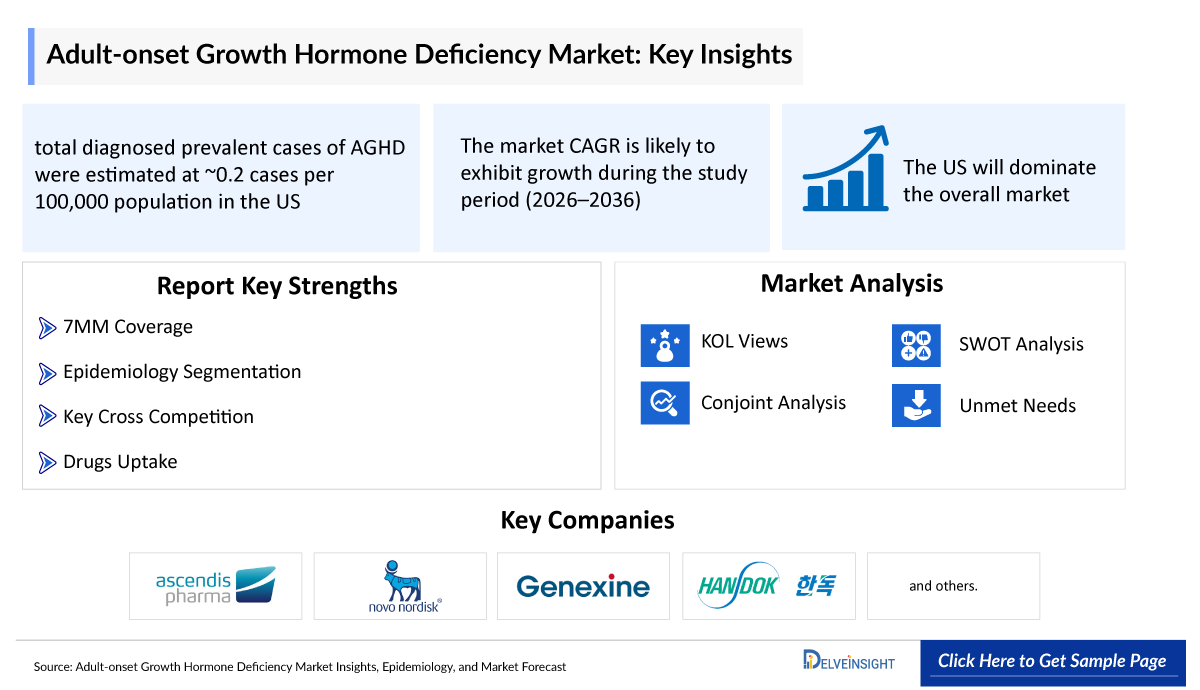
- The Adult-onset Growth Hormone Deficiency Market Size is anticipated to grow with a significant CAGR during the study period (2022-2036).
- The leading Adult-onset Growth Hormone Deficiency companies developing therapies in the treatment market include - Ascendis Pharma, Novo Nordisk, Genexine , Handok, among others.
Adult-onset Growth Hormone Deficiency Market & Epidemiology Insights
- Growth Hormone Deficiency (GHD), including Adult Growth Hormone Deficiency (AGHD) and pediatric GHD, is a rare endocrine disorder caused by inadequate secretion of growth hormone from the pituitary gland, leading to impaired growth in children and metabolic, cardiovascular, and quality-of-life impairments in adults.
- In the United Kingdom, AGHD is estimated to affect approximately 1 in every 10,000 adults at any given time in adult-onset cases, while the combined prevalence of childhood-onset and adult-onset GHD is higher at approximately 3 in every 10,000 people.
- Among all AGHD diagnosed prevalent cases, females represented a slight majority, accounting for about 54% of cases, while males comprised 46% of the total patient population, in Japan.
- The AGHD market is rapidly transitioning from daily recombinant human growth hormone (hGH) injections toward long-acting weekly therapies, driven by the need to improve treatment adherence, convenience, and long-term persistence.
- Until 2020, AGHD management primarily relied on daily somatropin injections as the traditional standard of care; however, the approval of somapacitan (SOGROYA) marked the first once-weekly therapy for AGHD, representing a major shift toward long-acting growth hormone replacement therapies.
- The recent adult AGHD approval of lonapegsomatropin (SKYTROFA) has intensified competition within the AGHD market, validating broader physician acceptance of extended-duration GH replacement therapies.
- Emerging pipeline candidates such as GX-H9 are leveraging advanced half-life extension technologies, including Fc-fusion and albumin-binding platforms, to potentially enable once-weekly or twice-monthly dosing.
- Poor adherence to daily growth hormone injections remains a major unmet need in AGHD management, particularly among adult patients requiring lifelong hormone replacement therapy, thereby strengthening demand for once-weekly or extended-interval products.
- Historical clinical setbacks, including the discontinuation of Versartis’ somavaratan (VRS-317) program, continue to influence regulatory scrutiny and emphasize the importance of balanced efficacy, safety, and IGF-1 stability in long-acting GH development.
Adult-onset Growth Hormone Deficiency (AGHD) Market Size and Forecast in the 7MM
- 2025 Adult-onset Growth Hormone Deficiency (AGHD) Market Size: ~USD XX million
- 2036 Projected Adult-onset Growth Hormone Deficiency (AGHD) Market Size: ~USD XX million
- Adult-onset Growth Hormone Deficiency (AGHD) Growth Rate (2026–2036): XX% CAGR
Request for unlocking the sample page of the "Adult-onset Growth Hormone Deficiency Market Forecast"
Key Factors Driving the Adult-onset Growth Hormone Deficiency (AGHD) Market
- Increasing awareness and diagnosis of AGHD: Rising recognition of the metabolic, cardiovascular, and quality-of-life consequences associated with untreated AGHD is supporting greater screening, diagnosis, and referral to endocrine specialists.
- Growing adoption of long-acting growth hormone therapies: The introduction of once-weekly therapies such as somapacitan (SOGROYA) and lonapegsomatropin (SKYTROFA) is accelerating the shift away from daily injections by improving patient convenience, adherence, and long-term treatment persistence.
- Long-term treatment dependency: AGHD generally requires chronic or lifelong hormone replacement therapy, creating sustained demand and stable recurring revenue opportunities for approved and emerging therapies.
DelveInsight's "Adult-onset Growth Hormone Deficiency (AGHD) Market Insights, Epidemiology and Market Forecast – 2036" report delivers an in-depth understanding of the AGHD, historical and forecasted epidemiology, as well as the AGHD therapeutics market trends in the United States, EU4 (Germany, Spain, Italy, and France) and the United Kingdom, and Japan.
The Adult-onset Growth Hormone Deficiency (AGHD) market report delivers a comprehensive analysis of the current treatment landscape, including standards of care, clinical practices, and evolving therapeutic algorithms. It evaluates, AGHD patient burden trends, revenue & market share dynamics, peak patient share & therapy uptake analysis, and provides an in-depth market size assessment, and growth rate projections (Historical & Forecast 2022–2036) across global regions. The report highlights key unmet medical needs in AGHD and maps the competitive and clinical landscape to uncover high‑value opportunities, providing a clear outlook on future market growth potential.
Scope of the AGHD Market Report | |
|
Study Period |
2022–2036 |
|
Historical Year |
2022–2025 |
|
Forecast Period |
2026–2036 |
|
Base Year |
2026 |
|
Geographies Covered |
ü North America : The US; ü Europe: Germany, France, Italy, and Spain and the UK; ü Asia-Pacific: Japan |
|
AGHD Market CAGR (Forecast period) |
XX% (2026–2036) |
|
AGHD Epidemiology Segmentation Analysis |
Patient Burden Assessment · Total Diagnosed Prevalent Cases of GHD · GHD Diagnosed Prevalent Cases by Age · AGHD Diagnosed Prevalent Cases · AGHD Diagnosed Prevalent Cases by Gender · AGHD Treated Cases |
|
AGHD Companies |
· Ascendis Pharma · Novo Nordisk · Genexine · Handok, among others |
|
AGHD Therapies |
· Somapacitan (SOGROYA) · Lonapegsomatropin (SKYTROFA) · GX-H9, among others |
|
AGHD Market |
Segmented by · Region/Geographies · Drugs/Therapies |
|
Analysis |
· Addressable Patient Population · Market Drivers and Market barriers · Cost Assumptions and Pricing Analogues · KOL Views · SWOT Analysis · Reimbursement · Conjoint Analysis · Unmet Needs |
Adult-onset Growth Hormone Deficiency (AGHD) Disease Understanding
Adult-onset Growth Hormone Deficiency (AGHD) Overview
AGHD is a chronic endocrine disorder characterized by inadequate secretion of growth hormone (GH) from the pituitary gland during adulthood, most commonly resulting from pituitary tumors, pituitary surgery, radiation therapy, traumatic brain injury, or hypothalamic-pituitary disease. AGHD is associated with altered body composition, reduced muscle mass and bone density, increased visceral fat, impaired cardiovascular and metabolic function, fatigue, reduced exercise capacity, and diminished quality of life. Unlike pediatric GHD, AGHD primarily affects metabolic health and physical functioning rather than linear growth.
Adult-onset Growth Hormone Deficiency Diagnosis
Diagnosis of AGHD is complex and typically requires a combination of clinical assessment, medical history, serum insulin-like growth factor-1 (IGF-1) evaluation, and confirmatory dynamic stimulation testing due to the pulsatile nature of endogenous GH secretion. However, a normal serum IGF-1 level does not rule out AGHD, as many affected patients still show values within the standard reference range. Common diagnostic tests include the insulin tolerance test (ITT), glucagon stimulation test, and macimorelin stimulation test. Among these, ITT remains the gold-standard diagnostic method but is labor-intensive and contraindicated in certain patients with cardiovascular disease or seizures. Because symptoms are often nonspecific and diagnostic procedures require specialized endocrine expertise, AGHD remains substantially underdiagnosed across many healthcare settings.
Further details are provided in the report...
Current Adult-onset Growth Hormone Deficiency (AGHD) Treatment Landscape
The treatment of AGHD primarily involves recombinant hGH replacement therapy aimed at restoring physiological GH levels and improving metabolic function, body composition, bone density, cardiovascular health, and quality of life. Historically, AGHD management relied on daily somatropin injections; however, the treatment landscape is increasingly shifting toward long-acting growth hormone therapies that reduce injection frequency and improve patient adherence. The FDA-approved once-weekly therapies such as somapacitan (SOGROYA) and lonapegsomatropin (SKYTROFA) have significantly expanded treatment options by providing sustained insulin-like growth factor-1 (IGF-1) control with efficacy comparable to daily GH formulations. To mitigate adverse effects such as edema, arthralgia, insulin resistance, and fluid retention, modern clinical guidelines mandate an individualized, non-weight-based "start low, go slow" titration protocol, utilizing monthly dose adjustments until serum IGF-1 levels normalize to the age-adjusted median-to-upper reference range. Treatment dosing is highly dependent on age and biological sex; older adults exhibit heightened sensitivity and require lower introductory doses, whereas women taking oral estrogen require substantially higher doses to overcome hepatic growth hormone resistance.
Further details related to country-based variations are provided in the report...
Adult-onset Growth Hormone Deficiency (AGHD) Unmet Needs
The section “unmet needs of Adult-onset Growth Hormone Deficiency (AGHD)” outlines the critical gaps between the current state of patient care, diagnosis, and the ideal & effective management of the disease. It highlights the obstacles experienced by patients, clinicians, and researchers and identifies potential solutions for future progress.
- Delayed and complex diagnosis
- Need for more convenient long-acting therapies with sustained IGF-1 control
- Poor long-term adherence associated with daily GH injections
- High chronic disease burden with persistent impairment in quality of life and long-term monitoring needs, and others…..
Note: Comprehensive unmet needs insights in AGHD and their strategic implications are provided in the full report...
Adult-onset Growth Hormone Deficiency (AGHD) Epidemiology
The Adult-onset Growth Hormone Deficiency epidemiology section provides insights about the historical and current Adult-onset Growth Hormone Deficiency patient pool and forecasted trends for individual seven major countries. It helps to recognize the causes of current and forecasted trends by exploring numerous studies and views of key opinion leaders. This part of the Adult-onset Growth Hormone Deficiency market report also provides the diagnosed patient pool and their trends along with assumptions undertaken.
Key Findings from AGHD Epidemiological Analysis and Forecast
- In the United States, the total diagnosed prevalent cases of AGHD were estimated at approximately 0.2 cases per 100,000 population, in 2025.
- In 2025, among gender-specific cases in the United States, females accounted for the majority of the AGHD cases, with the mean patient age estimated at approximately 50 years.
- In Europe, the number of reported AGHD patients was estimated at ∼200 cases in France, ∼600 cases in Italy, ∼200 cases in Spain, and ∼100 cases in the United Kingdom.
- In the United Kingdom, among age-specific cases in 2025, the highest GHD cases was observed in the 20–29 years (24.5%) age group, followed by 18–19 years (17.2%) and 40–49 years (14.5%), while lower prevalence was reported in older populations, including 60–69 years (9.9%) and ≥70 years (5.5%).
- In 2025, ∼70% of patients with GHD were diagnosed with adult-onset disease, in Japan.
Adult-onset Growth Hormone Deficiency Epidemiology Segmentation
- Total Diagnosed Prevalent Cases of GHD
- GHD Diagnosed Prevalent Cases by Age
- AGHD Diagnosed Prevalent Cases
- AGHD Diagnosed Prevalent Cases by Gender
- AGHD Treated Cases
Adult-onset Growth Hormone Deficiency (AGHD) Drug Analysis & Competitive Landscape
The AGHD drug chapter provides a detailed, market-focused review of approved therapies and the emerging pipeline across Phase III Adult-onset Growth Hormone Deficiency clinical trials. It covers mechanism of action, clinical trial data, regulatory approvals, patents, collaborations, strategic partnerships upcoming key catalyst for each therapy, along with their advantages, limitations, and recent developments. This section offers critical insights into the AGHD treatment landscape, supporting market assessment, competitive analysis, and growth forecasting for the AGHD therapeutics market.
Approved Therapies for Adult-onset Growth Hormone Deficiency (AGHD)
Lonapegsomatropin (SKYTROFA): Ascendis Pharma
Lonapegsomatropin is a long-acting prodrug of recombinant human growth hormone (hGH) designed for once-weekly SC administration in patients with AGHD. Utilizing the company’s proprietary TransCon technology, lonapegsomatropin transiently binds unmodified somatropin to an inert carrier, enabling sustained release of active hGH over one week while maintaining physiologic IGF-1 levels. IN In July 2025, the therapy is approved for AGHD in the US and multiple global markets, while also approved in 2021 for pediatric growth hormone deficiency (PGHD) to reduce the burden of daily GH injections and improve long-term treatment adherence with sustained physiologic IGF-1 control.
Somapacitan (SOGROYA): Novo Nordisk
Novo Nordisk’s somapacitan is a once-weekly long-acting recombinant hGH therapy designed for SC administration using prefilled, single-patient-use pens available in 5 mg, 10 mg, and 15 mg strengths. Approved for both AGHD and PGHD, Somapacitan became the first once-weekly hGH therapy approved for AGHD in 2020, offering a convenient alternative to daily GH injections while maintaining sustained efficacy and physiologic IGF-1 control.
Competitive Landscape of AGHD Marketed Therapies | ||||||
|
Product |
Company |
Mechanism of Action |
Indication |
ROA |
Molecule Type |
Initial Approval |
|
Lonapegsomatropin (SKYTROFA) |
Ascendis Pharma |
Human growth hormone replacements |
AGHD |
SC |
hGH therapy |
US: 2025 |
|
Somapacitan (SOGROYA) |
Novo Nordisk |
Somatotropin receptor agonists |
AGHD |
SC |
hGH therapy |
US: 2020 EU: 2021 JP: 2021 |
Note: Detailed marketed therapies assessment will be provided in the final report....
Adult-onset Growth Hormone Deficiency (AGHD) Pipeline Analysis
GX-H9: Genexine/Handok
GX-H9 is a long-acting recombinant hGH being developed for AGHD and pediatric GHD using the company’s proprietary hyFc fusion platform to extend half-life and enable once-weekly or twice-monthly SC administration. Designed as a biobetter alternative to conventional daily GH therapies, GX-H9 aims to improve patient convenience, adherence, and long-term treatment outcomes while maintaining comparable efficacy and safety. Clinical studies demonstrated favorable pharmacokinetic and pharmacodynamic profiles with sustained IGF-1 activity and good tolerability in AGHD patients. The drug has received orphan drug designation (ODD) from the US FDA for GHD.
- GX-H9 is being co-developed with Handok, while I-Mab holds development and commercialization rights in Greater China, where the candidate achieved positive Phase III results and is advancing toward regulatory filing.
- The drug is currenltly being evaluted in a Phase III clinical trial for AGHD.
Note: Detailed emerging therapies assessment will be provided in the final report...
Adult-onset Growth Hormone Deficiency (AGHD) Key Players, Market Leaders and Emerging Companies
- Ascendis Pharma
- Novo Nordisk
- Genexine
- Handok, among others
Adult-onset Growth Hormone Deficiency (AGHD) Market Outlook
The AGHD market is undergoing a gradual but meaningful transformation, shifting from the long-standing reliance on daily recombinant hGH injections toward long-acting growth hormone formulations designed to improve patient adherence, convenience, and long-term treatment persistence. The approvals of Ascendis Pharma’s lonapegsomatropin (SKYTROFA) and Novo Nordisk’s somapacitan (SOGROYA) have significantly reshaped the treatment landscape by validating the clinical and commercial potential of once-weekly growth hormone replacement therapies. These agents have demonstrated sustained IGF-1 control, comparable efficacy to daily GH therapies, and reduced injection burden, supporting broader adoption of long-acting endocrine therapies.
The market’s evolution has also been shaped by earlier setbacks in long-acting GH development. Versartis, an endocrine-focused biopharmaceutical company, previously developed somavaratan (VRS-317), a long-acting recombinant hGH candidate for AGHD. However, failure to meet efficacy endpoints in a Phase III trial in 2017 led to discontinuation of the program and ultimately the company’s merger with Aravive in 2018. Despite this setback, continued advances in half-life extension technologies and optimized pharmacokinetic platforms have revitalized confidence in the long-acting GH segment.
The emerging pipeline is now focused on next-generation long-acting biologics with improved dosing flexibility and safety profiles. Genexine’s GX-H9 is among the leading emerging candidates and is designed to support once-weekly or potentially twice-monthly dosing. The therapy has demonstrated favorable pharmacokinetic and tolerability profiles in clinical studies, reflecting the industry’s growing emphasis on differentiated long-acting formulations capable of improving long-term adherence and expanding access across global AGHD markets.
- The market is expected to witness sustained growth across the 7MM due to increasing awareness of the metabolic and cardiovascular consequences of untreated AGHD, expanding endocrine screening practices, and broader adoption of patient-centric long-acting therapies.
- The United States currently holds the largest market share for AGHD therapies, largely due to strong diagnostic rates, well-established insurance and reimbursement infrastructures, and advanced endocrinology networks
- Long-acting growth hormone therapies are reshaping the AGHD treatment landscape by reducing dosing frequency and improving patient convenience and adherence.
- Somapacitan (SOGROYA) has emerged as the first once-weekly growth hormone therapy approved for adults with GHD, establishing a major commercial and clinical milestone in the long-acting GH segment.
- The emerging AGHD pipeline remains moderately competitive, with several next-generation long-acting and extended half-life growth hormone candidates, including GX-H9, being developed to improve treatment persistence, and offer differentiated pharmacokinetic and half-life extension profiles.
Further details will be provided in the report...
Drug Class/Insights into Leading Emerging and Marketed Therapies in Adult-onset Growth Hormone Deficiency (AGHD) (2022–2036 Forecast)
The AGHD market comprises daily and long-acting recombinant hGH therapies designed to restore physiological GH levels, improve metabolic function, enhance body composition, and reduce the long-term complications associated with hormone deficiency.
Long-acting growth hormone therapies: Approved therapies such as lonapegsomatropin (SKYTROFA) and somapacitan (SOGROYA) are reshaping the AGHD treatment landscape through once-weekly dosing, reduced injection burden, and improved treatment adherence compared with daily GH injections. Meanwhile, emerging candidates such as GX-H9 are advancing next-generation long-acting biologics with potential once-weekly or twice-monthly administration, highlighting continued innovation focused on dosing flexibility, sustained IGF-1 control, and patient-centric AGHD management.
Adult-onset Growth Hormone Deficiency (AGHD) Drug Uptake
This section focuses on the uptake rate of potential Adult-onset Growth Hormone Deficiency drugs expected to be launched in the market during the forecast period (2026–2036). The analysis covers the AGHD drug’s uptake, performance at peak, factors affecting performance during prime years of growth, patient uptake by therapy, and anticipated sales generated by each drug.
Therapy uptake in the AGHD market is expected to be driven by clinical efficacy, long term safety, dosing convenience, treatment adherence, and sustained IGF-1 control. Approved long acting therapies such as lonapegsomatropin and somapacitan are anticipated to achieve rapid adoption due to their once weekly administration, lower injection burden, and efficacy comparable to daily recombinant hGH therapies. In contrast, emerging candidates such as GX-H9 may see more gradual uptake despite offering once weekly or twice monthly dosing, as broader adoption will likely depend on validation of long term efficacy, safety, real world adherence, and the clinical differentiation of its half life extension technology.
Detailed insights of emerging therapies' drug uptake is included in the report...
Adult-onset Growth Hormone Deficiency Market Access and Reimbursement of Approved therapies
The report further provides detailed insights on the country-wise accessibility and reimbursement scenarios, cost-effectiveness scenario of approved therapies, programs making accessibility easier and out-of-pocket costs more affordable, insights on patients insured under federal or state government prescription drug programs, etc.
The United States
The United States Reimbursement of Approved Therapies for AGHD | |
|
Drug Name |
Access Programme |
|
Somapacitan (SOGROYA) |
· SOGROYA savings card offer · JumpStart program · Patient Assistance Program (PAP) · NovoCare |
Reimbursement is a crucial factor that affects the drug’s access to the market. Often, the decision to reimburse comes down to the price of the drug relative to the benefit it produces in treated patients. To reduce the healthcare burden of these high-cost therapies, many payment models are being considered by payers and other industry insiders.
NOTE: Further Details are provided in the final report...
Adult-onset Growth Hormone Deficiency (AGHD) Therapies Price Scenario & Trends
Pricing and analogue assessment of AGHD therapies highlights evolving price dynamics structures. This section summarizes the cost of approved treatments, closest and most appropriate analogue selection for emerging therapies, and understanding of how pricing influences market access, adherence, and long-term uptake.
Industry Experts and Physician Views for AGHD
To keep up with AL amyloidosis market trends, we take Key Opinion Leaders (KOLs) and Subject Matter Experts (SMEs) opinions working in the domain through primary research to fill the data gaps and validate our secondary research. Industry experts were contacted for insights on the AL amyloidosis emerging therapies, evolving treatment landscape, patient adherence to conventional therapies, therapy switching trends, drug adoption and uptake, accessibility challenges, and epidemiology and real-world prescription patterns in AGHD, including MD, PhD, Instructor, Postdoctoral Researcher, Professor, Researcher, and others.
DelveInsight’s analysts connected with 15+ KOLs to gather insights at country level. Centers such as the Stanford University School of Medicine, Kobe University Hospital, University Medical Center Hamburg-Eppendorf, and University of Turin, etc. were contacted.Their opinion helps understand and validate current and emerging AL amyloidosis therapies, highlight unmet medical needs, provide epidemiological context, and support strategic decisions for market access, therapy adoption, and pipeline prioritization in AL amyloidosis.
|
Region |
Key Opinion Leaders (KOLs) and Subject Matter Experts (SMEs) |
|
United States |
“Many children receiving growth hormone therapy are otherwise healthy, with no identifiable medical cause for their short stature. Despite low growth hormone levels in tests, their MRI scans are normal. This raises concerns about over prescription, ethical implications, and the need for stricter diagnostic criteria to ensure appropriate and justified treatment.” |
|
Italy |
“Despite existing therapies, AGHD lacks optimized long-term treatment strategies, standardized diagnostic criteria, and tailored approaches for transition-phase patients. More research is needed to refine monitoring protocols and improve access to personalized, safe, and effective care options.” |
Adult-onset Growth Hormone Deficiency Report Qualitative Analysis: SWOT and Conjoint Analysis
We perform qualitative and market Intelligence analysis using various approaches, such as SWOT analysis and conjoint analysis.
In the SWOT analysis of AGHD, strengths, weaknesses, opportunities, and threats in terms of disease diagnosis, patient awareness, patient burden, competitive landscape, cost-effectiveness, and geographical accessibility of therapies are provided.
Conjoint analysis analyzes emerging therapies based on relevant attributes such as safety, efficacy, frequency of administration, route of administration, and order of entry. Scoring is given based on these parameters to analyze the effectiveness of therapy.
The team of analysts analyzes promising emerging therapies based on relevant attributes such as safety, efficacy, frequency of administration, route of administration, and order of entry. In efficacy, the trial’s primary and secondary outcome measures are evaluated, whereas the therapies’ safety is evaluated, wherein the acceptability, tolerability, and adverse events are majorly observed. In addition, the scoring is also based on the route of administration, order of entry, probability of success, and the addressable patient pool for each therapy. According to these parameters, the final weightage score and the ranking of the emerging therapies are decided.
Scope of the Adult-onset Growth Hormone Deficiency Market Report
- The report covers a segment of key events, an executive summary, a descriptive overview of Adult-onset Growth Hormone Deficiency (AGHD), explaining their causes, signs and symptoms, pathogenesis, and currently available treatments.
- Comprehensive insight has been provided into the epidemiology segments and forecasts, the future growth potential of the diagnosis rate, and disease progression along treatment guidelines.
- Additionally, an all-inclusive account of both the current and emerging treatments, along with the elaborative profiles of late-stage and prominent therapies, will have an impact on the current treatment landscape.
- A detailed review of the AGHD market, historical and forecasted market size, market share by therapies, detailed assumptions, and rationale behind our approach is included in the report, covering the 7MM drug outreach.
- The report provides an edge while developing business strategies by understanding trends through SWOT analysis and expert insights/KOL views, patient journey, and treatment preferences that help in shaping and driving the 7MM Adult-onset Growth Hormone Deficiency (AGHD) market.
Adult-onset Growth Hormone Deficiency Market Report Insights
- Adult-onset Growth Hormone Deficiency (AGHD) Patient Population Forecast
- Adult-onset Growth Hormone Deficiency (AGHD) Therapeutics Market Size
- Adult-onset Growth Hormone Deficiency (AGHD) Pipeline Analysis
- Adult-onset Growth Hormone Deficiency (AGHD) Market Size and Trends
- Adult-onset Growth Hormone Deficiency (AGHD) Market Opportunity (Current and Forecasted)
Adult-onset Growth Hormone Deficiency Market Report Key Strengths
- Adult-onset Growth Hormone Deficiency Epidemiology‑based (Epi‑based) Bottom‑up Forecasting
- Artificial Intelligence (AI)-Enabled Market Research Report
- 11-Year Forecast
- Adult-onset Growth Hormone Deficiency (AGHD) Market Outlook (North America, Europe, Asia-pacific)
- Adult-onset Growth Hormone Deficiency Patient Burden Trends (By Geography)
- Adult-onset Growth Hormone Deficiency (AGHD) Treatment Addressable Market (TAM)
- Adult-onset Growth Hormone Deficiency (AGHD) Competitve Landscape
- Adult-onset Growth Hormone Deficiency (AGHD) Major Companies Insights
- Adult-onset Growth Hormone Deficiency (AGHD) Price Trends and Analogue Assessment
- Adult-onset Growth Hormone Deficiency (AGHD) Therapies Drug Adoption/Uptake
- Adult-onset Growth Hormone Deficiency (AGHD) Therapies Peak Patient Share Analysis
Adult-onset Growth Hormone Deficiency Market Report Assessment
- Adult-onset Growth Hormone Deficiency (AGHD) Current Treatment Practices
- Adult-onset Growth Hormone Deficiency (AGHD) Unmet Needs
- Adult-onset Growth Hormone Deficiency (AGHD) Clinical Development Analysis
- Adult-onset Growth Hormone Deficiency (AGHD) Emerging Drugs Product Profiles
- Adult-onset Growth Hormone Deficiency (AGHD) Market attractiveness
- Adult-onset Growth Hormone Deficiency (AGHD) Qualitative Analysis (SWOT and Conjoint Analysis)
- Adult-onset Growth Hormone Deficiency Market Drivers
- Adult-onset Growth Hormone Deficiency Market Barriers
FAQs Related to the Adult-onset Growth Hormone Deficiency Market Report:
Adult-onset Growth Hormone Deficiency Market Insights
- What was the AGHD market size, the market size by therapies, market share (%) distribution in 2025, and what would it look like by 2036? What are the contributing factors for this growth?
- What are the anticipated pricing variations among different geographies for the emerging therapies in the future?
- What can be the future treatment paradigm of AGHD?
- What are the disease risks, burdens, and unmet needs of AGHD? What will be the growth opportunities across the 7MM concerning the Adult-onset Growth Hormone Deficiency patient?
- Who is the major future competitor in the market, and how will the competitors affect their market share?
- What are the current options for the treatment of AGHD? What are the current guidelines for treating AGHD in the US, Europe, and Japan?
Reasons to Buy Adult-onset Growth Hormone Deficiency Market Forecast Report
- The report will help in developing business strategies by understanding the latest trends and changing treatment dynamics driving the AGHD market.
- Bottom up forecasting builds from the affected population to product forecasts, delivering a robust, data driven approach ideal for new therapies and novel classes.
- Insights on patient burden/disease incidence, evolution in diagnosis, and factors contributing to the change in the epidemiology of the disease during the forecast years.
- Understand the existing market opportunities in varying geographies and the growth potential over the coming years.
- Identifying strong upcoming players in the market will help devise strategies to help get ahead of competitors.
- Detailed analysis and ranking of class-wise potential current and emerging therapies under the conjoint analysis section to provide visibility around leading classes.
- To understand KOLs’ perspectives on the accessibility, acceptability, and compliance-related challenges of existing treatment to overcome barriers in the future.
- Detailed insights on the unmet needs of the existing market so that the upcoming players can strengthen their development and launch strategy.
- This Artificial Intelligence (AI) enabled report summarize and simplify complex datasets with in the report into clear, actionable insights for stakeholders, investors, and healthcare providers, enabling faster, data driven decisions.

-pipeline.png&w=256&q=75)

