AIDS Related Kaposi's Sarcoma Market Summary
- The AIDS-related Kaposi’s Sarcoma Market is projected to maintain consistent growth throughout the forecast period (2025–2034), fueled by increasing Highly Active Antiretroviral Therapy (HAART)-resistant cases, rising awareness and diagnosis rates.
- The leading AIDS related Kaposi's Sarcoma Companies such as Anderson Clinical Research, Ligand Pharmaceuticals, Lederle Laboratories, Pfizer, Otsuka America Pharmaceutical, Sequus Pharmaceuticals, SUGEN, and others.
AIDS Related Kaposi Sarcoma Market & Epidemiology Analysis
- The increasing cases of AIDS-related Kaposi’s sarcoma are primarily driven by late HIV diagnosis and delayed initiation of antiretroviral therapy, leading to prolonged immune suppression.
- The AIDS-related Kaposi’s treatment landscape is dominated by combination antiretroviral therapy (cART) with systemic chemotherapy, mainly pegylated liposomal doxorubicin (PLD) or paclitaxel for advanced disease, and local therapies for limited lesions. Despite these options, persistent Kaposi’s risk in virally suppressed individuals, limited access in low-resource settings, and the absence of therapies targeting human herpesvirus 8 (HHV-8) remain key unmet needs.
- The current AIDS Related Kaposi's Sarcoma Treatment Market Landscape has limited US FDA-approved options with no generics available in the market, including therapies such as POMALYST (pomalidomide) and PANRETIN (alitretinoin).
- AIDS-related Kaposi’s drug development is limited by low market potential in high-income regions and poor infrastructure in high-burden areas. The historic lack of animal models for HHV-8/KSHV hindered innovation, leaving treatments reliant on ART and chemotherapy. Despite a new model enabling research, entrenched therapies and logistical barriers keep industry interest low.
Request for Unlocking the CAGR of AIDS-Related Kaposi’s Sarcoma Treatment Market
Key Factors Driving the AIDS-Related Kaposi’s Sarcoma Market
-
Rising Prevalence of HIV/AIDS
Despite advancements in HIV management, a substantial global patient pool continues to be at risk of developing AIDS-related Kaposi’s Sarcoma (KS). Regions with high HIV burden, particularly low- and middle-income countries, significantly contribute to market growth.
-
Improved Survival Due to Antiretroviral Therapy (ART)
As ART improves the lifespan of HIV patients, the number of individuals living longer with complications such as KS increases. Longer survival increases the need for chronic management, thereby expanding the overall market size.
-
Advancements in Chemotherapy and Immunotherapy
Standard treatments like liposomal doxorubicin continue to dominate, but emerging immunotherapies and targeted agents are gaining momentum. Novel drugs with better safety and efficacy profiles are attracting investment and driving pipeline activity.
-
Increasing Awareness and Early Diagnosis
Enhanced screening programs and better access to HIV healthcare services enable earlier diagnosis of KS. Early-stage detection increases the number of patients eligible for therapeutic interventions—boosting market uptake.
-
Ongoing Research in Viral Oncology
Kaposi's Sarcoma-associated Herpesvirus (KSHV/HHV-8) continues to be an area of active research. Deeper understanding of viral oncology is opening doors for targeted therapies, offering new commercial opportunities.
-
Growing Focus on Rare Cancers
Pharma companies and research organizations are investing more in rare and neglected cancers like KS. Supportive regulatory frameworks (orphan designations, fast-track approvals) further accelerate therapeutic development.
-
Expansion of Healthcare Infrastructure in Emerging Markets
Improved access to HIV testing, oncology diagnostics, and treatment centers in developing nations is increasing treatment rates. This is a key driver of sustained market growth.
DelveInsight’s comprehensive report titled “AIDS Related Kaposi’s Sarcoma Treatment Market Insights, Epidemiology, and Market Forecast – 2034” offers a detailed analysis of AIDS related Kaposi’s sarcoma. The report presents historical and projected epidemiological data covering total incident cases of AIDS related Kaposi’s sarcoma, gender-specific incident Cases of AIDS related Kaposi’s sarcoma, and treated cases of AIDS related Kaposi’s sarcoma. In addition to epidemiology, the market report encompasses various aspects related to the patient population. These aspects include the diagnosis process, prescription patterns, physician perspectives, market accessibility, treatment options, and prospective developments in the market across seven major markets: the United States, EU4 (Germany, France, Italy, and Spain), the United Kingdom, and Japan, spanning from 2020 to 2034.
The AIDS Related Kaposi's Sarcoma Treatment Market Report analyzes the existing treatment practices and unmet medical requirements in AIDS Related Kaposi’s Sarcoma. It evaluates the market potential and identifies potential business prospects for enhancing therapies or interventions. This valuable information enables stakeholders to make well-informed decisions regarding product development and strategic planning for the market.
Scope of the AIDS Related Kaposi's Sarcoma Market | |
|
Study Period |
2020–2034 |
|
Forecast Period |
2025–2034 |
|
Geographies Covered |
US, EU4 (Germany, France, Italy, and Spain) and the UK, and Japan |
|
AIDS Related Kaposi’s Sarcoma Epidemiology |
|
|
AIDS Related Kaposi’s Sarcoma Market |
|
|
AIDS Related Kaposi's Sarcoma Market Analysis |
|
|
AIDS Related Kaposi’s Sarcoma Companies |
|
|
Future opportunity |
The future treatment landscape for AIDS-related Kaposi’s sarcoma presents significant untapped potential, particularly in addressing the limitations of existing therapies for patients with advanced, recurrent, or HAART-resistant disease. Current options such as POMALYST and PANRETIN leave substantial clinical gaps in terms of efficacy, durability of response, and systemic disease control. Opportunities lie in the development of novel agents targeting HHV-8, immune checkpoints, or tumor angiogenesis, as well as in the application of precision medicine approaches through biomarker-driven treatment selection. Despite these clear avenues for innovation, the absence of any emerging therapies in the clinical pipeline underscores a critical unmet need and a stagnant development landscape. |
AIDS Related Kaposi’s Sarcoma Disease Understanding
AIDS Related Kaposi's Sarcoma Overview
AIDS-related Kaposi’s sarcoma is a cancer caused by HHV-8 that primarily affects individuals with advanced HIV infection. It manifests as purplish skin lesions and can involve internal organs, becoming life-threatening if untreated. The disease thrives in the setting of immune suppression, making it a key indicator of AIDS progression. While ART has significantly reduced Kaposi’s incidence in high-income countries, it remains prevalent in regions with limited HIV care. Its persistence highlights ongoing global health disparities in access to early HIV treatment and oncology services.
The primary signs of AIDS-related Kaposi’s sarcoma include purplish, red, or brown skin lesions that may appear on the face, legs, mouth, or genitals. These lesions are typically painless but can become swollen, bleed, or ulcerate. In more advanced cases, Kaposi’s sarcoma can affect internal organs such as the lungs or gastrointestinal tract, leading to breathing difficulties, coughing, or digestive issues. Swelling in the limbs due to lymphatic obstruction is also common. The severity of symptoms often correlates with the degree of immune suppression in individuals with HIV.
AIDS Related Kaposi’s Sarcoma Diagnosis and Treatment Algorithm
Diagnosing AIDS-related Kaposi’s sarcoma can be challenging, as early skin lesions may resemble other dermatologic conditions. Clinicians consider patient history, especially HIV status and degree of immunosuppression, alongside clinical findings such as violaceous patches, plaques, or nodules on the skin or mucosa.
Definitive diagnosis requires a skin or tissue biopsy, with histopathology showing spindle cells and vascular proliferation often positive for HHV-8. Imaging studies may be used to assess internal organ involvement, particularly in the lungs or gastrointestinal tract. Prompt identification is critical, as early initiation of ART and, in some cases, chemotherapy can significantly improve outcomes.
Treatment of AIDS-related Kaposi’s sarcoma focuses primarily on restoring immune function through ART, which often leads to regression of lesions and improved outcomes. In cases with extensive or visceral involvement, chemotherapy—such as liposomal doxorubicin—is added to control tumor progression. Regular monitoring is crucial to track response and detect complications like opportunistic infections or organ dysfunction. Multidisciplinary care and patient education are key, ensuring adherence to ART, recognition of symptom changes, and psychosocial support. For refractory cases, targeted therapies or clinical trial enrollment may be explored.s
AIDS Related Kaposi’s Sarcoma Epidemiology
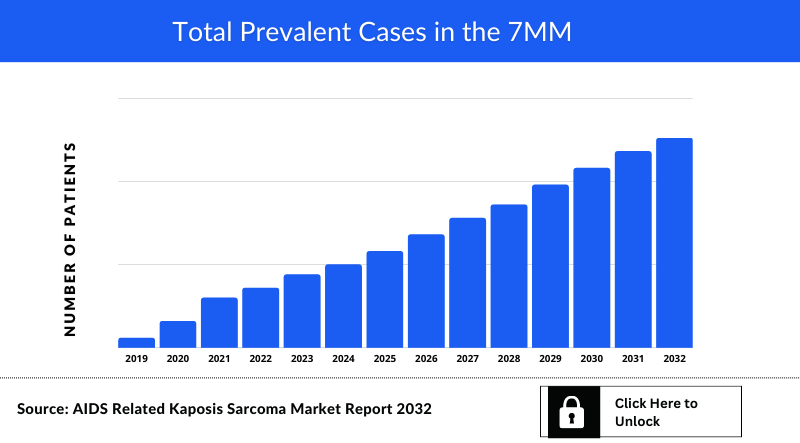
The epidemiology section of the AIDS related Kaposi’s sarcoma market report offers information on the patient populations, including historical and projected trends for each of the seven major markets. Examining key opinion leader views from physicians or clinical experts can assist in identifying the reasons behind historical and projected trends. The AIDS Related Kaposi's Sarcoma diagnosed patient pool, their trends, and the underlying assumptions are all included in this section of the report.
This section also presents the data with relevant tables and graphs, offering a clear and concise view of the prevalence of AIDS Related Kaposi’s Sarcoma. Additionally, the report discloses the assumptions made during the analysis, ensuring data interpretation and presentation transparency. This epidemiological data is valuable for understanding the disease burden and its impact on the patient population across various regions.
Key Findings from the AIDS Related Kaposi's Sarcoma Epidemiological Forecast
- In the US, the incidence of AIDS-related Kaposi sarcoma among people living with HIV is approximately 237 per 100,000 person-years, with significantly higher rates observed in men than in women, underscoring a marked gender disparity in disease occurrence.
- In 2020, the ASIR of Kaposi sarcoma in Germany was recorded at 0.21 per 100,000 in males and 0.02 per 100,000 in females.
- In 2020, the ASIR of Kaposi sarcoma in France was reported at 0.42 per 100,000 in males and 0.05 per 100,000 in females.
- In 2020, the ASIR of Kaposi sarcoma in Italy was measured at 1.1 per 100,000 in males and 0.58 per 100,000 in females.
- In 2020, the ASIR of Kaposi sarcoma in Spain was noted at 0.6 per 100,000 in males and 0.08 per 100,000 in females.
- In 2020, the ASIR of Kaposi sarcoma in the United Kingdom was estimated at 0.05 per 100,000 in males and 0.02 per 100,000 in females.
- In 2020, the ASIR of Kaposi sarcoma in Japan was documented at 0.05 per 100,000 in males.
- The epidemiology of AIDS related Kaposi’s sarcoma is expected to change during the forecast period (2025-2034).
AIDS Related Kaposi’s Sarcoma Market Outlook
The AIDS related Kaposi’s sarcoma therapeutics market is further expected to increase by the major drivers, such as the rising incidence population, technological advancements, and upcoming therapies in the forecast period (2025–2034). The current treatment landscape for AIDS-related Kaposi’s sarcoma is limited, primarily consisting of POMALYST (pomalidomide)—an oral immunomodulatory agent approved under accelerated approval—and PANRETIN (alitretinoin), a topical retinoid gel. While POMALYST offers the first systemic oral therapy in over two decades, and PANRETIN provides localized lesion control, both options cater to a narrow patient population, particularly those unresponsive to HAART.
Notably, no emerging therapies are currently in advanced development for this indication, highlighting a significant unmet need for more diverse, effective, and durable treatment options—especially for patients with refractory, disseminated, or rapidly progressive disease.
In January 2021, the European Commission withdrew the marketing authorisation for PANRETIN in Europe at the request of its marketing holder, Amdipharm Limited, who opted to discontinue the product for commercial reasons. Initially approved in October 2000 for AIDS-related Kaposi’s sarcoma, PANRETIN’s authorisation was renewed in 2005 and granted unlimited validity in 2010 before its withdrawal. With ongoing research and continued dedication, the future holds hope for even more effective treatments and, ultimately, a cure for this challenging condition. According to DelveInsight, the AIDS Related Kaposi’s Sarcoma market in the 7MM is expected to change significantly during the study period 2020–2034.
AIDS Related Kaposi’s Sarcoma Drug Analysis
AIDS Related Kaposi’s Sarcoma Marketed Drugs
-
POMALYST (pomalidomide): Bristol-Myers Squibb
POMALYST, a thalidomide analogue, exhibits immunomodulatory, antiangiogenic, and antineoplastic activity by binding to cereblon and promoting the degradation of key transcription factors such as Aiolos and Ikaros, leading to cytotoxic and immune-enhancing effects. It has shown the ability to induce apoptosis, inhibit tumor proliferation, overcome lenalidomide resistance, and enhance T cell and NK cell function while reducing pro-inflammatory cytokines. Indicated for adult patients with AIDS-related Kaposi sarcoma after HAART failure or for HIV-negative patients, POMALYST was granted accelerated approval, Breakthrough Therapy designation, and Orphan Drug designation, with continued approval contingent on confirmatory trial results.
-
PANRETIN (alitretinoin): ADVANZ PHARMA
PANRETIN gel 0.1%, containing alitretinoin (9-cis-retinoic acid), is a topical therapy designed for AIDS-related Kaposi’s sarcoma. Alitretinoin, an endogenous retinoid, uniquely activates all intracellular retinoid receptor subtypes (RARα, RARβ, RARγ, RXRα, RXRβ, RXRγ), triggering transcriptional pathways that regulate gene expression linked to cellular differentiation and proliferation in both normal and malignant cells. Through this broad receptor engagement, alitretinoin demonstrates the ability to inhibit Kaposi’s sarcoma cell growth in vitro, underscoring its targeted role in managing this neoplastic condition.
In April 2019, Advanz Pharma acquired the international rights to two established medicines from Eisai, including PANRETIN gel, for USD 30 million in cash, in addition to approximately USD 3.3 million for purchased inventory and related prepayments.
AIDS Related Kaposi’s Sarcoma Market Segmentation
DelveInsight’s ‘AIDS Related Kaposi’s Sarcoma – Market Insights, Epidemiology, and Market Forecast – 2034’ report provides a detailed outlook of the current and future AIDS related Kaposi’s sarcoma market, segmented within countries, by therapies, and by classes. Further, the market of each region is then segmented by each therapy to provide a detailed view of the current and future market share of all therapies.
AIDS Related Kaposi’s Sarcoma Market Size by Countries
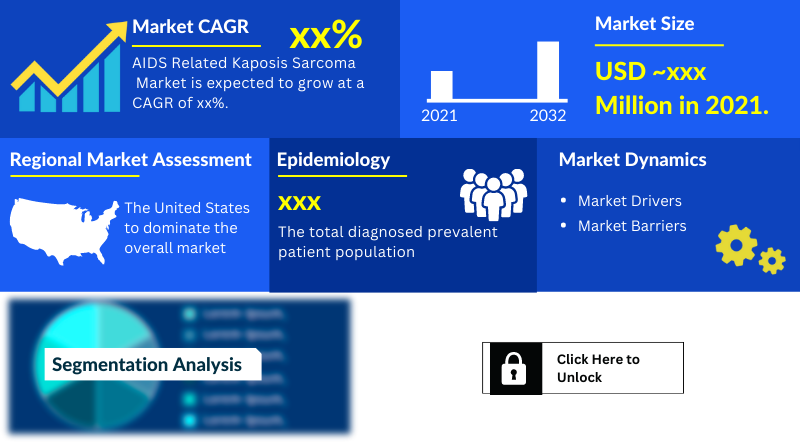
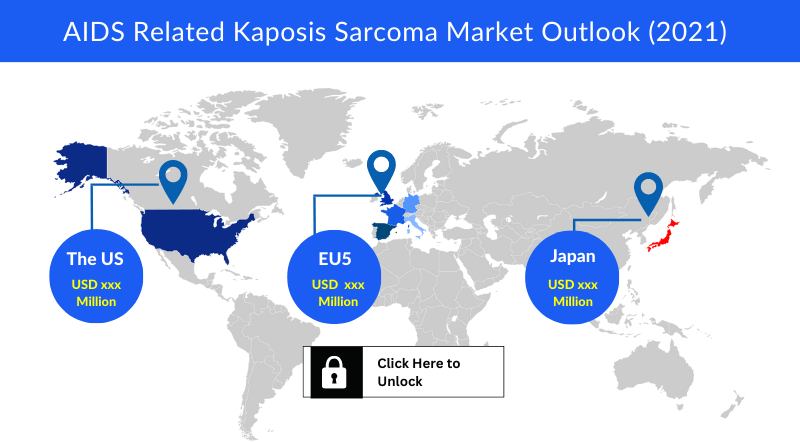
The AIDS related Kaposi’s sarcoma market size is assessed separately for various countries, including the United States, EU4 (Germany, France, Italy, and Spain), the UK, and Japan. In 2024, the United States held a significant share of the overall 7MM (Seven Major Markets) AIDS related Kaposi’s sarcoma market, primarily attributed to the country’s higher prevalence of the condition and the elevated cost of the available treatments. This dominance is projected to persist, especially with the potential early introduction of new products.
AIDS Related Kaposi’s Sarcoma Market Size by Therapies
AIDS Related Kaposi’s Sarcoma Market Size by Therapies is categorized into current and emerging markets for the study period 2020–2034.
AIDS Related Kaposi’s Sarcoma Drugs Uptake
This section focuses on the sales uptake of potential AIDS related Kaposi’s sarcoma drugs that have recently been launched or are anticipated to be launched in the AIDS Related Kaposi’s Sarcoma market between 2020 and 2034. It estimates the market penetration of AIDS related Kaposi’s sarcoma drugs for a given country, examining their impact within and across classes and segments. It also touches upon the financial and regulatory decisions contributing to the probability of success (PoS) of the drugs in the AIDS related Kaposi’s sarcoma market. The AIDS related Kaposi’s sarcoma Emerging Therapies are analyzed based on various attributes such as safety and efficacy in randomized clinical trials, order of entry and other market dynamics, and the unmet need they fulfill in the AIDS Related Kaposi’s sarcoma market.
AIDS Related Kaposi’s Sarcoma Market Access and Reimbursement
DelveInsight’s ‘AIDS Related Kaposi’s Sarcoma Market Insights, Epidemiology, and Market Forecast – 2034’ report provides a descriptive overview of the market access and reimbursement scenario of AIDS Related Kaposi’s Sarcoma. This section includes a detailed analysis of the country-wise healthcare system for each therapy, enlightening the market access, reimbursement policies, and health technology assessments.
Latest KOL Views on AIDS Related Kaposi's Sarcoma
To keep up with current AIDS related Kaposi’s sarcoma market trends and fill gaps in secondary findings, we interview KOLs and SMEs’ working in the AIDS related Kaposi’s sarcoma domain. Their opinion helps understand and validate current and emerging therapies and treatment patterns or AIDS related Kaposi’s sarcoma market trends. This will support the clients in potential upcoming novel treatments by identifying the overall scenario of the market and the AIDS related Kaposi’s sarcoma unmet needs.
AIDS Related Kaposi’s Sarcoma: KOL Insights
DelveInsight’s analysts connected with 50+ KOLs to gather insights; however, interviews were conducted with 15+ KOLs in the 7MM. These KOLs were from organizations, institutes, and hospitals, such as National Cancer Institute, US; The Ronald O. Perelman Department of Dermatology, US; Public Health England Knowledge & Intelligence Team, UK; Department of Epidemiology, Murcia Regional Health Authority, Ronda de Levante, Spain; Department of Oncology and Anatomic Pathology, Italy; and University of Occupational and Environmental Health, Japan, among others.
“AIDS-related Kaposi's sarcoma, driven by HHV-8 in immunocompromised patients, shows variable progression from skin lesions to visceral involvement. Diagnosis relies on biopsy, with staging based on tumor spread, CD4 count, and systemic symptoms. In the ART era, cases can emerge even with high CD4 levels and controlled HIV, reflecting evolving disease patterns.” “Major strides have been made in the management of AIDS-related Kaposi’s Sarcoma, largely due to improved HIV control. Declines in incidence and better outcomes in early Kaposi's have been achieved with cART. For cases unresponsive to HIV suppression, chemotherapy remains the primary treatment. Targeted biological therapies are being tested, but their curative potential remains uncertain.”
“AIDS-related Kaposi’s management continues to face critical gaps despite advances in therapy. The absence of curative options, high recurrence risk despite sustained HIV control from chronic or relapsing disease remain key challenges. ART only partially restores immune function, leaving patients vulnerable to Kaposi's and other malignancies, while drug-resistant HIV, persistent inflammation, and chemotherapy-related toxicity add to treatment complexity. Unmet needs include effective options for refractory disease, targeted strategies for Kaposi’s-IRIS, and improved access to Kaposi's therapies in low-resource regions where HIV and Kaposi's burden is highest.”
AIDS Related Kaposi's Sarcoma Competitive Intelligence Analysis
We conduct a Competitive and Market Intelligence analysis of the AIDS related Kaposi’s sarcoma Market, utilizing various Competitive Intelligence tools such as SWOT analysis and Market entry strategies. The inclusion of these analyses is contingent upon data availability, ensuring a comprehensive and well-informed assessment of the market landscape and competitive dynamics.
AIDS Related Kaposi’s Sarcoma Pipeline Development Activities
The AIDS Related Kaposi's Sarcoma Therapeutics Market Report offers an analysis of therapeutic candidates in Phase II and III stages and examines companies involved in developing targeted therapeutics for AIDS Related Kaposi’s Sarcoma. It provides valuable insights into the advancements and progress of potential treatments in clinical development for this condition. The AIDS Related Kaposi's Sarcoma Market Report covers information on collaborations, acquisition and merger, licensing, patent details, and other information for emerging AIDS related Kaposi’s sarcoma therapies.
AIDS Related Kaposi’s Sarcoma Market Report Insights
- Patient-based AIDS Related Kaposi's Sarcoma Market Forecasting
- Therapeutic Approaches
- AIDS Related Kaposi’s Sarcoma Pipeline Analysis
- AIDS Related Kaposi’s Sarcoma Market Size and Trends
- AIDS Related Kaposi’s Sarcoma Drugs Market Opportunities
- Impact of Upcoming Therapies
AIDS Related Kaposi’s Sarcoma Market Report Key Strengths
- 10 Years AIDS Related Kaposi's Sarcoma Market Forecast
- The 7MM Coverage
- AIDS Related Kaposi’s Sarcoma Epidemiology Segmentation
- Key Cross Competition
- Highly Analyzed AIDS Related Kaposi’s Sarcoma Market
- AIDS Related Kaposi’s Sarcoma Drugs Uptake
AIDS Related Kaposi’s Sarcoma Market Report Assessment
- AIDS Related Kaposi’s Sarcoma Treatment Practices
- AIDS Related Kaposi's Sarcoma Unmet Needs
- AIDS Related Kaposi’s Sarcoma Pipeline Product Profiles
- AIDS Related Kaposi’s Sarcoma Market Attractiveness
Key Questions Answered in the AIDS Related Kaposi's Sarcoma Market
How common is AIDS related Kaposi’s sarcoma?
- What are the key findings of AIDS related Kaposi’s sarcoma epidemiology across the 7MM, and which country will have the highest number of patients during the study period (2020–2034)?
- What are the currently available treatments for AIDS related Kaposi’s sarcoma?
- What are the disease risk, burden, and unmet needs of AIDS related Kaposi’s sarcoma?
- At what CAGR is the AIDS related Kaposi’s sarcoma market and its epidemiology is expected to grow in the 7MM during the forecast period (2025–2034)?
- How would the unmet needs impact the AIDS related Kaposi’s sarcoma market dynamics and subsequently influence the analysis of the related trends?
- What would be the forecasted patient pool of AIDS related Kaposi’s sarcoma in the 7MM covering the United States, EU4 (Germany, France, Italy, and Spain), the UK, and Japan?
- Among EU4 and the UK, which country will have the highest number of patients during the forecast period (2025–2034)?
- How many companies are currently developing therapies for the AIDS related Kaposi’s sarcoma treatment?
Reasons to Buy the AIDS Related Kaposi's Sarcoma Market Report
- The report will help in developing business strategies by understanding the latest trends and changing treatment dynamics driving the AIDS related Kaposi’s sarcoma Market.
- Insights on patient burden/disease AIDS Related Kaposi's Sarcoma Prevalence, evolution in diagnosis, and factors contributing to the change in the epidemiology of the disease during the forecast years
- To understand the existing AIDS Related Kaposi's Sarcoma Drugs Market opportunity in varying geographies and the growth potential over the coming years.
- Distribution of historical and current patient share based on real-world prescription data along with reported sales of current treatment in the US, EU4 (Germany, France, Italy, and Spain), the United Kingdom, and Japan.
- Identification of strong upcoming players in the AIDS Related Kaposi's Sarcoma Drugs Market will help in devising strategies that will help in getting ahead of competitors.
- Detailed analysis and ranking of class-wise potential current and emerging therapies under the conjoint analysis section to provide visibility around leading classes.
- Highlights of Access and Reimbursement policies of approved therapies, barriers to accessibility of off-label expensive therapies, and patient assistance programs.
- To understand the perspective of Key Opinion Leaders around the accessibility, acceptability, and compliance-related challenges of existing treatment to overcome barriers in the future.
- Detailed insights on the unmet needs of the existing AIDS Related Kaposi's Sarcoma Drugs Market so that the upcoming players can strengthen their development and launch strategy.
For More In-depth Information @ New DelveInsight Blogs