Alagille Syndrome Market
Key Highlights
- DelveInsight’s analyst projects that the total prevalent cases of Alagille Syndrome (ALGS) in the 7MM were ~17,883 in 2023 and these cases are going to increase during the forecast period (2024–2034). This increase in growth can be attributed to growing awareness and population growth ultimately leading to an increase in the prevalence of ALGS.
- According to DelveInsight's analysis, it is projected that approximately 38% of the total prevalent cases of Alagille Syndrome (ALGS) in the 7MM were in the United States. As per the estimations, it indicates that in 2023, the EU4 and the UK collectively represented nearly 9,819 prevalent cases of ALGS.
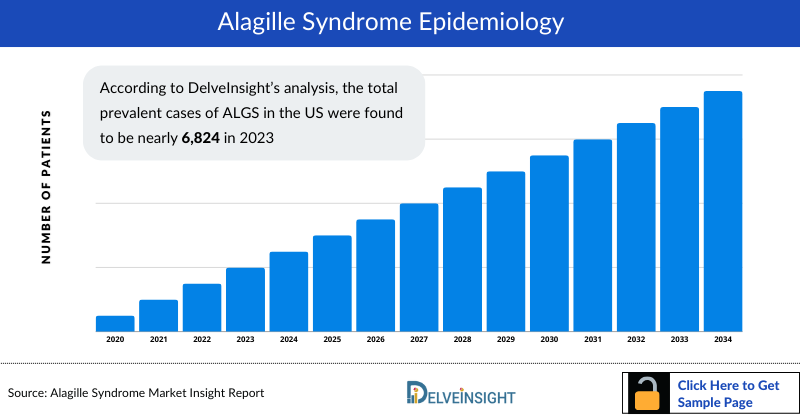
- According to DelveInsight’s analysis, the total prevalent cases of ALGS in the US were found to be nearly 6,824 in 2023 and are estimated to increase with a significant CAGR throughout the forecast period.
- As per DelveInsight’s estimates, Japan accounted for nearly 7% of the total prevalent cases of ALGS in the 7MM in 2023.
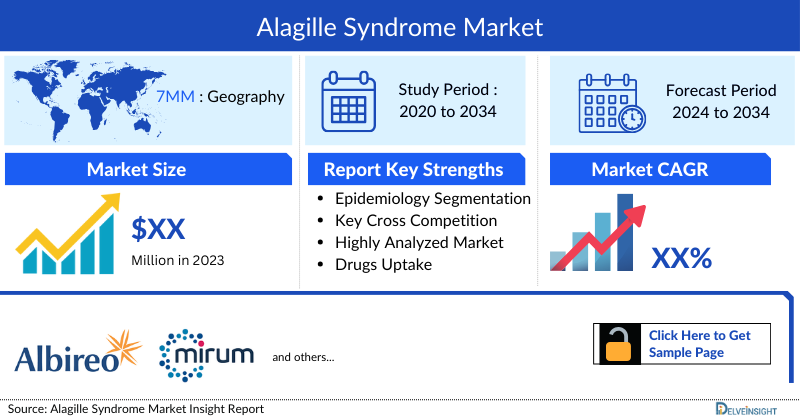
DelveInsight’s “Alagille Syndrome (ALGS) – Epidemiology Forecast – 2034” report delivers an in-depth understanding of Alagille Syndrome, historical and forecasted epidemiology of Alagille Syndrome in the United States, EU4 (Germany, France, Italy, and Spain) and the United Kingdom, and Japan.
Geography Covered
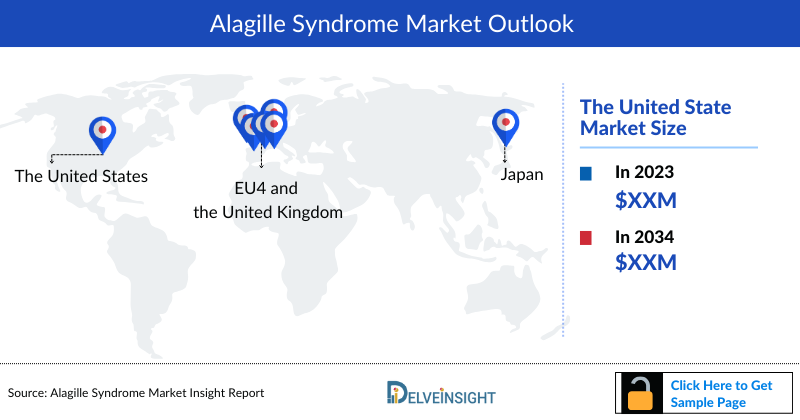
- The United States
- EU4 (Germany, France, Italy, and Spain) and the United Kingdom
- Japan
Study Period: 2020–2034
Alagille Syndrome Disease Understanding
Alagille Syndrome Overview
Alagille syndrome, also known as Alagille-Watson syndrome, is a rare genetic disorder caused by mutations in the JAG1 or NOTCH2 gene. Predominantly involving JAG1 on chromosome 20, this autosomal dominant condition affects multiple organ systems. Symptoms typically appear within the first two years of life and include bile duct paucity, cholestasis, jaundice, poor weight gain, severe itching, congenital heart defects, heart murmurs, vertebral anomalies, distinctive facial features, and ocular abnormalities. Around half of the cases occur de novo, meaning the mutation is not inherited from a parent. The severity of symptoms varies, with some individuals requiring liver transplantation due to progressive liver damage.
Alagille Syndrome Recent Developments
- On September 23, 2024, Ipsen announced that the European Commission has granted approval for Kayfanda® (odevixibat) under exceptional circumstances to treat cholestatic pruritus in patients with Alagille Syndrome (ALGS) aged 6 months and older. Kayfanda is a once-daily, non-systemic ileal bile acid transport (IBAT) inhibitor. The active ingredient, odevixibat, works by blocking the ileal bile acid transporter, leading to a reduction in serum bile acids produced by the liver.
Alagille Syndrome Diagnosis
The diagnosis of ALGS is complex due to its highly variable symptoms. It involves identifying characteristic symptoms through detailed patient history, thorough clinical evaluation, and specialized tests. Key diagnostic tools include liver biopsy to detect bile duct paucity, although this hallmark feature might not always be present in infants. Diagnosis is often suspected if an individual exhibits three of five clinical findings: liver disease or cholestasis, heart defects, skeletal abnormalities, ophthalmologic issues, and distinctive facial features. Additional tests, such as blood tests, eye examinations, spine x-rays, abdominal ultrasounds, and heart function evaluations, support the diagnosis. Molecular genetic testing for JAG1 or NOTCH2 mutations can confirm the diagnosis, although some cases may not reveal these mutations.
Further details related to diagnosis are provided in the report…
Alagille Syndrome Epidemiology
For the purpose of designing the patient-based model for Alagille Syndrome (ALGS), the report provides historical as well as forecasted epidemiology segmented by Total Prevalent Cases of Alagille Syndrome, Gender-Specific Prevalent Cases of Alagille Syndrome, Age-specific Prevalent Cases of Alagille Syndrome, and Type-specific Prevalent Cases of Alagille Syndrome in the 7MM covering the United States, EU4 countries (Germany, France, Italy, and Spain) and the United Kingdom, and Japan, from 2020 to 2034.
- The highest proportion of ALGS cases was reported in Germany among the EU4 and the UK, while the lowest number of cases was found in Spain.
- The Gender-specific Cases of ALGS in the US were ~3,846 for males and ~2,978 for females in 2023 and are expected to increase within the forecast period (2024–2034).
- According to the analysis performed by DelveInsight's experts, the Age-specific Cases of ALGS were categorized into 0-0.5 years, 0.5-10 years, 11-20 years, and >20 years The higher number of cases (~4,436) was accounted for by the 0.5-10 year age group in 2023 in the US.
- The Prevalence of ALGS Based on the Type of ALGS was categorized into Patients with Chronic Cholestasis and Patients without Cholestasis. According to DelveInsight estimates, a higher number of patients were estimated in Patients with Chronic Cholestasis, with approximately 1,177 cases in 2023 in Japan.
KOL Views
To gaze into the epidemiology insights of the real world, we take KOLs and SMEs’ opinions working in the domain through primary research to fill the data gaps and validate our secondary research on disease prevalence.
DelveInsight’s analysts connected with 20+ KOLs to gather insights; however, interviews were conducted with 10+ KOLs in the 7MM. Centers such as the University of Michigan Hospital; Department of Surgery, UCSF; University Hospital, Münster, and others were contacted. Their opinion helps understand and validate current disease prevalence, gender involved with the disease, diagnosis rate, and diagnostic criteria.
Scope of the Report
- The report covers a segment of key events, an executive summary, a descriptive overview of Alagille Syndrome, explaining its causes, signs and symptoms, and currently available diagnostic algorithms and guidelines.
- Comprehensive insight has been provided into the epidemiology segments and forecasts, the future growth potential of diagnosis rate, disease progression, and diagnosis guidelines.
- The report provides an edge for understanding trends, expert insights/KOL views, and patient journeys in the 7MM.
- A detailed review of current challenges in establishing the diagnosis.
Alagille Syndrome Report Insights
- Patient Population
- Country-wise Epidemiology Distribution
- Total Prevalent Cases of Alagille Syndrome
- Gender-Specific Prevalent Cases of Alagille Syndrome
- Age-specific Prevalent Cases of Alagille Syndrome
- Type-specific Prevalent Cases of Alagille Syndrome
Alagille Syndrome Report Key Strengths
- 11 years Forecast
- The 7MM Coverage
- Alagille Syndrome Epidemiology Segmentation
Alagille Syndrome Report Assessment
- Current Diagnostic Practices Patient Segmentation
Epidemiology Insights
- What are the disease risks, burdens, and unmet needs of Alagille Syndrome? What will be the growth opportunities across the 7MM concerning the patient population of Alagille Syndrome?
- What is the historical and forecasted Alagille Syndrome patient pool in the United States, EU4 (Germany, France, Italy, and Spain) the United Kingdom, and Japan?
- Why are the diagnosed prevalent cases of ALGS in Japan lower than in the US?
- Which country has a high patient share for ALGS?
Reasons to Buy
- Insights on patient burden/disease, evolution in diagnosis, and factors contributing to the change in the epidemiology of the disease during the forecast years.
- To understand the Alagille Syndrome prevalence cases in varying geographies over the coming years.
- A detailed overview of Gender and Age-specific prevalence of ALGS, and prevalence of ALGS based on type of ALGS.
- To understand the perspective of key opinion leaders around the current challenges with establishing the diagnosis options.
- Detailed insights on various factors hampering disease diagnosis and other existing diagnostic challenges.
1. Key Insights
2. Report Introduction
3. ALGS Epidemiology Overview at a Glance
3.1. Patient Share Distribution of ALGS in 2020
3.2. Patient Share Distribution of ALGS in 2034
4. Methodology of ALGS Epidemiology
5. Executive Summary of ALGS
6. Key Events
7. Disease Background and Overview
7.1. Introduction
7.2. Clinical Manifestations
7.3. Signs and Symptoms
7.4. Risk Factors
7.5. Genetics and Inheritance
7.6. Pathogenesis
7.7. Prognosis
7.8. Staging
7.9. Diagnosis
7.9.1. Diagnostic criteria
7.9.2. Differential diagnosis
8. Epidemiology and Patient Population
8.1. Key Findings
8.2. Assumptions and Rationale: The 7MM
8.2.1. Total Prevalent Cases of Alagille Syndrome
8.2.2. Gender-specific Prevalent Cases of Alagille Syndrome
8.2.3. Age-specific Prevalent Cases of Alagille Syndrome
8.2.4. Type-specific Prevalent Cases of Alagille Syndrome
8.3. Total Prevalent Cases of Alagille Syndrome in the 7MM
8.4. The US
8.4.1. Total Prevalent Cases of Alagille Syndrome
8.4.2. Gender-specific Prevalent Cases of Alagille Syndrome
8.4.3. Age-specific Prevalent Cases of Alagille Syndrome
8.4.4. Type-specific Prevalent Cases of Alagille Syndrome
8.5. The EU4 and the UK
8.5.1. Germany
8.5.1.1. Total Prevalent Cases of Alagille Syndrome
8.5.1.2. Gender-specific Prevalent Cases of Alagille Syndrome
8.5.1.3. Age-specific Prevalent Cases of Alagille Syndrome
8.5.1.4. Type-specific Prevalent Cases of Alagille Syndrome
8.5.2. France
8.5.2.1. Total Prevalent Cases of Alagille Syndrome
8.5.2.2. Gender-specific Prevalent Cases of Alagille Syndrome
8.5.2.3. Age-specific Prevalent Cases of Alagille Syndrome
8.5.2.4. Type-specific Prevalent Cases of Alagille Syndrome
8.5.3. Italy
8.5.3.1. Total Prevalent Cases of Alagille Syndrome
8.5.3.2. Gender-specific Prevalent Cases of Alagille Syndrome
8.5.3.3. Age-specific Prevalent Cases of Alagille Syndrome
8.5.3.4. Type-specific Prevalent Cases of Alagille Syndrome
8.5.4. Spain
8.5.4.1. Total Prevalent Cases of Alagille Syndrome
8.5.4.2. Gender-specific Prevalent Cases of Alagille Syndrome
8.5.4.3. Age-specific Prevalent Cases of Alagille Syndrome
8.5.4.4. Type-specific Prevalent Cases of Alagille Syndrome
8.5.5. The UK
8.5.5.1. Total Prevalent Cases of Alagille Syndrome
8.5.5.2. Gender-specific Prevalent Cases of Alagille Syndrome
8.5.5.3. Age-specific Prevalent Cases of Alagille Syndrome
8.5.5.4. Type-specific Prevalent Cases of Alagille Syndrome
8.6. Japan
8.6.1. Total Prevalent Cases of Alagille Syndrome
8.6.2. Gender-specific Prevalent Cases of Alagille Syndrome
8.6.3. Age-specific Prevalent Cases of Alagille Syndrome
8.6.4. Type-specific Prevalent Cases of Alagille Syndrome
9. Patient Journey
10. KOL Views
11. Appendix
11.1. Bibliography
11.2. Acronyms and Abbreviations
11.3. Report Methodology
12. DelveInsight Capabilities
13. Disclaimer
14. About DelveInsight
List of Tables:
Table 1: Summary of Alagille Syndrome Epidemiology, and Key Events (2020–2034)
Table 2: Features of Alagille Syndrome
Table 3: Molecular Genetic Testing Used in Alagille Syndrome
Table 4: Recommended Evaluations Following Initial Diagnosis in Individuals with Alagille Syndrome
Table 5: Classic Criteria, based on five body systems, for a diagnosis of Alagille syndrome
Table 6: Genes of Interest in the Differential Diagnosis of Alagille Syndrome (ALGS)
Table 7: Total Prevalent Population of Alagille Syndrome in the 7MM (2020–2034)
Table 8: Total Prevalent Cases of Alagille Syndrome in the United States (2020–2034)
Table 9: Gender-specific Prevalent Cases of Alagille Syndrome in the United States (2020–2034)
Table 10: Age-specific Prevalent Cases of Alagille Syndrome in the United States (2020–2034)
Table 11: Type-specific Prevalent Cases of Alagille Syndrome in the United States (2020–2034)
Table 12: Total Prevalent Cases of Alagille Syndrome in Germany (2020–2034)
Table 13: Gender-specific Prevalent Cases of Alagille Syndrome in Germany (2020–2034)
Table 14: Age-specific Prevalent Cases of Alagille Syndrome in Germany (2020–2034)
Table 15: Type-specific Prevalent Cases of Alagille Syndrome in Germany (2020–2034)
Table 16: Total Prevalent Cases of Alagille Syndrome in France (2020–2034)
Table 17: Gender-specific Prevalent Cases of Alagille Syndrome in France (2020–2034)
Table 18: Age-specific Prevalent Cases of Alagille Syndrome in France (2020–2034)
Table 19: Type-specific Prevalent Cases of Alagille Syndrome in France (2020–2034)
Table 20: Total Prevalent Cases of Alagille Syndrome in Italy (2020–2034)
Table 21: Gender-specific Prevalent Cases of Alagille Syndrome in Italy (2020–2034)
Table 22: Age-specific Prevalent Cases of Alagille Syndrome in Italy (2020–2034)
Table 23: Type-specific Prevalent Cases of Alagille Syndrome in Italy (2020–2034)
Table 24: Total Prevalent Cases of Alagille Syndrome in Spain (2020–2034)
Table 25: Gender-specific Prevalent Cases of Alagille Syndrome in Spain (2020–2034)
Table 26: Age-specific Prevalent Cases of Alagille Syndrome in Spain (2020–2034)
Table 27: Type-specific Prevalent Cases of Alagille Syndrome in Spain (2020–2034)
Table 28: Total Prevalent Cases of Alagille Syndrome in the United Kingdom (2020–2034)
Table 29: Gender-specific Prevalent Cases of Alagille Syndrome in the United Kingdom (2020–2034)
Table 30: Age-specific Prevalent Cases of Alagille Syndrome in the United Kingdom (2020–2034)
Table 31: Type-specific Prevalent Cases of Alagille Syndrome in the United Kingdom (2020–2034)
Table 32: Total Prevalent Cases of Alagille Syndrome in Japan (2020–2034)
Table 33: Gender-specific Prevalent Cases of Alagille Syndrome in Japan (2020–2034)
Table 34: Age-specific Prevalent Cases of Alagille Syndrome in Japan (2020–2034)
Table 35: Type-specific Prevalent Cases of Alagille Syndrome in Japan (2020–2034)
List of Figures:
Figure 1: Flow diagram of genetic investigations and management for suspected ALGS patients
Figure 2: Frequency of symptoms
Figure 3: Total Prevalent cases of Alagille Syndrome in 7MM (2020–2034)
Figure 4: Total Prevalent cases of Alagille Syndrome in the United States (2020–2034)
Figure 5: Gender-specific Prevalent Cases of Alagille Syndrome in the US (2020–2034)
Figure 6: Age-specific Prevalent Cases of Alagille Syndrome in the US (2020–2034)
Figure 7: Type specific cases of Alagille Syndrome in the US (2020–2034)
Figure 8: Total Prevalent cases of Alagille Syndrome in Germany (2020–2034)
Figure 9: Gender-specific Prevalent Cases of Alagille Syndrome in Germany (2020–2034)
Figure 10: Age-specific Prevalent Cases of Alagille Syndrome in Germany (2020–2034)
Figure 11: Type specific cases of Alagille Syndrome in Germany (2020–2034)
Figure 12: Total Prevalent cases of Alagille Syndrome in France (2020–2034)
Figure 13: Gender-specific Prevalent Cases of Alagille Syndrome in France (2020–2034)
Figure 14: Age-specific Prevalent Cases of Alagille Syndrome in France (2020–2034)
Figure 15: Type specific cases of Alagille Syndrome in France (2020–2034)
Figure 16: Total Prevalent cases of Alagille Syndrome in Italy (2020–2034)
Figure 17: Gender-specific Prevalent Cases of Alagille Syndrome in Italy (2020–2034)
Figure 18: Age-specific Prevalent Cases of Alagille Syndrome in Italy (2020–2034)
Figure 19: Type specific cases of Alagille Syndrome in Italy (2020–2034)
Figure 20: Total Prevalent cases of Alagille Syndrome in Spain (2020–2034)
Figure 21: Gender-specific Prevalent Cases of Alagille Syndrome in Spain (2020–2034)
Figure 22: Age-specific Prevalent Cases of Alagille Syndrome in Spain (2020–2034)
Figure 23: Type specific cases of Alagille Syndrome in Spain (2020–2034)
Figure 24: Total Prevalent cases of Alagille Syndrome in the United Kingdom (2020–2034)
Figure 25: Gender-specific Prevalent Cases of Alagille Syndrome in the UK (2020–2034)
Figure 26: Age-specific Prevalent Cases of Alagille Syndrome in the UK (2020–2034)
Figure 27: Type specific cases of Alagille Syndrome in the United Kingdom (2020–2034)
Figure 28: Total Prevalent cases of Alagille Syndrome in Japan (2020–2034)
Figure 29: Gender-specific Prevalent Cases of Alagille Syndrome in Japan (2020–2034)
Figure 30: Age-specific Prevalent Cases of Alagille Syndrome in Japan (2020–2034)
Figure 31: Type specific cases of Alagille Syndrome in Japan (2020–2034)
Figure 32: Treatment protocol for cholestatic pruritus in Alagille syndrome. MARS¼ molecular adsorbent recirculation system; PEBD¼ partial external biliary diversion
Figure 33: Unmet Needs
Alagille Syndrome Companies:
- Mirum Pharmaceuticals
- Albireo
- And Many Others