Allergic Rhino-Conjunctivitis Market Summary
- The allergic rhinoconjunctivitis market size is anticipated to sustain a steady Compound Annual Growth Rate (CAGR) during the forecast period (2026–2036). This growth in market revenue is primarily propelled by a rising global prevalence of allergic rhinoconjunctivitis affecting over 400 million people worldwide, increasing environmental allergen exposure, growing urbanization and pollution levels, expanding adoption of targeted biologics and allergen immunotherapy, and increased R&D investment in novel treatment approaches including anti-IgE monoclonal antibodies, anti-IL-4/IL-13 biologics, and sublingual immunotherapy.
- The leading Allergic Rhinoconjunctivitis companies developing therapies in the treatment market include - Immunotek SL, Emergo Therapeutics, Iltoo Pharma, Marinomed Biotech AG, and others.
Allergic Rhinoconjunctivitis Market & Epidemiology Insights
- The increasing cases of allergic rhinoconjunctivitis may be attributed to a combination of factors, including rising prevalence of IgE-mediated type I hypersensitivity reactions, climate change extending pollen seasons, growing exposure to indoor allergens such as house dust mites and pet dander, and increasing comorbid conditions including asthma, atopic dermatitis, sinusitis, and ocular conjunctivitis all of which amplify disease burden and complicate disease management.
- Mixed Pollens Allergen Extract (ORALAIR) by Stallergenes Greer and House Dust Mite Allergen Extract (ODACTRA) by ALK-Abelló exemplify the growing role of allergen immunotherapy in allergic rhinoconjunctivitis management. ORALAIR, is designed to induce long-term immune tolerance in patients with grass pollen-induced allergic rhinoconjunctivitis, while ODACTRA targets house dust mite-induced allergic rhinitis with or without conjunctivitis through disease-modifying sublingual immunotherapy. Together, these therapies reflect the shift beyond symptomatic treatment toward allergen-specific interventions capable of addressing the underlying immunologic drivers of disease and potentially providing sustained clinical benefit.
- A gap remains for a single intervention that delivers both rapid and durable long-term symptom control across the full spectrum of allergic rhinoconjunctivitis encompassing nasal congestion, sneezing, rhinorrhea, and ocular symptoms while demonstrating disease-modifying activity, safety across pediatric and adult populations, and minimal systemic adverse effects beyond the current standard of care.
- The future market for Allergic Rhinoconjunctivitis will be highly competitive, with multiple entrants MM09-MG01 (Inmunotek) in Phase III subcutaneous immunotherapy for rhinoconjunctivitis triggered by house dust mites advancing through clinical development. As these therapies gain approval, market dynamics are set to intensify and overall growth is projected to accelerate at a significant CAGR.
Request for unlocking the sample page of the "Allergic Rhinoconjunctivitis Market Forecast"
Key Factors Driving the Allergic Rhinoconjunctivitis Market
- Rising Disease Prevalence: Increasing incidence of allergic rhinitis and conjunctivitis worldwide, driven by environmental allergens, pollution, and changing lifestyles, is expanding the patient population.
- Growing Awareness and Diagnosis Rates: Enhanced awareness among patients and healthcare professionals is leading to earlier diagnosis and greater treatment adoption.
- Advancements in Immunotherapy: Continuous development of allergen-specific immunotherapies, including sublingual and biologic therapies, is improving treatment outcomes and driving market growth.
- Increasing Healthcare Expenditure: Higher healthcare spending and improved access to allergy treatments in developed and emerging markets are supporting market expansion.
- Robust Pipeline and Innovation: Ongoing research activities and the introduction of novel therapies targeting underlying allergic mechanisms are creating significant growth opportunities in the Allergic Rhinoconjunctivitis market.
DelveInsight's comprehensive report titled "Allergic Rhinoconjunctivitis Market Insights, Epidemiology, and Market Forecast – 2036" offers a detailed analysis of allergic rhinoconjunctivitis across its seasonal and perennial subtypes and associated comorbid conditions. The report presents historical and projected epidemiological data covering total prevalent cases of allergic rhinoconjunctivitis, total diagnosed prevalent cases of allergic rhinoconjunctivitis, comorbidity-associated cases of allergic rhinoconjunctivitis including cases co-existing with asthma, atopic dermatitis, and sinusitis subtype-specific cases of allergic rhinoconjunctivitis, and treated cases of allergic rhinoconjunctivitis. In addition to epidemiology, the market report encompasses various aspects related to the patient population. These aspects include the diagnosis process, prescription patterns, physician perspectives, market accessibility, treatment options, and prospective developments in the market across seven major markets: the United States, EU4 (Germany, France, Italy, and Spain), the United Kingdom, and Japan, spanning from 2026 to 2036.
The report analyzes the existing treatment practices and unmet medical requirements in Allergic Rhinoconjunctivitis. It evaluates the market potential and identifies potential business prospects for enhancing therapies or interventions. This valuable information enables stakeholders to make well-informed decisions regarding product development and strategic planning for the market.
Scope of the Allergic Rhinoconjunctivitis Market Report | |
|
Study Period |
2022–2036 |
|
Forecast Period |
2026–2036 |
|
Geographies Covered |
US, EU4 (Germany, France, Italy, and Spain) and the UK, and Japan |
|
Allergic Rhinoconjunctivitis Epidemiology |
· Total Prevalent Cases of Allergic Rhinoconjunctivitis · Total Diagnosed Prevalent Cases of Allergic Rhinoconjunctivitis · Age-specific Diagnosed Prevalent Cases of Allergic Rhinoconjunctivitis · Treated Cases of Allergic Rhinoconjunctivitis |
|
Allergic Rhinoconjunctivitis Market |
· Total Market Size · Market Size by Therapies |
|
Market Analysis |
· KOL Views · Conjoint Analysis · SWOT Analysis · Unmet Needs |
|
Allergic Rhinoconjunctivitis Market players |
· Sanofi · Regeneron Pharmaceuticals · Eli Lilly · Merck · Others |
Allergic Rhinoconjunctivitis Disease Understanding
Allergic Rhinoconjunctivitis Overview
Allergic rhinoconjunctivitis is a chronic, IgE-mediated inflammatory disorder characterized by concurrent inflammation of the nasal mucosa and conjunctiva following exposure to airborne allergens. Clinical manifestations are driven by mast cell activation and the release of inflammatory mediators, including histamine, leukotrienes, and cytokines, resulting in vasodilation, sensory nerve stimulation, mucus hypersecretion, and increased lacrimation. The condition is commonly classified into seasonal allergic rhinoconjunctivitis (SARC), often referred to as hay fever and triggered by seasonal outdoor allergens such as grass and tree pollens, and perennial allergic rhinoconjunctivitis (PARC), which is associated with year-round exposure to indoor allergens such as house dust mites and pet dander. Seasonal disease is frequently diagnosed during childhood and adolescence, whereas perennial disease is often linked to chronic indoor allergen exposure throughout adulthood.
Allergic Rhinoconjunctivitis Diagnosis
The diagnostic workup typically begins with a detailed clinical history and physical examination, with diagnosis primarily based on symptom patterns, allergen exposure history, and confirmatory allergy testing. Skin prick testing (SPT) remains the preferred first-line method for detecting allergen-specific IgE sensitization, while serum-specific IgE testing serves as a valuable alternative when SPT is unavailable or contraindicated. Nasal cytology may be used as a complementary tool to differentiate allergic from non-allergic rhinitis and to identify local allergic rhinitis (LAR), a phenotype characterized by symptoms consistent with allergic rhinoconjunctivitis despite negative skin prick and serum-specific IgE test results. In such cases, the nasal provocation test (NPT) is considered the diagnostic gold standard for confirming local allergic rhinitis.
Further details related to country-based variations are provided in the report...
Current Allergic Rhinoconjunctivitis Treatment Landscape
According to established treatment guidelines, allergic rhinoconjunctivitis management follows a stepwise approach encompassing allergen avoidance, pharmacological interventions, and immunotherapy Pharmacological treatments primarily consisting of first-line medications such as intranasal corticosteroids (INCS), second-generation oral and nasal antihistamines, and oral leukotriene receptor antagonists (LTRA), while second-line medications include oral corticosteroids, mast cell stabilizers, nasal decongestants, and nasal anticholinergics. The updated ARIA-EAACI 2024–2025 guidelines — based on the GRADE evidence-to-decision framework — issued recommendations prioritizing the choice between intranasal INCS, INAH, and fixed combinations of INAH + INCS, with INCS recommended as the most efficacious intranasal treatment class for moderate-to-severe persistent allergic rhinoconjunctivitis. For ocular symptoms, oral antihistamines including desloratadine, fexofenadine, loratadine, olopatadine, and rupatadine demonstrated the highest probability of improving rhinoconjunctivitis-related quality of life in seasonal allergic rhinoconjunctivitis, while the ARIA-EAACI 2024–2025 guidelines recommend oral antihistamines over LTRA and ocular antihistamines over mast cell stabilisers for conjunctival symptoms. Allergen Immunotherapy (AIT) delivered via subcutaneous (SCIT) or sublingual (SLIT) routes — is the only disease-modifying treatment option for allergic rhinoconjunctivitis, recommended for patients who remain symptomatic despite pharmacotherapy or those in whom prevention of asthma development is a priority, particularly in pediatric populations.
Further details related to country-based variations are provided in the report...
Allergic Rhinoconjunctivitis Epidemiology
The Allergic Rhinoconjunctivitis epidemiology section of the allergic rhinoconjunctivitis market report offers information on the patient populations, including historical and projected trends for each of the seven major markets. Examining key opinion leader views from physicians or clinical experts can assist in identifying the reasons behind historical and projected trends. The diagnosed patient pool, their trends, and the underlying assumptions are all included in this section of the report. This section also presents the data with relevant tables and graphs, offering a clear and concise view of the prevalence of allergic rhinoconjunctivitis. Additionally, the report discloses the assumptions made during the analysis, ensuring data interpretation and presentation transparency. This epidemiological data is valuable for understanding the disease burden and its impact on the patient population across various regions.
Key Findings from the Allergic Rhinoconjunctivitis Epidemiology Report
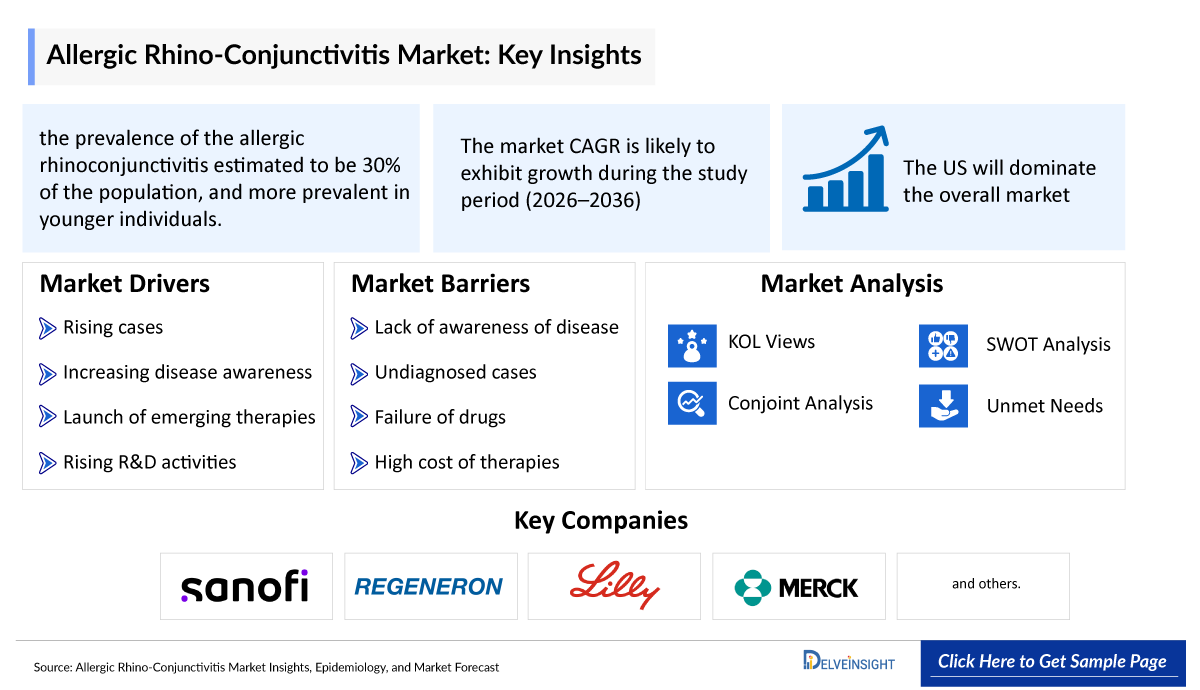
- As per secondary analysis, the prevalence of the allergic rhinoconjunctivitis estimated to be 30% of the population, and more prevalent in younger individuals.
- Based on a large international study, adolescents aged 13–14 years across 25 countries found that 13.3% reported experiencing symptoms of rhinoconjunctivitis, while among children aged 6–7 years from 16 countries, 7.7% were found to suffer from current rhinoconjunctivitis symptoms reflecting a significant disease burden even among younger age groups across the 7MM.
- Recent longitudinal analyses in the UK shows that allergic rhinoconjunctivitis impacts approximately 1 in 8 adults and 1 in 14 children, with prevalence rates notably rising in the adult population.
- Major risk factors contributing to regional differences in allergic rhinoconjunctivitis prevalence across the 7MM include genetic predisposition, exposure to pollen and dust mite allergens, air pollution, smoking, urban living, and climate change. The epidemiology of Allergic Rhinoconjunctivitis is expected to change during the forecast period (2026–2036).
Allergic Rhinoconjunctivitis Epidemiology Segmentation
- Total Prevalent Cases of Allergic Rhinoconjunctivitis
- Total Diagnosed Prevalent Cases of Allergic Rhinoconjunctivitis
- Age-specific Diagnosed Prevalent Cases of Allergic Rhinoconjunctivitis
- Treated Cases of Allergic Rhinoconjunctivitis
Further details related to country-based variations are provided in the report...
Allergic Rhinoconjunctivitis Drug Analysis & Competitive Landscape
The allergic rhinoconjunctivitis drug chapter provides a detailed, market-focused review of approved therapies and the emerging pipeline across Phase I-III Allergic Rhinoconjunctivitis clinical trials. It covers mechanism of action, clinical trial data, regulatory approvals, patents, collaborations, strategic partnerships upcoming key catalyst for each therapy, along with their advantages, limitations, and recent developments. This section offers critical insights into the allergic rhinoconjunctivitis treatment landscape, supporting market assessment, competitive analysis, and growth forecasting for the allergic rhinoconjunctivitis therapeutics market.
Approved Therapies for Allergic Rhinoconjunctivitis
Mixed Pollens Allergen Extract (ORALAIR): Stallergenes Greer
Mixed Pollens Allergen Extract (ORALAIR), developed by Stallergenes Greer, is a sublingual allergen immunotherapy tablet containing extracts from five grass pollens (Sweet Vernal, Orchard, Perennial Rye, Timothy, and Kentucky Blue Grass). It is indicated for the treatment of grass pollen-induced allergic rhinitis with or without conjunctivitis in patients aged 5 years and older and is designed to induce long-term immune tolerance through repeated allergen exposure.
First authorized for use in Europe in 2009, ORALAIR subsequently received US FDA approval in April 2014 for the treatment of grass pollen-induced allergic rhinitis with or without conjunctivitis. In November 2018, the FDA expanded its indication to include pediatric patients aged 5 through 17 years, making ORALAIR one of the first grass pollen allergen immunotherapy tablets available for both adult and pediatric populations and further advancing disease-modifying treatment options beyond conventional symptomatic pharmacotherapy for allergic rhinoconjunctivitis.
House Dust Mite Allergen Extract (ODACTRA): ALK-Abelló
House Dust Mite Allergen Extract (ODACTRA), developed by ALK, is a sublingual allergen immunotherapy tablet containing standardized extracts of the house dust mites Dermatophagoides farinae and Dermatophagoides pteronyssinus. It is indicated for the treatment of house dust mite-induced allergic rhinitis with or without conjunctivitis and is designed to induce long-term immune tolerance by modifying the underlying allergic response rather than providing symptomatic relief alone.
- In February 2025, the FDA expanded its indication to include children aged 5–11 years, broadening the eligible patient population and reinforcing ODACTRA's position as a leading disease-modifying immunotherapy option for both pediatric and adult patients with allergic rhinoconjunctivitis.
- First approved in Japan in 2015 as one of the earliest house dust mite allergen immunotherapy tablets, ODACTRA subsequently received approvals in Europe under the brand name ACARIZAX and was approved by the US FDA in March 2017 for the treatment of house dust mite-induced allergic rhinitis, with or without conjunctivitis.
Allergic Rhinoconjunctivitis Marketed/Approved Therapies | ||||
|
Indication |
Molecule Type |
MoA |
RoA |
Marketed Region |
|
Allergic rhinitis, with or without conjunctivitis |
Allergen Extract |
Allergen immunotherapy |
Sublingual tablet |
JP: 2015 EU: 2016 UK: 2016 US: 2017 |
|
Grass-pollen allergic rhinitis (with/without conjunctivitis) |
Allergen Extract |
Allergen immunotherapy |
Sublingual tablet |
EU: 2009 UK: 2009 US: 2014,2018 |
Note: Detailed marketed therapies assessment will be provided in the final report...
Allergic Rhinoconjunctivitis Pipeline Analysis
The allergic rhinoconjunctivitis market is expected to evolve gradually, driven by a growing number of emerging therapies currently in clinical development. Key players such as Inmunotek (MM09-MG01), among others, are showing active commitment to addressing this unmet need, with ongoing efforts to advance novel treatment options for this complex and heterogeneous allergic condition.
MM09-MG01: Inmunotek
MM09-MG01, developed by Inmunotek, is a subcutaneously administered allergen immunotherapy product containing biological extracts of house dust mite (Dermatophagoides pteronyssinus and/or D. farinae), currently being evaluated in a Phase III prospective, randomized, placebo-controlled, multicenter trial assessing efficacy and safety of subcutaneous immunotherapy in patients with mild to moderate asthma and allergic rhinitis/rhinoconjunctivitis due to hypersensitivity to house dust mites.
Competitive Landscape of Allergic Rhinoconjunctivitis Pipeline Drugs | ||||||
|
Drug Name |
Company |
Highest Phase |
Indication |
RoA |
MoA |
Anticipated Launch in the US |
|
MM09-MG01 |
Inmunotek |
III |
Allergic rhinitis |
Intranasal spray |
Mast cell inhibition |
Information is available in the full report |
|
XX |
XX |
XX |
XX |
XX |
XX |
XX |
|
Note: Launch insights are provisional and may change with future report updates or the occurrence of major key catalysts. | ||||||
Note: Detailed emerging therapies assessment will be provided in the final report...
Allergic Rhinoconjunctivitis Market Outlook
The allergic rhinoconjunctivitis therapeutics market is further expected to increase by the major drivers, such as the rising prevalence population, technological advancements, and upcoming therapies in the forecast period (2026–2036).
With ongoing research and continued dedication, the future holds hope for even more effective treatments and, ultimately, a cure for this challenging condition. According to DelveInsight, the allergic rhinoconjunctivitis market in the 7MM is expected to change significantly during the forecast period 2026-2036.
Allergic Rhinoconjunctivitis Competitive Landscape
The Allergic Rhinoconjunctivitis competitive landscape is characterized by the presence of several established pharmaceutical and biotechnology companies focused on developing innovative therapies to improve symptom control and long-term disease management. The market includes a mix of antihistamines, corticosteroids, immunotherapies, and emerging biologic treatments targeting underlying allergic pathways. Ongoing research efforts, strategic collaborations, and advancements in allergen-specific immunotherapy are intensifying competition, while companies continue to invest in novel formulations and pipeline candidates aimed at enhancing efficacy, safety, and patient convenience. As the prevalence of allergic diseases rises globally, the competitive environment is expected to become increasingly dynamic throughout the forecast period.
Key Allergic Rhinoconjunctivitis Companies
Some of the key companies actively developing therapies in the Allergic Rhinoconjunctivitis treatment landscape include:
- Immunotek SL
- Emergo Therapeutics
- Iltoo Pharma
- Marinomed Biotech AG, and others
Allergic Rhinoconjunctivitis Competitive Intelligence Analysis
We conduct a Competitive and Market Intelligence analysis of the allergic rhinoconjunctivitis market, utilizing various Competitive Intelligence tools such as SWOT analysis and Market entry strategies. The inclusion of these analyses is contingent upon data availability, ensuring a comprehensive and well-informed assessment of the market landscape and competitive dynamics.
Allergic Rhinoconjunctivitis Pipeline Development Activities
The Allergic Rhinoconjunctivitis pipeline report offers an analysis of Allergic Rhinoconjunctivitis clinical trials within I/II and III stages and examines companies involved in developing targeted therapeutics for allergic rhinoconjunctivitis. It provides valuable insights into the advancements and progress of potential treatments in clinical development for this condition.
Allergic Rhinoconjunctivitis Clinical Trial Activites
The Allergic Rhinoconjunctivitis clinical trial analysis report covers information on collaborations, acquisition and merger, licensing, patent details, and other information for emerging allergic rhinoconjunctivitis therapies.
Allergic Rhinoconjunctivitis Market Segmentation
DelveInsight's 'Allergic Rhinoconjunctivitis Market Insights, Epidemiology, and Market Forecast – 2036 report provides a detailed outlook of the current and future allergic rhinoconjunctivitis market, segmented within countries, by therapies, and by classes. Further, the market of each region is then segmented by each therapy to provide a detailed view of the current and future market share of all therapies.
Allergic Rhinoconjunctivitis Market Size by Countries
The allergic rhinoconjunctivitis market size is assessed separately for various countries, including the United States, EU4 (Germany, France, Italy, and Spain), the UK, and Japan. In 2025, the United States held a significant share of the overall 7MM (Seven Major Markets) allergic rhinoconjunctivitis market, primarily attributed to the country's higher diagnosed prevalence of the condition and the elevated cost of the available treatments. This dominance is projected to persist, especially with the potential early introduction of new products.
Allergic Rhinoconjunctivitis Market Size by Therapies
Allergic Rhinoconjunctivitis Market Size by Therapies is categorized into current and emerging markets for the study period 2022–2036.
Note: Detailed market segment assessment will be provided in the final report...
Allergic Rhinoconjunctivitis Drugs Uptake
This section focuses on the sales uptake of potential of allergic rhinoconjunctivitis drugs that have recently been launched or are anticipated to be launched in the allergic rhinoconjunctivitis market between 2022 and 2036. It estimates the market penetration of allergic rhinoconjunctivitis drugs for a given country, examining their impact within and across classes and segments. It also touches upon the financial and regulatory decisions contributing to the probability of success (PoS) of the drugs in the allergic rhinoconjunctivitis market.
The emerging allergic rhinoconjunctivitis therapies are analyzed based on various attributes such as safety and efficacy in randomized clinical trials, order of entry and other market dynamics, and the unmet need they fulfill in the allergic rhinoconjunctivitis market.
Note: Detailed assessment of drug uptake and attribute analysis will be provided in the full report on Allergic Rhinoconjunctivitis...
Allergic Rhinoconjunctivitis Market Access and Reimbursement
DelveInsight’s "Allergic Rhinoconjunctivitis Market Insights, Epidemiology, and Market Forecast – 2036" report provides a descriptive overview of the market access and reimbursement scenario of allergic rhinoconjunctivitis.
This section includes a detailed analysis of the country-wise healthcare system for each therapy, enlightening the market access, reimbursement policies, and health technology assessments.
What are KOL Views on Allergic Rhinoconjunctivitis Market Report?
To keep up with current allergic rhinoconjunctivitis market trends and fill gaps in secondary findings, we interview KOLs and SMEs’ working in allergic rhinoconjunctivitis domain. Their opinion helps understand and validate current and emerging therapies and treatment patterns or allergic rhinoconjunctivitis market trends. This will support the clients in potential upcoming novel treatments by identifying the overall scenario of the market and the allergic rhinoconjunctivitis unmet needs.
Allergic Rhinoconjunctivitis: KOL Insights
DelveInsight's analysts connected with 50+ KOLs to gather insights; however, interviews were conducted with 15+ KOLs in the 7MM. These KOLs were from organizations, institutes, and hospitals, such as National Jewish Health, Charité – Universitätsmedizin Berlin, Hospital Clínic de Barcelona, Humanitas Research Hospital, Hôpital Européen Georges-Pompidou, Royal Brompton Hospital, and Jikei University Hospital among others.
|
Region |
Key Opinion Leaders (KOLs) and Subject Matter Experts (SMEs) |
|
United States |
“Allergic rhinoconjunctivitis is a highly prevalent yet frequently underdiagnosed and undertreated condition — affecting up to 20% of the population in allergic rhinitis literature and up to 40% in ophthalmological surveys. One of the major challenges in developing a successful management strategy is that the condition is often self-diagnosed, leading to self-treatment without adequate medical supervision.” |
|
Germany |
“Allergen immunotherapy (AIT) remains the only available disease-modifying treatment for allergic rhinoconjunctivitis, and key unmet needs include identifying the most appropriate route of allergen administration, optimizing component-resolved diagnosis for precise AIT composition, expanding treatment access in high-risk pediatric and adolescent populations, and exploring the future potential of combining biologics with AIT.” |
Note: Detailed assessment of KOL Views will be provided in the full report on Allergic Rhinoconjunctivitis..
Scope of the Hemophilia Market Report
- The report covers the descriptive overview of Hemophilia, explaining its causes, signs and symptoms, pathophysiology, diagnosis and currently available therapies
- Comprehensive insight has been provided into the Hemophilia epidemiology and treatment in the 7MM
- Additionally, an all-inclusive account of both the current and emerging therapies for Hemophilia is provided, along with the assessment of new therapies, which will have an impact on the current treatment landscape
- A detailed review of the Hemophilia market; historical and forecasted is included in the report, covering drug outreach in the 7MM
- The report provides an edge while developing business strategies, by understanding trends shaping and driving the global Hemophilia market
Hemophilia Market Report Highlights
- In the coming years, the Hemophilia market is set to change due to the rising awareness of the disease, and incremental healthcare spending across the world; which would expand the size of the market to enable the drug manufacturers to penetrate more into the market
- The companies and academics are working to assess challenges and seek opportunities that could influence Hemophilia R&D. The therapies under development are focused on novel approaches to treat/improve the disease condition
- Major players are involved in developing therapies for Hemophilia. The launch of emerging therapies will significantly impact the Hemophilia market
- A better understanding of disease pathogenesis will also contribute to the development of novel therapeutics for Hemophilia
- Our in-depth analysis of the pipeline assets across different stages of development (Phase III and Phase II), different emerging trends and comparative analysis of pipeline products with detailed clinical profiles, key cross-competition, launch date along with product development activities will support the clients in the decision-making process regarding their therapeutic portfolio by identifying the overall scenario of the research and development activities
Allergic Rhinoconjunctivitis Market Report Insights
- Allergic Rhinoconjunctivitis Patient Population
- Allergic RhinoconjunctivitisTherapeutic Approaches
- Allergic Rhinoconjunctivitis Pipeline Analysis
- Allergic Rhinoconjunctivitis Market Size and Trends
- Allergic Rhinoconjunctivitis Market Opportunities
- Impact of Upcoming Allergic Rhinoconjunctivitis Therapies
Allergic Rhinoconjunctivitis Market Report Key Strengths
- 11 Years Forecast
- The 7MM Coverage
- Allergic Rhinoconjunctivitis Epidemiology Segmentation
- Competitive Landscape
- Highly Analyzed Allergic Rhinoconjunctivitis Market
- Allergic Rhinoconjunctivitis Drugs Uptake
Allergic Rhinoconjunctivitis Market Report Assessment
- Allergic Rhinoconjunctivitis Current Treatment Practices
- Allergic Rhinoconjunctivitis Unmet Needs
- Allergic Rhinoconjunctivitis Pipeline Product Profiles
- Allergic Rhinoconjunctivitis Market Attractiveness
- Allergic Rhinoconjunctivitis Market Drivers
- Allergic Rhinoconjunctivitis Market Barriers
Key Questions Answered in the Allergic Rhinoconjunctivitis Market Report:
- How common is allergic rhinoconjunctivitis?
- What are the key findings of allergic rhinoconjunctivitis epidemiology across the 7MM, and which country will have the highest number of patients during the study period (2022–2036)?
- What are the currently available treatments for allergic rhinoconjunctivitis?
- What are the disease risk, burden, and unmet needs of allergic rhinoconjunctivitis?
- At what CAGR is the allergic rhinoconjunctivitis market and its epidemiology is expected to grow in the 7MM during the forecast period (2026–2036)?
- How would the unmet needs impact the allergic rhinoconjunctivitis market dynamics and subsequently influence the analysis of the related trends?
- What would be the forecasted patient pool of allergic rhinoconjunctivitis in the 7MM covering the United States, EU4 (Germany, France, Italy, and Spain), the UK, and Japan?
- Among EU4 and the UK, which country will have the highest number of patients during the forecast period (2026–2036)?
- How many companies are currently developing therapies for the treatment of allergic rhinoconjunctivitis?
Reasons to buy Allergic Rhinoconjunctivitis Market Forecast Report
- The report will help in developing business strategies by understanding the latest trends and changing treatment dynamics driving the allergic rhinoconjunctivitis market.
- Insights on patient burden/disease prevalence, evolution in diagnosis, and factors contributing to the change in the epidemiology of the disease during the forecast years.
- To understand the existing market opportunity in varying geographies and the growth potential over the coming years.
- Distribution of historical and current patient share based on real-world prescription data along with reported sales of current treatment in the US, EU4 (Germany, France, Italy, and Spain), the United Kingdom, and Japan.
- Identification of strong upcoming players in the market will help in devising strategies that will help in getting ahead of competitors.
- Detailed analysis and ranking of class-wise potential current and emerging therapies under the attribute analysis section to provide visibility around leading classes.
- Highlights of Access and Reimbursement policies of approved therapies, barriers to accessibility of off-label expensive therapies, and patient assistance programs.
- To understand the perspective of Key Opinion Leaders around the accessibility, acceptability, and compliance-related challenges of existing treatment to overcome barriers in the future.
- Detailed insights on the unmet needs of the existing market so that the upcoming players can strengthen their development and launch strategy.