
Alpha-mannosidosis Market Summary
Alpha-mannosidosis Insights and Trends
- The alpha-mannosidosis market is expected to witness moderate-to-steady growth during the forecast period (2026–2036). Market expansion is likely to be driven by increasing uptake of velmanase alfa-tycv (LAMZEDE) following regulatory approvals, gradual expansion of newborn screening programs enabling earlier and presymptomatic diagnosis, and sustained R&D activity in the lysosomal storage disorder space.
- The observed increase in reported alpha-mannosidosis cases is primarily attributable to improved disease recognition. Enhanced understanding of rare lysosomal storage disorders, identification of pathogenic variants in the MAN2B1 gene leading to alpha-mannosidase enzyme deficiency, and growing clinical awareness among physicians have collectively contributed to improved diagnostic rates. In addition, the expansion of genetic testing and newborn screening programs across the 7MM is facilitating earlier and more frequent identification of affected individuals
- Velmanase alfa-tycv (LAMZEDE) by Chiesi Global Rare Diseases, the first and only approved enzyme replacement therapy for alpha-mannosidosis, exemplifies the only currently available pharmacological intervention - providing recombinant human alpha-mannosidase to address non-central nervous system manifestations of this ultra-rare progressive lysosomal storage disorder in both adult and pediatric patients, administered as an intravenous infusion.
- Despite LAMZEDE's commercial success and clinical importance, the development pipeline remains notably sparse. Chiesi continues to support research efforts in alpha-mannosidosis, while broader innovation in the space remains limited, with only a small number of preclinical programs under evaluation.
- Significant unmet needs persist within the alpha-mannosidosis treatment landscape. Current management approaches do not provide a cure, have limited impact on neurological disease progression, and require lifelong administration. These limitations create opportunities for next-generation therapeutic strategies, including gene therapies, CNS-targeted treatments, and potentially curative approaches capable of addressing both systemic and neurological manifestations.
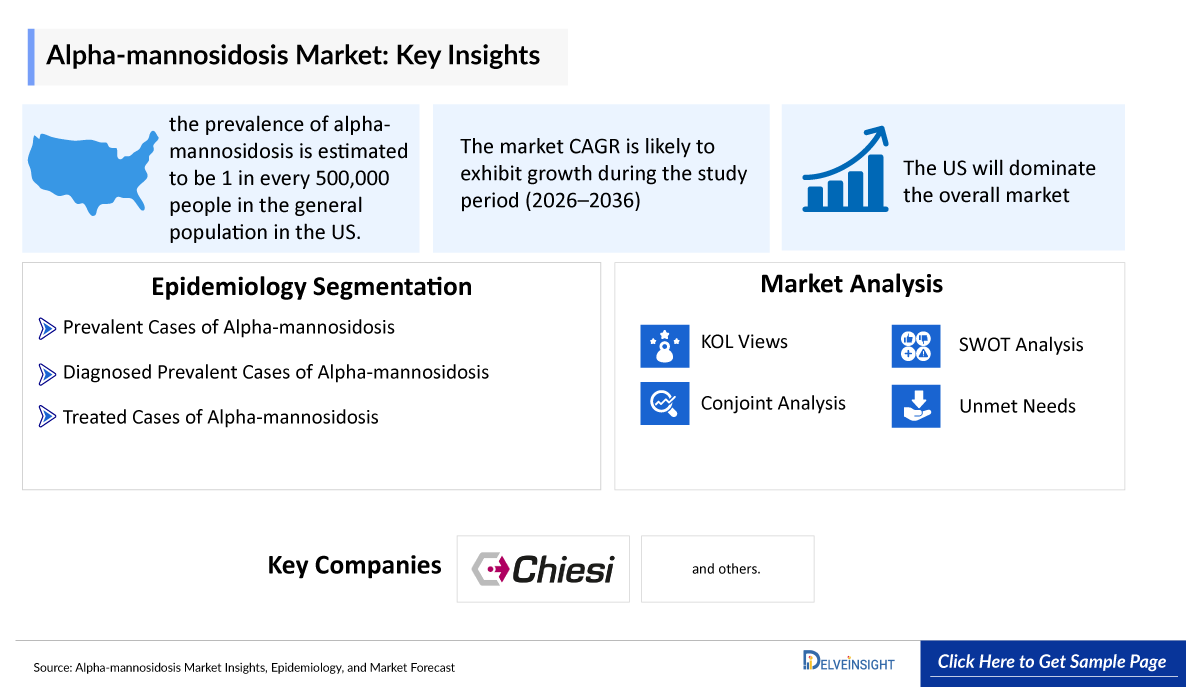
DelveInsight’s “Alpha-mannosidosis Market Insights, Epidemiology, and Market Forecast – 2036” report delivers an in-depth understanding of alpha-mannosidosis, historical and forecasted epidemiology, as well as the alpha-mannosidosis market trends in the United States, EU4 (Germany, France, Italy, and Spain), the United Kingdom, and Japan.
The alpha-mannosidosis market report delivers a comprehensive analysis of the current treatment landscape, including standards of care, clinical practices, and evolving therapeutic algorithms. It evaluates, alpha-mannosidosis patient burden trends, revenue & market share dynamics, peak patient share & therapy uptake analysis, and provides an in-depth market size assessment, and growth rate projections (Historical & Forecast 2022–2036) across the 7MM regions. The report highlights key unmet medical needs in alpha-mannosidosis and maps the competitive and clinical landscape to uncover high‑value opportunities, providing a clear outlook on future market growth potential.
Geography Covered
North America: The United States
Europe: Germany, France, Italy, and Spain and the United Kingdom
Asia-Pacific: Japan
|
Study Period |
2022–2036 |
|
Historical Year |
2022–2025 |
|
Forecast Period |
2026–2036 |
|
Base Year |
2025 |
|
Geographies Covered |
|
|
Alpha-mannosidosis Epidemiology Segmentation Analysis |
Patient Burden Assessment
|
|
Alpha-mannosidosis Companies |
And more |
|
Alpha-mannosidosis Market |
Segmented by
|
|
Analysis |
|
Alpha-mannosidosis Understanding and Treatment Algorithm
Alpha-mannosidosis Overview and Diagnosis
Alpha-mannosidosis is a rare inherited lysosomal storage disorder caused by mutations in the MAN2B1 gene, leading to a deficiency of the enzyme alpha-D-mannosidase. This enzyme deficiency results in the accumulation of mannose-rich oligosaccharides in cells, causing progressive damage to multiple organs and tissues. The disease follows an autosomal recessive inheritance pattern and exists along a clinical spectrum ranging from mild (Type 1) to severe (Type 3), with most patients presenting with the moderate form (Type 2). Key manifestations include recurrent infections due to immune deficiency, skeletal abnormalities, hearing loss, cognitive and speech impairment, psychiatric symptoms, and motor dysfunction such as muscle weakness, joint problems, and ataxia.
The diagnostic workup for alpha-mannosidosis begins with clinical suspicion based on key features - intellectual disability, skeletal abnormalities, hearing loss, and recurrent infections. Initial screening involves urine or serum oligosaccharide analysis, followed by enzymatic measurement of acid alpha-mannosidase activity in leukocytes as the gold-standard confirmatory step. Molecular testing of the MAN2B1 gene serves as the final confirmatory step, enabling carrier detection in relatives and antenatal diagnosis using both biochemical and genetic methods.
Further details related to country-based variations are provided in the report…
Current Alpha-mannosidosis Treatment Landscape
Velmanase alfa (LAMZEDE) is currently the only approved disease-modifying therapy for alpha-mannosidosis and has demonstrated good tolerability along with improvements in biochemical markers and selected functional outcomes, particularly in non-central nervous system manifestations. It is widely used as the standard enzyme replacement approach in clinical practice where available, although its effect remains limited by lack of meaningful CNS penetration. Hematopoietic stem cell transplantation (HSCT) has also been explored in selected patients with severe disease and may offer clinical benefit when performed early in the disease course before irreversible organ damage develops; however, it carries significant procedural risks and is not considered standard of care due to variable outcomes. Management of alpha-mannosidosis is otherwise largely supportive and multidisciplinary, focusing on symptom control across multiple organ systems, including hearing impairment, recurrent infections, respiratory and cardiac complications, skeletal abnormalities, and neurodevelopmental delays, alongside nutritional and rehabilitative support. Genetic counselling remains an integral component of care, as the disease is inherited in an autosomal recessive manner, with carrier testing available for at-risk relatives when familial pathogenic variants are identified, and prenatal or preimplantation genetic testing possible in confirmed families.
Further details related to country-based variations are provided in the report…
Alpha-mannosidosis Epidemiology
The epidemiology section of the alpha-mannosidosis market report offers information on the patient populations, including historical and projected trends for each of the seven major markets. Examining key opinion leader views from physicians or clinical experts can assist in identifying the reasons behind historical and projected trends. The diagnosed patient pool, their trends, and the underlying assumptions are all included in this section of the report.
This section also presents the data with relevant tables and graphs, offering a clear and concise view of the prevalence of alpha-mannosidosis. Additionally, the report discloses the assumptions made during the analysis, ensuring data interpretation and presentation transparency. This epidemiological data is valuable for understanding the disease burden and its impact on the patient population across various regions.
Key Findings from Alpha-mannosidosis Epidemiological Analysis and Forecast
- As per secondary analysis, the prevalence of alpha-mannosidosis is estimated to be 1 in every 500,000 people in the general population in the US.
- Alpha-mannosidosis affects males and females in equal numbers and can potentially affect individuals of any ethnic group worldwide.
- Based on secondary data analysis, the estimated prevalence of alpha-mannosidosis in Italy ranges from approximately 1 in 250,000 to 1 in 1 million live births, underscoring its classification as an ultra-rare lysosomal storage disorder within the national population.
Alpha-mannosidosis Market Outlook
The alpha-mannosidosis therapeutics market is further expected to increase by the major drivers, such as the rising prevalence population, technological advancements, and upcoming therapies in the forecast period (2026–2036).
With ongoing research and continued dedication, the future holds hope for effective treatments and, ultimately, a cure for this challenging condition. According to DelveInsight, the alpha-mannosidosis market in the 7MM is expected to change significantly during the forecast period 2026-2036.
Alpha-mannosidosis Drug Analysis
The alpha-mannosidosis drug chapter provides a detailed, market-focused review of approved therapies. It covers mechanism of action, clinical trial data, regulatory approvals, patents, collaborations, strategic partnerships upcoming key catalyst for each therapy, along with their advantages, limitations, and recent developments. This section offers critical insights into the alpha-mannosidosis treatment landscape, supporting market assessment, competitive analysis, and growth forecasting for the alpha-mannosidosis therapeutics market.
Approved Therapies for Alpha-mannosidosis
Velmanase alfa-tycv (LAMZEDE): Chiesi Farmaceutici S.p.A
Velmanase alfa-tycv (LAMZEDE) is a recombinant human alpha-mannosidase enzyme replacement therapy indicated for the treatment of non-CNS manifestations of alpha-mannosidosis in adult and paediatric patients. It is the first and only FDA and EMA-approved pharmacological therapy for alpha-mannosidosis, making it the cornerstone of the current treatment landscape. It works by supplementing deficient alpha-mannosidase enzyme activity, thereby preventing the accumulation of mannose-rich oligosaccharides across tissues.
- In February 2023, Chiesi Farmaceutici S.p.A reported that the US Food and Drug Administration (FDA) has approved Velmanase alfa-tycv (LAMZEDE) for the treatment of non-central nervous system manifestations of alpha-mannosidosis in adult and pediatric patients.
- In April 2018, Chiesi announced that the European Commission had granted marketing authorization for Velmanase alfa-tycv (LAMZEDE) for the treatment of non-neurological manifestations in individuals with mild to moderate alpha-mannosidosis.
Alpha-mannosidosis Marketed/Approved Therapies | ||||||
|
Drug/Therapy |
Company |
Indication |
Molecule Type |
MoA |
RoA |
Marketed Region |
|
Velmanase alfa-tycv (LAMZEDE) |
Chiesi Farmaceutici S.p.A |
Alpha-mannosidosis |
Recombinant proteins |
Alpha-mannosidase replacements |
Intravenous infusion |
US: 2023 EU: 2018 |
Note: Detailed marketed therapies assessment will be provided in the final report…
Alpha-mannosidosis Market Outlook
DelveInsight’s ‘Alpha-mannosidosis Market Insights, Epidemiology, and Market Forecast – 2036’ report provides a detailed outlook of the current and future alpha-mannosidosis market, segmented within countries, by therapies, and by classes. Further, the market of each region is then segmented by each therapy to provide a detailed view of the current and future market share of all therapies.
Alpha-mannosidosis Market Size by Countries
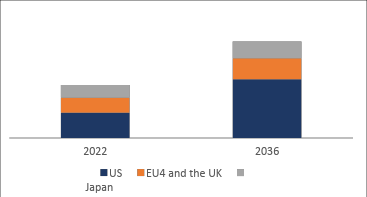
The alpha-mannosidosis market size is assessed separately for various countries, including the US, EU4 (Germany, France, Italy, and Spain), the UK, and Japan. In 2025, the US held a significant share of the overall 7MM (Seven Major Markets) alpha-mannosidosis market, primarily attributed to the country’s higher prevalence of the condition and the elevated cost of the available treatments. This dominance is projected to persist, especially with the potential early introduction of new products.
Country-wise Market Size Distribution of Alpha-mannosidosis
Alpha-mannosidosis Market Size by Therapies
Market Share Distribution of Alpha-mannosidosis by Therapies in 2036

Note: Detailed market segment assessment will be provided in the final report.
Alpha-mannosidosis Drug Uptake
This section focuses on the sales uptake of potential of alpha-mannosidosis drugs that have recently been launched or are anticipated to be launched in the alpha-mannosidosis market between 2022 and 2036. It estimates the market penetration of alpha-mannosidosis drugs for a given country, examining their impact within and across classes and segments. It also touches upon the financial and regulatory decisions contributing to the probability of success (PoS) of the drugs in the alpha-mannosidosis market.
Note: Detailed assessment of drug uptake and attribute analysis will be provided in the full report on alpha-mannosidosis
Alpha-mannosidosis Market Access and Reimbursement
DelveInsight’s ‘Alpha-mannosidosis Market Insights, Epidemiology, and Market Forecast – 2036’ report provides a descriptive overview of the market access and reimbursement scenario of alpha-mannosidosis.
This section includes a detailed analysis of the country-wise healthcare system for each therapy, enlightening the market access, reimbursement policies, and health technology assessments.
KOL Views
To keep up with current alpha-mannosidosis market trends and fill gaps in secondary findings, we interview KOLs and SMEs’ working in the alpha-mannosidosis domain. Their opinion helps understand and validate current and emerging therapies and treatment patterns or alpha-mannosidosis market trends. This will support the clients in potential upcoming novel treatments by identifying the overall scenario of the market and the alpha-mannosidosis unmet needs.
Alpha-mannosidosis: KOL Insights
DelveInsight’s analysts connected with 50+ KOLs to gather insights; however, interviews were conducted with 15+ KOLs in the 7MM. These KOLs were from organizations, institutes, and hospitals, such as Interdisciplinary Sarcoma Center, West German Cancer Center, University of Duisburg-Essen, Germany; Virgin del Rocio University Hospital, University of Seville, Spain; Integrated Unit ICO Hospitalet, HUB, Barcelona, Spain; National Cancer Center Hospital, Tokyo, Japan; Department of Orthopaedic Surgery, The University of Tokyo, Japan; and the Royal Orthopaedic Hospital, Birmingham, UK among others.
|
Region |
Key Opinion Leaders (KOLs) and Subject Matter Experts (SMEs) |
|
United States |
“Alpha-mannosidosis is a rare and progressive lysosomal storage disorder encountered across multiple care settings - from general pediatric and metabolic clinics to specialist inherited metabolic disease centers. Clinicians managing this condition face the dual challenge of multisystem disease involvement - spanning cognitive, skeletal, immunological, and auditory systems - alongside significant inter-patient clinical variability that makes individualized assessment and management essential at every stage of the disease continuum.” |
|
Germany |
“ Effective management of alpha-mannosidosis begins with early and accurate diagnosis guided by a validated diagnostic algorithm - incorporating urine or serum oligosaccharide screening, leukocyte alpha-mannosidase enzyme activity measurement, and confirmatory MAN2B1 molecular testing. A structured multidisciplinary approach encompassing metabolic physicians, geneticists, neurologists, audiologists, physiotherapists, and immunologists is essential to address the broad clinical spectrum of this disease. The introduction of enzyme replacement therapy with velmanase alfa has expanded the treatment landscape, while hematopoietic stem cell transplantation remains the preferred option for preservation of neurocognitive function in early-onset severe cases." |
Note: Detailed assessment of KOL Views will be provided in the full report on alpha-mannosidosis
Competitive Intelligence Analysis
We conduct a Competitive and Market Intelligence analysis of the alpha-mannosidosis Market, utilizing various Competitive Intelligence tools such as SWOT analysis and Market entry strategies. The inclusion of these analyses is contingent upon data availability, ensuring a comprehensive and well-informed assessment of the market landscape and competitive dynamics.
Alpha-mannosidosis Report Insights
- Alpha-mannosidosis Patient Population
- Therapeutic Approaches
- Alpha-mannosidosis Market Size and Trends
- Alpha-mannosidosis Market Opportunities
- Impact of Upcoming Therapies
Alpha-mannosidosis Report Key Strengths
- 11 Years Forecast
- The 7MM Coverage
- Alpha-mannosidosis Epidemiology Segmentation
- Key Cross Competition
- Highly Analyzed Alpha-mannosidosis Market
- Alpha-mannosidosis Drugs Uptake
Alpha-mannosidosis Report Assessment
- Alpha-mannosidosis Current Treatment Practices
- Unmet Needs
- Alpha-mannosidosis Market Attractiveness
Key Questions
- How common is alpha-mannosidosis?
- What are the key findings of alpha-mannosidosis epidemiology across the 7MM, and which country will have the highest number of patients during the study period (2022–2036)?
- What are the currently available treatments for alpha-mannosidosis?
- What are the disease risk, burden, and unmet needs of alpha-mannosidosis?
- At what CAGR is the alpha-mannosidosis market and its epidemiology is expected to grow in the 7MM during the forecast period (2026–2036)?
- How would the unmet needs impact the alpha-mannosidosis market dynamics and subsequently influence the analysis of the related trends?
- What would be the forecasted patient pool of alpha-mannosidosis in the 7MM covering the United States, EU4 (Germany, France, Italy, and Spain), the UK, and Japan?
- Among EU4 and the UK, which country will have the highest number of patients during the forecast period (2026–2036)?
- How many companies are currently developing therapies for the treatment of alpha-mannosidosis?
Reasons to buy
- The report will help in developing business strategies by understanding the latest trends and changing treatment dynamics driving the alpha-mannosidosis market.
- Insights on patient burden/disease prevalence, evolution in diagnosis, and factors contributing to the change in the epidemiology of the disease during the forecast years.
- To understand the existing market opportunity in varying geographies and the growth potential over the coming years.
- Distribution of historical and current patient share based on real-world prescription data along with reported sales of current treatment in the US, EU4 (Germany, France, Italy, and Spain), the United Kingdom, and Japan.
- Identification of strong upcoming players in the market will help in devising strategies that will help in getting ahead of competitors.
- Detailed analysis and ranking of class-wise potential current therapies under the conjoint analysis section to provide visibility around leading classes.
- Highlights of Access and Reimbursement policies of approved therapies, barriers to accessibility of off-label expensive therapies, and patient assistance programs.
- To understand the perspective of Key Opinion Leaders around the accessibility, acceptability, and compliance-related challenges of existing treatment to overcome barriers in the future.
- Detailed insights on the unmet needs of the existing market so that the upcoming players can strengthen their development and launch strategy.
Frequently Asked Questions
-
What are the treatment goals for alpha-mannosidosis?
The primary goals in the treatment of alpha-mannosidosis are to slow disease progression and prevent irreversible organ damage, reduce the accumulation of mannose-rich oligosaccharides through enzyme replacement therapy, preserve neurocognitive function and prevent early cognitive decline - ideally through early hematopoietic stem cell transplantation - manage multisystem manifestations including hearing loss, recurrent infections, skeletal abnormalities, and immune deficiency, and improve overall quality of life and functional independence across pediatric and adult patient populations through comprehensive multidisciplinary care.
-
What are the challenges in managing alpha-mannosidosis?
Managing alpha-mannosidosis presents several challenges, including significant diagnostic delays - averaging nearly a decade from symptom onset to confirmed diagnosis - due to its non-specific clinical presentation and resemblance to other lysosomal storage disorders such as mucopolysaccharidoses. Additional challenges include the extreme rarity and inter-patient clinical variability of the disease, the inability of current enzyme replacement therapy velmanase alfa-tycv (LAMZEDE) to cross the blood-brain barrier and address progressive neurological and cognitive decline, the risk of hypersensitivity reactions and antidrug antibody formation with long-term ERT, the high cost and limited global access to approved therapies, and a near-absent emerging drug pipeline for this ultra-rare condition.
-
What are the key factors driving the growth of the Alpha-mannosidosis market?
The Alpha-mannosidosis market is driven by increasing disease awareness and growing adoption of newborn and genetic screening programs enabling earlier diagnosis, the commercial expansion of velmanase alfa-tycv (LAMZEDE) following FDA approval in 2023 and EMA approval in 2018, expanding real-world evidence from the SPARKLE registry reinforcing long-term treatment confidence, and the unmet need for CNS-penetrating therapies that address the neurological burden of alpha-mannosidosis.
-
How will the Alpha-mannosidosis Market and Epidemiology Forecast Report benefit the clients?
The report provides comprehensive insights into the current alpha-mannosidosis market landscape, epidemiological trends across the 7MM, competitive intelligence, regulatory developments, and unmet medical needs across pediatric and adult patient populations. These insights support informed business decisions, strategic planning, opportunity assessment, and market-entry strategies for stakeholders operating in the rare disease and lysosomal storage disorder sector.