Alport Syndrome Market Summary
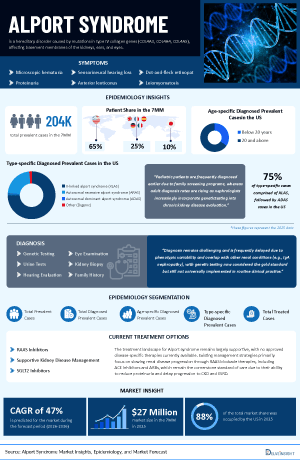
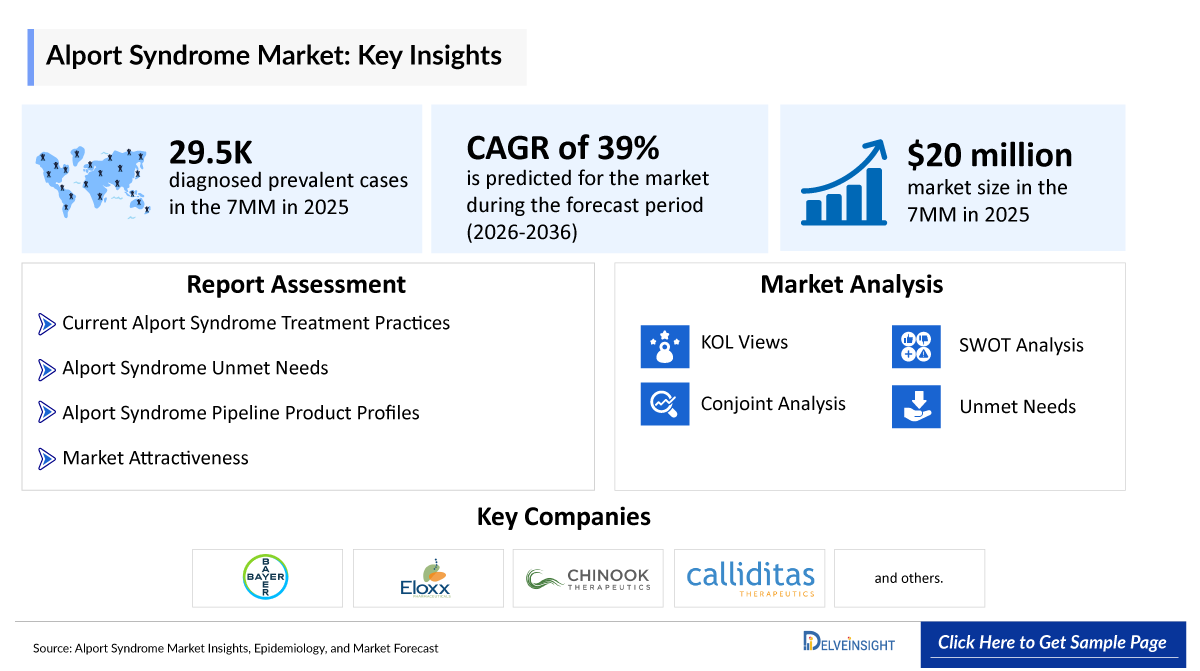
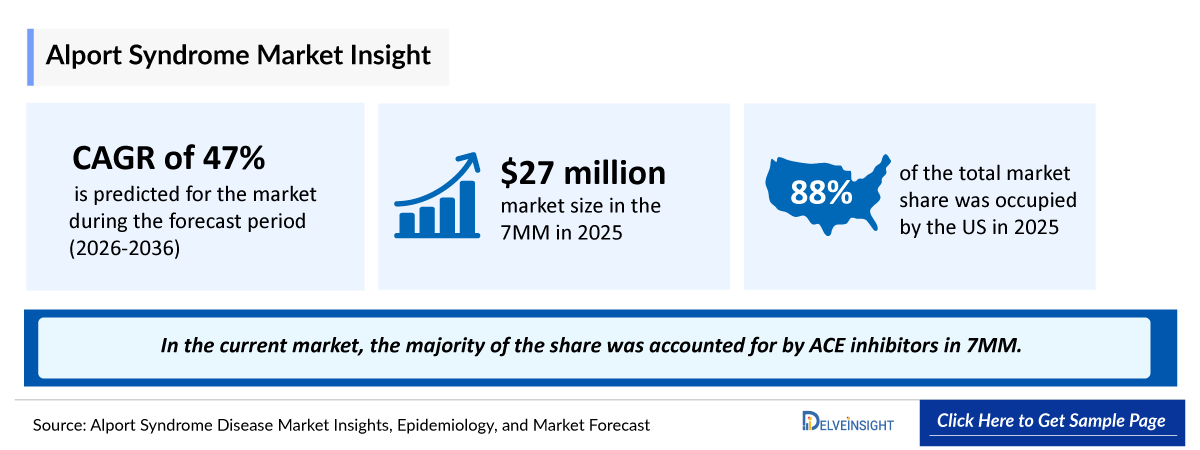
- According to DelveInsight’s analysis, the Alport Syndrome Market Size was found to be around USD 27 million in the leading markets (the United States, the EU4 (Germany, France, Italy, and Spain), the United Kingdom, and Japan) in 2025.
- The leading Alport Syndrome Companies include Eloxx Pharmaceuticals, Enyo Pharmaceuticals, Evotec, Bayer, Asahi Kasei, River 3 Renal, Bain Capital Life Sciences, Novartis (Chinook Therapeutics), Travere Therapeutics, Renalys Pharma, ZyVersa Therapeutics, and others.
Alport Syndrome Market and Epidemiology Analysis
- Alport syndrome is a rare inherited kidney disorder caused by mutations in type IV collagen genes (COL4A3, COL4A4, COL4A5), leading to structural abnormalities of the glomerular basement membrane and characterized by progressive renal impairment, sensorineural hearing loss, and eye abnormalities.
- It is a lifelong condition with an estimated prevalence of ~1 in 5,000–10,000 individuals, though the true burden is likely underestimated due to underdiagnosis and recognition of a broader “Alport spectrum”, encompassing both severe and milder phenotypes.
- The disease exhibits heterogeneous inheritance patterns, predominantly X-linked (~80%), with males typically experiencing earlier onset and faster progression to End-stage renal disease (ESRD), while females and autosomal forms show variable but still clinically significant disease progression.
- Diagnosis remains challenging and is frequently delayed due to phenotypic variability and overlap with other renal conditions (e.g., IgA nephropathy), with genetic testing now considered the gold standard but still not universally implemented in routine clinical practice.
- The primary objective of current treatment strategies in Alport syndrome is to delay disease progression and preserve patients’ native kidney function for as long as possible. To achieve this, blood pressure-lowering medications are commonly prescribed, even in individuals without diagnosed hypertension.
- ACE Inhibitors and angiotensin receptor blockers (ARBs), such as lisinopril, ramipril, and losartan, have demonstrated efficacy in reducing proteinuria and slowing kidney scarring.
- Ongoing clinical development programs are expected to shift treatment goals from merely delaying kidney failure to modifying disease biology and preserving long-term renal function. Introduction of novel therapies is anticipated to increase genetic testing uptake and earlier diagnosis, thereby expanding the treatable patient population.
- Alport Syndrome Market expansion is anticipated to be driven by a gradually evolving late-stage pipeline, including emerging therapies such as ELX-02 (Exaluren) by Eloxx Pharmaceuticals, Vonafexor by Enyo Pharmaceuticals, BAY3401016 developed through collaboration between Evotec and Bayer, Setanaxib by Calliditas Therapeutics, Atrasentan from Novartis (originated via Chinook Therapeutics), and Sparsentan developed by Travere Therapeutics in partnership with Renalys Pharma.
- Despite advances, significant unmet needs persist, including lack of curative therapies, limited genotype-targeted treatments, absence of robust biomarkers for early progression, and continued diagnostic delays, collectively underscoring the need for innovative, disease-modifying strategies.
Alport Syndrome Market Size and Forecast in the 7MM
| 2025 Alport Syndrome Market Size | ~USD 27 million |
| 2036 Projected Alport Syndrome Market Size | ~USD 1,900 million |
| Alport Syndrome Growth Rate (2026–2036) | ~47% CAGR |
Key Factors Driving the Growth of the Alport Syndrome Market
-
Increasing recognition and diagnosis of Alport syndrome
Improved access to genetic testing and heightened clinical awareness are driving earlier and more accurate diagnosis of Alport syndrome. This is contributing to a growing identified patient population and increasing the need for targeted, long-term disease management strategies.
-
Advancements in genetic diagnostics and hereditary disease detection
Progress in genetic screening technologies, along with greater emphasis on family history and inherited kidney disorders, is enhancing the detection of mutations associated with Alport syndrome. These developments are supporting earlier intervention and improved disease monitoring, reinforcing the demand for effective therapeutic approaches.
-
Disease-Modifying Therapies in Alport Syndrome
In Alport syndrome, disease-modifying therapies in development aim to target the underlying genetic and molecular mechanisms driving kidney damage, with the goal of slowing or halting disease progression rather than only managing symptoms, marking a shift toward more disease-altering treatment strategies.
DelveInsight's ‘Alport Syndrome Market Insights, Epidemiology and Market Forecast – 2036’ report delivers an in-depth understanding of the Alport syndrome, historical and forecasted epidemiology, as well as the Alport syndrome market trends in the United States, EU4 (Germany, Spain, Italy, and France) and the United Kingdom, and Japan.
The Alport Syndrome Treatment Market Report delivers a comprehensive analysis of the current treatment landscape, including standards of care, clinical practices, and evolving therapeutic algorithms. It evaluates Alport syndrome patient burden trends, revenue & market share dynamics, peak patient share & therapy uptake analysis, and provides an in-depth market size assessment, and growth rate projections (historical & forecast 2022–2036) across global regions. The Alport Syndrome Treatment Market Report highlights key unmet medical needs in Alport syndrome and maps the competitive and clinical landscape to uncover high-value opportunities, providing a clear outlook on future market growth potential.
Scope of the Alport Syndrome Therapeutics Market Report | |
|
Study Period |
2022–2036 |
|
Historical Year |
2022–2025 |
|
Forecast Period |
2026–2036 |
|
Base Year |
2026 |
|
Geographies Covered |
|
|
Alport Syndrome Market CAGR (Forecast period) | |
|
Alport Syndrome Epidemiology Segmentation Analysis |
Patient Burden Assessment
|
|
Alport Syndrome Companies |
|
|
Alport Syndrome Therapies |
|
|
Alport Syndrome Market |
Segmented by
|
|
Analysis |
|
Alport Syndrome Understanding and Treatment Algorithm
Alport Syndrome Overview and Diagnosis
Alport syndrome is a hereditary disorder caused by mutations in type IV collagen genes (COL4A3, COL4A4, COL4A5), affecting the basement membranes of the kidneys, ears, and eyes. It presents with early hematuria and progressive kidney dysfunction that can lead to renal failure, often accompanied by hearing loss and ocular abnormalities.
The disease occurs in X-linked, autosomal recessive, and autosomal dominant forms, with X-linked being the most common and severe in males. Diagnosis relies on clinical features, family history, biopsy findings, and increasingly genetic testing. There is no curative treatment; management focuses on slowing disease progression using supportive therapies, though many patients eventually require dialysis or kidney transplantation.
The diagnostic approach to Alport syndrome integrates clinical suspicion, laboratory testing, and advanced genetic analysis. It is typically suspected in individuals with persistent hematuria, family history of kidney disease, early hearing loss, or unexplained renal impairment. Initial evaluation includes urine and blood tests to assess hematuria, proteinuria, and kidney function, though these findings are not disease-specific.
Kidney biopsy can provide supportive evidence through structural and collagen abnormalities, while skin biopsy may aid in select cases. However, genetic testing has become the gold standard, enabling definitive identification of mutations in COL4A3, COL4A4, and COL4A5 genes and determination of inheritance patterns. Complementary assessments such as audiometry and ophthalmologic evaluation further support diagnosis and disease monitoring.
Current Alport Syndrome Treatment Landscape
Alport syndrome management is primarily supportive and aimed at slowing disease progression, as no curative therapy exists. Treatment is individualized, with renin–angiotensin–aldosterone system (RAAS) inhibition forming the cornerstone. ACE inhibitors are first-line due to their antihypertensive, antiproteinuric, and nephroprotective effects, while ARBs are used in patients who are intolerant or unresponsive. Additional supportive measures, including diuretics, may be used based on proteinuria severity.
Despite these interventions, many patients progress to end-stage kidney disease, requiring dialysis or kidney transplantation, the latter offering favorable outcomes. Adjunct management includes hearing aids for sensorineural hearing loss and ophthalmologic interventions when needed. Emerging approaches such as gene and stem cell therapies are under investigation but remain experimental.
Alport Syndrome Unmet Needs
The section “unmet needs of Alport Syndrome” outlines the critical gaps between the current state of patient care, diagnosis, and the ideal & effective management of the disease. It highlights the obstacles experienced by patients, clinicians, and researchers and identifies potential solutions for future progress.
- Delayed or Missed Diagnosis due to Under-recognition
- Lack of approved treatment options
- Need for new therapeutic targets and treatment approaches
- Lack of Validated Prognostic Biomarkers, and others…..
Note: Comprehensive unmet needs insights in Alport syndrome and their strategic implications are provided in the full report.
Alport Syndrome Epidemiology
Real-world evidence suggests that Alport syndrome remains underdiagnosed and underreported in routine clinical practice, particularly in patients with mild hematuria or slowly progressive disease who may not undergo timely genetic testing or specialist evaluation. Consequently, the true prevalence and disease burden of Alport syndrome are likely higher than currently reported, especially compared with data from clinical studies and specialized registries.
Key Findings from Alport Syndrome Epidemiological Analysis and Forecast
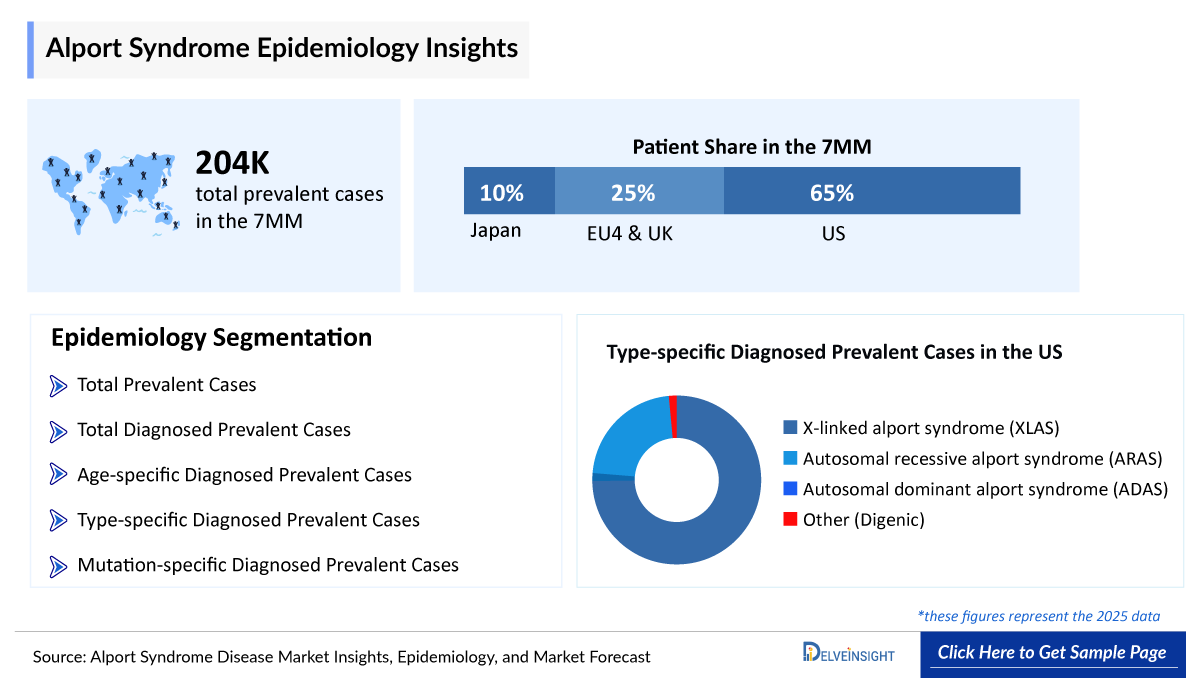
- The United States accounted for the highest Alport Syndrome prevalence cases, ~55% of the total 7MM cases in 2025.
- The Alport Syndrome Diagnosed Prevalent Cases in the 7MM were ~51,900 cases in 2025 and are projected to rise by 2036.
- In 2025, among type-specific diagnosed prevalent cases of Alport syndrome, X-linked Alport syndrome (XLAS) accounted for the highest proportion of cases, ~25,300, followed by Autosomal Dominant Alport syndrome (ADAS) and Autosomal Recessive Alport syndrome (ARAS), while digenic and other rare forms represented the smallest share.
- In the EU4 and the UK, age-specific diagnosed prevalent cases of Alport syndrome in 2025 were estimated to be lower in individuals under 20 years and higher in those aged 20 years and above (~65%).The higher proportion in adults primarily reflects delayed recognition of milder and slowly progressive disease forms, while pediatric cases are more frequently identified through earlier clinical presentation and family-based evaluation.
- In 2025, in the United States, mutation-specific diagnosed prevalent cases of Alport syndrome were in the highest in the splice site mutation and frame shift mutation segment with ~6,700 cases while nonsense mutations accounted for the lowest number of cases.
Alport Syndrome Segmentation Segmentation
- Total Alport Syndrome Prevalent Cases
- Total Alport Syndrome Diagnosed Prevalent Cases
- Alport Syndrome Age-specific Diagnosed Prevalent Cases
- Alport Syndrome Type-specific Diagnosed Prevalent Cases
- Alport Syndrome Mutation-specific Diagnosed Prevalent Cases
- Total Alport Syndrome Treated Cases
Alport Syndrome Market Recent Breakthroughs and Developments
- In May 2026, as per the quarterly report between January 2023 and April 2024, a UK-based Phase IIa open-label proof-of-concept study evaluated the safety of exaluren in patients with autosomal recessive Alport syndrome carrying COL4A4 nonsense mutations, with adverse event assessment serving as the primary endpoint
- As per March 2026, the annual report, A Phase IIa trial of exaluren in NMAS (nonsense mutation-associated syndromes/disorders or nonsense mutation-associated diseases) has been completed, with a Phase IIb study planned for 1H 2026, pending patient enrollment and funding availability. Topline data from the 16-week placebo-controlled portion are expected by mid-2027, with final study readout anticipated by the end of 2027. However, the company currently lacks sufficient funding to support the planned Phase IIb trial in Alport syndrome
- In January 2026, ENYO Pharma announced positive topline Phase II ALPESTRIA-1 results demonstrating that vonafexor improved kidney function decline and delivered sustained therapeutic benefit in patients with Alport syndrome.
- In January 2026, ENYO Pharma targets Q2 2026 End-of-Phase II meeting ahead of planned Phase III alport syndrome study initiation in 2H 2026.
Alport Syndrome Drug Analysis & Competitive Landscape
The Alport syndrome drug chapter provides a detailed, market-focused review of approved therapies and the emerging pipeline across Phase I–III clinical trials. It covers the mechanism of action, clinical trial data, patents, collaborations, and strategic partnerships, upcoming key catalysts for each therapy, along with their advantages, limitations, and recent developments. This section offers critical insights into the Alport syndrome treatment landscape, supporting market assessment, competitive analysis, and growth forecasting for the Alport syndrome therapeutics market.
Alport Syndrome Pipeline Analysis
-
ELX-02: Eloxx Pharmaceuticals
Eloxx’s lead investigational product candidate, ELX-02, is a small molecule drug candidate designed to restore the production of full-length functional proteins. It is a synthetic aminoglycoside administered through the subcutaneous route and inhalational route. It optimizes ribosomal read-through of premature termination codons (PTC), through which full-length functional proteins can be produced.
It acts by targeting CFTR. Preclinical studies support ELX-02 activity in nonsense mutation genetic kidney diseases. Currently, ELX-02 is in Phase II (NCT05448755) clinical development for the treatment of Alport syndrome in patients with nonsense mutations.
-
BAY3401016: Evotec and Bayer
BAY3401016 is a mAb targeting the protein Sema3A. Sema3A is an extracellular guidance protein and a well-known regulator of the actin cytoskeleton. Alterations of the actin cytoskeleton, particularly of podocytes, are a key pathophysiological feature of Alport syndrome. Sema3A is upregulated in injured human kidneys and implicated in the development and progression of acute and CKDs.
The drug is being developed as a potential first-to-market treatment for Alport syndrome, aiming to delay disease progression and the onset of end-stage renal disease, with a potentially positive impact on hearing loss. The drug is currently in Phase II clinical development for Alport syndrome through a collaboration between Bayer and Evotec.
Comparison of Emerging Drugs Under Development | ||||||
|
Drug Name |
Company |
Highest Phase |
Indication |
RoA |
Molecule Type |
Anticipated Launch in the US |
|
ELX-02 (Exaluren) |
Eloxx Pharmaceuticals |
II |
Alport syndrome patients with a nonsense mutation | Subcutaneous |
Small molecule |
2030 |
|
BAY3401016 |
Evotec and Bayer |
II |
Alport syndrome |
Subcutaneous |
Monoclonal antibody |
Information is available in the full report |
|
Setanaxib |
Asahi Kasei |
II |
Alport syndrome |
Oral |
Small molecule |
Information is available in the full report |
|
R3R01 |
River 3 Renal/ Bain Capital Life Sciences |
II |
Alport syndrome |
Oral |
Small molecule |
Information is available in the full report |
|
Atrasentan |
Novartis (Chinook Therapeutics) |
II |
Alport syndrome |
Oral |
Small molecule |
Information is available in the full report |
|
Note: Launch insights are provisional and may change with future report updates or the occurrence of major key catalysts. | ||||||
Alport Syndrome Companies
- Eloxx Pharmaceuticals
- Enyo Pharmaceuticals
- Evotec
- Bayer
- Asahi Kasei
- River 3 Renal
- Bain Capital Life Sciences
- Novartis (Chinook Therapeutics)
- Travere Therapeutics
- Renalys Pharma
- ZyVersa Therapeutics, and others
Alport Syndrome Market Outlook
The Alport Syndrome Treatment Market Landscape remains largely supportive, with no approved disease-specific therapies currently available. Existing management strategies primarily focus on slowing renal disease progression through RAAS blockade therapies, including ACE inhibitors and ARBs, which remain the cornerstone standard of care due to their ability to reduce proteinuria and delay progression to CKD and ESRD.
Increasing clinical evidence supporting the benefits of early intervention, particularly in genetically confirmed pediatric patients, has contributed to earlier initiation of nephroprotective therapy across major markets. In addition, SGLT2 inhibitors are increasingly being incorporated as adjunctive renoprotective agents because of their demonstrated renal benefits in broader CKD populations, despite limited Alport syndrome-specific clinical data.
Current Alport Syndrome Treatment approaches are also gradually evolving toward multidrug combination strategies involving ACE inhibitors or ARBs together with SGLT2 inhibitors to maximize long-term nephroprotection and preserve renal function. However, these therapies remain largely supportive rather than curative, as they do not directly address the underlying type IV collagen defect responsible for disease progression.
Consequently, the Alport Syndrome Therapeutics Market Landscape is progressively transitioning toward precision-based and disease-modifying approaches supported by advances in molecular diagnostics, expanding genetic testing, and increasing clinical trial activity.
Key Alport Syndrome Pipeline candidates include ELX-02, a translational read-through therapy targeting nonsense mutations; Vonafexor, which targets renal inflammation and fibrosis pathways; BAY3401016, designed to stabilize podocyte structure and reduce glomerular injury; Setanaxib, which is being developed for its antifibrotic potential; and Atrasentan, which is expected to strengthen combination nephroprotective strategies targeting persistent proteinuria and progressive renal decline.
Over the next decade, improved early diagnosis and treatment advancements are expected to raise the age at which kidney failure manifests in individuals with Alport syndrome. Additional benefits are anticipated from novel therapies that can complement ACE inhibition. While safe and effective curative therapies are within the realm of possibility, notable challenges must be addressed to transform these possibilities into reality.
Key Findings from the Alport Syndrome Market Forecast Report
- In 2025, the US accounted for the maximum share of the Alport Syndrome Treatment Market in the 7MM, i.e ~88%, followed by Japan. The Alport Syndrome Market Size in the 7MM was estimated to be USD 27 million in 2025, which is expected to show positive growth by 2036.
- The Alport Syndrome Treatment Market Size was USD 24 million in the United States in 2025. Due to the emergence of novel therapies, the overall Alport Syndrome Market Size would experience an increase in the United States during the forecast period. Among the 7MM countries, the United States accounted for the largest market size for Alport syndrome.
Alport Syndrome Drug Class/Insights into Leading Emerging and Marketed Therapies (2022-2036)
The Alport syndrome pipeline comprises therapies targeting diverse pathogenic pathways, including restoration of glomerular basement membrane integrity, reduction of fibrosis and inflammation, preservation of podocyte function, modulation of lipid metabolism, and attenuation of progressive kidney injury, with the goal of slowing renal function decline and delaying progression to end-stage kidney disease.
Semaphorin-3A (Sema3A) inhibitors: They are investigational therapies that target the Sema3A signaling pathway, which is implicated in podocyte injury, glomerular dysfunction, and renal fibrosis. By blocking Sema3A activity, these agents aim to preserve kidney structure, reduce proteinuria, and slow disease progression. In Alport syndrome, where progressive glomerular damage drives kidney function decline, Sema3A inhibition represents a potential disease-modifying strategy to delay renal deterioration and progression to end-stage kidney disease.
ATP-binding cassette transporter A1 (ABCA1) inducers: They are investigational therapies designed to enhance the expression and activity of ABCA1, a key regulator of cellular cholesterol and lipid efflux. By improving lipid homeostasis and reducing lipid accumulation in kidney cells, these agents aim to protect renal structure and function.
In Alport syndrome, ABCA1 induction may help mitigate podocyte injury and progressive kidney damage, offering a potential disease-modifying approach to slow renal decline and delay progression to end-stage kidney disease. These emerging therapies reflect a shift toward mechanism-based, disease-specific approaches, moving beyond symptomatic management to address the underlying neurobiology of 22q11.2 deletion syndrome.
Alport Syndrome Drug Uptake
This section focuses on the uptake rate of potential Alport Syndrome drugs expected to be launched in the market during the forecast period (2026–2036). The analysis covers the Alport syndrome drug’s uptake, performance at peak, factors affecting performance during prime years of growth, patient uptake by therapy, and anticipated sales generated by each drug.
Overall, drug uptake in this space is expected to be gradual, with therapies such as ELX-02 (Exaluren), Vonafexor (EYP001), Setanaxib, Atrasentan (VANRAFIA), and Sparsentan (FILSPARI) showing medium to medium-fast uptake driven by stronger clinical validation, clearer patient positioning, and advancing regulatory progress, while BAY3401016 is expected to have slower uptake due to earlier-stage development and limited evidence maturity.
Detailed insights into emerging therapies' drug uptake are included in the report.
Alport Syndrome Market Access and Reimbursement of Approved Therapies
The Alport Syndrome Therapeutics Market Report further provides detailed insights on the country-wise accessibility and reimbursement scenarios, cost-effectiveness scenario of approved therapies, programs making accessibility easier and out-of-pocket costs more affordable, insights on patients insured under federal or state government prescription drug programs, etc.
Reimbursement is a crucial factor that affects the drug’s access to the market. Often, the decision to reimburse comes down to the price of the drug relative to the benefit it produces in treated patients. To reduce the healthcare burden of these high-cost therapies, many payment models are being considered by payers and other industry insiders.
The programs available in the US are:
- Vaccines for Children Program (VFC)
- Children’s Health Insurance Program (CHIP)
- Medicare and Medicaid Coverage
NOTE: Further Details are provided in the final report….
Alport Syndrome Therapies Price Scenario & Trends
Pricing and analogue assessment of Alport syndrome therapies highlights evolving price dynamics structures. This section summarizes the cost of approved treatments, the closest and most appropriate analogue selection for emerging therapies, and the understanding of how pricing influences market access, adherence, and long-term uptake.
Industry Experts and Physician Views for Alport Syndrome
To keep up with Alport syndrome market trends, we take Key Opinion Leaders (KOLs) and Subject Matter Experts (SMEs) opinions working in the domain through primary research to fill the data gaps and validate our secondary research. Industry Experts were contacted for insights on Alport syndrome emerging therapies, evolving treatment landscape, patient adherence to conventional therapies, therapy switching trends, drug adoption and uptake, accessibility challenges, and epidemiology and real-world prescription patterns in Alport syndrome, including MD, PhD, Instructor, Postdoctoral Researcher, Professor, Researcher, and others.
DelveInsight’s analysts connected with 10+ KOLs to gather insights; however, interviews were conducted with 6+ KOLs in the 7MM. Centers such as the University of Minnesota Medical School, Bambino Gesù Children's Hospital, the University of Nottingham, etc. were contacted. Their opinion helps understand and validate current and emerging Alport syndrome therapies, highlight unmet medical needs, provide epidemiological context, and support strategic decisions for market access, therapy adoption, and pipeline prioritization in Alport syndrome.
|
Region |
Key Opinion Leaders (KOLs) and Subject Matter Experts (SMEs) |
|
United States |
“It is clear that the natural history of Alport kidney disease can be substantially modified by ACE inhibition and that optimal kidney outcomes are achieved by initiating treatment while kidney function is still normal. In the coming decade, enhanced early diagnosis and treatment will continue to increase the age at onset of kidney failure in the Alport population. Novel therapies that can be added to ACE inhibition will provide further benefit. Safe and effective curative therapies are not out of reach, but significant hurdles exist to make such approaches a reality.” |
|
Spain |
“It is difficult to predict prognosis in patients with heterozygous COL4A3/4 mutations. Some variant combinations appear to be associated with a more severe phenotype and earlier disease onset, suggesting a possible synergistic effect in compound heterozygosity. A reliable diagnosis and prognosis require comprehensive clinical evaluation of all family members, including renal and extra-renal features, together with thorough molecular genetic analysis of the entire pedigree.” |
Alport Syndrome Report Qualitative Analysis: SWOT and Conjoint Analysis
We perform qualitative and market Intelligence analysis using various approaches, such as SWOT analysis and conjoint analysis. In the SWOT analysis of Alport syndrome, strengths, weaknesses, opportunities, and threats in terms of disease diagnosis, patient awareness, patient burden, competitive landscape, cost-effectiveness, and geographical accessibility of therapies are provided.
Conjoint analysis analyzes emerging therapies based on relevant attributes such as safety, efficacy, frequency of administration, route of administration, and order of entry. Scoring is given based on these parameters to analyze the effectiveness of therapy.
The team of analysts analyzes promising emerging therapies based on relevant attributes such as safety, efficacy, frequency of administration, route of administration, and order of entry. In efficacy, the trial’s primary and secondary outcome measures are evaluated, whereas the therapies’ safety is evaluated, wherein the acceptability, tolerability, and adverse events are mainly observed. In addition, the scoring is also based on the route of administration, order of entry, probability of success, and the addressable patient pool for each therapy. According to these parameters, the final weightage score and the ranking of the emerging therapies are decided.
Scope of the Alport Syndrome Market Report
- The Alport Syndrome Therapeutics Market Report covers a segment of key events, an executive summary, a descriptive overview, explaining its causes, signs and symptoms, pathogenesis, and currently available treatments.
- Comprehensive insight has been provided into the epidemiology segments and forecasts, the future growth potential of the diagnosis rate, and disease progression along Alport Syndrome Treatment guidelines.
- Additionally, an all-inclusive account of both the current and emerging treatments, along with the elaborative profiles of prominent therapies, will have an impact on the current Alport Syndrome Treatment Market Landscape.
- A detailed review of the Alport syndrome Treatment Market, historical and forecasted Alport Syndrome Treatment Market Size, Alport Syndrome Drugs Market Share by therapies, detailed assumptions, and rationale behind our approach is included in the report, covering the 7MM drug outreach.
- The Alport Syndrome Therapeutics Market Report provides an edge while developing business strategies by understanding trends through SWOT analysis and expert insights/KOL views, patient journey, and treatment preferences that help in shaping and driving the 7MM Alport syndrome Drugs Market.
Alport Syndrome Market Report Insights
- Alport Syndrome Patient Population Forecast
- Alport Syndrome Therapeutics Market Size
- Alport Syndrome Pipeline Drugs Analysis
- Alport Syndrome Market Size and Trends
- Alport Syndrome Market Opportunity (Current and forecasted)
Alport Syndrome Market Report Key Strengths
- Epidemiology-based (Epi-based) Bottom-up Forecasting
- Artificial Intelligence (AI)-Enabled Market Research Report
- 11-Year Forecast
- Alport Syndrome Market Outlook (North America, Europe, Asia-Pacific)
- Patient Burden Trends (By Geography)
- Alport Syndrome Treatment Addressable Market (TAM)
- Alport Syndrome Competitive Landscape
- Alport Syndrome Major Companies Insights
- Alport Syndrome Price Trends and Analogue Assessment
- Alport Syndrome Therapies Drug Adoption/Uptake
- Alport Syndrome Therapies Peak Patient Share Analysis
Alport Syndrome Market Report Assessment
- Current Alport Syndrome Treatment Practices
- Alport Syndrome Unmet Needs
- Alport Syndrome Clinical Development Analysis
- Alport Syndrome Emerging Drugs Product Profiles
- Alport Syndrome Market Attractiveness
- Alport Syndrome Qualitative Analysis (SWOT and Conjoint analysis)
Key Questions Answered in the Alport Syndrome Treatment Market Report
Alport Syndrome Therapeutics Market Insights
- What was the Alport syndrome Treatment Market Size, the market size by therapies, Alport Syndrome Drugs Market Share (%) distribution in 2025, and what would it look like by 2036? What are the contributing factors for this growth?
- What are the anticipated pricing variations among different geographies for the emerging therapies in the future?
- What can be the future treatment paradigm of Alport syndrome?
- What are the disease risks, burdens, and unmet needs of Alport syndrome?
- What will be the growth opportunities across the 7MM concerning the patient population with Alport syndrome?
- Who is the major future competitor in the market, and how will the competitors affect their market share?
- What are the current options for the treatment of Alport syndrome?
- What are the current guidelines for treating Alport syndrome in the US, Europe, and Japan?
Reasons to Buy the Alport Syndrome Market Report
- The Alport Syndrome Therapeutics Market Report will help in developing business strategies by understanding the latest trends and changing treatment dynamics driving the Alport syndrome drugs market.
- Bottom up forecasting builds from the affected population to product forecasts, delivering a robust, data driven approach ideal for new therapies and novel classes.
- Insights on patient burden/disease: Alport Syndrome Incidence, evolution in diagnosis, and factors contributing to the change in the epidemiology of the disease during the forecast years.
- Understand the existing market opportunities in varying geographies and the growth potential over the coming years.
- Identifying strong upcoming players in the Alport Syndrome Drugs Market will help devise strategies to help get ahead of competitors.
- Detailed analysis and ranking of class-wise potential emerging therapies under the conjoint analysis section to provide visibility around leading classes.
- To understand KOLs’ perspectives on the accessibility, acceptability, and compliance-related challenges of existing treatment to overcome barriers in the future.
- Detailed insights on the unmet needs of the existing Alport Syndrome Drugs Market so that the upcoming players can strengthen their development and launch strategy.
- This Artificial Intelligence (AI) enabled report summarizes and simplifies complex datasets within the report into clear, actionable insights for stakeholders, investors, and healthcare providers, enabling faster, data driven decisions.
Stay updated with us for Recent Articles