Anaplastic Lymphoma Kinase Non Small Cell Lung Cancer Market Summary
Anaplastic Lymphoma Kinase Positive Non-Small Cell Lung Cancer (ALK NSCLC) Insights and Trends
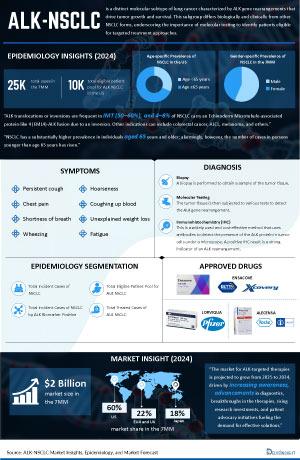
- According to DelveInsight’s analysis, the ALK NSCLC market size was found to be ~USD 2,050 million in the 7MM (the United States, the EU4 (Germany, France, Italy, and Spain), the United Kingdom, and Japan) in 2025.
- ALK-positive NSCLC is a genetically defined subset of lung cancer characterized by rearrangements in the ALK gene that drive uncontrolled tumor growth. It is most commonly seen in younger patients.
- Current clinical guidelines recommend that all patients with advanced non-squamous NSCLC (and selected squamous cases) undergo broad molecular profiling at diagnosis or progression, including mandatory ALK testing.
- Off-label use of non-ALK targeted therapies in ALK NSCLC is limited. Unlike other cancers, symptom-directed medications (e.g., antidepressants or prokinetics) do not play a disease-modifying role. Instead, treatment is primarily driven by molecularly targeted agents.
- Targeted therapy has replaced chemotherapy as the cornerstone of treatment for ALK-positive NSCLC. Alectinib (ALECENSA) is widely used as a preferred first-line therapy due to its strong systemic efficacy.
- Guidelines from the NCCN recommend alectinib over crizotinib, ceritinib, and brigatinib as the treatment of choice for patients with ALK rearrangement owing to the its PFS advantage, cumulative reduction in incidence of brain metastasis, and favorable toxicity profile.
- Several emerging therapies are in mid- to late-stage clinical development, including Neladalkib (NVL-655), which aim to address resistance mutations and improve CNS efficacy. Early-stage candidates such as TRI-611 and Gilteritinib are also being investigated to further refine the treatment paradigm.
- Some patients experience disease progression in the absence of a detectable ALK mutation, which is indicative of TKI treatment failure. For them, treatment options are limited, although platinum-based chemotherapy remains a valid treatment option
- A key challenge in ALK-positive NSCLC is disease relapse, particularly in the brain, as CNS metastases are common and can occur even when systemic disease is controlled. While newer ALK inhibitors offer better CNS penetration, long-term disease control remains limited, and resistance continues to emerge over time.
Anaplastic Lymphoma Kinase Positive Non-Small Cell Lung Cancer (ALK NSCLC) Market Size and Forecast in the 7MM
- 2025 ALK NSCLC Market Size: ~2,050 million
- 2036 Projected ALK NSCLC Market Size: ~3,370 million
- ALK NSCLC Growth Rate (2026–2036): ~4.5% CAGR
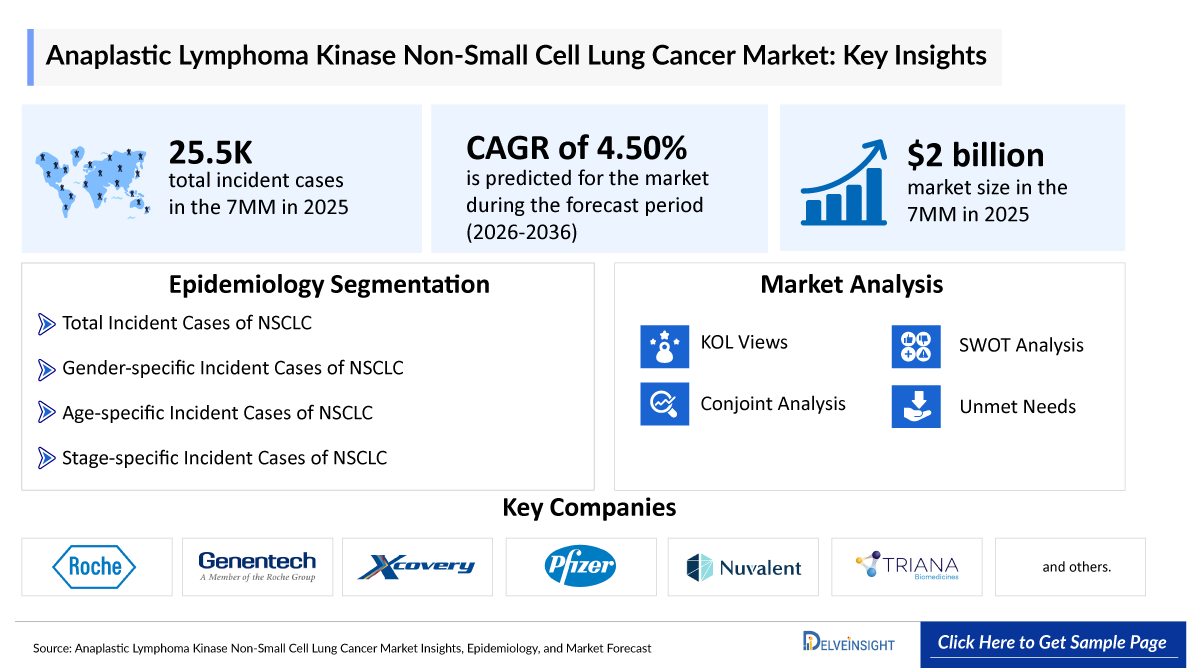
DelveInsight's ‘ALK NSCLC – Market Insights, Epidemiology and Market Forecast – 2036’ report delivers an in-depth understanding of the ALK NSCLC, historical and forecasted epidemiology, as well as the ALK NSCLC market trends in the United States, EU4 (Germany, Spain, Italy, and France) and the United Kingdom, and Japan.
The ALK NSCLC market report delivers a comprehensive analysis of the current treatment landscape, including standards of care, clinical practices, and evolving therapeutic algorithms. It evaluates ALK NSCLC patient burden trends, revenue & market share dynamics, peak patient share & therapy uptake analysis, and provides an in-depth market size assessment, and growth rate projections (Historical & Forecast 2022–2036) across global regions. The report highlights key unmet medical needs in ALK NSCLC and maps the competitive and clinical landscape to uncover high‑value opportunities, providing a clear outlook on future market growth potential.
|
Study Period |
2022–2036 |
|
Historical Year |
2022–2025 |
|
Forecast Period |
2026–2036 |
|
Base Year |
2026 |
|
Geographies Covered |
|
|
ALK NSCLC Market CAGR (Forecast period) |
~4.5% (2026–2036) |
|
ALK NSCLC Epidemiology Segmentation Analysis |
Patient Burden Assessment
|
|
ALK NSCLC Companies |
|
|
ALK NSCLC Therapies |
|
|
ALK NSCLC Market |
Segmented by
|
|
Analysis |
|
Key Factors Driving the Anaplastic Lymphoma Kinase Positive Non-Small Cell Lung Cancer (ALK NSCLC) Market
Increasing Adoption of Targeted ALK Inhibitors
The widespread use of highly effective ALK tyrosine kinase inhibitors (TKIs), particularly Alectinib, has significantly improved progression-free survival and quality of life compared to chemotherapy. The continued preference for targeted therapies in the first-line setting is a major growth driver.
Growing Focus on CNS Metastases Management
A high proportion of ALK NSCLC patients develop brain metastases. Drugs with superior CNS penetration, such as alectinib and lorlatinib are driving treatment decisions and shaping market demand.
Ongoing Clinical Research and Innovation
Early-stage assets such as TRI-611 and exploratory approaches involving agents like Gilteritinib reflect continued investment in overcoming resistance and improving long-term outcomes.
Anaplastic Lymphoma Kinase Positive Non-Small Cell Lung Cancer (ALK NSCLC) Understanding and Treatment Algorithm
ALK NSCLC Overview and Diagnosis
NSCLC is a distinct molecular subtype of lung cancer characterized by rearrangements in the anaplastic lymphoma kinase (ALK) gene, most commonly the EML4-ALK fusion. It is more frequently observed in younger patients, non-smokers, or light smokers with adenocarcinoma histology. This subtype is clinically significant because it is highly responsive to targeted therapies, which have transformed prognosis compared to conventional chemotherapy. The disease often shows a tendency for early spread to the CNS, making effective brain-penetrant therapies especially important.
The diagnosis of ALK NSCLC relies on molecular testing to identify ALK gene rearrangements. Patients with advanced non-squamous NSCLC are routinely tested using techniques such as immunohistochemistry, fluorescence in situ hybridization, or next-generation sequencing (NGS), with NGS increasingly preferred due to its ability to detect multiple genomic alterations simultaneously. Accurate and early identification of ALK status is critical, as it directly guides treatment decisions. Imaging studies, including MRI of the brain, are also commonly performed given the high incidence of CNS metastases in this patient population.
Further details are provided in the report.
Current Anaplastic Lymphoma Kinase Positive Non-Small Cell Lung Cancer (ALK NSCLC) Treatment Landscape
The treatment landscape for ALK NSCLC is dominated by ALK TKIs, which are used across multiple lines of therapy. Alectinib is widely used as a first-line standard of care due to its strong efficacy and CNS activity. Lorlatinib is typically used in later lines or increasingly in the first-line setting for its ability to overcome resistance mutations. Therapies such as Ensartinib (ENSACOVE) and Neladalkib (NVL-655) aim to address resistance and improve safety profiles. While chemotherapy and immunotherapy may still play a role in certain settings, targeted ALK inhibition remains the cornerstone of treatment.
Further details related to country-based variations are provided in the report.
Anaplastic Lymphoma Kinase Positive Non-Small Cell Lung Cancer (ALK NSCLC) Unmet Needs
The section “unmet needs of ALK NSCLC” outlines the critical gaps between the current state of patient care, diagnosis, and the ideal & effective management of the disease. It highlights the obstacles experienced by patients, clinicians, and researchers and identifies potential solutions for future progress.
- Development of resistance to ALK inhibitors
- Management of CNS metastases
- Safety and tolerability concerns
- Access and cost barriers, and others…..
Note: Comprehensive unmet needs insights in ALK NSCLC and their strategic implications are provided in the full report.
Anaplastic Lymphoma Kinase Positive Non-Small Cell Lung Cancer (ALK NSCLC) Epidemiology
Key Findings from ALK NSCLC Epidemiological Analysis and Forecast
- Among the 7MM, the US accounted for the highest number of incident cases of ALK NSCLC with ~10,000 cases in 2025.
- NSCLC shows a higher incidence in males, accounting for more than 55% of cases, compared to females.
- Among the age groups, the highest age-specific cases accounted for 65+ years in 2025 with more than 65% of the total cases.
- In the US, out of all the stages, the highest stage-specific cases accounted for stage IV, followed by stage I in 2025. While the least stage-specific cases were observed in stage IIIB of stages.
- Among EU4 and the UK, Germany accounted for the highest incident cases of ALK NSCLC, followed by the UK, and the least cases were accounted for by Spain in the year 2025.

Anaplastic Lymphoma Kinase Positive Non-Small Cell Lung Cancer (ALK NSCLC) Drug Analysis & Competitive Landscape
The ALK NSCLC drug chapter provides a detailed, market-focused review of the emerging pipeline across Phase III-I clinical trials and preclinical trials. It covers the mechanism of action, clinical trial data, regulatory approvals, patents, collaborations, and strategic partnerships for each therapy, along with their advantages, limitations, and recent developments. This section offers critical insights into the ALK NSCLC treatment landscape, supporting market assessment, competitive analysis, and growth forecasting for the ALK NSCLC therapeutics market.
Approved Therapies for ALK NSCLC
Alectinib (ALECENSA): Genentech and Roche
Alectinib is a highly selective, central nervous system-active, oral medicine used for the treatment of people with NSCLC whose tumours are identified as anaplastic lymphoma kinase -positive. Alectinib is a TKI that targets ALK fusion proteins, preventing signalling within cancer cells to inhibit their growth and survival. Alectinib is currently approved in over 80 countries as a first-line treatment for advanced (metastatic) ALK-positive NSCLC. It is also approved in over 90 countries for the treatment of ALK-positive advanced NSCLC patients whose disease has worsened after, or who could not tolerate treatment with, crizotinib. The approval was based on the Phase III (ALINA) study showing Alectinib reduced the risk of disease recurrence or death by an unprecedented 76% in people with ALK-positive early-stage resected NSCLC.
Ensartinib (ENSACOVE): Xcovery Holdings
Ensartinib is a next-generation, small-molecule ALK TKI developed for the treatment of patients with ALK-positive NSCLC. The drug is designed to selectively inhibit ALK-driven tumor growth while maintaining activity against several resistance mutations that limit earlier-generation therapies. The ownership of Ensartinib is shared across regions. Xcovery Holdings is the original developer and retains rights for global development and commercialization outside China, while Betta Pharmaceuticals became the majority owner of Xcovery and holds commercial rights in China. Clinically, ensartinib has demonstrated strong efficacy in both systemic and CNS disease, which is particularly relevant given the high incidence of brain metastases in ALK-positive NSCLC patients.
|
ALK NSCLC Marketed/Approved Therapies | ||||||
|
Drug/Therapy |
Company |
Indication |
Molecule Type |
MoA |
RoA |
Marketed Region |
|
Alectinib (ALECENSA) |
Roche / Genentech |
ALK-positive metastatic NSCLC |
Small molecule |
TKI |
Oral |
US: 2015 EU: 2017 |
|
Ensartinib (ENSACOVE) |
Xcovery Holdings |
ALK-positive metastatic NSCLC |
Small molecule |
TKI |
Oral |
US: 2024 |
|
Lorlatinib (LORBRENA) |
Pfizer |
ALK-positive metastatic NSCLC |
Small molecule |
TKI |
Oral |
US: 2018 |
Note: Detailed marketed therapies assessment will be provided in the final report.
ALK NSCLC Pipeline Analysis
Neladalkib (NVL-655): Nuvalent
Neladalkib is an investigational, brain-penetrant, ALK-selective inhibitor. Neladalkib is designed to remain active in tumors that have developed resistance to first-, second-, and third-generation ALK inhibitors, including tumors with single or compound treatment-emergent ALK mutations such as G1202R. Neladalkib has received BTD from the US FDA for the treatment of patients with locally advanced or metastatic ALK-positive NSCLC who have been previously treated with 2 or more ALK TKI and ODD for ALK-positive NSCLC.
TRI-611: TRIANA Biomedicines
TRI-611 is a novel oral, small-molecule, investigational therapy designed to target and degrade ALK fusion proteins in patients with ALK-positive NSCLC for which ALK TKIs are now the standard of care. TRI-611 is a potent, brain-penetrant molecular glue degrader that brings ALK and cereblon together through a unique binding mechanism that works independently of the kinase active site.
|
Competitive Landscape of Pipeline Drugs | ||||||
|
Drug Name |
Company |
Highest Phase |
Indication |
RoA |
MoA |
Anticipated Launch in the US |
|
Neladalkib (NVL-655) |
Nuvalent |
III |
ALK-Positive NSCLC |
Oral |
TKI |
Information is available in the full report |
|
TRI-611 |
TRIANA Biomedicines, |
I/II |
ALK-Positive NSCLC |
Oral |
TKI |
Information is available in the full report |
|
Gilteritinib |
Astellas Pharma Global Development |
I |
ALK-Positive NSCLC |
Oral |
Multi kinase inhibitor |
Information is available in the full report |
|
Note: Launch insights are provisional and may change with future report updates or the occurrence of major key catalysts. | ||||||
Note: Detailed emerging therapies assessment will be provided in the final report.
ALK NSCLC Key Players, Market Leaders and Emerging Companies
- Roche
- Genentech
- Xcovery Holdings
- Pfizer
- Nuvalent
- TRIANA Biomedicines,
- Astellas Pharma Global Development, and others
Anaplastic Lymphoma Kinase Positive Non-Small Cell Lung Cancer (ALK NSCLC) Drug Updates
- In April 2026, Xcovery Holdings announced an agreement with EVERSANA to support and expand the US commercial launch of Ensartinib (ENSACOVE).
- In April 2026, Nuvalent announced the submission of NDA for the (ALKOVE-1) study of neladalkib to the US FDA.
- In April 2026, Nuvalent announced that pivotal data for neladalkib, global (ALKOVE-1) Phase I/II clinical trial, in addition to preliminary data for ALKAZAR, will be presented during an oral presentation at the 2026 American Society of Clinical Oncology (ASCO) Annual Meeting.
- In April 2026, TRIANA Biomedicines announced that one oral and two poster presentations regarding TRI-611 will be presented at the American Association for Cancer Research (AACR) Annual Meeting 2026.
- In March 2026, TRIANA Biomedicines announced that the US FDA granted Fast Track designation for TRI-611 for the treatment of ALK+ NSCLC.
- In March 2026, TRIANA Biomedicines announced that the first patient had been dosed in a Phase I/II clinical trial evaluating TRI-611 in patients with ALK–positive NSCLC.
- In January 2026, TRIANA Biomedicines announced a research collaboration with Johnson & Johnson to advance the discovery of important molecular glue targets in oncology. The collaboration aims to advance next-generation molecular glue degraders by applying TRIANA’s proprietary molecular glue discovery platform to targets that have been inadequately targeted or considered undruggable.
Anaplastic Lymphoma Kinase Positive Non-Small Cell Lung Cancer (ALK NSCLC) Market Outlook
The treatment landscape for ALK-positive non-small cell lung cancer (ALK NSCLC) has undergone a major transformation with the advent of targeted therapies, particularly ALK TKIs. A major milestone in ALK NSCLC therapy is the development and widespread use of second- and third-generation ALK inhibitors. Alectinib (ALECENSA) is a preferred first-line treatment due to its strong efficacy, CNS penetration, and favorable safety profile. Similarly, Lorlatinib (LORBRENA) is a third-generation ALK inhibitor designed to overcome resistance mutations and provide robust intracranial activity.
In the evolving pipeline, several next-generation agents aim to address resistance and improve durability of response. Neladalkib is a highly selective ALK inhibitor designed to overcome compound resistance mutations while minimizing off-target toxicities. TRI-611 is in early-stage development, focusing on novel mechanisms to tackle resistance pathways. Gilteritinib, although primarily approved for acute myeloid leukemia, is being explored for its potential activity in ALK-driven malignancies.
Overall, the ALK NSCLC treatment paradigm continues to evolve rapidly, driven by innovation in targeted therapies, improved molecular diagnostics, and a deeper understanding of resistance mechanisms. These advancements are expected to sustain market growth across the 7MM from 2022 to 2036, yielding significant commercial opportunities for existing products and pipeline candidates.
- Among the 7MM, the US accounted for the largest market size of ALK NSCLC. i.e., USD ~1,280 million in 2025.
- With the availability of 5 TKIs indicated for use in the first-line setting, decision-making on treatment selection and strategy can be challenging. Despite development of resistance, crizotinib remains the first-line treatment of choice in several regions of the world.
- Alectinib is often used in clinical practice in Japan, and both alectinib and crizotinib are currently recommended for first-line use in the Japanese guidelines.
Further details will be provided in the report….
Drug Class/Insights into Leading Emerging and Marketed Therapies in Anaplastic Lymphoma Kinase Positive Non-Small Cell Lung Cancer (ALK NSCLC) (2022–2036 Forecast)
The ALK NSCLC market (2022–2036 forecast) is shifting toward mechanism-based therapies with a strong focus on overcoming resistance mutations, improving central nervous system (CNS) activity, and delivering more durable responses compared with earlier-generation treatments.
- ALK Tyrosine Kinase Inhibitors (ALK TKIs): The ALK-positive NSCLC landscape is primarily driven by next-generation ALK TKIs. Among approved therapies, alectinib is a second-generation ALK TKI, and remains a cornerstone first-line treatment due to its durable systemic responses and strong intracranial efficacy. Ensartinib, another second-generation ALK/ROS1 inhibitor, has demonstrated robust CNS penetration and improved progression-free survival, strengthening competition within the frontline ALK-positive NSCLC market.
- Molecular Glue Degraders: Emerging candidate, TRI-611 is a molecular glue degrader designed to induce selective degradation of ALK fusion proteins rather than simply inhibiting kinase activity. This novel mechanism may provide an opportunity to overcome resistance pathways that limit the long-term effectiveness of conventional ALK TKIs.
- Next-Generation Selective ALK Inhibitors: Emerging therapies such as neladalkib (NVL-655) are being developed as highly selective next-generation ALK inhibitors designed to retain activity against refractory resistance mutations while minimizing TRK-related neurologic toxicities and off-target adverse effects. Compared with earlier-generation ALK TKIs, NVL-655 is being positioned as a differentiated competitor with enhanced selectivity and potential activity against compound resistance mutations.
Overall, innovation in ALK-positive NSCLC is driven by a robust portfolio of approved and investigational small-molecule ALK TKIs that target oncogenic ALK fusion proteins and associated resistance mutations. As these pipeline candidates progress, they are expected to expand treatment options across multiple lines of therapy, address key unmet needs such as CNS metastases and resistance management, and support steady market growth across major regions.
Anaplastic Lymphoma Kinase Positive Non-Small Cell Lung Cancer (ALK NSCLC) Drug Uptake
This section focuses on the uptake rate of potential drugs expected to be launched in the market during the forecast period (2026–2036). The analysis covers the ALK NSCLC drug’s uptake, performance at peak, factors affecting performance during prime years of growth, patient uptake by therapy, and anticipated sales generated by each drug.
During the forecast period, the currently approved ALK inhibitors such as Alectinib are expected to maintain strong utilization as a preferred first-line standard of care, driven by robust progression-free survival (PFS) and excellent CNS penetration. However, its uptake may gradually stabilize as newer-generation therapies with broader mutation coverage enter earlier treatment settings. Lorlatinib is expected to see increasing adoption, particularly in later lines and potentially in first-line settings, due to its ability to overcome a wide range of ALK resistance mutations and its strong intracranial efficacy.
Among pipeline agents, Neladalkib is expected to follow a gradual but important uptake trajectory, particularly in patients with compound resistance mutations after prior ALK TKI therapy. Early-stage candidates such as TRI-611 and Gilteritinib are expected to have limited uptake within the forecast window unless strong clinical differentiation is demonstrated, particularly in overcoming resistance and improving tolerability. Overall uptake will depend on clinical efficacy, safety outcomes, and positioning alongside standard of care therapies.
Detailed insights of emerging therapies' drug uptake is included in the report
Market Access and Reimbursement of Approved Therapies in Anaplastic Lymphoma Kinase Positive Non-Small Cell Lung Cancer (ALK NSCLC)
Reimbursement is a crucial factor that affects the drug’s access to the market. Often, the decision to reimburse comes down to the price of the drug relative to the benefit it produces in treated patients. To reduce the healthcare burden of these high-cost therapies, many payment models are being considered by payers and other industry insiders.
The United States
|
US Reimbursement of Therapies Approved for ALK NSCLC | |
|
Drug/Therapy |
Access Program |
|
ALECENSA |
ALECENSA Access Solutions |
Reimbursement is a crucial factor that affects the drug’s access to the market. Often, the decision to reimburse comes down to the price of the drug relative to the benefit it produces in treated patients. To reduce the healthcare burden of these high-cost therapies, many payment models are being considered by payers and other industry insiders.
NOTE: Further Details are provided in the final report….
Anaplastic Lymphoma Kinase Positive Non-Small Cell Lung Cancer (ALK NSCLC) Therapies Price Scenario & Trends
Pricing and analogue assessment of ALK NSCLC therapies highlights evolving price dynamics structures. This section summarizes the cost of approved treatments, closest and most appropriate analogue selection for emerging therapies, and understanding of how pricing influences market ALK NSCLCess, adherence, and long-term uptake.
Industry Experts and Physician Views for Anaplastic Lymphoma Kinase Positive Non-Small Cell Lung Cancer (ALK NSCLC)
To keep up with ALK NSCLC market trends, we take Key Opinion Leaders (KOLs) and Subject Matter Experts (SMEs) opinions working in the domain through primary research to fill the data gaps and validate our secondary research. Industry experts were contacted for insights on the ALK NSCLC emerging therapies, evolving treatment landscape, patient adherence to conventional therapies, therapy switching trends, drug adoption and uptake, accessibility challenges, and epidemiology and real-world prescription patterns in ALK NSCLC, including MD, PhD, Instructor, Postdoctoral Researcher, Professor, Researcher, and others.
DelveInsight’s analysts connected with 15+ KOLs to gather insights at the country level. Centers such as Massachusetts General Hospital, University Hospital Heidelberg, and Tokyo Medical University, etc. were contacted. Their opinion helps understand and validate current and emerging ALK NSCLC therapies, highlight unmet medical needs, provide epidemiological context, and support strategic decisions for market access, therapy adoption, and pipeline prioritization in ALK NSCLC.
|
Region |
Key Opinion Leaders (KOLs) and Subject Matter Experts (SMEs) |
|
United States |
“Brain metastases in ALK-positive NSCLC require adjustments in current treatment algorithms due to the increasing role of next-generation ALK inhibitors with CNS activity.” |
|
Germany |
“ALK-positive NSCLC is a distinct molecular subtype that frequently occurs in younger patients and never-smokers, with brain metastases representing a major therapeutic challenge.” |
Qualitative Analysis: SWOT and Conjoint Analysis
We perform qualitative and market Intelligence analysis using various approaches, such as SWOT analysis and conjoint analysis.
In the SWOT analysis of ALK NSCLC, strengths, weaknesses, opportunities, and threats in terms of disease diagnosis, patient awareness, patient burden, competitive landscape, cost-effectiveness, and geographical ALK NSCLCessibility of therapies are provided.
Conjoint analysis analyzes emerging therapies based on relevant attributes such as safety, efficacy, frequency of administration, route of administration, and order of entry. Scoring is given based on these parameters to analyze the effectiveness of therapy.
The team of analysts analyzes promising emerging therapies based on relevant attributes such as safety, efficacy, frequency of administration, route of administration, and order of entry. In efficacy, the trial’s primary and secondary outcome measures are evaluated, whereas the therapies’ safety is evaluated, wherein the acceptability, tolerability, and adverse events are majorly observed. In addition, the scoring is also based on the route of administration, order of entry, probability of success, and the addressable patient pool for each therapy. According to these parameters, the final weightage score and the ranking of the emerging therapies are decided.
Scope of the Report
- The report covers a segment of key events, an executive summary, a descriptive overview of ALK NSCLC, explaining their causes, signs and symptoms, pathogenesis, and currently available treatments.
- Comprehensive insight has been provided into the epidemiology segments and forecasts, the future growth potential of the diagnosis rate, and disease progression along treatment guidelines.
- Additionally, an all-inclusive account of both the current and emerging treatments, along with the elaborative profiles of late-stage and prominent therapies, will have an impact on the current treatment landscape.
- A detailed review of the ALK NSCLC market, historical and forecasted market size, market share by therapies, detailed assumptions, and rationale behind our approach is included in the report, covering the 7MM drug outreach.
- The report provides an edge while developing business strategies by understanding trends through SWOT analysis and expert insights/KOL views, patient journey, and treatment preferences that help in shaping and driving the 7MM ALK NSCLC market.
Report Insights
- ALK NSCLC Patient Population Forecast
- ALK NSCLC Therapeutics Market Size
- ALK NSCLC Pipeline Analysis
- ALK NSCLC Market Size and Trends
- ALK NSCLC Market Opportunity (Current and forecasted)
Report Key Strengths
- Epidemiology‑based (Epi‑based) Bottom‑up Forecasting
- Artificial Intelligence (AI)-Enabled Market Research Report
- 11-Year Forecast
- ALK NSCLC Market Outlook (North America, Europe, Asia-Pacific)
- Patient Burden Trends (By Geography)
- ALK NSCLC Treatment Addressable Market (TAM)
- ALK NSCLC Competitive Landscape
- ALK NSCLC) Major Companies Insights
- ALK NSCLC Price Trends and Analogue Assessment
- ALK NSCLC Therapies Drug Adoption/Uptake
- ALK NSCLC Therapies Peak Patient Share Analysis
Report Assessment
- ALK NSCLC Current Treatment Practices
- ALK NSCLC Unmet Needs
- ALK NSCLC Clinical Development Analysis
- ALK NSCLC Emerging Drugs Product Profiles
- ALK NSCLC Market attractiveness
- ALK NSCLC Qualitative Analysis (SWOT and conjoint analysis)
FAQs
Market Insights
- What was the ALK NSCLC market size, the market size by therapies, market share (%) distribution in 2025, and what would it look like by 2036? What are the contributing factors for this growth?
- What are the anticipated pricing variations among different geographies for the emerging therapies in the future?
- What can be the future treatment paradigm of ALK NSCLC?
- What are the disease risks, burdens, and unmet needs of ALK NSCLC? What will be the growth opportunities across the 7MM concerning the patient population with ALK NSCLC?
- Who is the major future competitor in the market, and how will the competitors affect their market share?
- What are the current options for the treatment of ALK NSCLC? What are the current guidelines for treating ALK NSCLC in the US, Europe, and Japan?
Reasons to Buy
- The report will help in developing business strategies by understanding the latest trends and changing treatment dynamics driving the ALK NSCLC market.
- Bottom-up forecasting builds from the affected population to product forecasts, delivering a robust, data-driven approach ideal for new therapies and novel classes.
- Insights on patient burden/disease incidence, evolution in diagnosis, and factors contributing to the change in the epidemiology of the disease during the forecast years.
- Understand the existing market opportunities in varying geographies and the growth potential over the coming years.
- Identifying strong upcoming players in the market will help devise strategies to help get ahead of competitors.
- Detailed analysis and ranking of class-wise potential emerging therapies under the conjoint analysis section to provide visibility around leading classes.
- To understand KOLs’ perspectives on the accessibility, acceptability, and compliance-related challenges of existing treatment to overcome barriers in the future.
- Detailed insights on the unmet needs of the existing market so that the upcoming players can strengthen their development and launch strategy.
- This Artificial Intelligence (AI)-enabled report summarizes and simplifies complex datasets within the report into clear, actionable insights for stakeholders, investors, and healthcare providers, enabling faster, data-driven decisions.