
Anti-Snoring Devices Market Summary
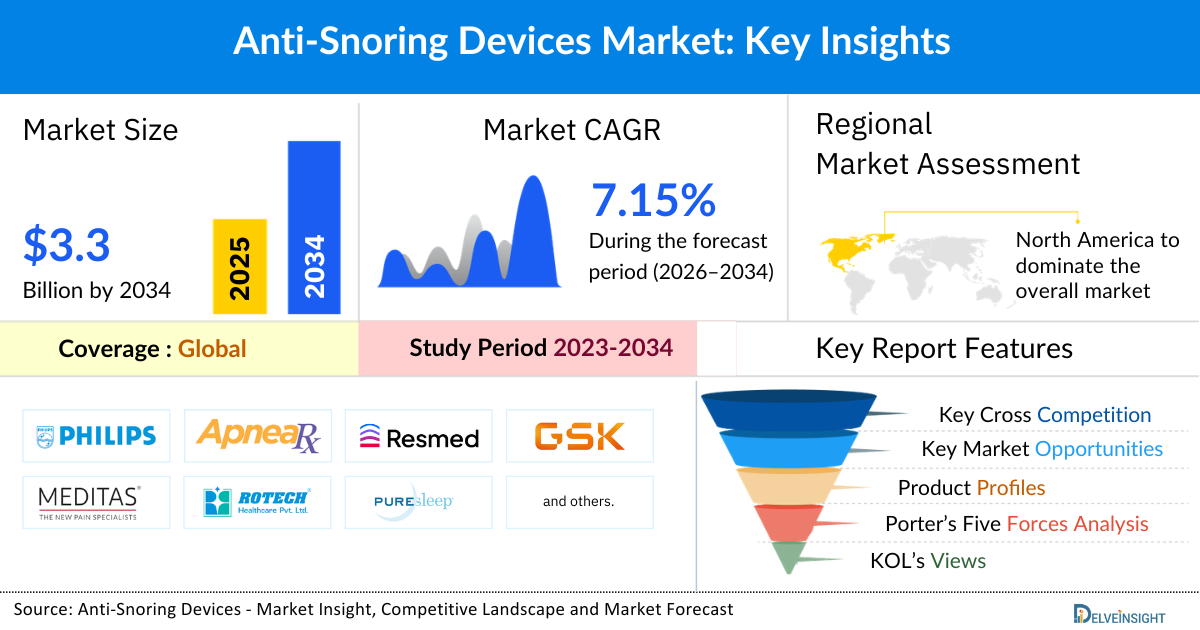
- The global anti-snoring devices market size is expected to increase from USD 1,824.93 million in 2025 to USD 3,378.81 million by 2034, reflecting strong and sustained growth.
- The global anti-snoring devices market is growing at a CAGR of 7.15% during the forecast period from 2026 to 2034.
- The growth of the global anti-snoring market is being strongly driven by the factors including the rising burden of sleep disorders linked to obesity, COPD, depression, and other risk conditions; increasing global sleep awareness campaigns that are shifting public perception toward proactive management of snoring and sleep health; and the rapid introduction of advanced, technology-enabled anti-snoring solutions that offer greater comfort, precision, and monitoring capabilities. Together, these forces are accelerating both consumer adoption and clinical acceptance, thereby boosting market expansion.
- The leading companies operating in the anti-snoring devices market include Koninklijke Philips NV, Apnea Sciences, ResMed, SomnoMed, GSK plc., Meditas, Rotech Healthcare, The Pure Sleep Company, Tomed GmbH, Fisher and Paykel Healthcare Limited, Whole You Inc., AccuMED Corporation, Taevas Life Sciences, SnoreLess, Leone SpA, and others.
- North America is projected to lead the global anti-snoring devices market, supported by a high and growing prevalence of sleep-related disorders, including chronic snoring and obstructive sleep apnea. The region benefits from strong awareness initiatives led by healthcare organizations, sleep foundations, and patient advocacy groups that emphasize early intervention and the importance of sleep health. Additionally, robust product development activity, rapid adoption of advanced technologies, and a well-established healthcare infrastructure further strengthen the region’s market dominance throughout the forecast period.
- In the device type segment of the anti-snoring devices market, the mandibular advancement devices category is estimated to account for the largest market share in 2025.
Request for unlocking the report of the @ Anti-Snoring Devices Market Trends
Anti-Snoring Devices Market Size and Forecasts
|
Report Metrics |
Details |
|
2025 Market Size |
USD 1,824.93 million |
|
2034 Projected Market Size |
USD 3,378.81 million |
|
Growth Rate (2025-2032) |
7.15% CAGR |
|
Largest Market |
North America |
|
Fastest Growing Market |
Asia-Pacific |
|
Market Structure |
Moderately Concentrated |
Factors Contributing to the Growth of the Anti-Snoring Devices Market
- Increasing prevalence of sleep disorders and associated risk factors: The rising incidence of sleep disorders, including habitual snoring, obstructive sleep apnea, insomnia, and sleep-related breathing problems, continues to be a major driver of demand for anti-snoring devices. Contributing risk factors such as obesity, COPD, chronic stress, cardiovascular conditions, and depression are becoming increasingly common, leading to a wider population experiencing sleep fragmentation and airway obstruction. As more individuals seek accessible and non-invasive solutions for improving sleep quality, the need for affordable, easy-to-use anti-snoring devices grows significantly. This expanding patient base is expected to accelerate product adoption, boost market penetration, and drive steady long-term growth across both clinical and home-care settings.
- Surge in sleep awareness campaigns and educational programs: Growing public and clinical awareness about the importance of healthy sleep is transforming consumer behavior and encouraging earlier intervention in snoring and sleep-disordered breathing. Government agencies, healthcare organizations, and sleep foundations are conducting large-scale awareness campaigns that highlight the health risks of untreated snoring, such as hypertension, daytime fatigue, metabolic disorders, and poor cognitive performance. These initiatives are empowering individuals to seek diagnosis and adopt preventive devices before symptoms escalate. As understanding deepens around the health benefits of restorative sleep, demand for user-friendly anti-snoring solutions is expanding rapidly, further strengthening market momentum.
- Rising launch of technologically advanced sleep devices: The introduction of innovative, technology-enabled anti-snoring devices is significantly reshaping the market by improving accuracy, comfort, and personalization. Modern devices now integrate AI-driven analytics, acoustic and positional sensors, smart vibration cues, and adaptive therapeutic mechanisms that adjust in real time to reduce snoring episodes. These advancements not only enhance treatment outcomes but also increase user satisfaction and long-term adherence. The continuous rollout of sophisticated oral appliances, wearable trackers, smart pillows, and contact-free monitoring systems is broadening the range of therapeutic options available to consumers. As companies invest heavily in R&D and introduce breakthrough technologies, the market is witnessing accelerated growth and stronger competitive dynamics.
Anti-Snoring Devices Market Report Segmentation
This anti-snoring devices market report offers a comprehensive overview of the global anti-snoring devices market, highlighting key trends, growth drivers, challenges, and opportunities. It covers detailed market segmentation by DeviceType (Mandibular Advancement Devices, Tongue Stabilizing Devices, Continuous Positive Airway Pressure (CPAP) Devices, and Others), Distribution Channel (Hospital and Retail Pharmacies, Online Pharmacies, and Others), and geography. The report provides valuable insights into the competitive landscape, regulatory environment, and market dynamics across major markets, including North America, Europe, and Asia-Pacific. Featuring in-depth profiles of leading industry players and recent product innovations, this report equips businesses with essential data to identify market potential, develop strategic plans, and capitalize on emerging opportunities in the rapidly growing anti-snoring devices market.
The anti-snoring devices market encompasses a range of noninvasive and minimally invasive products designed to reduce or eliminate snoring by improving airflow during sleep. It includes oral appliances, nasal devices, positional therapy tools, chin straps, EPAP systems, and smart sensor-based solutions. Driven by rising awareness of sleep health, increasing prevalence of snoring and sleep apnea, and ongoing technological advancements, the market continues to expand as consumers and clinicians seek effective, comfortable, and home-based snoring management options.
The anti-snoring devices market is expected to witness strong expansion as multiple interconnected factors collectively elevate demand and adoption. The rising global prevalence of sleep disorders, driven by conditions such as obesity, COPD, depression, and lifestyle-induced sleep disturbances, is significantly increasing the number of individuals seeking effective snoring and sleep-related interventions. At the same time, growing public health initiatives and widespread sleep awareness campaigns are enhancing recognition of snoring as a clinical issue rather than a benign inconvenience, prompting earlier diagnosis and higher consumer willingness to adopt therapeutic devices. Complementing these trends is the surge in technologically advanced sleep solutions, including sensor-enabled, app-connected, and AI-driven anti-snoring devices, which offer enhanced comfort, accuracy, and real-time monitoring. Together, these dynamics are setting a strong foundation for sustained growth in the anti-snoring devices market by driving both consumer demand and clinical acceptance.
Get More Insights into the Report @ Anti-Snoring Devices Market Insights
What are the latest Anti-Snoring Devices Market dynamics and trends?
The anti-snoring devices market is witnessing strong, sustained momentum, supported by several high-impact drivers that are reshaping both consumer behavior and clinical practice. The rising incidence of sleep disorders associated with obesity, COPD, depression, and other underlying health conditions has significantly expanded the population seeking reliable snoring interventions. Parallel to this, large-scale sleep health awareness initiatives are elevating public understanding of the consequences of untreated snoring, fostering a shift toward early identification, preventive care, and professional guidance. This evolving landscape is further strengthened by the introduction of next-generation, technology-enhanced anti-snoring solutions that deliver superior comfort, optimized airway support, and advanced monitoring capabilities.
According to recent analysis by DelveInsight, the epidemiology of sleep disorders highlights a substantial and growing public health challenge, which is directly driving demand for anti-snoring devices. Population-based studies reveal persistently high rates of sleep-related problems, affecting approximately 56 percent of adults in the United States, 31 percent in Western Europe, and 23 percent in Japan. Globally, 30 to 35 percent of adults experience insomnia symptoms, with prevalence rising to 75 percent among older individuals. In many developed countries, nearly one-third of adults report difficulty initiating or maintaining sleep at least once a week, while 6 to 15 percent meet diagnostic criteria for insomnia disorders. Longitudinal data indicate an increasing incidence, with annual rates of 30.7 percent for insomnia symptoms and 7.4 percent for insomnia syndrome. A recent study in Spain reported insomnia symptoms in 43.4 percent of adults, chronic insomnia disorder in 14 percent, and chronic insomnia syndrome in 13.7 percent, reflecting a nearly 47 percent increase in chronic insomnia over the past two decades.
The rising prevalence of sleep disorders, coupled with comorbid conditions such as COPD, which affects approximately 400 million people worldwide, significantly expands the target population for anti-snoring and sleep-management devices. This growing health burden is driving the adoption of non-invasive solutions such as mandibular advancement devices, nasal dilators, EPAP systems, and smart wearable technologies. Increased awareness among consumers and healthcare providers, alongside technological innovations that enhance comfort, monitoring, and treatment efficacy, is further boosting market penetration.
Collectively, the high prevalence of sleep disorders and associated respiratory conditions is creating strong demand, accelerating product adoption, and propelling growth in the anti-snoring devices market.
However, Complications associated with anti-snoring devices, along with uncertain and often inconsistent clinical evidence, continue to shape the challenges within the anti-snoring devices market. Many users experience issues such as discomfort, oral dryness, jaw pain, nasal irritation, or disrupted sleep, which can affect overall compliance and limit long-term adoption. Additionally, the lack of strong, standardized, and widely validated clinical studies supporting the efficacy of several device categories creates hesitation among both healthcare professionals and consumers. These limitations make it difficult to achieve broad clinical acceptance, slow the pace of regulatory approval, and contribute to variability in real-world outcomes. Together, while device-related complications and insufficient evidence pose substantial barriers, they also underscore the growing need for better-designed, clinically proven, and patient-centric anti-snoring technologies capable of strengthening trust, improving adherence, and advancing the overall market.
Anti-Snoring Devices Market Segment Analysis
Anti-Snoring Devices Market by DeviceType (Mandibular Advancement Devices, Tongue Stabilizing Devices, Continuous Positive Airway Pressure (CPAP) Devices, and Others), Distribution Channel (Hospital and Retail Pharmacies, Online Pharmacies, and Others), and Geography (North America, Europe, Asia-Pacific, and Rest of the World)
By Device Type: Mandibular Advancement Devices Category Dominates the Market
In the device type segment of the anti-snoring devices market, the mandibular advancement devices category is estimated to account for the largest market share in 2025 of 40% during the forecast period from 2026 to 2034. The mandibular advancement devices (MADs) category is gaining significant traction in the anti-snoring devices market due to its strong clinical effectiveness, growing patient preference, and rising regulatory validation. MADs work by gently advancing the lower jaw to keep the upper airway open during sleep, reducing soft-tissue collapse and improving airflow. This simple yet highly effective mechanism has made MADs one of the most widely adopted noninvasive solutions for both chronic snoring and mild-to-moderate obstructive sleep apnea. Their ease of use, comfort, portability, and high adherence rates give them a clear advantage over traditional CPAP therapy, which many patients find bulky or difficult to tolerate.
Clinical evidence continues to strengthen the credibility of MADs, with numerous studies demonstrating improvements in apnea-hypopnea index, oxygen saturation, and overall sleep quality. This clinical backing has led to growing regulatory support as well. A notable example is the FDA clearance of Narval CC and other custom-made, adjustable mandibular advancement devices, which has reinforced their acceptance in mainstream sleep therapy. Leading companies such as ResMed, SomnoMed, and Whole You are further accelerating growth by introducing advanced, digitally designed, and customizable MADs that offer better comfort and treatment precision.
Thus, rising clinical acceptance, patient-centric design improvements, and supportive regulatory pathways have positioned mandibular advancement devices as one of the fastest-growing and most impactful categories in the anti-snoring devices market.
By Distribution Channel: Hospital and Retail Pharmacies Category Dominates the Market
In the distribution channel segment of the anti-snoring devices market, the hospital and retail pharmacies category is estimated to account for the largest market share of 48% in 2025. Hospital and retail pharmacies play a crucial role in shaping the distribution landscape of the anti-snoring devices market by ensuring accessibility, credibility, and professional guidance for consumers. Hospital pharmacies serve as a trusted channel, particularly for patients diagnosed with snoring or sleep-disordered breathing during clinical evaluations. Through collaboration with sleep specialists, ENT physicians, and pulmonologists, these pharmacies often dispense medically recommended devices such as mandibular advancement devices, nasal dilators, and EPAP systems. Their involvement enhances patient confidence, supports proper device selection, and ensures adherence to clinically guided treatment pathways.
Retail pharmacies, on the other hand, significantly expand market reach by offering convenience and wider product visibility. As awareness of sleep health grows, consumers increasingly seek over-the-counter options that are easy to purchase, affordable, and immediately available. Retail outlets stock a variety of noninvasive solutions, including nasal strips, chin straps, positional therapy devices, and basic oral appliances, making them a preferred channel for first-time users or individuals seeking quick relief. Additionally, retail pharmacies often provide pharmacist counseling, which helps consumers navigate product choices based on comfort, effectiveness, and price. Together, hospital and retail pharmacies form a strong, complementary distribution network that supports both medically guided and consumer-driven adoption of anti-snoring devices, ultimately driving steady market growth.
Anti-Snoring Devices Market Regional Analysis
North America Anti-Snoring Devices Market Trends
North America is projected to lea the global anti-snoring devices market with a market share of 41% in 2025, supported by a high and growing prevalence of sleep-related disorders, including chronic snoring and obstructive sleep apnea. The region benefits from strong awareness initiatives led by healthcare organizations, sleep foundations, and patient advocacy groups that emphasize early intervention and the importance of sleep health. Additionally, robust product development activity, rapid adoption of advanced technologies, and a well-established healthcare infrastructure further strengthen the region’s market dominance throughout the forecast period.
Recent analyses highlight a rapidly growing burden of sleep-related issues in the United States, which is directly fueling demand for anti-snoring devices. According to DelveInsight’s 2024 assessment, nearly 35 percent of U.S. adults struggled to stay asleep in 2023, with snoring and obstructive sleep apnea identified as major contributors. Additional findings from the same year indicate that about 84.5 million adults, roughly one in three, regularly experience disrupted sleep due to snoring and breathing difficulties. This escalating prevalence is driving millions of individuals to seek accessible and comfortable solutions such as mandibular advancement devices, nasal dilators, EPAP systems, and advanced smart sleep devices aimed at improving airflow and enhancing sleep quality.
The market is further strengthened by continuous public awareness initiatives. The National Sleep Foundation plays an important role through its annual Sleep Awareness Week, a flagship campaign centered on improving national understanding of sleep health. By promoting evidence-based guidance, practical sleep improvement strategies, and professional insights, the foundation encourages individuals to recognize snoring as a treatable condition rather than a harmless inconvenience. These combined forces, rising diagnostic awareness and strong advocacy efforts, are significantly increasing consumer engagement and accelerating the adoption of anti-snoring devices across the country.
Thus, the interplay of all the aforementioned factors is likely to fuel the regional market growth and demand for anti-snoring devices in North America during the forecasted period from 2026 to 2034.
Europe Anti-Snoring Devices Market Trends
The Europe anti-snoring devices market is expanding steadily, supported by high awareness of sleep disorders, well-established healthcare systems, and strong emphasis on early diagnosis and treatment of sleep-related conditions. Countries such as Germany, the United Kingdom, France, Italy, and the Nordic nations are driving adoption due to the increasing prevalence of obstructive sleep apnea, rising geriatric populations, and growing demand for clinically validated, noninvasive snoring solutions. Technological advancements, including smart oral appliances, connected sleep monitoring devices, and AI-enabled solutions, are further stimulating market growth as European consumers show a strong preference for evidence-based and personalized sleep therapies. Additionally, supportive reimbursement structures in certain countries, increased availability of sleep clinics, and active involvement of professional organizations in promoting sleep health are enhancing market penetration. The region also benefits from stringent regulatory standards that ensure high product quality, thereby boosting consumer trust. Collectively, these factors are positioning Europe as a mature yet innovation-driven market in the global anti-snoring devices landscape.
Asia-Pacific Anti-Snoring Devices Market Trends
The Asia-Pacific anti-snoring devices market is experiencing strong growth driven by rising awareness of sleep health, increasing diagnosis of sleep-disordered breathing, and rapid urbanization, contributing to lifestyle-related risk factors such as obesity and stress. Countries including China, India, Japan, South Korea, and Australia are witnessing a surge in demand for non-invasive and affordable snoring solutions as consumers become more proactive about managing sleep quality. Expanding healthcare infrastructure, the growing presence of sleep clinics, and greater adoption of home-based sleep technologies further support market expansion. Additionally, the region’s large population base, increasing disposable income, and growing penetration of e-commerce platforms have made anti-snoring devices more accessible to consumers. Manufacturers are also targeting Asia-Pacific with technologically advanced products tailored to local needs, while rising digital health adoption is boosting the use of smart wearables and AI-based sleep trackers. Together, these factors position Asia-Pacific as one of the fastest-growing and most dynamic regions in the global anti-snoring devices market.
Who are the major players in the anti-snoring devices Market?
The following are the leading companies in the anti-snoring devices Market. These companies collectively hold the largest market share and dictate industry trends.
- Koninklijke Philips NV
- Apnea Sciences
- ResMed
- SomnoMed
- GSK plc.
- Meditas
- Rotech Healthcare
- The Pure Sleep Company
- Tomed GmbH
- Fisher and Paykel Healthcare Limited
- Whole You Inc.,
- AccuMED Corporation
- Taevas Life Sciences
- SnoreLess
- Leone SpA, and others
How is the competitive landscape shaping the anti-snoring devices market?
The competitive landscape of the anti-snoring devices market is evolving rapidly as consumer awareness, technological innovation, and clinical validation continue to expand. The market is moderately consolidated, with a mix of dominant global players and a growing number of specialized manufacturers competing across multiple device categories such as mandibular advancement devices, CPAP systems, EPAP valves, positional therapy solutions, and smart sensor-based devices. Leading companies are increasingly leveraging advanced materials, AI-driven sleep analytics, and personalized device designs to differentiate their offerings while expanding their presence across home-care and clinical-care segments.
Strategic partnerships, product launches, and regulatory approvals are shaping competition as established brands aim to strengthen their portfolios and newer entrants focus on niche product innovation. Additionally, rising investments in sleep-health technologies and strong e-commerce penetration are intensifying competition, encouraging companies to emphasize comfort, affordability, and improved user adherence.
Thus, the market landscape reflects a dynamic environment where innovation speed, clinical efficacy, and user experience have become the most critical differentiators.
Recent Developmental Activities in the Anti-Snoring Devices Market
- In September 2024, AppYea launched AppySleep Wristband, a smart biofeedback wearable designed to detect snoring and irregular breathing patterns, then deliver gentle vibrations to prompt the user to change sleep position. The wristband pairs with a mobile app that tracks sleep data, helping users monitor improvements in snoring and overall sleep quality.
- In July 2024, Snorles, a leading innovator in sleep technology, announced the launch of its latest product, GenioFlex, which offers a fresh approach to managing snoring without the need for intrusive nighttime devices. Snorles GenioFlex distinguishes itself by its unique daytime functionality, eliminating the need for users to wear or use it during sleep hours. Unlike traditional anti-snoring products that may disrupt sleep quality, GenioFlex seamlessly integrates into daily routines, providing effective snoring management without compromising nighttime rest.
- In March 2024, SnoreLessNow launched its Anti Snore Mouth Guard+ (also marketed as SomnoFit-S® in Europe) following FDA 510(k) clearance earlier that year. This mandibular advancement device positions the jaw forward to increase airflow and reduce snoring, offering a mask-free alternative for patients seeking non-CPAP solutions.
- In February 2024, ResMed announced the launch of its AirFit F40 ultra-compact, full-face mask indicated for sleep apnea. The device offers the comfort of smaller masks without sacrificing performance, thus helping with sleep apnea therapy compliance for users of high-pressure continuous positive airway pressure (CPAP) treatment.
|
Report Metrics |
Details |
|
Study Period |
2023 to 2034 |
|
Base Year |
2025 |
|
Forecast Period |
2026 to 2034 |
|
Anti-Snoring Devices Market CAGR |
7.15% |
|
Key Companies in the Anti-Snoring Devices Market |
Koninklijke Philips NV, Apnea Sciences, ResMed, SomnoMed, GSK plc., Meditas, Rotech Healthcare, The Pure Sleep Company, Tomed GmbH, Fisher and Paykel Healthcare Limited, Whole You Inc., AccuMED Corporation, Taevas Life Sciences, SnoreLess, Leone SpA, and others. |
|
Anti-Snoring Devices Market Segments |
by Device Type, by Distribution Channel, and by Geography |
|
Medical Device Contract Manufacturing Regional Scope |
North America, Europe, Asia Pacific, the Middle East, Africa, and South America |
|
Medical Device Contract Manufacturing Country Scope |
U.S., Canada, Mexico, Germany, United Kingdom, France, Italy, Spain, China, Japan, India, Australia, South Korea, and key Countries |
Anti-Snoring Devices Market Segmentation
- Medical Device Contract Manufacturing by Device Type Exposure
- Mandibular Advancement Devices
- Tongue Stabilizing Devices
- Continuous Positive Airway Pressure (CPAP) Devices
- Others
- Medical Device Contract Manufacturing by Distribution Channel Exposure
- Hospital and Retail Pharmacies
- Online Pharmacies
- Others
Contract Development Manufacturing Organization Geography Exposure
- North America Anti-Snoring Devices Market
- United States Anti-Snoring Devices Market
- Canada Anti-Snoring Devices Market
- Mexico Anti-Snoring Devices Market
- Europe Anti-Snoring Devices Market
- United Kingdom Anti-Snoring Devices Market
- Germany Anti-Snoring Devices Market
- France Anti-Snoring Devices Market
- Italy Anti-Snoring Devices Market
- Spain Anti-Snoring Devices Market
- Rest of Europe Anti-Snoring Devices Market
- Asia-Pacific Anti-Snoring Devices Market
- China Anti-Snoring Devices Market
- Japan Anti-Snoring Devices Market
- India Anti-Snoring Devices Market
- Australia Anti-Snoring Devices Market
- South Korea Anti-Snoring Devices Market
- Rest of Asia-Pacific Anti-Snoring Devices Market
- Rest of the World Anti-Snoring Devices Market
- South America Anti-Snoring Devices Market
- Middle East Anti-Snoring Devices Market
- Africa Anti-Snoring Devices Market
Impact Analysis
AI-Powered Innovations and Applications:
Artificial intelligence is redefining the next generation of anti-snoring devices by enabling smarter, more adaptive, and highly personalized sleep therapy. Modern devices equipped with AI-driven sensors continuously monitor breathing patterns, snoring intensity, vibration frequencies, sleep positions, and airflow disruptions in real time. These data streams are analyzed using machine learning algorithms that can accurately distinguish benign snoring from patterns that may indicate early-stage sleep apnea, allowing for more targeted and effective intervention.
AI-enabled oral appliances and wearable systems can automatically adjust therapeutic settings such as mandibular positioning, airflow pressure, or gentle vibratory stimulation based on moment-to-moment physiological changes during sleep. This dynamic responsiveness helps maintain airway openness while improving user comfort and device adherence. In addition, AI-powered positional therapy devices use predictive analytics to anticipate snoring episodes and guide users into optimal sleeping positions before snoring escalates.
Beyond therapy optimization, AI platforms offer comprehensive sleep coaching insights by turning nightly data into actionable trend reports. Users receive personalized guidance on sleep hygiene, lifestyle adjustments, and device usage, while clinicians can remotely access detailed metrics to support accurate diagnoses and continuous follow-up care. As AI technologies continue to evolve, their integration is expected to shift anti-snoring solutions from reactive tools to proactive and preventive systems that deliver superior therapeutic outcomes and a more seamless, user-centered sleep experience.
U.S. Tariff Impact Analysis on Anti-Snoring Devices Market:
The U.S. tariff environment has a direct influence on the anti-snoring devices market by affecting production costs, pricing strategies, and product availability. When tariffs increase on imported components or finished devices, manufacturers face higher input costs that often translate into elevated retail prices. This can slow adoption in the largely out-of-pocket consumer segment and create obstacles for smaller companies that rely on international suppliers and lack the scale to absorb cost fluctuations. In contrast, domestic producers may gain a competitive edge if imported products become more expensive, prompting shifts toward localized manufacturing and supply chain diversification.
Tariffs also reshape long-term strategic decisions across the industry. Companies may respond by redesigning products to incorporate tariff-free components, relocating production to lower-tariff regions, or expanding local assembly facilities. While these adjustments can strengthen supply chain resilience, they also introduce challenges such as retooling expenses, regulatory re-approvals, and delayed product launches. Ultimately, tariff changes influence not only pricing and competition but also the pace of innovation, market entry strategies, and patient access to advanced anti-snoring technologies.
How This Analysis Helps Clients
- Cost Management: By understanding the tariff landscape, clients can anticipate cost increases and adjust pricing strategies accordingly, ensuring profitability.
- Supply Chain Optimization: Clients can identify alternative sourcing options and diversify their supply chains to reduce dependency on high-tariff regions, enhancing resilience.
- Regulatory Navigation: Expert guidance on navigating the evolving regulatory environment helps clients maintain compliance and avoid potential legal challenges.
- Strategic Planning: Insights into tariff impacts enable clients to make informed decisions about manufacturing locations, partnerships, and market entry strategies.
Startup Funding & Investment Trends:
|
Company Name |
Total Funding |
Type of Funding |
Product/Services |
Core Technology / Focus |
|
Smart Nora |
USD 12 million (approx.) |
Venture Funding |
Smart, non-invasive snoring solution with responsive sleep monitoring |
Motion-based sensor technology and an adaptive air inflation system |
|
NasalAid Technologies |
USD 5 million (estimated) |
Seed + Angel Investment |
Nasal dilators for airflow optimization |
Ergonomic nasal support and airflow improvement devices |
|
QuietOn |
USD 15 million (approx.) |
Crowdfunding + Venture Capital |
Active noise-cancelling earbuds for sleep and snoring environments |
ANC-powered sleep earbuds and acoustic noise reduction |
|
SnoreLab (Reviva Softworks) |
Self-funded with strategic investments |
Private Investment |
Snoring and sleep analysis mobile app |
AI-driven acoustic analysis and snoring event classification |
|
SomniFix |
USD 3 million (estimated) |
Angel + Early Stage Funding |
Mouth strips to improve nasal breathing and reduce mouth snoring |
Breathing optimization and adhesive-based nasal airflow control |
|
Hüpnos |
USD 4 million (approx.) |
Seed Funding |
Smart anti-snoring sleep mask with position and breathing sensors |
AI-based positional therapy and real-time snoring detection |
|
Eargo Sleep Technologies |
Proprietary funding |
Private Equity |
Sleep and snore monitoring devices |
Micro-sensor integration and personalized sleep analytics |
|
Dozzy Inc. |
USD 6 million (approx.) |
Seed + Series A |
AI-powered adjustable oral appliance |
Adaptive mandibular positioning and machine-learning algorithms |
|
Slumbr Technologies |
USD 2–3 million (estimated) |
Angel Investors |
Smart positional sleep belts |
Body-position correction using sensor-guided vibration cues |
Key takeaways from the Anti-Snoring Devices Market report study
- Market size analysis for the current anti-snoring devices market size (2025), and market forecast for 8 years (2026 to 2034)
- Top key product/technology developments, mergers, acquisitions, partnerships, and joint ventures happened over the last 3 years.
- Key companies dominating the anti-snoring devices market.
- Various opportunities are available for the other competitors in the anti-snoring devices market space.
- What are the top-performing segments in 2025? How these segments will perform in 2034?
- Which are the top-performing regions and countries in the current anti-snoring devices market scenario?
- Which are the regions and countries where companies should have concentrated on opportunities for the anti-snoring devices market growth in the future?

