Antimicrobial Susceptibility Testing Market Summary
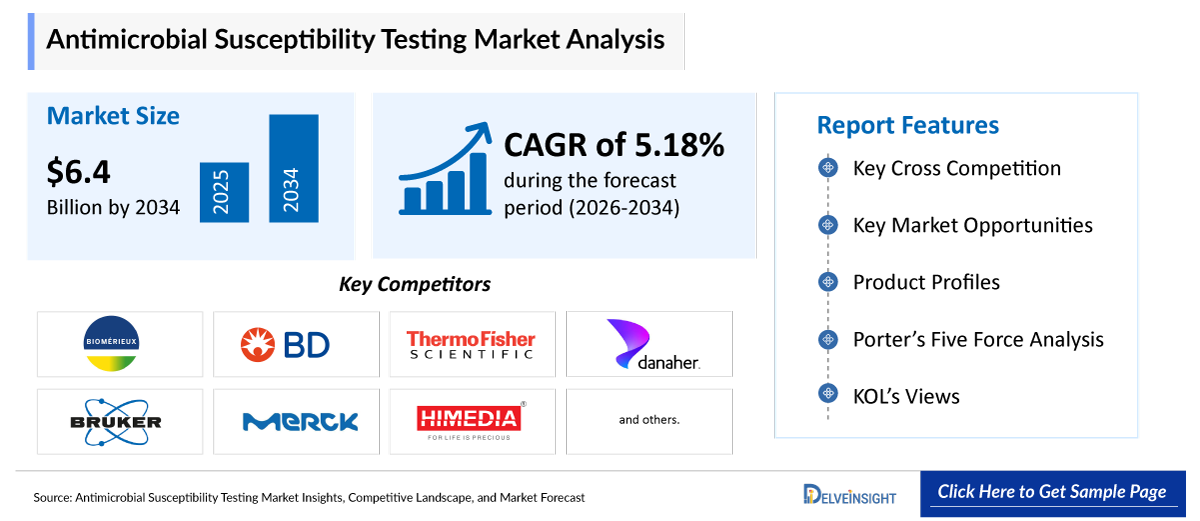
- The global antimicrobial susceptibility testing market size is expected to increase from USD 4,128.15 million in 2025 to USD 6,475.48 million by 2034, reflecting strong and sustained growth.
- The global antimicrobial susceptibility testing market is growing at a CAGR of 5.18% during the forecast period from 2026 to 2034.
- The rising burden of infectious diseases, including conditions such as Sepsis and Urinary Tract Infections, is increasing the need for accurate diagnosis and effective treatment selection, thereby driving demand for antimicrobial susceptibility testing (AST). At the same time, the growing emphasis on targeted and personalized therapy is shifting clinical practice away from empirical antibiotic use toward evidence-based treatment, where AST plays a crucial role in identifying the most effective drug for each patient. This demand is further strengthened by technological advancements in AST systems, such as automation and rapid testing platforms, which significantly reduce turnaround time and improve diagnostic accuracy. Collectively, these factors are accelerating the adoption of AST across healthcare settings, thereby boosting the overall market growth.
- The leading companies operating in the antimicrobial susceptibility testing market include bioMérieux SA, Becton, Dickinson and Company (BD), Thermo Fisher Scientific Inc., Beckman Coulter, Inc., Danaher Corporation, Bio-Rad Laboratories, Inc., Bruker Corporation, Accelerate Diagnostics, Inc., Luminex Corporation, Abbott Laboratories, F. Hoffmann-La Roche Ltd., Siemens Healthineers AG, HiMedia Laboratories Pvt. Ltd., Hardy Diagnostics, Liofilchem S.r.l., Merck KGaA, Charles River Laboratories International, Inc., QIAGEN N.V., Cepheid, Inc., and others.
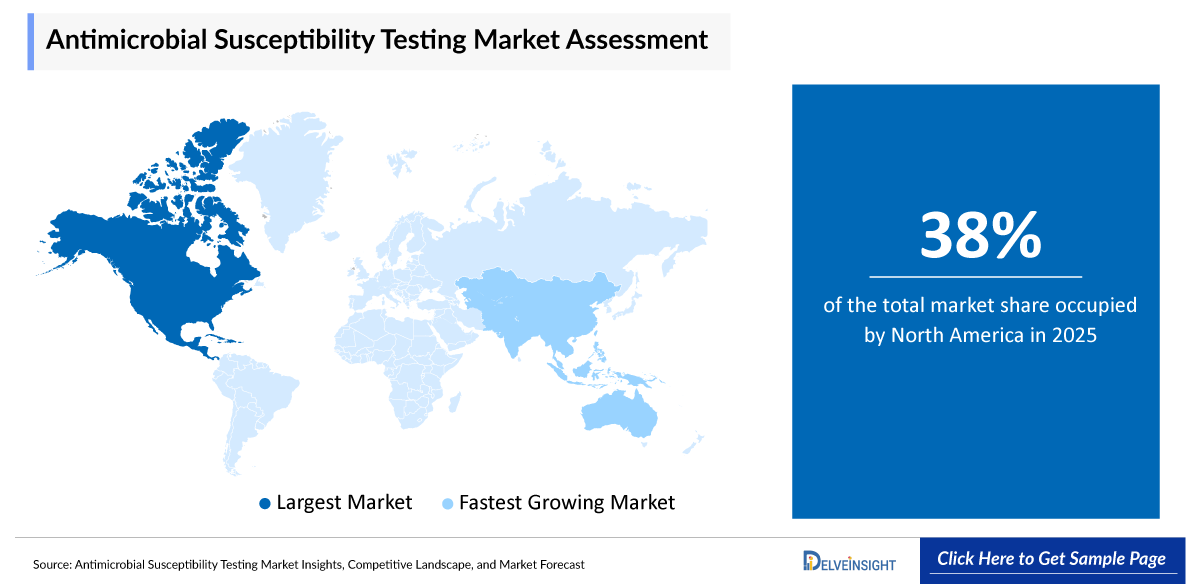
- North America is expected to dominate the antimicrobial susceptibility testing market due to the high prevalence of infectious diseases and antimicrobial resistance, advanced healthcare infrastructure, and strong presence of leading diagnostic companies. Additionally, widespread adoption of automated and rapid diagnostic technologies, along with supportive initiatives by organizations such as the Centers for Disease Control and Prevention and Food and Drug Administration to combat antimicrobial resistance, further drives the demand for AST solutions across the region.
- In the product segment of the antimicrobial susceptibility testing market, the manual testing category is estimated to account for the largest market share in 2025.
Request for unlocking the report of the @ Antimicrobial Susceptibility Testing Market Insights
Antimicrobial Susceptibility Testing Market Size and Forecasts
|
Report Metrics |
Details |
|
2025 Market Size |
USD 4,128.15 million |
|
2034 Projected Market Size |
USD 6,475.48 million |
|
Growth Rate (2026-2034) |
5.18% CAGR |
|
Largest Market |
North America |
|
Fastest Growing Market |
Asia-Pacific |
|
Market Structure |
Moderately Concentrated |
Factors Contributing to the Growth of the Antimicrobial Susceptibility Testing Market
- Rising burden of infectious disease leading to a surge in antimicrobial susceptibility testing: The rising burden of infectious diseases, including conditions such as sepsis, tuberculosis, and urinary tract infections, is significantly boosting the demand for antimicrobial susceptibility testing. As infection rates increase, there is a greater need for accurate and timely identification of effective antimicrobial therapies. AST helps clinicians determine the most appropriate treatment, reduce trial-and-error prescribing, and improve patient outcomes. This growing reliance on precise diagnostics is driving the adoption of AST across hospitals, laboratories, and healthcare systems, thereby supporting overall market growth.
- Growing demand for targeted & personalized therapy: The growing demand for targeted and personalized therapy is significantly boosting the antimicrobial susceptibility testing (AST) market, as healthcare providers increasingly move away from empirical antibiotic use toward precision-based treatment. AST enables clinicians to identify the most effective antimicrobial for a specific pathogen, ensuring optimized therapy for conditions such as Sepsis and Urinary Tract Infections. This approach not only improves patient outcomes but also helps minimize unnecessary antibiotic use and combat resistance. As a result, the increasing focus on personalized medicine is driving greater adoption of AST solutions across clinical settings.
- Technological advancements in AST systems: Technological advancements in antimicrobial susceptibility testing (AST) systems are significantly boosting the market by improving the speed, accuracy, and efficiency of diagnostics. The development of automated platforms and rapid AST technologies enables faster detection of effective treatments for infections such as Sepsis and Tuberculosis, reducing turnaround time from days to hours. Additionally, innovations like digital microbiology, AI integration, and high-throughput systems enhance workflow efficiency and reduce human error. These improvements are encouraging healthcare facilities to adopt advanced AST solutions, thereby driving overall market growth.
Antimicrobial Susceptibility Testing Market Report Segmentation
This antimicrobial susceptibility testing market report offers a comprehensive overview of the global antimicrobial susceptibility testing market, highlighting key trends, growth drivers, challenges, and opportunities. It covers detailed market segmentation by Product (Automated Instruments and Manual Testing), Organism Type (Bacteria, Fungi, and Parasites), Method Type (Phenotypic {Disk Diffusion (Kirby-Bauer method), Broth Dilution (MIC testing), E-test (gradient diffusion), and Agar Dilution} and Genotypic { PCR-based, DNA Sequencing, Microarray-based}), Application (Clinical Diagnostics, Drug Discovery & Development, Epidemiology & Surveillance, and Others), End-Users (Hospitals & Diagnostic Laboratories, Pharmaceutical & Biotechnology Companies, Academic & Research Institutes, and Others) and geography. The report provides valuable insights into the competitive landscape, regulatory environment, and market dynamics across major markets, including North America, Europe, and Asia-Pacific. Featuring in-depth profiles of leading industry players and recent product innovations, this report equips businesses with essential data to identify market potential, develop strategic plans, and capitalize on emerging opportunities in the rapidly growing Antimicrobial Susceptibility Testing market.
Antimicrobial Susceptibility Testing (AST) is a laboratory process used to determine how sensitive a microorganism, such as bacteria or fungi, is to specific antimicrobial drugs. It helps identify the most effective treatment by evaluating whether a pathogen is inhibited or resistant to antibiotics, which is especially critical in managing infections like Sepsis and Tuberculosis. This enables clinicians to select appropriate therapy, improve patient outcomes, and reduce the risk of antimicrobial resistance.
The rising burden of infectious diseases, including conditions such as Sepsis and Urinary Tract Infections, is significantly increasing the need for accurate diagnosis and effective treatment selection, thereby driving demand for antimicrobial susceptibility testing (AST). As infection rates continue to grow globally, healthcare providers are under greater pressure to ensure timely and precise identification of the most effective antimicrobial therapy, reducing complications, hospital stays, and mortality rates. At the same time, the growing emphasis on targeted and personalized therapy is shifting clinical practice away from empirical antibiotic use toward evidence-based treatment approaches. In this context, AST plays a crucial role by enabling clinicians to tailor therapies based on the specific resistance profile of pathogens, improving patient outcomes while minimizing unnecessary antibiotic exposure.
This demand is further strengthened by continuous technological advancements in AST systems, including automation, rapid diagnostic platforms, and integration with digital laboratory workflows. These innovations significantly reduce turnaround time from days to hours while enhancing accuracy, reproducibility, and laboratory efficiency. Additionally, the incorporation of advanced data analytics and streamlined workflows is supporting faster clinical decision-making. Collectively, these factors are accelerating the adoption of AST across hospitals, diagnostic laboratories, and research settings, thereby driving sustained growth in the overall market.
Get More Insights into the Report @ Antimicrobial Susceptibility Testing Market Trends
What are the latest antimicrobial susceptibility testing market dynamics and trends?
The rising burden of infectious diseases such as sepsis, tuberculosis, hospital-acquired infections (HAIs), gastrointestinal infections, and urinary tract infections worldwide is significantly boosting the overall market of antimicrobial susceptibility testing.
According to the World Sepsis Day Organization (2025), around 47 to 50 million cases of sepsis occur each year across the world. Sepsis progresses quickly and is often associated with high mortality if not treated promptly with the right antibiotics. This creates a strong demand for AST to determine the most appropriate drug based on the pathogen’s susceptibility profile, reducing the reliance on broad-spectrum antibiotics and minimizing treatment failure.
Additionally, according to the World Health Organization (2026), in 2024, an estimated 10.7 million people fell ill with TB worldwide. Effective treatment of tuberculosis requires precise identification of antibiotic resistance patterns, as standard therapies may fail in resistant cases. AST plays a critical role in determining the most appropriate drug regimen, reducing treatment failures, and improving patient outcomes.
Furthermore, according to the facts provided by the World Health Organization (2025), on average, around 1 in 10 patients was affected by hospital-acquired infections. Common HAIs such as ventilator-associated pneumonia, bloodstream infections, and surgical site infections increase the need for accurate identification of effective antibiotics. AST enables clinicians to determine the most appropriate therapy, reduce the misuse of broad-spectrum antibiotics, and improve patient outcomes.
Additionally, the growing demand for targeted and personalized therapy is significantly boosting the antimicrobial susceptibility testing (AST) market, as healthcare systems increasingly prioritize precision-based treatment over empirical antibiotic use. AST plays a critical role in identifying the most effective antimicrobial for a specific pathogen, enabling clinicians to tailor therapies based on individual patient needs and resistance profiles. This approach not only improves clinical outcomes but also reduces the misuse of broad-spectrum antibiotics and helps combat antimicrobial resistance. As precision medicine continues to gain traction globally, the reliance on accurate and rapid AST solutions is increasing across hospitals and diagnostic laboratories, thereby driving overall market growth. In addition to this demand, several recent development activities are further accelerating the AST market. For instance, in February 2024, the U.S. Food and Drug Administration cleared the Selux AST System, an advanced automated platform capable of testing multiple antibiotics simultaneously and delivering faster results compared to traditional methods.
Collectively, the shift toward personalized therapy, combined with continuous product innovations, increasing burden of infectious diseases, and regulatory approvals, is accelerating the adoption of advanced AST systems and driving sustained growth in the global market.
However, the long turnaround times, challenges in testing fastidious and rare organisms, and stringent regulatory approval processes are key factors limiting the growth of the antimicrobial susceptibility testing (AST) market. Traditional AST methods often require extended incubation periods, delaying clinical decision-making and reducing efficiency. Additionally, certain difficult-to-culture pathogens complicate accurate susceptibility testing, leading to gaps in diagnosis and treatment. Furthermore, strict regulatory requirements for product approvals increase development timelines and costs for manufacturers, slowing the introduction of innovative AST technologies. Collectively, these factors hinder widespread adoption and act as restraints on overall market growth.
Antimicrobial Susceptibility Testing Market Segment Analysis
Antimicrobial Susceptibility Testing Market by Product (Automated Instruments and Manual Testing), Organism Type (Bacteria, Fungi, and Parasites), Method Type (Phenotypic {Disk Diffusion (Kirby-Bauer method), Broth Dilution (MIC testing), E-test (gradient diffusion), and Agar Dilution} and Genotypic {PCR-based, DNA Sequencing, Microarray-based}), Application (Clinical Diagnostics, Drug Discovery & Development, Epidemiology & Surveillance, and Others), End-Users (Hospitals & Diagnostic Laboratories, Pharmaceutical & Biotechnology Companies, Academic & Research Institutes, and Others), and Geography (North America, Europe, Asia-Pacific, and Rest of the World)
By Product: Manual Testing in antimicrobial susceptibility testing is expected to dominate the market with the largest revenue share.
In the product segment of the antimicrobial susceptibility testing market, the manual testing category is contributing to 52.36% of total market revenue in 2025, because it serves as the most accessible, cost-efficient, and universally adaptable diagnostic approach across diverse laboratory settings. Manual AST methods, primarily disk diffusion (Kirby–Bauer), broth dilution, and gradient strip methods, continue to be widely adopted due to their minimal infrastructure requirements, ease of use, and ability to deliver reliable phenotypic results aligned with global standards such as EUCAST and CLSI. These techniques rely heavily on consumables like antibiotic-impregnated discs, MIC strips, and culture media (e.g., Mueller–Hinton agar), which are inexpensive and scalable, enabling high testing volumes even in low- and middle-income countries. This widespread affordability and simplicity allow smaller hospitals, diagnostic labs, and research institutes to routinely perform AST without investing in expensive automated platforms, thereby expanding overall market penetration. Moreover, manual testing remains essential for confirmatory testing, customization of antibiotic panels, and evaluation of new or less common antimicrobial agents that may not yet be available in automated systems, reinforcing its continued relevance alongside technological advancements.
Several well-established manufacturers are continuously strengthening this segment through extensive product portfolios. For example, Becton, Dickinson and Company offers the BD BBL™ Sensi-Disc™ range, which provides a broad spectrum of antibiotic discs for disk diffusion testing and is recognized for consistent and accurate performance in clinical microbiology laboratories. Similarly, Thermo Fisher Scientific supplies Oxoid™ antimicrobial susceptibility discs, widely used for manual determination of bacterial sensitivity across multiple antibiotic classes. Another key player, Bio-Rad Laboratories, offers a comprehensive AST portfolio including antibiotic disks, Mueller–Hinton agar media, and disk dispensers that support standardized manual testing workflows. These products are routinely used to test a wide range of pathogens, including multidrug-resistant organisms, highlighting their critical role in global antimicrobial resistance (AMR) surveillance. Additionally, manual consumables such as susceptibility discs are designed for ease of handling and rapid deployment, enabling laboratories to quickly scale testing during outbreaks or hospital infection surges.
Overall, the manual testing segment continues to drive the AST market during the forecasted period.
By Organism Type: The bacterial category dominates the market.
Within the organism type segment of the antimicrobial susceptibility testing market, the bacterial category is anticipated to dominate, accounting for around 64.57% of the market share in 2025, primarily because the majority of routine microbiology testing globally is centered on bacterial pathogens, making bacterial AST the most frequently performed diagnostic workflow across hospitals and laboratories. The high and continuously rising burden of bacterial infections, especially hospital-acquired infections and multidrug-resistant strains such as MRSA, E. coli, and Klebsiella pneumonia, is driving consistent demand for both AST instruments and consumables. Laboratories must perform susceptibility testing for nearly every clinically significant bacterial isolate, which leads to high-volume, repetitive usage of consumables such as antibiotic disks, MIC panels, and culture media, thereby generating sustained revenue and market expansion. Additionally, bacterial organisms are highly adaptable and develop resistance rapidly, which necessitates frequent testing, re-testing, and surveillance, further increasing utilization rates of AST products.
From a product innovation perspective, continuous launches and regulatory clearances of AST instruments and consumables specifically for bacterial testing are accelerating this segment’s growth. For instance, in April 2025, Becton, Dickinson and Company received U.S. FDA clearance for updated BD Phoenix™ M50 and M100 systems panels, which include enhanced bacterial identification and susceptibility testing capabilities, supporting faster and more standardized bacterial AST workflows. Similarly, in June 2024, bioMérieux announced that its VITEK® REVEAL™ AST System received U.S. FDA 510(k) clearance. The system was designed to deliver antimicrobial susceptibility testing results directly from positive blood cultures for Gram-negative bacteria in approximately 5.5–6 hours, enabling clinicians to make same-day treatment decisions for patients with bacteremic sepsis.
Thus, the factors mentioned above are expected to boost the market of the category and thereby escalate the overall market of AST.
By Method Type: Phenotypic category dominates the market
Within the phenotypic segment of the antimicrobial susceptibility testing market, the Disk Diffusion (Kirby-Bauer method) category is anticipated to dominate, accounting for around 67.87% of the market share in 2025, due to its simplicity, reliability, and widespread adoption across clinical laboratories worldwide. This method remains one of the most commonly used AST techniques because it is highly cost-effective and does not require sophisticated instrumentation, making it particularly suitable for small- and mid-sized laboratories as well as resource-limited settings. In this approach, antibiotic-impregnated disks are placed on agar plates inoculated with bacterial isolates, and the resulting zones of inhibition are measured to determine susceptibility, allowing clinicians to make informed treatment decisions. The method’s standardized guidelines, established by organizations such as Clinical and Laboratory Standards Institute and European Committee on Antimicrobial Susceptibility Testing, ensure consistent and reproducible results, further strengthening its global acceptance.
Additionally, the Disk Diffusion method drives high demand for consumables such as antibiotic disks, Mueller-Hinton agar plates, and quality control strains, leading to continuous and recurring revenue generation for manufacturers. Companies like Thermo Fisher Scientific (Oxoid™ antibiotic discs), HiMedia Laboratories (antibiotic discs and culture media), and Becton, Dickinson and Company (BBL™ Sensi-Disc™ products) offer a wide range of disk diffusion consumables that are routinely used in bacterial testing. The ability to test multiple antibiotics simultaneously on a single plate, along with the flexibility to adapt to new antibiotics and updated breakpoints, further enhances its utility in routine diagnostics and antimicrobial resistance (AMR) surveillance programs. Moreover, disk diffusion is often used as a reference or confirmatory method alongside automated systems, reinforcing its continued relevance even in advanced laboratory settings. As the global burden of bacterial infections and AMR continues to rise, the high testing volumes, low operational costs, and continuous demand for consumables associated with the Kirby Bauer method make it a key contributor to the growth of the phenotypic AST segment.
By Application: Clinical Diagnostic category dominates the market.
Within the application segment of the antimicrobial susceptibility testing market, the clinical diagnostics category is anticipated to dominate, accounting for around 54.57% of the market share in 2025, due to its central role in infectious disease management, routine hospital workflows, and antimicrobial stewardship programs. According to the data provided by the World Sepsis Organization (2025), approximately, 47 to 50 million sepsis cases occurred each year. Antimicrobial susceptibility testing is fundamentally embedded in clinical microbiology laboratories, where it is used to determine the effectiveness of antibiotics against pathogens and guide targeted therapy decisions. The rising global burden of infectious diseases, hospital-acquired infections (HAIs), and antimicrobial resistance (AMR) has significantly increased the demand for accurate and rapid diagnostic solutions in clinical settings. Hospitals and diagnostic laboratories perform a high volume of AST procedures daily, making clinical diagnostics the largest revenue-generating application segment. Additionally, increasing emphasis on evidence-based treatment and regulatory recommendations for routine susceptibility testing further strengthen the dominance of this segment.
Moreover, the advanced platforms such as automated systems and molecular diagnostic tools are increasingly being integrated into hospital laboratories to reduce turnaround time and improve patient outcomes. These innovations are particularly critical in critical care settings, where timely identification of effective antibiotics can significantly reduce mortality rates. Furthermore, antimicrobial stewardship programs implemented by healthcare authorities worldwide mandate routine susceptibility testing, thereby reinforcing the dominance of clinical diagnostic applications.
Recent developments among key market players further highlight the strong focus on clinical diagnostic applications. For instance, in April 2026, Thermo Fisher Scientific announced the divestiture of its microbiology business (which includes AST and culture media solutions widely used in clinical laboratories) to Astorg for approximately $1.075 billion, reflecting strategic realignment and continued investment interest in clinical microbiology diagnostics.
In conclusion, the clinical diagnostics segment dominates the antimicrobial susceptibility testing market due to its indispensable role in routine patient care, high testing volumes in hospitals and laboratories, strong regulatory support, and continuous technological advancements. The ongoing investments, product innovations, and strategic activities by major companies further reinforce its leading position in the overall market.
By End-Users: Hospitals & Diagnostic Laboratories Category Dominates the Market
In the end-users segment of the antimicrobial susceptibility testing market, the hospitals & diagnostic laboratories category dominates due to the high volume of routine infection cases and the critical need for rapid, accurate pathogen identification and antibiotic sensitivity profiling in clinical decision-making. These settings are the primary point of care for patients with bacterial infections, sepsis, and hospital-acquired infections, making AST an essential part of everyday microbiology workflows. Hospitals and diagnostic labs perform large-scale testing using both automated and manual AST systems to guide targeted antibiotic therapy, reduce treatment failures, and support antimicrobial stewardship programs. The continuous influx of patient samples, coupled with the rising prevalence of antimicrobial resistance, ensures consistent demand for AST instruments, consumables, and reagents, firmly establishing this segment as the leading end-user category in the market.
Antimicrobial Susceptibility Testing Market Regional Analysis
North America Antimicrobial Susceptibility Testing Market Trends
North America is expected to account for the highest proportion of 44.67% of the antimicrobial susceptibility testing market in 2025, out of all regions. North America is expected to dominate the Antimicrobial Susceptibility Testing market due to the high prevalence of infectious diseases and antimicrobial resistance, advanced healthcare infrastructure, and strong presence of leading diagnostic companies. Additionally, widespread adoption of automated and rapid diagnostic technologies, along with supportive initiatives by organizations such as the Centers for Disease Control and Prevention and Food and Drug Administration to combat antimicrobial resistance, further drives the demand for AST solutions across the region.
According to the data provided by the Centre for Disease Control and Prevention (2026), each year, at least 1.7 million adults and more than 18,000 children in the U.S. develop sepsis.
Additionally, as per the same source, in 2023, the United States reported 9,633 cases of tuberculosis disease. Tuberculosis (TB) and sepsis are significantly boosting the antimicrobial susceptibility testing (AST) market due to the urgent need for accurate and timely antibiotic sensitivity data to guide effective treatment. In TB, the rise of multidrug-resistant and extensively drug-resistant strains has made susceptibility testing essential for selecting appropriate drug regimens and supporting global TB control programs. In sepsis, which is a life-threatening bloodstream infection, rapid AST is critical for identifying the causative bacteria and ensuring immediate administration of effective antibiotics, especially in intensive care settings. The increasing prevalence of resistant infections in both conditions is driving higher demand for AST instruments, reagents, and consumables, thereby supporting overall market growth.
However, the increase in product development activities among the key market players is further boosting the overall market. For instance, in April 2025, Becton, Dickinson and Company received U.S. FDA clearance for updated BD Phoenix™ M50 and M100 systems panels, which include enhanced bacterial identification and susceptibility testing capabilities, supporting faster and more standardized bacterial AST workflows.
Collectively, these factors are expected to significantly drive the growth of the antimicrobial susceptibility testing market in North America throughout the forecast period of 2026 to 2034.
Europe Antimicrobial Susceptibility Testing Market Trends
The antimicrobial susceptibility testing market in Europe is witnessing strong and sustained growth due to the rising burden of infectious diseases. According to the data provided by the European Centre for Disease Prevention and Control (2025), an estimated 204,000 people fell ill with tuberculosis (TB) in 2024 in Europe. Additionally, Europe is witnessing strong and sustained growth due to the region’s high focus on antimicrobial resistance (AMR) control, well-established clinical microbiology infrastructure, and strict standardization of testing practices. A key growth driver is the widespread implementation of harmonized AST guidelines under the European Committee on Antimicrobial Susceptibility Testing, which standardizes breakpoints and interpretation criteria across European laboratories, ensuring consistent and high-quality susceptibility reporting across countries.
The market is further strengthened by ongoing technological advancements and EU-regulated product launches and system upgrades from leading diagnostic companies. For example, in June 2023, Sysmex Europe GmbH launched a point-of-care antimicrobial susceptibility testing system in Europe capable of delivering AST results in approximately 30 minutes directly from urine samples, significantly reducing turnaround time compared to conventional culture-based methods.
Thus, the factors mentioned above are expected to boost the overall market of antimicrobial susceptibility in Europe.
Asia-Pacific Antimicrobial Susceptibility Testing Market Trends
The Asia Pacific (APAC) region is emerging as a major growth driver for the Antimicrobial Susceptibility Testing market due to its large patient population, rapidly increasing burden of infectious diseases, and rising antimicrobial resistance (AMR) across key countries such as China, India, and Japan. The region is witnessing a sharp rise in hospital-acquired infections and multidrug-resistant bacterial strains, which is significantly increasing the demand for accurate and timely susceptibility testing to guide effective antibiotic therapy. At the same time, governments across APAC are heavily investing in healthcare infrastructure, expanding diagnostic laboratory networks, and implementing national AMR action plans, which are accelerating the adoption of both automated and manual AST systems in hospitals and reference laboratories. The growing awareness among clinicians about antimicrobial stewardship, along with increasing access to advanced diagnostic technologies such as rapid AST platforms and automated systems, is further strengthening market penetration. Additionally, countries like India and China are scaling up large surveillance programs for resistance monitoring, which requires continuous and high-volume AST testing. Combined with improving affordability of diagnostic solutions and expansion of private healthcare facilities, these factors are positioning APAC as the fastest-growing and most dynamic region in the global AST market, with strong long-term growth potential driven by rising infection rates and expanding diagnostic capabilities.
Who are the major players in the antimicrobial susceptibility testing market?
The following are the leading companies in the antimicrobial susceptibility testing market. These companies collectively hold the largest market share and dictate industry trends.
- bioMérieux SA
- Becton, Dickinson and Company (BD)
- Thermo Fisher Scientific Inc.
- Beckman Coulter, Inc.
- Danaher Corporation
- Bio-Rad Laboratories, Inc.
- Bruker Corporation
- Accelerate Diagnostics, Inc.
- Luminex Corporation
- Abbott Laboratories
- F. Hoffmann-La Roche Ltd.
- Siemens Healthineers AG
- HiMedia Laboratories Pvt. Ltd.
- Hardy Diagnostics
- Liofilchem S.r.l.
- Merck KGaA
- Charles River Laboratories International, Inc.
- QIAGEN N.V.
- Cepheid, Inc, and others
How is the competitive landscape shaping the antimicrobial susceptibility testing market?
The competitive landscape of the antimicrobial susceptibility testing (AST) market is highly dynamic and moderately consolidated, with a few global diagnostic leaders dominating alongside several regional and niche players. Major companies such as Becton, Dickinson and Company, bioMérieux, Thermo Fisher Scientific, and Danaher (through subsidiaries like Beckman Coulter) hold strong positions due to their broad portfolios of automated AST systems, consumables, and integrated laboratory solutions. Competition is increasingly shaped by continuous innovation in rapid and automated testing platforms, integration with laboratory information systems, and expansion of antimicrobial resistance (AMR) testing capabilities. Companies are actively investing in R&D to reduce turnaround time, improve accuracy, and enable real-time or same-day susceptibility reporting, which is becoming a key differentiator in hospital and high-throughput laboratory settings. Strategic collaborations, partnerships with hospitals and research institutions, and mergers and acquisitions are also common strategies used to expand geographic reach and strengthen product pipelines. For example, industry players are increasingly combining diagnostics with digital and AI-driven data interpretation tools to support antimicrobial stewardship programs and clinical decision-making. At the same time, emerging companies are introducing rapid point-of-care AST solutions, increasing competitive pressure and pushing established firms to accelerate innovation cycles. Overall, the competitive landscape is being reshaped by automation, rapid diagnostics, and integrated digital ecosystems, making AST solutions more efficient, scalable, and clinically impactful in the fight against antimicrobial resistance.
Recent Developmental Activities in the Antimicrobial Susceptibility Testing Market
- In January 2026, emerging companies secured significant funding to develop next-generation rapid AST solutions capable of delivering results within one hour, reflecting strong industry momentum toward faster and more precise diagnostics.
- In April 2025, Becton, Dickinson and Company received U.S. FDA clearance for updated BD Phoenix™ M50 and M100 systems panels, which include enhanced bacterial identification and susceptibility testing capabilities, supporting faster and more standardized bacterial AST workflows.
- In June 2024, Sysmex Corporation’s subsidiary received the prestigious Longitude Prize for its PA-100 rapid AST system, highlighting innovation in rapid susceptibility testing technologies.
- In June 2024, bioMérieux announced that its VITEK® REVEAL™ AST System received U.S. FDA 510(k) clearance. The system was designed to deliver antimicrobial susceptibility testing results directly from positive blood cultures for Gram-negative bacteria in approximately 5.5–6 hours, enabling clinicians to make same-day treatment decisions for patients with bacteremic sepsis.
- In February 2024, the U.S. Food and Drug Administration cleared the Selux AST System, an advanced automated platform capable of testing multiple antibiotics simultaneously and delivering faster results compared to traditional methods.
- In June 2023, Sysmex Europe GmbH launched a point-of-care antimicrobial susceptibility testing system in Europe capable of delivering AST results in approximately 30 minutes directly from urine samples, significantly reducing turnaround time compared to conventional culture-based methods.
|
Report Metrics |
Details |
|
Study Period |
2023 to 2034 |
|
Base Year |
2025 |
|
Forecast Period |
2026 to 2034 |
|
Antimicrobial Susceptibility Testing Market CAGR |
5.18% |
|
Key Companies in the Antimicrobial Susceptibility Testing Market |
bioMérieux SA, Becton, Dickinson and Company (BD), Thermo Fisher Scientific Inc., Beckman Coulter, Inc., Danaher Corporation, Bio-Rad Laboratories, Inc., Bruker Corporation, Accelerate Diagnostics, Inc., Luminex Corporation, Abbott Laboratories, F. Hoffmann-La Roche Ltd, Siemens Healthineers AG, HiMedia Laboratories Pvt. Ltd., Hardy Diagnostics, Liofilchem S.r.l., Merck KGaA, Charles River Laboratories International, Inc., QIAGEN N.V., Cepheid, Inc., and others. |
|
Antimicrobial Susceptibility Testing Market Segments |
by Product, by Organism Type, by Method Type, by Application, by End-Users, and by Geography |
|
Antimicrobial Susceptibility Testing Regional Scope |
North America, Europe, Asia Pacific, Middle East, Africa, and South America |
|
Antimicrobial Susceptibility Testing Country Scope |
U.S., Canada, Mexico, Germany, United Kingdom, France, Italy, Spain, China, Japan, India, Australia, South Korea, and key Countries |
Antimicrobial Susceptibility Testing Market Segmentation
- Antimicrobial Susceptibility Testing by Product Exposure
- Automated Instruments
- Manual Testing
- Antimicrobial Susceptibility Testing Organism Type Exposure
- Bacteria
- Fungi
- Parasites
- Antimicrobial Susceptibility Testing Method Type Exposure
- Phenotypic
- Disk Diffusion (Kirby-Bauer method)
- Broth Dilution (MIC testing)
- E-test (gradient diffusion), and Agar Dilution
- Genotypic
- PCR-based
- DNA Sequencing
- Microarray-based
- Phenotypic
- Antimicrobial Susceptibility Testing Application Exposure
- Clinical Diagnostics
- Drug Discovery & Development
- Epidemiology & Surveillance
- Others
- Antimicrobial Susceptibility Testing End-Users Exposure
- Hospitals & Diagnostic Laboratories
- Pharmaceutical & Biotechnology Companies
- Academic & Research Institutes
- Others
Antimicrobial Susceptibility Testing Geography Exposure
- North America Antimicrobial Susceptibility Testing Market
- United States Antimicrobial Susceptibility Testing Market
- Canada Antimicrobial Susceptibility Testing Market
- Mexico Antimicrobial Susceptibility Testing Market
- Europe Antimicrobial Susceptibility Testing Market
- United Kingdom Antimicrobial Susceptibility Testing Market
- Germany Antimicrobial Susceptibility Testing Market
- France Antimicrobial Susceptibility Testing Market
- Italy Antimicrobial Susceptibility Testing Market
- Spain Antimicrobial Susceptibility Testing Market
- Rest of Europe Antimicrobial Susceptibility Testing Market
- Asia-Pacific Antimicrobial Susceptibility Testing Market
- China Antimicrobial Susceptibility Testing Market
- Japan Antimicrobial Susceptibility Testing Market
- India Antimicrobial Susceptibility Testing Market
- Australia Antimicrobial Susceptibility Testing Market
- South Korea Antimicrobial Susceptibility Testing Market
- Rest of Asia-Pacific Antimicrobial Susceptibility Testing Market
- Rest of the World Antimicrobial Susceptibility Testing Market
- South America Antimicrobial Susceptibility Testing Market
- Middle East Antimicrobial Susceptibility Testing Market
- Africa Antimicrobial Susceptibility Testing Market
Antimicrobial Susceptibility Testing Market Recent Industry Trends and Milestones (2023-2026):
|
Category |
Key Developments |
|
Antimicrobial Susceptibility Testing Product Approval |
Selux AST System (FDA approval), BD Phoenix™ M50 and M100 Systems Panels (FDA approval) |
|
Antimicrobial Susceptibility Testing Product Launch |
Sysmex Europe GmbH launched a point-of-care antimicrobial susceptibility testing system in Europe capable of delivering AST results in approximately 30 minutes. |
|
Company Strategy |
bioMérieux · Focus on a fully integrated microbiology ecosystem (ID + AST together) · Expansion of VITEK® automated AST platforms and Etest® strips · Strategy to reduce turnaround time for rapid clinical decision-making
Becton, Dickinson and Company · Expansion of BD Phoenix™ automated AST system capabilities · Continuous upgradation of antibiotic panels and breakpoint updates · Integration of AST with blood culture and infection diagnostics portfolio · Focus on hospital infection control and antimicrobial stewardship support |
|
Emerging Technology |
Rapid phenotypic AST, microfluidics-based AST, AI and machine learning-based AST platforms, digital microbiology and cloud-connected AST systems, genotypic and molecular AST methods, and others. |
Impact Analysis
AI-Powered Innovations and Applications:
AI-powered innovations in the antimicrobial susceptibility testing (AST) market are transforming how laboratories detect, interpret, and report antimicrobial resistance by making testing faster, more accurate, and highly standardized. Artificial intelligence and machine learning algorithms are increasingly being integrated into AST platforms to analyze bacterial growth patterns, inhibition zones, and time-lapse imaging data to predict susceptibility results earlier than conventional methods. These systems can identify subtle phenotypic changes in microbial growth and correlate them with resistance profiles, helping reduce turnaround time and support faster clinical decision-making, especially in critical infections like sepsis. AI is also being used to improve breakpoint interpretation and result standardization, minimizing inter-laboratory variability and ensuring consistency with evolving guidelines from bodies such as CLSI and EUCAST. In addition, AI-driven AST platforms enable predictive resistance modeling, where historical and real-time microbiology data are analyzed to forecast likely resistance patterns, supporting antimicrobial stewardship programs and empirical therapy selection. Integration of AI with automated AST instruments and digital microbiology systems allows real-time data processing, remote monitoring, and cloud-based reporting, improving laboratory efficiency and workflow optimization. Overall, AI is shifting AST from a purely manual, time-dependent process to an intelligent, data-driven ecosystem that enhances speed, accuracy, and clinical utility in combating antimicrobial resistance.
U.S. Tariff Impact Analysis on Antimicrobial Susceptibility Testing Market:
The U.S. tariff impact analysis on the antimicrobial susceptibility testing (AST) market indicates that tariffs primarily affect the cost structure, supply chain efficiency, and pricing of instruments, reagents, and consumables rather than demand for AST itself. Since AST relies heavily on globally sourced components such as antibiotic disks, culture media, diagnostic reagents, and automated instrument parts import tariffs can increase landed costs for manufacturers like Thermo Fisher Scientific, bioMérieux, and Becton, Dickinson and Company when importing raw materials or finished consumables into the U.S. This leads to higher production costs, which may be partially passed on to hospitals and diagnostic laboratories in the form of increased pricing for AST kits and systems. Additionally, tariffs can create supply chain disruptions and sourcing delays, particularly for specialized consumables like antibiotic susceptibility disks and MIC panels that are often manufactured or assembled in multiple regions. However, the impact is somewhat moderated because the AST market is medically essential and non-discretionary, meaning demand remains stable even if costs rise. As a result, companies often respond by shifting manufacturing closer to the U.S., diversifying suppliers, or expanding domestic production capabilities to reduce tariff exposure. Overall, tariffs tend to increase operational costs and encourage localization of manufacturing, but they do not significantly reduce AST adoption due to the critical role of susceptibility testing in managing antimicrobial resistance and guiding clinical treatment decisions.
How This Analysis Helps Clients
- Cost Management: By understanding the tariff landscape, clients can anticipate cost increases and adjust pricing strategies accordingly, ensuring profitability.
- Supply Chain Optimization: Clients can identify alternative sourcing options and diversify their supply chains to reduce dependency on high-tariff regions, enhancing resilience.
- Regulatory Navigation: Expert guidance on navigating the evolving regulatory environment helps clients maintain compliance and avoid potential legal challenges.
- Strategic Planning: Insights into tariff impacts enable clients to make informed decisions about manufacturing locations, partnerships, and market entry strategies.
Startup Funding & Investment Trends:
|
Company Name |
Total Funding |
Stage of Development |
Main Product |
Core Technology |
|
SeLux Diagnostics |
~$48 million |
- |
Rapid AST platform for antibiotic susceptibility profiling |
Phenotypic AST using advanced imaging and algorithm-based interpretation to rapidly determine antimicrobial effectiveness against resistant bacteria |
Key takeaways from the Antimicrobial Susceptibility Testing market report study
- Market size analysis for the current antimicrobial susceptibility testing market size (2025), and market forecast for 8 years (2026 to 2034)
- Top key product/technology developments, mergers, acquisitions, partnerships, and joint ventures happened over the last 3 years.
- Key companies dominating the antimicrobial susceptibility testing market.
- Various opportunities available for the other competitors in the antimicrobial susceptibility testing market space.
- What are the top-performing segments in 2025? How these segments will perform in 2034?
- Which are the top-performing regions and countries in the current antimicrobial susceptibility testing market scenario?
- Which are the regions and countries where companies should have concentrated on opportunities for the antimicrobial susceptibility testing market growth in the future.

