
Aspiration Devices Market Summary
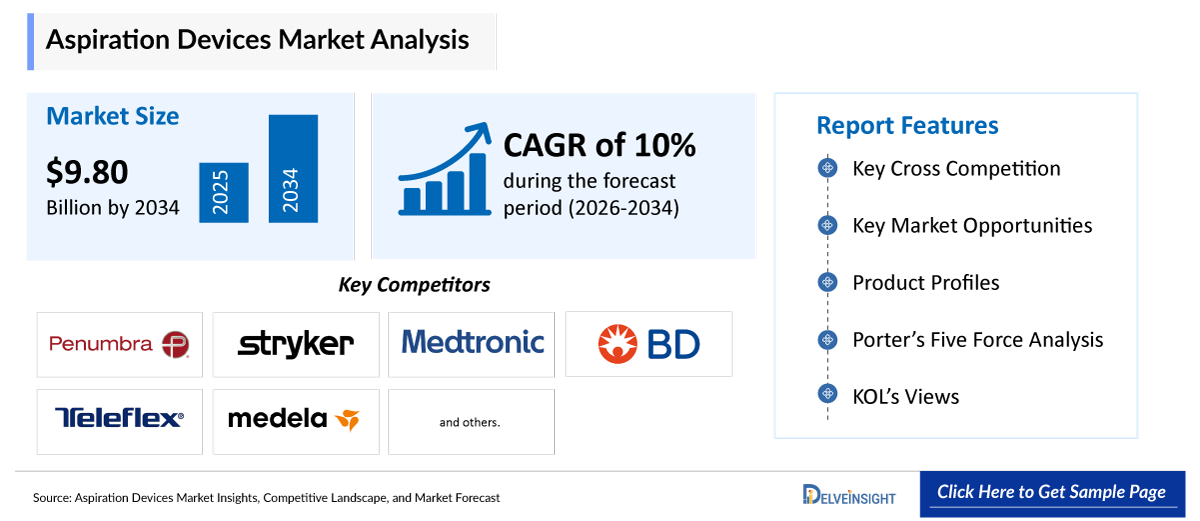
- The Aspiration Devices market size is estimated at USD 4.15 billion in 2025 and is projected to reach USD 9.80 billion by 2034. Growth is anchored in the rising global burden of ischemic stroke and venous thromboembolism, the expanding adoption of minimally invasive vascular and neurovascular procedures, and continued innovation in intelligent, computer-assisted aspiration technology.
- The global Aspiration Devices market is growing at a CAGR of 10.0% during the forecast period from 2026 to 2034.
- By product type, the aspiration catheters segment dominated the Aspiration Devices market with a 38% share in 2025.
- By mechanism, the vacuum-based aspiration segment dominated the Aspiration Devices market with a 46% share in 2025.
- By application, the vascular aspiration segment dominated the Aspiration Devices market with a 33% share in 2025.
- By end-user, the hospitals segment dominated the Aspiration Devices market with a 61% share in 2025.
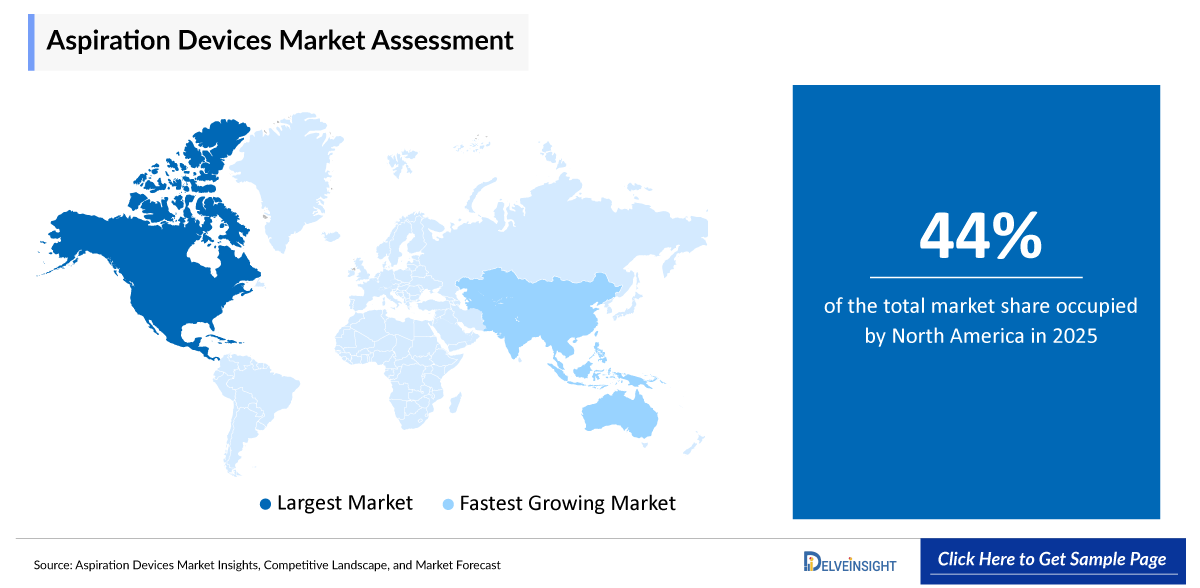
- North America dominated the global Aspiration Devices market revenue with a 44% share in 2025, representing the highest regional market share globally.
Aspiration devices are a broad class of medical instruments, comprising aspiration catheters, aspiration pumps, aspiration cannulas, aspiration needles, and related consumables, used to remove clot, thrombus, fluid, air, tissue debris, or other unwanted material from the body through applied vacuum or mechanical suction. These devices span a wide range of clinical settings, from neurovascular thrombectomy for acute ischemic stroke and vascular thrombectomy for pulmonary embolism and deep vein thrombosis, to general surgical aspiration for fluid and smoke evacuation, and respiratory or airway aspiration for secretion and mucus clearance in critical care, emergency medicine, and home settings.
The market is organized by product type across aspiration catheters, aspiration pumps, aspiration cannulas, and aspiration needles; by mechanism, spanning vacuum-based aspiration, mechanical suction, and manual aspiration; by application, led by vascular and neurovascular aspiration alongside surgical and respiratory or airway aspiration; and by end-user, dominated by hospitals. Driven by the rising incidence of stroke and thromboembolic disease, the accelerating shift toward minimally invasive interventional procedures, and continuous product innovation from intelligent aspiration pumps to large-lumen, torque-responsive catheters, aspiration devices have become foundational tools across vascular surgery, interventional neurology, interventional radiology, emergency medicine, and critical care.
Aspiration Devices Market Key Growth Drivers
- The rising global burden of ischemic stroke and venous thromboembolism is driving demand for aspiration thrombectomy, underscored by Stryker's USD 4.9 billion acquisition of Inari Medical completed in February 2025 to expand its peripheral vascular and venous thromboembolism portfolio.
- The accelerating shift toward minimally invasive vascular, neurovascular, and surgical procedures is expanding physician preference for aspiration-based clot and tissue removal over open surgical alternatives.
- Continuous product innovation, including Penumbra's FDA-cleared THUNDERBOLT computer-assisted vacuum thrombectomy (CAVT) platform in June 2026 and Inari Medical's Artix Thrombectomy System launched in March 2025, is improving procedural efficiency and expanding clinical adoption.
- Accelerating regulatory clearances and label expansions, including b AlphaVac F1885 System clearance for pulmonary embolism in April 2024 and Imperative Care's Zoom 7X aspiration catheter and Symphony Thrombectomy System clearances in 2025, are broadening the addressable patient population.
- The rising global incidence of respiratory disorders and growth of critical care and emergency medicine admissions are sustaining steady demand for surgical and respiratory or airway aspiration devices.
- Growing hospital and ambulatory surgical center infrastructure, particularly the expansion of dedicated stroke centers and cardiac catheterization labs, is increasing procedure volumes that require aspiration devices.
- Heavy M&A and investment activity, including Stryker's acquisition of Inari Medical and continued capacity expansion by Penumbra, Boston Scientific, and Medtronic, is consolidating innovation and expanding global commercial reach.
- The convergence of rising disease burden, minimally invasive procedure adoption, and sustained product innovation is expected to support strong, durable growth in the market through 2034.
Key Companies in Aspiration Devices Market
The competitive landscape is led by the following active manufacturers:
- Penumbra, Inc.
- Stryker
- Medtronic
- BD
- Teleflex
- Medela
- Laerdal Medical
- Boston Scientific
- Inari Medical
- AngioDynamics, and others
For illustrative purposes, only the top 10 companies are listed in the Table of Contents. The report may include analysis and references to additional companies relevant to the market assessment.
Aspiration Devices Market Size
The following snapshot summarizes the principal report metrics for the Aspiration Devices market.
|
Report Metrics |
Details |
|
2025 Market Size |
USD 4.15 billion |
|
2034 Projected Market Size |
USD 9.80 billion |
|
Growth Rate (2026-2034) |
10.0% CAGR |
|
Largest Market |
North America |
|
Fastest Growing Market |
Asia-Pacific |
|
Market Structure |
Moderately Concentrated |
All market values are expressed in USD and represent DelveInsight estimates synthesized from primary and secondary research.
Factors Contributing to the Growth of the Aspiration Devices Market
Aspiration Devices Market Drivers
- Rising Burden of Ischemic Stroke and Venous Thromboembolism: The most powerful driver of the Aspiration Devices market is the rising global burden of acute ischemic stroke, deep vein thrombosis, and pulmonary embolism, which is expanding demand for aspiration-based thrombectomy. Stroke remains a leading cause of death and long-term disability worldwide, and venous thromboembolism affects hundreds of thousands of patients annually in the United States alone. Aspiration catheters combined with vacuum pumps allow physicians to directly suction clot from occluded vessels, restoring blood flow with a minimally invasive, catheter-based approach. Commercial and strategic momentum is substantial: Stryker completed its USD 4.9 billion acquisition of Inari Medical in February 2025 to strengthen its position in the fast-growing peripheral vascular and venous thromboembolism segment, bringing Inari's FlowTriever and ClotTriever aspiration and mechanical thrombectomy systems into Stryker's neurovascular portfolio. As dedicated stroke centers expand and thrombectomy eligibility criteria broaden, demand for aspiration devices used in neurovascular and vascular thrombectomy is set to grow steadily through 2034.
- Accelerating Shift toward Minimally Invasive Procedures: A structural shift toward minimally invasive vascular, neurovascular, and surgical procedures is a central growth engine for the market. Aspiration-based clot and tissue removal offers reduced procedural trauma, shorter recovery times, and lower complication rates relative to open surgical alternatives, driving physician and hospital preference across interventional radiology, vascular surgery, interventional neurology, and general surgery. Aspiration catheters and pumps enable direct, continuous, or intelligent vacuum-based clot capture, while aspiration cannulas and needles support fluid, tissue, and smoke evacuation in surgical settings. As minimally invasive techniques continue to displace open procedures across specialties, the addressable base of procedures requiring aspiration devices continues to widen.
- Continuous Technological Innovation: Ongoing product innovation is expanding clinical adoption and procedural efficiency. Penumbra received FDA clearance in June 2026 for THUNDERBOLT, which introduces computer-assisted vacuum thrombectomy (CAVT) technology, powered by the Penumbra Engine, to detect, fatigue, and completely ingest clot during acute ischemic stroke intervention. Inari Medical, now part of Stryker, launched the Artix Thrombectomy System in March 2025, integrating aspiration and mechanical thrombectomy for peripheral arterial disease. Intelligent aspiration platforms that combine large-lumen catheter engineering with automated clot-detection algorithms are improving technical success rates and reducing procedure times, reinforcing physician confidence in aspiration-based interventions across both neurovascular and peripheral vascular applications.
- Accelerating Regulatory Clearances and Label Expansions: A growing wave of regulatory clearances and label expansions is increasing the addressable patient population for aspiration devices. AngioDynamics received FDA clearance for its AlphaVac F1885 System in April 2024, expanding its use to treat pulmonary embolism. Imperative Care received FDA 510(k) clearance for its Zoom 7X aspiration catheter for ischemic stroke in July 2025 and for its Symphony Thrombectomy System covering the full spectrum of venous thromboembolism care in September 2025. Each clearance and label expansion creates durable, recurring demand for compliant manufacturing capacity and reinforces the strategic value of established aspiration device portfolios across stroke, pulmonary embolism, and deep vein thrombosis indications.
- Rising Respiratory Disease Burden and Critical Care Demand: The rising global incidence of respiratory disorders, growing critical care and emergency medicine admissions, and an aging population are sustaining steady, high-frequency demand for surgical and respiratory or airway aspiration devices. Aspiration pumps and cannulas are essential in operating rooms, intensive care units, and emergency departments for airway clearance, wound and fluid management, and surgical field visualization, while portable and manual aspiration devices support growing home healthcare and ambulatory care utilization. This broad, recurring clinical need provides a stable demand base that complements the faster-growing vascular and neurovascular aspiration segments.
- Expanding Hospital and Ambulatory Surgical Center Infrastructure: Growing investment in hospital infrastructure, dedicated stroke centers, cardiac catheterization labs, and ambulatory surgical centers is increasing the volume of vascular, neurovascular, and surgical procedures that rely on aspiration devices. As more facilities achieve comprehensive stroke center or thrombectomy-capable status, and as ambulatory surgical centers expand their interventional capabilities, the installed base of aspiration pumps and compatible single-use catheters, cannulas, and needles continues to grow.
- Strong M&A and Investment Activity: Active consolidation and investment are reshaping the competitive landscape and expanding commercial reach. Stryker's acquisition of Inari Medical is the most prominent example, bringing a leading peripheral vascular aspiration and mechanical thrombectomy portfolio under a global medtech platform with extensive commercial infrastructure. Penumbra, Boston Scientific, Medtronic, BD, and Teleflex continue to invest in next-generation aspiration catheter and pump technology, while AngioDynamics and Inari Medical's legacy product lines continue to expand indications. This investment activity validates the long-term growth trajectory of the market and channels capital toward companies with scale, clinical evidence, and broad procedural coverage.
Aspiration Devices Market Restraints
Despite strong momentum, the Aspiration Devices market faces material constraints. High procedural and device costs associated with advanced aspiration thrombectomy systems can limit adoption in cost-sensitive and lower-resource healthcare settings, while reimbursement for newer indications and technologies remains uneven across geographies. The need for specialized physician training in vascular and neurovascular intervention constrains the pace of adoption, particularly outside major stroke and vascular centers. Complex and evolving regulatory requirements across major markets lengthen approval timelines for new devices and label expansions. Device-related complications, including vessel injury and incomplete clot removal, require ongoing clinical evidence generation to support broader guideline inclusion. Intense competitive and pricing pressure among a growing number of manufacturers is compressing margins in mature product categories such as manual aspiration devices and standard surgical cannulas. Together, these cost, training, regulatory, and competitive barriers temper the pace of growth, even as the underlying drivers of disease burden, minimally invasive adoption, and innovation remain firmly intact.
Aspiration Devices Market Segment Analysis
The aspiration devices market by product type (aspiration catheters, aspiration pumps, aspiration cannulas, aspiration needles, and others), mechanism (vacuum-based aspiration, mechanical suction, manual aspiration, and others), application (vascular aspiration, neurovascular aspiration, surgical aspiration, respiratory/airway aspiration, and others), end-user (hospitals, specialty clinics, ambulatory surgical centers, and others), and geography (North America, Europe, Asia-Pacific, and Rest of World).
By Product Type
Dominant Subsegment: Aspiration Catheters.
The aspiration catheters segment accounted for 38% of the Aspiration Devices market in 2025. Aspiration catheters are the leading product type because they are the primary interface for vacuum-based clot and thrombus removal in neurovascular and vascular thrombectomy, and because continuous innovation in large-lumen, torque-responsive catheter design is expanding their clinical role. Products such as Penumbra's Indigo Aspiration System catheters and Inari Medical's FlowTriever and ClotTriever catheters, now part of Stryker's portfolio, illustrate the segment's technological depth and commercial scale. Aspiration pumps, the essential vacuum source paired with these catheters, represent the second-largest category and are growing quickly alongside catheter adoption, while aspiration cannulas and needles remain foundational to general surgical and respiratory aspiration. While aspiration pumps are growing fastest as intelligent, computer-assisted vacuum technology gains adoption, the breadth of clinical indications and the recurring, single-use nature of catheter consumption secure the aspiration catheters segment's leadership across the forecast period.
By Mechanism
Dominant Subsegment: Vacuum-Based Aspiration.
The vacuum-based aspiration segment accounted for 46% of the Aspiration Devices market in 2025. Vacuum-based aspiration is the leading mechanism because it underpins the majority of modern thrombectomy and clot-removal procedures, offering continuous or intelligently modulated suction that improves clot capture while minimizing vessel trauma. Penumbra's FDA-cleared THUNDERBOLT platform, which introduces computer-assisted vacuum thrombectomy technology powered by the Penumbra Engine, exemplifies the segment's technological trajectory toward automated, sensor-guided vacuum control. Mechanical suction devices remain widely used in general surgical and respiratory applications, while manual aspiration continues to serve cost-sensitive and point-of-care settings, including emergency and home-use scenarios. As vacuum-based systems increasingly incorporate intelligent clot-detection and modulation technology, the segment is expected to extend its leadership across the forecast period.
By Application
Dominant Subsegment: Vascular Aspiration.
The vascular aspiration segment accounted for 33% of the Aspiration Devices market in 2025. Vascular aspiration, spanning pulmonary embolism, deep vein thrombosis, and peripheral arterial thrombus removal, is the leading application because venous thromboembolism affects a very large patient population and because commercial platforms such as Inari Medical's FlowTriever and ClotTriever systems and AngioDynamics' AlphaVac F1885 System have established strong clinical evidence and broad hospital adoption. Stryker's acquisition of Inari Medical for USD 4.9 billion in February 2025 underscores the commercial scale of the vascular aspiration opportunity. Neurovascular aspiration, used in acute ischemic stroke thrombectomy, is the fastest-growing application, propelled by expanding stroke center infrastructure and next-generation platforms such as Penumbra's THUNDERBOLT CAVT system, while surgical aspiration and respiratory or airway aspiration provide broad, recurring demand across operating rooms, intensive care units, and emergency departments. Nonetheless, the scale and clinical maturity of vascular aspiration secure its leadership across the forecast period.
By End-User
Dominant Subsegment: Hospitals.
The hospitals segment accounted for 61% of the Aspiration Devices market in 2025. Hospitals are the leading end-user because vascular, neurovascular, and complex surgical aspiration procedures require catheterization labs, dedicated stroke centers, operating rooms, and intensive care infrastructure that predominantly reside in hospital settings, along with the specialized interventional and surgical staff needed to perform these procedures. Specialty clinics support a growing share of outpatient vascular access and wound-care aspiration procedures, while ambulatory surgical centers are the fastest-growing end-user as more interventional and minor surgical procedures shift to lower-cost outpatient settings. Nonetheless, the complexity and acuity of vascular and neurovascular thrombectomy keep hospitals the dominant end-user across the forecast period.
Aspiration Devices Market Region Analysis
Dominant Region: North America
North America accounted for 44% of the global Aspiration Devices market revenue in 2025, representing the highest regional market share globally. The region's dominance reflects a mature stroke and vascular care ecosystem, a dense network of comprehensive stroke centers and cardiac catheterization labs, clear FDA regulatory pathways, and the direct presence of leading manufacturers including Penumbra, Stryker, Boston Scientific, BD, Teleflex, and AngioDynamics. North America hosts the largest concentration of thrombectomy-capable stroke centers and venous thromboembolism treatment programs, and sponsors benefit from strong reimbursement frameworks and rapid access to newly cleared technology. Stryker's completion of its acquisition of Inari Medical in February 2025 reinforced the region's commercial depth in peripheral vascular aspiration, while Penumbra's June 2026 FDA clearance for THUNDERBOLT extended domestic neurovascular innovation. Strong reimbursement, regulatory clarity, and manufacturer concentration anchor the region's continued leadership across the forecast period.
Fastest Growing Region: Asia-Pacific
Asia-Pacific is the fastest-growing region in the Aspiration Devices market. The region's elevated CAGR is driven by rising stroke and cardiovascular disease incidence, rapid expansion of hospital and stroke-center infrastructure, and growing healthcare investment across China, Japan, India, South Korea, and Australia. China is expanding its network of stroke-ready hospitals and interventional radiology capacity, Japan is broadening reimbursement for advanced thrombectomy technology, and India is scaling minimally invasive vascular and surgical procedure volumes as tertiary care infrastructure expands. Government healthcare investment, an aging population, and growing awareness of early stroke and thromboembolism intervention are accelerating adoption, while regional distributors and manufacturers scale access to global aspiration device platforms. The combination of rising disease burden, infrastructure build-out, and improving procedural access positions Asia-Pacific as the principal source of incremental growth over the forecast period.
Aspiration Devices Market Regional Commentary
North America
North America accounted for 44% of the global Aspiration Devices market revenue in 2025. The United States dominates on the strength of its stroke and vascular care infrastructure, FDA regulatory clarity, and the direct presence of leading manufacturers, while continued product launches, including Penumbra's THUNDERBOLT and Inari Medical's Artix Thrombectomy System, and Stryker's expanded peripheral vascular portfolio following the Inari acquisition, reinforce the region's leadership.
Europe
Europe is a large and advanced regional market, supported by established stroke-care and vascular intervention networks, CE-marking regulatory pathways, and growing adoption of intelligent aspiration technology across Germany, France, the United Kingdom, Italy, and Spain. Expanding comprehensive stroke center coverage and rising venous thromboembolism awareness continue to support steady demand for both neurovascular and vascular aspiration devices across the region.
Asia-Pacific
Asia-Pacific is the fastest-growing region, propelled by rising stroke and cardiovascular disease incidence, rapid hospital and stroke-center infrastructure build-out, and growing healthcare investment across China, Japan, India, South Korea, and Australia. Expanding interventional radiology and neurology capacity, alongside improving reimbursement for advanced thrombectomy technology, is accelerating regional adoption of aspiration devices.
Rest of World
The Rest of World region, spanning Latin America, the Middle East, and Africa, is an emerging growth frontier. Expanding hospital and critical-care infrastructure, rising demand for minimally invasive vascular and surgical intervention, and efforts to build stroke-ready treatment networks are gradually broadening access, while distributor partnerships with global manufacturers support the build-out of regional procedural capacity.
Aspiration Devices Market Competitive Landscape
The Aspiration Devices market is classified as Moderately Concentrated. A group of large, diversified medical technology companies with broad vascular, neurovascular, and surgical device portfolios, including Stryker, Medtronic, Boston Scientific, BD, and Teleflex, secures large hospital contracts and anchors the top tier, while specialized and fast-scaling providers such as Penumbra, AngioDynamics, Medela, and Laerdal Medical compete through focused clinical evidence, device innovation, and category leadership in specific applications such as neurovascular thrombectomy, respiratory aspiration, and emergency airway management, increasing competition across the fastest-growing application segments.
The competitive landscape can be evaluated across the following dimensions:
- Market concentration: Moderately concentrated, with large diversified medtech players leading and a focused field of specialized aspiration-technology innovators.
- Leading players: Stryker, Medtronic, Boston Scientific, BD, and Teleflex anchor the top tier through broad vascular, neurovascular, and surgical device portfolios.
- Geographic reach: Leaders operate global, multi-country commercial networks; Penumbra supports healthcare providers, hospitals, and clinics in more than 100 countries.
- Product portfolio strength: Top players offer end-to-end aspiration catheters, pumps, cannulas, and needles spanning neurovascular, vascular, surgical, and respiratory applications.
- Technology access: Intelligent, computer-assisted vacuum thrombectomy platforms, such as Penumbra's THUNDERBOLT CAVT system, and integrated aspiration-and-mechanical thrombectomy systems, such as Inari Medical's Artix, are decisive competitive advantages.
- Strategic partnerships and M&A: Active consolidation, most notably Stryker's USD 4.9 billion acquisition of Inari Medical completed in February 2025, is reshaping competitive positioning in vascular and venous thromboembolism aspiration.
- Regulatory track record: A strong history of FDA 510(k) clearances and label expansions, exemplified by AngioDynamics' AlphaVac F1885 clearance and Imperative Care's Zoom 7X and Symphony clearances, is a key differentiator.
- Manufacturing capabilities: Large-lumen catheter engineering, intelligent aspiration control electronics, and sterile single-use device manufacturing at scale are key competitive moats.
- Innovation focus: Computer-assisted vacuum thrombectomy, integrated aspiration-mechanical thrombectomy platforms, expanded indications for pulmonary embolism and deep vein thrombosis, and portable, intelligent aspiration pumps for surgical and respiratory use.
Aspiration Devices Market Recent Developmental Activities
- In June 2026, Penumbra, Inc., received U.S. FDA clearance for THUNDERBOLT, expanding its computer-assisted vacuum thrombectomy (CAVT) technology to address acute ischemic stroke.
- In March 2025, Inari Medical, Inc. (part of Stryker), launched the Artix Thrombectomy System, an integrated platform combining aspiration and mechanical thrombectomy for peripheral arterial disease.
- In February 2025, Stryker completed its acquisition of Inari Medical, Inc. for a total equity value of approximately USD 4.9 billion, bringing Inari's FlowTriever and ClotTriever aspiration and thrombectomy systems into Stryker's neurovascular business.
- In September 2025, Imperative Care received FDA 510(k) clearance for its Symphony Thrombectomy System to treat pulmonary embolism, expanding its use to cover the full spectrum of venous thromboembolism patient care.
- In July 2025, Imperative Care received FDA 510(k) clearance for its Zoom 7X aspiration catheter, featuring a pre-shaped tip designed to center in vessels and optimize aspiration in challenging stroke anatomy.
- In April 2024, AngioDynamics received FDA clearance for its AlphaVac F1885 System to treat pulmonary embolism, expanding the device's use beyond general mechanical thrombectomy.
- In 2025, Stryker integrated Inari Medical's commercial and R&D teams following the acquisition, aligning peripheral vascular aspiration development with Stryker's global neurovascular manufacturing and distribution infrastructure.
- In 2025, Penumbra, Inc. continued expansion of its Indigo Aspiration System portfolio, including Lightning Intelligent Aspiration tubing enhancements for peripheral and pulmonary embolism thrombectomy.
- In 2024 and 2025, Boston Scientific continued to expand its interventional and surgical device portfolio, supporting broader adoption of aspiration and thrombus-management technologies across cardiovascular procedures.
- In 2024 and 2025, Medtronic and Teleflex advanced their respective vascular access and aspiration catheter portfolios, supporting growing procedural volumes in interventional radiology and vascular surgery.
Aspiration Devices Market Segmentation
- Aspiration Devices Market by Product Type
- Aspiration Catheters
- Aspiration Pumps
- Aspiration Cannulas
- Aspiration Needles
- Others
- Aspiration Devices Market by Mechanism
- Vacuum-Based Aspiration
- Mechanical Suction
- Manual Aspiration
- Others
- Aspiration Devices Market by Application
- Vascular Aspiration
- Neurovascular Aspiration
- Surgical Aspiration
- Respiratory/Airway Aspiration
- Others
- Aspiration Devices Market by End-User
- Hospitals
- Specialty Clinics
- Ambulatory Surgical Centers
- Others
Aspiration Devices Market by Geography
- North America Aspiration Devices Market
- United States Aspiration Devices Market Size in USD million (2023-2034)
- Canada Aspiration Devices Market Size in USD million (2023-2034)
- Mexico Aspiration Devices Market Size in USD million (2023-2034)
- Europe Aspiration Devices Market
- Germany Aspiration Devices Market Size in USD million (2023-2034)
- United Kingdom Aspiration Devices Market Size in USD million (2023-2034)
- France Aspiration Devices Market Size in USD million (2023-2034)
- Italy Aspiration Devices Market Size in USD million (2023-2034)
- Spain Aspiration Devices Market Size in USD million (2023-2034)
- Rest of Europe Aspiration Devices Market Size in USD million (2023-2034)
- Asia-Pacific Aspiration Devices Market
- China Aspiration Devices Market Size in USD million (2023-2034)
- Japan Aspiration Devices Market Size in USD million (2023-2034)
- India Aspiration Devices Market Size in USD million (2023-2034)
- Australia Aspiration Devices Market Size in USD million (2023-2034)
- South Korea Aspiration Devices Market Size in USD million (2023-2034)
- Rest of Asia-Pacific Aspiration Devices Market Size in USD million (2023-2034)
- Rest of the World (RoW) Aspiration Devices Market
- Middle East Aspiration Devices Market Size in USD million (2023-2034)
- Africa Aspiration Devices Market Size in USD million (2023-2034)
- South America Aspiration Devices Market Size in USD million (2023-2034)
Aspiration Devices Market Recent Industry Trends and Milestones (2023-2026):
|
Category |
Key Developments |
|
Aspiration Devices Market Product Approval |
Regulatory momentum is expanding the addressable patient population for aspiration devices. AngioDynamics received FDA clearance for its AlphaVac F1885 System for pulmonary embolism in April 2024, Imperative Care received FDA 510(k) clearance for its Zoom 7X aspiration catheter for ischemic stroke in July 2025, and its Symphony Thrombectomy System for venous thromboembolism in September 2025, and Penumbra received FDA clearance for its THUNDERBOLT computer-assisted vacuum thrombectomy platform in June 2026. Each clearance creates durable demand for compliant manufacturing and reliable device supply, reinforcing the strategic value of established aspiration device portfolios. |
|
Aspiration Devices Market Expansion |
Manufacturers broadened product capability across neurovascular, vascular, surgical, and respiratory applications. Inari Medical, now part of Stryker, launched the Artix Thrombectomy System in March 2025 for peripheral arterial disease; Penumbra continued expansion of its Indigo Aspiration System and Lightning Intelligent Aspiration portfolio, and Boston Scientific, Medtronic, and Teleflex advanced their respective vascular access and thrombus-management device lines. Intelligent, sensor-guided aspiration control and large-lumen catheter engineering improved procedural throughput and clinical outcomes. |
|
Aspiration Devices Market Investment |
Capital and consolidation accelerated sharply. Stryker completed its acquisition of Inari Medical for a total equity value of approximately USD 4.9 billion in February 2025, following a January 2025 definitive agreement, significantly expanding its peripheral vascular and venous thromboembolism aspiration portfolio. Continued R&D investment by Penumbra, Boston Scientific, Medtronic, BD, and Teleflex supported next-generation catheter and pump development across neurovascular, vascular, and surgical aspiration applications. |
|
Company Strategy |
Penumbra, Inc.: Neurovascular leadership through intelligent, computer-assisted vacuum thrombectomy technology led by THUNDERBOLT. Stryker: Peripheral vascular and venous thromboembolism expansion through the Inari Medical acquisition and the Artix Thrombectomy System. Medtronic and Boston Scientific: Broad vascular and cardiovascular aspiration and thrombus-management portfolios. BD and Teleflex: Vascular access and aspiration catheter breadth across interventional and surgical applications. AngioDynamics: Vascular aspiration expansion into pulmonary embolism through AlphaVac. Medela and Laerdal Medical: Specialized leadership in surgical, respiratory, and emergency airway aspiration devices. |
|
Emerging Technologies |
Computer-assisted and intelligent vacuum thrombectomy is the leading edge of innovation, with sensor-guided clot detection and modulated aspiration improving procedural safety and efficacy. Integrated platforms combining aspiration and mechanical thrombectomy, such as Inari Medical's Artix system, are expanding treatment versatility. Portable and battery-powered aspiration pumps are advancing home healthcare and emergency use, while automated, single-use aspiration cannulas and needles with enhanced infection-control features are emerging across surgical and respiratory applications. Collaboration between device manufacturers, stroke centers, and vascular surgery programs continues to accelerate clinical adoption of next-generation aspiration technology. |
Aspiration Devices Market Startup Funding and Investment Trends
Investment in the Aspiration Devices ecosystem has concentrated on intelligent, computer-assisted vacuum thrombectomy, integrated aspiration-and-mechanical thrombectomy platforms, and expanding indications across pulmonary embolism, deep vein thrombosis, and ischemic stroke. The following activity illustrates recent funding and investment trends and technology focus.
|
Company |
Total Funding |
Funding Stage |
Main Offering |
Core Technology |
|
Inari Medical, Inc. |
USD 4.9 billion acquisition |
Acquired by Stryker (2025) |
Peripheral vascular aspiration and mechanical thrombectomy |
FlowTriever, ClotTriever, and Artix aspiration platforms |
|
Request for unlocking the report of the @ Aspiration Devices Market Insights | ||||
Capital is flowing toward providers that combine intelligent vacuum control with broad indication coverage across neurovascular and vascular applications. Stryker's acquisition of Inari Medical, at a total equity value of approximately USD 4.9 billion, underscores the strategic value of peripheral vascular aspiration infrastructure. Emerging providers such as Imperative Care continue to expand FDA-cleared aspiration platforms across stroke and venous thromboembolism indications, while established manufacturers including Penumbra, Medtronic, Boston Scientific, BD, and Teleflex reinvest in next-generation catheter and pump technology. Collectively, these investments signal conviction that intelligent aspiration control, integrated thrombectomy platforms, and expanding clinical indications will define the next phase of competitive advantage in the global Aspiration Devices market.
Key Takeaways from the Aspiration Devices Market Report Study
- Market size analysis for the current aspiration devices market size (2025), and market forecast for 9 years (2026 to 2034).
- Top key product/technology developments, mergers, acquisitions, partnerships, and joint ventures that happened over the last 3 years.
- Key companies dominating the global aspiration devices market.
- Various opportunities available for competitors in the aspiration devices market space.
- What are the top-performing segments in 2025? How will these segments perform in 2034?
- Which are the top-performing regions and countries in the current aspiration devices market scenario?
- Which are the regions and countries where companies should concentrate their opportunities for aspiration devices market growth in the future?
Target audience who can benefit from this aspiration devices market report study
- Aspiration Devices product providers
- Research organizations and consulting companies
- Neurodegenerative disease therapeutics-related organizations, associations, forums, and other alliances
- Government and corporate offices
- Start-up companies, venture capitalists, and private equity firms
- Distributors and traders dealing in aspiration devices
- Various end-users who want to know more about the aspiration devices market and the latest technological developments in the aspiration devices market.

