
Atherectomy Devices Market Summary
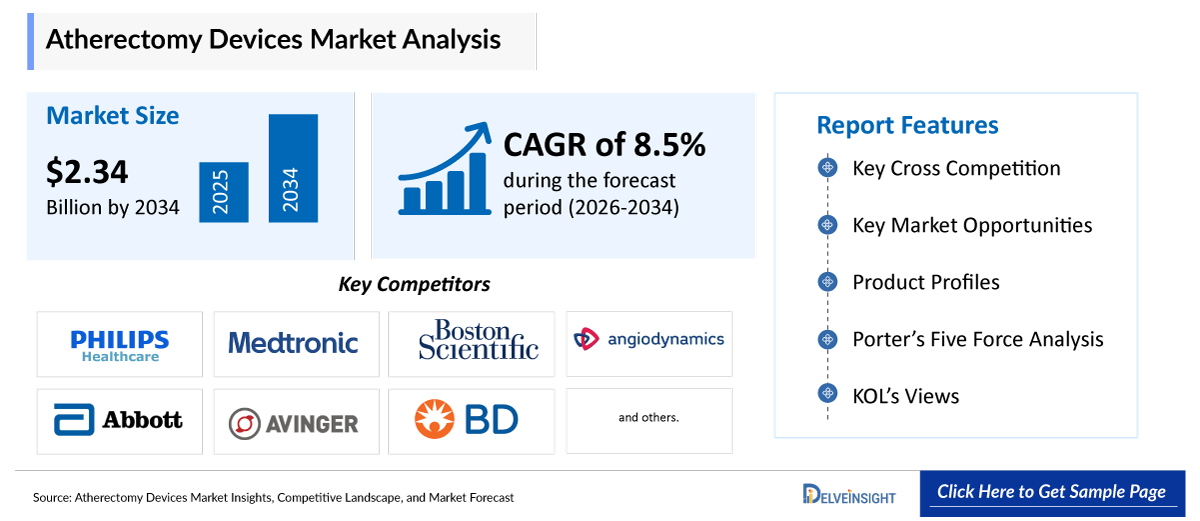
- The Atherectomy Devices market is estimated at USD 1.12 billion in 2025 and is projected to reach USD 2.34 billion by 2034. Growth is anchored in the rising global burden of coronary and peripheral artery disease, the accelerating shift toward minimally invasive revascularization, and continuous innovation in directional, rotational, orbital, and laser plaque-modification technology.
- The global Atherectomy Devices market is growing at a CAGR of 8.5% during the forecast period from 2026 to 2034.
- By product, the directional atherectomy devices segment dominated the Atherectomy Devices market with a ~40% share in 2025, owing to its versatility across both peripheral and coronary lesions.
- By application, the peripheral artery disease segment dominated the Atherectomy Devices market with a ~50% share in 2025, reflecting the high prevalence of lower-extremity arterial disease.
- By end-user, the hospitals segment dominated the Atherectomy Devices market with a ~65% share in 2025, supported by cath-lab infrastructure and multidisciplinary interventional teams.
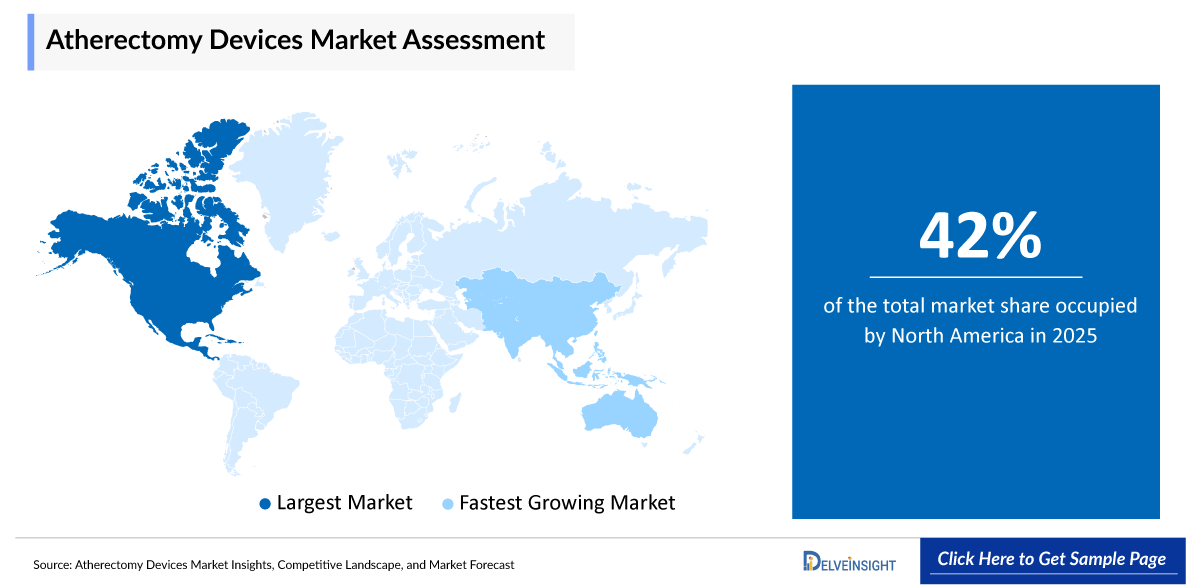
- North America dominated the global Atherectomy Devices market revenue with a ~42% share in 2025, representing the highest regional market share globally.
Atherectomy is a catheter-based, minimally invasive procedure that mechanically removes atherosclerotic plaque, calcium, and thrombus from diseased coronary and peripheral arteries to restore luminal patency without relying solely on balloon dilation or permanent stent placement. Atherectomy devices are purpose-built to cut, shave, sand, or photo-ablate plaque, and are engineered as directional, rotational, orbital, or laser (photo-ablative) systems, each suited to distinct lesion morphologies ranging from soft, eccentric plaque to densely calcified, diffuse disease. Because coronary artery disease, peripheral artery disease, and in-stent restenosis frequently involve heavily calcified or fibrotic lesions that resist conventional angioplasty, interventional cardiologists and vascular specialists increasingly turn to atherectomy as a vessel-preparation and standalone debulking tool. The market is organized by product across directional, rotational, orbital, and laser atherectomy devices; by application across coronary artery disease, peripheral artery disease, and in-stent restenosis; and by end-user across hospitals, specialty clinics, and other outpatient settings. Driven by the rising global prevalence of cardiovascular disease, an aging and increasingly diabetic population, the shift toward outpatient and ambulatory interventional care, and rapid technological advancement in imaging-integrated and multi-modality devices, atherectomy device manufacturers have become essential partners in the modern interventional cardiology and vascular surgery ecosystem.
Atherectomy Devices Market Key Growth Drivers
- The rising global burden of cardiovascular disease is driving demand, with an estimated 200 million people worldwide affected by coronary heart disease as of 2024, alongside millions more living with peripheral artery disease and stroke.
- The growing prevalence of peripheral artery disease, particularly among aging, diabetic, and hypertensive populations, is expanding demand for effective, durable plaque-removal solutions.
- Increasing preference for minimally invasive procedures over open surgical revascularization is accelerating adoption, given shorter hospital stays, faster recovery, and reduced complication rates.
- Continuous technological advancement, including image-guided atherectomy, intravascular ultrasound and optical coherence tomography integration, and combination laser/lithotripsy platforms, is improving procedural precision and safety.
- Accelerating regulatory approvals and label expansions, including AngioDynamics’ September 2024 CE Mark for the Auryon Atherectomy System covering PAD, critical limb ischemia, and in-stent restenosis, are widening addressable indications.
- Expansion of outpatient and ambulatory surgical center-based interventional cardiology is broadening access and lowering the cost of atherectomy procedures.
- Strategic consolidation, including Abbott’s acquisition of Cardiovascular Systems, Inc., underscores the strategic value of atherectomy technology and is expected to sustain innovation investment through 2034.
Key Companies in Atherectomy Devices Market
The competitive landscape is led by the following active device manufacturers:
- Koninklijke Philips N.V.
- Medtronic PLC
- Boston Scientific Corporation
- AngioDynamics Inc.
- Abbott Laboratories
- Avinger
- BD
- Ra Medical Systems
- REX Medical
- Cardio Flow, Inc.
For illustrative purposes, only the top 10 companies are listed in the Table of Contents. The report may include analysis and references to additional companies relevant to the market assessment.
Atherectomy Devices Market Size
The following snapshot summarizes the principal report metrics for the Atherectomy Devices market.
|
Report Metrics |
Details |
|
2025 Market Size |
USD 1.12 billion |
|
2034 Projected Market Size |
USD 2.34 billion |
|
Growth Rate (2026-2034) |
8.5% CAGR |
|
Largest Market |
North America |
|
Fastest Growing Market |
Asia-Pacific |
|
Market Structure |
Highly Consolidated |
All market values are expressed in USD and represent DelveInsight estimates synthesized from primary and secondary research.
Factors Contributing to the Growth of the Atherectomy Devices Market
Market Drivers
Rising Global Burden of Coronary and Peripheral Artery Disease
The most powerful driver of the Atherectomy Devices market is the escalating global burden of cardiovascular disease. An estimated 200 million people worldwide were living with coronary heart disease as of 2024, and millions more were affected by peripheral artery disease and stroke. Atherosclerotic plaque buildup, often heavily calcified in elderly and diabetic patients, frequently resists conventional balloon angioplasty and requires mechanical debulking before definitive treatment. As the prevalence of hypertension, diabetes, and obesity continues to rise worldwide, the underlying disease burden driving atherectomy procedure volumes is expected to expand steadily, anchoring market growth through 2034.
Growing Preference for Minimally Invasive Revascularization
Patients and physicians increasingly favor minimally invasive, catheter-based interventions over open surgical bypass. Atherectomy offers meaningful clinical advantages, including shorter hospital stays, faster recovery, reduced peri-procedural trauma, and, in many cases, avoidance of permanent stent implantation. Directional atherectomy in particular allows selective plaque debulking without leaving a permanent implant behind, reducing the risk of complications such as in-stent restenosis. As outpatient and ambulatory interventional cardiology continues to expand, the procedural and economic advantages of atherectomy are expected to sustain adoption across the forecast period.
Technological Advancements in Device Design and Imaging Integration
Continuous innovation across directional, rotational, orbital, and laser atherectomy platforms is a central growth engine for the market. Manufacturers are integrating real-time intravascular imaging, including intravascular ultrasound and optical coherence tomography, to guide precise plaque removal while sparing the healthy vessel wall. Combination devices, such as Philips’ dual-function laser atherectomy and intravascular lithotripsy catheter that entered clinical trials in November 2024, are simplifying peripheral artery disease treatment by integrating multiple therapeutic modalities into a single procedure. As artificial intelligence and robotics are incorporated into image-guided interventions, procedural efficiency, safety, and reproducibility are expected to improve further.
Accelerating Regulatory Approvals and Label Expansions
A steady wave of regulatory approvals and label expansions is broadening the addressable patient population for atherectomy devices. In September 2024, AngioDynamics received European CE Mark approval for its Auryon Atherectomy System to treat peripheral artery disease, including critical limb ischemia and in-stent restenosis. In April 2024, Avinger received FDA 510(k) clearance for its Pantheris SV image-guided atherectomy system, extending image-guided debulking to smaller vessels. In January 2025, the FDA cleared a 510(k) submission for the Rotarex Atherectomy System covering revised instructions for use. Each approval and label expansion creates durable, recurring demand for compliant, well-supported atherectomy platforms.
Expansion of Outpatient and Ambulatory Interventional Care
A structural shift toward outpatient and ambulatory surgical center-based interventional cardiology and vascular care is expanding the addressable market. Favorable reimbursement frameworks in developed markets are increasingly supporting atherectomy procedures performed outside traditional hospital settings, lowering costs and improving patient access. While hospitals retain the leading share given their advanced catheterization laboratories and multidisciplinary teams, the growing role of specialty clinics and ambulatory centers is expected to broaden procedure volumes across the forecast period.
Strategic M&A and Investment Activity
Active consolidation and investment are accelerating capability build-out across the market. Abbott’s acquisition of Cardiovascular Systems, Inc. brought orbital atherectomy technology into one of the industry’s largest cardiovascular portfolios, reflecting the strategic value placed on differentiated plaque-modification platforms. Manufacturers are shifting from marketing standalone atherectomy devices toward positioning them as part of combination therapy alongside drug-coated balloons and intravascular lithotripsy, a trend expected to sustain innovation investment and competitive intensity through 2034.
Market Restraints
Despite strong momentum, the Atherectomy Devices market faces material constraints. The high cost of atherectomy systems and associated procedures limits adoption in price-sensitive markets and budget-constrained healthcare settings. The risk of procedural complications, including vessel perforation, dissection, and post-procedure restenosis, tempers physician adoption in certain patient populations. The market also faces strong competition from established, lower-cost alternatives such as balloon angioplasty, stenting, and drug-coated balloons, which benefit from extensive long-term clinical data. A limited pool of interventional cardiologists and vascular surgeons trained in atherectomy techniques constrains adoption, particularly in developing regions, while fragmented and evolving regulatory frameworks across geographies add complexity for manufacturers seeking multi-market approval. Reimbursement variability across countries further tempers the pace of adoption, even as the underlying drivers of rising disease burden and minimally invasive preference remain firmly intact.
Atherectomy Devices Market Segment Analysis
The Atherectomy Devices Market by Product (Directional Atherectomy Devices, Rotational Atherectomy Devices, Orbital Atherectomy Devices, and Laser Atherectomy Devices), Application (Coronary Artery Disease, Peripheral Artery Disease, and In-Stent Restenosis), End-User (Hospitals, Specialty Clinics, and Others), and Geography (North America, Europe, Asia-Pacific, and Rest of World).
By Product
Dominant Subsegment: Directional Atherectomy Devices.
Dominant: Directional Atherectomy Devices ~ 40%
The directional atherectomy devices segment accounted for approximately 40% of the Atherectomy Devices market in 2025. Directional atherectomy is the leading product category because of its exceptional versatility and precision across both peripheral and coronary lesions. Its blade-within-housing design enables selective removal of eccentric and bulky plaque without significant damage to the healthy vessel wall, preparing the artery for subsequent balloon angioplasty or drug-coated balloon treatment and reducing the need for permanent stenting. Prominent directional atherectomy devices include Medtronic’s HawkOne Directional Atherectomy System and Boston Scientific’s Jetstream Atherectomy System. While rotational and orbital atherectomy are highly effective for heavily calcified lesions, and laser atherectomy is gaining traction in complex occlusions, the broad applicability and established safety profile of directional atherectomy devices secure their leading position. Laser atherectomy devices are projected to register the fastest growth of the forecast period, propelled by their unique photo-ablative mechanism, expanding use in chronic total occlusions and in-stent restenosis, and rising adoption as a vessel-preparation tool ahead of drug-coated balloon or stent placement.
By Application
Dominant Subsegment: Peripheral Artery Disease.
Dominant: Peripheral Artery Disease ~ 50%
The peripheral artery disease segment accounted for approximately 50% of the Atherectomy Devices market in 2025. Peripheral artery disease is the leading application because atherectomy is a first-line debulking strategy for femoropopliteal and below-the-knee lesions, particularly in patients with heavily calcified plaque where balloon angioplasty alone offers poor durability. Rising rates of diabetes and an aging population are directly expanding the pool of patients with critical limb ischemia and claudication requiring intervention. Coronary artery disease is the second-largest application, with rotational and orbital atherectomy increasingly used to prepare severely calcified coronary lesions ahead of stent deployment, supporting steady procedure volumes in cath labs worldwide. In-stent restenosis is the fastest-growing application, as laser and directional atherectomy are increasingly used to debulk neointimal and calcified tissue within previously stented segments, reducing the recurrence of restenosis and extending the durability of prior interventions. While in-stent restenosis is scaling quickly, the sheer prevalence and treatment volume of peripheral artery disease secures its leadership across the forecast period.
By End-User
Dominant Subsegment: Hospitals.
Dominant: Hospitals ~ 65%
The hospitals segment accounted for approximately 65% of the Atherectomy Devices market in 2025. Hospitals lead the end-user segment because atherectomy procedures, while minimally invasive, are frequently performed in patients with complex cardiovascular and peripheral vascular disease requiring advanced catheterization laboratories, intravascular imaging systems, and hybrid operating rooms. Hospitals also host the multidisciplinary teams of interventional cardiologists, vascular surgeons, and interventional radiologists needed to manage high-risk cases such as critical limb ischemia and chronic total occlusions, and they serve as referral centers for complex procedures. Favorable reimbursement frameworks for advanced cardiovascular procedures further support hospital capital investment in atherectomy systems. Specialty clinics and ambulatory surgical centers are expected to gradually increase their share as outpatient interventional cardiology expands, but hospitals will continue to dominate given their unmatched infrastructure, patient volume, and clinical expertise across the forecast period.
Atherectomy Devices Market Region Analysis
Dominant Region: North America
North America accounted for approximately 42% of the global Atherectomy Devices market revenue in 2025, representing the highest regional market share globally. The region’s dominance reflects a high cardiovascular disease burden, advanced catheterization infrastructure, and favorable reimbursement conditions, particularly in the United States. Millions of U.S. adults are diagnosed with coronary heart disease, atrial fibrillation, and stroke each year, and an estimated 38.4 million people in the U.S. were living with diabetes in 2024, a major contributor to accelerated peripheral artery disease. North America also hosts a dense ecosystem of leading device manufacturers and a continuous pipeline of new product approvals, including the FDA’s January 2025 clearance of the Rotarex Atherectomy System. Strong reimbursement, regulatory clarity, and a culture of continuous innovation anchor the region’s continued leadership across the forecast period.
Fastest Growing Region: Asia-Pacific
Asia-Pacific is the fastest-growing region in the Atherectomy Devices market. The region’s elevated CAGR is driven by a large and aging population, rapid healthcare infrastructure development, rising disposable income, and growing awareness of minimally invasive treatment options across China, India, Japan, South Korea, and Australia. China and India are making substantial investments in hospital infrastructure and training a new generation of interventional specialists, while Japan, Australia, and Singapore maintain well-established regulatory pathways that support faster product introductions. Rising rates of obesity, hypertension, and diabetes are fueling atherosclerosis prevalence across the region, and ongoing regulatory harmonization efforts are expected to streamline market entry for manufacturers. The combination of high disease burden, infrastructure build-out, and rising healthcare spending positions Asia-Pacific as the principal source of incremental growth over the forecast period.
Regional Commentary
North America
North America accounted for approximately 42% of the global Atherectomy Devices market revenue in 2025. The United States dominates on the strength of its high cardiovascular disease burden, advanced catheterization infrastructure, and favorable reimbursement environment, while a continuous pipeline of regulatory clearances and a dense manufacturer base reinforce its leadership.
Europe
Europe is a large and advanced regional market, supported by a high prevalence of cardiovascular disease within a rapidly aging population and a strong regional preference for minimally invasive procedures. Reimbursement policies vary across countries, with Germany, France, and the United Kingdom maintaining robust frameworks that encourage device adoption, while CE Mark approvals such as AngioDynamics’ September 2024 clearance for the Auryon Atherectomy System continue to expand the region’s treatment options.
Asia-Pacific
Asia-Pacific is the fastest-growing region, propelled by a large and aging population, rapid healthcare infrastructure build-out, and rising healthcare spending across China, Japan, India, South Korea, and Australia. Expanding hospital networks, growing patient awareness, and gradual regulatory harmonization are accelerating regional adoption of atherectomy technology.
Rest of World
The Rest of World region, spanning the Middle East, Africa, and South America, is an emerging growth frontier. Expanding healthcare infrastructure, rising diagnosis rates of coronary and peripheral artery disease, and gradual alignment of regulatory frameworks with global standards are broadening access, while international partnerships support the build-out of interventional cardiology capacity.
Atherectomy Devices Market Competitive Landscape
The Atherectomy Devices market is classified as Highly Consolidated. A small group of major players, including Medtronic, Boston Scientific, and Abbott, dominate the market through extensive R&D capabilities, broad product portfolios, and global distribution networks, while specialized innovators such as AngioDynamics, Avinger, Ra Medical Systems, REX Medical, and Cardio Flow compete through focused technology platforms and expanding regulatory clearances.
The competitive landscape can be evaluated across the following dimensions:
- Market concentration: Highly consolidated, with a small number of major players holding the majority of global revenue.
- Leading players: Medtronic, Boston Scientific, and Abbott anchor the top tier through extensive R&D and global distribution networks.
- Geographic reach: Leaders operate global commercial infrastructure spanning North America, Europe, and Asia-Pacific.
- Product portfolio strength: Top players offer multi-modality platforms spanning directional, rotational, orbital, and laser atherectomy.
- Imaging integration: Combination of atherectomy with intravascular ultrasound, optical coherence tomography, and intravascular lithotripsy is a decisive competitive advantage.
- Strategic partnerships and M&A: Active consolidation, including Abbott’s acquisition of Cardiovascular Systems, Inc., extends technology reach and portfolio breadth.
- Regulatory momentum: Ongoing approvals and label expansions, such as AngioDynamics’ Auryon CE Mark and Avinger’s Pantheris SV FDA clearance, extend addressable indications.
- Innovation focus: Dual-function and multi-modality devices, AI-driven procedural guidance, and robotics-assisted intervention are key areas of competitive differentiation.
Atherectomy Devices Market Recent Developmental Activities
In January 2025, AngioDynamics, Inc., initiated a new clinical trial to expand the indications of its Auryon Atherectomy System to treat below-the-knee peripheral artery disease. Strategic significance: Broadens the addressable patient population for a leading laser atherectomy platform.
In January 2025, the FDA cleared a 510(k) submission for the Rotarex Atherectomy System, covering revised instructions for use aimed at reducing helix breakage. Strategic significance: Reinforces device reliability and sustains physician confidence in rotational atherectomy.
In November 2024, Koninklijke Philips N.V. announced enrollment of the first U.S. patient in a clinical trial for a combined laser atherectomy and intravascular lithotripsy catheter. Strategic significance: Advances a dual-function platform designed to simplify peripheral artery disease treatment.
In September 2024, AngioDynamics Inc. received European CE Mark approval for its Auryon Atherectomy System, enabling commercialization in Europe for peripheral artery disease, including critical limb ischemia and in-stent restenosis. Strategic significance: Expands the company’s addressable market and regulatory footprint outside the United States.
In April 2024, Avinger, Inc., received FDA 510(k) clearance for its Pantheris SV (Small Vessel) image-guided atherectomy system, a product line extension for smaller-diameter vessels. Strategic significance: Extends image-guided atherectomy to a broader range of peripheral anatomy.
In recent periods, Abbott Laboratories completed its acquisition of Cardiovascular Systems, Inc., bringing orbital atherectomy technology into its cardiovascular portfolio. Strategic significance: Consolidates Abbott’s position in calcified-lesion treatment and broadens its interventional device offering.
In recent periods, Cardio Flow, Inc., continued to advance its FreedomFlow rotational atherectomy platform and pursued regulatory clearance to expand its commercial footprint. Strategic significance: Strengthens the competitive position of a focused, specialized rotational atherectomy provider.
Atherectomy Devices Market Segmentation
Atherectomy Devices Market by Product
- Directional Atherectomy Devices
- Rotational Atherectomy Devices
- Orbital Atherectomy Devices
- Laser Atherectomy Devices
Atherectomy Devices Market by Application
- Coronary Artery Disease
- Peripheral Artery Disease
- In-Stent Restenosis
Atherectomy Devices Market by End-User
- Hospitals
- Specialty Clinics
- Others
Atherectomy Devices Market by Geography
- North America Atherectomy Devices Market
- United States Atherectomy Devices Market Size in USD million (2023-2034)
- Canada Atherectomy Devices Market Size in USD million (2023-2034)
- Mexico Atherectomy Devices Market Size in USD million (2023-2034)
- Europe Atherectomy Devices Market
- Germany Atherectomy Devices Market Size in USD million (2023-2034)
- United Kingdom Atherectomy Devices Market Size in USD million (2023-2034)
- France Atherectomy Devices Market Size in USD million (2023-2034)
- Italy Atherectomy Devices Market Size in USD million (2023-2034)
- Spain Atherectomy Devices Market Size in USD million (2023-2034)
- Rest of Europe Atherectomy Devices Market Size in USD million (2023-2034)
- Asia-Pacific Atherectomy Devices Market
- China Atherectomy Devices Market Size in USD million (2023-2034)
- Japan Atherectomy Devices Market Size in USD million (2023-2034)
- India Atherectomy Devices Market Size in USD million (2023-2034)
- Australia Atherectomy Devices Market Size in USD million (2023-2034)
- South Korea Atherectomy Devices Market Size in USD million (2023-2034)
- Rest of Asia-Pacific Atherectomy Devices Market Size in USD million (2023-2034)
- Rest of the World (RoW) Atherectomy Devices Market
- Middle East Atherectomy Devices Market Size in USD million (2023-2034)
- Africa Atherectomy Devices Market Size in USD million (2023-2034)
- South America Atherectomy Devices Market Size in USD million (2023-2034)
Atherectomy Devices Market Recent Industry Trends and Milestones (2023-2026)
|
Category |
Key Developments |
|
Atherectomy Devices Market Product Approval |
Regulatory momentum is expanding commercial opportunity. AngioDynamics received CE Mark approval for the Auryon Atherectomy System in September 2024, covering PAD, critical limb ischemia, and in-stent restenosis. Avinger received FDA 510(k) clearance for Pantheris SV in April 2024, and the FDA cleared a revised-IFU 510(k) for the Rotarex Atherectomy System in January 2025. Each approval and label expansion creates durable demand for compliant, well-supported atherectomy platforms. |
|
Atherectomy Devices Market Expansion |
Manufacturers broadened capability across the value chain. Philips advanced a combined laser atherectomy and intravascular lithotripsy catheter into U.S. clinical trials in November 2024. AngioDynamics expanded Auryon indications into below-the-knee PAD, and Cardio Flow continued to advance its FreedomFlow rotational platform. Growing integration of intravascular imaging and combination therapies is expanding the clinical scope of atherectomy devices. |
|
Atherectomy Devices Market Investment |
Strategic consolidation accelerated device portfolio breadth. Abbott completed its acquisition of Cardiovascular Systems, Inc. to acquire orbital atherectomy technology and strengthen its position in calcified-lesion treatment. Manufacturers are increasingly positioning atherectomy as part of combination therapy alongside drug-coated balloons and intravascular lithotripsy rather than as a standalone treatment. |
|
Company Strategy |
Medtronic: Broad directional atherectomy portfolio anchored by the HawkOne system. Boston Scientific: Jetstream directional atherectomy platform and broad peripheral portfolio. Abbott: Orbital atherectomy leadership following the Cardiovascular Systems acquisition. Philips: Imaging-integrated, dual-function laser atherectomy innovation. AngioDynamics: Auryon laser atherectomy expansion across PAD indications. Avinger, BD, Ra Medical Systems, REX Medical, and Cardio Flow: Focused, specialized atherectomy platforms competing on lesion-specific performance and regulatory expansion. |
|
Emerging Technologies |
Real-time integration of intravascular ultrasound and optical coherence tomography with atherectomy devices, artificial intelligence-guided lesion characterization, and robotics-assisted intervention are poised to improve procedural efficiency and safety. Dual-function and multi-modality devices combining atherectomy with intravascular lithotripsy or drug-coated balloon therapy represent a leading edge of innovation, alongside smaller-profile devices designed for below-the-knee and small-vessel anatomy. |
Atherectomy Devices Market Startup Funding and Investment Trends
Investment in the Atherectomy Devices ecosystem has concentrated on image-guided and combination-therapy platforms, small-vessel and below-the-knee applications, and expanded regulatory clearances. The following companies illustrate recent funding and technology focus
|
Company |
Total Funding |
Funding Stage |
Main Offering |
Core Technology |
|
Ra Medical Systems |
$24.3 million |
Clinical / Commercial |
DABRA Excimer Laser System |
Xenon chloride excimer laser system used to ablate plaque and thrombus |
|
Request for unlocking the report of the @ Atherectomy Devices Market | ||||
Capital continues to flow toward providers advancing imaging-integrated and combination-therapy atherectomy platforms. Abbott’s acquisition of Cardiovascular Systems, Inc. underscores the strategic value of orbital atherectomy technology, while Philips’ advancement of a dual-function laser and lithotripsy catheter and AngioDynamics’ expanding Auryon indications signal continued innovation investment. Collectively, these developments indicate that imaging integration, combination therapy, and expanded lesion-specific indications will define the next phase of competitive advantage in the global Atherectomy Devices market.
Key Takeaways from the Atherectomy Devices Market Report Study
- Market size analysis for the current atherectomy devices market size (2025), and market forecast for 9 years (2026 to 2034).
- Top key product/technology developments, mergers, acquisitions, partnerships, and joint ventures that happened over the last 3 years.
- Key companies dominating the global atherectomy devices market.
- Various opportunities available for competitors in the atherectomy devices market space.
- What are the top-performing segments in 2025? How will these segments perform in 2034?
- Which are the top-performing regions and countries in the current atherectomy devices market scenario?
- Which are the regions and countries where companies should concentrate their opportunities for atherectomy devices market growth in the future?
Target audience who can benefit from this atherectomy devices market report study
- Atherectomy devices product providers
- Research organizations and consulting companies
- Atherectomy devices-related organizations, associations, forums, and other alliances
- Government and corporate offices
- Start-up companies, venture capitalists, and private equity firms
- Distributors and traders dealing in atherectomy devices
- Various end-users who want to know more about the atherectomy devices market and the latest technological developments in the atherectomy devices market.

