
Barett Esophagus Market
- Barrett’s esophagus cases are increasing due to several factors such as social drinking, smoking, and hiatal hernia among others.
- Despite the well-established benefits of currently approved proton pump inhibitors (PPIs) in the treatment of dysplastic Barrett’s esophagus, the unmet needs are still present and although often frustrating, they challenge clinicians.
- The Barrett’s esophagus market is anticipated to sustain a steady Compound Annual Growth Rate (CAGR) during the forecast period (2024 to 2034). This growth in market revenue is chiefly propelled by advancements in diagnostic techniques, heightened awareness of the condition, and a growing number of reported cases.
- The unmet needs revolve around the inability to achieve full control of acid secretion through oral proton pump inhibitor (PPI) administration in managing patients experiencing symptoms.
- The existing market for Barrett's esophagus is distinguished by limited competition owing to the absence of FDA-approved treatments and the limited availability of therapeutic options.
- In order to enhance the quality of life for these patients and reduce the necessity for numerous medical consultations and unnecessary investigations, the market is eagerly anticipating new treatments that go beyond the current regimen.
- To drive the Barrett’s esophagus market in future years, a very few companies including Trio Medicines, among others are developing their assets for the treatment of Barrett’s esophagus. With the expected approval of these therapies during the forecast period [2024–2034], the overall therapeutic market of Barrett’s esophagus is likely to witness a rise at a significant CAGR.
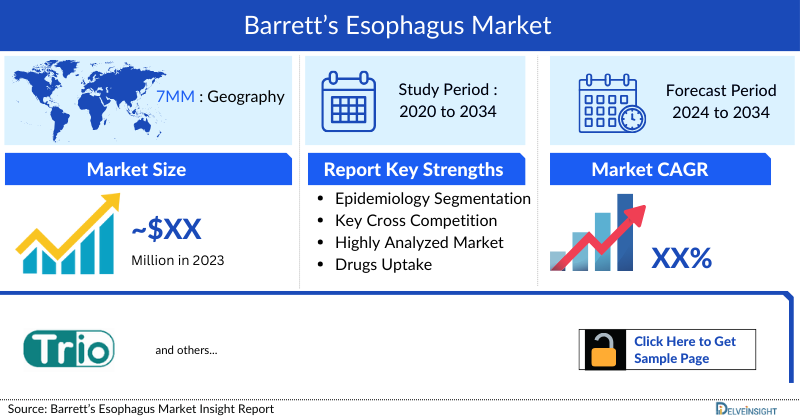
DelveInsight’s comprehensive report titled “Barrett’s Esophagus Market Insights, Epidemiology, and Market Forecast – 2034” offers a detailed analysis of Barrett’s esophagus. The report presents historical and projected epidemiological data covering Total Prevalent Cases and Diagnosed Prevalent Cases of Barrett’s Esophagus further segmented by Gender. In addition to epidemiology, the market report encompasses various aspects of the patient population. These aspects include the diagnosis process, prescription patterns, physician perspectives, market accessibility, treatment options, and prospective developments in the market across seven major markets: the United States, EU4 (Germany, France, Italy, and Spain), the United Kingdom, and Japan, spanning from 2020 to 2034.
The report analyzes the existing treatment practices and unmet medical requirements in Barrett’s esophagus. It evaluates the market potential and identifies potential business prospects for enhancing therapies or interventions. This valuable information enables stakeholders to make well-informed decisions regarding product development and strategic planning for the market.
Barrett’s esophagus Overview
Barrett's Esophagus is a complication of gastroesophageal reflux disease (GERD). GERD is a condition in which the stomach contents, including acid, reflux into the esophagus. People with Barrett's esophagus may develop a rare cancer called esophageal adenocarcinoma.
Barrett's esophagus is a pre-malignant condition characterized by the conversion of the normal esophageal squamous epithelium into metaplastic columnar epithelium. The stomach lining is mucinous columnar epithelium made to withstand the acidic environment required for digestion; however, the esophagus is lined by squamous epithelium. As a response to the acidic irritant, the squamous epithelium becomes inflamed. Continued exposure to acids leads to persistent inflammation and a columnar metaplasia reaction with the eventual development of an intestinal-type phenotype characterized by the presence of goblet cells.
Barrett's esophagus is more common in men than in women. It is also more common in older people. Other risk factors include having a history of acid reflux symptoms, being overweight, smoking, and others.
Barrett's esophagus does not cause symptoms. It may be associated with complications of GERD, including heartburn, chest pain, pain in the upper abdomen, trouble swallowing food, dry cough or clearing throat repeatedly, sour-tasting fluid backing up into your mouth, and frequent burping or belching, among others.
Barrett’s Esophagus Diagnosis and Treatment Algorithm
The diagnosis of Barrett's esophagus involves an upper gastrointestinal (GI) endoscopy and a biopsy. Patients diagnosed typically show gastroesophageal reflux disease symptoms with no distinct clinical or radiologic manifestations of Barrett's esophagus dysplasia.
The treatment for Barrett’s esophagus depends on the degree of dysplasia found in the esophageal cells. Chemoprevention with aspirin, other NSAIDs, PPIs, metformin, prokinetic agents, and statins is under study. Endoscopic resection techniques include mucosal resection, submucosal dissection, radiofrequency ablation, and cryotherapy. Radiofrequency ablation has compelling evidence for efficacy and hence is the most commonly used endoscopic resection technique. Long-term PPI therapy and surveillance are recommended after dysplasia ablation.
Barrett’s Esophagus Epidemiology
The epidemiology section of Barrett’s esophagus market report offers information on the patient populations, including historical and projected trends for each of the seven major markets. Examining key opinion leader views from physicians or clinical experts can assist in identifying the reasons behind historical and projected trends. The diagnosed patient pool, their trends, and the underlying assumptions are all included in this section of the report.
This section also presents the data with relevant tables and graphs, offering a clear and concise view of the prevalence of Barrett’s esophagus. Additionally, the report discloses the assumptions made during the analysis, ensuring data interpretation and presentation transparency. This epidemiological data is valuable for understanding the disease burden and its impact on the patient population across various regions.
Key Findings
- During the analysis of Barrett’s esophagus, it was found that the estimated prevalence is approximately 5.6% in the adult population in the US.
- The estimated prevalence of Barrett's esophagus in the general population was found to vary widely, ranging from 0.4% to more than 20%.
- During the analysis, it was found that males are more prevalent to Barrett's esophagus compared to females. Specifically, the prevalence was found to be 53% in males.
- The analysis observed that 11.6% of patients with Barrett's esophagus had high-grade dysplasia.
- The epidemiological landscape of Barrett’s esophagus is anticipated to undergo shifts over the forecast period spanning from 2024 to 2034.
Barrett’s Esophagus Market Outlook
The Barrett’s esophagus therapeutics market is further expected to increase by the major drivers, such as the rising prevalent population, technological advancements, and upcoming therapies in the forecast period [2024–2034].
With ongoing research and continued dedication, the future holds hope for even more effective treatments and, ultimately, a cure for this challenging condition. According to DelveInsight, Barrett’s esophagus market in the 7MM is expected to change significantly during the study period 2020–2034.
Barrett’s Esophagus Drug Chapters
Emerging Barrett’s Esophagus Drugs
The Barrett’s esophagus market is expected to experience gradual changes, mainly due to the limited availability of emerging therapies in this area. Key market players, including Trio Medicines, among others have demonstrated a keen interest in this condition and are actively pursuing the development of potential treatments.
Ceclazepide: Trio Medicines
Ceclazepide, also known as TR2-A, is a prodrug and a novel, potent, and highly selective gastrin/CCK2 receptor antagonist indicated for the treatment of Barrett's esophagus. The body efficiently converts TR2-A to the active molecule TR2 in the bloodstream. The patent application for ceclazepide was recently approved in Europe and the US. Currently, the drug is in the preclinical phase of clinical development, with no updates from the company since 2021.
Note: Detailed emerging therapies assessment will be provided in the final report…
Barrett’s Esophagus Market Segmentation
DelveInsight’s ‘Barrett’s esophagus – Market Insights, Epidemiology, and Market Forecast – 2034’ report provides a detailed outlook of the current and future Barrett’s esophagus market, segmented within countries, by therapies, and by classes. Further, the market of each region is then segmented by each therapy to provide a detailed view of the current and future market share of all therapies.
Barrett’s Esophagus Market Size by Countries
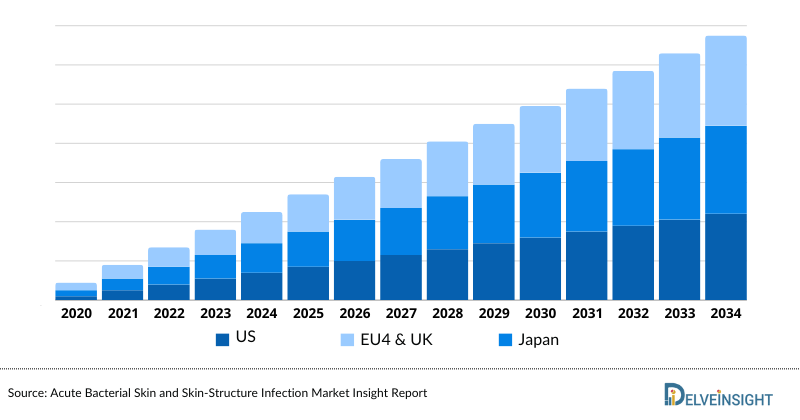
The Barrett’s esophagus market size is assessed separately for various countries, including the United States, EU4 (Germany, France, Italy, and Spain), the UK, and Japan. In 2023, the United States held a significant share of the overall 7MM (Seven Major Markets) Barrett’s esophagus market, primarily attributed to the country's higher prevalence of the condition and the elevated cost of the available treatments. This dominance is projected to persist, especially with the potential early introduction of new products.
Barrett’s Esophagus Market Size by Therapies
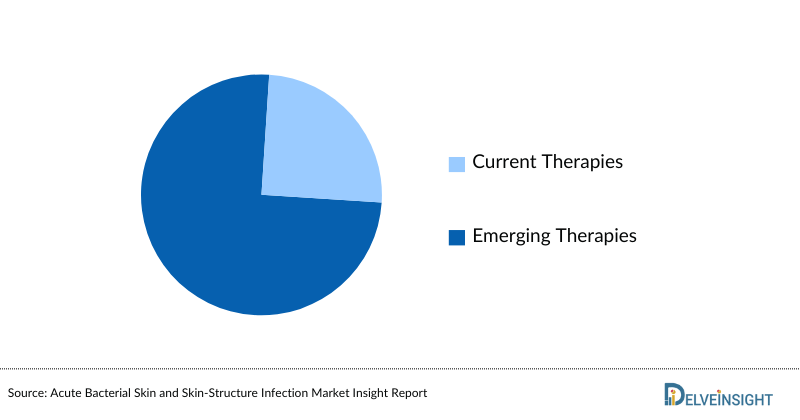
Barrett’s Esophagus Market Size by Therapies is categorized into current and emerging markets for the study period 2020–2034.
Note: Detailed market segment assessment will be provided in the final report….
Barrett’s Esophagus Drugs Uptake
This section focuses on the sales uptake of potential Barrett’s esophagus drugs that have recently been launched or are anticipated to be launched in the Barrett’s esophagus market between 2020 and 2034. It estimates the market penetration of Barrett’s esophagus drugs for a given country, examining their impact within and across classes and segments. It also touches upon the financial and regulatory decisions contributing to the probability of success (PoS) of the drugs in the Barrett’s esophagus market.
The emerging Barrett’s esophagus therapies are analyzed based on various attributes such as safety and efficacy in randomized clinical trials, order of entry and other market dynamics, and the unmet need they fulfill in the Barrett’s esophagus market.
Note: Detailed assessment of drug uptake and attribute analysis will be provided in the full report on Barrett’s esophagus….
Barrett’s Esophagus Market Access and Reimbursement
DelveInsight’s ‘Barrett’s esophagus Market Insights, Epidemiology, and Market Forecast – 2034’ report provides a descriptive overview of the market access and reimbursement scenario of Barrett’s esophagus.
This section includes a detailed analysis of the country-wise healthcare system for each therapy, enlightening the market access, reimbursement policies, and health technology assessments.
KOL Views
To keep up with current Barrett’s esophagus market trends and fill gaps in secondary findings, we interview KOLs and SMEs’ working in the Barrett’s esophagus domain. Their opinion helps understand and validate current and emerging therapies and treatment patterns or Barrett’s esophagus market trends. This will support the clients in potential upcoming novel treatments by identifying the overall scenario of the market and Barrett’s esophagus unmet needs.
Barrett’s Esophagus: KOL Insights
DelveInsight’s analysts connected with 50+ KOLs to gather insights; however, interviews were conducted with 15+ KOLs in the 7MM. These KOLs were from organizations, institutes, and hospitals, such as Creighton University Medical Center, American College of Gastroenterology, Division of Gastroenterology, Department of Medicine in the US, Division of Gastroenterology and Hepatology, University of Utah School of Medicine in the US, among others.
“Barrett's esophagus presents a significant clinical challenge due to its association with esophageal cancer. Early detection through regular endoscopic surveillance is paramount in high-risk patients with chronic acid reflux.”
“The unmet need in Barrett's esophagus lies in the development of targeted therapies that can halt or reverse the progression of precancerous lesions. While current treatments focus on symptom management and surveillance, there's a clear gap in our ability to intervene at an early stage to prevent esophageal adenocarcinoma.”
Note: Detailed assessment of KOL Views will be provided in the full report on Barrett’s esophagus….
Competitive Intelligence Analysis
We conduct a Competitive and Market Intelligence analysis of Barrett’s esophagus Market, utilizing various Competitive Intelligence tools such as SWOT analysis and Market entry strategies. The inclusion of these analyses is contingent upon data availability, ensuring a comprehensive and well-informed assessment of the market landscape and competitive dynamics.
Barrett’s Esophagus Pipeline Development Activities
The report offers an analysis of therapeutic candidates in Phase II and III stages and examines companies involved in developing targeted therapeutics for Barrett’s esophagus. It provides valuable insights into the advancements and progress of potential treatments in clinical development for this condition.
Pipeline Development Activities
The report covers information on collaborations, acquisition and merger, licensing, patent details, and other information for emerging Barrett’s esophagus therapies.
Barrett’s esophagus Report Insights
- Barrett’s esophagus Patient Population
- Therapeutic Approaches
- Barrett’s esophagus Pipeline Analysis
- Barrett’s esophagus Market Size and Trends
- Barrett’s esophagus Market Opportunities
- Impact of Upcoming Therapies
Barrett’s esophagus Report Key Strengths
- 11 Years Forecast
- The 7MM Coverage
- Barrett’s esophagus Epidemiology Segmentation
- Key Cross Competition
- Highly Analyzed Barrett’s esophagus Market
- Barrett’s esophagus Drugs Uptake
Barrett’s esophagus Report Assessment
- Barrett’s esophagus Current Treatment Practices
- Unmet Needs
- Barrett’s esophagus Pipeline Product Profiles
- Barrett’s esophagus Market Attractiveness
Key Questions
- How common is Barrett’s esophagus?
- What are the key findings of Barrett’s esophagus epidemiology across the 7MM, and which country will have the highest number of patients during the study period (2020–2034)?
- What are the currently available treatments for Barrett’s esophagus?
- What is the disease risk, burden, and unmet needs of Barrett’s esophagus?
- At what CAGR is the Barrett’s esophagus market and its epidemiology is expected to grow in the 7MM during the forecast period (2024–2034)?
- How would the unmet needs impact Barrett’s esophagus market dynamics and subsequently influence the analysis of the related trends?
- What would be the forecasted patient pool of Barrett’s esophagus in the 7MM covering the United States, EU4 (Germany, France, Italy, and Spain), the UK, and Japan?
- Among EU4 and the UK, which country will have the highest number of patients during the forecast period (2024–2034)?
- How many companies are currently developing therapies for the treatment of Barrett’s esophagus?
Reasons to buy
- The report will help in developing business strategies by understanding the latest trends and changing treatment dynamics driving Barrett’s esophagus Market.
- Insights on patient burden/disease prevalence, evolution in diagnosis, and factors contributing to the change in the epidemiology of the disease during the forecast years
- To understand the existing market opportunity in varying geographies and the growth potential over the coming years.
- Distribution of historical and current patient share based on real-world prescription data along with reported sales of current treatment in the US, EU4 (Germany, France, Italy, and Spain), the United Kingdom, and Japan.
- Identification of strong upcoming players in the market will help in devising strategies that will help in getting ahead of competitors.
- Detailed analysis and ranking of class-wise potential current and emerging therapies under the conjoint analysis section to provide visibility around leading classes.
- Highlights of Access and Reimbursement policies of approved therapies, barriers to accessibility of off-label expensive therapies, and patient assistance programs.
- To understand the perspective of Key Opinion Leaders around the accessibility, acceptability, and compliance-related challenges of existing treatment to overcome barriers in the future.
- Detailed insights on the unmet needs of the existing market so that the upcoming players can strengthen their development and launch strategy.