Bevacizumab Biosimilars Insight
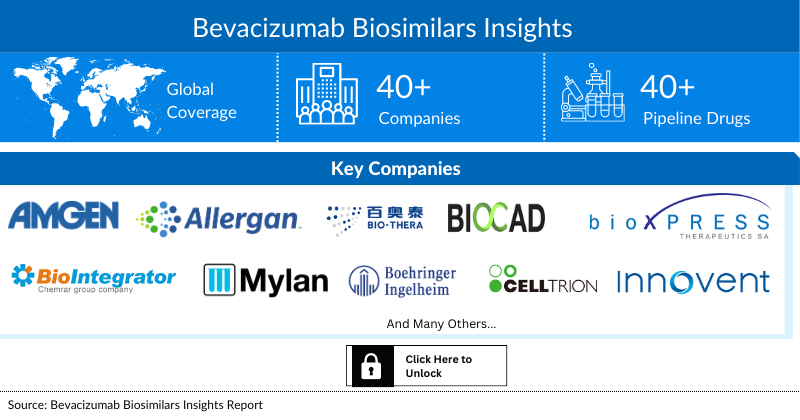
DelveInsight’s, “Bevacizumab – Biosimilar Insight, 2025,” report provides comprehensive insights about 25+ companies and 30+ marketed and pipeline drugs in Bevacizumab Biosimilars landscape. It covers the marketed and pipeline drug profiles, including clinical and nonclinical stage products. It also covers the therapeutics assessment by product type, stage, route of administration, and molecule type. It further highlights the inactive pipeline products in this space.
Geography Covered
- Global coverage
Bevacizumab Understanding
Bevacizumab Overview
Bevacizumab, sold under the brand name Avastin, is a medication used to treat a number of types of cancers and specific eye diseases. There is a great deal of evidence indicating that vascular endothelial growth factor (VEGF) is important for the survival and proliferation of cancer cells. VEGF plays an important role in angiogenesis, lymphangiogenesis, and tumor growth, which are all factors that contribute to its attractiveness as a therapeutic target for anti-cancer therapies. Angiogenesis, the formation of new blood vessels from pre-existing vasculature, is a critical process for tumor development and progression, as tumors require a blood supply to grow beyond a certain size and to metastasize. VEGF-A, one of the most potent isoforms of VEGF, stimulates this process by promoting endothelial cell proliferation, migration, and new vessel formation. In the context of cancer, overexpression of VEGF has been linked to increased tumor vascularization, aggressive tumor behavior, and poor prognosis.
In 2004, bevacizumab (Avastin) gained FDA approval for specific types of cancer and became the first antiangiogenic agent introduced to the market. Its approval marked a paradigm shift in oncology, moving beyond traditional cytotoxic chemotherapy to targeted biological therapies. Bevacizumab is a humanized monoclonal IgG1 antibody that specifically binds to and neutralizes VEGF-A, thereby inhibiting its interaction with VEGF receptors (VEGFR-1 and VEGFR-2) on the surface of endothelial cells. This prevents downstream signaling required for angiogenesis and vascular permeability, effectively starving the tumor of its blood supply and impeding its growth.
Bevacizumab is generally indicated for use in combination with different chemotherapy regimens which are specific to the type, severity, and stage of cancer. For example, it is approved for use in metastatic colorectal cancer in combination with 5-fluorouracil–based chemotherapy, in non-squamous non-small cell lung cancer (NSCLC) with carboplatin and paclitaxel, and in metastatic renal cell carcinoma with interferon-alpha. It is also used in glioblastoma, cervical cancer, and epithelial ovarian, fallopian tube, or primary peritoneal cancer under specific protocols. While its role in oncology remains prominent, bevacizumab has also shown benefit in off-label use for ocular conditions such as age-related macular degeneration (AMD) due to its ability to inhibit abnormal blood vessel formation in the retina. In this context, its anti-VEGF properties help reduce macular edema and preserve vision. However, bevacizumab is not without risks. Its inhibition of angiogenesis can lead to adverse effects including hypertension, proteinuria, impaired wound healing, gastrointestinal perforation, and increased risk of bleeding or thromboembolic events. Therefore, careful patient selection and monitoring are critical during treatment.
Bevacizumab Biosimilars Drugs Chapters
This segment of the Bevacizumab report encloses its detailed analysis of various drugs in different stages of clinical development, including marketed, phase III, II, I and preclinical. It also helps to understand clinical trial details, expressive pharmacological action, agreements and collaborations, and the latest news and press releases.
Marketed Bevacizumab Biosimilars Drugs
- Mvasi: Amgen
Mvasi is a vascular endothelial growth factor inhibitor. The U.S. Food and Drug Administration today approved Mvasi (bevacizumab-awwb) as a biosimilar to Avastin (bevacizumab) for the treatment of multiple types of cancer. Mvasi is the first biosimilar approved in the U.S. for the treatment of cancer.
- Bryxta: Zydus
Bryxta is a recombinant humanized monoclonal antibody (containing 1337 amino acids) produced in Chinese Hamster Ovary cell line. VEGF is a signal protein which stimulates vasculogenesis and angiogenesis. Bevacizumab binds to VEGF and inhibits its interactions with VEGF receptors (VEGFRs), Flt-1 (VEGFR-1) and KDR (VEGFR-2), on the surface of endothelial cells. This results in regression of tumour vasculature and inhibition of new tumour vessel growth.
Further product details are provided in the report……..
Emerging Bevacizumab Biosimilars Drugs
- Bevacizumab biosimilar (HD204): Prestige Biopharma
HD204 is a biosimilar to bevacizumab (Avastin®), a recombinant humanized monoclonal antibody that targets and inhibits vascular endothelial growth factor (VEGF). By blocking VEGF, HD204 disrupts angiogenesis—the process of new blood vessel formation—thereby starving tumors of the oxygen and nutrients needed for growth. It is being developed for use in combination with other treatments for various cancers, including metastatic colorectal cancer, advanced non-small-cell lung cancer, renal cell carcinoma, certain epithelial cancers, and cervical cancer. Currently in Phase III clinical development (SAMSON-II), HD204 previously demonstrated comparable pharmacokinetics, safety, and immunogenicity to Avastin® in the Phase I SAMSON-I trial.
- EG12021: EirGenix
EG12021 is a bevacizumab biosimilar developed by EirGenix, currently in the preclinical stage. Designed to target vascular endothelial growth factor (VEGF), it aims to inhibit angiogenesis, a key process in cancer growth and metastasis. The biosimilar seeks to provide a cost-effective alternative to Avastin®, supporting treatment across various solid tumors.
Further product details are provided in the report……..
Bevacizumab Therapeutic Assessment
This segment of the report provides insights about the different Bevacizumab biosimilars segregated based on following parameters that define the scope of the report, such as:
Major Players in Bevacizumab
There are approx. 25+ key companies which are developing the therapies for Bevacizumab.
Bevacizumab Biosimilar Phases
DelveInsight’s report covers around 30+ products under different phases of clinical development like
- Marketed stage products
- Late stage products (BLA Filed and Phase III)
- Mid-stage products (Phase II and
- Early-stage products (Phase I) along with the details of
- Pre-clinical and Discovery stage candidates
- Discontinued & Inactive candidates
Route of Administration
Bevacizumab pipeline report provides the therapeutic assessment of the pipeline drugs by the Route of Administration. Products have been categorized under various ROAs such as
- Subcutaneous
- Intravenous
Molecule Type
Bevacizumab Biosimilar Products have been categorized under various Molecule types such as
- Monoclonal antibodies
- Peptide
- Protein
- Small molecule
Product Type
Drugs have been categorized under various product types like Mono, Combination and Mono/Combination.
Bevacizumab Pipeline Development Activities
The report provides insights into different therapeutic candidates in marketed, phase III, II, I and preclinical stage. It also analyses Bevacizumab biosimilars drugs key players involved in developing key drugs.
|
Report Metrics |
Details |
|
Geography Covered |
Global |
|
Bevacizumab Biosimilar Companies and Therapies Analyzed |
40+ Companies & 40+ Marketed & Pipeline drugs |
|
Bevacizumab Therapeutic Assessment |
Clinical Trial Phases, Molecule Types, Product Types, Route of Administration (ROA), Mechanism of Action (MOA) |
|
Bevacizumab Biosimilar Marketed and Emerging Products | Mvasi (Amgen), Bryxta (Zydus), HD204 (Prestige BioPharma), GB 222 (Genor Biopharma), and others. |
|
Bevacizumab Biosimilar Companies | Amgen/ Allergan, Bio-Thera Solutions, Biocad, Biocon/Mylan, BioIntegrator, BioXpress Therapeutics, Boehringer Ingelheim, Celltrion, Centus Biotherapeutics Limited, Coherus BioSciences, Daiichi Sankyo/ Amgen, Dr Reddy’s, Gene Techno Science, Genor Biopharma, Harvest Moon Pharmaceuticals, Innovent Biologics, Kashiv BioSciences, Laboratorio Elea, mAbxience S.A, Mycenax Biotech, Outlook Therapeutics, Pfizer, R-Pharm, Reliance Life Sciences, Samsung Bioepis, Shanghai Henlius Biotech, Tanvex Biopharma, Zhejiang Teruisi Pharmaceutical, Zydus Cadila, and many others. |
Pipeline Development Activities
The report covers the detailed information of collaborations, acquisition and merger, licensing along with a thorough therapeutic assessment of emerging Bevacizumab biosimilar drugs.
Bevacizumab Biosimilar Report Highlights
The companies and academics are working to assess challenges and seek opportunities that could influence Bevacizumab R&D. The therapies under development are focused on novel approaches to treat/improve Bevacizumab.
- In April 2025, Biocon Biologics announced that the US Food and Drug Administration (US FDA) had approved Jobevne (bevacizumab-nwgd), a biosimilar Bevacizumab for intravenous use. JOBEVNE, a recombinant humanized monoclonal antibody used to treat several different types of cancer, is a biosimilar to the reference product Avastin® (bevacizumab).
- In January 2025, Outlook Therapeutics achieved regulatory approval in the European Union (EU) and the United Kingdom (UK) for the first authorized use of an ophthalmic formulation of bevacizumab for the treatment of wet age-related macular degeneration (wet AMD), announced the presentation of data from NORSE EIGHT at the Hawaiian Eye and Retina 2025 Meeting being held January 2025 in Kauai, HI.
Bevacizumab Biosimilars Report Insights
- Bevacizumab Biosimilar Pipeline Analysis
- Bevacizumab Biosimilar Therapeutic Assessment
- Bevacizumab Biosimilar Sales Assessment
- Bevacizumab Biosimilar Unmet Needs
- Impact of Bevacizumab Biosimilar Drugs
Bevacizumab Biosimilar Report Assessment
- Marketed Bevacizumab Biosimilar Product profiles
- Bevacizumab Biosimilar Pipeline Product Profiles
- Bevacizumab Biosimilar Therapeutic Assessment
- Bevacizumab Biosimilar Pipeline Assessment
- Bevacizumab Biosimilar Sales Assessment
- Inactive Bevacizumab Biosimilar drugs assessment
- Bevacizumab Biosimilar Unmet Needs
Key Questions
Current Treatment Scenario and Emerging Therapies:
- How many companies are developing Bevacizumab Biosimilars?
- How many Bevacizumab biosimilars are developed by each company?
- How many emerging biosimilars are in mid-stage, and late-stage?
- What are the key collaborations (Industry–Industry, Industry–Academia), Mergers and acquisitions, licensing activities related to the Bevacizumab biosimilars therapeutics?
- What are the clinical studies going on for Bevacizumab biosimilars and their status?
- What are the key designations that have been granted to the emerging drugs?
Stay Updated with us for Recent Articles-
- GSK Acquires Sierra Oncology; BriaCell’s Targeted Breast Cancer Immunotherapy; Merck’s Tepmetko; Gilead’s Magrolimab for MDS and AML; Eli Lilly’s Retevmo; Merck’s Pneumococcal Vaccine; FDA Approves Bevacizumab Biosimilar; Halozyme to Acquire Antares Pharma
- Promising results from IMbrave150 TRIAL of Atezolizumab + Bevacizumab may shift the treatment paradigsm for advanced HCC
- Good clinical response for dual immune checkpoint inhibitors (Tremelimumab + Durvalumab) in second line HCC however, tough fight ahead in first line setting from much promising Atezolizumab + Bevacizumab
- Encouraging results of nivolumab + bevacizumab + FOLFOXIRI in patients with RAS/BRAF mutations as a 1st Line treatment option, Opportunity for BMS for further expanding its blockbuster label for CRC patients
- Latest DelveInsight Blogs