Biosimilars Market Summary
- The Biosimilar market is estimated at USD 34.50 billion in 2025 and is projected to reach USD 134.30 billion by 2034. Growth is anchored in the wave of high-value biologic patent expirations, expanding regulatory pathways and interchangeability, and the global push to lower healthcare costs and widen patient access.
- The global Biosimilar market is growing at a CAGR of 16.3% during the forecast period from 2026 to 2034.
- By product, the monoclonal antibodies segment dominated the Biosimilar market with a 58% share in 2025.
- By indication, the oncology segment dominated the Biosimilar market with a 34% share in 2025.
- By manufacturing type, the in-house manufacturing segment dominated the Biosimilar market with a 64% share in 2025.
- By distribution channel, the hospital pharmacies segment dominated the Biosimilar market with a 56% share in 2025.
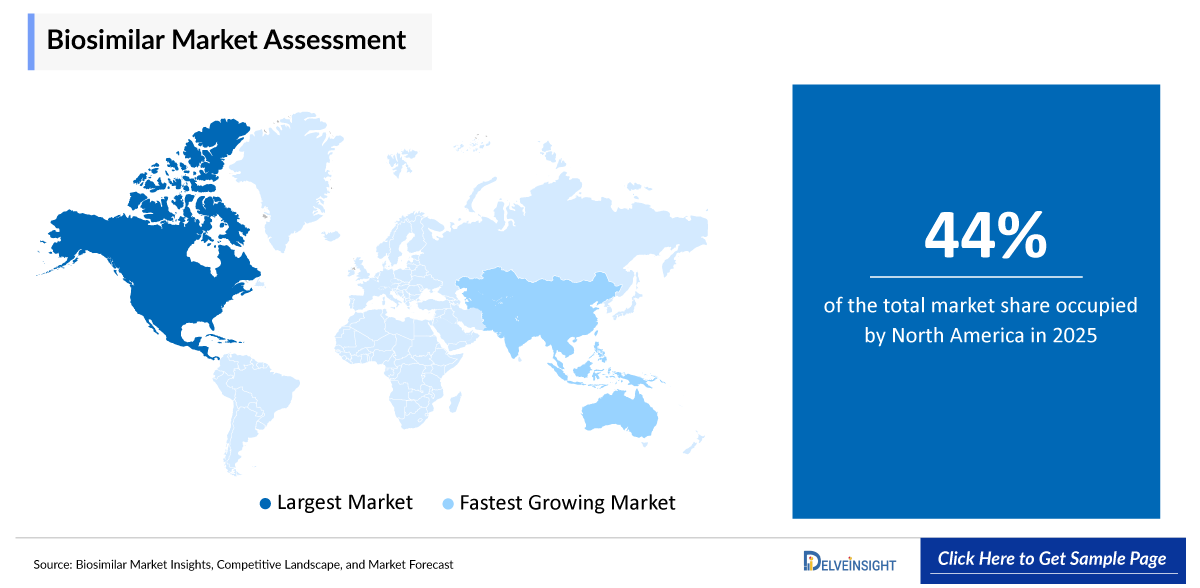
- North America dominated the global Biosimilar market revenue with a 44% share in 2025, representing the highest regional market share globally.
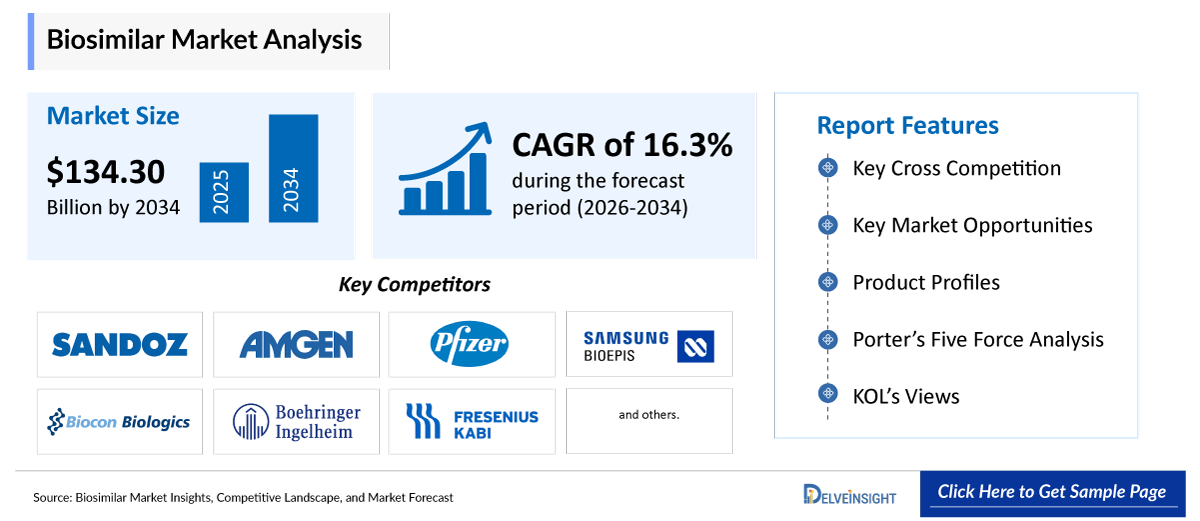
Biosimilar are biological products that are highly similar to an already approved reference biologic, with no clinically meaningful differences in safety, purity, and potency. Unlike small-molecule generics, biosimilar are large, complex proteins produced in living cell systems, including monoclonal antibodies, fusion proteins, erythropoietins, granulocyte colony-stimulating factors, insulins, and growth hormones. Approval follows dedicated regulatory pathways, the Biologics Price Competition and Innovation Act in the United States and the European Medicines Agency framework, and relies on a totality-of-evidence approach combining extensive analytical characterization, non-clinical studies, and confirmatory clinical trials.
The biosimilar ecosystem spans cell-line engineering, large-scale biomanufacturing, regulatory approval, distribution, and payer-driven adoption across hospital and retail channels. Major applications include oncology, autoimmune and inflammatory diseases, diabetes, blood disorders, and ophthalmology. Since the first European biosimilar approval in 2006 and the first United States approval in 2015, the market has matured rapidly, with the United States Food and Drug Administration having approved 96 biosimilar by the end of 2025, transforming biosimilar from a nascent category into a central pillar of sustainable, cost-effective biologic therapy.
Biosimilar Market Key Growth Drivers
- A wave of high-value biologic patent expirations, including Humira, Stelara, Eylea, and Prolia, is opening multi-billion-dollar markets to biosimilar competition and accelerating new launches.
- Biosimilar deliver substantial cost savings, with oncology biosimilar priced at 50% to 70% below reference average sales prices and denosumab biosimilar launched at discounts above 80%, and Cardinal Health projecting up to USD 181 billion in future United States healthcare savings.
- The rising global burden of cancer, autoimmune disease, and diabetes is expanding demand for affordable biologic therapy, with the International Agency for Research on Cancer projecting cancer cases to rise from 20 million in 2022 to 35 million by 2050.
- Maturing regulatory frameworks and the expansion of interchangeability designations, with 25 of the 96 United States biosimilar approved as interchangeable by the end of 2025, are improving pharmacy-level substitution and adoption.
- The FDA's modernization of the biosimilar pathway, prioritizing advanced analytical data over repetitive clinical trials, is lowering development costs and accelerating new entrants.
- Expanding manufacturing capacity in Asia-Pacific and vertically integrated supply chains are lowering production costs and broadening global access.
- The convergence of patent cliffs, payer cost-containment pressure, and a maturing developer ecosystem is expected to sustain strong double-digit growth in the global Biosimilar market through 2034.
Key Companies in Biosimilar Market
The competitive landscape is led by the following active manufacturers and developers:
- Sandoz Group AG
- Amgen Inc.
- Pfizer Inc.
- Celltrion, Inc.
- Samsung Bioepis Co., Ltd.
- Biocon Biologics Ltd.
- Boehringer Ingelheim International GmbH
- Fresenius Kabi AG
- Teva Pharmaceutical Industries Ltd.
- Organon & Co., and others
For illustrative purposes, only the top 10 companies are listed in the Table of Contents. The report may include analysis and references to additional companies where relevant to the market assessment.
Biosimilar Market Size
The following snapshot summarizes the principal report metrics for the Biosimilar market.
|
Report Metrics |
Details |
|
2025 Market Size |
USD 34.50 billion |
|
2034 Projected Market Size |
USD 134.30 billion |
|
Growth Rate (2026-2034) |
16.3% CAGR |
|
Largest Market |
North America |
|
Fastest Growing Market |
Asia-Pacific |
|
Market Structure |
Moderately Concentrated |
All market values are expressed in USD and represent DelveInsight estimates synthesized from primary and secondary research.
Factors Contributing to the Growth of the Biosimilar Market:
Biosimilar Market Drivers
- Wave of High-Value Biologic Patent Expirations Opening Large Markets: The single most powerful driver of the Biosimilar market is the cascade of patent expirations on blockbuster biologics. The loss of exclusivity for adalimumab (Humira), once the world's best-selling drug, opened the United States market to multiple biosimilar from 2023, followed by ustekinumab (Stelara), aflibercept (Eylea), and denosumab (Prolia and Xgeva). As of October 2025, annual United States sales for Prolia and Xgeva alone reached USD 5.3 billion, illustrating the scale of the markets now exposed to competition. Each expiration converts a protected, high-priced franchise into a contested market in which biosimilar rapidly capture share. With major checkpoint inhibitors such as pembrolizumab (Keytruda) and nivolumab (Opdivo) approaching patent loss toward 2028, the pipeline of addressable biologics continues to expand, sustaining new launches and revenue growth through 2034. Source: United States Food and Drug Administration; company disclosures, 2023-2026.
- Substantial Cost Savings and Payer-Driven Adoption: Biosimilar are central to healthcare cost containment, which underpins strong policy and payer support. Oncology biosimilar referencing trastuzumab, bevacizumab, and rituximab carry average sales price discounts of 50% to 70%, while denosumab biosimilar launched with wholesale acquisition cost discounts above 80%, and pegfilgrastim's average sales price has fallen by 95% since biosimilar entry. Cardinal Health has projected that, under supportive market and policy conditions, biosimilar could deliver up to USD 181 billion in future savings for the United States healthcare system. Payers, pharmacy benefit managers, and national health systems are increasingly steering utilization toward biosimilar through formulary preference and substitution, exemplified by CVS Caremark's decision to favor Stelara biosimilar. These savings dynamics make biosimilar adoption a structural priority for health systems worldwide.
- Rising Global Burden of Cancer, Autoimmune Disease, and Diabetes: The growing prevalence of conditions treated with biologics is expanding the addressable patient population. The International Agency for Research on Cancer recorded 20 million new cancer cases in 2022 and projects 35 million by 2050, driving demand for oncology biologics and their biosimilar. Autoimmune and inflammatory diseases, including rheumatoid arthritis, inflammatory bowel disease, and psoriasis, affect tens of millions globally and rely heavily on anti-TNF and other monoclonal antibody therapies. Diabetes affects 589 million adults worldwide according to the International Diabetes Federation, sustaining demand for insulin biosimilar. Because biologics are often the most effective but also the most expensive therapies for these conditions, biosimilar provide an essential route to scaling access affordably, directly enlarging market demand through the forecast period.
- Maturing Regulatory Pathways and Expanding Interchangeability: Strengthening regulatory frameworks are accelerating biosimilar approvals and clinical acceptance. The Biologics Price Competition and Innovation Act established the United States abbreviated approval pathway, and by the end of 2025 the FDA had approved 96 biosimilar, 25 of them designated interchangeable, permitting pharmacy-level substitution without prescriber intervention where state law allows. In 2025 alone the FDA approved 18 biosimilar across oncology, immunology, endocrinology, and ophthalmology. The European Medicines Agency, which approved the first biosimilar in 2006, continues to lead in adoption, and agencies including the United Kingdom MHRA are expanding approvals. Growing regulatory confidence and harmonization are shortening timelines and broadening the range of molecules suitable for biosimilar development.
- Regulatory Modernization Lowering Development Cost and Time: The FDA's modernization of the biosimilar pathway is reducing barriers to entry. By prioritizing advanced analytical characterization over repetitive comparative clinical trials, regulators are lowering development costs that have historically ranged from USD 100 million to USD 300 million per program and shortening time to market. This shift was visible in the pace of 2025 approvals, including ten new biosimilar in the first quarter alone, and in the simultaneous approval of multiple denosumab biosimilar. Lower development costs widen participation, attracting generic manufacturers and specialized developers and intensifying competition. As analytical-data-led approval becomes standard, more molecules become economically viable for biosimilar development, expanding the long-term pipeline.
- Expanding Asia-Pacific Manufacturing and Vertically Integrated Supply Chains: Growth in low-cost, large-scale biomanufacturing, particularly across Asia-Pacific, is broadening global access and supporting margins. Companies such as Celltrion, Samsung Bioepis, Biocon Biologics, and Shanghai Henlius Biotech operate substantial capacity and increasingly vertically integrated supply chains, enabling competitive pricing and reliable supply. Biocon Biologics' acquisition of the Viatris biosimilar business created one of the largest vertically integrated players, while contract developers such as mAbxience expand available capacity. Government initiatives in India, China, and South Korea promote affordable biologics and domestic manufacturing. This manufacturing expansion lowers production costs, supports rapid scale-up for new launches, and positions Asia-Pacific as both a production hub and a fast-growing demand center.
- Biosimilar as Foundational Infrastructure for Sustainable Biologic Therapy: Biosimilar have become essential infrastructure for sustainable healthcare. By introducing competition into previously monopolized biologic markets, they free resources for innovation and broaden patient access to advanced therapies in oncology, immunology, and chronic disease. Their growing role in formulary design, value-based contracting, and national procurement reinforces long-term demand, while initiatives such as Sandoz's Act4Biosimilar work to improve access in underserved regions. As health systems confront rising biologic spending, biosimilar provide a proven mechanism to expand access while containing cost, securing sustained market expansion through 2034.
Biosimilar Market Restraints
Despite strong momentum, the Biosimilar market faces material constraints. Regulatory complexity remains significant, as biosimilar development requires extensive analytical characterization, comparative studies, and navigation of distinct FDA, European Medicines Agency, and national frameworks, lengthening and raising the cost of development, which has historically reached USD 100 million to USD 300 million per program. Manufacturing is capital intensive and technically demanding, requiring specialized bioreactor capacity, cold-chain logistics, and rigorous quality control that create high barriers to entry and supply-chain risk. Commercial adoption is impeded by intellectual-property litigation, originator pricing strategies, and patent-thicket defenses that delay launches even after approval, with a substantial share of approved biosimilar remaining uncommercialized. Reimbursement and access are further complicated by pharmacy benefit manager rebate practices and formulary incentives that can favor higher-priced originators, distorting competition and limiting savings, concerns raised in United States Congressional testimony. Reimbursement remains uneven across geographies, and physician and patient confidence in switching, while improving, still requires education. A persistent biosimilar gap is also emerging, as only a small proportion of biologics expected to lose exclusivity over the next decade currently have biosimilar in development, reflecting the high cost and uncertain returns of pursuing complex molecules. Together, these regulatory, manufacturing, supply-chain, reimbursement, and adoption barriers temper the pace of growth across the forecast period, even as the underlying drivers remain firmly intact.
Biosimilar Market Segment Analysis
The Biosimilar Market by Product (Monoclonal Antibodies, Insulin, Erythropoietin, Granulocyte Colony-Stimulating Factor, Growth Hormone, Fusion Proteins, Anticoagulants, Others), Indication (Oncology, Autoimmune and Inflammatory Diseases, Blood Disorders, Diabetes, Growth Hormone Deficiency, Ophthalmology, Others), Manufacturing Type (In-house Manufacturing, Contract Manufacturing), Distribution Channel (Hospital Pharmacies, Retail Pharmacies, Specialty and Online Pharmacies), and Geography (North America, Europe, Asia-Pacific, Rest of World).
By Product
Dominant Subsegment: Monoclonal Antibodies. The monoclonal antibodies category is expected to dominate the market.
Dominant: Monoclonal Antibodies ~ 58%
The monoclonal antibodies segment accounted for 58% of the Biosimilar market in 2025. Monoclonal antibodies are the leading product class because the highest-value reference biologics losing exclusivity, including adalimumab, trastuzumab, infliximab, rituximab, bevacizumab, ustekinumab, and denosumab, are monoclonal antibodies. These molecules anchor multi-billion-dollar franchises across oncology and immunology, and their biosimilar capture large markets quickly once launched. The segment's dominance is reinforced by a deep pipeline and a steady cadence of approvals: the FDA cleared multiple ustekinumab biosimilar referencing Stelara, denosumab biosimilar referencing Prolia and Xgeva, aflibercept biosimilar such as Celltrion's Eydenzelt, the first omalizumab biosimilar Omlyclo, and the first golimumab biosimilar in 2026. Antibody biosimilar also command the largest absolute savings, with oncology antibodies discounted 50% to 70% versus reference average sales prices. Continued investment in antibody manufacturing capacity by Celltrion, Samsung Bioepis, Amgen, and Biocon Biologics, together with the approaching patent cliffs for pembrolizumab and nivolumab, secures the segment's leadership across the forecast period, while insulins, erythropoietins, colony-stimulating factors, growth hormones, and fusion proteins occupy established but smaller positions.
By Indication
Dominant Subsegment: Oncology. The oncology category is expected to dominate the market.
Dominant: Oncology ~ 34%
The oncology segment accounted for 34% of the Biosimilar market in 2025. Oncology is the leading indication because cancer biologics represent some of the largest and most expensive therapeutic franchises, and biosimilar competition delivers substantial savings in a setting of rising disease burden. The International Agency for Research on Cancer recorded 20 million new cancer cases in 2022 and projects 35 million by 2050, expanding the treated population. Biosimilar referencing trastuzumab, bevacizumab, rituximab, and pertuzumab are widely used across breast, colorectal, lung, and hematologic cancers, with average sales price discounts of 50% to 70% improving access and freeing budget for novel therapies. Supportive-care biosimilar, including pegfilgrastim and filgrastim for chemotherapy-induced neutropenia and denosumab for cancer-related bone disease, further deepen oncology demand, and the FDA approval of Shanghai Henlius Biotech's interchangeable pertuzumab biosimilar Poherdy in 2025 illustrates continued expansion. The approaching loss of exclusivity for checkpoint inhibitors such as pembrolizumab and nivolumab toward 2028 promises a second major wave of oncology biosimilar. These dynamics secure oncology's leadership, while autoimmune and inflammatory diseases follow closely as a major indication.
By Manufacturing Type
Dominant Subsegment: In-house Manufacturing. The in-house manufacturing category is expected to dominate the market.
Dominant: In-house Manufacturing ~ 64%
The in-house manufacturing segment accounted for 64% of the Biosimilar market in 2025. In-house manufacturing dominates because the leading biosimilar developers operate large, vertically integrated production networks that provide control over quality, cost, and supply security for complex biologics. Companies such as Sandoz, Amgen, Celltrion, Samsung Bioepis, and Biocon Biologics invest heavily in proprietary bioreactor capacity, cell-line development, and purification capability, which are essential to demonstrating biosimilarity and sustaining competitive pricing. Vertical integration also shortens supply chains and reduces dependence on third parties, an advantage in a market where reliable, high-volume supply is critical to capturing share quickly after launch. Biocon Biologics' acquisition of the Viatris biosimilar business created one of the largest vertically integrated players, and Accord BioPharma highlighted manufacturing its denosumab biosimilar internally without third-party partnership. While contract manufacturing remains important for emerging developers and capacity expansion, with organizations such as mAbxience supplying partners including Amneal, the scale, quality control, and cost advantages of internal production keep in-house manufacturing dominant across the forecast period.
By Distribution Channel
Dominant Subsegment: Hospital Pharmacies. The hospital pharmacies category is expected to dominate the market.
Dominant: Hospital Pharmacies ~ 56%
The hospital pharmacies segment accounted for 56% of the Biosimilar market in 2025. Hospital pharmacies dominate because many biosimilar are infused or administered biologics used in oncology, rheumatology, and other specialty settings where treatment is initiated and managed within hospitals and infusion centers. Antibody biosimilar referencing trastuzumab, bevacizumab, rituximab, and infliximab are typically delivered under clinical supervision, concentrating dispensing in hospital and institutional channels. Hospital formularies and group purchasing organizations also drive rapid biosimilar uptake through tendering and preferred-product decisions, making the hospital channel central to volume conversion. The growing role of payers and pharmacy benefit managers in steering utilization reinforces institutional purchasing power. As subcutaneous and self-administered biosimilar expand, including adalimumab, ustekinumab, and denosumab presentations, retail and specialty and online pharmacies are growing quickly, supported by patient-support and adherence programs. Nonetheless, the concentration of high-value infused biologics in institutional settings keeps hospital pharmacies the leading distribution channel across the forecast period.
Biosimilar Market Region Analysis
Dominant Region: North America
North America accounted for 44% of the global Biosimilar market revenue in 2025, representing the highest regional market share globally. The region's dominance reflects the high price of reference biologics in the United States, which makes biosimilar savings especially large, together with a maturing regulatory environment and an accelerating wave of launches. The Biologics Price Competition and Innovation Act established the United States approval pathway, and by the end of 2025 the FDA had approved 96 biosimilar, 25 of them interchangeable, with 18 approvals in 2025 alone across oncology, immunology, endocrinology, and ophthalmology. The launch of adalimumab, ustekinumab, denosumab, and aflibercept biosimilar has unlocked very large markets, with Prolia and Xgeva alone representing USD 5.3 billion in annual United States sales. Payer and pharmacy-benefit-manager steering, exemplified by formulary decisions favoring Stelara biosimilar, is converting approvals into volume. Strong disease burden, a deep developer base, and FDA pathway modernization that lowers development cost anchor the region's continued leadership.
Dominant: North America ~ 44% (Largest)
Fastest Growing Region: Asia-Pacific
Asia-Pacific is the fastest-growing region in the Biosimilar market. The region's elevated CAGR is driven by large patient populations, rising biologic demand, and rapidly expanding low-cost manufacturing capacity across China, India, South Korea, and Japan. Domestic leaders including Celltrion, Samsung Bioepis, Biocon Biologics, and Shanghai Henlius Biotech are scaling production and exporting globally, while government initiatives promote affordable biologics and domestic biomanufacturing. Recent activity underscores the momentum, including Biocon Biologics' launch of the etanercept biosimilar Nepexto in Australia and Samsung Bioepis' domestic partnership with Boryung for a denosumab biosimilar in 2025. Growing local demand, supportive industrial policy, and the region's role as a global production hub position Asia-Pacific as the principal source of incremental growth over the forecast period.
Regional Commentary
North America
North America accounted for 44% of the global Biosimilar market revenue in 2025. The United States dominates on the strength of high reference-biologic prices, a maturing FDA pathway with expanding interchangeability, and an accelerating launch cadence across oncology, immunology, and bone health, while Canada contributes through provincial biosimilar switching policies that have driven rapid uptake.
Europe
Europe is a large and pioneering biosimilar market, having approved the first biosimilar in 2006 through the European Medicines Agency and achieved the highest adoption maturity through national tenders and switching programs in Germany, the United Kingdom, France, and the Nordics. Continued approvals, including Biocon Biologics' MHRA clearance of denosumab biosimilar Vevzuo and Evfraxy in 2025, sustain European leadership in volume and clinical acceptance.
Asia-Pacific
Asia-Pacific is the fastest-growing region, propelled by large patient populations, expanding manufacturing capacity, and supportive government policy across China, India, South Korea, and Japan. Regional leaders such as Celltrion, Samsung Bioepis, Biocon Biologics, and Shanghai Henlius Biotech serve both domestic demand and global export markets, accelerating access to affordable biologics.
Rest of World
The Rest of World region, spanning Latin America, the Middle East, and Africa, is an emerging growth frontier. Rising chronic disease burden, improving regulatory capacity, and access initiatives such as Sandoz's Act4Biosimilar are expanding availability, while local partnerships and tenders gradually broaden the use of lower-cost biologic therapies.
Biosimilar Market Competitive Landscape
The Biosimilar market is classified as Moderately Concentrated. A group of global pharmaceutical and specialized biosimilar developers holds the majority of revenue, with Sandoz, Amgen, and Pfizer leveraging regulatory expertise and established distribution, and Asian leaders Celltrion, Samsung Bioepis, and Biocon Biologics driving cost-effective large-scale production. A widening field of generic manufacturers and specialized developers competes across individual molecules, increasing fragmentation in newer categories such as denosumab and ustekinumab.
The competitive landscape can be evaluated across the following dimensions:
- Market concentration: Moderately concentrated, with a few global leaders alongside many molecule-specific entrants and rising competition in newly opened markets.
- Leading players: Sandoz, Amgen, Pfizer, Celltrion, Samsung Bioepis, and Biocon Biologics anchor the top tier.
- Geographic reach: Leaders operate global commercial networks across North America and Europe, with Asia-Pacific developers expanding rapidly into Western and emerging markets.
- Product portfolio strength: Top players hold broad portfolios spanning oncology, immunology, endocrinology, and ophthalmology biosimilar.
- Pipeline strength: Deep pipelines targeting upcoming patent cliffs, including pembrolizumab, nivolumab, and high-dose aflibercept.
- Strategic partnerships: Extensive licensing, co-development, and commercialization deals, such as Samsung Bioepis with Organon and Bio-Thera with Hikma and Accord.
- M&A activity: Consolidation continues, including Biocon's acquisition of the Viatris biosimilar business and generic-maker entries by Amneal and Sun.
- Manufacturing capabilities: Large vertically integrated biomanufacturing and contract capacity are key competitive moats and supply-chain advantages.
- Innovation focus: High-concentration and citrate-free formulations, autoinjector and on-body delivery, interchangeability, and analytical-data-led development.
Biosimilar Market Recent Developmental Activities
- In May 2026, Bio-Thera Solutions, Ltd. (with Accord BioPharma, Inc.), received FDA approval for Immgolis and Immgolis Intri (golimumab-sldi), the first golimumab biosimilar in the United States, approved as interchangeable to Simponi and Simponi Aria for rheumatoid arthritis and ulcerative colitis. Strategic significance: Opens the anti-TNF golimumab market and expands interchangeable options in immunology.
- In December 2025, Amneal Pharmaceuticals, Inc. (with mAbxience), received FDA approval for Boncresa and Oziltus (denosumab-mobz), referencing Prolia and Xgeva, concluding a year in which eight pairs of denosumab biosimilar were approved. Strategic significance: Intensifies competition in a USD 5.3 billion reference market and signals deeper participation by generic manufacturers.
- In November 2025, Shanghai Henlius Biotech, Inc., received FDA approval for Poherdy (pertuzumab-dpzb), the only interchangeable biosimilar approved during 2025, referencing Perjeta for HER2-positive breast cancer. Strategic significance: Extends biosimilar competition to pertuzumab and demonstrates Asian developers achieving interchangeable status in oncology.
- In October 2025, Celltrion, Inc., received FDA approval for Eydenzelt (aflibercept-boav) for retinal diseases and secured interchangeability designations for its denosumab biosimilar Stoboclo and Osenvelt. Strategic significance: Broadens Celltrion's ophthalmology and bone-health portfolio and strengthens its interchangeable franchise.
- In July 2025, Biocon Biologics Ltd., received MHRA approval in the United Kingdom for the denosumab biosimilar Vevzuo and Evfraxy and launched the etanercept biosimilar Nepexto in Australia. Strategic significance: Expands Biocon's bone-health and immunology footprint across Europe and Asia-Pacific.
- In May 2025, Bio-Thera Solutions, Ltd. (with Hikma Pharmaceuticals PLC), received FDA approval for Starjemza (ustekinumab-hmny), a biosimilar referencing Stelara, later launched commercially in November 2025. Strategic significance: Adds to a crowded ustekinumab market where some biosimilar priced as much as 90% below the originator list price.
- In April 2025, Organon & Co., acquired the United States regulatory and commercial rights to Tofidence (tocilizumab), a biosimilar to Actemra for intravenous infusion. Strategic significance: Strengthens Organon's immunology biosimilar portfolio and United States commercial position.
- In March 2025, Celltrion, Inc., received FDA approval for Omlyclo (omalizumab-igec), the first omalizumab biosimilar referencing Xolair for asthma and chronic urticaria. Strategic significance: Opens a new therapeutic class to biosimilar competition ahead of a USD 3.9 billion reference market.
- In March 2024, Sandoz Group AG, received FDA approval for Wyost and Jubbonti (denosumab-bddz), the first denosumab biosimilar in the United States. Strategic significance: Pioneered the denosumab category and set the stage for a wave of bone-health biosimilar entries.
- In October 2023, Sandoz Group AG, completed its spin-off from Novartis to become a standalone, publicly listed company focused on biosimilar and generics. Strategic significance: Created a dedicated pure-play biosimilar leader with independent strategic and capital flexibility.
- In February 2023, Biocon Biologics Ltd., completed the acquisition of the biosimilar business of Viatris, creating one of the leading vertically integrated global biosimilar companies. Strategic significance: Consolidated portfolio, manufacturing, and commercial reach to accelerate global biosimilar commercialization.
- In January 2023, Amgen Inc., launched Amjevita (adalimumab-atto), the first Humira biosimilar in the United States. Strategic significance: Opened the largest biosimilar opportunity to date and catalyzed a multi-product adalimumab market.
Biosimilar Market Segmentation
- Biosimilar Market by Product
- Monoclonal Antibodies
- Insulin
- Erythropoietin
- Granulocyte Colony-Stimulating Factor
- Growth Hormone
- Fusion Proteins
- Anticoagulants
- Others
- Biosimilar Market by Indication
- Oncology
- Autoimmune and Inflammatory Diseases
- Blood Disorders
- Diabetes
- Growth Hormone Deficiency
- Ophthalmology
- Others
- Biosimilar Market by Manufacturing Type
- In-house Manufacturing
- Contract Manufacturing
- Biosimilar Market by Distribution Channel
- Hospital Pharmacies
- Retail Pharmacies
- Specialty and Online Pharmacies
Biosimilar Market by Geography
- North America Biosimilar Market
- United States Biosimilar Market Size in USD million (2023-2034)
- Canada Biosimilar Market Size in USD million (2023-2034)
- Mexico Biosimilar Market Size in USD million (2023-2034)
- Europe Biosimilar Market
- Germany Biosimilar Market Size in USD million (2023-2034)
- United Kingdom Biosimilar Market Size in USD million (2023-2034)
- France Biosimilar Market Size in USD million (2023-2034)
- Italy Biosimilar Market Size in USD million (2023-2034)
- Spain Biosimilar Market Size in USD million (2023-2034)
- Rest of Europe Biosimilar Market Size in USD million (2023-2034)
- Asia-Pacific Biosimilar Market
- China Biosimilar Market Size in USD million (2023-2034)
- Japan Biosimilar Market Size in USD million (2023-2034)
- India Biosimilar Market Size in USD million (2023-2034)
- Australia Biosimilar Market Size in USD million (2023-2034)
- South Korea Biosimilar Market Size in USD million (2023-2034)
- Rest of Asia-Pacific Biosimilar Market Size in USD million (2023-2034)
- Rest of the World (RoW) Biosimilar Market
- Middle East Biosimilar Market Size in USD million (2023-2034)
- Africa Biosimilar Market Size in USD million (2023-2034)
- South America Biosimilar Market Size in USD million (2023-2034)
Biosimilar Market Recent Industry Trends and Milestones (2023-2026):
|
Category |
Key Developments |
|
Biosimilar Market Product Approval |
The United States FDA approved 18 biosimilar in 2025, bringing the cumulative total to 96 by the end of 2025, including 25 interchangeable products. Approvals spanned denosumab (eight pairs referencing Prolia and Xgeva), ustekinumab biosimilar to Stelara, aflibercept (Celltrion's Eydenzelt), the first omalizumab biosimilar (Omlyclo), and the interchangeable pertuzumab biosimilar Poherdy from Shanghai Henlius Biotech. In 2026, Bio-Thera Solutions and Accord BioPharma secured the first golimumab biosimilar, Immgolis and Immgolis Intri, as interchangeable to Simponi and Simponi Aria. Internationally, Biocon Biologics received MHRA approval for denosumab biosimilar Vevzuo and Evfraxy. These approvals reflect an accelerating, analytical-data-led pathway across oncology, immunology, endocrinology, and ophthalmology. |
|
Biosimilar Market Product Expansion |
Biosimilar competition has scaled rapidly in newly opened markets. By mid-2025, nine ustekinumab biosimilar were available in the United States, some priced as much as 90% below the originator list price, while the adalimumab market matured into a multi-product field following the 2023 launches. Geographic expansion accelerated, with Biocon Biologics launching the etanercept biosimilar Nepexto in Australia and Samsung Bioepis partnering with Boryung for a denosumab biosimilar in Korea. Delivery innovation broadened access through high-concentration, citrate-free formulations and autoinjector and on-body presentations such as the UDENYCA franchise. Developers also advanced high-dose aflibercept and pembrolizumab biosimilar programs to address upcoming patent cliffs, extending the category into ophthalmology and immuno-oncology. |
|
Biosimilar Market Product Investment |
Investment and consolidation intensified across the value chain. Biocon Biologics acquired the Viatris biosimilar business to create one of the largest vertically integrated developers, and Sandoz completed its spin-off from Novartis in 2023 to become a dedicated pure-play biosimilar and generics company. In 2025, Organon acquired United States rights to the tocilizumab biosimilar Tofidence, and generic manufacturers Amneal and Sun expanded participation through separate deals in 2026. Cardinal Health projected that biosimilar could deliver up to USD 181 billion in future United States healthcare savings, underscoring the commercial rationale, while development costs historically ranging from USD 100 million to USD 300 million per program continued to shape investment decisions. |
|
Company Strategy |
Sandoz Group AG: Pure-play biosimilar and generics leadership following independence from Novartis, with a broad immunology and oncology portfolio. Amgen Inc.: First-mover position in adalimumab and a deep oncology and bone-health pipeline. Celltrion, Inc.: Expansion across immunology, ophthalmology, and bone health through Remsima, Steqeyma, Omlyclo, and Eydenzelt. Samsung Bioepis Co., Ltd.: Commercialization through partnerships including Organon across autoimmune, oncology, and ophthalmology. Biocon Biologics Ltd.: Vertical integration and global reach after the Viatris acquisition. Fresenius Kabi AG: Growth through proprietary and mAbxience-supplied biosimilar across immunology and bone health. |
|
Emerging Technologies |
The FDA's modernization of the biosimilar pathway, prioritizing advanced analytical characterization over repetitive clinical trials, is lowering development cost and accelerating approvals. The expansion of interchangeability designations, reaching 25 of 96 United States biosimilar by the end of 2025, is enabling pharmacy-level substitution. Formulation and delivery advances, including high-concentration and citrate-free presentations, autoinjectors, and on-body delivery systems, are improving patient experience and adherence. Developers are also pursuing the next wave of complex biosimilar, including high-dose aflibercept and checkpoint-inhibitor biosimilar referencing pembrolizumab and nivolumab, positioning the industry for the patent cliffs of the late 2020s. |
Biosimilar Market Startup Funding and Investment Trends
Investment in the Biosimilar ecosystem has concentrated on monoclonal antibody platforms, large-scale biomanufacturing, and pipelines targeting upcoming patent cliffs. The following emerging and growth-stage developers illustrate recent investment activity and technology focus.
|
Company |
Total Funding |
Funding Stage |
Main Product |
Core Technology |
|
Alvotech |
USD 450 million and above |
Public (Nasdaq) |
AVT04 (ustekinumab) |
Integrated monoclonal antibody biosimilar platform |
|
Shanghai Henlius Biotech, Inc. |
Public (HKEX) |
Public listing |
Poherdy (pertuzumab); HLX series |
Monoclonal antibody biosimilar |
|
Request for unlocking the report of the @ Biosimilar Market Insights | ||||
Capital is flowing toward developers with integrated monoclonal antibody platforms and the manufacturing scale needed to compete on the largest biologic franchises. Alvotech has raised substantial public and strategic capital to advance adalimumab and ustekinumab biosimilar, while Shanghai Henlius Biotech, Bio-Thera Solutions, and Prestige Biopharma leverage public listings to fund antibody pipelines spanning oncology and immunology. Contract-oriented developers such as mAbxience expand industry capacity and partner with commercial players including Amneal and Fresenius Kabi. Collectively, these investments signal conviction that vertically integrated manufacturing, interchangeable antibody biosimilar, and readiness for the pembrolizumab and nivolumab patent cliffs will define the next phase of competitive advantage in the global Biosimilar market.
Key Takeaways from the Biosimilar Market Report Study
- Market size analysis for the current biosimilar market size (2025), and market forecast for 9 years (2026 to 2034).
- Top key product/technology developments, mergers, acquisitions, partnerships, and joint ventures that happened over the last 3 years.
- Key companies dominating the global biosimilar market.
- Various opportunities available for competitors in the biosimilar market space.
- What are the top-performing segments in 2025? How will these segments perform in 2034?
- Which are the top-performing regions and countries in the current biosimilar market scenario?
- Which are the regions and countries where companies should concentrate their opportunities for biosimilar market growth in the future?
Target audience who can benefit from this biosimilar market report study
- Biosimilar product providers
- Research organizations and consulting companies
- Biosimilar-related organizations, associations, forums, and other alliances
- Government and corporate offices
- Start-up companies, venture capitalists, and private equity firms
- Distributors and traders dealing in biosimilar
- Various end-users who want to know more about the biosimilar market and the latest technological developments in the biosimilar market.