
Bladder Cancer Therapeutics and Diagnostics Market Summary
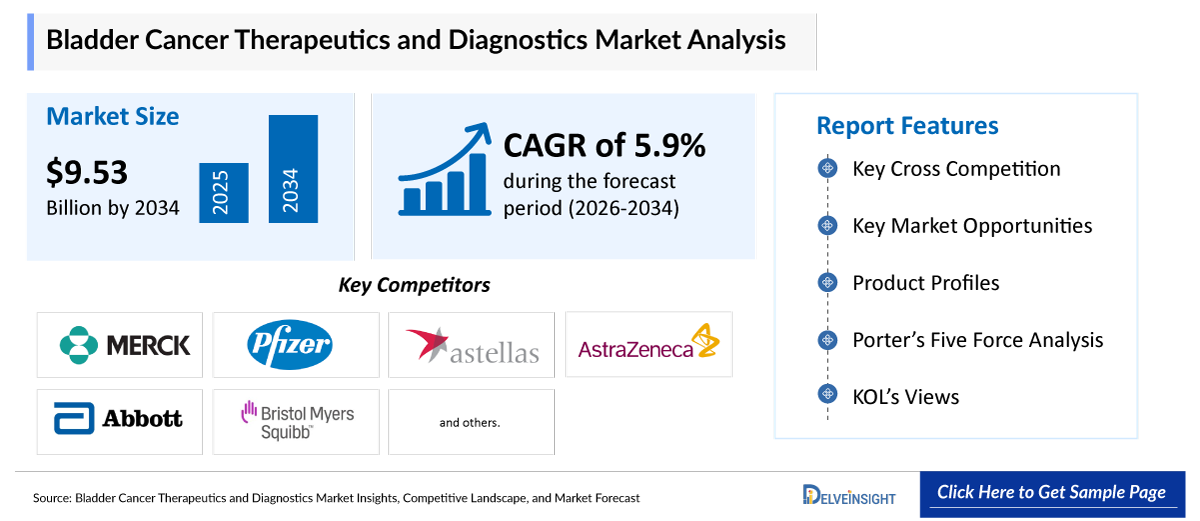
- The Bladder Cancer Therapeutics and Diagnostics market size is estimated at USD 5.68 billion in 2025 and is projected to reach USD 9.53 billion by 2034. Growth is anchored in the rising global incidence of bladder cancer, rapid adoption of PD-1/PD-L1 checkpoint inhibitors and antibody-drug conjugates, and expanding uptake of non-invasive urine-based and molecular diagnostics.
- The global bladder cancer therapeutics and diagnostics market is growing at a CAGR of 5.9% during the forecast period from 2026 to 2034.
- By product type, the therapeutics segment dominated the Bladder Cancer Therapeutics and Diagnostics market with a 64% share in 2025.
- Within therapeutics, the PD-1/PD-L1 inhibitors segment dominated with a 38% share in 2025, reflecting the rapid clinical uptake of checkpoint immunotherapy across muscle-invasive and non-muscle-invasive disease.
- Within diagnostics, the imaging-based diagnostics segment dominated with a 34% share in 2025, while urinary biomarker tests are the fastest-growing diagnostic category.
- By bladder cancer type, urothelial carcinoma dominated the market with a 90% share in 2025, consistent with its status as the most common bladder cancer histology worldwide.
- By end-users, the hospitals segment dominated the market with a 57% share in 2025, reflecting the concentration of cystectomy, intravesical therapy, and infusion-based immuno-oncology treatment in hospital settings.
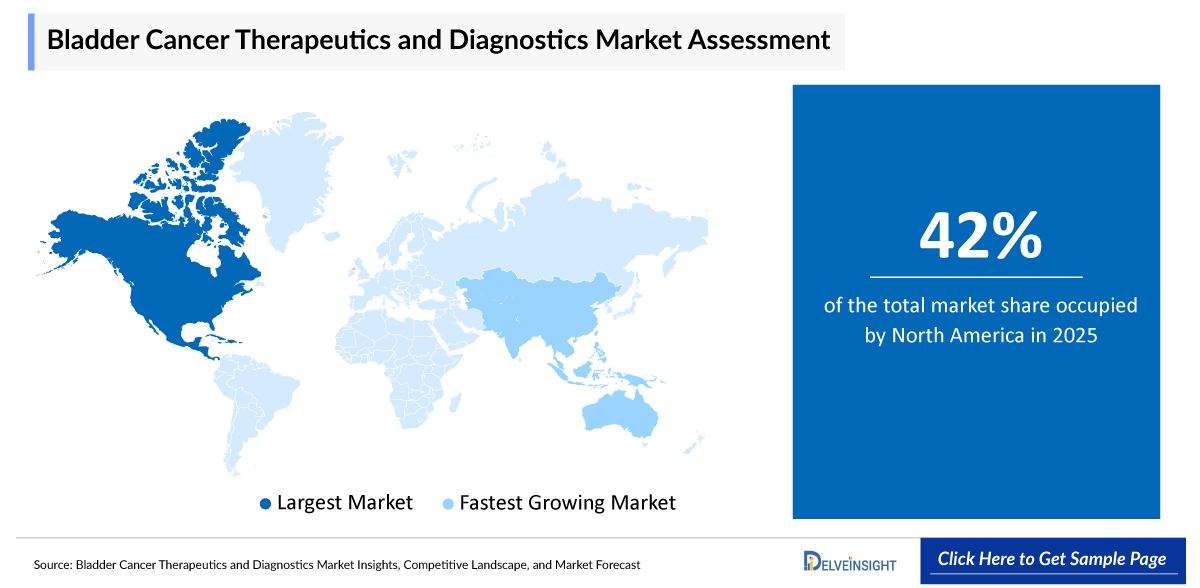
- North America dominated the global bladder cancer therapeutics and diagnostics market revenue with a 42% share in 2025, representing the highest regional market share globally.
Bladder cancer is a malignancy of the urothelial lining of the bladder that ranks among the most common cancers worldwide, and its management spans a continuum from non-invasive detection to curative-intent surgery and systemic therapy. The bladder cancer therapeutics and diagnostics market comprises the medicines, devices, and laboratory-developed tests used to detect, monitor, and treat the disease. On the diagnostics side, the market spans urine-based diagnostics, including urine cytology and urinary biomarker tests and services, imaging-based diagnostics, endoscopic diagnostics such as cystoscopy, histopathology and tissue-based diagnostics, and molecular diagnostics that increasingly incorporate companion diagnostic and minimal residual disease testing.
On the therapeutics side, the market spans platinum-based chemotherapy, antimetabolites, anthracyclines, vinca alkaloids, and the rapidly expanding class of PD-1/PD-L1 checkpoint inhibitors, alongside antibody-drug conjugates and BCG-based intravesical immunotherapy for non-muscle-invasive disease. Driven by rising global incidence, the shift toward perioperative and combination immunotherapy regimens, the clinical validation of ctDNA-based minimal residual disease testing, and growing companion-diagnostic integration, the bladder cancer therapeutics and diagnostics market has become a central pillar of the genitourinary oncology care pathway.
Bladder Cancer Therapeutics and Diagnostics Market Key Growth Drivers
- The rising global incidence of bladder cancer is expanding the diagnosed and treated patient pool, with more than 84,000 new cases and over 17,000 deaths estimated in the United States in 2026 and more than 635,000 new cases diagnosed worldwide each year.
- The rapid adoption of PD-1/PD-L1 checkpoint inhibitors and antibody-drug conjugate combinations is reshaping first-line and perioperative treatment, with Padcev plus Keytruda securing FDA approval as a perioperative regimen for muscle-invasive bladder cancer in November 2025 and an expanded platinum-free approval in July 2026.
- Advances in perioperative immunotherapy for muscle-invasive bladder cancer, anchored by AstraZeneca's Imfinzi and the NIAGARA trial, are establishing new curative-intent standards of care and driving durable demand for both therapeutics and companion monitoring.
- The expansion of non-invasive urine-based and molecular diagnostics, including NCCN-recognized ctDNA minimal residual disease testing, is enabling risk stratification and adjuvant treatment decisions without repeated invasive cystoscopy.
- Growing integration of companion diagnostics with precision oncology, exemplified by QIAGEN's therascreen FGFR test guiding FGFR-targeted therapy, is concentrating demand among diagnostic providers with regulatory-grade assays.
- Increasing investment, licensing, and platform expansion among molecular diagnostics companies, including Exact Sciences' 2025 licensing agreement with Freenome, is broadening the infrastructure available for blood- and urine-based oncology testing.
- Stringent regulatory and guideline requirements, including NCCN specifications for FDA-approved, tumor-informed assays, are concentrating demand among established diagnostic and therapeutic leaders with proven clinical evidence.
Key Companies in Bladder Cancer Therapeutics and Diagnostics Market
The competitive landscape is led by the following active manufacturers:
- Merck & Co.
- Pfizer Inc.
- Astellas Pharma Inc.
- Bristol Myers Squibb
- AstraZeneca
- Abbott Laboratories
- QIAGEN
- Exact Sciences Corporation
- Natera, Inc.
- Freenome Holdings, Inc., and others
For illustrative purposes, only the top 10 companies are listed in the Table of Contents. The report may include analysis and references to additional companies relevant to the market assessment.
Bladder Cancer Therapeutics and Diagnostics Market Size
The following snapshot summarizes the principal report metrics for the Bladder Cancer Therapeutics and Diagnostics market.
|
Report Metrics |
Details |
|
2025 Market Size |
USD 5.68 billion |
|
2034 Projected Market Size |
USD 9.53 billion |
|
Growth Rate (2026-2034) |
5.9% CAGR |
|
Largest Market |
North America |
|
Fastest Growing Market |
Asia-Pacific |
|
Market Structure |
Moderately Concentrated |
All market values are expressed in USD and represent DelveInsight estimates synthesized from primary and secondary research.
Factors Contributing to the Growth of the Bladder Cancer Therapeutics and Diagnostics Market
Bladder Cancer Therapeutics and Diagnostics Market Drivers
- Rising Global Incidence and Prevalence of Bladder Cancer: The most fundamental driver of the Bladder Cancer Therapeutics and Diagnostics market is the persistently high global incidence of the disease. Bladder cancer ranks among the ten most common cancers worldwide, with more than 635,000 new cases diagnosed each year globally, and the United States alone is projected to see more than 84,000 new diagnoses and over 17,000 deaths in 2026. The disease disproportionately affects older adults and has a high recurrence rate even after curative-intent treatment, requiring lifelong surveillance with imaging, cystoscopy, and increasingly, molecular testing. As the global geriatric population expands and cumulative lifetime exposure to established risk factors such as tobacco use and occupational carcinogens persists, the diagnosed and treated patient base continues to widen, directly enlarging demand for both diagnostic testing and systemic and intravesical therapeutics through 2034.
- Rapid Adoption of Immune Checkpoint Inhibitors and Antibody-Drug Conjugate Combinations: The clinical and commercial rise of PD-1/PD-L1 checkpoint inhibitors combined with antibody-drug conjugates is transforming the bladder cancer treatment paradigm. Pfizer and Astellas' Padcev (enfortumab vedotin) in combination with Merck's Keytruda (pembrolizumab) has become a new standard of care, with the FDA approving the combination as perioperative treatment for muscle-invasive bladder cancer in November 2025 based on the Phase 3 EV-303/KEYNOTE-905 trial, and expanding the approval in July 2026 to a platinum-free regimen regardless of cisplatin eligibility based on the EV-304/KEYNOTE-B15 trial. This first-in-class ADC-plus-checkpoint-inhibitor approach is driving rapid adoption across earlier lines of therapy and is prompting competing regimens from Bristol Myers Squibb and AstraZeneca, sustaining strong therapeutics revenue growth through the forecast period.
- Advances in Perioperative Immunotherapy for Muscle-Invasive Bladder Cancer: Perioperative immunotherapy is redefining curative-intent treatment for muscle-invasive bladder cancer (MIBC). AstraZeneca's Imfinzi (durvalumab), combined with neoadjuvant chemotherapy and continued as adjuvant monotherapy after radical cystectomy, received FDA approval in March 2025 based on the Phase 3 NIAGARA trial, which showed a 32% reduction in the risk of recurrence and a 25% reduction in the risk of death versus chemotherapy alone. Imfinzi has since been approved in combination with BCG for BCG-naive, high-risk non-muscle-invasive bladder cancer, and the Phase 3 VOLGA trial reported in May 2026 that perioperative Imfinzi plus enfortumab vedotin achieved statistically significant improvements in event-free and overall survival. As perioperative regimens become embedded in treatment guidelines, demand for both the underlying therapeutics and the diagnostic tools used to select and monitor patients continues to expand.
- Expansion of Non-Invasive Urine-Based and Molecular Diagnostics: A structural shift toward non-invasive, molecularly informed diagnostics is broadening the diagnostics segment of the market. Natera's Signatera, a personalized, tumor-informed circulating tumor DNA (ctDNA) assay, has been formally recognized in the NCCN Bladder Cancer Guidelines as a prognostic and predictive biomarker for minimal residual disease after cystectomy, and Phase 3 IMvigor011 data presented at ASCO 2025 demonstrated improved outcomes with ctDNA-guided adjuvant treatment. In August 2025, Signatera was also selected as a prespecified secondary endpoint in the Phase 3 ARCHER trial evaluating radiation therapy in muscle-invasive bladder cancer, with urinary tumor DNA assessed as an exploratory endpoint. As clinical evidence for tumor-informed and urine-based molecular monitoring accumulates, adoption is extending beyond invasive cystoscopy-based surveillance, directly enlarging demand for molecular and urinary biomarker diagnostics.
- Growing Companion Diagnostic and Precision Oncology Integration: Precision oncology is increasingly dependent on companion diagnostics that match patients to targeted therapy. QIAGEN's therascreen FGFR RGQ RT-PCR Kit remains the benchmark companion diagnostic used to identify FGFR2/FGFR3-altered urothelial carcinoma eligible for FGFR-targeted therapy, and is distributed through QIAGEN's Day-One Lab Readiness program to accelerate access immediately following drug approval. A December 2025 analytical concordance study comparing the therascreen RT-PCR assay against next-generation sequencing platforms in muscle-invasive and non-muscle-invasive bladder tumor tissue reinforced confidence in RT-PCR-based FGFR testing. As targeted and biomarker-selected therapies proliferate, companion diagnostic testing is becoming a mandatory gateway to treatment, concentrating diagnostic demand among providers with regulatory-approved, guideline-recognized assays.
- Increasing Investment, Licensing, and Platform Expansion in Molecular Diagnostics: Capital investment and strategic licensing are expanding the infrastructure available for blood- and urine-based oncology diagnostics relevant to bladder cancer. In August 2025, Exact Sciences entered an exclusive license agreement with Freenome, paying USD 75 million upfront with up to USD 700 million in additional milestones, to commercialize Freenome's multiomics blood-based cancer screening platform, extending Exact Sciences' ExactNexus commercial infrastructure to a broader range of oncology indications. Such platform investments strengthen the underlying molecular and companion diagnostics ecosystem, including assay development and commercial channels that increasingly support bladder cancer detection, monitoring, and companion testing, and signal continued capital inflows into precision oncology diagnostics through the forecast period.
- Stringent Regulatory and Reimbursement Standards Concentrating Demand: The exceptional evidentiary and regulatory demands of both oncology therapeutics and companion diagnostics are concentrating demand among established, well-capitalized providers. NCCN Guidelines specify that minimal residual disease status must be determined using an FDA-approved, personalized, tumor-informed multiplex PCR-NGS assay, and payer coverage for novel checkpoint inhibitor and ADC regimens depends on rigorous Phase 3 evidence and FDA labeling. This dynamic favors large pharmaceutical sponsors with deep clinical trial infrastructure and diagnostics companies with FDA-cleared, guideline-recognized assays, reinforcing the strategic position of leading bladder cancer therapeutics and diagnostics providers across the forecast period.
Bladder Cancer Therapeutics and Diagnostics Market Restraints
Despite strong momentum, the Bladder Cancer Therapeutics and Diagnostics market faces material constraints. The high cost of PD-1/PD-L1 checkpoint inhibitors and antibody-drug conjugate combination regimens limits access in cost-sensitive and lower-reimbursement geographies, and payer coverage for novel perioperative regimens remains uneven outside major developed markets. Cystoscopy, the diagnostic gold standard, remains invasive and resource-intensive, and while urine-based and molecular diagnostics are gaining clinical validation, guideline-level adoption and reimbursement for these newer assays continue to lag behind established imaging and endoscopic methods in many regions. Immune-related and BCG-related adverse events require specialized monitoring infrastructure that is unevenly distributed, and shortages of Bacillus Calmette-Guerin, the mainstay intravesical therapy for non-muscle-invasive disease, have periodically constrained treatment availability. Generic competition for platinum-based chemotherapy and antimetabolite regimens pressures pricing in the traditional therapeutics segment, while the complexity of companion diagnostic development, evolving regulatory requirements across FDA, EMA, and other authorities, and the shortage of trained genitourinary oncology and molecular pathology specialists constrain the pace of adoption. Together, these cost, access, infrastructure, and regulatory barriers temper the pace of growth, even as the underlying drivers of immunotherapy expansion, rising incidence, and precision diagnostics remain firmly intact.
Bladder Cancer Therapeutics and Diagnostics Market Segment Analysis
The bladder cancer therapeutics and diagnostics market by product type (diagnostics [urine-based diagnostics (urine cytology and urinary biomarker tests and services), imaging-based diagnostics, endoscopic diagnostics, histopathology & tissue-based diagnostics, molecular diagnostics, others] and therapeutics [platinum-based chemotherapy, antimetabolites, anthracyclines, vinca alkaloids, pd-1/pd-l1 inhibitors, others]), bladder cancer type (urothelial carcinoma, squamous-cell carcinoma, adenocarcinoma & other rare types), end-users (hospitals, ambulatory surgical centers, urology clinics, others), and geography (North America, Europe, Asia-Pacific, and Rest of World).
By Product Type
Dominant Subsegment: Therapeutics.
The therapeutics segment accounted for 64% of the Bladder Cancer Therapeutics and Diagnostics market in 2025. Therapeutics lead the market because systemic and intravesical treatment, spanning platinum-based chemotherapy, PD-1/PD-L1 checkpoint inhibitors, and antibody-drug conjugates, commands substantially higher per-patient spending than diagnostic testing, and because the rapid clinical uptake of combination immunotherapy regimens such as Padcev plus Keytruda and perioperative Imfinzi is expanding treated populations across earlier disease stages. Within therapeutics, PD-1/PD-L1 inhibitors accounted for approximately 38% of therapeutics revenue in 2025, the largest drug-class share, reflecting the central role of pembrolizumab, durvalumab, nivolumab, and avelumab across non-muscle-invasive, muscle-invasive, and metastatic settings. Within diagnostics, imaging-based diagnostics remained the largest category at approximately 34% share, given the established role of CT urography and other imaging modalities in staging and surveillance, while urinary biomarker tests and services are the fastest-growing diagnostic category as NCCN-recognized molecular assays gain adoption. While diagnostics volumes are far higher in absolute test counts, the high unit cost of biologic and ADC therapeutics secures the therapeutics segment's revenue leadership across the forecast period.
By Bladder Cancer Type
Dominant Subsegment: Urothelial Carcinoma.
The urothelial carcinoma segment accounted for approximately 90% of the Bladder Cancer Therapeutics and Diagnostics market in 2025. Urothelial carcinoma, also known as transitional cell carcinoma, is overwhelmingly the leading bladder cancer type because it originates from the urothelial cells lining the bladder and accounts for the large majority of diagnosed cases worldwide. Nearly all major approved therapeutics, including Padcev, Keytruda, Imfinzi, Opdivo, and Bavencio, as well as the leading companion and molecular diagnostics, are developed and labeled specifically for urothelial carcinoma, concentrating clinical trial activity, regulatory approvals, and commercial infrastructure in this histology. Squamous-cell carcinoma and adenocarcinoma together represent the remaining share and are associated with more limited treatment options and diagnostic standardization, though growing interest in histology-specific research is expected to support incremental growth in these rarer subtypes. The depth of the urothelial carcinoma pipeline and its dominant share of the diagnosed patient population secure its clear leadership across the forecast period.
By End-Users
Dominant Subsegment: Hospitals.
The hospitals segment accounted for approximately 57% of the Bladder Cancer Therapeutics and Diagnostics market in 2025. Hospitals are the leading end-user because radical cystectomy, intravesical BCG instillation, and infusion-based checkpoint inhibitor and antibody-drug conjugate regimens require specialized surgical, oncology infusion, and inpatient monitoring infrastructure that is concentrated in hospital and academic medical center settings. Hospitals also host the majority of advanced imaging, cystoscopy, and pathology services used for diagnosis and staging. Urology clinics play a central role in initial diagnosis, cystoscopic surveillance, and lower-risk non-muscle-invasive bladder cancer management, and ambulatory surgical centers are an increasingly important, faster-growing site of care for select cystoscopic and minimally invasive procedures as health systems shift appropriate cases to lower-cost outpatient settings. Nonetheless, the concentration of complex surgical and systemic therapy delivery secures hospitals' leadership across the forecast period.
Bladder Cancer Therapeutics and Diagnostics Market Region Analysis
Dominant Region: North America
North America accounted for 42% of the global bladder cancer therapeutics and diagnostics market revenue in 2025, representing the highest regional market share globally. The region's dominance reflects the high prevalence of bladder cancer, an advanced and well-reimbursed healthcare system, and the concentration of leading pharmaceutical and diagnostics companies, including Merck, Pfizer, Astellas' U.S. operations, Bristol Myers Squibb, AstraZeneca, Abbott, Exact Sciences, and Natera, headquartered or with major operations in the United States. North America hosts the earliest and broadest access to newly approved perioperative and combination immunotherapy regimens, and sponsors benefit from a deep clinical-trial ecosystem and NCCN guideline infrastructure that rapidly incorporates novel diagnostics such as ctDNA-based minimal residual disease testing. Strong reimbursement for both branded therapeutics and FDA-approved companion diagnostics, combined with a large and aging patient population, anchors the region's continued leadership across the forecast period.
Fastest Growing Region: Asia-Pacific
Asia-Pacific is the fastest-growing region in the Bladder Cancer Therapeutics and Diagnostics market. The region's elevated CAGR is driven by rising bladder cancer incidence linked to tobacco use and industrial exposure, rapid expansion of oncology and molecular diagnostics infrastructure, and growing healthcare investment across China, Japan, India, South Korea, and Australia. China is expanding hospital-based oncology infusion capacity and broadening reimbursement for checkpoint inhibitors, Japan is accelerating adoption of companion diagnostics alongside its established regulatory pathway, and India is scaling low-cost urology and diagnostic laboratory networks to address a substantial and growing caseload. Government healthcare investment, expanding urologic oncology patient populations, and growing local biopharmaceutical partnerships are accelerating adoption of both novel therapeutics and molecular diagnostics, positioning Asia-Pacific as the principal source of incremental growth over the forecast period.
Bladder Cancer Therapeutics and Diagnostics Market Regional Commentary
North America
North America accounted for 42% of the global bladder cancer therapeutics and diagnostics market revenue in 2025. The United States dominates on the strength of its high disease incidence, advanced reimbursement environment, concentration of leading pharmaceutical and diagnostics companies, and rapid regulatory pathway for perioperative immunotherapy and companion diagnostic approvals, while Canada and Mexico contribute a smaller but growing share supported by expanding oncology infrastructure.
Europe
Europe is a large and advanced regional market, supported by established EMA regulatory frameworks, strong national reimbursement systems, and growing adoption of perioperative immunotherapy regimens such as Imfinzi, which received EU approval as the first perioperative immunotherapy for muscle-invasive bladder cancer, and Keytruda plus Padcev, which secured European Commission approval in 2026 following a positive CHMP recommendation. Germany, France, the United Kingdom, Italy, and Spain anchor regional demand for both novel therapeutics and companion diagnostics.
Asia-Pacific
Asia-Pacific is the fastest-growing region, propelled by rising bladder cancer incidence, rapid oncology and diagnostics infrastructure build-out, and growing healthcare investment across China, Japan, India, South Korea, and Australia. Expanding reimbursement for checkpoint inhibitors, growing adoption of molecular diagnostics, and increasing clinical-trial activity are accelerating regional market growth.
Rest of World
The Rest of World region, spanning Latin America, the Middle East, and Africa, is an emerging growth frontier. Expanding oncology and urology care infrastructure, rising awareness and screening for bladder cancer, and gradual broadening of access to immunotherapy and molecular diagnostics are supporting incremental growth, while affordability and reimbursement constraints continue to shape the pace of adoption.
Bladder Cancer Therapeutics and Diagnostics Market Competitive Landscape
The Bladder Cancer Therapeutics and Diagnostics market is classified as Moderately Concentrated. On the therapeutics side, a group of large pharmaceutical companies with deep checkpoint-inhibitor and antibody-drug conjugate franchises, including Merck & Co., Pfizer Inc., Astellas Pharma Inc., Bristol Myers Squibb, and AstraZeneca, secures the majority of branded revenue and anchors the top tier through overlapping and competing perioperative and combination regimens. On the diagnostics side, the landscape is more fragmented, with Abbott Laboratories, QIAGEN, Exact Sciences Corporation, Natera, Inc., and Freenome Holdings, Inc. competing through imaging, molecular, and companion diagnostic platforms, increasing competition in the fastest-growing urinary biomarker and minimal residual disease testing segments.
The competitive landscape can be evaluated across the following dimensions:
- Market concentration: Moderately concentrated, with large pharmaceutical companies leading branded therapeutics and a fragmented, fast-growing field of specialized molecular diagnostics providers.
- Leading players: Merck & Co., Pfizer Inc., Astellas Pharma Inc., Bristol Myers Squibb, and AstraZeneca anchor the therapeutics top tier through checkpoint-inhibitor and antibody-drug conjugate franchises.
- Geographic reach: Leaders operate global commercial and regulatory networks essential for coordinated therapeutics and companion diagnostics launches across the United States, Europe, and Japan.
- Portfolio strength: Top players offer end-to-end genitourinary oncology portfolios spanning chemotherapy, checkpoint inhibitors, antibody-drug conjugates, and molecular and companion diagnostics.
- Companion diagnostic access: Ownership of, or partnership for, FDA-approved companion and guideline-recognized molecular diagnostics, such as QIAGEN's therascreen FGFR assay and Natera's Signatera test, is a decisive advantage.
- Strategic partnerships: Collaborations spanning drug developers and diagnostics providers, such as Exact Sciences' licensing agreement with Freenome, extend platform reach across oncology indications.
- M&A and licensing activity: Active dealmaking, including Exact Sciences' 2025 exclusive license agreement with Freenome valued at up to USD 775 million, underscores the strategic value of molecular diagnostics platforms.
- Clinical development capabilities: Large, well-resourced Phase 3 programs, including NIAGARA, EV-303/KEYNOTE-905, EV-304/KEYNOTE-B15, VOLGA, and IMvigor011, are key competitive moats in therapeutics.
- Innovation focus: Perioperative immunotherapy combinations, ctDNA-based minimal residual disease testing, urinary biomarker assays, and companion diagnostic integration.
Bladder Cancer Therapeutics and Diagnostics Market Recent Developmental Activities
- In 2026, Merck & Co. presented new bladder and kidney cancer data at the 2026 ASCO Genitourinary Cancers Symposium, reinforcing its genitourinary oncology portfolio. Strategic significance: Strengthens Merck's evidence base across bladder and kidney cancer and supports continued label expansion.
- In June 2026, Merck & Co. secured European Commission approval for Keytruda in combination with Padcev as perioperative treatment for cisplatin-ineligible resectable muscle-invasive bladder cancer, following a positive CHMP recommendation. Strategic significance: Extends the November 2025 U.S. approval to the European market and reinforces the PD-1 inhibitor plus antibody-drug conjugate regimen as a new standard of care.
- In July 2026, Pfizer Inc. and Astellas Pharma Inc. received expanded FDA approval for Padcev plus Keytruda as the first platinum-free perioperative regimen for muscle-invasive bladder cancer regardless of cisplatin eligibility, based on the Phase 3 EV-304/KEYNOTE-B15 trial. Strategic significance: Broadens the eligible patient population and reinforces the combination's position as standard of care.
- In May 2026, AstraZeneca reported that perioperative Imfinzi plus enfortumab vedotin achieved statistically significant improvements in event-free and overall survival in the Phase 3 VOLGA trial in muscle-invasive bladder cancer. Strategic significance: Positions AstraZeneca's durvalumab-based regimen as a leading comparator to competing ADC-immunotherapy combinations.
- In 2026, AstraZeneca secured approval of Imfinzi in combination with BCG for BCG-naive, high-risk non-muscle-invasive bladder cancer. Strategic significance: Extends Imfinzi's bladder cancer footprint from the perioperative muscle-invasive setting into earlier, non-muscle-invasive disease.
- In November 2025, Pfizer Inc. and Astellas Pharma Inc. announced FDA approval of Padcev plus Keytruda as perioperative treatment for cisplatin-ineligible muscle-invasive bladder cancer, based on the pivotal Phase 3 EV-303/KEYNOTE-905 trial showing a 60% reduction in risk of recurrence, progression, or death. Strategic significance: Establishes the first platinum-free perioperative regimen for this historically underserved patient population.
- In August 2025, Natera, Inc., announced that its Signatera minimal residual disease test was selected as a prespecified secondary endpoint in the Phase 3 ARCHER trial evaluating radiation therapy in muscle-invasive bladder cancer, sponsored by NRG Oncology. Strategic significance: Reinforces Signatera's clinical utility and expands its role in bladder cancer treatment-response monitoring.
- In August 2025, Exact Sciences Corporation entered an exclusive license agreement with Freenome Holdings, Inc. to commercialize Freenome's blood-based, multiomics cancer screening platform, with USD 75 million upfront and up to USD 700 million in milestone payments. Strategic significance: Expands Exact Sciences' molecular diagnostics infrastructure and broadens the commercial platform relevant to non-invasive oncology testing.
- In May 2025, AstraZeneca reported that Imfinzi plus standard-of-care BCG induction and maintenance therapy met the primary endpoint of disease-free survival in the Phase 3 POTOMAC trial in high-risk non-muscle-invasive bladder cancer. Strategic significance: Lays the clinical foundation for Imfinzi's subsequent approval in BCG-naive NMIBC.
- In March 2025, AstraZeneca received FDA approval for Imfinzi as the first and only perioperative immunotherapy for muscle-invasive bladder cancer, based on the Phase 3 NIAGARA trial. Strategic significance: Establishes a new perioperative standard of care and anchors AstraZeneca's genitourinary oncology franchise.
- In December 2025, QIAGEN supported publication of an analytical concordance study comparing its therascreen FGFR RT-PCR companion diagnostic against next-generation sequencing platforms across muscle-invasive and non-muscle-invasive bladder tumor tissue. Strategic significance: Reinforces confidence in RT-PCR-based FGFR companion diagnostic testing for FGFR-targeted bladder cancer therapy.
Bladder Cancer Therapeutics and Diagnostics Market Segmentation
- Bladder Cancer Therapeutics and Diagnostics Market by Product Type
- Diagnostics
- Urine-Based Diagnostics
- Urine Cytology
- Urinary Biomarker Tests and Services
- Imaging-Based Diagnostics
- Endoscopic Diagnostics
- Histopathology & Tissue-Based Diagnostics
- Molecular Diagnostics
- Others
- Therapeutics
- Platinum-Based Chemotherapy
- Antimetabolites
- Anthracyclines
- Vinca Alkaloids
- PD-1/PD-L1 Inhibitors
- Others
- Diagnostics
- Bladder Cancer Therapeutics and Diagnostics Market by Bladder Cancer Type
- Urothelial Carcinoma
- Squamous-Cell Carcinoma
- Adenocarcinoma & Other Rare Types
- Bladder Cancer Therapeutics and Diagnostics Market by End-Users
- Hospitals
- Ambulatory Surgical Centers
- Urology Clinics
- Others
Bladder Cancer Therapeutics and Diagnostics Market by Geography
- North America Bladder Cancer Therapeutics and Diagnostics Market
- United States Bladder Cancer Therapeutics and Diagnostics Market Size in USD million (2023-2034)
- Canada Bladder Cancer Therapeutics and Diagnostics Market Size in USD million (2023-2034)
- Mexico Bladder Cancer Therapeutics and Diagnostics Market Size in USD million (2023-2034)
- Europe Bladder Cancer Therapeutics and Diagnostics Market
- Germany Bladder Cancer Therapeutics and Diagnostics Market Size in USD million (2023-2034)
- United Kingdom Bladder Cancer Therapeutics and Diagnostics Market Size in USD million (2023-2034)
- France Bladder Cancer Therapeutics and Diagnostics Market Size in USD million (2023-2034)
- Italy Bladder Cancer Therapeutics and Diagnostics Market Size in USD million (2023-2034)
- Spain Bladder Cancer Therapeutics and Diagnostics Market Size in USD million (2023-2034)
- Rest of Europe Bladder Cancer Therapeutics and Diagnostics Market Size in USD million (2023-2034)
- Asia-Pacific Bladder Cancer Therapeutics and Diagnostics Market
- China Bladder Cancer Therapeutics and Diagnostics Market Size in USD million (2023-2034)
- Japan Bladder Cancer Therapeutics and Diagnostics Market Size in USD million (2023-2034)
- India Bladder Cancer Therapeutics and Diagnostics Market Size in USD million (2023-2034)
- Australia Bladder Cancer Therapeutics and Diagnostics Market Size in USD million (2023-2034)
- South Korea Bladder Cancer Therapeutics and Diagnostics Market Size in USD million (2023-2034)
- Rest of Asia-Pacific Bladder Cancer Therapeutics and Diagnostics Market Size in USD million (2023-2034)
- Rest of the World (RoW) Bladder Cancer Therapeutics and Diagnostics Market
- Middle East Bladder Cancer Therapeutics and Diagnostics Market Size in USD million (2023-2034)
- Africa Bladder Cancer Therapeutics and Diagnostics Market Size in USD million (2023-2034)
- South America Bladder Cancer Therapeutics and Diagnostics Market Size in USD million (2023-2034)
Bladder Cancer Therapeutics and Diagnostics Market Recent Industry Trends and Milestones (2023-2026):
|
Category |
Key Developments |
|
Bladder Cancer Therapeutics and Diagnostics Market Product Approval |
Regulatory momentum is expanding demand for advanced bladder cancer therapeutics. The FDA approved AstraZeneca's Imfinzi as perioperative treatment for muscle-invasive bladder cancer in March 2025 (NIAGARA trial), approved Padcev plus Keytruda as a perioperative regimen in November 2025 (EV-303/KEYNOTE-905), broadened that approval to a platinum-free regimen regardless of cisplatin eligibility in July 2026 (EV-304/KEYNOTE-B15), and Imfinzi secured approval for BCG-naive, high-risk non-muscle-invasive bladder cancer. Each approval creates durable demand for compliant manufacturing, patient selection diagnostics, and treatment monitoring. |
|
Bladder Cancer Therapeutics and Diagnostics Market Expansion |
Diagnostics providers broadened molecular and companion testing capability. Natera's Signatera minimal residual disease test gained NCCN Guidelines recognition and was selected as a secondary endpoint in the Phase 3 ARCHER trial in August 2025. QIAGEN's therascreen FGFR companion diagnostic remained the benchmark FGFR test for urothelial carcinoma, reinforced by a December 2025 analytical concordance study. Exact Sciences expanded its molecular diagnostics platform through the August 2025 licensing agreement with Freenome. |
|
Bladder Cancer Therapeutics and Diagnostics Market Investment |
Capital and licensing activity accelerated across therapeutics and diagnostics. Exact Sciences agreed to pay Freenome USD 75 million upfront with up to USD 700 million in milestones for exclusive U.S. rights to a blood-based cancer screening platform in August 2025. Merck secured European Commission approval for Keytruda plus Padcev in June 2026 following a positive CHMP recommendation, extending the combination's commercial reach into Europe. |
|
Company Strategy |
Merck & Co. and Pfizer/Astellas: Leadership in PD-1 inhibitor plus antibody-drug conjugate combinations across perioperative and metastatic settings. Bristol Myers Squibb: Opdivo-based adjuvant and first-line combination regimens. AstraZeneca: Perioperative Imfinzi-based regimens spanning non-muscle-invasive to muscle-invasive disease. Abbott Laboratories and QIAGEN: Imaging, companion diagnostic, and molecular testing platforms. Exact Sciences, Natera, and Freenome: Molecular and blood/urine-based minimal residual disease and screening platforms. |
|
Emerging Technologies |
ctDNA-based minimal residual disease testing is the leading edge of diagnostics innovation, with Natera's Signatera gaining NCCN recognition and expanding clinical-trial integration. Urinary biomarker assays and multiomics blood-based screening platforms are advancing as non-invasive alternatives to cystoscopy. On the therapeutics side, antibody-drug conjugate plus checkpoint-inhibitor combinations and perioperative immunotherapy regimens are redefining curative-intent treatment, while companion diagnostic-guided FGFR-targeted therapy continues to mature. |
Bladder Cancer Therapeutics and Diagnostics Market Startup Funding and Investment Trends
Investment in the Bladder Cancer Therapeutics and Diagnostics ecosystem has concentrated on molecular minimal residual disease testing, companion diagnostics, and blood- and urine-based screening platforms. The following companies illustrate recent funding and investment activity and technology focus.
|
Company |
Total Funding |
Funding Stage |
Main Offering |
Core Technology |
|
Freenome Holdings, Inc. |
Up to USD 775 million (licensing deal) |
Licensed to Exact Sciences (2025) |
Blood-based cancer screening platform |
Multiomics AI/ML-based ctDNA detection |
|
Request for unlocking the report of the @ Bladder Cancer Therapeutics and Diagnostics Market Insights | ||||
Capital is flowing toward providers that combine regulatory-grade evidence with scalable commercial infrastructure. Exact Sciences' licensing agreement with Freenome, structured with USD 75 million upfront and up to USD 700 million in milestone payments, underscores the strategic value of blood-based, multiomics screening platforms that are increasingly relevant to bladder and other genitourinary cancers. Natera continues to expand the clinical evidence base for its Signatera minimal residual disease test through Phase 3 trial integration, including IMvigor011 and ARCHER. Collectively, these investments signal conviction that non-invasive, molecularly informed diagnostics and companion testing will define the next phase of competitive advantage in the global bladder cancer therapeutics and diagnostics market.
Key Takeaways from the Bladder Cancer Therapeutics and Diagnostics Market Report Study
- Market size analysis for the current Bladder Cancer Therapeutics and Diagnostics market size (2025), and market forecast for 9 years (2026 to 2034).
- Top key product/technology developments, mergers, acquisitions, partnerships, and joint ventures that happened over the last 3 years.
- Key companies dominating the global bladder cancer therapeutics and diagnostics market.
- Various opportunities available for competitors in the Bladder Cancer Therapeutics and Diagnostics market space.
- What are the top-performing segments in 2025? How will these segments perform in 2034?
- Which are the top-performing regions and countries in the current Bladder Cancer Therapeutics and Diagnostics market scenario?
- Which are the regions and countries where companies should concentrate their opportunities for Bladder Cancer Therapeutics and Diagnostics market growth in the future?
Target audience who can benefit from this bladder cancer therapeutics and diagnostics market report study
- Bladder Cancer Therapeutics and Diagnostics product providers
- Research organizations and consulting companies
- Neurodegenerative disease therapeutics-related organizations, associations, forums, and other alliances
- Government and corporate offices
- Start-up companies, venture capitalists, and private equity firms
- Distributors and traders dealing in Bladder Cancer Therapeutics and Diagnostics
- Various end-users who want to know more about the Bladder Cancer Therapeutics and Diagnostics market and the latest technological developments in the Bladder Cancer Therapeutics and Diagnostics market.

