
Bone Neoplasms Market Summary
Bone-Neoplasms Insights and Trends
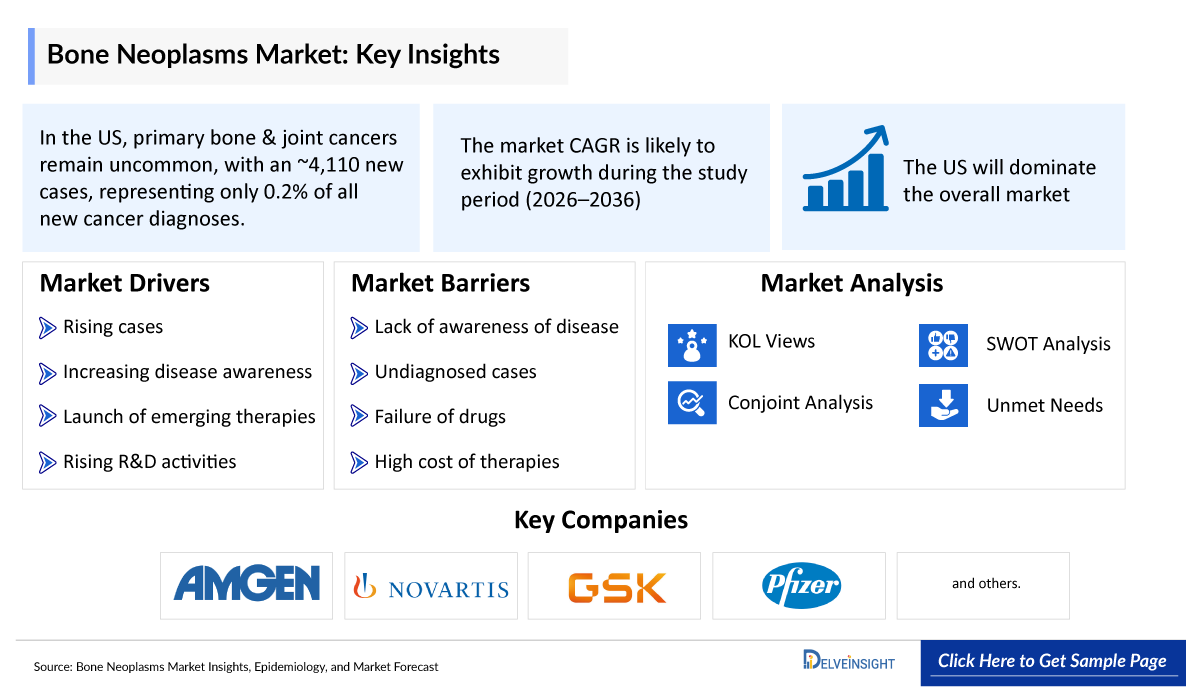
- The bone-neoplasms market is anticipated to sustain a steady Compound Annual Growth Rate (CAGR) during the forecast period (2026–2036). This growth in market revenue is primarily propelled by a rising global incidence of primary and metastatic bone cancers, an aging patient population increasingly susceptible to skeletal malignancies, growing adoption of targeted biologics and precision oncology therapies, and increased R&D investment in novel treatment approaches including immunotherapy, antibody-drug conjugates, and molecularly targeted agents.
- The increasing cases of bone neoplasms may be attributed to a combination of factors, including a rising global cancer burden, growing geriatric population susceptible to skeletal malignancies, improved diagnostic imaging enabling higher detection rates, and genetic predispositions such as IDH1/IDH2 mutations linked to chondrosarcoma subtypes.
- Denosumab (XGEVA) and zoledronic acid (ZOMETA) remain cornerstone therapies in bone oncology, representing biologic and bisphosphonate-based approaches, respectively. XGEVA targets RANKL-mediated osteoclast activity in GCTB and bone metastases, whereas ZOMETA is widely used to prevent skeletal-related events in multiple myeloma and metastatic solid tumors. The availability of denosumab biosimilars and generic zoledronic acid products has increased market competition and patient access, underscoring the maturation of the bone neoplasm treatment landscape.
- A gap remains for a single intervention that delivers both rapid disease control and durable long-term remission, demonstrating safety across primary malignant subtype’s osteosarcoma, Ewing sarcoma, and chondrosarcoma as well as pediatric and elderly populations, with minimal systemic adverse effects.
DelveInsight’s “Bone Neoplasms Market Insights, Epidemiology, and Market Forecast – 2036” report delivers an in-depth understanding of bone-neoplasms, historical and forecasted epidemiology, as well as the bone neoplasms market trends in the United States, EU4 (Germany, France, Italy, and Spain), the United Kingdom, and Japan.
The bone neoplasms market report delivers a comprehensive analysis of the current treatment landscape, including standards of care, clinical practices, and evolving therapeutic algorithms. It evaluates, bone neoplasms patient burden trends, revenue & market share dynamics, peak patient share & therapy uptake analysis, and provides an in-depth market size assessment, and growth rate projections (Historical & Forecast 2022–2036) across the 7MM regions. The report highlights key unmet medical needs in bone neoplasms and maps the competitive and clinical landscape to uncover high‑value opportunities, providing a clear outlook on future market growth potential.
Geography Covered
North America: The United States
Europe: Germany, France, Italy, and Spain and the United Kingdom
Asia-Pacific: Japan
|
Study Period |
2022–2036 |
|
Historical Year |
2022–2025 |
|
Forecast Period |
2026–2036 |
|
Base Year |
2025 |
|
Geographies Covered |
|
|
Bone Neoplasms Epidemiology Segmentation Analysis |
Patient Burden Assessment
|
|
Bone Neoplasms Companies |
And more |
|
Bone Neoplasms Market |
Segmented by
|
|
Analysis |
|
Bone-Neoplasms Understanding and Treatment Algorithm
Bone-Neoplasms Overview and Diagnosis
Bone tumors comprise a diverse group of neoplasms that may arise directly from bone (primary tumors) or result from the spread of cancer from other organs (secondary/metastatic tumors). Primary bone tumors can be benign or malignant, with each type differing in clinical behavior and treatment approach. The major malignant primary bone tumors include osteosarcoma, the most common form, which primarily affects adolescents and young adults and typically develops in long bones; Ewing’s sarcoma, an aggressive tumor seen mainly in children and young adults; and chondrosarcoma, a cartilage-forming malignancy that occurs more frequently in adults. The occurrence of bone tumors is influenced by factors such as age, sex, geographic variation, and genetic susceptibility, with osteosarcoma showing a characteristic bimodal age distribution during adolescence and later adulthood.
The diagnostic workup for bone neoplasms begins with clinical evaluation incorporating patient age, symptom onset, lesion location, and radiographic appearance — with conventional X-ray findings enabling correct diagnosis in over 80% of patients. MRI serves as the gold-standard imaging modality, superior in detecting bone marrow involvement, intramedullary extension, and invasion of adjacent joints, muscle compartments, and neurovascular bundles. CT scans further evaluate soft-tissue spread and distant organ metastases, while PET scans provide a whole-body metabolic map to detect systemic disease. Biopsy constitutes the final diagnostic step, completing tumor staging and histological grading, and must be performed after all imaging, in close consultation with the operating surgeon, as the biopsy track must be excised with the tumor.
Further details related to country-based variations are provided in the report…
Current Bone-Neoplasms Treatment Landscape
Surgery: Surgical resection aims to remove all tumor tissue with adequate margins while preserving as much limb function as possible. A decision for either limb salvage surgery or amputation is established using imaging, histopathology, response to adjuvant treatment, and patient wishes. Low-grade tumors amenable to surgical excision typically require wide excision (removing the involved part of the bone with a cuff of healthy tissue), with high-grade tumors requiring radical excision (removing the affected bone and associated soft tissues within the anatomical compartment).
Chemotherapy: Multiple chemotherapy agents and regimens are used to manage primary bone cancer. Often, this consists of induction (neoadjuvant) and postoperative combination therapy (adjuvant), with improvements in rates of limb salvage surgery and overall survival since their introduction. Chemotherapy forms part of the standard treatment protocol for osteosarcoma and Ewing sarcoma. Chondrosarcoma is still primarily managed surgically, except in cases of mesenchymal chondrosarcoma, where chemotherapy and radiotherapy are often used.
Radiotherapy: It is often used as adjunctive therapy in primary bone cancer. Ewing sarcoma is a radiosensitive tumor, with radiotherapy commonly used as part of the definitive treatment plan. Preoperative radiotherapy is used if the response to neoadjuvant chemotherapy is poor or the tumor is positioned in a problematic anatomical location, where reduction of tumor volume will aid surgical resection. If sufficient tumor volume cannot be removed surgically or it would be unacceptably disabling, radiotherapy is used for local treatment. Where adequate margins have not been resected, postoperative radiotherapy is utilized. Chondrosarcomas are relatively radioresistant, with radiotherapy only utilized for surgically unresectable or incompletely resected tumors. Radiotherapy has a palliative role in all primary bone cancers and is used to slow tumor growth locally and relieve pain.
Further details related to country-based variations are provided in the report…
Bone-Neoplasms Epidemiology
The epidemiology section of the bone-neoplasms market report offers information on the patient populations, including historical and projected trends for each of the seven major markets. Examining key opinion leader views from physicians or clinical experts can assist in identifying the reasons behind historical and projected trends. The diagnosed patient pool, their trends, and the underlying assumptions are all included in this section of the report.
This section also presents the data with relevant tables and graphs, offering a clear and concise view of the incidence of bone-neoplasms. Additionally, the report discloses the assumptions made during the analysis, ensuring data interpretation and presentation transparency. This epidemiological data is valuable for understanding the disease burden and its impact on the patient population across various regions.
Key Findings from Bone-Neoplasms Epidemiological Analysis and Forecast
- In the US, primary bone and joint cancers remain uncommon, with an estimated 4,110 new cases, representing only 0.2% of all new cancer diagnoses. Osteosarcoma is the most common subtype among children and adolescents, whereas chondrosarcoma predominates in adults.
- In the 7MM, there were approximately 1,200 and 900 cases of osteosarcoma in male and female respectively. The higher incidence in males is primarily attributed to differences in adolescent skeletal growth patterns, with males generally experiencing a longer and more pronounced pubertal growth spurt, which has been associated with an increased risk of osteosarcoma development during periods of rapid bone growth.
- Malignant neoplasm of bone and articular cartilage (MNBAC) exhibits a bimodal age distribution, peaking in adolescents (10–14 years) and older adults (>65 years), and is characterized by nonspecific early symptoms, local aggressiveness, and a high risk of pulmonary metastasis.
- A consistent male predominance has been observed in osteosarcoma, with a male-to-female ratio ranging from approximately 1.3:1 to 1.5:1. The lungs are the predominant metastatic site, accounting for roughly 90% of distant spread, and pulmonary metastases remain the leading cause of osteosarcoma-related mortality.
Bone-Neoplasms Market Outlook
The bone-neoplasms therapeutics market is further expected to increase by the major drivers, such as the rising incidence population, technological advancements, and upcoming therapies in the forecast period (2026–2036).
With ongoing research and continued dedication, the future holds hope for even more effective treatments and, ultimately, a cure for this challenging condition. According to DelveInsight, the bone-neoplasms market in the 7MM is expected to change significantly during the forecast period 2026-2036.
Bone-Neoplasms Drug Analysis & Competitive Landscape
The bone-neoplasms drug chapter provides a detailed, market-focused review of approved therapies and the emerging pipeline across Phase I-III clinical trials. It covers mechanism of action, clinical trial data, regulatory approvals, patents, collaborations, strategic partnerships upcoming key catalyst for each therapy, along with their advantages, limitations, and recent developments. This section offers critical insights into the bone-neoplasms treatment landscape, supporting market assessment, competitive analysis, and growth forecasting for bone-neoplasms therapeutics market.
Approved Therapies for Bone-Neoplasms
Mifamurtide (MEPACT): Esteve Pharmaceuticals
Mifamurtide (MEPACT) is indicated in children, adolescents and young adults for the treatment of high-grade resectable non-metastatic osteosarcoma after macroscopically complete surgical resection. It is used in combination with post-operative multi-agent chemotherapy. Safety and efficacy have been assessed in studies of patients 2 to 30 years of age at initial diagnosis. Mifamurtide (muramyl tripeptide phosphatidyl ethanolamine, MTP-PE) is a fully synthetic derivative of muramyl dipeptide (MDP), the smallest naturally-occurring immune stimulatory component of cell walls from Mycobacterium sp. It has similar immunostimulatory effects as natural MDP.
- In March 2009, the European Commission granted a marketing authorization valid throughout the European Union for MEPACT to IDM Pharm.
Bone-Neoplasms Marketed/Approved Therapies | ||||||
|
Drug/Therapy |
Company |
Indication |
Molecule Type |
MoA |
RoA |
Marketed Region |
|
Mifamurtide (MEPACT) |
Esteve Pharmaceuticals |
Osteosarcoma |
Immunostimulants |
Macrophage stimulants |
IV infusion | EU: 2009 |
Note: Detailed marketed therapies assessment will be provided in the final report…
Bone-Neoplasms Pipeline Analysis
Risvutatug Rezetecan: GSK / Hansoh Pharmaceutical Group
Risvutatug rezetecan (also known as Ris-Rez, GSK5764227, and HS-20093) is an investigational antibody-drug conjugate (ADC) designed to target B7-H3, a cell-surface protein that is highly expressed in numerous solid tumors. By selectively binding to B7-H3-positive cancer cells, the therapy aims to deliver its cytotoxic payload directly to tumor tissue. The drug is being evaluated through GSK’s global EMBOLD clinical development program, which is exploring its potential across a broad range of malignancies.
Competitive Landscape of Pipeline Drugs | ||||||
|
Drug Name |
Company |
Highest Phase |
Indication |
RoA |
MoA |
Anticipated Launch in the US |
|
Risvutatug rezetecan |
GSK / Hansoh Pharmaceutical Group |
II/III |
Osteosarcoma |
IV infusion |
ADC targeting B7-H3 |
Information is available in the full report |
|
Vactosertib |
MedPacto |
I/II |
Osteosarcoma |
Oral |
TGF-β1 kinase inhibitor |
Information is available in the full report |
|
Note: Launch insights are provisional and may change with future report updates or the occurrence of major key catalysts. | ||||||
Note: Detailed emerging therapies assessment will be provided in the final report…
Bone-Neoplasms Market Outlook
DelveInsight’s ‘Bone-Neoplasms Market Insights, Epidemiology, and Market Forecast – 2036’ report provides a detailed outlook of the current and future bone-neoplasms market, segmented within countries, by therapies, and by classes. Further, the market of each region is then segmented by each therapy to provide a detailed view of the current and future market share of all therapies.
Bone-Neoplasms Market Size by Countries
The bone-neoplasms market size is assessed separately for various countries, including the US, EU4 (Germany, France, Italy, and Spain), the UK, and Japan. In 2025, the US held a significant share of the overall 7MM (Seven Major Markets) bone-neoplasms market, primarily attributed to the country’s higher incidence of the condition and the elevated cost of the available treatments. This dominance is projected to persist, especially with the potential early introduction of new products.
Country-wise Market Size Distribution of Bone-Neoplasms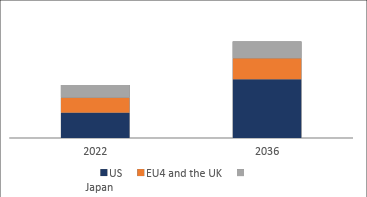
Bone-Neoplasms Market Size by Therapies
Bone-Neoplasms market size by therapies is categorized into current and emerging markets for the study period 2022–2036.
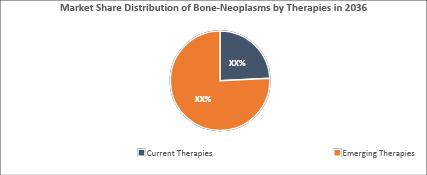
Note: Detailed market segment assessment will be provided in the final report.
Bone-Neoplasms Drug Uptake
This section focuses on the sales uptake of potential of bone-neoplasms drugs that have recently been launched or are anticipated to be launched in the bone-neoplasms market between 2022 and 2036. It estimates the market penetration of bone-neoplasms drugs for a given country, examining their impact within and across classes and segments. It also touches upon the financial and regulatory decisions contributing to the probability of success (PoS) of the drugs in the bone-neoplasms market.
The emerging bone-neoplasms therapies are analyzed based on various attributes such as safety and efficacy in randomized clinical trials, order of entry and other market dynamics, and the unmet need they fulfill in the bone-neoplasms market.
Note: Detailed assessment of drug uptake and attribute analysis will be provided in the full report on bone-neoplasms
Bone-Neoplasms Market Access and Reimbursement
DelveInsight’s ‘Bone-Neoplasms Market Insights, Epidemiology, and Market Forecast – 2036’ report provides a descriptive overview of the market access and reimbursement scenario of bone-neoplasms.
This section includes a detailed analysis of the country-wise healthcare system for each therapy, enlightening the market access, reimbursement policies, and health technology assessments.
KOL Views
To keep up with current bone-neoplasms market trends and fill gaps in secondary findings, we interview KOLs and SMEs’ working in the bone-neoplasms domain. Their opinion helps understand and validate current and emerging therapies and treatment patterns or bone neoplasms market trends. This will support the clients in potential upcoming novel treatments by identifying the overall scenario of the market and the bone-neoplasms unmet needs.
Bone-Neoplasms: KOL Insights
DelveInsight’s analysts connected with 50+ KOLs to gather insights; however, interviews were conducted with 15+ KOLs in the 7MM. These KOLs were from organizations, institutes, and hospitals, such as Interdisciplinary Sarcoma Center, West German Cancer Center, University of Duisburg-Essen, Virgen del Rocio University Hospital, University of Sevilla, and Integrated Unit ICO Hospitalet among others.
Region |
Key Opinion Leaders (KOLs) and Subject Matter Experts (SMEs) |
|
The US |
"Bone neoplasms encompass a diverse group of benign and malignant tumors that often present with nonspecific symptoms, making timely diagnosis challenging. Optimal outcomes depend on early recognition, accurate histopathological evaluation, and treatment within multidisciplinary sarcoma centers where surgical, medical, and radiological expertise can be integrated to deliver individualized patient care." |
|
Italy |
"Bone sarcomas are rare and highly heterogeneous malignancies requiring specialized management. Delays in referral to expert sarcoma centers can adversely affect prognosis, whereas coordinated multidisciplinary care and personalized treatment strategies based on tumor histology, anatomical site, and disease stage are critical for improving survival and preserving function." |
Note: Detailed assessment of KOL Views will be provided in the full report on bone-neoplasms
Competitive Intelligence Analysis
We conduct a Competitive and Market Intelligence analysis of the bone-neoplasms market, utilizing various Competitive Intelligence tools such as SWOT analysis and Market entry strategies. The inclusion of these analyses is contingent upon data availability, ensuring a comprehensive and well-informed assessment of the market landscape and competitive dynamics.
Bone-Neoplasms Pipeline Development Activities
The report offers an analysis of therapeutic candidates in Phase I/II and III stages and examines companies involved in developing targeted therapeutics for bone-neoplasms. It provides valuable insights into the advancements and progress of potential treatments in clinical development for this condition.
Pipeline Development Activities
The report covers information on collaborations, acquisition and merger, licensing, patent details, and other information for emerging bone-neoplasms therapies.
Bone-Neoplasms Report Insights
- Bone-Neoplasms Patient Population
- Therapeutic Approaches
- Bone-Neoplasms Pipeline Analysis
- Bone-Neoplasms Market Size and Trends
- Bone-Neoplasms Market Opportunities
- Impact of Upcoming Therapies
Bone-Neoplasms Report Key Strengths
- 11 Years Forecast
- The 7MM Coverage
- Bone-Neoplasms Epidemiology Segmentation
- Competitive Landscape
- Highly Analyzed Bone-Neoplasms Market
- Bone-Neoplasms Drugs Uptake
Bone-Neoplasms Report Assessment
- Bone-Neoplasms Current Treatment Practices
- Unmet Needs
- Bone-Neoplasms Pipeline Product Profiles
- Bone-Neoplasms Market Attractiveness
Key Questions
- How common are bone-neoplasms?
- What are the key findings of bone-neoplasms epidemiology across the 7MM, and which country will have the highest number of patients during the study period (2022–2036)?
- What are the currently available treatments for bone-neoplasms?
- What are the disease risk, burden, and unmet needs of bone-neoplasms?
- At what CAGR is the bone-neoplasms market and its epidemiology is expected to grow in the 7MM during the forecast period (2026–2036)?
- How would the unmet needs impact the bone-neoplasms market dynamics and subsequently influence the analysis of the related trends?
- What would be the forecasted patient pool of bone-neoplasms in the 7MM covering the United States, EU4 (Germany, France, Italy, and Spain), the UK, and Japan?
- Among EU4 and the UK, which country will have the highest number of patients during the forecast period (2026–2036)?
- How many companies are currently developing therapies for the treatment of bone-neoplasms?
Reasons to buy
- The report will help in developing business strategies by understanding the latest trends and changing treatment dynamics driving the bone-neoplasms market.
- Insights on patient burden/disease incidence, evolution in diagnosis, and factors contributing to the change in the epidemiology of the disease during the forecast years.
- To understand the existing market opportunity in varying geographies and the growth potential over the coming years.
- Distribution of historical and current patient share based on real-world prescription data along with reported sales of current treatment in the US, EU4 (Germany, France, Italy, and Spain), the United Kingdom, and Japan.
- Identification of strong upcoming players in the market will help in devising strategies that will help in getting ahead of competitors.
- Detailed analysis and ranking of class-wise potential current and emerging therapies under the attribute analysis section to provide visibility around leading classes.
- Highlights of Access and Reimbursement policies of approved therapies, barriers to accessibility of off-label expensive therapies, and patient assistance programs.
- To understand the perspective of Key Opinion Leaders around the accessibility, acceptability, and compliance-related challenges of existing treatment to overcome barriers in the future.
- Detailed insights on the unmet needs of the existing market so that the upcoming players can strengthen their development and launch strategy.
Frequently Asked Questions
-
What are the treatment goals for bone neoplasms?
The primary goals in the treatment of bone neoplasms are to achieve local tumor control, prevent disease progression and metastasis, preserve limb function and quality of life, reduce pain and skeletal complications, and improve overall survival through multimodal approaches including surgery, chemotherapy, radiotherapy, and targeted therapies.
-
What are the challenges in managing bone neoplasms?
Managing bone neoplasms presents several challenges, including delayed diagnosis due to nonspecific symptoms, the rarity and heterogeneity of tumor subtypes, difficulties in achieving complete surgical resection while preserving function, high risk of recurrence or metastasis in aggressive tumors, treatment-related toxicities, and limited therapeutic options for advanced or refractory disease.
-
What are the key factors driving the growth of the bone neoplasms market?
The bone neoplasms market is driven by increasing awareness and early diagnosis of bone cancers, advancements in imaging and molecular diagnostics, growing adoption of targeted and immunotherapeutic approaches, rising investment in oncology research, improved access to specialized cancer care, and ongoing clinical development of novel therapies for rare musculoskeletal tumors.
-
How will the Bone Neoplasm Market and Epidemiology Forecast Report benefit the clients?
The report provides comprehensive insights into the current bone neoplasms market landscape, epidemiological trends, emerging therapies, competitive intelligence, regulatory developments, and unmet medical needs. These insights support informed business decisions, strategic planning, opportunity assessment, and market-entry strategies for stakeholders operating in the oncology sector.