
Brain Cancer Diagnostics Market Summary
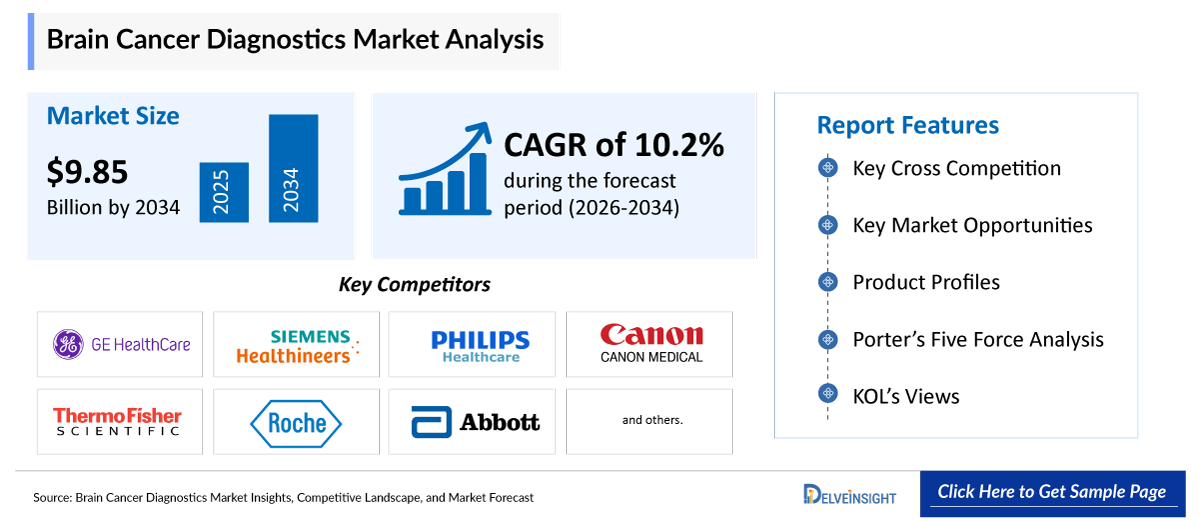
● The Brain Cancer Diagnostics market is estimated at USD 4.10 billion in 2025 and is projected to reach USD 9.85 billion by 2034. Growth is anchored in the rising global incidence of primary and metastatic brain tumors, rapid adoption of advanced neuro-imaging and molecular profiling, and the shift toward biomarker-driven, WHO-classification-aligned diagnosis of gliomas and other central nervous system malignancies.
● The global Brain Cancer Diagnostics market is growing at a CAGR of 10.2% during the forecast period from 2026 to 2034.
● By diagnostic type, the imaging diagnostics segment dominated the Brain Cancer Diagnostics market with a 46% share in 2025.
● By cancer/tumor type, the glioblastoma segment dominated the Brain Cancer Diagnostics market with a 41% share in 2025.
● By biomarker, the IDH mutation segment dominated the Brain Cancer Diagnostics market with a 29% share in 2025.
● By end user, the hospitals segment dominated the Brain Cancer Diagnostics market with a 52% share in 2025.
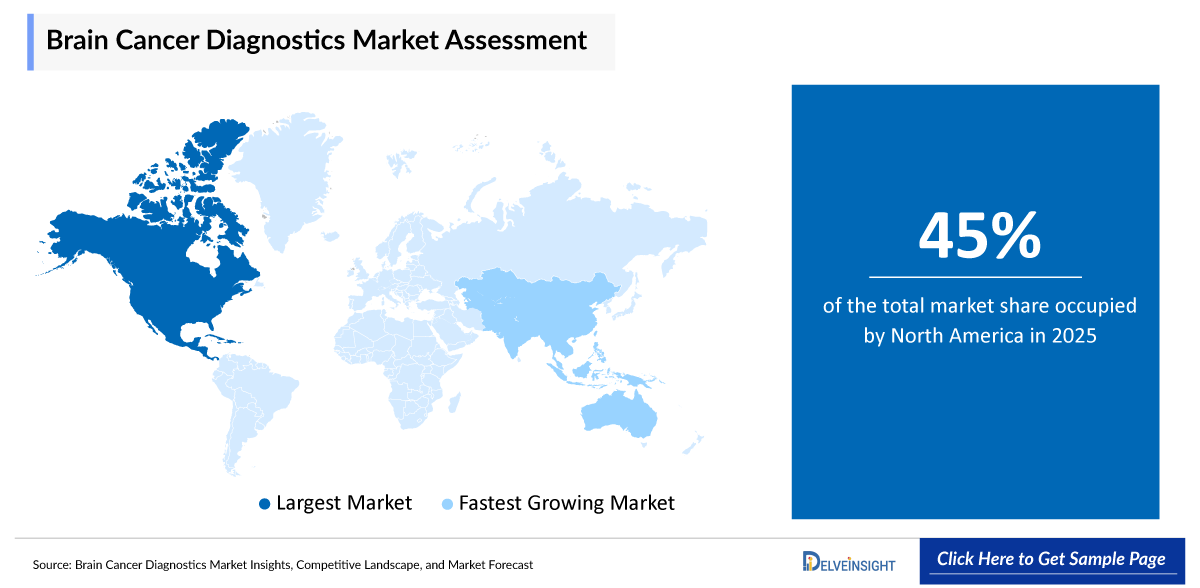
● North America dominated the global Brain Cancer Diagnostics market revenue with a 45% share in 2025, representing the highest regional market share globally.
Brain cancer diagnostics encompass the imaging, tissue-based, molecular, and liquid-biopsy technologies used to detect, classify, and molecularly characterize primary and metastatic brain tumors. Because the 2021 WHO Classification of Tumors of the Central Nervous System integrates molecular alterations, including IDH mutation status, MGMT promoter methylation, 1p/19q codeletion, TERT promoter mutation, EGFR alterations, and ATRX loss, alongside histology, accurate diagnosis increasingly depends on combining MRI and PET imaging with tissue-based immunohistochemistry and next-generation sequencing. Hospitals, diagnostic imaging centers, pathology and diagnostic laboratories, and cancer research institutes rely on an integrated diagnostic pathway spanning structural and functional imaging, stereotactic biopsy and neuropathology, molecular and genomic testing, and emerging liquid-biopsy biomarkers to guide surgical planning, treatment selection, and prognosis for glioblastoma, astrocytoma, oligodendroglioma, ependymoma, and other CNS tumor types. Driven by rising brain tumor incidence, the shift to molecular-integrated WHO classification, expanding reimbursement for companion diagnostics tied to targeted therapies such as vorasidenib, and continuous innovation in AI-assisted imaging and next-generation sequencing panels, brain cancer diagnostics have become essential infrastructure underpinning precision neuro-oncology care.
Brain Cancer Diagnostics Market Key Growth Drivers
• The rising global incidence of primary malignant brain tumors and brain metastases is expanding demand for diagnostic imaging and molecular testing, with gliomas remaining among the most common and lethal primary CNS malignancies worldwide.
• The 2021 WHO CNS5 classification's integration of molecular biomarkers, including IDH mutation, 1p/19q codeletion, MGMT promoter methylation, and TERT promoter mutation, into tumor grading is driving routine adoption of molecular and NGS-based testing alongside conventional histopathology.
• Regulatory approvals of biomarker-linked targeted therapies, including the FDA approval of Servier's Voranigo (vorasidenib) for IDH-mutant grade 2 glioma alongside Thermo Fisher's companion diagnostic, are accelerating demand for standardized IDH-mutation testing.
• Rapid advances in AI-assisted MRI, PET radiotracers, and radiogenomics are improving non-invasive tumor characterization and enabling earlier, more precise detection of glioblastoma, astrocytoma, oligodendroglioma, and ependymoma.
• Expanding next-generation sequencing and comprehensive genomic profiling panels from diagnostics majors are broadening biomarker coverage across EGFR alterations, ATRX loss, and other clinically actionable CNS mutations.
• Growing investment by imaging OEMs in dedicated neuro-oncology software and brain-specific PET tracers, including new brain-metastasis imaging agents, is strengthening the diagnostic pathway from initial imaging to molecular confirmation.
• The convergence of rising disease burden, molecular-classification-driven testing, targeted-therapy approvals, and imaging innovation is expected to sustain strong double-digit growth in the market through 2034.
Key Companies in Brain Cancer Diagnostics Market
The competitive landscape is led by the following active manufacturers:
• GE HealthCare
• Siemens Healthineers
• Philips Healthcare
• Canon Medical Systems
• Thermo Fisher Scientific
• F. Hoffmann-La Roche
• Illumina
• QIAGEN
• Agilent Technologies
• Abbott Laboratories
Factors Contributing to the Growth of the Brain Cancer Diagnostics Market
Market Drivers
Rising Global Incidence of Primary and Metastatic Brain Tumors
The most fundamental driver of the Brain Cancer Diagnostics market is the rising worldwide incidence of primary malignant brain tumors and brain metastases from systemic cancers such as lung and breast cancer. Glioblastoma remains the most common and aggressive primary malignant brain tumor in adults, and its poor prognosis places a premium on early and accurate detection through MRI, PET, and tissue-based confirmation. Astrocytoma, oligodendroglioma, and ependymoma together account for a substantial share of remaining primary CNS malignancies, each requiring distinct combinations of imaging and molecular workup. As aging populations and improved survival from systemic cancers increase the population at risk of brain metastases, demand for both initial diagnostic imaging and confirmatory tissue and molecular testing expands directly, anchoring market growth through 2034.
Molecular-Integrated WHO Classification Driving Biomarker Testing
The 2021 WHO Classification of Tumors of the Central Nervous System fundamentally reshaped brain tumor diagnosis by requiring integration of molecular alterations, including IDH mutation status, 1p/19q codeletion, MGMT promoter methylation, TERT promoter mutation, EGFR alterations, and ATRX loss, together with histology to assign an accurate diagnosis and grade. This shift has made molecular and genomic testing a routine, non-optional component of the neuro-oncology diagnostic pathway rather than a research adjunct. Pathology and diagnostic laboratories are consequently expanding immunohistochemistry, fluorescence in situ hybridization, and next-generation sequencing capacity to support compliant, guideline-aligned reporting, directly enlarging demand for molecular diagnostics and biomarker panels across the forecast period.
Market Restraints
Despite strong momentum, the Brain Cancer Diagnostics market faces material constraints. The high cost of advanced MRI and PET imaging systems, along with the capital intensity of comprehensive genomic profiling and next-generation sequencing infrastructure, limits adoption in lower-resource settings and smaller diagnostic laboratories. The invasive nature of tissue-based diagnosis, requiring stereotactic or open biopsy, carries surgical risk and is not always feasible for deep-seated or inoperable tumors, constraining the volume of tissue available for full molecular workup. Standardization challenges persist across immunohistochemistry, fluorescence in situ hybridization, and sequencing-based methods for detecting biomarkers such as MGMT promoter methylation, where assay concordance varies across laboratories. A shortage of specialized neuropathologists and neuroradiologists, particularly outside major academic centers, constrains diagnostic throughput and turnaround time. The blood-brain barrier continues to limit the sensitivity of blood-based liquid biopsy for CNS malignancies relative to other solid tumors, slowing near-term commercial adoption. Reimbursement for advanced molecular panels remains inconsistent across geographies, and dependence on a small number of specialized reagent and instrument suppliers concentrates supply risk. Together, these cost, technical, workforce, and reimbursement barriers temper the pace of growth, even as the underlying drivers of rising incidence, molecular-classification adoption, and targeted-therapy expansion remain firmly intact.
Brain Cancer Diagnostics Market Segment Analysis
The brain cancer diagnostics market diagnostic type (imaging diagnostics, tissue-based diagnostics, molecular diagnostics, liquid biopsy & biomarker diagnostics), cancer/tumor type (glioblastoma, astrocytoma, oligodendroglioma, ependymoma, and others), biomarkers (idh mutation, mgmt promoter methylation, 1p/19q codeletion, tert promoter mutation, egfr alterations, atrx alterations), end user (hospitals, diagnostic imaging centers, pathology & diagnostic laboratories, cancer research institutes, and others), and geography (North America, Europe, Asia-Pacific, and Rest of World).
By Diagnostic Type
Dominant Subsegment: Imaging Diagnostics.
The imaging diagnostics segment accounted for 46% of the Brain Cancer Diagnostics market in 2025. Imaging diagnostics lead the market because MRI and PET remain the first-line, non-invasive tools for detecting, localizing, and monitoring brain tumors, generating very high, recurring procedure volumes across hospitals and diagnostic imaging centers. Advanced structural and functional MRI sequences, combined with amino-acid and glucose PET tracers, allow clinicians to characterize tumor extent, differentiate recurrence from treatment effect, and guide biopsy and surgical planning before any tissue is obtained. Continuous innovation from imaging OEMs, including AI-enabled lesion detection, higher-field MRI platforms, and brain-specific PET radiotracers for recurrent and metastatic disease, sustains great and dependable demand for imaging equipment, software, and services. While molecular diagnostics, liquid biopsy, and biomarker diagnostics are the fastest-growing diagnostic types, propelled by the shift to molecular-integrated WHO classification, the sheer volume, accessibility, and first-line clinical role of imaging secure the imaging diagnostics segment's leadership across the forecast period.
By Cancer/Tumor Type
Dominant Subsegment: Glioblastoma.
The glioblastoma segment accounted for 41% of the Brain Cancer Diagnostics market in 2025. Glioblastoma is the leading tumor type because it is the most common and most aggressive primary malignant brain tumor in adults, characterized by rapid progression, near-universal recurrence, and a diagnostic pathway that requires intensive imaging surveillance combined with comprehensive molecular workup, including IDH mutation status and MGMT promoter methylation testing to guide treatment selection and prognosis. The poor prognosis and high recurrence rate of glioblastoma drive repeated imaging and biomarker assessment across the disease course, sustaining large diagnostic volumes relative to other tumor types. Astrocytoma and oligodendroglioma, which depend heavily on IDH mutation and 1p/19q codeletion status for classification, are growing quickly as molecular testing becomes routine, while ependymoma diagnosis is expanding alongside pediatric and adult neuro-oncology awareness. Nonetheless, the scale, severity, and diagnostic intensity associated with glioblastoma secure its clear leadership across the forecast period.
Brain Cancer Diagnostics Market Region Analysis
Dominant Region: North America
North America accounted for 45% of the global Brain Cancer Diagnostics market revenue in 2025, representing the highest regional market share globally. The region's dominance reflects a mature neuro-oncology care infrastructure, widespread adoption of advanced MRI and PET imaging, early integration of the WHO CNS5 molecular classification into clinical practice, and clear FDA regulatory pathways for companion diagnostics, particularly in the United States. North America hosts the largest concentration of academic neuro-oncology centers and molecular pathology laboratories, and providers benefit from proximity to leading imaging OEMs and molecular diagnostics companies headquartered in the region. The approval of biomarker-linked therapies such as vorasidenib, combined with a deep clinical-trial pipeline in glioma and rising precision-oncology adoption, drives substantial diagnostic testing demand. Heavy investment in AI-enabled imaging platforms and expanding next-generation sequencing capacity, together with strong reimbursement and regulatory clarity, anchor the region's continued leadership across the forecast period.
Dominant: North America ~ 45% (Largest)
Fastest Growing Region: Asia-Pacific
Asia-Pacific is the fastest-growing region in the Brain Cancer Diagnostics market. The region's elevated CAGR is driven by rising brain tumor incidence, rapid expansion of advanced imaging infrastructure, and growing healthcare investment across China, Japan, India, South Korea, and Australia. China is expanding installed MRI and PET-CT capacity and scaling domestic molecular diagnostics manufacturing, Japan is advancing AI-assisted neuro-imaging adoption, India is expanding access to affordable NGS-based tumor profiling, and South Korea and Australia are strengthening academic neuro-oncology research and biomarker-testing networks. Government healthcare investment, expanding oncology patient populations, and growing local production of diagnostic imaging and molecular testing platforms are accelerating adoption across the region. The combination of high disease burden, infrastructure build-out, and rising molecular-testing penetration positions Asia-Pacific as the principal source of incremental growth over the forecast period.
Regional Commentary
North America
North America accounted for 45% of the global Brain Cancer Diagnostics market revenue in 2025. The United States dominates on the strength of its neuro-oncology infrastructure, FDA regulatory clarity for companion diagnostics, and early clinical adoption of WHO CNS5 molecular classification, while heavy investment in AI-enabled imaging and NGS capacity, and continued biomarker-linked drug approvals, reinforce its leadership.
Europe
Europe is a large and advanced regional market, supported by established EMA and national regulatory frameworks, strong academic neuropathology networks, and growing adoption of molecular-integrated CNS tumor classification. Expanding companion diagnostic partnerships and cross-border neuro-oncology research collaborations across Germany, France, the United Kingdom, Italy, and Spain reinforce the region's role in both imaging and molecular diagnostics.
Asia-Pacific
Asia-Pacific is the fastest-growing region, propelled by rising brain tumor incidence, rapid imaging-infrastructure build-out, and growing healthcare investment across China, Japan, India, South Korea, and Australia. Expanding domestic manufacturing of imaging systems and molecular diagnostics platforms, along with government cancer-screening initiatives, are accelerating regional diagnostic testing growth.
Rest of World
The Rest of World region, spanning Latin America, the Middle East, and Africa, is an emerging growth frontier. Expanding neuro-oncology and diagnostic imaging infrastructure, rising awareness of brain tumor symptoms and screening, and efforts to align regulatory frameworks with global standards are gradually broadening access, while international partnerships support the build-out of regional molecular diagnostics capacity.
Brain Cancer Diagnostics Market Competitive Landscape
The Brain Cancer Diagnostics market is classified as Moderately Concentrated. A group of established imaging OEMs with global installed bases and integrated AI-imaging platforms, including GE HealthCare, Siemens Healthineers, Philips Healthcare, and Canon Medical Systems, anchors the imaging diagnostics segment, while molecular and genomic diagnostics leaders such as Thermo Fisher Scientific, F. Hoffmann-La Roche, Illumina, QIAGEN, Agilent Technologies, and Abbott Laboratories compete through expanding companion diagnostic approvals, comprehensive genomic profiling panels, and immunohistochemistry and in-situ hybridization platforms for biomarker testing, increasing competition across the molecular and tissue-based diagnostics segments.
The competitive landscape can be evaluated across the following dimensions:
• Market concentration: Moderately concentrated, with global imaging OEMs leading the imaging diagnostics segment and molecular diagnostics majors competing intensely in biomarker and genomic profiling.
• Leading players: GE HealthCare, Siemens Healthineers, Philips Healthcare, and Canon Medical Systems anchor imaging diagnostics through global installed bases and AI-enabled platforms.
• Geographic reach: Leaders operate global sales, service, and installation networks spanning hospitals, diagnostic imaging centers, and reference laboratories across all major regions.
• Service and product portfolio strength: Top players offer end-to-end solutions spanning MRI and PET imaging systems, AI-based image analysis, immunohistochemistry and in-situ hybridization assays, and next-generation sequencing panels.
• Companion diagnostic access: Approved companion diagnostics linked to targeted CNS therapies, such as Thermo Fisher's Oncomine-based IDH-mutation companion diagnostic for vorasidenib, are a decisive competitive advantage.
• Strategic partnerships: Collaborations between imaging OEMs and radiopharmaceutical developers, and between molecular diagnostics companies and pharmaceutical sponsors, extend biomarker and imaging-agent reach into neuro-oncology.
• Innovation focus: AI-assisted neuro-imaging, radiogenomics, expanded NGS biomarker panels, and early-stage liquid biopsy platforms for CNS malignancies are key areas of ongoing innovation.
• Manufacturing and technology capabilities: High-field MRI, digital PET-CT, automated immunohistochemistry staining platforms, and high-throughput sequencing instrumentation are key competitive moats.
Brain Cancer Diagnostics Market Recent Developmental Activities
In 2026, GE HealthCare advanced its next-generation SIGNA MR platform for neuroscience and neuro-oncology research, including a helium-free 1.5T MRI installation supporting brain imaging research collaborations. Strategic significance: Strengthens GE HealthCare's neuro-imaging research pipeline and supports translation of advanced MRI tools into clinical brain tumor imaging.
In 2026, GE HealthCare highlighted MIM LesionID Pro, an FDA-cleared AI tool for automated whole-body tumor burden analysis, and MIM KineticID, a 510(k)-pending dynamic PET imaging and kinetic modeling software, at industry nuclear medicine conferences. Strategic significance: Expands AI-enabled quantitative tumor imaging capabilities relevant to brain metastasis and glioma monitoring.
Brain Cancer Diagnostics Market Segmentation
Brain Cancer Diagnostics Market by Diagnostic Type
• Imaging Diagnostics
• Tissue-Based Diagnostics
• Molecular Diagnostics
• Liquid Biopsy & Biomarker Diagnostics
Brain Cancer Diagnostics Market by Cancer/Tumor Type
• Glioblastoma
• Astrocytoma
• Oligodendroglioma
• Ependymoma
• Others
Brain Cancer Diagnostics Market by Biomarker Type
• IDH Mutation
• MGMT Promoter Methylation
• 1p/19q Codeletion
• TERT Promoter Mutation
• EGFR Alterations
• ATRX Alterations
Brain Cancer Diagnostics Market by End-Users
• Hospitals
• Diagnostic Imaging Centers
• Pathology & Diagnostic Laboratories
• Cancer Research Institutes
• Others
Brain Cancer Diagnostics Market by Geography
• North America Brain Cancer Diagnostics Market
▪ United States Brain Cancer Diagnostics Market Size in USD million (2023-2034)
▪ Canada Brain Cancer Diagnostics Market Size in USD million (2023-2034)
▪ Mexico Brain Cancer Diagnostics Market Size in USD million (2023-2034)
• Europe Brain Cancer Diagnostics Market
▪ Germany Brain Cancer Diagnostics Market Size in USD million (2023-2034)
▪ United Kingdom Brain Cancer Diagnostics Market Size in USD million (2023-2034)
▪ France Brain Cancer Diagnostics Market Size in USD million (2023-2034)
▪ Italy Brain Cancer Diagnostics Market Size in USD million (2023-2034)
▪ Spain Brain Cancer Diagnostics Market Size in USD million (2023-2034)
▪ Rest of Europe Brain Cancer Diagnostics Market Size in USD million (2023-2034)
• Asia-Pacific Brain Cancer Diagnostics Market
▪ China Brain Cancer Diagnostics Market Size in USD million (2023-2034)
▪ Japan Brain Cancer Diagnostics Market Size in USD million (2023-2034)
▪ India Brain Cancer Diagnostics Market Size in USD million (2023-2034)
▪ Australia Brain Cancer Diagnostics Market Size in USD million (2023-2034)
▪ South Korea Brain Cancer Diagnostics Market Size in USD million (2023-2034)
▪ Rest of Asia-Pacific Brain Cancer Diagnostics Market Size in USD million (2023-2034)
• Rest of the World (RoW) Brain Cancer Diagnostics Market
▪ Middle East Brain Cancer Diagnostics Market Size in USD million (2023-2034)
▪ Africa Brain Cancer Diagnostics Market Size in USD million (2023-2034)
▪ South America Brain Cancer Diagnostics Market Size in USD million (2023-2034)
Key Takeaways from the Brain Cancer Diagnostics Market Report Study
• Market size analysis for the current Brain Cancer Diagnostics market size (2025), and market forecast for 9 years (2026 to 2034).
• Top key product/technology developments, mergers, acquisitions, partnerships, and joint ventures that happened over the last 3 years.
• Key companies dominating the global Brain Cancer Diagnostics market.
• Various opportunities available for competitors in the Brain Cancer Diagnostics market space.
• What are the top-performing segments in 2025? How will these segments perform in 2034?
• Which are the top-performing regions and countries in the current Brain Cancer Diagnostics market scenario?
• Which are the regions and countries where companies should concentrate their opportunities for Brain Cancer Diagnostics market growth in the future?
Target audience who can benefit from this Brain Cancer Diagnostics market report study
• Brain Cancer Diagnostics product providers
• Research organizations and consulting companies
• Brain Cancer Diagnostics -related organizations, associations, forums, and other alliances
• Government and corporate offices
• Start-up companies, venture capitalists, and private equity firms
• Distributors and traders dealing in Brain Cancer Diagnostics
• Various end-users who want to know more about the Brain Cancer Diagnostics market and the latest technological developments in the Brain Cancer Diagnostics market.

