
Bronchitis Epidemiology
Bronchitis Insights and Trends
- Bronchitis is inflammation of the bronchial tubes, causing a persistent cough, often with mucus. It may be acute, usually due to a respiratory infection and lasting a few weeks, or chronic, a long-term condition often linked to smoking and classified as part of Chronic Obstructive Pulmonary Disease (COPD).
- Approximately 70–80% of acute exacerbations of chronic bronchitis are associated with respiratory infections, making infectious agents the leading trigger of disease worsening.
- Chronic bronchitis most commonly develops in tobacco smokers, with an estimated 30–50% eventually exhibiting symptoms of the disease. Passive exposure to tobacco smoke is also a recognized risk factor contributing to its development.
- Bronchitis is one of the most common causes of cough in healthcare settings. Acute bronchitis affects approximately 5% of adults annually, while chronic bronchitis affects 3.4–22.0% of adults.
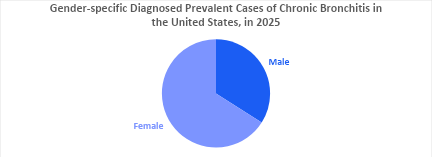
- Chronic bronchitis is most commonly observed in individuals over 40 years of age. It is more prevalent in women than men across all age groups and may also be more severe in women.
Bronchitis Epidemiology Forecast in the 7MM
- 2025 Diagnosed Prevalent Cases of Bronchitis: ~XX
- 2036 Projected Diagnosed Prevalent Cases of Bronchitis: ~XX
- Bronchitis Growth Rate (2026–2036): XX% CAGR
DelveInsight's ‘Bronchitis Epidemiology Forecast – 2036’ report delivers an in-depth understanding of the epidemiology of bronchitis, historical and forecasted, in the United States, EU4 (Germany, Spain, Italy, and France) and the United Kingdom, and Japan.
|
Study Period |
2022–2036 |
|
Historical Year |
2022–2025 |
|
Forecast Period |
2026–2036 |
|
Base Year |
2026 |
|
Geographies Covered |
|
|
Bronchitis Epidemiology CAGR (Forecast period) |
XX% (2026–2036) |
|
Bronchitis Epidemiology Segmentation Analysis |
Patient Burden Assessment
|
Bronchitis Understanding and Diagnosis Algorithm
Bronchitis Overview and Diagnosis
Bronchitis is an inflammatory condition of the bronchial tubes that carry air to and from the lungs, leading to symptoms such as persistent cough, mucus production, wheezing, chest discomfort, and shortness of breath. The disease can occur as acute bronchitis, typically caused by viral respiratory infections and lasting for a short duration, or as chronic bronchitis, a long-term condition characterized by a productive cough lasting at least three months in two consecutive years. Chronic bronchitis is strongly associated with smoking, environmental pollutants, and recurrent respiratory infections and is a major subtype of Chronic Obstructive Pulmonary Disease. Current treatment strategies focus on symptom relief, smoking cessation, bronchodilator therapy, corticosteroids when indicated, management of infections, and prevention of disease progression and exacerbations.
Bronchitis is an inflammation of the bronchial tubes, the airways that carry air to and from the lungs. It commonly causes symptoms such as a persistent cough, mucus production, wheezing, chest discomfort, and shortness of breath. Bronchitis may occur as acute bronchitis, which is usually caused by viral respiratory infections and resolves within a few weeks, or as chronic bronchitis, a long-term condition defined by a productive cough lasting for at least three months per year for two consecutive years. Chronic bronchitis is strongly associated with smoking, exposure to environmental pollutants, and recurrent respiratory infections, and it is a major form of COPD.
The diagnosis of bronchitis is primarily based on clinical evaluation, including the assessment of cough duration, sputum production, and other respiratory symptoms. Physical examination may reveal findings such as wheezing, rhonchi, or prolonged expiration. Additional investigations, including chest X-rays, pulmonary function tests, sputum analysis, and pulse oximetry, may be performed to rule out other respiratory disorders, evaluate airflow obstruction, and determine disease severity, especially in cases of chronic bronchitis. Early diagnosis and appropriate treatment are essential for symptom control, reducing the risk of exacerbations, and improving patients' quality of life.
Further details are provided in the report.
Bronchitis Epidemiology
Key Findings from Bronchitis Epidemiological Analysis and Forecast
- A study conducted in the United Kingdom reported an incidence of acute bronchitis of 54 cases per 1,000 individuals. Incidence rates vary across age groups, ranging from 36 cases per 1,000 among younger men to 225 cases per 1,000 among adults aged 85 years and older, indicating a substantially higher burden of disease in the elderly population.
- According to secondary research, chronic bronchitis affects approximately 10 million people in the United States. It most commonly occurs in individuals aged 44–65 years, and its prevalence is higher in women than in men, with reported rates of 56.8 cases per 1,000 women compared with 28.8 cases per 1,000 men.
- The prevalence of chronic bronchitis symptoms varies globally among adult populations but is estimated to be approximately 3–6% in Westernized countries. The condition is more common in men and is associated with increasing age, tobacco smoking, occupational exposures, obstructive sleep apnea, and lower socioeconomic status.
Scope of the Report
- The report covers a segment of a descriptive overview of Bronchitis, explaining its causes, signs and symptoms, and pathogenesis.
- Comprehensive insight has been provided into the epidemiology segments and forecasts, the future growth potential of the diagnosis rate, and disease progression.
Report Insights
Bronchitis Patient Population Forecast
Report Key Strengths
- Epidemiology‑based (Epi‑based) Bottom‑up Forecasting
- 11-year Forecast
- Patient Burden Trends (by geography)
FAQs
- What are the disease risks, burdens, and unmet needs of Bronchitis? What will be the growth opportunities across the 7MM concerning the patient population with Bronchitis?
- What is the historical and forecasted Bronchitis patient pool in the US, EU4 (Germany, France, Italy, and Spain), the UK, and Japan?
Reasons to Buy
- Insights on patient burden/disease prevalence, evolution in diagnosis, and factors contributing to the change in the epidemiology of the disease during the forecast years.
- To understand key opinion leaders’ perspectives on the diagnostic challenges to overcome barriers in the future.
- Detailed insights into various factors hampering disease diagnosis and other existing diagnostic challenges.