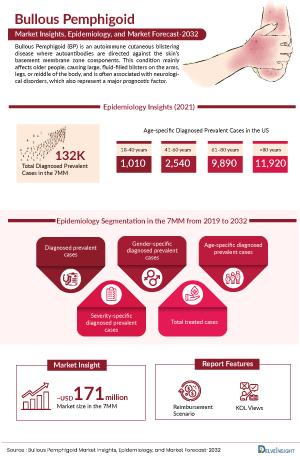
Bullous Pemphigoid Market
- Bullous pemphigoid clinical burden is observed due to the older age profile of patients, who often present with comorbidities, including neurological disorders, which are associated with worse prognosis and increased mortality risk. Additionally, the disease is frequently chronic and relapsing, contributing to long-term treatment dependency and healthcare utilization.
- The bullous pemphigoid treatment landscape is primarily driven by immune-mediated inflammation targeting the basement membrane zone, with current management largely dependent on topical and systemic corticosteroids as first-line therapy. In more severe or relapsing cases, conventional immunosuppressants such as methotrexate, azathioprine, or mycophenolate mofetil are used as steroid-sparing or adjunct options, although their use is limited by safety concerns, especially in the elderly population.
- Despite the availability of corticosteroids and immunosuppressants, there remains a clear unmet need for safer, targeted therapies that can reduce steroid exposure while maintaining durable disease control, particularly in elderly and comorbidity-heavy populations where treatment toxicity is a major limitation.
- The treatment paradigm is gradually shifting toward biologic and targeted immunomodulatory therapies that act on key inflammatory pathways involved in disease pathogenesis. This includes emerging agents targeting type 2 inflammation and B-cell mediated immune responses, aiming to improve long-term disease control with improved safety profiles.
- The bullous pemphigoid treatment landscape remains primarily driven by conventional immunosuppressive therapies, including systemic corticosteroids and steroid-sparing agents. Recently, targeted biologic approaches such as Dupilumab have gained regulatory approval in select markets, representing a shift toward more targeted immune modulation strategies.
- The bullous pemphigoid pipeline is expanding with investigational targeted therapies, including RAY-121 (Chugai Pharmaceutical), which aim to address underlying immune mechanisms and potentially provide more disease-specific treatment options compared with broad immunosuppression.
Bullous Pemphigoid Market Size and Forecast in the 7MM
- 2025 Bullous Pemphigoid Market Size: ~USD XX million
- 2036 Projected Bullous Pemphigoid Market Size: ~USD XX million
- Bullous Pemphigoid Growth Rate (2026–2036): XX% CAGR
DelveInsight's ‘Bullous Pemphigoid Market Insights, Epidemiology and Market Forecast – 2036’ report delivers an in-depth understanding of the bullous pemphigoid, historical and forecasted epidemiology, as well as the Bullous Pemphigoid market trends in the United States, EU4 (Germany, Spain, Italy, and France) and the United Kingdom, and Japan.
The Bullous Pemphigoid market report delivers a comprehensive analysis of the current treatment landscape, including standards of care, clinical practices, and evolving therapeutic algorithms. It evaluates, bullous pemphigoid patient burden trends, revenue & market share dynamics, peak patient share & therapy uptake analysis, and provides an in-depth market size assessment, and growth rate projections (Historical & Forecast 2022–2036) across global regions. The report highlights key unmet medical needs in bullous pemphigoid and maps the competitive and clinical landscape to uncover high‑value opportunities, providing a clear outlook on future market growth potential.
|
Study Period |
2022–2036 |
|
Historical Year |
2022–2025 |
|
Forecast Period |
2026–2036 |
|
Base Year |
2026 |
|
Geographies Covered |
|
|
Bullous Pemphigoid Market CAGR (Forecast period) |
XX% (2026–2036) |
|
Bullous Pemphigoid Epidemiology Segmentation Analysis |
Patient Burden Assessment
|
|
Bullous Pemphigoid Companies |
|
|
Bullous Pemphigoid Therapies |
|
|
Bullous Pemphigoid Market |
Segmented by
|
|
Analysis |
|
|
|
Key Factors Driving the Bullous Pemphigoid Market
-
Increasing disease burden driven by an aging population
Bullous pemphigoid is predominantly a disease of older adults, with incidence increasing markedly with advancing age. The growing global elderly population, along with improved recognition of autoimmune blistering disorders, is expected to expand the BP patient pool and increase demand for effective treatment options.
-
High unmet need due to limitations of conventional immunosuppressive therapies
Current management of bullous pemphigoid relies largely on corticosteroids and immunosuppressive agents, which are associated with significant safety concerns, particularly among elderly patients with multiple comorbidities. Frequent disease relapses, prolonged treatment duration, and treatment-related adverse events highlight the need for safer and more targeted therapeutic approaches, thereby driving interest in novel treatment options.
-
Growing adoption and development of targeted biologic therapies
Advances in the understanding of bullous pemphigoid pathogenesis, including the involvement of autoantibodies, eosinophilic inflammation, type 2 immune responses, and complement activation, have facilitated the development of targeted therapies. The approval of dupilumab, the first therapy specifically approved for bullous pemphigoid, has validated targeted treatment strategies and is expected to stimulate further research, development, and adoption of innovative biologic therapies in this therapeutic area.
Bullous Pemphigoid Understanding and Treatment Algorithm
Bullous Pemphigoid Overview and Diagnosis
Bullous pemphigoid is a chronic autoimmune subepidermal blistering disorder caused by an immune response against structural proteins of the skin basement membrane, primarily BP180 (type XVII collagen) and BP230. Autoantibody-mediated immune activation leads to complement activation, eosinophilic inflammation, and tissue damage, resulting in the formation of tense blisters. The disease primarily affects the elderly population and is associated with significant morbidity, impaired quality of life, recurrent disease episodes, and treatment-related complications. Clinical manifestations commonly include severe pruritus, urticarial or eczematous lesions, and tense fluid-filled blisters, although atypical non-bullous presentations may delay diagnosis.
Diagnosis of bullous pemphigoid is based on a combination of clinical assessment, histopathology, and immunological testing. A skin biopsy typically demonstrates a subepidermal blister with eosinophil-rich inflammation, while direct immunofluorescence of perilesional skin remains the gold standard diagnostic method, showing linear deposition of IgG and complement component C3 along the basement membrane zone. Serological detection of BP180 and BP230 autoantibodies using assays such as ELISA further supports diagnosis and disease monitoring.
Further details are provided in the report.
Bullous Pemphigoid Diagnosis Treatment
Treatment of bullous pemphigoid focuses on controlling inflammation, reducing blister formation, and minimizing treatment-related toxicity. High-potency topical corticosteroids and systemic corticosteroids remain key treatment options, although long-term steroid use is associated with safety concerns, particularly in elderly patients. Steroid-sparing immunosuppressants such as azathioprine, mycophenolate mofetil, and methotrexate may be used to reduce corticosteroid exposure. In refractory cases, therapies including rituximab, omalizumab, and intravenous immunoglobulin (IVIG) have been explored. Advances in disease understanding have enabled targeted approaches, with dupilumab becoming the first FDA approved targeted therapy for bullous pemphigoid, marking a shift toward mechanism based treatment strategies.
Further details related to country-based variations are provided in the report.
Bullous Pemphigoid Unmet Needs
The section “unmet needs of bullous pemphigoid” outlines the critical gaps between the current state of patient care, diagnosis, and the ideal & effective management of the disease. It highlights the obstacles experienced by patients, clinicians, and researchers and identifies potential solutions for future progress.
- Limited targeted treatment options and reliance on corticosteroid-based therapy
- High treatment-related safety concerns in elderly patients
- Persistent disease activity and frequent relapse despite treatment
- Limited options for patients with refractory or treatment-resistant disease, and others…..
Note: Comprehensive unmet needs insights in bullous pemphigoid and their strategic implications are provided in the full report.
Bullous Pemphigoid Epidemiology
Key Findings from Bullous Pemphigoid Epidemiological Analysis and Forecast
- Bullous pemphigoid is the most common autoimmune subepidermal blistering disorder, representing 80% of subepidermal immunobullous cases. bullous pemphigoid most commonly affects elderly patients between the ages of 60–80 years.
- The overall prevalence of pemphigoid is 0.012%, or 12 pemphigoid patients/100,000 adults in the US.
- Bullous pemphigoid had the highest prevalence of all autoimmune bullous diseases, followed by pemphigus vulgaris, mucous membrane pemphigoid, and chronic bullous dermatosis of childhood.
- The disease is associated with a higher burden in elderly patients due to frequent comorbidities and chronic disease course. Patients with bullous pemphigoid often require prolonged treatment and monitoring because of disease relapses, persistent pruritus, and complications associated with both the disease and immunosuppressive therapies.
- Bullous pemphigoid increases significantly with advancing age, with the highest occurrence observed among individuals aged ≥80 years, highlighting the strong association between disease development and aging.
- Bullous pemphigoid is most common in older females, age 70 and older. It’s not as common in males, younger adults, and children
Bullous Pemphigoid Drug Analysis & Competitive Landscape
The bullous pemphigoid drug chapter provides a detailed, market-focused review of approved therapies and the emerging pipeline across Phase I clinical trials. It covers the mechanism of action, clinical trial data, regulatory approvals, patents, collaborations, and strategic partnerships for each therapy, along with their advantages, limitations, and recent developments. This section offers critical insights into the bullous pemphigoid treatment landscape, supporting market assessment, competitive analysis, and growth forecasting for the bullous pemphigoid therapeutics market.
Approved Therapies for Bullous Pemphigoid
Dupilumab (DUPIXENT): Sanofi
Dupilumab is a fully human monoclonal antibody targeting the interleukin-4 receptor alpha (IL-4Rα), thereby inhibiting signaling from IL-4 and IL-13, key drivers of type 2 inflammation. Developed by Regeneron Pharmaceuticals and Sanofi, Dupixent was initially approved for multiple type 2 inflammatory diseases and has expanded into bullous pemphigoid, becoming the first FDA-approved targeted therapy for adult patients with bullous pemphigoid. The approval was supported by the ADEPT Phase II/III trial, which demonstrated improvements in sustained disease remission, itch reduction, and corticosteroid-sparing effects compared with placebo.
The bullous pemphigoid indication represents a strategic expansion of the DUPIXENT immunology franchise into an area with high unmet need, where treatment has historically relied on broad immunosuppression and corticosteroids associated with safety limitations.
In January 2026, the company announced in its Q4 results that dupilumab received approval for bullous pemphigoid in Europe and Japan, expanding its potential use in this rare autoimmune dermatological condition.
Note: Detailed marketed therapies assessment will be provided in the final report.
|
Table 1: Competitive Landscape of Bullous Pemphigoid Marketed/Approved Therapies | ||||||
|
Drug/Therapy |
Company |
Indication |
Molecule Type |
MoA |
RoA |
Marketed Region |
|
Dupilumab (DUPIXENT) |
Sanofi |
Bullous Pemphigoid |
Monoclonal Antibody |
IL4 and IL13 inhibitor |
SC |
US: 2025 Japan: 2026 |
|
Kenketu Glovenin-I |
Nihon Pharmaceutical |
Bullous Pemphigoid |
Polyclonal human immunoglobulin G |
immunomodulation |
IV |
Japan: 2015 |
Bullous Pemphigoid Pipeline Analysis
RAY 121 : Chugai Pharmaceuticals
RAY-121, being developed by Chugai Pharmaceutical, is currently in Phase I clinical trials for the treatment of autoimmune diseases, including Bullous Pemphigoid. It is delivered via intravenous infusion or subcutaneous injection. The drug works by targeting complement C1s and is based on Recycling Antibody technology.
|
Table 2: Competitive Landscape of Pipeline Drugs | ||||||
|
Drug Name |
Company |
Highest Phase |
Indication |
RoA |
MoA |
Anticipated Launch in the US |
|
RAY 121 |
Chugai Pharmaceuticals |
I |
Bullous Pemphigoid |
SC |
Complement C1s inhibitors |
Information is available in the full report |
|
Note: Launch insights are provisional and may change with future report updates or the occurrence of major key catalysts. | ||||||
Note: Detailed emerging therapies assessment will be provided in the final report.
Bullous Pemphigoid Key Players, Market Leaders and Emerging Companies
-
Sanofi
-
Chugai Pharmaceutical, and others
Bullous Pemphigoid Drug Updates
-
In March 2026, Sanofi and Regeneron announced the approval of dupilumab in Japan as the first targeted therapy for adults with bullous pemphigoid, following positive clinical results from the Phase II/III ADEPT study.
Drug Class Insights
Bullous Pemphigoid Market Outlook
The bullous pemphigoid treatment landscape focuses on controlling disease activity, preventing new blister formation, promoting skin healing, and reducing pruritus, with therapy selection guided by disease severity, patient age, and comorbidities, as the condition predominantly affects elderly patients with higher risk of treatment-related complications. High-potency topical corticosteroids and systemic corticosteroids remain the first-line standard of care, but long-term use is limited by infection risk, systemic toxicity, and safety concerns, driving use of steroid sparing agents such as azathioprine, tetracyclines, tacrolimus, and intravenous immunoglobulin in refractory or high-risk patients.
Developing new drugs is highly challenging. Many targeted therapeutics and complement inhibitors (such as nomacopan) have stalled or been withdrawn in Phase III trials. Others, like the anti-C5a receptor antibody avdoralimab, were prematurely terminated because of recruitment challenges and lack of superior clinical improvement over placebo. Despite trial terminations, agents like dupilumab (targeting IL-4 and IL-13) have shown significant promise.
The treatment paradigm is gradually shifting toward targeted immunotherapies addressing key mechanisms such as autoantibody mediated inflammation, complement activation, and eosinophilic immune responses, with dupilumab supported by emerging clinical evidence as a targeted biologic approach in bullous pemphigoid. The pipeline is increasingly focused on precision immunology strategies, including complement pathway inhibition such as C1s-targeting agents like RAY-121 (Chugai Pharmaceutical). Despite these advances, there remains a significant unmet need for safer, durable, steroid-sparing therapies that provide sustained disease control with improved tolerability.
Further details will be provided in the report….
Drug Class/Insights into Leading Emerging and Marketed Therapies in Bullous Pemphigoid (2022–2036 Forecast)
The bullous pemphigoid treatment landscape comprises antidepressants, anxiolytics, adjunctive agents, and emerging novel therapies, each targeting different aspects of neurotransmitter imbalance and symptom control.
- Corticosteroids: Include topical corticosteroids (e.g., clobetasol propionate) and systemic corticosteroids (e.g., prednisone), which activate glucocorticoid receptors to suppress pro-inflammatory cytokine production, immune cell activation, and inflammatory responses, forming the foundation of bullous pemphigoid management.
- Interleukin inhibitors: Include dupilumab, an IL-4 receptor alpha antagonist that inhibits IL-4 and IL-13 signaling, thereby suppressing type 2 inflammatory pathways implicated in bullous pemphigoid pathogenesis. This class represents a shift toward targeted immune modulation.
Bullous Pemphigoid Drug Uptake
This section focuses on the uptake rate of potential drugs expected to be launched in the market during the forecast period (2026–2036). The analysis covers the bullous pemphigoid drug’s uptake, performance at peak, factors affecting performance during prime years of growth, patient uptake by therapy, and anticipated sales generated by each drug.
The uptake of therapies in bullous pemphigoid is expected to vary across established immunosuppressive treatments, targeted biologics, and emerging immune modulating therapies. Corticosteroids are expected to maintain broad utilization due to their established role in achieving rapid disease control and extensive clinical experience; however, long-term use may be limited by safety concerns, particularly in the elderly population who are at increased risk of corticosteroid-associated complications.
Targeted therapies are expected to gain increasing adoption, driven by the need for mechanism based treatment options, improved tolerability, and reduced dependence on broad immunosuppression. Dupilumab is positioned for strong uptake following its approval for adults with bullous pemphigoid, supported by its targeted inhibition of IL-4 receptor alpha and blockade of IL-4 and IL-13 signaling involved in type 2 inflammatory pathways.
Emerging therapies targeting specific immune mechanisms, including complement pathway inhibitors such as RAY-121 (Chugai Pharmaceutical), may achieve gradual adoption depending on clinical differentiation, demonstrated efficacy, safety profile, and ability to provide durable disease control with reduced reliance on conventional immunosuppressive therapies.
Detailed insights of emerging therapies' drug uptake is included in the report.
Market Access and Reimbursement of Bullous Pemphigoid
The United States
Reimbursement is a crucial factor that affects the drug’s access to the market. Often, the decision to reimburse comes down to the price of the drug relative to the benefit it produces in treated patients. To reduce the healthcare burden of these high-cost therapies, many payment models are being considered by payers and other industry insiders.
|
The US Reimbursement for Bullous Pemphigoid | |
|
Drug |
Access Program |
|
Dupilumab (DUPIXENT) |
DUPIXENT MyWay |
The report further provides detailed insights on the country-wise accessibility and reimbursement scenarios, cost-effectiveness scenario of approved therapies, programs making accessibility easier and out-of-pocket costs more affordable, insights on patients insured under federal or state government prescription drug programs, etc.
NOTE: Further Details are provided in the final report….
Bullous Pemphigoid Therapies Price Scenario & Trends
Pricing and analogue assessment of bullous pemphigoid therapies highlights evolving price dynamics structures. This section summarizes the cost of approved treatments, closest and most appropriate analogue selection for emerging therapies, and understanding of how pricing influences market access, adherence, and long-term uptake.
Further details are provided in the final report….
Industry Experts and Physician Views for Bullous Pemphigoid
To keep up with bullous pemphigoid market trends, we take Key Opinion Leaders (KOLs) and Subject Matter Experts (SMEs) opinions working in the domain through primary research to fill the data gaps and validate our secondary research. Industry experts were contacted for insights on the bullous pemphigoid emerging therapies, evolving treatment landscape, patient adherence to conventional therapies, therapy switching trends, drug adoption and uptake, accessibility challenges, and epidemiology and real-world prescription patterns in bullous pemphigoid, including MD, PhD, Instructor, Postdoctoral Researcher, Professor, Researcher, and others.
DelveInsight’s analysts connected with 10+ KOLs to gather insights at country level. Centers such as the Baylor Scott and White Research Institute in Dallas, Women’s Hospital and Harvard Medical School, Uppsala University, etc. were contacted.Their opinion helps understand and validate current and emerging bullous pemphigoid therapies, highlight unmet medical needs, provide epidemiological context, and support strategic decisions for market access, therapy adoption, and pipeline prioritization in bullous pemphigoid.
|
Region |
Key Opinion Leaders (KOLs) and Subject Matter Experts (SMEs) |
|
United States |
"Indirect immunofluorescence is used to differentiate bullous pemphigoid from other blistering conditions like epidermolysis bullosa acquisita, mucous membrane pemphigo, or bullous lupus. It is diagnosed based on clinical presentation, routine histology, and the presence of tissue-bound immune reactants at the dermo-epidermal junction. Moderate to severe cases typically involve blisters covering more than 10% of the body surface area." |
|
Germany |
"Direct immunofluorescence microscopy is considered the standard tool for diagnosing bullous pemphigoid. Enzyme-linked immunosorbent assay is another method for the diagnosis of Bullous Pemphigoid which recognizes Bullous Pemphigoid230 antigen, usually found in 60–70% of patients.” |
Qualitative Analysis: SWOT and Conjoint Analysis
We perform qualitative and market Intelligence analysis using various approaches, such as SWOT analysis and conjoint analysis.
In the SWOT analysis of bullous pemphigoid, strengths, weaknesses, opportunities, and threats in terms of disease diagnosis, patient awareness, patient burden, competitive landscape, cost-effectiveness, and geographical accessibility of therapies are provided.
Conjoint analysis analyzes emerging therapies based on relevant attributes such as safety, efficacy, frequency of administration, route of administration, and order of entry. Scoring is given based on these parameters to analyze the effectiveness of therapy.
The team of analysts analyzes promising emerging therapies based on relevant attributes such as safety, efficacy, frequency of administration, route of administration, and order of entry. In efficacy, the trial’s primary and secondary outcome measures are evaluated, whereas the therapies’ safety is evaluated, wherein the acceptability, tolerability, and adverse events are majorly observed. In addition, the scoring is also based on the route of administration, order of entry, probability of success, and the addressable patient pool for each therapy. According to these parameters, the final weightage score and the ranking of the emerging therapies are decided.
Scope of the Report
- The report covers a segment of key events, an executive summary, a descriptive overview of bullous pemphigoid, explaining their causes, signs and symptoms, pathogenesis, and currently available treatments.
- Comprehensive insight has been provided into the epidemiology segments and forecasts, the future growth potential of the diagnosis rate, and disease progression along treatment guidelines.
- Additionally, an all-inclusive account of both the current and emerging treatments, along with the elaborative profiles of late-stage and prominent therapies, will have an impact on the current treatment landscape.
- A detailed review of the bullous pemphigoid market, historical and forecasted market size, market share by therapies, detailed assumptions, and rationale behind our approach is included in the report, covering the 7MM drug outreach.
- The report provides an edge while developing business strategies by understanding trends through SWOT analysis and expert insights/KOL views, patient journey, and treatment preferences that help in shaping and driving the 7MM bullous pemphigoid market.
Report Insights
- Bullous Pemphigoid Patient Population Forecast
- Bullous Pemphigoid Therapeutics Market Size
- Bullous Pemphigoid Pipeline Analysis
- Bullous Pemphigoid Market Size and Trends
- Bullous Pemphigoid Market Opportunity (Current and forecasted)
Report Key Strengths
- Epidemiology‑based (Epi‑based) Bottom‑up Forecasting
- Artificial Intelligence (AI)-Enabled Market Research Report
- 11-Year Forecast
- Bullous Pemphigoid Market Outlook (North America, Europe, Asia-Pacific)
- Patient Burden Trends (By Geography)
- Bullous Pemphigoid Treatment Addressable Market (TAM)
- Bullous Pemphigoid Competitve Landscape
- Bullous Pemphigoid Major Companies Insights
- Bullous Pemphigoid Price Trends and Analogue Assessment
- Bullous Pemphigoid Therapies Drug Adoption/Uptake
- Bullous Pemphigoid Therapies Peak Patient Share Analysis
Report Assessment
- Bullous Pemphigoid Current Treatment Practices
- Bullous Pemphigoid Unmet Needs
- Bullous Pemphigoid Clinical Development Analysis
- Bullous Pemphigoid Emerging Drugs Product Profiles
- Bullous Pemphigoid Market attractiveness
- Bullous Pemphigoid Qualitative Analysis (SWOT and conjoint analysis)
FAQs
Market Insights
- What was the bullous pemphigoid market size, the market size by therapies, market share (%) distribution in 2025, and what would it look like by 2036? What are the contributing factors for this growth?
- What are the anticipated pricing variations among different geographies for the emerging therapies in the future?
- What can be the future treatment paradigm of bullous pemphigoid?
- What are the disease risks, burdens, and unmet needs of bullous pemphigoid? What will be the growth opportunities across the 7MM concerning the patient population with bullous pemphigoid?
- Who is the major future competitor in the market, and how will the competitors affect their market share?
- What are the current options for the treatment of bullous pemphigoid? What are the current guidelines for treating bullous pemphigoid in the US, Europe, and Japan?
Reasons to Buy
- The report will help in developing business strategies by understanding the latest trends and changing treatment dynamics driving the bullous pemphigoid market.
- Bottom-up forecasting builds from the affected population to product forecasts, delivering a robust, data-driven approach ideal for new therapies and novel classes.
- Insights on patient burden/disease incidence, evolution in diagnosis, and factors contributing to the change in the epidemiology of the disease during the forecast years.
- Understand the existing market opportunities in varying geographies and the growth potential over the coming years.
- Identifying strong upcoming players in the market will help devise strategies to help get ahead of competitors.
- Detailed analysis and ranking of class-wise potential current and emerging therapies under the conjoint analysis section to provide visibility around leading classes.
- To understand KOLs’ perspectives on the accessibility, acceptability, and compliance-related challenges of existing treatment to overcome barriers in the future.
- Detailed insights on the unmet needs of the existing market so that the upcoming players can strengthen their development and launch strategy.
- This Artificial Intelligence (AI)-enabled report summarize and simplify complex datasets with in the report into clear, actionable insights for stakeholders, investors, and healthcare providers, enabling faster, data-driven decisions.