
Cannabinoid Pipeline Insight
DelveInsight’s, “Cannabinoids Pipeline Insight 2026” report provides comprehensive insights about 40+ companies and 50+ pipeline drugs in Cannabinoids pipeline landscape. It covers the pipeline drug profiles, including clinical and nonclinical stage products. It also covers the therapeutics assessment by product type, stage, route of administration, and molecule type. It further highlights the inactive pipeline products in this space.
Geography Covered
- Global coverage
Cannabinoids Understanding
Cannabinoids Overview
Cannabinoids are active chemical compounds found in Cannabis sativa and Cannabis indica plants or synthesized in laboratories, used to treat various medical conditions and symptoms. They interact with the body’s endocannabinoid system, which helps regulate key functions like pain, mood, appetite, and memory. These compounds have shown therapeutic potential in managing chronic pain, epilepsy, multiple sclerosis, and chemotherapy-induced nausea. While promising, their effectiveness is still being studied, and progress is hindered by regulatory barriers and social stigma. Based on their origin, cannabinoids fall into three categories: Phytocannabinoids- naturally occurring in cannabis plants (e.g., THC, CBD), Endocannabinoids- produced by the human body (e.g., anandamide, 2-AG) and Synthetic cannabinoids -lab-created compounds, some of which are approved for medical use.
Cannabinoids exert their effects by interacting with the endocannabinoid system (ECS), which includes CB1 and CB2 receptors, endocannabinoids like anandamide and 2-AG, and related enzymes. THC primarily binds to CB1 receptors in the brain and spinal cord, influencing mood, memory, and coordination, and is responsible for marijuana’s psychoactive effects. CB2 receptors, mainly found in immune tissues, help regulate inflammation. CBD, while having low affinity for both receptors, modulates the ECS indirectly and does not cause a “high.” THC is beneficial in increasing appetite, reducing nausea, and managing pain and muscle spasms, particularly in cancer and HIV/AIDS patients. CBD has shown promise in treating epilepsy, pain, inflammation, and potentially mental health disorders. Both cannabinoids contribute to symptom relief in multiple conditions where conventional therapies may fall short. Research continues to explore their broader therapeutic potential, including applications in multiple sclerosis, cancer, and immune disorders.
Cannabinoids, both natural and synthetic, are increasingly recognized for their therapeutic potential across oncology, neurology, pain management, and immunology. They act through CB1 and CB2 receptors, TRP channels, and immune pathways to produce anti-inflammatory, neuroprotective, and anticancer effects. In cancer, cannabinoids like CBD inhibit tumor growth and spread, while in neurological disorders, they reduce seizures and inflammation. For chronic pain, they offer a safer alternative to opioids. Their immunomodulatory properties help manage autoimmune and inflammatory diseases. Cannabinoids also support cardiovascular and respiratory health by reducing blood pressure and bronchoconstriction. Innovations in synthetic formulations and drug delivery are enhancing their clinical efficacy and safety. These advances are solidifying cannabinoids as valuable tools in modern medicine.
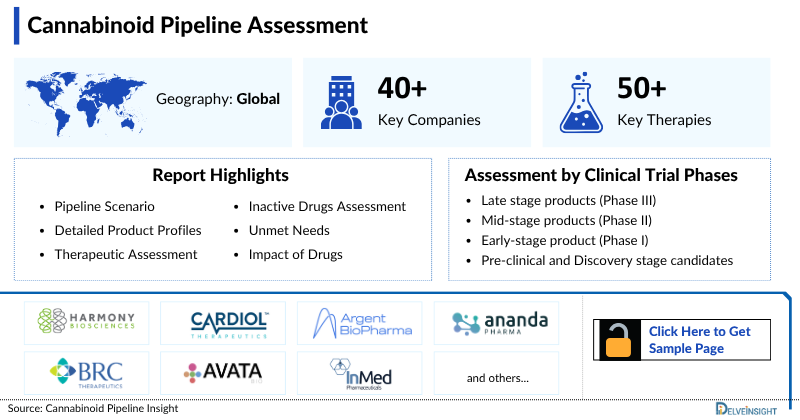
"Cannabinoids Pipeline Insight, 2026" report by DelveInsight outlays comprehensive insights of present scenario and growth prospects across the indication. A detailed picture of the Cannabinoids pipeline landscape is provided which includes the disease overview and Cannabinoids treatment guidelines. The assessment part of the report embraces, in depth Cannabinoids commercial assessment and clinical assessment of the pipeline products under development. In the report, detailed description of the drug is given which includes mechanism of action of the drug, clinical studies, NDA approvals (if any), and product development activities comprising the technology, Cannabinoids collaborations, licensing, mergers and acquisition, funding, designations and other product related details.
Discover the latest Cannabinoids pipeline insights, emerging therapies, and clinical advancements shaping the future of treatment in 2026.
Cannabinoids Report Highlights
- The Cannabinoids companies and academics are working to assess challenges and seek opportunities that could influence Cannabinoids R&D. The therapies under development are focused on novel approaches to treat/improve Cannabinoids.
Cannabinoids Emerging Drugs Analysis
This segment of the Cannabinoids report encloses its detailed analysis of various drugs in different stages of clinical development, including Phase III, II, I, Preclinical and Discovery. It also helps to understand clinical trial details, expressive pharmacological action, agreements and collaborations, and the latest news and press releases.
Cannabinoids Emerging Drugs
-
ZYN002: Harmony Biosciences
ZYN002 is the first-and-only pharmaceutically manufactured synthetic cannabidiol devoid of THC and formulated as a patent-protected permeation-enhanced gel for transdermal delivery through the skin and into the circulatory system. The product is manufactured through a synthetic process in a cGMP facility and is not extracted from the cannabis plant. ZYN002 does not contain THC, the compound that causes the euphoric effect of cannabis, and has the potential to be a nonscheduled product if approved.
Currently, the drug is in Phase III stage of its clinical development for the treatment of Fragile X Syndrome.
-
MRX1: Ananda Pharma
MRX1 is a high purity cannabidiol (CBD) formulation developed by Ananda Pharma as its lead investigational product. It is designed to target complex chronic inflammatory pain conditions such as chemotherapy induced peripheral neuropathy and endometriosis associated pain. The product is manufactured to pharmaceutical grade standards with a focus on consistency, safety, and regulatory compliance, positioning it as a potential therapeutic option in areas of high unmet medical need. Currently, the drug is in Phase II stage of its development for the treatment of Endometriosis-Associated Pain.
-
BRC-002: BRC Therapeutics
BRC-002 is a first-in-class botanically derived oral therapy specifically designed to address the severe pain and associated co-morbidities of Complex Regional Pain Syndrome (CRPS), a rare and debilitating chronic pain condition with limited effective treatment options. According to company’s pipeline, the drug is in Phase I stage of its development for the treatment of Complex Regional Pain Syndrome (CRPS).
-
INM-901: InMed Pharmaceuticals Inc.
INM‑901 is an investigational oral drug candidate developed by InMed Pharmaceuticals for the treatment of Alzheimer’s disease. It is a synthetic cannabinoid analog that targets CB1, CB2, and PPAR receptors, offering a multi-modal approach to neuroprotection and inflammation control. Preclinical studies show it enhances cognitive function, reduces neuroinflammation, and promotes neuronal growth. Its high lipophilicity allows it to cross the blood–brain barrier effectively. INM‑901 is currently in preclinical development with ongoing formulation and safety studies for Alzheimer’s disease.
Further product details are provided in the report……..
Cannabinoids Therapeutic Assessment
This Cannabinoids segment of the Cannabinoids report provides insights about the different Cannabinoids drugs segregated based on following parameters that define the scope of the report, such as:
Major Players in Cannabinoids
- There are approx. 40+ key companies which are developing the therapies for Cannabinoids. The companies which have their Cannabinoids drug candidates in the most advanced stage, i.e. Phase III include, Harmony Biosciences.
Phases
DelveInsight’s report covers around 50+ products under different phases of clinical development like
- Late stage products (Phase III)
- Mid-stage products (Phase II)
- Early-stage product (Phase I) along with the details of
- Pre-clinical and Discovery stage candidates
- Discontinued & Inactive candidates
Cannabinoids Route of Administration
Cannabinoids pipeline report provides the therapeutic assessment of the pipeline drugs by the Route of Administration. Products have been categorized under various ROAs such as
- Oral
- Intravenous
- Subcutaneous
- Parenteral
- Topical
Cannabinoids Molecule Type
Products have been categorized under various Molecule types such as
- Recombinant fusion proteins
- Small molecule
- Monoclonal antibody
- Peptide
- Polymer
- Gene therapy
Cannabinoids Product Type
Cannabinoids Drugs have been categorized under various product types like Mono, Combination and Mono/Combination.
Cannabinoids Clinical Trials Activities
The Cannabinoids Pipeline report provides insights into Cannabinoids Pipeline clinical trial within Phase III, II, I, preclinical and discovery stage. It also analyses Cannabinoids therapeutic drugs key players involved in developing key drugs.
Cannabinoids Pipeline Development Activities
The Cannabinoids Clinical Trials analysis report covers the detailed information of collaborations, acquisition and merger, licensing along with a thorough therapeutic assessment of emerging Cannabinoids drugs.
Cannabinoids Report Insights
- Cannabinoids Pipeline Analysis
- Therapeutic Cannabinoids Assessment
- Cannabinoids Market Unmet Needs
- Impact of Cannabinoids Drugs
Cannabinoids Report Assessment
- Cannabinoids Pipeline Product Profiles
- Cannabinoids Therapeutic Assessment
- Cannabinoids Pipeline Assessment
- Inactive Cannabinoids drugs assessment
- Cannabinoids Market Unmet Needs
Key Questions Answered in the Cannabinoids Pipeline Report
- Current Cannabinoids Treatment Scenario and Emerging Therapies:
- How many Cannabinoids companies are developing Cannabinoids drugs?
- How many Cannabinoids drugs are developed by each company?
- How many Cannabinoids emerging drugs are in mid-stage, and late-stage of development for the treatment of Cannabinoids?
- What are the Cannabinoids key collaborations (Industry–Industry, Industry–Academia), Mergers and acquisitions, licensing activities related to the Cannabinoids therapeutics?
- What are the recent trends, drug types and novel technologies developed to overcome the limitation of existing therapies?
- What are the Cannabinoids clinical studies going on for Cannabinoids and their status?
- What are the Cannabinoids key designations that have been granted to the emerging drugs?
Cannabinoids Key Players
- Harmony Biosciences
- Cardiol Therapeutics
- SciSparc
- Argent BioPharma
- Ananda Pharma
- BRC Therapeutics
- Avata Biosciences
- InMed Pharmaceuticals Inc.
- MIRA Pharmaceuticals Inc.
- Bionorica SE
- Neurotech International
- Botanix SB Inc.
- Octavian Therapeutics
- ZYUS Life Sciences Corp.
- Avicanna Inc.
- Raphael Pharmaceutical
- EPM Therapeutics
- Polyrizon
- Artelo Biosciences
- Virpax Pharmaceuticals
Cannabinoids Key Products
- ZYN-002
- CardiolRx
- SCI-110
- CannEpil
- MRX1
- BRC-002
- AVAT-021
- INM-901
- MIRA-55
- BX-1
- NTI164
- BTX 1801
- OCT130401
- Trichomylin
- AVCN-319301a
- HPC1
- EMP301
- SCI-160
- ART 12.11
- NobrXiol

