
Checkpoint Inhibitor Refractory Cancer Market Summary
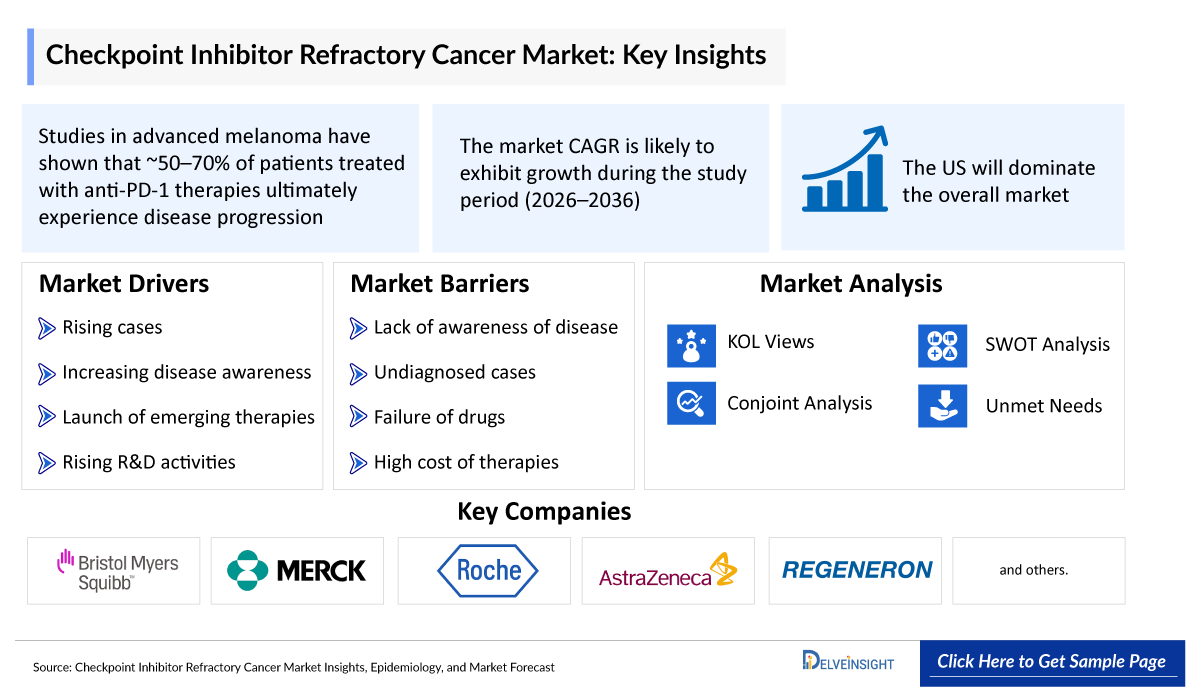
- The Checkpoint Inhibitor Refractory Cancer Market Dynamics are expected to evolve significantly during the forecast period, driven by the increasing adoption of immune checkpoint inhibitors (ICIs), growing recognition of primary and acquired resistance mechanisms, and the urgent need for novel therapies capable of restoring antitumor immune responses in patients who fail to benefit from existing immunotherapies.
- The leading Checkpoint Inhibitor Refractory Cancer Companies include Bristol-Myers Squibb, AstraZeneca, Merck, Genentech/Hoffmann-La Roche, Regeneron Pharmaceuticals, Merck KGaA and Pfizer, Bristol-Myers Squibb, Janssen Research and Development, LLC, 4D pharma plc., 4SC AG, OncoSec Medical, Mirati Therapeutics, Ascentage Pharma Group, ENB Therapeutics, Inc., Exicure, Inc., Evelo Biosciences, Inc./Merck Sharp & Dohme Corp., Eisai, Kartos Therapeutics, Exelixis, ImmunityBio and others.
Checkpoint Inhibitor Refractory Cancer Market and Epidemiology Insights
- Checkpoint-inhibitor refractory cancer refers to tumors that demonstrate resistance or relapse following treatment with immune checkpoint inhibitors targeting PD-1, PD-L1, or CTLA-4 pathways. This challenge is observed across multiple tumor types, including Melanoma, Non-Small Cell Lung Cancer, Renal Cell Carcinoma, Urothelial Carcinoma, Hepatocellular Carcinoma, Head and Neck Cancer, and other solid tumors.
- The epidemiological burden of checkpoint-inhibitor refractory disease is increasing as the use of immunotherapy expands globally. Although immune checkpoint inhibitors have transformed cancer treatment, a substantial proportion of patients either fail to respond initially or eventually develop resistance, creating a large and growing population with limited therapeutic options.
- Current treatment strategies for checkpoint inhibitor–refractory cancers primarily involve chemotherapy, targeted therapies, combination immunotherapy regimens, antiangiogenic agents, cellular therapies, and enrollment in clinical trials. However, clinical outcomes remain suboptimal for many patients, particularly those with advanced or heavily pretreated disease.
- Resistance to immunotherapy remains a major unmet need, driven by complex mechanisms including immune exclusion, T-cell exhaustion, loss of antigen presentation, immunosuppressive tumor microenvironments, and adaptive resistance pathways that limit the effectiveness of existing checkpoint blockade therapies.
- Advances in tumor immunology and biomarker research are driving the development of next-generation immuno-oncology therapies designed to overcome resistance, enhance immune activation, and improve response durability in refractory patient populations.
- Checkpoint Inhibitor Refractory Cancer Emerging Therapies are increasingly focused on novel immune targets, including LAG-3, TIM-3, CTLA-4 combinations, cytokine-based therapies, Tumor-Infiltrating Lymphocyte (TIL) therapies, bispecific antibodies, cancer vaccines, and cellular immunotherapies aimed at restoring immune sensitivity in resistant tumors.
- Precision oncology approaches are gaining momentum, with growing emphasis on biomarker-guided patient selection, molecular profiling, immune signatures, and personalized treatment strategies to identify patients most likely to benefit from specific resistance-overcoming therapies.
- Several late-stage and early-stage investigational therapies are being evaluated for their ability to improve response rates, prolong survival, and re-establish immune control of tumors in checkpoint inhibitor–refractory settings, potentially transforming future treatment paradigms.
- As novel immuno-oncology therapies continue to advance through clinical development, the Checkpoint Inhibitor–Refractory Cancer Therapeutics Market is expected to witness substantial growth, driven by the need to improve outcomes, extend survival, and provide effective treatment options for patients who have exhausted currently available checkpoint inhibitor therapies.
Checkpoint-Inhibitor Refractory Cancer and Forecast in the 7MM
| 2025 Checkpoint-Inhibitor Refractory Cancer Market Size | ~USD XXXX |
| 2036 Checkpoint-Inhibitor Refractory Cancer Market Size | ~USD XXXX |
| Checkpoint-Inhibitor Refractory Cancer Growth Rate (2026–2036) | XX% CAGR |
Key Factors Driving the Growth of Checkpoint-Inhibitor Refractory Cancer Market
-
Growing Burden of Checkpoint Inhibitor Resistance
The expanding use of immune checkpoint inhibitors across multiple malignancies, including melanoma, non-small cell lung cancer (NSCLC), renal cell carcinoma, head and neck cancer, and urothelial carcinoma, has led to a growing population of patients who experience primary or acquired resistance to treatment. Despite the success of PD-1, PD-L1, and CTLA-4 inhibitors, many patients ultimately fail to achieve durable responses, creating a significant unmet need for therapies capable of overcoming checkpoint inhibitor resistance.
-
Rising Opportunities in Next-Generation Immuno-Oncology Therapies
Advances in the understanding of tumor immune evasion, T-cell exhaustion, alternative immune checkpoints, and the tumor microenvironment are driving the development of innovative therapeutic approaches. Emerging therapies such as Lifileucel (AMTAGVI), Botensilimab + Balstilimab, Domvanalimab + Zimberelimab, Visugromab (CTL-002), and CUE-101 are being investigated to restore antitumor immunity, enhance immune activation, and improve outcomes in patients who have progressed on prior checkpoint inhibitor therapy.
-
Emerging Checkpoint-Inhibitor Refractory Cancer Competitive Landscape
The competitive landscape is rapidly evolving with the development of diverse therapeutic modalities, including tumor-infiltrating lymphocyte (TIL) therapies, novel checkpoint combinations, cytokine-based immunotherapies, cancer vaccines, targeted therapies, and tumor microenvironment-modulating agents. Key therapies in development include Sitravatinib + Nivolumab, TAVO + Pembrolizumab, Visugromab (CTL-002), Bemcentinib + Pembrolizumab, Lifileucel (AMTAGVI), Botensilimab + Balstilimab, Domvanalimab + Zimberelimab, CUE-101, and CMP-001 + Nivolumab, among others, highlighting increasing industry focus on addressing immunotherapy resistance and improving long-term clinical outcomes.
DelveInsight's ‘Checkpoint-Inhibitor Refractory Cancer Market Insights, Epidemiology and Market Forecast – 2036’ report delivers an in-depth understanding of the Checkpoint-Inhibitor Refractory Cancer, historical and forecasted epidemiology, as well as Checkpoint-Inhibitor Refractory Cancer market trends in the United States, EU4 (Germany, Spain, Italy, and France) and the United Kingdom, and Japan.
The Checkpoint-Inhibitor Refractory Cancer Treatment Market Report delivers a comprehensive analysis of the current treatment landscape, including standards of care, clinical practices, and evolving therapeutic algorithms. It evaluates Checkpoint-Inhibitor Refractory Cancer patient burden trends, revenue & market share dynamics, peak patient share & therapy uptake analysis, and provides an in-depth market size assessment and growth rate projections (Historical & Forecast 2022–2036) across global regions. The report highlights key unmet medical needs in Checkpoint-Inhibitor Refractory Cancer and maps the competitive and clinical landscape to uncover high‑value opportunities, providing a clear outlook on future market growth potential.
Scope of the Checkpoint-Inhibitor Refractory Cancer Market Report | |
|
Study Period |
2022–2036 |
|
Historical Year |
2022–2025 |
|
Forecast Period |
2026–2036 |
|
Base Year |
2026 |
|
Geographies Covered |
|
|
Checkpoint-Inhibitor Refractory Cancer CAGR (Study period/Forecast period) |
XX% (2026 ̶ 2036) |
|
Checkpoint-Inhibitor Refractory Cancer Epidemiology Segmentation Analysis |
Patient Burden Assessment
|
|
Checkpoint-Inhibitor Refractory Cancer Companies |
|
|
Checkpoint-Inhibitor Refractory Cancer Therapies |
|
|
Checkpoint-Inhibitor Refractory Cancer Market |
Segmented by
|
|
Analysis |
|
Checkpoint-Inhibitor Refractory Cancer Understanding
Checkpoint-Inhibitor Refractory Cancer Overview
Checkpoint-Inhibitor Refractory Cancer refers to a group of advanced malignancies that fail to respond to, or eventually progress despite treatment with Immune Checkpoint Inhibitors (ICIs), including programmed death-1 (PD-1), programmed death-ligand 1 (PD-L1), and cytotoxic T-lymphocyte-associated protein 4 (CTLA-4) inhibitors. Immune checkpoint blockade has transformed the treatment landscape for multiple cancers, including melanoma, non-small cell lung cancer (NSCLC), renal cell carcinoma, urothelial carcinoma, head and neck squamous cell carcinoma, and several other solid tumors.
However, a substantial proportion of patients exhibit either primary resistance, in which no meaningful response is achieved, or acquired resistance, where disease progression occurs following an initial clinical benefit. Mechanisms contributing to checkpoint inhibitor resistance include impaired antigen presentation, T-cell exhaustion, immunosuppressive tumor microenvironment signaling, loss of interferon pathway activity, low tumor immunogenicity, and activation of alternative immune escape pathways.
As a result, checkpoint-inhibitor refractory cancer remains a major clinical challenge associated with poor prognosis, limited treatment options, and significant unmet medical need.
Checkpoint-Inhibitor Refractory Cancer Diagnosis
Checkpoint Inhibitor Refractory Cancer Diagnosis is primarily based on clinical and radiographic evidence of disease progression during or following treatment with immune checkpoint inhibitors. Assessment typically involves serial imaging studies such as Computed Tomography (CT), Magnetic Resonance Imaging (MRI), or Positron Emission Tomography (PET) scans, interpreted using standardized response criteria including RECIST and immune-related response criteria.
Additional evaluation may include tumor molecular profiling, biomarker assessment, PD-L1 expression testing, tumor mutational burden (TMB) analysis, microsatellite instability (MSI) testing, and characterization of the tumor immune microenvironment to identify potential mechanisms of resistance and guide subsequent therapeutic strategies. Increasing use of genomic and immunologic biomarkers is improving understanding of resistance patterns and supporting the development of personalized treatment approaches for patients with checkpoint-inhibitor refractory disease.
Further details are provided in the report.
Checkpoint-Inhibitor Refractory Cancer Treatment
The Checkpoint Inhibitor Refractory Cancer Treatment landscape is primarily focused on overcoming immune resistance, restoring antitumor immune responses, controlling disease progression, prolonging survival, and improving quality of life. Management typically involves a multidisciplinary approach that combines immunotherapy-based strategies, targeted therapies, adoptive cell therapies, chemotherapy, radiation therapy, and biomarker-guided treatment selection.
Checkpoint Inhibitor Refractory Cancer treatment choice depends on factors such as tumor type, prior response to immune checkpoint inhibitors, molecular profile, disease burden, performance status, and the mechanisms underlying immune resistance. Given the poor prognosis associated with treatment-refractory disease, early identification of resistance and timely therapeutic intervention remain critical components of patient management.
Current Checkpoint Inhibitor Refractory Cancer treatment strategies vary according to tumor type and may include alternative immune checkpoint combinations, targeted therapies, chemotherapy, radiotherapy, tumor-infiltrating lymphocyte (TIL) therapy, and enrollment in clinical trials investigating novel immuno-oncology approaches. Recently approved therapies such as Lifileucel (AMTAGVI) have demonstrated the potential of adoptive cell therapy in patients with advanced melanoma progressing after checkpoint inhibitor treatment.
In addition, targeted agents such as Erdafitinib (BALVERSA) and combination immunotherapy regimens are being utilized in selected patient populations based on underlying molecular characteristics. Despite these advances, treatment options remain limited for many patients who develop primary or acquired resistance to immune checkpoint blockade, and long-term outcomes remain suboptimal.
Consequently, the Checkpoint Inhibitor Refractory Cancer Treatment Landscape is rapidly evolving toward next-generation immunotherapies and resistance-overcoming strategies. Emerging therapies such as Botensilimab + Balstilimab, Domvanalimab + Zimberelimab, Sitravatinib + Nivolumab, Bemcentinib + Pembrolizumab, Visugromab (CTL-002), CUE-101, CMP-001 + Nivolumab, and TAVO + Pembrolizumab are being investigated to enhance T-cell activation, reverse immune suppression, modulate the tumor microenvironment, and improve responses in patients with checkpoint-inhibitor-refractory disease. These innovative approaches have the potential to reshape the future treatment paradigm by addressing the underlying mechanisms of immune resistance and improving long-term clinical outcomes.
Further details related to country-based variations are provided in the report.
Checkpoint-Inhibitor Refractory Cancer Unmet Needs
The section “unmet needs of Checkpoint-Inhibitor Refractory Cancer” outlines the critical gaps between the current state of patient care, diagnosis, and the ideal & effective management of the disease. It highlights the obstacles experienced by patients, clinicians, and researchers and identifies potential solutions for future progress.
- Limited Availability of Effective Post-Immunotherapy Treatment Options: Despite the widespread adoption of immune checkpoint inhibitors, therapeutic options remain limited for patients who develop primary or acquired resistance, leaving many with poor prognosis and few effective treatment alternatives.
- Persistent Tumor Immune Evasion and Resistance Mechanisms: Complex resistance pathways—including impaired antigen presentation, T-cell exhaustion, immunosuppressive tumor microenvironments, alternative immune checkpoint activation, and loss of interferon signaling—continue to limit the effectiveness of current immunotherapy approaches.
- Lack of Predictive Biomarkers for Treatment Selection: Although several biomarkers are under investigation, there remains a significant need for validated tools capable of identifying patients most likely to develop checkpoint inhibitor resistance and predicting response to subsequent therapies.
- Need for Durable and Broadly Applicable Immunotherapy Strategies: Existing treatment approaches often provide limited and tumor-specific benefits, highlighting the need for therapies capable of generating durable responses across multiple cancer types and resistance settings.
Comprehensive unmet needs insights in Checkpoint-Inhibitor Refractory Cancer and their strategic implications are provided in the full report.
Checkpoint-Inhibitor Refractory Cancer Epidemiology
Key Findings from Checkpoint-Inhibitor Refractory Cancer Epidemiological Analysis and Forecast
- In many cancers such as melanoma, NSCLC, renal cell carcinoma, urothelial carcinoma, and head and neck cancers, approximately 40–60% of patients experience primary resistance to PD-1/PD-L1 inhibitor therapy, while a substantial proportion of initial responders eventually develop acquired resistance and disease progression.
- Studies in advanced melanoma have shown that approximately 50–70% of patients treated with anti-PD-1 therapies ultimately experience disease progression, highlighting the significant unmet need for therapies capable of overcoming acquired immunotherapy resistance.
- In advanced NSCLC, despite the widespread adoption of PD-1 and PD-L1 inhibitors, a large proportion of patients either fail to respond initially or develop resistance after an initial response, making checkpoint-inhibitor refractory disease an increasingly important clinical challenge in routine oncology practice.
- The epidemiological burden of checkpoint-inhibitor refractory cancer is expected to increase during the forecast period due to expanding use of immunotherapy across multiple tumor types and earlier lines of treatment, resulting in a growing population of patients progressing after checkpoint blockade.
- The United States is expected to account for the largest share of the checkpoint-inhibitor refractory cancer population across the 7MM during the forecast period, driven by high immunotherapy utilization rates, broad access to innovative oncology treatments, and a large cancer patient population.
- Among the EU4 and the UK, Germany is expected to contribute the highest number of checkpoint-inhibitor refractory cancer cases, followed by France and Italy, owing to higher adoption of immune checkpoint inhibitors and greater prevalence of immunotherapy-treated cancers.
- Melanoma and NSCLC are expected to represent the largest contributor to the checkpoint-inhibitor refractory patient pool, reflecting extensive use of PD-1/PD-L1 inhibitors and the substantial proportion of patients who ultimately develop resistance.
- The checkpoint-inhibitor refractory cancer population is anticipated to expand steadily between 2022 and 2036, driven by improving survival among cancer patients, broader indications for checkpoint inhibitors, increasing treatment duration, and growing recognition of primary and acquired resistance mechanisms.
- Increasing use of molecular profiling, biomarker testing, and immune characterization is expected to improve identification and stratification of checkpoint-inhibitor refractory patients, supporting the development of next-generation immunotherapies and personalized treatment strategies.
Checkpoint Inhibitor Refractory Cancer Epidemiology Segmentation in the 7MM
- Total Incidence Cases of Cancer by types
- Total Checkpoint-Inhibitor treated patients
- Checkpoint-Inhibitor refractory patients
Checkpoint Inhibitor Refractory Cancer Market Recent Breakthroughs and Developments
- In August 2026, Replimune received accelerated FDA approval for Tudriqev (vusolimogene oderparepvec-wtpg) in combination with nivolumab for adults with unresectable advanced cutaneous melanoma that has progressed following an anti-PD-1–based regimen. The approval represents an important development for patients with anti-PD-1-refractory melanoma.
Checkpoint-Inhibitor Refractory Cancer Drug Analysis & Competitive Analysis
The Checkpoint-Inhibitor Refractory Cancer Drug Chapter provides a detailed, market-focused review of approved therapies and the emerging Checkpoint Inhibitor Refractory Cancer pipeline across Phase I–III clinical trials. It covers the Checkpoint Inhibitor Refractory Cancer mechanism of action, Checkpoint Inhibitor Refractory Cancer Clinical Trials data, regulatory approvals, patents, collaborations, and strategic partnerships for each therapy, along with their advantages, limitations, and recent developments.
This section offers critical insights into the Checkpoint-Inhibitor Refractory Cancer treatment landscape, supporting market assessment, competitive analysis, and growth forecasting for the Checkpoint-Inhibitor Refractory Cancer therapeutics market.
Checkpoint-Inhibitor Refractory Cancer Approved Therapies
-
Lifileucel (AMTAGVI): Iovance Biotherapeutics
Lifileucel is an autologous tumor-infiltrating lymphocyte (TIL) cell therapy developed for the treatment of adult patients with unresectable or metastatic melanoma previously treated with a PD-1 blocking antibody and, if BRAF V600 mutation-positive, a BRAF inhibitor with or without a MEK inhibitor in the United States. Lifileucel is designed to harness and expand a patient's own tumor-reactive T cells ex vivo, followed by reinfusion after lymphodepleting chemotherapy to generate a potent antitumor immune response in patients with checkpoint inhibitor-refractory disease.
Lifileucel is developed and marketed by Iovance Biotherapeutics. The therapy represents the first FDA-approved tumor-infiltrating lymphocyte (TIL) therapy and establishes a new treatment option for patients whose disease has progressed following immune checkpoint inhibitor treatment.
In February 2026, Iovance Biotherapeutics announced data demonstrating that patients with advanced melanoma experienced high response rates when treated with commercial lifileucel in a real-world clinical study.
Checkpoint-Inhibitor Refractory Cancer Pipeline Analysis
-
Sitravatinib + Nivolumab: Mirati Therapeutics/Bristol Myers Squibb
Sitravatinib is an oral spectrum-selective tyrosine kinase inhibitor targeting TAM family receptors (TYRO3, AXL, and MERTK), VEGFR, and MET pathways, designed to reprogram the immunosuppressive tumor microenvironment and restore sensitivity to immune checkpoint blockade. In combination with nivolumab, the regimen is being investigated in patients with advanced solid tumors that have progressed following prior checkpoint inhibitor therapy, particularly in non-small cell lung cancer (NSCLC) and renal cell carcinoma (RCC).
Clinical studies have demonstrated the potential of sitravatinib to overcome acquired resistance to PD-1 inhibitors by reducing suppressive myeloid-cell populations and enhancing T-cell activity. In April 2025, updated Phase II data in metastatic clear-cell RCC showed that sitravatinib plus nivolumab continued to demonstrate clinical activity in patients progressing after prior immune checkpoint inhibitor treatment, supporting its potential role in the checkpoint inhibitor-refractory setting.mk
-
Tavokinogene telseplasmid (TAVO) + Pembrolizumab: OncoSec Medical
Tavokinogene telseplasmid is an investigational intratumoral IL-12 plasmid immunotherapy delivered via electroporation to stimulate localized cytokine production and enhance antitumor immune responses. When combined with pembrolizumab, TAVO is designed to convert immunologically “cold” tumors into “hot” tumors, thereby improving responsiveness to PD-1 blockade.
The combination has been evaluated in multiple checkpoint inhibitor-resistant malignancies, including metastatic melanoma and triple-negative breast cancer (TNBC). TAVO received Fast Track designation from the FDA for metastatic melanoma progressing after prior anti-PD-1 therapy, and ongoing studies have continued to evaluate its ability to resensitize tumors that have become refractory to checkpoint inhibitors.
Comparison of Checkpoint Inhibitor Refractory Cancer Emerging Drugs Under Development | |||||||
|
Drug Name |
Company |
Highest Phase |
Indication |
RoA |
MoA |
Molecule Type |
Anticipated Launch in the US |
|
Botensilimab + Balstilimab |
Agenus |
III |
Checkpoint inhibitor-refractory microsatellite-stable metastatic colorectal cancer (MSS-mCRC) and other advanced solid tumors |
IV |
Fc-enhanced CTLA-4 blockade + PD-1 inhibition to enhance innate and adaptive antitumor immune responses |
Monoclonal antibody |
2028 |
|
Sitravatinib + Nivolumab |
Mirati Therapeutics |
II |
Checkpoint inhibitor-refractory advanced solid tumors |
Oral, IV |
Multi-kinase inhibition (TAM, VEGFR, MET) + PD-1 blockade |
Small Molecule |
Information is available in the full report |
|
Tavokinogene Telseplasmid (TAVO) + Pembrolizumab |
OncoSec Medical |
II |
Checkpoint inhibitor-refractory metastatic melanoma and advanced solid tumors |
Intratumoral, IV |
IL-12 plasmid gene therapy delivered via electroporation + PD-1 blockade |
Monoclonal antibody |
Information is available in the full report |
|
CTL-002 |
Compass Therapeutics |
II |
Advanced solid tumors including checkpoint inhibitor-refractory cancers |
IV |
Anti-DKK1 monoclonal antibody |
Monoclonal Antibody |
Information is available in the full report |
|
Note: Launch insights are provisional and may change with future report updates or the occurrence of major key catalysts. | |||||||
Note: A detailed emerging therapies assessment will be provided in the final report
Checkpoint-Inhibitor Refractory Cancer Market Outlook
The Checkpoint-Inhibitor Refractory Cancer Therapeutics Market is expected to witness substantial growth during the forecast period, driven by the increasing use of immune checkpoint inhibitors across multiple tumor types, rising incidence of acquired and primary resistance to PD-1/PD-L1 therapies, and growing demand for effective post-checkpoint treatment options.
A significant proportion of patients with melanoma, non-small cell lung cancer, renal cell carcinoma, head and neck squamous cell carcinoma, colorectal cancer, and other solid tumors ultimately experience disease progression despite checkpoint inhibitor therapy, creating a large and expanding population with high unmet medical need. The United States, EU4, the UK, and Japan are expected to remain the major markets due to broad adoption of immuno-oncology therapies, advanced oncology infrastructure, and increasing access to novel immune-based treatments.
The current Checkpoint Inhibitor Refractory Cancer treatment landscape remains heterogeneous and largely dependent on tumor-specific salvage therapies, chemotherapy, targeted agents, re-challenge strategies, and participation in clinical trials. While some patients derive benefit from these approaches, durable responses remain limited, and outcomes are often poor, particularly in tumors that are intrinsically resistant to immune checkpoint blockade.
As a result, Checkpoint Inhibitor Refractory Cancer Therapeutics Market Dynamics are increasingly shifting toward next-generation immunotherapies and combination strategies designed to overcome resistance mechanisms, enhance immune activation, and reprogram the tumor microenvironment. Checkpoint Inhibitor Refractory Cancer Emerging Therapies such as Botensilimab + Balstilimab (Agenus), Lifileucel (AMTAGVI, Iovance Biotherapeutics), Sitravatinib + Nivolumab, CUE-101, and CMP-001 + Nivolumab have the potential to reshape the treatment paradigm for patients who have progressed after prior checkpoint inhibitor therapy.
The United States is expected to remain the largest commercial market owing to high checkpoint inhibitor utilization, strong oncology treatment infrastructure, favorable reimbursement dynamics, and rapid adoption of innovative immuno-oncology products. Europe is anticipated to experience steady growth supported by increasing availability of advanced immunotherapies and broader implementation of precision oncology approaches, while Japan is expected to benefit from expanding use of immune checkpoint inhibitors and increasing focus on novel therapies for resistant disease.
The Checkpoint Inhibitor Refractory Cancer Therapeutics Market is also expected to benefit from ongoing research into resistance biology, including T-cell exhaustion, myeloid-driven immune suppression, TGF-β signaling, TIGIT pathways, and tumor-specific antigen-directed immune activation. Despite these advances, significant unmet needs remain, including limited durable treatment options after checkpoint failure, lack of validated biomarkers to guide therapy selection, high development complexity for combination immunotherapies, and the substantial clinical burden associated with progressive disease.
Consequently, companies developing differentiated therapies capable of overcoming resistance, generating durable responses, and improving survival outcomes are expected to gain a significant competitive advantage in the evolving Checkpoint-Inhibitor Refractory Cancer market.
Further details will be provided in the report….
Checkpoint Inhibitor Refractory Cancer Drug Class/Insights into Leading Emerging and Marketed Therapies (2022–2036 Forecast)
The Checkpoint-Inhibitor Refractory Cancer Therapeutics Market comprises tumor-infiltrating lymphocyte (TIL) therapies and adoptive cell therapies, next-generation checkpoint inhibitor combinations, immune microenvironment modulators and kinase inhibitors, innate immune activators and pattern-recognition receptor agonists, antigen-specific T-cell activators and targeted immunotherapies, and emerging cytokine- and immune-reprogramming-based therapies.
These drug classes are designed to overcome primary and acquired resistance to PD-1/PD-L1 inhibitors by enhancing antitumor immunity, restoring T-cell function, modifying the tumor microenvironment, and generating durable responses in patients who have progressed following checkpoint inhibitor therapy.
- Tumor-infiltrating lymphocyte (TIL) therapies and adoptive cell therapies: These therapies utilize autologous tumor-reactive lymphocytes expanded ex vivo and reinfused to generate potent antitumor immune responses independent of existing checkpoint inhibitor resistance mechanisms. They represent one of the most advanced approaches for patients who have failed prior immunotherapy. Representative therapies include Lifileucel (AMTAGVI) by Iovance Biotherapeutics.
- Next-generation checkpoint inhibitor combinations: These therapies aim to improve upon conventional PD-1/PD-L1 blockade by targeting complementary immune checkpoints and enhancing T-cell activation. They are designed to overcome immune exhaustion and restore responsiveness in tumors that have become resistant to standard checkpoint inhibitors. Key therapies include Botensilimab + Balstilimab (CTLA-4 + PD-1), Domvanalimab + Zimberelimab (TIGIT + PD-1), and other novel checkpoint combinations under clinical development.
- Immune microenvironment modulators and kinase inhibitors: These therapies target immunosuppressive signaling pathways within the tumor microenvironment, including TAM receptors, AXL, VEGFR, and MET pathways, to reduce myeloid-cell-mediated immune suppression and enhance the efficacy of checkpoint blockade. Representative therapies include Sitravatinib + Nivolumab and Bemcentinib + Pembrolizumab.
Further details will be provided in the report….
Checkpoint-Inhibitor Refractory Cancer Drug Uptake
This section focuses on the uptake rate of potential Checkpoint Inhibitor Refractory Cancer drugs expected to be launched in the market during the forecast period (2026–2036). The analysis covers the Checkpoint-Inhibitor Refractory Cancer Drug Uptake market's uptake by drugs, patient uptake by therapy, and sales of each drug.
The uptake of therapies in the Checkpoint-Inhibitor Refractory Cancer Therapeutics Market is expected to vary across conventional salvage therapies, targeted therapies, adoptive cell therapies, next-generation checkpoint inhibitor combinations, immune microenvironment modulators, and emerging immuno-oncology platforms during the forecast period. Existing treatment approaches, including chemotherapy, targeted therapies, and tumor-specific salvage regimens, are expected to maintain substantial utilization due to their established clinical use, broad availability, and incorporation into treatment guidelines. However, their uptake may remain constrained by limited durability of response, cumulative toxicity, and suboptimal outcomes in patients who have progressed following PD-1/PD-L1 inhibitor therapy.
Checkpoint Inhibitor Refractory Cancer Emerging therapies such as Botensilimab + Balstilimab (Agenus), Sitravatinib + Nivolumab, Bemcentinib + Pembrolizumab, CUE-101, and CMP-001 + Nivolumab are expected to attract considerable clinical interest due to their potential to address distinct mechanisms of checkpoint inhibitor resistance. Botensilimab plus balstilimab may achieve particularly strong uptake if ongoing registrational studies continue to demonstrate meaningful survival benefits in microsatellite-stable colorectal cancer and other immunotherapy-resistant tumors.
Similarly, therapies targeting immune suppression within the tumor microenvironment, such as sitravatinib and bemcentinib-based combinations, could gain adoption by enhancing responsiveness to existing checkpoint inhibitors and extending the utility of immunotherapy across multiple tumor types.
Over the forecast period, treatment patterns are expected to evolve from reliance on conventional salvage approaches toward more personalized and mechanism-driven immunotherapy strategies. Increasing understanding of resistance biology, expanding biomarker-guided treatment selection, and continued advances in cell therapy, innate immune activation, and next-generation checkpoint modulation are expected to support broader adoption of innovative therapies.
Furthermore, growing integration of precision oncology and multidisciplinary cancer care models may accelerate the uptake of therapies capable of delivering durable responses in heavily pretreated patient populations.
Overall, the Checkpoint-Inhibitor Refractory Cancer Therapeutics Market is expected to transition toward highly targeted immuno-oncology approaches focused on overcoming resistance and restoring antitumor immunity. Therapies capable of improving response durability, prolonging survival, addressing diverse resistance mechanisms, and providing meaningful clinical benefit after checkpoint inhibitor failure are expected to drive future uptake and reshape the treatment landscape between 2026 and 2036.
Further detailed analysis of emerging therapies' drug uptake in the report…
Checkpoint Inhibitor Refractory Cancer Market Access and Reimbursement
Reimbursement is a crucial factor that affects the drug’s access to the market. Often, the decision to reimburse comes down to the price of the drug relative to the benefit it produces in treated patients. To reduce the healthcare burden of these high-cost therapies, many payment models are being considered by payers and other industry insiders.
Further details are provided in the final report….
Checkpoint-Inhibitor Refractory Cancer Therapies Price Scenario & Trends
Pricing and analogue assessment of Checkpoint-Inhibitor Refractory Cancer therapies highlights evolving price dynamics structures. This section summarizes the cost of approved treatments, closest and most appropriate analogue selection for emerging therapies, and understanding of how pricing influences market access, adherence, and long-term uptake.
Further details are provided in the final report….
Checkpoint Inhibitor Refractory Cancer Industry Experts and Physician Views
To keep up with Checkpoint-Inhibitor Refractory Cancer Therapeutics Market Trends, we take Key Opinion Leaders (KOLs) and Subject Matter Experts (SMEs) opinions working in the domain through primary research to fill the data gaps and validate our secondary research. Industry experts were contacted for insights on the Checkpoint-Inhibitor Refractory Cancer emerging therapies, evolving Checkpoint Inhibitor Refractory Cancer Treatment Landscape, patient adherence to conventional therapies, therapy switching trends, drug adoption and uptake, accessibility challenges, and epidemiology and real-world prescription patterns in Checkpoint-Inhibitor Refractory Cancer, including MD, PhD, Instructor, Postdoctoral Researcher, Professor, Researcher, and others.
DelveInsight’s analysts connected with 10+ KOLs to gather insights; however, interviews were conducted with 6+ KOLs in the 7MM. Centers such as the University of Texas MD Anderson Cancer Center, Memorial Sloan Kettering Cancer Center, Dana-Farber Cancer Institute/Harvard Medical School, University of Chicago Medicine Comprehensive Cancer Center, etc. were contacted. Their opinion helps understand and validate current and emerging Checkpoint-Inhibitor Refractory Cancer therapies, highlight unmet medical needs, provide epidemiological context, and support strategic decisions for market access, therapy adoption, and pipeline prioritization in Checkpoint-Inhibitor Refractory Cancer.
Region |
Key Opinion Leaders (KOLs) and Subject Matter Experts (SMEs) |
|
United States |
“Checkpoint inhibitor-refractory cancer represents one of the most significant challenges in modern immuno-oncology. Although immune checkpoint inhibitors have transformed outcomes across multiple tumor types, a substantial proportion of patients either fail to respond or eventually develop resistance. There remains a critical need for therapies capable of overcoming immune escape mechanisms, restoring antitumor immunity, and delivering durable responses after checkpoint inhibitor failure.” |
|
Germany |
“Current treatment options for checkpoint inhibitor-refractory cancers remain limited and are often dependent on tumor-specific salvage therapies, chemotherapy, or targeted agents with modest clinical benefit. The emergence of next-generation immunotherapies, including cell therapies, novel checkpoint combinations, and immune microenvironment modulators, has generated considerable interest as potential strategies to address this significant unmet medical need.” |
Checkpoint Inhibitor Refractory Cancer Report Qualitative Analysis: SWOT and Conjoint Analysis
We perform qualitative and Checkpoint Inhibitor Refractory Cancer Therapeutics Market Intelligence analysis using various approaches, such as SWOT analysis and conjoint analysis. In the SWOT analysis of Checkpoint-Inhibitor Refractory Cancer, strengths, weaknesses, opportunities, and threats in terms of disease diagnosis, patient awareness, patient burden, competitive landscape, cost-effectiveness, and geographical accessibility of therapies are provided.
Conjoint analysis analyzes Checkpoint Inhibitor Refractory Cancer Emerging Therapies based on relevant attributes such as safety, efficacy, frequency of administration, route of administration, and order of entry. Scoring is given based on these parameters to analyze the effectiveness of therapy.
The team of analysts analyzes promising Checkpoint Inhibitor Refractory Cancer Emerging Therapies based on relevant attributes such as safety, efficacy, frequency of administration, route of administration, and order of entry. In efficacy, the trial’s primary and secondary outcome measures are evaluated, whereas the therapies’ safety is evaluated, wherein the acceptability, tolerability, and adverse events are majorly observed.
In addition, the scoring is also based on the route of administration, order of entry, probability of success, and the addressable patient pool for each therapy. According to these parameters, the final weightage score and the ranking of the emerging therapies are decided.
Scope of the Checkpoint Inhibitor Refractory Cancer Market Report
- The Checkpoint Inhibitor Refractory Cancer Therapeutics Market Report covers a segment of key events, an executive summary, a descriptive overview, explaining its causes, signs and symptoms, pathogenesis, and currently available treatments.
- Comprehensive insight has been provided into the epidemiology segments and forecasts, the future growth potential of the diagnosis rate, and disease progression along treatment guidelines.
- Additionally, an all-inclusive account of both the current and emerging treatments, along with the elaborative profiles of late-stage and prominent therapies, will have an impact on the current Checkpoint Inhibitor Refractory Cancer Treatment landscape.
- A detailed review of the Checkpoint-Inhibitor Refractory Cancer Therapeutics Market, historical and forecasted Checkpoint Inhibitor Refractory Cancer Treatment Market Size, Checkpoint Inhibitor Refractory Cancer Drugs Market Share by therapies, detailed assumptions, and rationale behind our approach is included in the report, covering the 7MM drug outreach.
- The Checkpoint Inhibitor Refractory Cancer Therapeutics Market Report provides an edge while developing business strategies by understanding trends through SWOT analysis and expert insights/KOL views, patient journey, and treatment preferences that help in shaping and driving the 7MM Checkpoint-Inhibitor Refractory Cancer Drugs Market.
Checkpoint Inhibitor Refractory Cancer Market Report Insights
- Checkpoint-Inhibitor Refractory Cancer Patient Population Forecast
- Checkpoint-Inhibitor Refractory Cancer Therapeutics Market Size
- Checkpoint-Inhibitor Refractory Cancer Pipeline Analysis
- Checkpoint-Inhibitor Refractory Cancer Market Size and Trends
- Checkpoint-Inhibitor Refractory Cancer Market Opportunity (Current and forecasted)
Checkpoint Inhibitor Refractory Cancer Market Report Key Strengths
- Epidemiology‑based (Epi‑based) Bottom‑up Forecasting
- Artificial Intelligence (AI)-enabled Market Research Report
- 11-year forecast
- Checkpoint-Inhibitor Refractory Cancer Market Outlook (North America, Europe, Asia-Pacific)
- Patient Burden Trends (by geography)
- Checkpoint-Inhibitor Refractory Cancer Treatment Addressable Market (TAM)
- Checkpoint-Inhibitor Refractory Cancer Competitive Landscape
- Checkpoint-Inhibitor Refractory Cancer Major Companies Insights
- Checkpoint-Inhibitor Refractory Cancer Price Trends and Analogue Assessment
- Checkpoint-Inhibitor Refractory Cancer Therapies Drug Adoption/Uptake
- Checkpoint-Inhibitor Refractory Cancer Therapies Peak Patient Share Analysis
Checkpoint Inhibitor Refractory Cancer Market Report Assessment
- Current Checkpoint-Inhibitor Refractory Cancer Treatment Practices
- Checkpoint-Inhibitor Refractory Cancer Unmet Needs
- Checkpoint-Inhibitor Refractory Cancer Clinical Development Analysis
- Checkpoint-Inhibitor Refractory Cancer Emerging Drugs Product Profiles
- Checkpoint-Inhibitor Refractory Cancer Market Attractiveness
- Checkpoint-Inhibitor Refractory Cancer Qualitative Analysis (SWOT and Conjoint Analysis)
Key Questions Answered in the Checkpoint Inhibitor Refractory Cancer Therapeutics Market Report
Checkpoint Inhibitor Refractory Cancer Treatment Market Insights
- What was the Checkpoint-Inhibitor Refractory Cancer Treatment Market Size, the Checkpoint Inhibitor Refractory Cancer Market Size by therapies, Checkpoint Inhibitor Refractory Cancer Drugs Market Share (%) distribution in 2025, and what would it look like by 2036? What are the contributing factors for this growth?
- What are the anticipated pricing variations among different geographies for the emerging therapies in the future?
- What can be the future treatment paradigm of Checkpoint-Inhibitor Refractory Cancer?
- What are the disease risks, burdens, and unmet needs of Checkpoint-Inhibitor Refractory Cancer?
- What will be the growth opportunities across the 7MM concerning the patient population with Checkpoint-Inhibitor Refractory Cancer?
- Who is the major future competitor in the market, and how will the competitors affect their market share?
- What are the current options for the treatment of Checkpoint-Inhibitor Refractory Cancer?
- What are the current guidelines for treating Checkpoint-Inhibitor Refractory Cancer in the US, Europe, and Japan?
Reasons to Buy the Checkpoint Inhibitor Refractory Cancer Therapeutics Market Report
- The Checkpoint Inhibitor Refractory Cancer Therapeutics Market Report will help in developing business strategies by understanding the latest trends and changing treatment dynamics driving the Checkpoint-Inhibitor Refractory Cancer Drugs Market.
- Bottom-up forecasting builds from the affected population to product forecasts, delivering a robust, data-driven approach ideal for new therapies and novel classes.
- Insights on patient burden/disease: Checkpoint Inhibitor Refractory Cancer Incidence, evolution in diagnosis, and factors contributing to the change in the epidemiology of the disease during the forecast years.
- Understand the existing Checkpoint Inhibitor Refractory Cancer Drugs Market opportunities in varying geographies and the growth potential over the coming years.
- Identifying strong upcoming players in the Checkpoint Inhibitor Refractory Cancer Drugs Market will help devise strategies to help get ahead of competitors.
- Detailed analysis and ranking of class-wise potential current and Checkpoint Inhibitor Refractory Cancer emerging therapies under the conjoint analysis section to provide visibility around leading classes.
- To understand KOLs’ perspectives on the accessibility, acceptability, and compliance-related challenges of existing treatment to overcome barriers in the future.
- Detailed insights on the unmet needs of the existing Checkpoint Inhibitor Refractory Cancer Drugs Market so that the upcoming players can strengthen their development and launch strategy.
- This Artificial Intelligence (AI)-enabled report summarize and simplify complex datasets within the report into clear, actionable insights for stakeholders, investors, and healthcare providers, enabling faster, data-driven decisions.
Stay updated with us for Recent Articles @ New DelveInsight Blogs