Chemotherapy Induced Nausea and Vomiting Market Summary
- The CINV Market Size is anticipated to grow with a significant CAGR during the study period (2020-2034).
- The key CINV companies developing therapies invlude - Helsinn Healthcare TerSera Therapeutics, Merck, Novartis, GSK, Heron Therapeutics, Helsinn, Teva Pharma, and others.
CINV Market and Epidemiology Analysis
- Chemotherapy-induced nausea and vomiting (CINV) is a distressing side effect experienced by cancer patients undergoing chemotherapy. This condition significantly impacts patients' quality of life and treatment adherence.
- Chemotherapy-induced nausea and vomiting (CINV) is classified into five types: acute (within 24 hours of chemotherapy), delayed (24 hours to 5 days post-treatment), breakthrough (occurring despite prophylaxis), anticipatory (triggered by cues or anxiety from past experiences), and refractory (persisting in subsequent cycles despite prior antiemetic use).
- Studies have shown that without proper prevention and management, up to 70-80% of patients receiving chemotherapy may experience CINV to some extent.
- The chemotherapy-induced nausea and vomiting (CINV) market is projected to witness steady growth from 2025 to 2034, fueled by rising cancer Incident, increasing use of aggressive chemotherapy regimens, and greater emphasis on supportive cancer care. Advances in antiemetic therapies, including NK-1 receptor antagonists, 5-HT3 receptor antagonists, and combination regimens, are expected to drive market expansion and enhance patient quality of life.
- VARUB (rolapitant) and AKYNZEO (netupitant and palonosetron) are FDA-approved treatments of chemotherapy-induced nausea and vomiting (CINV), offering targeted receptor blockade to enhance antiemetic control and improve patient comfort during cancer therapy.
Request for unlocking the Sample Page of the "CINV Market Insights"
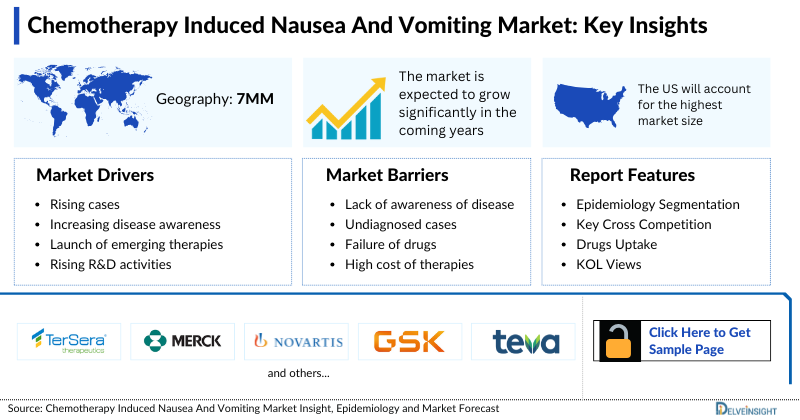
Key Factors Driving the Growth of the CINV Market
- Increasing global cancer burden and chemotherapy adoption: The rising incidence of cancer worldwide has led to greater use of chemotherapy, expanding the patient population susceptible to CINV and increasing demand for antiemetic therapies.
- Advancements in antiemetic drug development: Innovations such as NK1 receptor antagonists, long-acting formulations, and combination therapies have improved symptom control, encouraging wider clinical adoption.
- Strong guideline support and preventive treatment strategies: Updated international oncology guidelines emphasize prophylactic antiemetic use, driving routine prescribing of CINV therapies across treatment settings.
- Growing emphasis on patient quality of life and treatment adherence: Improved management of CINV is recognized as critical for maintaining chemotherapy adherence and enhancing patient quality of life, boosting utilization of supportive care drugs.
- Expanding access in emerging and community oncology markets: Better healthcare infrastructure, reimbursement support, and awareness of supportive care in emerging regions and community clinics are further fueling market growth.
DelveInsight’s comprehensive report titled “Chemotherapy Induced Nausea and Vomiting (CINV) Market Insights, Epidemiology, and Market Forecast – 2034” offers a detailed analysis of chemotherapy induced nausea and vomiting. The report presents historical and projected epidemiological data covering Total Incident Cases of Chemotherapy Induced Nausea and Vomiting (CINV), Chemotherapy Induced Nausea and Vomiting (CINV) Type-specific Cases, Age-specific Cases of Chemotherapy Induced Nausea and Vomiting (CINV), Gender-specific Cases of Chemotherapy Induced Nausea and Vomiting (CINV), Treated Cases of Chemotherapy Induced Nausea and Vomiting (CINV). In addition to epidemiology, the market report encompasses various aspects related to the patient population. These aspects include the diagnosis process, prescription patterns, physician perspectives, market accessibility, treatment options, and prospective developments in the market across seven major markets: the United States, EU4 (Germany, France, Italy, and Spain), the United Kingdom, and Japan, spanning from 2020 to 2034.
The report analyzes the existing treatment practices and unmet medical requirements in Chemotherapy Induced Nausea and Vomiting (CINV). It evaluates the market potential and identifies potential business prospects for enhancing therapies or interventions. This valuable information enables stakeholders to make well-informed decisions regarding product development and strategic planning for the market.
Scope of the CINV Market | |
|
Study Period |
2020 to 2034 |
|
Forecast Period |
2025-2034 |
|
Geographies Covered |
|
|
CINV Market |
|
|
CINV Market Size | |
|
CINV Companies |
Helsinn Healthcare TerSera Therapeutics, Merck, Novartis, GSK, Heron Therapeutics, Helsinn, Teva Pharma, and others |
|
CINV Epidemiology Segmentation |
|
Chemotherapy Induced Nausea and Vomiting Disease Understanding
Chemotherapy Induced Nausea and Vomiting Overview
Chemotherapy-induced nausea and vomiting (CINV) is one of the most common and distressing side effects of cancer treatment, significantly impacting patients’ quality of life and adherence to therapy. It occurs when cytotoxic chemotherapy triggers the release of neurotransmitters, such as serotonin and substance P, which activate the vomiting center in the brain. CINV can be classified into several types, including acute, delayed, anticipatory, breakthrough, and refractory, depending on the timing and response to therapy. Advances in supportive care have markedly reduced its incidence, yet CINV remains a substantial clinical challenge, especially in high-emetogenic chemotherapy regimens.
Chemotherapy Induced Nausea and Vomiting Diagnosis
Diagnosis of CINV is primarily clinical, based on patient-reported symptoms, treatment history, and the emetogenic potential of the administered chemotherapy agents. Assessment tools, such as patient diaries and standardized scoring systems, help quantify the severity and timing of symptoms. Risk factors including younger age, female gender, low alcohol intake, history of motion sickness, and anxiety are also considered when evaluating patients. No specific laboratory or imaging tests are required; instead, careful clinical evaluation ensures accurate classification and guides prophylactic and therapeutic decisions.
Chemotherapy Induced Nausea and Vomiting Treatment Algorithm
Management of CINV focuses on prevention rather than reactive treatment, with antiemetic regimens tailored to the emetogenic risk of chemotherapy. First-line preventive strategies typically involve a combination of 5-HT3 receptor antagonists (e.g., palonosetron), NK-1 receptor antagonists (e.g., rolapitant, aprepitant), and corticosteroids (e.g., dexamethasone). Agents such as VARUBI (rolapitant) and AKYNZEO (netupitant and palonosetron) are FDA-approved options that target multiple emetic pathways, improving control and patient comfort. Non-pharmacologic measures, including dietary adjustments, psychological support, and complementary therapies, can further aid symptom management. Continuous assessment and timely adjustment of antiemetic therapy are critical to optimizing patient outcomes.
Chemotherapy Induced Nausea and Vomiting Epidemiology
The chemotherapy induced nausea and vomiting epidemiology section of the market report offers information on the patient populations, including historical and projected trends for each of the seven major markets. Examining key opinion leader views from physicians or clinical experts can assist in identifying the reasons behind historical and projected trends. The diagnosed patient pool, their trends, and the underlying assumptions are all included in this section of the report.
This section also presents the data with relevant tables and graphs, offering a clear and concise view of the incidence of chemotherapy induced nausea and vomiting. Additionally, the report discloses the assumptions made during the analysis, ensuring data interpretation and presentation transparency. This epidemiological data is valuable for understanding the disease burden and its impact on the patient population across various regions.
CINV Epidemiology Key Findings
- According to secondary research, CINV affects over 25% of patients undergoing highly emetogenic chemotherapy in the United States.
- As per a systematic review and individual patient data meta-analysis including 2,048 patients—65% receiving highly emetogenic chemotherapy (HEC) and 35% receiving moderately emetogenic chemotherapy (MEC), nausea occurred in 24% (acute), 49% (delayed), and 31% (long-delayed) of HEC recipients, and in 7%, 38%, and 24% of MEC recipients, respectively. Vomiting was reported in 8% (acute), 14% (delayed), and 6% (long-delayed) of HEC recipients, and 2%, 14%, and 6% of MEC recipients.
- The epidemiology of chemotherapy induced nausea and vomiting is expected to change during the forecast period (2025-2034).
CINV Epidemiology Segmentation
- Total Incident Cases of Chemotherapy Induced Nausea and Vomiting
- Chemotherapy Induced Nausea and Vomiting Type-specific Cases
- Age-specific Cases of Chemotherapy Induced Nausea and Vomiting
- Gender-specific Cases of Chemotherapy Induced Nausea and Vomiting
- Treated Cases of Chemotherapy Induced Nausea and Vomiting
Chemotherapy Induced Nausea and Vomiting Drug Analysis
The drug chapter segment of the Chemotherapy Induced Nausea and Vomiting drugs market report encloses the detailed analysis of Chemotherapy Induced Nausea and Vomiting marketed drugs and late-stage (Phase-III and Phase-II) CINV pipeline drugs. It also helps to understand the Chemotherapy Induced Nausea and Vomiting clinical trial details, expressive pharmacological action, agreements and collaborations, approval and patent details, advantages and disadvantages of each included drug, and the latest news and press releases.
Marketed Chemotherapy Induced Nausea and Vomiting Drugs
AKYNZEO (netupitant and palonosetron): Helsinn Healthcare
AKYNZEO is a fixed-dose, oral combination antiemetic therapy comprising netupitant, an NK-1 (neurokinin-1) receptor antagonist, and palonosetron, a potent, long-acting 5-HT₃ (serotonin) receptor antagonist. Approved by the US FDA in 2014, it is designed to provide comprehensive protection against both acute (within 24 hours post-chemotherapy) and delayed (up to 5 days after treatment) nausea and vomiting associated with moderately to highly emetogenic chemotherapy regimens. By combining two complementary mechanisms in a single dose,
AKYNZEO offers both convenience and enhanced efficacy over single-agent therapy, and is typically administered once prior to the initiation of chemotherapy.
VARUBI (rolapitant): TerSera Therapeutics
VARUBI (rolapitant), marketed by TerSera Therapeutics, is a selective NK-1 (neurokinin-1) receptor antagonist approved by the US FDA in 2015 for the prevention of delayed-phase chemotherapy-induced nausea and vomiting (CINV) in adults, when used in combination with other antiemetic agents. Unlike some NK-1 antagonists, rolapitant has a long half-life of approximately 180 hours, allowing for single-dose administration prior to chemotherapy without the need for repeat dosing over the following days. Its extended receptor blockade provides sustained protection, making it a convenient option for patients receiving moderately to highly emetogenic chemotherapy.
CINV Marketed Drugs | ||||
|
Drug |
MoA |
RoA |
Company |
Logo |
|
AKYNZEO |
NK-1 receptor antagonist/5-HT₃ |
Oral |
Helsinn Healthcare |
|
|
VARUBI |
substance P/neurokinin 1 (NK1) receptor antagonist |
Oral |
TerSera Therapeutics |
|
|
XX |
XX |
XX |
XXX |
|


Note: Detailed emerging therapies assessment will be provided in the final report...
Chemotherapy Induced Nausea and Vomiting Market Outlook
The Chemotherapy Induced Nausea and Vomiting therapeutics market is further expected to increase by the major drivers, such as the rising incidence population, technological advancements, and upcoming therapies in the forecast period (2025–2034). With ongoing research and continued dedication, the future holds hope for even more effective treatments and, ultimately, a cure for this challenging condition. According to DelveInsight, the Chemotherapy Induced Nausea and Vomiting market in the 7MM is expected to change significantly during the forecast period 2025–2034.
Chemotherapy Induced Nausea and Vomiting Competitive Landscape
The competitive landscape in the chemotherapy-induced nausea and vomiting (CINV) market is shaped by a mix of established pharmaceutical leaders and emerging innovators offering antiemetic therapies. Key competition revolves around multi-mechanistic treatment regimens, including serotonin (5-HT3) antagonists, NK1 receptor antagonists, corticosteroids, and novel combination products designed to improve symptom control. Companies differentiate through clinical efficacy, safety profiles, convenient dosing, and supportive guideline inclusion. Recent activity includes new product launches, lifecycle extensions, and expanded indication filings, while biosimilars and generics continue to influence pricing dynamics. Geographic expansion and strategic collaborations further intensify competition as firms vie to capture market share in supportive oncology care.
Key Chemotherapy Induced Nausea and Vomiting Companies
The Key CINV companies actively involved in the Chemotherapy Induced Nausea and Vomiting treatment landscape include -
- Helsinn Healthcare
- TerSera Therapeutics
- Merck
- Novartis
- GSK
- Heron Therapeutics
- Helsinn
- Teva Pharma, and others
Chemotherapy Induced Nausea and Vomiting (CINV) Market Segmentation
DelveInsight’s ‘CINV Market Insights, Epidemiology, and Market Forecast – 2034’ report provides a detailed outlook of the current and future chemotherapy induced nausea and vomiting market, segmented within countries, by therapies, and by classes. Further, the market of each region is then segmented by each therapy to provide a detailed view of the current and future market share of all therapies.
Chemotherapy Induced Nausea and Vomiting (CINV) Market Size by Countries
The Chemotherapy Induced Nausea and Vomiting (CINV) market size is assessed separately for various countries, including the United States, EU4 (Germany, France, Italy, and Spain), the UK, and Japan. In 2024, the United States held a significant share of the overall 7MM (Seven Major Markets) chemotherapy induced nausea and vomiting market. This dominance is projected to persist, especially with the potential introduction of new products.
CINV Market Size by Therapies
Chemotherapy Induced Nausea and Vomiting (CINV) Market Size by Therapies is categorized into current and emerging markets for the study period 2020–2034.
Note: Detailed market segment assessment will be provided in the final report...
Chemotherapy Induced Nausea and Vomiting Drugs Uptake
This section focuses on the sales uptake of potential chemotherapy induced nausea and vomiting drugs that have recently been launched or are anticipated to be launched in the chemotherapy induced nausea and vomiting market between 2020 and 2034. It estimates the market penetration of chemotherapy induced nausea and vomiting drugs for a given country, examining their impact within and across classes and segments. It also touches upon the financial and regulatory decisions contributing to the probability of success (PoS) of the drugs in the chemotherapy induced nausea and vomiting market.
The emerging chemotherapy induced nausea and vomiting therapies are analyzed based on various attributes such as safety and efficacy in randomized clinical trials, order of entry and other market dynamics, and the unmet need they fulfill in the chemotherapy induced nausea and vomiting market.
CINV Clinical Trial Activities
The CINV pipeline report provides insights into CINV Clinical Trials within Phase II, and Phase III stage. It also analyses CINV key players involved in developing targeted therapeutics.
CINV Pipeline Development Activities
The CINV clinical trials analysis report covers the detailed information of collaborations, acquisition, and merger, licensing, patent details, and other information for CINV emerging therapies.
Note: Detailed assessment of drug uptake and attribute analysis will be provided in the full report on chemotherapy induced nausea and vomiting...
Chemotherapy Induced Nausea and Vomiting Market Access and Reimbursement
DelveInsight’s ‘CINV Market Insights, Epidemiology, and Market Forecast – 2034’ report provides a descriptive overview of the market access and reimbursement scenario of Chemotherapy Induced Nausea and Vomiting (CINV).
This section includes a detailed analysis of the country-wise healthcare system for each therapy, enlightening the market access, reimbursement policies, and health technology assessments.
Latest KOL Views on Chemotherapy Induced Nausea and Vomiting Market Report
To keep up with current Chemotherapy Induced Nausea and Vomiting (CINV) market trends and fill gaps in secondary findings, we interview KOLs and SMEs’ working in the chemotherapy induced nausea and vomiting domain. Their opinion helps understand and validate current and emerging therapies and treatment patterns or chemotherapy induced nausea and vomiting market trends. This will support the clients in potential upcoming novel treatments by identifying the overall scenario of the market and the chemotherapy induced nausea and vomiting unmet needs.
DelveInsight’s analysts connected with 50+ KOLs to gather insights; however, interviews were conducted with 25+ KOLs in the 7MM. These KOLs were from organizations, institutes, and hospitals, such as University of California, Yale School of Medicine, Stanford University, University of Girona, ellvitge-Idibell University Hospital, Walton Centre, and University of Tokyo, among others.
What KOLs are saying on CINV Patient Trends?
-
Higher Focus on Prevention Over Treatment: KOLs note a shift toward proactive management of CINV, with clinicians increasingly emphasizing guideline-based prophylaxis to prevent nausea and vomiting rather than reacting after symptoms emerge.
-
Improved Control with Newer Therapies: Experts point out that modern antiemetic regimens—especially combinations targeting multiple pathways are leading to better overall control of both acute and delayed CINV, improving patient comfort and adherence to chemotherapy schedules.
-
Personalized Risk Assessment: Thought leaders stress that factors such as patient age, gender, prior CINV history, and chemotherapy emetogenicity are now being actively used to tailor antiemetic therapy, rather than using a “one size fits all” approach.
-
Patient-Reported Outcomes Gaining Traction: KOLs emphasize that incorporating patient feedback on nausea severity and quality of life measures in clinical practice is driving more nuanced treatment adjustments and research focus.
-
Growing Awareness in Community Settings: Many experts observe that awareness of CINV and its impacts has expanded beyond academic centers into community oncology clinics, leading to more consistent management across care settings.
CINV Report Qualitative Analysis
The CINV report qualitative analysis highlights key themes shaping the market, including evolving treatment practices, unmet patient needs, and shifting clinician preferences toward preventive and personalized antiemetic strategies. It assesses insights from KOL opinions, patient experiences, and prescribing behaviors to understand real-world adoption of therapies. The analysis also examines regulatory perspectives, guideline influence, and competitive dynamics, offering a holistic view of factors impacting clinical decision-making and market growth beyond quantitative forecasts.
Note: Detailed assessment of KOL Views will be provided in the full report on chemotherapy induced nausea and vomiting...
Chemotherapy Induced Nausea and Vomiting Competitive Intelligence Analysis
We conduct a Competitive and Market Intelligence analysis of the Chemotherapy Induced Nausea and Vomiting (CINV) Market, utilizing various Competitive Intelligence tools such as SWOT analysis and Market entry strategies. The inclusion of these analyses is contingent upon data availability, ensuring a comprehensive and well-informed assessment of the market landscape and competitive dynamics.
Scope of the Chemotherapy Induced Nausea and Vomiting Market Report
- The Chemotherapy Induced Nausea and Vomiting treatment market report covers the descriptive overview of Chemotherapy Induced Nausea and Vomiting, explaining its causes, signs and symptoms, pathophysiology, diagnosis and currently available Chemotherapy Induced Nausea and Vomiting therapies
- Comprehensive insight has been provided into the Chemotherapy Induced Nausea and Vomiting epidemiology and treatment in the 7MM
- Additionally, an all-inclusive account of both the current and emerging therapies for Chemotherapy Induced Nausea and Vomiting is provided, along with the assessment of new therapies, which will have an impact on the current treatment landscape
- A detailed review of the Chemotherapy Induced Nausea and Vomiting treatment market; historical and forecasted is included in the report, covering drug outreach in the 7MM
- The Chemotherapy Induced Nausea and Vomiting treatment market report provides an edge while developing business strategies, by understanding trends shaping and driving the global Chemotherapy Induced Nausea and Vomiting market
Chemotherapy Induced Nausea and Vomiting Market Report Insights
- CINV Patient Population
- CINV Therapeutic Approaches
- CINV Pipeline Analysis
- CINV Market Size and Trends
- CINV Market Opportunities
- Impact of Upcoming CINV Therapies
Chemotherapy Induced Nausea and Vomiting Market Report Key Strengths
- 10 Years Forecast
- The 7MM Coverage
- Epidemiology Segmentation
- Key Cross Competition
- Highly Analyzed Market
- CINV Drugs Uptake
Chemotherapy Induced Nausea and Vomiting Market Report Assessment
- Current CINV Treatment Practices
- CINV Unmet Needs
- CINV Pipeline Product Profiles
- CINV Market Attractiveness
- CINV Market Drivers
- CINV Market Barriers
Key Questions Answered In The Chemotherapy Induced Nausea and Vomiting Market Report:
- How common is chemotherapy induced nausea and vomiting?
- What are the key findings of chemotherapy induced nausea and vomiting epidemiology across the 7MM, and which country will have the highest number of patients during the study period (2020–2034)?
- What are the currently available treatments for chemotherapy induced nausea and vomiting?
- What are the disease risk, burden, and unmet needs of chemotherapy induced nausea and vomiting?
- At what CAGR is the chemotherapy induced nausea and vomiting market and its epidemiology is expected to grow in the 7MM during the forecast period (2025–2034)?
- How would the unmet needs impact the chemotherapy induced nausea and vomiting market dynamics and subsequently influence the analysis of the related trends?
- What would be the forecasted patient pool of chemotherapy induced nausea and vomiting in the 7MM covering the United States, EU4 (Germany, France, Italy, and Spain), the UK, and Japan?
- Among EU4 and the UK, which country will have the highest number of patients during the forecast period (2025–2034)?
- How many companies are currently developing therapies for the treatment of chemotherapy induced nausea and vomiting?
Reasons to buy Chemotherapy Induced Nausea and Vomiting Market Forecast Report
- The report will help in developing business strategies by understanding the latest trends and changing treatment dynamics driving the chemotherapy induced nausea and vomiting market.
- Insights on patient burden/disease incidence, evolution in diagnosis, and factors contributing to the change in the epidemiology of the disease during the forecast years.
- To understand the existing market opportunity in varying geographies and the growth potential over the coming years.
- Distribution of historical and current patient share based on real-world prescription data along with reported sales of current treatment in the US, EU4 (Germany, France, Italy, and Spain), the United Kingdom, and Japan.
- Identification of strong upcoming players in the market will help in devising strategies that will help in getting ahead of competitors.
- Detailed analysis and ranking of class-wise potential current and emerging therapies under the conjoint analysis section to provide visibility around leading classes.
- Highlights of Access and Reimbursement policies of approved therapies, barriers to accessibility of off-label expensive therapies, and patient assistance programs.
- To understand the perspective of Key Opinion Leaders around the accessibility, acceptability, and compliance-related challenges of existing treatment to overcome barriers in the future.
- Detailed insights on the unmet needs of the existing market so that the upcoming players can strengthen their development and launch strategy.