
Chronic Gout Insights and Trends
- Chronic gout is a long-term inflammatory arthritic disorder caused by persistent hyperuricemia, leading to deposition of monosodium urate (MSU) crystals in joints and surrounding tissues, resulting in recurrent pain, inflammation, joint stiffness, and progressive joint damage.
- Clinical presentation commonly includes recurrent gout flares, chronic joint pain, swelling, tophi formation, reduced mobility, and joint deformities, particularly affecting the lower extremities such as the big toe, ankles, knees, and feet. In severe cases, patients may also develop renal complications including nephrolithiasis and chronic kidney disease (CKD).
- The increasing use of serum uric acid testing, synovial fluid analysis, ultrasound, and dual-energy CT (DECT) has improved diagnostic accuracy and detection of urate crystal deposition, although gout diagnosis remains largely clinical and is frequently delayed or misdiagnosed in patients with atypical presentations or comorbid conditions.
- The prevalence of chronic gout continues to rise globally, driven by increasing rates of obesity, metabolic syndrome, hypertension, diabetes, chronic kidney disease, aging population, and lifestyle-related risk factors, contributing to a growing clinical and economic burden.
- Management of chronic gout focuses on long-term serum uric acid control, prevention of gout flares, reduction of tophi burden, and preservation of joint function through a combination of pharmacological therapy and lifestyle modifications.
- Approved standard of care for chronic gout include allopurinol, febuxostat, colchicine, NSAIDs, corticosteroids, probenecid. First-line urate-lowering therapies primarily act through xanthine oxidase inhibition, while adjunctive therapies are used for acute inflammation and flare management.
- Pegloticase (KRYSTEXXA), a recombinant uricase biologic, is currently the only FDA-approved therapy specifically indicated for chronic gout refractory to conventional treatment.
- The current standard of care for chronic gout is centered on urate-lowering therapy with xanthine oxidase inhibitors, while anti-inflammatory agents are commonly used for flare management and pegloticase is reserved for refractory disease.
- The chronic gout pipeline includes emerging therapies such as SEL-212, pozdeutinurad (AR882), ABP-671, SAP-001, PRX-115, and NC-2700, which are being developed to improve long-term urate control, tolerability, and treatment outcomes in refractory or uncontrolled gout populations.
- Despite therapeutic advancements, chronic gout and chronic refractory gout (CRG) continue to represent significant unmet needs due to persistent hyperuricemia, treatment resistance, delayed diagnosis, comorbidities, limited adherence to urate-lowering therapies, and challenges associated with long-term disease management.
Chronic Gout Market Size and Forecast in the 7MM
- 2025 Chronic Gout Market Size: ~USD XX million
- 2036 Projected Chronic Gout Market Size: ~USD XX million
- Chronic Gout Growth Rate (2026–2036): XX% CAGR
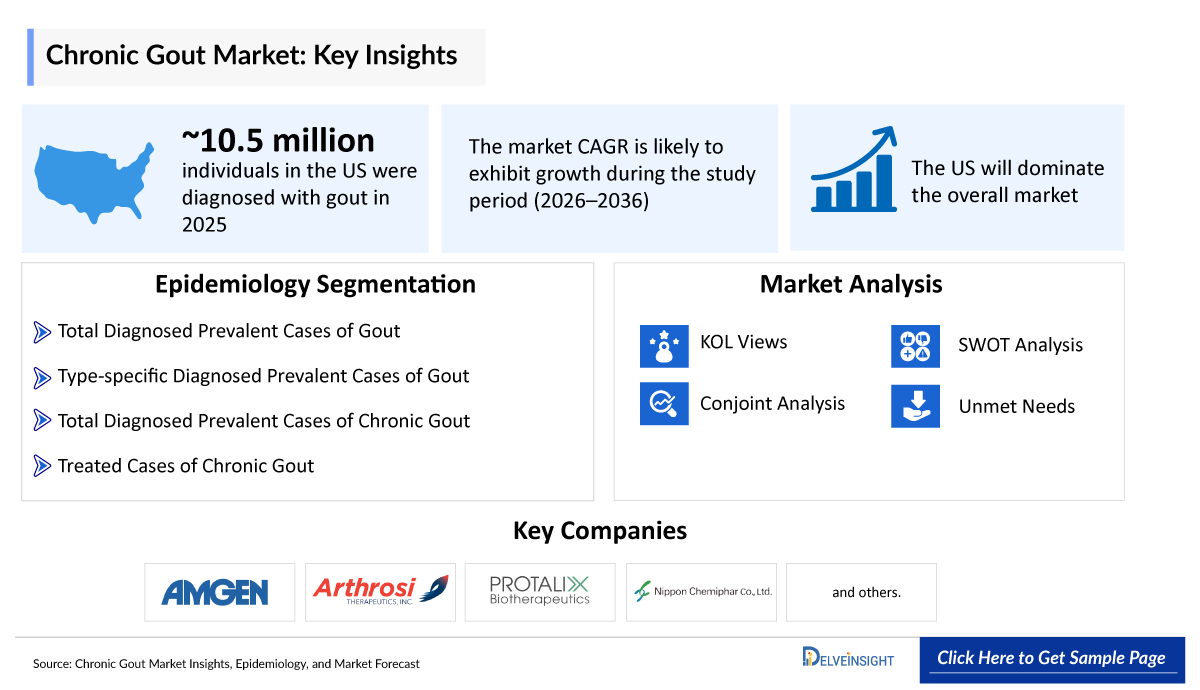
DelveInsight's ‘Chronic Gout Market Insights, Epidemiology and Market Forecast – 2036’ report delivers an in-depth understanding of the Chronic Gout, historical and forecasted epidemiology, as well as the Chronic Gout market trends in the United States, EU4 (Germany, Spain, Italy, and France), and the United Kingdom, and Japan.
The Chronic Gout market report delivers a comprehensive analysis of the current treatment landscape, including standards of care, clinical practices, and evolving therapeutic algorithms. It evaluates Chronic Gout patient burden trends, revenue & market share dynamics, peak patient share & therapy uptake analysis, and provides an in-depth market size assessment, and growth rate projections (Historical & Forecast 2022–2036) across global regions. The report highlights key unmet medical needs in Chronic Gout and maps the competitive and clinical landscape to uncover high‑value opportunities, providing a clear outlook on future market growth potential.
|
Study Period |
2022–2036 |
|
Historical Year |
2022–2025 |
|
Forecast Period |
2026–2036 |
|
Base Year |
2026 |
|
Geographies Covered |
|
|
Chronic Gout Market CAGR (Forecast period) |
XX% (2026–2036) |
|
Chronic Gout Epidemiology Segmentation Analysis |
Patient Burden Assessment
|
|
Chronic Gout Companies |
|
|
Chronic Gout Therapies |
|
|
Chronic Gout Market |
Segmented by
|
|
Analysis |
|
|
|
Key Factors Driving the Chronic Gout Market
Increasing Prevalence of Hyperuricemia and Chronic Gout
The chronic gout market is expanding due to the rising global prevalence of hyperuricemia, obesity, metabolic syndrome, diabetes, hypertension, and chronic kidney disease, all of which are major risk factors for gout development. Aging populations, sedentary lifestyles, alcohol consumption, and dietary habits rich in purines are further contributing to the increasing disease burden and long-term treatment demand.
Advancements in Urate-Lowering Therapies and Pipeline Innovation
The chronic gout treatment landscape is evolving with the development of next-generation urate-lowering agents, biologics, and anti-inflammatory therapies aimed at improving serum uric acid control and reducing flare frequency. Therapies such as pegloticase (KRYSTEXXA) have expanded treatment options for uncontrolled gout, while pipeline candidates targeting inflammatory pathways and uric acid metabolism are expected to further strengthen the market over the coming years.
Expansion of Combination and Biologic-Based Treatment Approaches
The emergence of combination approaches, including immunomodulator co-therapy with pegloticase to improve treatment durability and reduce immunogenicity, is supporting broader utilization of advanced therapies in chronic refractory gout. This trend is expected to improve clinical outcomes and increase physician confidence in biologic-based treatment strategies.Chronic Gout Understanding and Treatment Algorithm
Chronic Gout Overview and Diagnosis
Chronic gout is a chronic inflammatory arthritic disorder caused by prolonged hyperuricemia and deposition of MSU crystals in joints and surrounding tissues. The disease commonly presents with recurrent gout flares, persistent joint pain, swelling, stiffness, and tophi formation, particularly in the lower extremities such as the great toe, ankles, knees, and feet. Over time, uncontrolled disease may lead to chronic joint damage, deformities, reduced mobility, renal stones, and chronic kidney disease (CKD). Chronic refractory gout (CRG) represents a severe form of gout in which symptoms and serum urate levels remain inadequately controlled despite standard urate-lowering therapies.
Chronic Gout Diagnosis
Diagnosis of chronic gout is primarily based on clinical evaluation, serum uric acid assessment, and identification of MSU crystals in synovial fluid or tophi aspirates using polarized light microscopy, which remains the gold standard for diagnosis. Imaging techniques such as X-ray, ultrasound, and Dual-Energy CT (DECT) are increasingly used to detect urate crystal deposits, tophi burden, and structural joint damage. Additional laboratory investigations, including renal function tests and inflammatory markers, help assess disease severity, associated comorbidities, and treatment response.
Further details are provided in the report.
Chronic Gout Treatment
Treatment of chronic gout primarily focuses on reducing serum uric acid levels, preventing recurrent flares, and limiting long-term joint damage. First-line urate-lowering therapies include xanthine oxidase inhibitors such as allopurinol and febuxostat, while uricosuric agents such as probenecid may be used in patients with inadequate uric acid control.
Acute gout flares are managed with NSAIDs, colchicine (Colcrys), and corticosteroids to control pain and inflammation. In severe or refractory disease, advanced therapies such as pegloticase (KRYSTEXXA) and interleukin-1 inhibitors including canakinumab may be considered, particularly in patients with chronic tophaceous gout.
Management also includes dietary modifications, weight management, hydration, and control of comorbidities such as chronic kidney disease and metabolic syndrome. Overall, treatment is individualized based on disease severity, serum urate levels, flare frequency, and patient response to therapy.
Further details related to country-based variations are provided in the report.
Chronic Gout Unmet Needs
The section “unmet needs of chronic gout” outlines the critical gaps between the current state of patient care, diagnosis, and the ideal & effective management of the disease. It highlights the obstacles experienced by patients, clinicians, and researchers and identifies potential solutions for future progress.
- Effective and personalized treatment options
- Complexity in epidemiological data
- Improvement in patient education and adherence
- Advanced diagnostic tools
- Novel therapeutic agents
- Pain and quality of life management
- Long-term management and follow-up, and others…..
Note: Comprehensive unmet needs insights in Chronic Gout and their strategic implications are provided in the full report.
Chronic Gout Epidemiology
Key Findings from Chronic Gout Epidemiological Analysis and Forecast
- In 2025, over ~10.5 million individuals in the US were diagnosed with gout, highlighting a significant burden of this chronic inflammatory condition across the population.
- In 2025, Italy reported the lowest number of diagnosed prevalent cases of chronic gout among major countries.
- Among EU4 and the UK, Germany, accounted nearly ~171,000 cases diagnosed prevalent cases of chronic gout in 2025, while France accounted for more than ~73,000 cases. The cases are expected to rise across EU4 and the UK.
- As per secondary analysis, the prevalence of gout is greater than 1% in most developed countries, including the US (3.9%), Germany (1.4%), and the UK (2.5%).
- The prevalence of gout in Italy increased from 0.67% in 2005 to 0.9% in 2009. In adults older than 20 years, the male-to-female ratio ranged from 2.5 (>90 years) to 11 (35–39 years), demonstrating a significantly higher disease burden among males.
Chronic Gout Drug Analysis & Competitive Landscape
The chronic gout drug chapter provides a detailed, market-focused review of approved therapies and the emerging pipeline across Phase I–III clinical trials. It covers the mechanism of action, clinical trial data, regulatory approvals, patents, collaborations, and strategic partnerships for each therapy, along with their advantages, limitations, and recent developments. This section offers critical insights into the chronic gout treatment landscape, supporting market assessment, competitive analysis, and growth forecasting for the chronic gout therapeutics market.
Approved Therapies for Chronic Gout
Pegloticase (KRYSTEXXA): Amgen
KRYSTEXXA is prescribed for adult patients with chronic gout who have not responded to standard treatments. This condition, known as gout refractory to conventional therapy, occurs in individuals who are unable to achieve normal serum uric acid levels and continue to experience inadequate symptom control despite using xanthine oxidase inhibitors at the highest appropriate dose. Additionally, KRYSTEXXA is indicated for patients who cannot use these inhibitors due to contraindications. Pegloticase offers an alternative treatment option for those who have exhausted other therapeutic avenues, providing a means to manage chronic gout symptoms more effectively when traditional therapies prove insufficient.
Note: Detailed marketed therapies assessment of therapies will be provided in the final report.
|
Chronic Gout Marketed/Approved Therapies | ||||||
|
Drug/Therapy |
Company |
Indication |
Molecule Type |
MoA |
RoA |
Marketed Region |
|
Pegloticase (KRYSTEXXA) |
Amgen |
Chronic Gout |
Biologic |
PEGylated recombinant uricase that converts uric acid into allantoin |
IV infusion |
US: 2010 EU: 2013 (Withdrawn in 2016) |
Chronic Gout Pipeline Analysis
Pozdeutinurad (AR882): Arthrosi Therapeutics
AR882, a novel and selective URAT1 inhibitor developed by Arthrosi Therapeutics, has shown promising results in recent clinical trials for the treatment of gout and tophaceous gout. AR882 is responsible for the majority of reabsorption of filtered uric acid from the renal tubular lumen. By inhibiting URAT1, AR882 increases uric acid urinary excretion and thereby lowers serum uric acid (sUA). Preclinically, AR882 has demonstrated an inhibitory effect on uric acid uptake and good tolerability in pharmacology, pharmacokinetics, and toxicology studies.
NASP (SEL-212): Swedish Orphan Biovitrum (Sobi)
SEL-212 is a novel investigational combination medicine designed to reduce serum urate levels in people with CRG, potentially reducing harmful tissue urate deposits which, when left untreated, can lead to debilitating gout flares and joint deformity. SEL-212 consists of pegadricase, Selecta’s proprietary pegylated uricase, co-administered with Immunomodulator (ImmTOR), designed to mitigate the formation of Antidrug Antibodies (ADAs).
|
Competitive Landscape of Pipeline Drugs | ||||||
|
Drug Name |
Company |
Highest Phase |
Indication |
RoA |
MoA |
Anticipated Launch in the US |
|
Pozdeutinurad (AR882) |
Arthrosis Therapeutics |
III |
Refractory Tophaceous Gout/Chronic Gout |
Oral |
Selective inhibitor of Uric Acid Transporter 1 ( URAT1) |
Information is available in the full report |
|
NASP (SEL-212) |
Swedish Orphan Biovitrum (Sobi) |
III |
Chronic Refractory Gout |
IV infusion |
Pegylated uricase with immune tolerance platform |
Information is available in the full report |
|
PRX-115 |
Protalix Biotherapeutics |
I |
Uncontrolled Gout |
IV infusion |
Urate oxidase replacements catalyze the oxidation of uric acid |
Information is available in the full report |
|
NC-2700 |
Nippon Chemiphar |
Preclinical |
Chronic Refractory Gout |
- |
URAT 1 inhibitor |
Information is available in the full report |
|
Note: Launch insights are provisional and may change with future report updates or the occurrence of major key catalysts. | ||||||
Note: Detailed emerging therapies assessment will be provided in the final report.
Chronic Gout Key Players, Market Leaders, and Emerging Companies
- Amgen
- Arthrosis Therapeutics
- Protalix Biotherapeutics
- Swedish Orphan Biovitrum (Sobi)
- Nippon Chemiphar, and others
Chronic Gout Drug Updates
- In April 2026, corporatre presentation of Protalix Biotherapeutics ha shown that PRX-115 topiline results of Phase II are anticipated in H2-2027.
- In February 2026, SOBI announced the completion of its acquisition of Arthrosi Therapeutics, adding pozdeutinurad (AR882), a once-daily oral URAT1 inhibitor, to its gout pipeline. Pozdeutinurad is currently being evaluated in two global Phase III studies for progressive and tophaceous gout, with topline results expected in 2026.
- In September 2025, Sobi announced that the US FDA accepted the Biologics License Application (BLA) for Nanoencapsulated Sirolimus plus Pegadricase for uncontrolled gout, with a PDUFA target action date set for June 27, 2026. NASP is an investigational once-every-4-week infusion therapy combining nanoencapsulated sirolimus with pegadricase to improve urate-lowering efficacy and immunomodulation
- In July 2024, Sobi initiated a rolling BLA for SEL-212 with the US FDA based on results from the DISSOLVE I and II studies.
Drug Class Insights
Chronic Gout Market Outlook
The chronic gout market is evolving from conventional urate-lowering therapies toward targeted and mechanism-driven approaches, although xanthine oxidase inhibitors such as allopurinol and febuxostat continue to remain the standard of care. Despite available therapies, a subset of patients develops refractory disease characterized by persistent hyperuricemia, recurrent flares, tophi formation, and progressive joint damage, highlighting a major unmet clinical need.
The treatment landscape is increasingly shifting toward advanced biologics and next-generation urate-lowering therapies targeting uric acid metabolism and inflammatory pathways. Pegloticase (KRYSTEXXA) remains the only approved biologic for uncontrolled chronic gout, while emerging therapies such as SEL-212, pozdeutinurad (AR882), SAP-001, PRX-115, and NC-2700 are being developed to improve long-term urate control, efficacy, and patient adherence. However, KRYSTEXXA’s EU marketing authorization was withdrawn in 2016 for commercial reasons, limiting its availability to select markets despite its continued role in refractory gout management.
- The United States represents the largest chronic gout market, driven by the rising prevalence of gout, obesity, CKD, and strong uptake of advanced therapies.
- Chronic Refractory Gout management is gradually shifting from symptomatic flare control toward long-term urate reduction and targeted treatment strategies.
- Patients with uncontrolled or treatment-resistant gout continue to represent a major unmet need, particularly those with tophaceous gout and comorbid CKD.
- Pegloticase (KRYSTEXXA) is expected to maintain a strong position in severe refractory gout due to its potent uric acid-lowering efficacy.
- Late-stage pipeline therapies such as pozdeutinurad (AR882), SEL-212, and SAP-001 are expected to expand treatment options and intensify competition during the forecast period.
Further details will be provided in the report….
Drug Class/Insights into Leading Emerging and Marketed Therapies in Chronic Gout (2022–2036 Forecast)
The chronic gout treatment landscape comprises anti-seizure medications (ASMs), rescue therapies, and adjunctive/targeted therapies, each addressing different aspects of seizure control, acute management, and underlying disease mechanisms.
- Urate-lowering therapies (ULTs): Include xanthine oxidase inhibitors such as allopurinol and febuxostat (ULORIC/FEBURIC/Adenuric), which form the foundation of chronic gout management by reducing uric acid production and maintaining serum urate levels below the crystallization threshold. These therapies are used for long-term prevention of gout flares, tophi formation, and progressive joint damage.
- Anti-inflammatory and flare management therapies: Include NSAIDs, colchicine, and corticosteroids, which are commonly used for the treatment of acute gout flares and inflammation control. These therapies provide rapid symptomatic relief by reducing joint pain, swelling, and inflammatory responses associated with monosodium urate (MSU) crystal deposition.
- Advanced biologic and targeted therapies: Include biologic uricase therapies such as pegloticase (KRYSTEXXA) and emerging pipeline agents such as SEL-212 and pozdeutinurad (AR882), designed for patients with chronic refractory or uncontrolled gout who fail conventional therapies. These therapies target uric acid metabolism and urate transport pathways through mechanisms such as uric acid enzymatic breakdown and URAT1 inhibition, representing a shift toward more targeted and mechanism-driven management of severe gout.
Overall, ULTs continue to define the current standard of care in chronic gout management, while anti-inflammatory therapies remain essential for controlling acute gout flares and pain. In parallel, emerging biologic and targeted therapies are expected to drive future innovation in the chronic refractory gout (CRG) treatment landscape by addressing persistent hyperuricemia and treatment-resistant disease.
Chronic Gout Drug Uptake
This section focuses on the uptake rate of potential drugs expected to be launched in the market during the forecast period (2026–2036). The analysis covers the Chronic Gout drug’s uptake, performance at peak, factors affecting performance during prime years of growth, patient uptake by therapy, and anticipated sales generated by each drug.
The uptake of therapies in chronic gout is expected to vary across urate-lowering therapies, anti-inflammatory treatments, and advanced targeted therapies. Established urate-lowering agents such as allopurinol and febuxostat are anticipated to maintain strong and sustained uptake due to their central role in long-term serum urate control and prevention of gout progression. In parallel, anti-inflammatory therapies including NSAIDs, colchicine, and corticosteroids are expected to continue widespread use for the management of acute gout flares and inflammation control.
In contrast, advanced therapies such as pegloticase (KRYSTEXXA) are expected to demonstrate gradual but increasing uptake, particularly in patients with severe, uncontrolled, or tophaceous gout who are inadequately managed with conventional therapies. Adoption of these therapies is driven by the limitations of standard urate-lowering treatments in difficult-to-treat patients and the growing need for more effective uric acid reduction strategies.
Next-generation pipeline therapies such as SEL-212, pozdeutinurad (AR882), SAP-001, PRX-115, and NC-2700 are anticipated to witness gradual uptake as clinical evidence matures and regulatory development progresses. Their future adoption will depend on demonstrated efficacy in uncontrolled gout populations, long-term urate-lowering potential, safety/tolerability, and improved patient adherence compared with existing therapies.
Detailed insights of emerging therapies' drug uptake is included in the report.
Market Access and Reimbursement of Chronic Gout
The United States
|
The US Reimbursement for Chronic Gout | |
|
Drug |
Access Program |
|
Pegloticase (KRYSTEXXA) |
Amgen By Your Side |
Reimbursement is a crucial factor that affects the drug’s access to the market. Often, the decision to reimburse comes down to the price of the drug relative to the benefit it produces in treated patients. To reduce the healthcare burden of these high-cost therapies, many payment models are being considered by payers and other industry insiders.
NOTE: Further Details are provided in the final report….
Chronic Gout Therapies Price Scenario & Trends
Pricing and analogue assessment of chronic gout therapies highlights evolving price dynamics structures. This section summarizes the cost of approved treatments, the closest and most appropriate analogue selection for emerging therapies, and understanding of how pricing influences market access, adherence, and long-term uptake.
Further details are provided in the final report….
Industry Experts and Physician Views for Chronic Gout
To keep up with chronic gout market trends, we take Key Opinion Leaders (KOLs) and Subject Matter Experts (SMEs) opinions working in the domain through primary research to fill the data gaps and validate our secondary research. Industry experts were contacted for insights on the emerging chronic gout therapies, evolving treatment landscape, patient adherence to conventional therapies, therapy switching trends, drug adoption and uptake, accessibility challenges, and epidemiology and real-world prescription patterns in chronic gout, including MD, PhD, Instructor, Postdoctoral Researcher, Professor, Researcher, and others.
DelveInsight’s analysts connected with 10+ KOLs to gather insights at the country level. Centers such as the Rutgers Robert Wood Johnson Medical School, New Brunswick, NJ, US, and Renal Division, Medical Center–University of Freiburg, Freiburg, Germany, etc., were contacted. Their opinion helps understand and validate current and emerging chronic gout therapies, highlight unmet medical needs, provide epidemiological context, and support strategic decisions for market access, therapy adoption, and pipeline prioritization in chronic gout.
|
Region |
Key Opinion Leaders (KOLs) and Subject Matter Experts (SMEs) |
|
United States |
“In gout, the main aim is to lower SUA levels to target, commonly established at less than 6 mg/dL (0.36 mmol/L), but which should be lower in selected patients and those with severe gout to hasten crystal dissolution. ULT drugs must be titrated to achieve the target SUA. When the SUA target has not been achieved, drug doses should be increased, or drug combinations should be considered.” |
|
Germany |
“IL-1 antagonist canakinumab is a new drug for the treatment of acute gout. This is authorized for use when the 3 standard treatment options (NSAIDs, corticosteroids, and colchicine) are not tolerated, insufficiently effective, or contraindicated.” |
Qualitative Analysis: SWOT and Conjoint Analysis
We perform qualitative and market Intelligence analysis using various approaches, such as SWOT analysis and conjoint analysis.
In the SWOT analysis of Chronic Gout, strengths, weaknesses, opportunities, and threats in terms of disease diagnosis, patient awareness, patient burden, competitive landscape, cost-effectiveness, and geographical accessibility of therapies are provided.
Conjoint analysis analyzes emerging therapies based on relevant attributes such as safety, efficacy, frequency of administration, route of administration, and order of entry. Scoring is given based on these parameters to analyze the effectiveness of therapy.
The team of analysts analyzes promising emerging therapies based on relevant attributes such as safety, efficacy, frequency of administration, route of administration, and order of entry. In efficacy, the trial’s primary and secondary outcome measures are evaluated, whereas the therapies’ safety is evaluated, wherein the acceptability, tolerability, and adverse events are majorly observed. In addition, the scoring is also based on the route of administration, order of entry, probability of success, and the addressable patient pool for each therapy. According to these parameters, the final weightage score and the ranking of the emerging therapies are decided.
Scope of the Report
- The report covers a segment of key events, an executive summary, a descriptive overview of chronic gout, explaining their causes, signs and symptoms, pathogenesis, and currently available treatments.
- Comprehensive insight has been provided into the epidemiology segments and forecasts, the future growth potential of the diagnosis rate, and disease progression along treatment guidelines.
- Additionally, an all-inclusive account of both the current and emerging treatments, along with the elaborate profiles of late-stage and prominent therapies, will have an impact on the current treatment landscape.
- A detailed review of the chronic gout market, historical and forecasted market size, market share by therapies, detailed assumptions, and rationale behind our approach is included in the report, covering the 7MM drug outreach.
- The report provides an edge while developing business strategies by understanding trends through SWOT analysis and expert insights/KOL views, patient journey, and treatment preferences that help in shaping and driving the 7MM Chronic Gout market.
Report Insights
- Chronic Gout Patient Population Forecast
- Chronic Gout Therapeutics Market Size
- Chronic Gout Pipeline Analysis
- Chronic Gout Market Size and Trends
- Chronic Gout Market Opportunity (Current and forecasted)
Report Key Strengths
- Epidemiology‑based (Epi‑based) Bottom‑up Forecasting
- Artificial Intelligence (AI)-Enabled Market Research Report
- 11-Year Forecast
- Chronic Gout Market Outlook (North America, Europe, Asia-Pacific)
- Patient Burden Trends (By Geography)
- Chronic Gout Treatment Addressable Market (TAM)
- Chronic Gout Competitive Landscape
- Chronic Gout Major Companies Insights
- Chronic Gout Price Trends and Analogue Assessment
- Chronic Gout Therapies Drug Adoption/Uptake
- Chronic Gout Therapies Peak Patient Share Analysis
Report Assessment
- Chronic Gout Current Treatment Practices
- Chronic Gout Unmet Needs
- Chronic Gout Clinical Development Analysis
- Chronic Gout Emerging Drugs Product Profiles
- Chronic Gout Market Attractiveness
- Chronic Gout Qualitative Analysis (SWOT and conjoint analysis)
FAQs
Market Insights
- What was the chronic gout market size, the market size by therapies, the market share (%) distribution in 2025, and what would it look like by 2036? What are the contributing factors for this growth?
- What are the anticipated pricing variations among different geographies for the emerging therapies in the future?
- What can be the future treatment paradigm of chronic gout?
- What are the disease risks, burdens, and unmet needs of chronic gout? What will be the growth opportunities across the 7MM concerning the patient population with chronic gout?
- Who is the major future competitor in the market, and how will the competitors affect their market share?
- What are the current options for the treatment of chronic gout? What are the current guidelines for treating chronic gout in the US, Europe, and Japan?
Reasons to Buy
- The report will help in developing business strategies by understanding the latest trends and changing treatment dynamics driving the chronic gout market.
- Bottom-up forecasting builds from the affected population to product forecasts, delivering a robust, data-driven approach ideal for new therapies and novel classes.
- Insights on patient burden/disease incidence, evolution in diagnosis, and factors contributing to the change in the epidemiology of the disease during the forecast years.
- Understand the existing market opportunities in varying geographies and the growth potential over the coming years.
- Identifying strong upcoming players in the market will help devise strategies to help get ahead of competitors.
- Detailed analysis and ranking of class-wise potential current and emerging therapies under the conjoint analysis section to provide visibility around leading classes.
- To understand KOLs’ perspectives on the accessibility, acceptability, and compliance-related challenges of existing treatment to overcome barriers in the future.
- Detailed insights into the unmet needs of the existing market so that the upcoming players can strengthen their development and launch strategy.
- This Artificial Intelligence (AI)-enabled report summarizes and simplifies complex datasets within the report into clear, actionable insights for stakeholders, investors, and healthcare providers, enabling faster, data-driven decisions.