Chronic Plaque Psoriasis Insights and Trends
- Chronic Plaque Psoriasis is a chronic immune-mediated inflammatory skin disorder driven by dysregulation of the immune system, particularly the IL-23/Th17 axis, leading to excessive keratinocyte proliferation and abnormal epidermal differentiation. This results in well-demarcated erythematous plaques with silvery scales, along with persistent inflammation and potential systemic involvement.
-
Clinical presentation commonly includes well-defined scaly plaques, erythema, pruritus, and skin thickening, typically affecting the elbows, knees, scalp, and lower back. In moderate-to-severe cases, patients may also develop nail psoriasis (pitting, onycholysis), psoriatic arthritis, and impaired quality of life due to pain, itching, and psychosocial burden.
-
The increasing use of dermatological assessment tools such as PASI scoring, histopathology, dermoscopy, and imaging in psoriatic arthritis (e.g., ultrasound and MRI) has improved diagnostic accuracy and disease severity assessment. However, diagnosis remains primarily clinical and may be delayed in mild or atypical cases.
-
The prevalence of chronic plaque psoriasis continues to rise globally, driven by increasing rates of obesity, metabolic syndrome, stress, smoking, alcohol consumption, and genetic predisposition, contributing to a growing clinical, economic, and quality-of-life burden.
-
Management of Chronic Plaque Psoriasis focuses on long-term disease control, reduction of skin lesions, prevention of flares, and improvement in quality of life through a combination of topical therapies, phototherapy, systemic agents, and biologics.
-
Therapies for chronic plaque psoriasis include topical corticosteroids and vitamin D analogues, conventional systemic treatments including methotrexate, cyclosporine, and acitretin, oral small molecules such as apremilast, and biologic therapies that target specific inflammatory pathways.
-
Approved biologics include TNF-α inhibitors (adalimumab, etanercept, infliximab, and certolizumab pegol), IL-17 inhibitors (secukinumab, ixekizumab, brodalumab, and bimekizumab), and IL-23 inhibitors (guselkumab, risankizumab, and tildrakizumab).
-
The current standard of care for chronic plaque psoriasis is centered on biologic therapies targeting IL-17 and IL-23 pathways for moderate-to-severe disease, while topical agents and phototherapy remain first-line options for mild disease. Systemic non-biologic agents are still used in resource-limited settings or selected patients.
-
The chronic plaque psoriasis pipeline includes emerging therapies such as next-generation IL-23 inhibitors, TYK2 inhibitors (e.g., deucravacitinib), oral small molecules, and novel biologics aimed at improving efficacy, safety, convenience, and long-term disease control.
-
Despite therapeutic advancements, chronic plaque psoriasis continues to represent a significant unmet need due to chronic relapsing disease course, treatment non-response in some patients, safety concerns with long-term immunosuppression, adherence challenges, and the persistent impact on quality of life and psychosocial well-being.
Chronic Plaque Psoriasis Market Size and Forecast in the 7MM
-
2025 Chronic Plaque Psoriasis Market Size: ~USD XX million
-
2036 Projected Chronic Plaque Psoriasis Market Size: ~USD XX million
-
Chronic Plaque Psoriasis Growth Rate (2026–2036): XX% CAGR
DelveInsight's ‘Chronic Plaque Psoriasis Market Insights, Epidemiology and Market Forecast – 2036’ report delivers an in-depth understanding of the Chronic Plaque Psoriasis, historical and forecasted epidemiology, as well as the Chronic Plaque Psoriasis market trends in the United States, EU4 (Germany, Spain, Italy, and France), and the United Kingdom, and Japan.
The Chronic Plaque Psoriasis market report delivers a comprehensive analysis of the current treatment landscape, including standards of care, clinical practices, and evolving therapeutic algorithms. It evaluates chronic plaque psoriasis patient burden trends, revenue & market share dynamics, peak patient share & therapy uptake analysis, and provides an in-depth market size assessment, and growth rate projections (Historical & Forecast 2022–2036) across global regions. The report highlights key unmet medical needs in chronic plaque psoriasis and maps the competitive and clinical landscape to uncover high‑value opportunities, providing a clear outlook on future market growth potential.
|
Study Period |
2022–2036 |
|
Historical Year |
2022–2025 |
|
Forecast Period |
2026–2036 |
|
Base Year |
2026 |
|
Geographies Covered |
|
|
Chronic Plaque Psoriasis Market CAGR (Forecast period) |
XX% (2026–2036) |
|
Chronic Plaque Psoriasis Epidemiology Segmentation Analysis |
Patient Burden Assessment
|
|
Chronic Plaque Psoriasis Companies |
|
|
Chronic Plaque Psoriasis Therapies |
|
|
Chronic Plaque Psoriasis Market |
Segmented by
|
|
Analysis |
|
|
|
Key Factors Driving the Chronic Plaque Psoriasis Market
Rising Prevalence and Disease Burden of Psoriasis
The psoriasis market is growing due to the increasing global prevalence of plaque psoriasis and associated risk factors such as obesity, metabolic syndrome, diabetes, smoking, and stress. Improved diagnosis rates, greater disease awareness, and expanding healthcare access are further increasing treatment demand.
Advancements in Biologics and Targeted Therapies
Market growth is driven by the development of targeted biologics and immunomodulators, including TNF-α, IL-17, and IL-23 inhibitors, which offer improved efficacy and long-term disease control. Continued innovation in monoclonal antibodies and oral therapies is expected to strengthen the treatment landscape.
Growing Adoption of Long-Term and Personalized Treatment Approaches
Increasing use of biologics, maintenance therapies, and personalized treatment strategies based on disease severity and patient response is supporting market expansion. Favorable regulatory approvals and ongoing pipeline development are further contributing to psoriasis market growth.
Chronic Plaque Psoriasis Understanding
Chronic Plaque Psoriasis Overview
Psoriasis is a chronic immune-mediated inflammatory skin disorder characterized by erythematous, well-demarcated plaques with silvery scales, most commonly presenting as plaque psoriasis. The disease is associated with immune dysregulation involving TNF-α, IL-17, and IL-23 pathways and is frequently linked with comorbidities such as psoriatic arthritis, obesity, diabetes, cardiovascular disease, and depression. Treatment depends on disease severity and includes topical corticosteroids, vitamin D analogs, phototherapy, systemic therapies, and targeted biologics, including adalimumab, secukinumab, ustekinumab, and ixekizumab. Recent advancements in IL-17, IL-23, TYK2, and JAK-targeted therapies have significantly improved long-term disease management, although psoriasis remains underdiagnosed and undertreated globally.
Chronic Plaque Psoriasis Diagnosis
Diagnosis of psoriasis is primarily based on clinical evaluation and characteristic findings such as well-demarcated erythematous plaques with silvery scales. In uncertain cases, skin biopsy and histopathological examination may be performed to confirm the diagnosis and differentiate psoriasis from other inflammatory skin disorders. Additional assessments, including evaluation of disease severity, body surface area involvement, nail changes, and psoriatic arthritis symptoms, help guide treatment selection and long-term disease management.
Further details are provided in the report.
Chronic Plaque Psoriasis Treatment
Treatment of psoriasis primarily focuses on controlling inflammation, reducing skin lesions, preventing disease progression, and improving quality of life. Mild-to-moderate psoriasis is commonly managed with topical corticosteroids, vitamin D analogs, and phototherapy, while moderate-to-severe disease often requires systemic therapies such as methotrexate, cyclosporine, acitretin, and apremilast. Advanced biologic therapies targeting TNF-α, IL-17, IL-23, and IL-12/23 pathways, including adalimumab, secukinumab, ustekinumab, and ixekizumab, are widely used for patients with severe or refractory disease. Emerging therapies such as TYK2 and JAK inhibitors are further expanding treatment options. Overall, treatment is individualized based on disease severity, body surface area involvement, comorbidities, and patient response to therapy.
Further details related to country-based variations are provided in the report.
Chronic Plaque Psoriasis Unmet Needs
The section “unmet needs of chronic plaque psoriasis” outlines the critical gaps between the current state of patient care, diagnosis, and the ideal & effective management of the disease. It highlights the obstacles experienced by patients, clinicians, and researchers and identifies potential solutions for future progress.
-
Need for more effective and durable treatment options
-
Limited long-term efficacy and loss of treatment response
-
High treatment costs and restricted access to biologics
-
Underdiagnoses and under-treatment of psoriasis, and others…..
Note: Comprehensive unmet needs insights in chronic plaque psoriasis and their strategic implications are provided in the full report.
Chronic plaque psoriasis Epidemiology
Key Findings from Chronic Plaque Psoriasis Epidemiological Analysis and Forecast
-
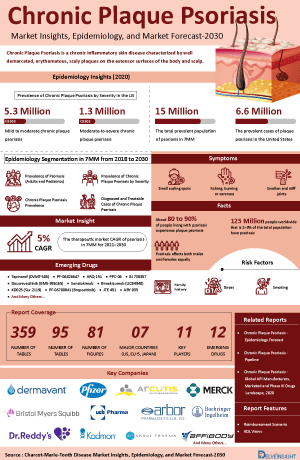
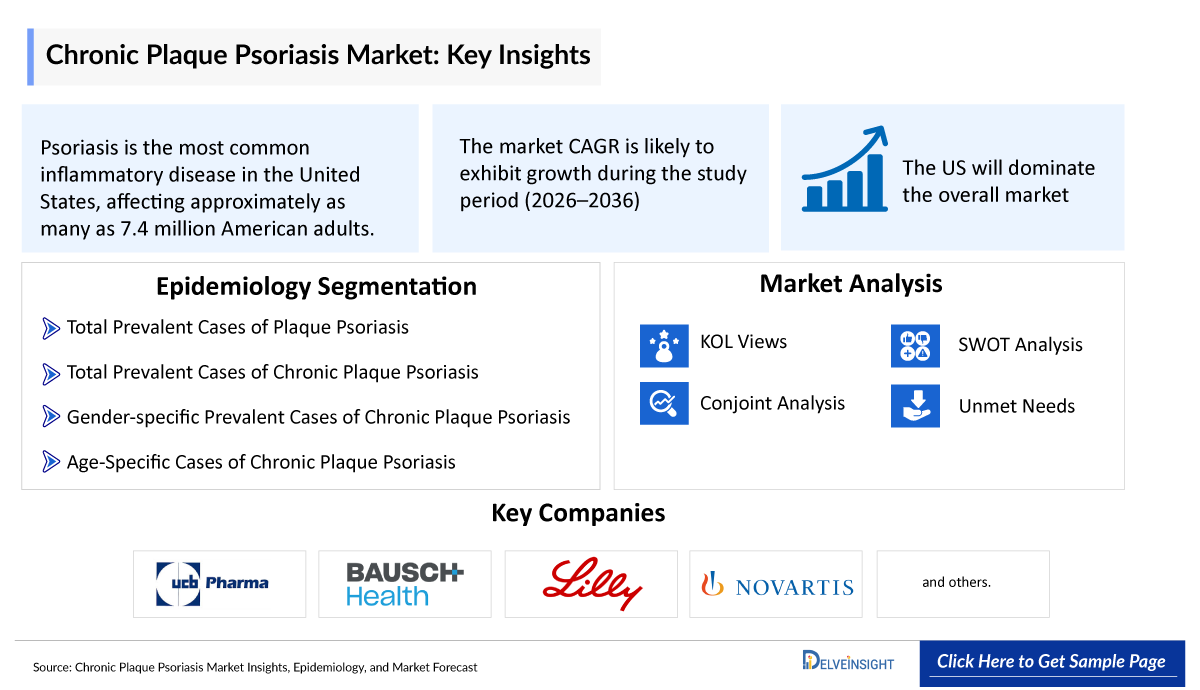
As per the Centers for Disease Control and Prevention, Psoriasis is the most common inflammatory disease in the United States, affecting approximately as many as 7.4 million American adults.
-
According to estimates, about 80 to 90% of people living with psoriasis experience plaque psoriasis.
-
Psoriasis is prevalent worldwide, with a global prevalence of 1% to 8%. It begins in childhood in approximately one-third of cases.
-
As per the National Psoriasis Foundation, the most common form of psoriasis, plaque psoriasis, appears as raised, red patches covered with a silvery white buildup of dead skin cells. Approximately 20% of people with psoriasis have moderate-to-severe plaque psoriasis.
-
The most common form of Psoriasis is Chronic Plaque Psoriasis, affecting about 90% of psoriasis patients, with about 20%–30% of them suffering from a moderate or severe condition.
-
It is estimated that males are slightly more affected by chronic plaque psoriasis than females.
Chronic Plaque Psoriasis Drug Analysis & Competitive Landscape
The Chronic Plaque Psoriasis drug chapter provides a detailed, market-focused review of approved therapies and the emerging pipeline across Phase I–III clinical trials. It covers the mechanism of action, clinical trial data, regulatory approvals, patents, collaborations, and strategic partnerships for each therapy, along with their advantages, limitations, and recent developments. This section offers critical insights into the chronic plaque psoriasis treatment landscape, supporting market assessment, competitive analysis, and growth forecasting for the chronic plaque psoriasis therapeutics market.
Approved Therapies for Chronic Plaque Psoriasis
Certolizumab (CIMZIA): UCB
CIMZIA is indicated for the treatment of adults with moderate-to-severe plaque psoriasis who are candidates for systemic therapy or phototherapy. CIMZIA is an Fc-free, PEGylated anti-TNF therapy that selectively neutralizes TNF-α, a key inflammatory cytokine involved in psoriasis pathogenesis. It provides an effective biologic treatment option for patients requiring long-term disease control and improved management of moderate-to-severe plaque psoriasis.
Apremilast (OTEZLA): Amgen
OTEZLA is an oral small-molecule inhibitor of phosphodiesterase 4 (PDE4) specific for cyclic adenosine monophosphate (cAMP). PDE4 inhibition results in increased intracellular cAMP levels, which are thought to indirectly modulate the production of inflammatory mediators.
Note: Detailed marketed therapies assessment of therapies will be provided in the final report.
|
Chronic Plaque Psoriasis Marketed/Approved Therapies | ||||||
|
Drug/Therapy |
Company |
Indication |
Molecule Type |
MoA |
RoA |
Marketed Region |
|
Certolizumab (CIMZIA) |
UCB |
Plaque Psoriasis |
Biologic |
TNF-α inhibitor |
SC |
US: 2016 EU: 2016 JP: 2016 |
|
Apremilast (OTEZLA) |
Amgen |
Plaque Psoriasis |
Small Molecule |
PDE4 inhibitor |
Oral |
US: 2014 EU: 2015 JP: 2016 |
|
Secukinumab (COSENTYX) |
Novartis |
Plaque Psoriasis |
Biologic |
IL-17A inhibitor |
SC |
US: 2015 EU: 2015 JP: 2014 |
|
Ixekizumab (TALTZ) |
Eli Lilly |
Plaque Psoriasis |
Biologic |
IL-17A inhibitor |
SC |
US: 2016 EU: 2016 JP: 2016 |
Chronic Plaque Psoriasis Pipeline Analysis
SGX302: Soligenix
SGX302 is a topical, synthetic hypericin gel developed for the treatment of mild-to-moderate chronic plaque psoriasis. It utilizes a photodynamic therapy mechanism, where hypericin is activated by UVA light exposure to generate localized anti-inflammatory and immunomodulatory effects in psoriatic lesions. SGX302 targets inflammatory pathways driving keratinocyte hyperproliferation, leading to reductions in erythema, scaling, and plaque thickness. Its mechanism involves reactive oxygen species (ROS)–mediated modulation of T-cell activity, providing localized disease control without systemic immunosuppression.
ME3183: Meiji Seika Pharma
ME3183 is an investigational oral small-molecule therapy being developed by Meiji Seika Pharma for the treatment of psoriasis, including chronic plaque psoriasis. It is designed to modulate key immune-inflammatory signaling pathways involved in keratinocyte hyperproliferation and T-cell–mediated skin inflammation, which are central drivers of psoriasis pathophysiology. ME3183 acts by targeting upstream inflammatory mediators, aiming to reduce psoriatic lesion formation, erythema, and scaling, while improving overall skin clearance and disease control.
|
Competitive Landscape of Pipeline Drugs | ||||||
|
Drug Name |
Company |
Highest Phase |
Indication |
RoA |
MoA |
Anticipated Launch in the US |
|
TAK-279 |
Takeda |
III |
Plaque Psoriasis |
Oral |
TYK2 Inhibitor |
Information is available in the full report |
|
SGX302 |
Soligenix |
II |
Plaque Psoriasis |
Topical |
Photodynamic Therapy |
Information is available in the full report |
|
ME3183 |
Meiji Seika Pharma |
II |
Plaque Psoriasis |
Oral |
PDE4 inhibitor |
Information is available in the full report |
|
Note: Launch insights are provisional and may change with future report updates or the occurrence of major key catalysts. | ||||||
Note: Detailed emerging therapies assessment will be provided in the final report.
Chronic Plaque Psoriasis Key Players, Market Leaders, and Emerging Companies
-
UCB
-
Bausch Health Companies
-
Eli Lilly
-
Novartis
-
Amgen
-
Meiji Seika Pharma
-
Soligenix
-
Takeda, and others
Chronic Plaque Psoriasis Drug Updates
-
In March 2026, Takeda announced new data from two pivotal Phase III studies of zasocitinib (TAK-279), a next-generation, highly selective oral TYK2 inhibitor, in adults with moderate-to-severe plaque psoriasis. Presented as a late-breaking abstract at the 2026 American Academy of Dermatology (AAD) Annual Meeting, the results demonstrated that once-daily oral zasocitinib provided rapid and durable skin clearance, with a safety profile consistent with prior Phase IIb findings.
-
In December 2025, Soligenix announced extended results of its ongoing Phase IIa trial of SGX302 (synthetic hypericin) for the treatment of mild-to-moderate psoriasis. In this extension (Cohort 3) of the exploratory phase of the study, an additional four patients are enrolled and treated with an improved topical gel formulation of synthetic hypericin.
-
In September 2025, Novartis announced the launch of a Direct-to-Patient (DTP) platform in the United States, effective November 1, 2025, enabling cash-paying patients prescribed secukinumab (COSENTYX) to access the therapy at a 55% discount off the list price.
Chronic Plaque Psoriasis Market Outlook
The moderate-to-severe plaque psoriasis market is evolving from conventional topical and phototherapy-based management toward a biologic- and targeted immunology-driven treatment paradigm, with established agents such as TNF inhibitors (CIMZIA), IL-17 inhibitors (SILIQ, TALTZ, COSENTYX), and PDE4 inhibition (OTEZLA) continuing to form the backbone of therapy. Despite the strong biologics landscape, a significant proportion of patients remain inadequately controlled, discontinue therapy due to loss of response, safety concerns, or injection burden, highlighting a persistent unmet need, particularly in mild-to-moderate and localized disease, where topical therapies dominate but remain suboptimal in disease modification.
The treatment landscape is increasingly shifting toward next-generation oral and mechanism-driven therapies and novel non-systemic approaches, aiming to improve convenience, long-term adherence, and safety while maintaining high efficacy. In this context, emerging pipeline assets such as ME3183 (Meiji Seika Pharma), an oral selective PDE4 inhibitor, SGX302 (Soligenix), a photodynamic therapy using synthetic hypericin activated by visible light, and TAK-279 (Takeda), a next-generation oral TYK2 inhibitor, are expected to expand treatment options across earlier and mid-line settings of plaque psoriasis.
-
The United States represents one of the largest plaque psoriasis markets, driven by high disease prevalence, strong biologics penetration, and increasing diagnosis of mild-to-moderate cases.
-
Despite multiple approved biologics, treatment gaps persist in patients with localized disease, poor adherence to topical regimens, and those seeking non-injectable options.
-
Current topical therapies provide symptomatic relief but lack disease-modifying potential, reinforcing the need for novel targeted and non-systemic approaches.
-
Phototherapy and topical corticosteroids remain foundational in localized disease management, but are limited by accessibility, convenience, and long-term compliance challenges.
-
Recent scientific insights suggest that inflammatory cytokine activity may be disproportionately elevated in localized disease, supporting targeted intervention opportunities.
-
Pipeline assets such as TAK-279, SGX302, and ME3183 are expected to drive innovation in oral targeted therapy and non-invasive treatment modalities during the forecast period.
Further details will be provided in the report….
Drug Class/Insights into Leading Emerging and Marketed Therapies in Chronic Plaque Psoriasis (2022–2036 Forecast)
The plaque psoriasis treatment landscape is structured around topical therapies, phototherapy, and systemic biologics/oral agents, each addressing varying disease severity and treatment goals from symptom control to long-term immune modulation.
-
Topical therapies: Include corticosteroids, vitamin D analogs (calcipotriene), retinoids, coal tar, and moisturizers, forming the first-line standard of care for mild-to-moderate and localized disease. These provide symptomatic relief but are non–disease–modifying and often limited by recurrence and adherence challenges.
-
Systemic biologics and oral agents: Include TNF inhibitors (CIMZIA), IL-17 inhibitors (COSENTYX, TALTZ, SILIQ), and PDE4 inhibitors (OTEZLA), which dominate moderate-to-severe disease management by targeting key inflammatory cytokines and immune pathways driving psoriasis pathogenesis.
Overall, biologics define the current standard in moderate-to-severe plaque psoriasis, while topical and phototherapy approaches remain central in mild-to-moderate disease. However, significant unmet need persists in localized and mild-to-moderate psoriasis, where treatments remain largely symptomatic, driving demand for novel, non-invasive, and targeted therapies such as oral small molecules and photodynamic approaches (e.g., TAK-279, ME3183, SGX302)
Chronic Plaque Psoriasis Drug Uptake
This section focuses on the uptake rate of potential drugs expected to be launched in the market during the forecast period (2026–2036). The analysis covers the Chronic Plaque Psoriasis drug’s uptake, performance at peak, factors affecting performance during prime years of growth, patient uptake by therapy, and anticipated sales generated by each drug.
The plaque psoriasis treatment uptake landscape is expected to vary across topical therapies, phototherapy, and systemic biologics/oral agents, reflecting differences in disease severity, convenience, and long-term efficacy.
Established topical therapies such as corticosteroids, vitamin D analogs, and combination regimens are expected to maintain consistent and widespread use in mild-to-moderate and localized disease due to their role as first-line treatments, ease of access, and rapid symptomatic relief, despite limitations in long-term disease modification and recurrence control.
In contrast, systemic biologics and oral targeted therapies such as TNF inhibitors, IL-17 inhibitors, IL-23 pathway agents, and PDE4 inhibitors (OTEZLA) are expected to demonstrate strong and sustained uptake in moderate-to-severe plaque psoriasis, driven by superior efficacy, durable skin clearance, and established clinical guidelines.
Next-generation pipeline therapies such as TAK-279 (oral TYK2 inhibitor), SGX302 (photodynamic therapy), and ME3183 (oral PDE4 inhibitor) are anticipated to witness gradual uptake as clinical evidence matures and regulatory positioning evolves, particularly in earlier lines of therapy and mild-to-moderate disease segments. Their future adoption will be influenced by efficacy vs biologics, safety profile, convenience (oral/topical/non-systemic), and long-term disease control potential.
Detailed insights into emerging therapies' drug uptake are included in the report.
Market Access and Reimbursement of Chronic Plaque Psoriasis
The United States
|
The US Reimbursement for Chronic Plaque Psoriasis | |
|
Drug |
Access Program |
|
Ixekizumab (TALTZ) |
Lilly Support Services |
Reimbursement is a crucial factor that affects the drug’s access to the market. Often, the decision to reimburse comes down to the price of the drug relative to the benefit it produces in treated patients. To reduce the healthcare burden of these high-cost therapies, many payment models are being considered by payers and other industry insiders.
NOTE: Further Details are provided in the final report….
Chronic Plaque Psoriasis Therapies Price Scenario & Trends
Pricing and analogue assessment of Chronic Plaque Psoriasis therapies highlights evolving price dynamics structures. This section summarizes the cost of approved treatments, the closest and most appropriate analogue selection for emerging therapies, and the understanding of how pricing influences market access, adherence, and long-term uptake.
Further details are provided in the final report….
Industry Experts and Physician Views for Chronic Plaque Psoriasis
To keep up with Chronic Plaque Psoriasis market trends, we take Key Opinion Leaders (KOLs) and Subject Matter Experts (SMEs) opinions working in the domain through primary research to fill the data gaps and validate our secondary research. Industry experts were contacted for insights on the emerging chronic plaque psoriasis therapies, evolving treatment landscape, patient adherence to conventional therapies, therapy switching trends, drug adoption and uptake, accessibility challenges, and epidemiology and real-world prescription patterns in chronic plaque psoriasis, including MD, PhD, Instructor, Postdoctoral Researcher, Professor, Researcher, and others.
DelveInsight’s analysts connected with 10+ KOLs to gather insights at the country level. Centers such as the Rutgers Robert Wood Johnson Medical School, New Brunswick, NJ, US, and Medical Center–University of Freiburg, Freiburg, Germany, etc., were contacted. Their opinion helps understand and validate current and emerging chronic plaque psoriasis therapies, highlight unmet medical needs, provide epidemiological context, and support strategic decisions for market access, therapy adoption, and pipeline prioritization in chronic plaque psoriasis.
|
Region |
Key Opinion Leaders (KOLs) and Subject Matter Experts (SMEs) |
|
United States |
“During the late stages of clinical development, risankizumab demonstrated superior performance compared to apremilast as a systemic therapy for adult patients with moderate plaque psoriasis.” |
|
Germany |
“Both physicians and patients have expressed a desire for new options to treat psoriasis. ENBREL rapidly cleared psoriasis in many patients and was generally well-tolerated in two large clinical trials.” |
Qualitative Analysis: SWOT and Conjoint Analysis
We perform qualitative and market Intelligence analysis using various approaches, such as SWOT analysis and conjoint analysis.
In the SWOT analysis of Chronic Plaque Psoriasis, strengths, weaknesses, opportunities, and threats in terms of disease diagnosis, patient awareness, patient burden, competitive landscape, cost-effectiveness, and geographical accessibility of therapies are provided.
Conjoint analysis analyzes emerging therapies based on relevant attributes such as safety, efficacy, frequency of administration, route of administration, and order of entry. Scoring is given based on these parameters to analyze the effectiveness of therapy.
The team of analysts analyzes promising emerging therapies based on relevant attributes such as safety, efficacy, frequency of administration, route of administration, and order of entry. In efficacy, the trial’s primary and secondary outcome measures are evaluated, whereas the therapies’ safety is evaluated, wherein the acceptability, tolerability, and adverse events are mainly observed. In addition, the scoring is also based on the route of administration, order of entry, probability of success, and the addressable patient pool for each therapy. According to these parameters, the final weightage score and the ranking of the emerging therapies are decided.
Scope of the Report
-
The report covers a segment of key events, an executive summary, a descriptive overview of chronic plaque psoriasis, explaining its causes, signs and symptoms, pathogenesis, and currently available treatments.
-
Comprehensive insight has been provided into the epidemiology segments and forecasts, the future growth potential of the diagnosis rate, and disease progression along treatment guidelines.
-
Additionally, an all-inclusive account of both the current and emerging treatments, along with the elaborate profiles of late-stage and prominent therapies, will have an impact on the current treatment landscape.
-
A detailed review of the Chronic Plaque Psoriasis market, historical and forecasted market size, market share by therapies, detailed assumptions, and rationale behind our approach is included in the report, covering the 7MM drug outreach.
-
The report provides an edge while developing business strategies by understanding trends through SWOT analysis and expert insights/KOL views, patient journey, and treatment preferences that help in shaping and driving the 7MM chronic plaque psoriasis market.
Report Insights
-
Chronic Plaque Psoriasis Patient Population Forecast
-
Chronic Plaque Psoriasis Therapeutics Market Size
-
Chronic Plaque Psoriasis Pipeline Analysis
-
Chronic Plaque Psoriasis Market Size and Trends
-
Chronic Plaque Psoriasis Market Opportunity (Current and forecasted)
Report Key Strengths
-
Epidemiology‑based (Epi‑based) Bottom‑up Forecasting
-
Artificial Intelligence (AI)-Enabled Market Research Report
-
11-Year Forecast
-
Chronic Plaque Psoriasis Market Outlook (North America, Europe, Asia-Pacific)
-
Patient Burden Trends (By Geography)
-
Chronic Plaque Psoriasis Treatment Addressable Market (TAM)
-
Chronic Plaque Psoriasis Competitive Landscape
-
Chronic Plaque Psoriasis Major Companies Insights
-
Chronic Plaque Psoriasis Price Trends and Analogue Assessment
-
Chronic Plaque Psoriasis Therapies Drug Adoption/Uptake
-
Chronic Plaque Psoriasis Therapies Peak Patient Share Analysis
Report Assessment
-
Chronic Plaque Psoriasis Current Treatment Practices
-
Chronic Plaque Psoriasis Unmet Needs
-
Chronic Plaque Psoriasis Clinical Development Analysis
-
Chronic Plaque Psoriasis Emerging Drugs Product Profiles
-
Chronic Plaque Psoriasis Market Attractiveness
-
Chronic Plaque Psoriasis Qualitative Analysis (SWOT and conjoint analysis)
FAQs
Market Insights
-
What was the Chronic Plaque Psoriasis market size, the market size by therapies, the market share (%) distribution in 2025, and what would it look like by 2036? What are the contributing factors for this growth?
-
What are the anticipated pricing variations among different geographies for the emerging therapies in the future?
-
What can be the future treatment paradigm of Chronic Plaque Psoriasis?
-
What are the disease risks, burdens, and unmet needs of Chronic Plaque Psoriasis? What will be the growth opportunities across the 7MM concerning the patient population with Chronic Plaque Psoriasis?
-
Who is the major future competitor in the market, and how will the competitors affect their market share?
-
What are the current options for the treatment of Chronic Plaque Psoriasis? What are the current guidelines for treating Chronic Plaque Psoriasis in the US, Europe, and Japan?
Reasons to Buy
-
The report will help in developing business strategies by understanding the latest trends and changing treatment dynamics driving the Chronic Plaque Psoriasis market.
-
Bottom-up forecasting builds from the affected population to product forecasts, delivering a robust, data-driven approach ideal for new therapies and novel classes.
-
Insights on patient burden/disease incidence, evolution in diagnosis, and factors contributing to the change in the epidemiology of the disease during the forecast years.
-
Understand the existing market opportunities in varying geographies and the growth potential over the coming years.
-
Identifying strong upcoming players in the market will help devise strategies to help get ahead of competitors.
-
Detailed analysis and ranking of class-wise potential current and emerging therapies under the conjoint analysis section to provide visibility around leading classes.
-
To understand KOLs’ perspectives on the accessibility, acceptability, and compliance-related challenges of existing treatment to overcome barriers in the future.
-
Detailed insights into the unmet needs of the existing market so that the upcoming players can strengthen their development and launch strategy.
-
This Artificial Intelligence (AI) -enabled report summarizes and simplifies complex datasets within the report into clear, actionable insights for stakeholders, investors, and healthcare providers, enabling faster, data-driven decisions.