-market.png&w=256&q=75)
Community-Acquired Bacterial Pneumonia Market
- Community-acquired bacterial pneumonia (CABP) remains one of the most common and clinically significant lower respiratory tract infections worldwide. Among bacterial pathogens, Streptococcus pneumoniae is the leading and most prevalent causative organism globally, accounting for a substantial proportion of CABP cases and associated morbidity and mortality
- Other notable pathogens responsible for CAP include Haemophilus influenzae and Mycoplasma pneumoniae. Notably, pneumonia caused by chlamydia and mycoplasma often presents similarly to other types of pneumonia, posing diagnostic challenges.
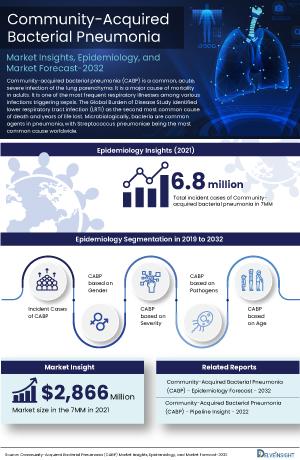
- Among infections that can lead to sepsis, CABP stands as a significant contributor to mortality in adults. Lower respiratory tract infections (LRTIs), identified as the second leading cause of death and years of life lost by the Global Burden of Disease Study, encompass pneumonia as a major component.
- Key approved therapies for CABP include lefamulin (XENLETA) from Nabriva Therapeutics and omadacycline (NUZYRA) from Paratek Pharmaceuticals. Lefamulin is a first-in-class pleuromutilin antibiotic, while omadacycline is a broad-spectrum aminomethylcycline. Both demonstrate activity against common and resistant respiratory pathogens, expanding available treatment options for CABP.
- The emerging CABP landscape includes CAL02, developed by Eagle Pharmaceuticals and Combioxin SA, and AON-D21 from APTARION Biotech, and others. These candidates utilize novel approaches to address antimicrobial resistance and improve outcomes in patients with severe CABP.
- Several antibiotics have received approval, broadening the treatment arsenal for CAP, especially in cases with primary complications. Common antimicrobial options for CAP include macrolides (alone or in conjunction with β-lactams), amoxicillin (alone or in combination with a macrolide), fluoroquinolones, and third-generation cephalosporin's combined with a macrolide.
Community Acquired Bacterial Pneumonia (CABP) Market Size and Forecast in the 7MM
- 2025 Community Acquired Bacterial Pneumonia (CABP) Market Size: ~USD XXX million
- 2036 Projected Community Acquired Bacterial Pneumonia (CABP) Market Size: ~USD XXX million
- Community Acquired Bacterial Pneumonia (CABP) Growth Rate (2026–2036): ~XXX CAGR
-Market-Key-Insights.png)
DelveInsight's ‘Community Acquired Bacterial Pneumonia (CABP) – Market Insights, Epidemiology and Market Forecast – 2036’ report delivers an in-depth understanding of CABP, historical and forecasted epidemiology, as well as the CABP market trends in the United States, EU4 (Germany, Spain, Italy, and France), the United Kingdom, and Japan.
The Community Acquired Bacterial Pneumonia (CABP) market report delivers a comprehensive analysis of the current treatment landscape, including standards of care, clinical practices, and evolving therapeutic algorithms. It evaluates CABP patient burden trends, revenue & market share dynamics, peak patient share & therapy uptake analysis, and provides an in-depth market size assessment, and growth rate projections (Historical & Forecast 2022–2036) across global regions. The report highlights key unmet medical needs in CABP and maps the competitive and clinical landscape to uncover high‑value opportunities, providing a clear outlook on future market growth potential.
|
Study Period |
2022–2036 |
|
Historical Year |
2022–2025 |
|
Forecast Period |
2026–2036 |
|
Base Year |
2026 |
|
Geographies Covered |
|
|
Community Acquired Bacterial Pneumonia (CABP) Market CAGR (Study period/Forecast period) |
XXX (2026 ̶ 2036) |
|
Community Acquired Bacterial Pneumonia (CABP) Epidemiology Segmentation Analysis |
Patient Burden Assessment
|
|
Community Acquired Bacterial Pneumonia (CABP) Companies |
|
|
Community Acquired Bacterial Pneumonia (CABP) Therapies |
|
|
Community Acquired Bacterial Pneumonia (CABP) Market |
Segmented by
|
|
Analysis |
|
Key Factors Driving the Community Acquired Bacterial Pneumonia (CABP) Market
-
Escalating antimicrobial resistance (AMR) and need for novel antibiotics
Rising antimicrobial resistance among respiratory pathogens, combined with the increasing burden of CABP driven by aging populations, comorbidities, and environmental risk factors, is creating a strong demand for novel and effective antibiotic therapies. Improved diagnosis and disease recognition are further expanding the treated patient population.
-
Growing Opportunities in Targeted Therapies for CABP
Opportunities in CABP treatment are expanding with a shift toward targeted and pathogen-specific therapies beyond broad-spectrum antibiotics. Advances in rapid diagnostic tools, antimicrobial stewardship programs, and the development of novel antibiotics targeting resistant pathogens are strengthening the treatment landscape. Furthermore, increasing focus on precision medicine, adjunctive therapies, and host-directed treatments is expected to enhance clinical outcomes and drive innovation in CABP management.
Community Acquired Bacterial Pneumonia (CABP) Understanding and Treatment Algorithm
Community Acquired Bacterial Pneumonia (CABP) Overview and Diagnosis
CABP is an acute infection of the lung parenchyma acquired outside hospital settings, most commonly caused by pathogens such as Streptococcus pneumoniae, Haemophilus influenzae, Staphylococcus aureus, and atypical organisms like Mycoplasma pneumoniae and Legionella pneumophila. It typically presents with symptoms such as fever, cough, sputum production, dyspnea, and chest pain, with severity ranging from mild illness to life-threatening disease, particularly in older adults and individuals with comorbidities. Diagnosis is based on clinical evaluation supported by chest imaging (e.g., chest X-ray showing infiltrates), microbiological testing (sputum culture, blood cultures, or PCR-based assays), and assessment of severity using validated scoring systems such as CURB-65, enabling timely and appropriate management.
Further details are provided in the report.
Community Acquired Bacterial Pneumonia (CABP) Treatment
Treatment of CABP involves prompt initiation of empiric antibiotic therapy tailored to disease severity, patient risk factors, and likely pathogens such as Streptococcus pneumoniae and Haemophilus influenzae. For otherwise healthy outpatients, first-line options typically include amoxicillin, doxycycline, or a macrolide (where resistance is low), while patients with comorbidities or more severe disease may require combination therapy (e.g., a β-lactam plus a macrolide) or a respiratory fluoroquinolone. Hospitalized patients are generally treated with intravenous β-lactams combined with macrolides or monotherapy with fluoroquinolones, with escalation to broader-spectrum agents if risk factors for resistant organisms such as Staphylococcus aureus (including MRSA) or Pseudomonas aeruginosa are present. Supportive care including oxygen therapy, hydration, antipyretics, and management of complications is essential, and treatment is later refined based on microbiological results and clinical response.
Further details related to country-based variations are provided in the report.
Community Acquired Bacterial Pneumonia (CABP) Unmet Needs
The section “unmet needs of CABP” outlines the critical gaps between the current state of patient care, diagnosis, and the ideal & effective management of the disease. It highlights the obstacles experienced by patients, clinicians, and researchers and identifies potential solutions for future progress.
- Lack of rapid and accurate diagnostics
- Rising antimicrobial resistance
- Limited personalized treatment approaches, and others…..
Comprehensive unmet needs insights in CABP and their strategic implications are provided in the full report.
Community Acquired Bacterial Pneumonia (CABP) Epidemiology
Key Findings from Community Acquired Bacterial Pneumonia (CABP) Epidemiological Analysis and Forecast
- Around 80% of the nearly 4 million cases of community-acquired pneumonia (CAP) in the US are classified as CABP. This high prevalence of CABP within the broader category of CAP underscores the significant burden of bacterial pathogens in pneumonia cases.
- In 2025, the US accounted for approximately 55% of the incidence cases of CABP among the 7MM.
- In the US, mild cases of CABP constituted the highest proportion, approximately 50% of total incident cases, followed by moderate cases at around 35%. This distribution suggests that a significant majority of CABP cases are relatively less severe, possibly indicating effective early detection and outpatient management strategies.
- Among all the pathogens associated with CABP, Streptococcus pneumoniae stands out as the most common causative pathogen in the US, followed by other bacterial strains.
- In 2025, gender-specific cases of CABP in the US showed that male individuals accounted for over half of the total CABP cases.
- CABP epidemiology in the US from 2022 to 2036 reveals a concerning trend of increasing cases for major pathogens. S. pneumoniae, H. influenzae, Staphylococcus aureus, M. pneumoniae, C. pneumoniae, and L. pneumophila are all projected to experience significant rises in cases.
Numbers are subject to change with report updation, clinical information updates, etc.
Community Acquired Bacterial Pneumonia (CABP) Drug Chapters & Competitive Analysis
The CABP drug chapter provides a detailed, market-focused review of approved therapies and the emerging pipeline across Phase I–III clinical trials. It covers the mechanism of action, clinical trial data, regulatory approvals, patents, collaborations, and strategic partnerships for each therapy, along with their advantages, limitations, and recent developments. This section offers critical insights into the CABP treatment landscape, supporting market assessment, competitive analysis, and growth forecasting for the CABP therapeutics market.
Approved Therapies for Community Acquired Bacterial Pneumonia (CABP)
Lefamulin (XENLETA): Nabriva Therapeutics
Lefamulin stands out as a significant addition to the arsenal against bacterial infections due to its unique mechanism of action and dual formulation for oral and intravenous administration. Its semi-synthetic nature allows for tailored modifications, enhancing its efficacy and pharmacokinetic properties. The FDA's approval of lefamulin in both oral and IV forms in August 2019 signals its recognition as a versatile treatment option for a range of bacterial infections.
Omadacycline (NUZYRA): Paratek Pharmaceutical
Omadacycline is a modern, broad-spectrum antibiotic approved by the FDA in October 2018 for both oral and intravenous use. Its mechanism of action involves inhibiting bacterial protein synthesis, offering activity against Gram-positive and Gram-negative pathogens, including drug-resistant strains. With once-daily dosing and efficacy in treating community-acquired pneumonia and skin infections, omadacycline stands as a versatile and promising option in the battle against antimicrobial resistance.
|
Table 1:Competitive Landscape of Marketed/Approved Therapies | ||||||
|
Drug/Therapy |
Company |
Indication |
Molecule Type |
RoA |
MoA |
Marketed Region |
|
Lefamulin (XENLETA) |
Nabriva Therapeutics |
CABP |
Small molecules |
Oral |
Protein 50S ribosomal subunit modulators |
US: 2019 |
|
Omadacycline (NUZYRA) |
Paratek Pharmaceutical |
CABP |
Small molecules |
Oral |
Protein synthesis inhibitors |
US: 2018 |
Note: Detailed marketed therapies assessment of therapies will be provided in the final report.
Community Acquired Bacterial Pneumonia (CABP) Pipeline Analysis
CAL02: Eagle Pharmaceutical/Combioxin
CAL02 is a phase II-stage drug designed to combat severe infections, particularly CAP, in ICU patients. It comprises liposomes containing cholesterol and sphingomyelin, with the latter added for its unique anti-infection properties. This combination underscores the importance of understanding the antibacterial roles of antimicrobial lipids.
The drug's approach involves neutralizing virulence effectors, which are key contributors to organ failure and fatal complications in severe infections. By targeting these virulence factors, CAL02 aims to mitigate the progression of infections and improve patient outcomes.
CAL02 received FDA’s Fast-Track and Qualified Infectious Disease Product (QIDP) designations, which provide five years exclusivity extension (for a total potential of eight or ten years of exclusivity).
AON-D21 (anti-C5a): APTARION Biotech AG
AON-D21 is currently being tested in Phase II clinical trial. It is described as a PEGylated L-configured aptamer, which is a type of synthetic molecule designed to bind to specific targets in the body. AON-D21 functions by targeting a particular aspect of the immune system known as the complement system. It specifically binds to and neutralizes a component called C5a.
The target C5a plays a central role in regulating the human immune system, acting as an orchestrator of immune responses. This broad function offers the potential to extend the use of therapies aimed at modulating C5a to a wider range of diseases, particularly those where controlling immune system activity is beneficial.
|
Table 2: Competitive Landscape of Emerging Therapies | |||||||
|
Drug Name |
Company |
Highest Phase |
Indication |
RoA |
MoA |
Molecule Type |
Anticipated Launch in the US |
|
CAL02 |
Eagle Pharmaceutical/Combioxin |
II |
CAP |
IV Infusion |
Bacterial toxin inhibitors |
Small molecule |
Information is available in the full report |
|
AON-D21 |
APTARION Biotech |
II |
CAP |
IV Infusion |
Complement C5a receptor antagonists |
Small molecule |
Information is available in the full report |
|
Note: Launch insights are provisional and may change with future report updates or the occurrence of major key catalysts. | |||||||
Note: A detailed emerging therapies assessment will be provided in the final report
Community Acquired Bacterial Pneumonia (CABP) Key Players, Market Leaders, and Emerging Companies
- Nabriva Therapeutics
- Paratek Pharmaceuticals
- Eagle Pharmaceutical/Combioxin
- APTARION Biotech, and others
Community Acquired Bacterial Pneumonia (CABP) Drug Updates
- In January 2026, the international Phase II ADCAP trial for AON-D21 in severe community-acquired pneumonia has completed enrollment.
- In March 2025, US IND received and extension of the ADCAP trial to 150 patients.
Drug Class Insights
Community Acquired Bacterial Pneumonia (CABP) Market Outlook
Community-acquired pneumonia (CAP) presents a significant burden globally, both in terms of morbidity and mortality. However, determining the most effective antibiotic treatment for CAP remains a complex task due to various factors. One challenge stems from the diverse epidemiology of CAP, which can vary significantly across different regions and countries, leading to differences in the prevalence of antimicrobial resistance and the types of pathogens causing the infection.
Moreover, the landscape of antibiotic treatment for CAP is constantly evolving due to changes in the safety profiles and efficacy of established antibiotics. This evolution is partly driven by the emergence of antimicrobial resistance, which can render previously effective antibiotics less potent against certain pathogens. Consequently, clinicians face the dilemma of selecting the most appropriate antibiotic regimen for individual patients, taking into account local resistance patterns and patient-specific factors.
In recent years, the approval of new antibiotics has offered additional options for the treatment of CAP. Drugs such as omadacycline (NUZYRA), delafloxacin (BAXDELA), and lefamulin (XENLETA) have expanded the armamentarium against CAP, providing alternatives for patients who may not respond to traditional therapies or who have primary complications. These newer antibiotics offer broader spectra of activity and novel mechanisms of action, enhancing their potential effectiveness against a range of CAP pathogens.
In addition, the drugs approved for hospital-acquired bacterial pneumonia (HABP)/ventilator-associated bacterial pneumonia (VABP) comprises cefiderocol (FETROJA), ceftazidime-avibactam (AVYCAZ), telavancin (VIBATIV), and ceftolozane + tazobactam (ZERBAXA), among others. In contrast, the pipeline for emerging therapies targeting CAP remains relatively limited. However, there are ongoing efforts to develop new treatments, with some promising candidates being evaluated in clinical trials.
Further details will be provided in the report….
Drug Class/Insights into Leading Emerging and Marketed Therapies in Community Acquired Bacterial Pneumonia (CABP) (2022–2036 Forecast)
The CABP treatment landscape is steadily evolving from lifelong plasma-derived augmentation toward disease-modifying, RNA-based, and gene-editing approaches aimed at addressing both lung and liver pathology. While current management remains centered on intravenous A1-PI replacement, the pipeline increasingly focuses on reducing mutant protein accumulation, correcting genetic defects, and enabling durable clinical benefit.
- Protein 50S ribosomal subunit modulators and broad-spectrum antibiotics: Lefamulin (XENLETA), omadacycline (NUZYRA), along with established agents such as amoxicillin and azithromycin, are commonly used for the treatment of CABP, providing broad-spectrum coverage against typical and atypical respiratory pathogens. However, their effectiveness is increasingly challenged by rising antimicrobial resistance and the lack of disease-modifying activity.
- Host-directed and anti-virulence therapies: Emerging candidates such as CAL02 and AON-D21 are being developed to complement conventional antibiotic treatment by targeting bacterial toxins, virulence factors, and host inflammatory responses. These novel approaches aim to improve clinical outcomes in severe CABP and address challenges associated with antimicrobial resistance and treatment failure.
Further details will be provided in the report….
Community Acquired Bacterial Pneumonia (CABP) Drug Uptake
This section focuses on the uptake rate of potential drugs expected to be launched in the market during the forecast period (2026–2036). The analysis covers the CABP market's uptake by drugs, patient uptake by therapy, and sales of each drug.
Further detailed analysis of emerging therapies' drug uptake in the report…
Market Access and Reimbursement of Community Acquired Bacterial Pneumonia (CABP)
The report further provides detailed insights on the country-wise accessibility and reimbursement scenarios, cost-effectiveness scenario of approved therapies, programs making accessibility easier and out-of-pocket costs more affordable, insights on patients insured under federal or state government prescription drug programs, etc.
Reimbursement is a crucial factor that affects the drug’s access to the market. Often, the decision to reimburse comes down to the price of the drug relative to the benefit it produces in treated patients. To reduce the healthcare burden of these high-cost therapies, many payment models are being considered by payers and other industry insiders.
|
Table 1: The US Reimbursement for Community Acquired Bacterial Pneumonia (CABP) Therapies | |
|
Drug |
Access Program |
|
Omadacycline |
NUZYRA Copay Program |
Further details are provided in the final report….
Community Acquired Bacterial Pneumonia (CABP) Therapies Price Scenario & Trends
Pricing and analogue assessment of CABP therapies highlights evolving price dynamics structures. This section summarises the cost of approved treatments, the closest and most appropriate analogue selection for emerging therapies, and the understanding of how pricing influences market access, adherence, and long-term uptake.
Further details are provided in the final report….
Industry Experts and Physician Views for Community Acquired Bacterial Pneumonia (CABP)
To keep up with CABP market trends, we take Key Opinion Leaders (KOLs) and Subject Matter Experts (SMEs) opinions working in the domain through primary research to fill the data gaps and validate our secondary research. Industry experts were contacted for insights on the CABP emerging therapies, evolving treatment landscape, patient adherence to conventional therapies, therapy switching trends, drug adoption and uptake, accessibility challenges, and epidemiology and real-world prescription patterns in CABP, including MD, PhD, Instructor, Postdoctoral Researcher, Professor, Researcher, and others.
DelveInsight’s analysts connected with 10+ KOLs to gather insights; however, interviews were conducted with 6+ KOLs in the 7MM. Centres such as the University of North Carolina at Chapel Hill, the University of Tokyo Hospital, and King’s College London, etc. were contacted. Their opinion helps understand and validate current and emerging CABP therapies, highlight unmet medical needs, provide epidemiological context, and support strategic decisions for market access, therapy adoption, and pipeline prioritisation in CABP.
|
Region |
Key Opinion Leaders (KOLs) and Subject Matter Experts (SMEs) |
|
United States |
“Community-acquired pneumonia (CAP) requires urgent and specific antimicrobial therapy. However, the causal pathogen is typically unknown at the point when anti-infective therapeutics must be initiated. Physicians synthesize information from diverse data streams to make appropriate decisions.” |
|
United Kingdom |
“Despite current diagnostic tests, it is difficult to detect pathogens in majority of patients. Respiratory viruses are detected more frequently than bacteria among community acquired pneumonia.” |
Qualitative Analysis: SWOT and Conjoint Analysis
We perform qualitative and market Intelligence analysis using various approaches, such as SWOT analysis and conjoint analysis.
In the SWOT analysis of CABP, strengths, weaknesses, opportunities, and threats in terms of disease diagnosis, patient awareness, patient burden, competitive landscape, cost-effectiveness, and geographical accessibility of therapies are provided.
Conjoint analysis analyses emerging therapies based on relevant attributes such as safety, efficacy, frequency of administration, route of administration, and order of entry. Scoring is given based on these parameters to analyse the effectiveness of therapy.
The team of analyst’s analyses promising emerging therapies based on relevant attributes such as safety, efficacy, frequency of administration, route of administration, and order of entry. In efficacy, the trial’s primary and secondary outcome measures are evaluated, whereas the therapies’ safety is evaluated, wherein the acceptability, tolerability, and adverse events are mainly observed. In addition, the scoring is also based on the route of administration, order of entry, probability of success, and the addressable patient pool for each therapy. According to these parameters, the final weightage score and the ranking of the emerging therapies are decided.
Scope of the Report
- The report covers a segment of key events, an executive summary, a descriptive overview of Community Acquired Bacterial Pneumonia (CABP), explaining its causes, signs and symptoms, pathogenesis, and currently available treatments.
- Comprehensive insight has been provided into the epidemiology segments and forecasts, the future growth potential of the diagnosis rate, and disease progression along treatment guidelines.
- Additionally, an all-inclusive account of both the current and emerging treatments, along with the elaborate profiles of late-stage and prominent therapies, will have an impact on the current treatment landscape.
- A detailed review of the Community Acquired Bacterial Pneumonia (CABP) market, historical and forecasted market size, market share by therapies, detailed assumptions, and rationale behind our approach is included in the report, covering the 7MM drug outreach.
- The report provides an edge while developing business strategies by understanding trends through SWOT analysis and expert insights/KOL views, patient journey, and treatment preferences that help in shaping and driving the 7MM Community Acquired Bacterial Pneumonia (CABP) market.
Report Insights
- Community Acquired Bacterial Pneumonia (CABP) Patient Population Forecast
- Community Acquired Bacterial Pneumonia (CABP) Therapeutics Market Size
- Community Acquired Bacterial Pneumonia (CABP) Pipeline Analysis
- Community Acquired Bacterial Pneumonia (CABP) Market Size and Trends
- Community Acquired Bacterial Pneumonia (CABP) Market Opportunity (Current and forecasted)
Report Key Strengths
- Epidemiology‑based (Epi‑based) Bottom‑up Forecasting
- Artificial Intelligence (AI)-enabled Market Research Report
- 11-year forecast
- Community Acquired Bacterial Pneumonia (CABP) Market Outlook (North America, Europe, Asia-Pacific)
- Patient Burden Trends (by geography)
- Community Acquired Bacterial Pneumonia (CABP) Treatment Addressable Market (TAM)
- Community Acquired Bacterial Pneumonia (CABP) Competitive Landscape
- Community Acquired Bacterial Pneumonia (CABP) Major Companies Insights
- Community Acquired Bacterial Pneumonia (CABP) Price Trends and Analogue Assessment
- Community Acquired Bacterial Pneumonia (CABP) Therapies Drug Adoption/Uptake
- Community Acquired Bacterial Pneumonia (CABP) Therapies Peak Patient Share Analysis
Report Assessment
- Community Acquired Bacterial Pneumonia (CABP) Current Treatment Practices
- Community Acquired Bacterial Pneumonia (CABP) Unmet Needs
- Community Acquired Bacterial Pneumonia (CABP) Clinical Development Analysis
- Community Acquired Bacterial Pneumonia (CABP) Emerging Drugs Product Profiles
- Community Acquired Bacterial Pneumonia (CABP) Market Attractiveness
- Community Acquired Bacterial Pneumonia (CABP) Qualitative Analysis (SWOT and Conjoint Analysis)
FAQs
Market Insights
- What was the Community Acquired Bacterial Pneumonia (CABP) market size, the market size by therapies, market share (%), distribution in 2025, and what would it look like by 2036? What are the contributing factors for this growth?
- What are the anticipated pricing variations among different geographies for the emerging therapies in the future?
- What can be the future treatment paradigm of Community Acquired Bacterial Pneumonia (CABP)?
- What are the disease risks, burdens, and unmet needs of Community Acquired Bacterial Pneumonia (CABP)? What will be the growth opportunities across the 7MM concerning the patient population with Community Acquired Bacterial Pneumonia (CABP)?
- Who is the major future competitor in the market, and how will the competitors affect their market share?
- What are the current options for the treatment of Community Acquired Bacterial Pneumonia (CABP)? What are the current guidelines for treating Community Acquired Bacterial Pneumonia (CABP) in the US, Europe, and Japan?
Reasons to Buy
- The report will help in developing business strategies by understanding the latest trends and changing treatment dynamics driving the Community Acquired Bacterial Pneumonia (CABP) market.
- Bottom-up forecasting builds from the affected population to product forecasts, delivering a robust, data-driven approach ideal for new therapies and novel classes.
- Insights on patient burden/disease incidence, evolution in diagnosis, and factors contributing to the change in the epidemiology of the disease during the forecast years.
- Understand the existing market opportunities in varying geographies and the growth potential over the coming years.
- Identifying strong upcoming players in the market will help devise strategies to help get ahead of competitors.
- Detailed analysis and ranking of class-wise potential current and emerging therapies under the conjoint analysis section to provide visibility around leading classes.
- To understand KOLs’ perspectives on the accessibility, acceptability, and compliance-related challenges of existing treatment to overcome barriers in the future.
- Detailed insights into the unmet needs of the existing market so that the upcoming players can strengthen their development and launch strategy.
- This Artificial Intelligence (AI)-enabled report summarizes and simplifies complex datasets within the report into clear, actionable insights for stakeholders, investors, and healthcare providers, enabling faster, data-driven decisions.
-pipeline.png&w=256&q=75)