Cutaneous Melanoma Market
Key Highlights
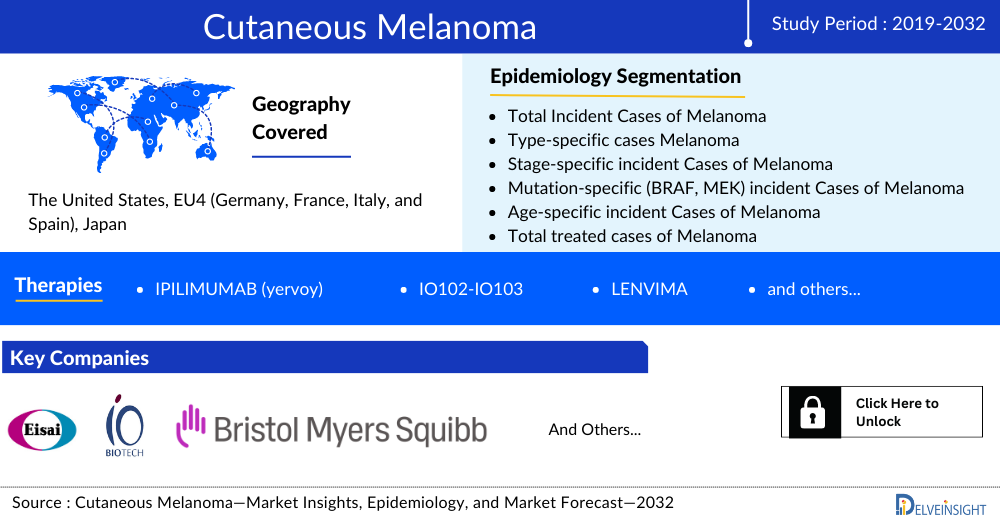
- The disease epidemiology covered in the report provides historical as well as forecasted Cutaneous Melanoma epidemiology scenario in the 7MM covering the United States, EU4 (Germany, Spain, Italy, and France) and the United Kingdom, and Japan from 2019 to 2032.
- Cutaneous Melanoma epidemiology is segmented as Total Incident Cases of Melanoma, Type-specific cases Melanoma, Stage-specific incident Cases of Melanoma, Mutation-specific (BRAF, MEK) incident Cases of Melanoma, Age-specific incident Cases of Melanoma, and Total treated cases of Melanoma] in the Cutaneous Melanoma market report.
Request for unlock CAGR of Cutaneous Melanoma Market
DelveInsight's "Cutaneous Melanoma Market Insights, Epidemiology, and Market Forecast — 2032" report delivers an in-depth understanding of the Cutaneous Melanoma, historical and forecasted epidemiology as well as the Cutaneous Melanoma market trends in the United States, EU4 (Germany, Spain, Italy, and France) and the United Kingdom, and Japan.
The Cutaneous Melanoma market report provides current treatment practices, emerging drugs, Cutaneous Melanoma market share of the individual therapies, current and forecasted Cutaneous Melanoma market Size from 2019 to 2032 segmented by seven major markets. The Report also covers current Cutaneous Melanoma treatment practice/algorithm, and unmet medical needs to curate best of the opportunities and assesses the underlying potential of the market.
Geography Covered
- The United States
- EU4 (Germany, Spain, Italy, and France) and the United Kingdom
- Japan
Study Period: 2019-2032
Cutaneous Melanoma Market Disease Understanding and Treatment Algorithm
The DelveInsight’s Cutaneous Melanoma market report gives a thorough understanding of Cutaneous Melanoma by including details such as disease definition, symptoms, causes, pathophysiology, diagnosis, and treatment. Melanoma is a common skin cancer that arises from the melanin cells within the upper layer of the skin (epidermis) or from similar cells that may be found in moles (nevi). This type of skin cancer may send down roots into deeper layers of the skin, and some of these microscopic roots may spread (metastasize), causing new tumor growths in vital organs of the body.
In the early stages, most melanomas do not produce any specific symptoms. Later they may appear as lesions that do not heal or an existing mole that shows changes in size or color. Melanoma accounts for less than 5% of all skin cancers; however, it causes the greatest number of skin cancer–related deaths worldwide. Early detection of thin cutaneous melanoma is the best means of reducing mortality, although mortality rates have dropped over the past decade due to the advent of more effective targeted and immune therapies for patients with advanced disease.
Cutaneous Melanoma Diagnosis
Early detection and recognition of skin cancer are essential. Recognizing the early warning signs of melanoma and doing regular self-examinations of skin can help find melanoma early when the disease is more curable. Doctors use many tests to find or diagnose cancer. Initial evaluation includes a physical exam and biopsy. Depending on the results of the assessment, imaging tests are performed tests to learn if cancer has spread to another part of the body from where it started including ultrasound, computed tomography (CT or CAT) scan, magnetic resonance imaging (MRI), and positron emission tomography (PET) or PET-CT scan.
Cutaneous Melanoma Treatment
The treatment of melanoma depends on its thickness, whether cancer has spread, the stage, whether there are specific genetic changes in melanoma cells, the rate of melanoma growth, and the person’s overall health.
Over the past years, several therapies have been approved by the US FDA. Depending on the features of the tumor (location, stage, and genetic profile), the therapeutic options may be surgical resection, chemotherapy, radiotherapy, photodynamic therapy (PDT), immunotherapy, or targeted therapy. Yet, for individuals at Stages I–III, the most common treatment choice is surgical resection, and for solitary metastatic melanoma, metastasectomy remains the primary intervention.
Recently the US FDA has approved Opdualag for patients with metastatic or inoperable melanoma, which comprised of two immunotherapy agents, relatlimab (anti-LAG-3) and nivolumab (anti-PD-1), which delayed time to cancer progression.

Cutaneous Melanoma Epidemiology
The Cutaneous Melanoma epidemiology section provides insights about historical and current Cutaneous Melanoma patient pool and forecasted trends for individual seven major countries. It helps to recognize the causes of current and forecasted trends by exploring numerous studies and views of key opinion leaders. This part of the report also provides the diagnosed patient pool and their trends along with assumptions undertaken.
Key Findings
- The disease epidemiology covered in the report provides historical as well as forecasted Cutaneous Melanoma epidemiology scenario in the 7MM covering the United States, EU4 (Germany, Spain, Italy, and France) and the United Kingdom, and Japan from 2019 to 2032.
- The disease epidemiology covered in the report provides historical as well as forecasted Cutaneous Melanoma epidemiology [segmented as Total Incident Cases of Melanoma, Type-specific cases Melanoma, Stage-specific incident Cases of Melanoma, Mutation-specific (BRAF, MEK) incident Cases of Melanoma, Age-specific incident Cases of Melanoma, and Total treated cases of Melanoma] in the 7MM covering the United States, EU4 (Germany, Spain, Italy, and France) and the United Kingdom, and Japan from 2019 to 2032.
Country Wise- Cutaneous Melanoma Epidemiology
This section provides a glimpse of the Cutaneous Melanoma epidemiology in the United States, EU4 (Germany, Spain, Italy, and France) and the United Kingdom, and Japan.
Learn more about the evolving epidemiology trends and key developments: Adenoid Cystic Carcinoma Epidemiology Forecast
Cutaneous Melanoma Drug Chapters
The drug chapter segment of the Cutaneous Melanoma report encloses the detailed analysis of Cutaneous Melanoma marketed drugs and late stage (Phase-III and Phase-II) pipeline drugs. It also helps to understand the Cutaneous Melanoma clinical trial details, expressive pharmacological action, agreements and collaborations, approval and patent details, advantages and disadvantages of each included drug, and the latest news and press releases.
Cutaneous Melanoma Marketed Drugs
IPILIMUMAB (yervoy): Bristol Myers Squibb
Approved by the FDA in 2011 for patients with stage IV melanoma, ipilimumab was the first checkpoint blockade therapy that helped shrink many tumors markedly and extend life for patients with advanced melanoma. Ipilimumab targets CTLA-4, a protein on the T cell that functions as a “brake” to regulate immune system activation. Blocking CTLA-4 allows T cells to attack and destroy tumors. Ipilimumab targets CTLA-4, a protein on the T cell that functions as a “brake” to regulate immune system activation. Blocking CTLA-4 allows T cells to attack and destroy tumors.
Note: Detailed Current therapies assessment will be provided in the full report of Cutaneous Melanoma
Cutaneous Melanoma Emerging Drugs
IO102-IO103 (IO Biotech), a combination of two novel immunotherapeutics, IO102 and IO103, which are designed to target IDO and PD-L1 expressing cells, respectively, is being evaluated for the patients who suffer from melanoma. Based on findings from the MM1636 Phase I/II clinical study, the FDA granted Breakthrough designation to IO102-IO103 in combination with an anti-PD-1 monoclonal antibody for the treatment of patients with unresectable or metastatic melanoma in December 2020. Currently, is being evaluated in a Phase III (NCT05155254) trial in combination with KEYTRUDA as a first-line therapy in patients with previously untreated, unresectable or metastatic (advanced) melanoma.
LENVIMA, discovered and developed by Eisai, is a kinase inhibitor that inhibits the kinase activities of vascular endothelial growth factor (VEGF) receptors VEGFR1 (FLT1), VEGFR2 (KDR), and VEGFR3 (FLT4). It inhibits other kinases that have been implicated in pathogenic angiogenesis, tumor growth, and cancer progression in addition to their normal cellular functions, including fibroblast growth factor (FGF) receptors FGFR1-4, the platelet derived growth factor receptor alpha (PDGFRα), KIT, and RET. Currently the drug is in Phase III (NCT03820986; LEAP-003) to assess the safety and efficacy of pembrolizumab (MK-3475) combined with lenvatinib (MK-7902/E7080) compared to pembrolizumab alone as first-line treatment in adults for advanced melanoma.
Note: Detailed emerging therapies assessment will be provided in the full report of Cutaneous Melanoma
Cutaneous Melanoma Market Outlook
Cutaneous malignant melanoma is the most aggressive and invasive skin cancer, resulting in the majority of skin cancer deaths. Long-term survival for metastatic disease is low; however, most patients are initially diagnosed with localized disease, surgical excision of which is often curative.
Immunotherapies and targeted therapies produce vastly superior results, chemotherapy is no longer a frontline therapy. It is most often used if targeted therapies and/or checkpoint blockade therapies fail. It may sometimes be used in conjunction with these other therapies. Radiation is rarely used to treat a primary melanoma tumor, but may be used to treat melanomas that have spread to the brain or other distant sites to shrink tumors and decrease pain, improve comfort and mobility.
While more melanoma treatment options exist today than ever before, there are even more new approaches currently being explored. Building on today’s strong forward momentum in understanding and treating melanoma, researchers are hard at work refining the therapeutic combinations and strategies to improve outcomes. Someday, advanced melanoma may be transformed from a deadly disease to a chronic, manageable or even curable condition.
To summarize, a better and clear understanding of the pathogenesis of Melanoma is likely to improve the treatment regimens and development of novel therapies significantly. With this, several companies have started working toward the development of new therapeutic options. The market is expected to experience favorable growth in the coming years owing to the already prescribed products along with the launch of distinctive emerging therapies in the coming years.
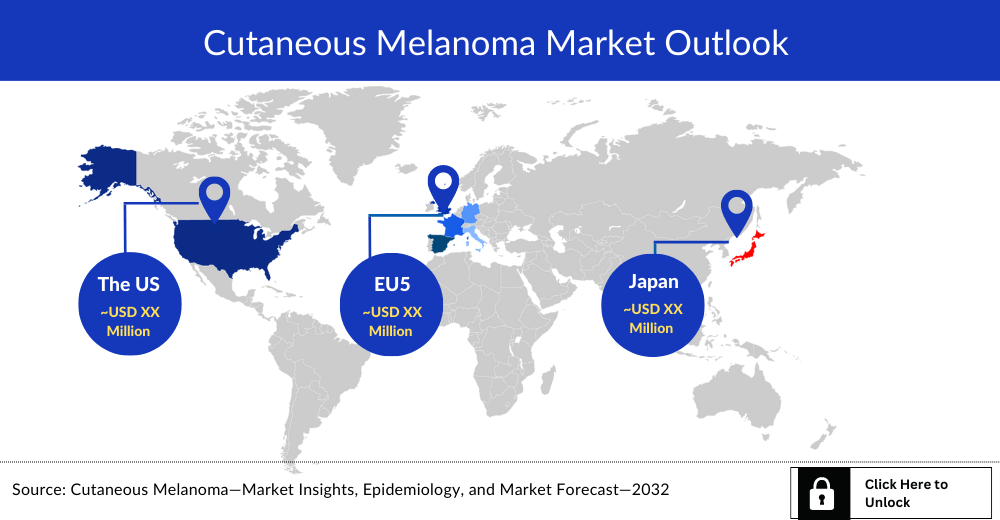
According to DelveInsight, Cutaneous Melanoma market in 7MM is expected to witness a major change in the study period 2019-2032.
Analyst Commentary
- The pipeline of Cutaneous Melanoma has many potential therapies being investigated for the treatment of Cutaneous Melanoma, and it is safe to predict that the treatment space will experience a significant impact on the market during the forecast period.
- The expected introduction of emerging therapies with improved efficacy, more awareness initiatives programs, and further improvement in the diagnosis rate, are likely to boost the growth of the Cutaneous Melanoma market in the 7MM. Aside from that, the market size of Cutaneous Melanoma may flourish due to increased research and development, label-expansion of approved therapies into other epilepsy in this field.
- The market growth of Cutaneous Melanoma may be offset by failures and/or discontinuation of the emerging therapies, unaffordable pricing, market access and reimbursement issues, and a scarcity of healthcare specialists.
|
Report Metrics |
Details |
|
Study Period |
2019 to 2032 |
|
Base Year |
2021 |
|
Forecast Period |
2022 to 2032 |
|
CAGR | |
|
Cutaneous Melanoma Drugs |
IPILIMUMAB (yervoy), IO102-IO103, LENVIMA, and Others. |
|
Cutaneous Melanoma Key Companies |
Eisai, IO Biotech, Bristol Myers Squibb and Many Others. |
Cutaneous Melanoma Drugs Uptake
This section focuses on the rate of uptake of the potential drugs recently launched in the Cutaneous Melanoma market or expected to get launched in the market during the study period 2019-2032. The analysis covers Cutaneous Melanoma market uptake by drugs; patient uptake by therapies; and sales of each drug.
This helps in understanding the drugs with the most rapid uptake, reasons behind the maximal use of new drugs, and allows the comparison of the drugs based on market share and size which again will be useful in investigating factors important in market uptake and in making financial and regulatory decisions.
Note: Detailed emerging therapies assessment will be provided in full report of Cutaneous Melanoma
Cutaneous Melanoma Pipeline Development Activities
The report provides insights into different therapeutic candidates in Phase II and Phase III stage. It also analyzes Cutaneous Melanoma key players involved in developing targeted therapeutics.
Cutaneous Melanoma Clinical Trial Development Activities
The report covers the detailed information of collaborations, acquisition and merger, licensing, patent details and other information for Cutaneous Melanoma emerging therapies.
Reimbursement Scenario in Cutaneous Melanoma
Approaching reimbursement proactively can have a positive impact both during the late stages of product development and well after product launch. In a report, we consider reimbursement to identify economically attractive indications and market opportunities. When working with finite resources, the ability to select the markets with the fewest reimbursement barriers can be a critical business and price strategy.
KOL- Views
To keep up with current market trends, we take KOLs and SMEs ' opinions working in the Cutaneous Melanoma domain through primary research to fill the data gaps and validate our secondary research. Their opinion helps to understand and validate current and emerging therapies treatment patterns or Cutaneous Melanoma market trends. This will support the clients in potential upcoming novel treatment by identifying the overall scenario of the market and the unmet needs.
Competitive Intelligence Analysis
We perform Competitive and Market Intelligence analysis of the Cutaneous Melanoma Market by using various Competitive Intelligence tools that include - SWOT analysis, PESTLE analysis, Porter's five forces, BCG Matrix, Market entry strategies etc. The inclusion of the analysis entirely depends upon the data availability.
Scope of the Cutaneous Melanoma Market Report
- The report covers the descriptive overview of Cutaneous Melanoma, explaining its causes, signs and symptoms, pathophysiology, diagnosis, and currently available therapies
- Comprehensive insight has been provided into the Cutaneous Melanoma epidemiology and treatment in the 7MM
- Additionally, an all-inclusive account of both the current and emerging therapies for Cutaneous Melanoma are provided, along with the assessment of new therapies, which will have an impact on the current treatment landscape
- A detailed review of the Cutaneous Melanoma market; historical and forecasted is included in the report, covering drug outreach in the 7MM
- Detailed Patient Based Market Forecasting determines the trends shaping and driving the Global Cutaneous Melanoma market
Cutaneous Melanoma Market Report Highlights
- In the coming years, the Cutaneous Melanoma market is set to change due to the rising awareness of the disease, and incremental healthcare spending across the world; which would expand the size of the market to enable the drug manufacturers to penetrate more into the market
- The companies and academics are working to assess challenges and seek opportunities that could influence Cutaneous Melanoma R&D. The therapies under development are focused on novel approaches to treat/improve the disease condition
- Major players are involved in developing therapies for Cutaneous Melanoma. The launch of emerging therapies will significantly impact the Cutaneous Melanoma market
- A better understanding of disease pathogenesis will also contribute to the development of novel therapeutics for Cutaneous Melanoma
- Our in-depth analysis of the pipeline assets across different stages of development (Phase III and Phase II), different emerging trends, and comparative analysis of pipeline products with detailed Cutaneous Melanoma clinical trial profiles, key cross-competition, launch date along with product development activities will support the clients in the decision-making process regarding their therapeutic portfolio by identifying the overall scenario of the research and development activities
Cutaneous Melanoma Report Insights
- Patient Based Market Forecasting
- Therapeutic Approaches
- Cutaneous Melanoma Pipeline Analysis
- Cutaneous Melanoma Market Size and Trends
- Market Opportunities
- Impact of upcoming Therapies
Cutaneous Melanoma Report Key Strengths
- 11 Years Forecast
- 7MM Coverage
- Cutaneous Melanoma Epidemiology Segmentation
- Key Cross Competition
- Highly Analyzed Market
- Drugs Uptake
Cutaneous Melanoma Report Assessment
- Current Treatment Practices
- Unmet Needs
- Pipeline Product Profiles
- Market Attractiveness
Key Questions
Market Insights:
- What was the Cutaneous Melanoma drug class share (%) distribution in 2019 and how it would look like in 2032?
- What would be the Cutaneous Melanoma total market size as well as market size by therapies across the 7MM during the forecast period (2019-2032)?
- What are the key findings of the market across 7MM and which country will have the largest Cutaneous Melanoma market size during the forecast period (2019-2032)?
- At what CAGR, the Cutaneous Melanoma market is expected to grow by 7MM during the forecast period (2019-2032)?
- What would be the Cutaneous Melanoma market outlook across the 7MM during the forecast period (2019-2032)?
- What would be the Cutaneous Melanoma market growth till 2032, and what will be the resultant market Size in the year 2032?
- How would the unmet needs affect the market dynamics and subsequent analysis of the associated trends?
Epidemiology Insights:
- What are the disease risk, burden, and regional/ethnic differences of Cutaneous Melanoma?
- What are the key factors driving the epidemiology trend for seven major markets covering the United States, EU4 (Germany, Spain, Italy, and France) and the UK, and Japan?
- What is the historical Cutaneous Melanoma patient pool in seven major markets covering the United States, EU4 (Germany, Spain, Italy, and France) and the UK, and Japan?
- What would be the forecasted patient pool of Cutaneous Melanoma in seven major markets covering the United States, EU4 (Germany, Spain, Italy, and France) and the UK, and Japan?
- Where will be the growth opportunities in the 7MM concerning the patient population about Cutaneous Melanoma?
- Out of all 7MM countries, which country would have the highest prevalent population of Cutaneous Melanoma during the forecast period (2019-2032)?
- At what CAGR the patient population is expected to grow by 7MM during the forecast period (2019-2032)?
Current Treatment Scenario, Marketed Drugs, and Emerging Therapies:
- What are the current options for the Cutaneous Melanoma treatment in addition to the approved therapies?
- What are the current treatment guidelines for the treatment of Cutaneous Melanoma in the US, Europe, and Japan?
- What are the Cutaneous Melanoma marketed drugs and their respective MOA, regulatory milestones, product development activities, advantages, disadvantages, safety, efficacy, etc.?
- How many companies are developing therapies for the treatment of Cutaneous Melanoma?
- How many therapies are in-development by each company for Cutaneous Melanoma treatment?
- How many are emerging therapies in mid-stage, and late stage of development for Cutaneous Melanoma treatment?
- What are the key collaborations (Industry - Industry, Industry-Academia), Mergers and acquisitions, licensing activities related to the Cutaneous Melanoma therapies?
- What are the recent novel therapies, targets, mechanisms of action, and technologies being developed to overcome the limitation of existing therapies?
- What are the clinical studies going on for Cutaneous Melanoma and its status?
- What are the current challenges faced in drug development?
- What are the key designations that have been granted for the emerging therapies for Cutaneous Melanoma?
- What are the global historical and forecasted markets of Cutaneous Melanoma?
Reasons to buy
- The Patient Based Market Forecasting analysis will help in developing business strategies by understanding trends shaping and driving the Cutaneous Melanoma market
- Organize sales and marketing efforts by identifying the best opportunities for Cutaneous Melanoma in the US, Europe (Germany, Spain, Italy, and France) and the United Kingdom, and Japan
- Identification of strong upcoming players in the market will help in devising strategies that will help in getting ahead of competitors
- Organize sales and marketing efforts by identifying the best opportunities for the Cutaneous Melanoma market
- To understand the future market competition in the Cutaneous Melanoma market.