
Cutting Balloons Market Summary
- The global cutting balloons market size was valued at USD 0.82 billion in 2025 and is projected to reach USD 1.58 billion by 2034.
- The market is expected to expand at a CAGR of 7.6% during the forecast period 2026-2034, supported by the rising prevalence of coronary and peripheral artery disease and calcified lesions, the growing complexity of lesions requiring advanced lesion preparation, the clinical evidence supporting cutting and scoring balloons, and the growth of arteriovenous fistula and dialysis access interventions.
- By product type, the cutting balloons segment dominated the cutting balloons market with a 54% share in 2025.
- By application, the coronary artery disease segment dominated the cutting balloons market with a 52% share in 2025.
- By balloon compliance, the non-compliant segment dominated the cutting balloons market with a 55% share in 2025.
- By end-user, the hospitals segment dominated the cutting balloons market with a 62% share in 2025.
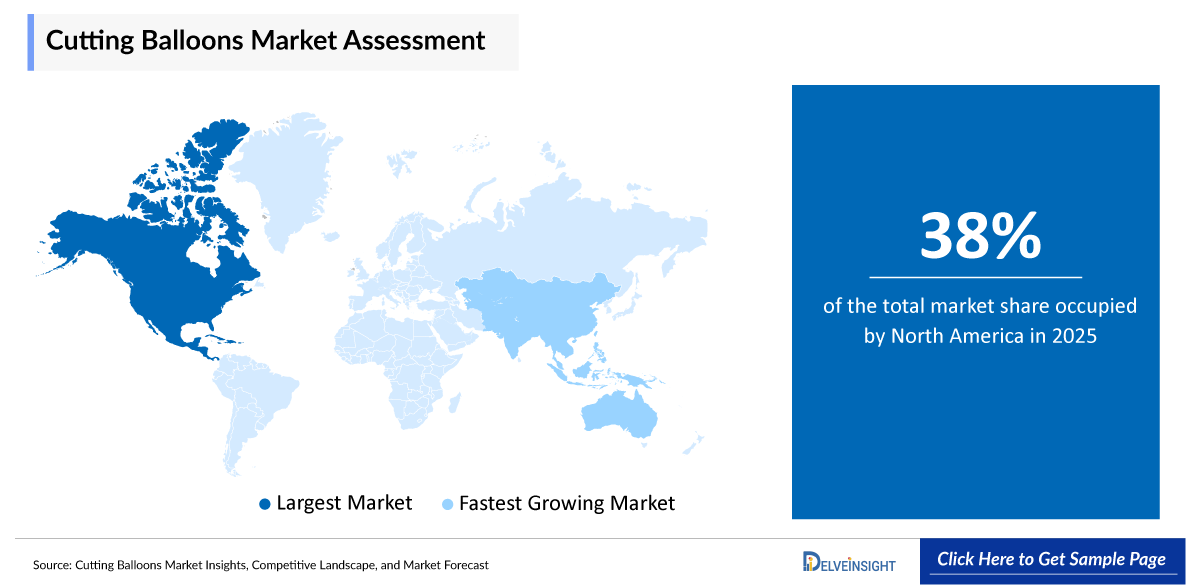
- North America accounted for the largest share of the cutting balloons market at 38% in 2025, while Asia-Pacific is anticipated to register the fastest growth through 2034.
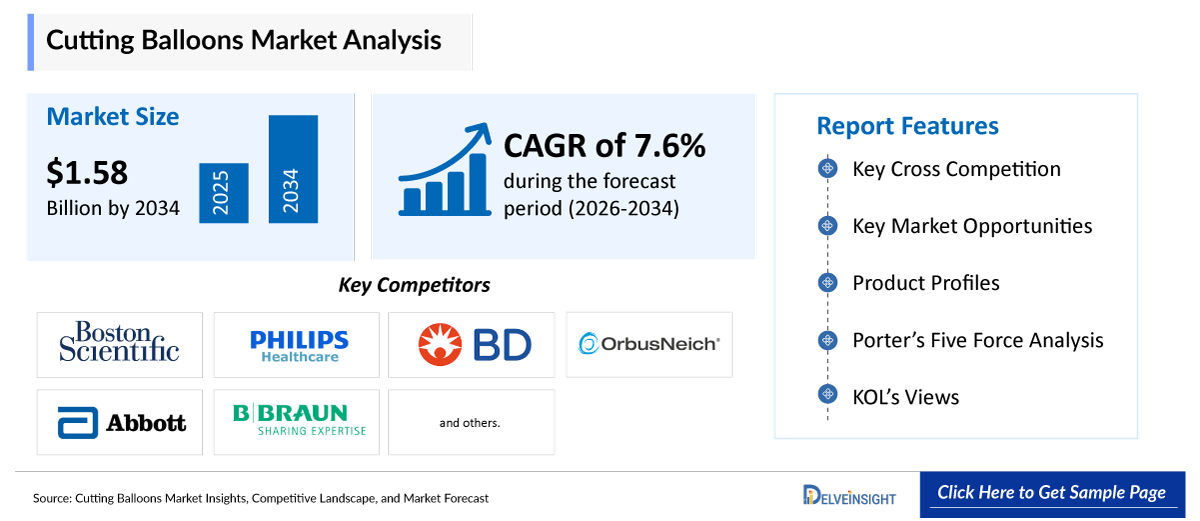
A cutting balloon is a specialized angioplasty catheter that carries microsurgical blades, known as atherotomes, bonded longitudinally to the surface of a balloon, which create controlled incisions in a resistant, fibrotic, or calcified lesion during inflation to enable dilation at lower pressure and to prepare the vessel for stenting. The scope of the market encompasses cutting balloons, which use atherotomes, and the closely related scoring balloons, which use nitinol scoring elements or wires to create a focal stress pattern that modifies plaque, both of which are used for lesion preparation in resistant, calcified, and fibrotic lesions and in-stent restenosis. Leading products include the Boston Scientific Wolverine cutting balloon, mounted on a semicompliant balloon with three or four atherotomes, and the scoring balloons AngioSculpt from Philips, UltraScore and VascuTrak from Becton Dickinson, Scoreflex and Scoreflex NC from OrbusNeich, and NSE Alpha from B. Braun.
These devices are used across coronary artery disease, peripheral artery disease, arteriovenous dialysis fistula, and renal artery interventions, and they modify plaque at lower pressures than standard angioplasty while reducing the risk of vessel recoil and barotrauma. The contemporary market is defined by the growing complexity of lesions, the emphasis on lesion preparation before drug-coated balloons and stents, and the competition among specialty balloon, atherectomy, and intravascular lithotripsy technologies.
Cutting Balloons Market Key Growth Drivers
- Rising prevalence of coronary and peripheral artery disease and of calcified and fibrotic lesions, with peripheral artery disease affecting 200 million people worldwide.
- Growing complexity of lesions, including calcified, fibrotic, and in-stent restenosis lesions, that require advanced lesion preparation before stenting.
- Clinical evidence supporting cutting and scoring balloons, including the demonstration in the ShortCUT trial that the Wolverine cutting balloon achieved non-inferiority to intravascular lithotripsy for minimal stent area in severely calcified coronary arteries.
- Growth of arteriovenous fistula and dialysis access interventions, for which scoring balloons are indicated to treat resistant stenoses.
- The shift toward lesion preparation before drug-coated balloons and drug-eluting stents to optimize outcomes.
- Technological advancement in balloon design, including atherotomes, dual-wire scoring systems, and improved deliverability and crossing profiles.
- Rising volumes of percutaneous coronary and endovascular intervention that expand the use of specialty balloons.
Key Companies in Cutting Balloons Market
The leading participants in the cutting balloons market include the following:
- Boston Scientific Corporation
- Koninklijke Philips N.V.
- Becton, Dickinson and Company
- OrbusNeich Medical Group Holdings Limited
- Abbott Laboratories
- B. Braun SE
- Biotronik SE & Co. KG
- Medtronic plc
- iVascular S.L.U.
- SIS Medical AG, and others
For illustrative purposes, only the top 10 companies are listed in the Table of Contents. The report may include analysis and references to additional companies relevant to the market assessment.
Cutting Balloons Market Size
The following table summarizes the headline market metrics for the global cutting balloons market across the base year and the forecast horizon.
|
Report Metrics |
Details |
|
2025 Market Size |
USD 0.82 billion |
|
2034 Projected Market Size |
USD 1.58 billion |
|
Growth Rate (2026-2034) |
7.6% CAGR |
|
Largest Market |
North America (38% share in 2025) |
|
Fastest Growing Market |
Asia-Pacific |
|
Market Structure |
Consolidated |
All market values are expressed in USD and represent DelveInsight estimates synthesized from primary and secondary research.
Factors Contributing to the Growth of the Cutting Balloons Market
Cutting Balloons Market Drivers
- Rising Prevalence of Cardiovascular Disease and Calcified Lesions: The foundational driver of the cutting balloons market is the rising prevalence of coronary and peripheral artery disease and the growing burden of calcified and fibrotic lesions that these devices are designed to treat. Coronary artery disease remains a leading cause of death worldwide, and peripheral artery disease affects 200 million people worldwide, a population that grows with aging, diabetes, chronic kidney disease, and the risk factors that drive atherosclerosis. Calcification of the arteries increases with age, diabetes, and renal disease, and calcified and fibrotic lesions are among the most difficult to treat because they resist dilation by standard balloon angioplasty and impede the delivery and expansion of stents. As the population ages and as the prevalence of diabetes and chronic kidney disease rises, the burden of calcified and fibrotic lesions grows, and the number of patients requiring intervention on resistant lesions increases. Cutting and scoring balloons are designed specifically to modify these resistant lesions, creating incisions or scores that allow the lesion to be dilated at lower pressure and the vessel to be prepared for stenting. The growth in the prevalence of cardiovascular disease and in the burden of calcified and fibrotic lesions expands the population of patients requiring advanced lesion preparation and sustains demand for cutting and scoring balloons across coronary and peripheral interventions, anchoring the growth of the market across the forecast period.
- Growing Complexity of Lesions Requiring Advanced Lesion Preparation: The growing complexity of the lesions treated by percutaneous intervention drives demand for the advanced lesion preparation that cutting and scoring balloons provide. As interventional cardiology and peripheral intervention address increasingly complex disease, including severely calcified lesions, fibrotic plaque, in-stent restenosis, bifurcation lesions, and balloon-undilatable chronic total occlusions, lesion preparation has become the key to achieving optimal immediate and long-term outcomes. Standard balloon angioplasty cannot reliably dilate resistant, calcified, and fibrotic lesions, and inadequate lesion preparation leads to underexpansion of stents, which is associated with restenosis and adverse outcomes. Cutting balloons use atherotomes to score through fibrosis and to anchor into and fracture calcium, and scoring balloons use nitinol elements to create a focal stress pattern that modifies plaque, both enabling controlled dilation and better vessel preparation than standard angioplasty. These devices are used alone or in combination with atherectomy and other plaque-modification techniques to prepare complex lesions for stenting. As the lesions treated grow more complex and as the importance of lesion preparation to outcomes is increasingly recognized, demand for cutting and scoring balloons grows. The growing complexity of lesions and the central role of lesion preparation in modern intervention sustain demand for cutting and scoring balloons across the forecast period.
- Clinical Evidence Supporting Cutting and Scoring Balloons: The accumulation of clinical evidence supporting the efficacy and safety of cutting and scoring balloons drives their adoption in interventional practice. Clinical studies have demonstrated the efficacy of cutting balloons for the treatment of calcified and resistant lesions, showing that cutting balloon angioplasty can achieve a larger lumen and better minimal lumen area than conventional angioplasty in calcified stenosis, and that it achieves luminal gain at lower inflation pressure. The ShortCUT trial, the first randomized head-to-head study to compare the Wolverine cutting balloon to intravascular lithotripsy for the treatment of calcified coronary artery disease, demonstrated that the cutting balloon achieved non-inferiority to intravascular lithotripsy for minimal stent area at the site of maximum calcium. An analysis of percutaneous coronary intervention procedures performed in England and Wales found that the use of cutting balloons was associated with a lower risk of perforation, and imaging studies have suggested that cutting balloons are effective for plaque modification in severely calcified lesions. This body of evidence, together with the recognition of the role of lesion preparation in optimizing stent expansion and outcomes, supports the adoption of cutting and scoring balloons and their incorporation into treatment algorithms. As clinical evidence accumulates and as the devices are validated in trials and registries, their adoption grows. The accumulation of clinical evidence supporting cutting and scoring balloons sustains their adoption and the growth of the market across the forecast period.
- Growth of Arteriovenous Fistula and Dialysis Access Interventions: The growth of arteriovenous fistula and dialysis access interventions is an important driver of demand for scoring balloons, which are indicated for the treatment of resistant stenoses in dialysis access. Patients with end-stage renal disease who receive hemodialysis depend on arteriovenous fistulae and grafts for vascular access, and these access sites frequently develop stenoses that impair dialysis and require intervention to maintain patency. The stenoses in arteriovenous fistulae are often resistant and elastic and recoil after standard balloon angioplasty, which makes them well suited to treatment with scoring balloons that fracture and modify the resistant tissue and reduce recoil. Scoring balloons, including AngioSculpt and UltraScore, are indicated for the treatment of obstructive lesions of native and synthetic arteriovenous dialysis fistulae, and they provide the focused force required to treat these resistant lesions. The growth of the end-stage renal disease population, driven by diabetes and hypertension, increases the number of patients requiring dialysis access and the number of interventions to maintain access patency. As the dialysis population grows and as access interventions increase, demand for the scoring balloons used to treat resistant access stenoses grows. The growth of arteriovenous fistula and dialysis access interventions sustains demand for scoring balloons and broadens the market beyond coronary intervention across the forecast period.
- Shift Toward Lesion Preparation Before Drug-Coated Balloons and Stents: The shift toward systematic lesion preparation before the deployment of drug-coated balloons and drug-eluting stents drives demand for cutting and scoring balloons. Interventional practice has increasingly recognized that adequate preparation of the vessel before the deployment of a drug-coated balloon or a stent is essential to achieving optimal outcomes, since inadequate preparation leads to underexpansion, poor drug delivery, and restenosis. Cutting and scoring balloons prepare the vessel by modifying the lesion, enabling full expansion, improving the apposition and expansion of stents, and enhancing the transfer of drug from drug-coated balloons to the vessel wall. The growth of drug-coated balloon use, particularly for in-stent restenosis and for peripheral and small-vessel disease, and the emphasis on optimal stent expansion in complex lesions, increase the use of lesion preparation devices. As interventionalists adopt systematic lesion preparation and as drug-coated balloon use grows, the use of cutting and scoring balloons to prepare the vessel increases. The recognition of the importance of lesion preparation, and the growth of drug-coated balloon and stent procedures that require it, sustain demand for cutting and scoring balloons across the forecast period, positioning them as an essential step in the treatment of complex lesions.
- Technological Advancement in Balloon Design: Continuous technological advancement in the design of cutting and scoring balloons enhances their performance and drives adoption. Manufacturers have advanced the design of atherotomes and scoring elements, the compliance and pressure characteristics of the balloon, and the deliverability and crossing profile of the device, improving the ability to reach and treat complex lesions safely. The Wolverine cutting balloon uses secured atherotomes that anchor into and amplify force in calcium so that lesions can be modified at lower pressures, and it has improved lesion passability and stent delivery success. Scoring balloons use dual-wire and nitinol scoring systems that create a focal stress pattern and provide anti-slipping properties, and manufacturers have introduced non-compliant scoring balloons for high-pressure dilation and lower-profile devices for improved deliverability. The improvement of the crossing profile and navigability of newer devices addresses the principal limitations of earlier cutting and scoring balloons, and the availability of devices across guidewire platforms and a range of sizes extends their use across coronary and peripheral applications. As manufacturers advance balloon design to improve safety, deliverability, and efficacy, the devices become applicable to a broader range of lesions and adoption grows. Technological advancement in balloon design enhances the performance and broadens the applicability of cutting and scoring balloons and sustains demand across the forecast period.
- Rising Volumes of Percutaneous and Endovascular Intervention: The rising volume of percutaneous coronary and endovascular intervention expands the use of cutting and scoring balloons across the treatment of complex lesions. Percutaneous coronary intervention is a routine and standardized procedure performed in large and growing volumes, and the expansion of endovascular treatment for peripheral artery disease, dialysis access, and other vascular conditions increases the number of procedures in which lesion preparation is required. As the volume of intervention grows with the prevalence of cardiovascular disease, the aging of the population, and the shift from surgical to minimally invasive treatment, the number of complex lesions requiring advanced preparation increases, and with it the use of cutting and scoring balloons. The expansion of interventional capacity, including cardiac catheterization laboratories and endovascular suites, and the growth of intervention in emerging markets, further increase procedure volumes. Cutting and scoring balloons are used as part of the interventional toolkit for the preparation of resistant and complex lesions, and their use grows with the volume of intervention. The rising volume of percutaneous coronary and endovascular intervention, and the growth of the complex lesions treated within it, sustain demand for cutting and scoring balloons across the forecast period and support the expansion of the market across coronary, peripheral, and dialysis access applications.
Cutting Balloons Market Restraints
The cutting balloons market faces several interrelated restraints that temper its growth. The foremost is the risk of complications associated with cutting and scoring balloons, including vessel dissection, perforation, and balloon rupture, which are inherent to devices that create incisions or focal stress in the vessel wall and which require careful technique and case selection, and adverse event reports document balloon rupture and the risk of dissection and perforation.
The higher cost of cutting and scoring balloons compared with standard angioplasty balloons constrains their use to selected resistant and complex lesions rather than routine cases, and cost and reimbursement considerations influence device selection. Competition from alternative plaque-modification technologies, including intravascular lithotripsy and rotational and orbital atherectomy, provides interventionalists with a range of options for treating calcified and resistant lesions, and the emergence of intravascular lithotripsy in particular has provided an alternative for severely calcified lesions, as reflected in head-to-head trials. The crossing profile and deliverability of cutting and scoring balloons, although improved, can limit their use in tortuous anatomy and tight lesions, and the largest and most calcified lesions may resist even these devices or require combination with atherectomy.
The niche nature of the indication, confined to resistant and complex lesions, limits the size of the market relative to the broader angioplasty balloon market. The learning curve and the need for careful technique to avoid complications require training and experience. Reimbursement pressures and cost containment in interventional procedures constrain device selection and pricing. Together, these factors moderate the pace and scope of adoption and require manufacturers to demonstrate safety, efficacy, deliverability, and value relative to alternative plaque-modification technologies to sustain growth.
Cutting Balloons Market Segment Analysis
The global cutting balloons market is segmented by product type (cutting balloons and scoring balloons), by application coronary artery disease, peripheral artery disease, arteriovenous fistula and dialysis access, and others), by balloon technology (semi-compliant and non- compliant), and by end-users (hospitals, cardiac catheterization laboratories, ambulatory surgical centers, and others) by geography (North America, Europe, Asia-Pacific, and the Rest of the World).
By Product Type
Dominant Subsegment: Cutting Balloons.
The cutting balloons category is expected to dominate the market. The cutting balloons segment accounted for a 54% share of the cutting balloons market in 2025. Cutting balloons, which carry atherotomes, the microsurgical blades bonded longitudinally to the balloon surface, are the defining and established technology of the market and the reference device for the treatment of resistant and calcified lesions through controlled incision. The dominance of the segment reflects the clinical efficacy of cutting balloons in modifying calcified and fibrotic lesions, the strength of the evidence supporting them, and the established position of the Wolverine cutting balloon in interventional practice. The atherotomes anchor into and fracture calcium and score through fibrosis, amplifying force so that lesions can be modified at lower pressure than standard angioplasty or scoring balloons, and imaging studies have suggested that cutting balloons are more effective for plaque modification in severely calcified lesions than scoring balloons, achieving greater luminal gain at lower pressure. The evidence from randomized and observational studies, including the demonstration of non-inferiority to intravascular lithotripsy and the association with a lower risk of perforation, supports the use of cutting balloons for resistant and calcified lesions. While scoring balloons are a large and growing complementary segment used across coronary, peripheral, and dialysis access applications, the clinical efficacy, evidence base, and established position of cutting balloons sustain the leadership of the segment. The efficacy in calcified lesions, the strength of the evidence, and the established role of cutting balloons sustain the leadership of the segment across the forecast period.
By Application
Dominant Subsegment: Coronary Artery Disease.
The coronary artery disease category is expected to dominate the market. The coronary artery disease segment accounted for a 52% share of the cutting balloons market in 2025. Coronary intervention is the largest application of cutting and scoring balloons, since the treatment of calcified, fibrotic, and resistant coronary lesions and of in-stent restenosis is the primary use for which cutting balloons were developed and in which their evidence base is strongest. The dominance of the segment reflects the high volume of percutaneous coronary intervention, the frequency of calcified and complex coronary lesions, and the central role of lesion preparation in achieving optimal stent expansion and outcomes in the coronary vasculature. Cutting balloons such as the Wolverine and scoring balloons such as Scoreflex NC are indicated for coronary use, treating resistant and calcified lesions and in-stent restenosis to prepare the vessel for stenting, and they are incorporated into the treatment algorithms for complex coronary disease. The recognition that inadequate lesion preparation leads to stent underexpansion and adverse outcomes, and the accumulation of coronary evidence for cutting and scoring balloons, sustains their use in coronary intervention. While peripheral artery disease and arteriovenous fistula are important and growing applications, the volume of coronary intervention, the frequency of complex coronary lesions, and the strength of the coronary evidence sustain the leadership of the coronary artery disease segment across the forecast period, and it anchors demand for cutting and scoring balloons.
By Balloon Technology
Dominant Subsegment: Non-Compliant.
The non-compliant category is expected to dominate the market. The non-compliant segment accounted for a 55% share of the cutting balloons market in 2025. Non-compliant balloons, which maintain their diameter at high pressure and do not expand beyond their rated size, are well suited to the treatment of resistant and calcified lesions, since they deliver high, controlled pressure to fracture calcium and modify resistant plaque without overexpanding and injuring the adjacent vessel. The dominance of the segment reflects the requirement for high-pressure, controlled dilation in the resistant and calcified lesions that cutting and scoring balloons treat, and the availability of non-compliant cutting and scoring balloons designed for this purpose. Non-compliant scoring balloons such as Scoreflex NC and NSE Alpha, and ultra-high-pressure non-compliant balloons, provide the focused, high-pressure force required to modify resistant lesions, and the non-compliant design allows the operator to apply high pressure with predictable balloon behavior. The treatment of calcified and resistant lesions, which requires controlled high-pressure dilation, favors non-compliant devices. While semi-compliant cutting balloons such as the Wolverine are widely used and the semi-compliant segment is substantial, the requirement for high-pressure dilation in resistant and calcified lesions sustains the leadership of the non-compliant segment. The requirement for controlled high-pressure dilation in resistant lesions sustains the leadership of the non-compliant segment across the forecast period.
By End-User
Dominant Subsegment: Hospitals.
The hospitals category is expected to dominate the market. The hospitals segment accounted for a 62% share of the cutting balloons market in 2025. Hospitals, which operate the cardiac catheterization laboratories and endovascular suites where percutaneous coronary and complex peripheral interventions are performed, are the principal setting for the use of cutting and scoring balloons and the principal purchasers of these devices, which concentrates market value in this segment. The dominance of the segment reflects the concentration of complex and high-acuity interventional procedures in hospitals, the requirement for the infrastructure, imaging, and support that complex intervention demands, and the treatment of the calcified and resistant lesions that cutting and scoring balloons address in the hospital setting. Complex coronary intervention, the treatment of calcified and resistant lesions, and the management of complications require the resources and expertise concentrated in hospitals, and the majority of percutaneous coronary intervention is performed in hospital cardiac catheterization laboratories. While ambulatory surgical centers and office-based laboratories perform a growing share of peripheral and dialysis access interventions, and the cardiac catheterization laboratory is central to coronary use, the concentration of complex intervention and the treatment of resistant lesions in hospitals sustains the leadership of the hospitals segment. The concentration of complex interventional procedures and the treatment of resistant lesions in hospitals sustain the leadership of the segment across the forecast period.
Cutting Balloons Market Region Analysis
Dominant Region: North America
North America accounted for a 38% share of the global cutting balloons market in 2025, representing the highest regional market share globally. The leadership of the region reflects the high volume of percutaneous coronary and peripheral intervention, the advanced adoption of specialty balloons and lesion preparation, the concentration of the leading device companies, and the burden of cardiovascular disease. The United States is the largest national market, supported by the high volume of percutaneous coronary intervention, the prevalence of coronary and peripheral artery disease and of the calcified lesions that accompany aging, diabetes, and chronic kidney disease, and the advanced adoption of cutting and scoring balloons in interventional practice. The U.S. Food and Drug Administration regulates cutting and scoring balloons through its clearance and approval pathways, and it has cleared and approved cutting balloons and scoring balloons for coronary, peripheral, renal, and arteriovenous dialysis fistula indications, including the premarket approval of the Scoreflex NC scoring balloon for coronary use. The leading device companies, including Boston Scientific, Philips, Becton Dickinson, and others, operate in the region, and the large dialysis population sustains demand for scoring balloons in dialysis access. The high procedure volume, the burden of disease, the advanced adoption of lesion preparation, and the concentration of device companies reinforce the leadership of the region. The combination of procedure volume, disease burden, adoption, and device company presence sustains the position of North America as the largest regional market across the forecast period.
Fastest Growing Region: Asia-Pacific
Asia-Pacific is projected to register the fastest compound annual growth rate through 2034. The region is expanding its interventional capacity, experiencing a rising burden of cardiovascular disease, and increasing the adoption of specialty balloons, which drives demand for cutting and scoring balloons. China, Japan, and India are the principal national markets, supported by large and aging populations, the rising prevalence of coronary and peripheral artery disease and of diabetes and chronic kidney disease, the expansion of cardiac catheterization and endovascular capacity, and the growth of percutaneous coronary and peripheral intervention. The rising burden of calcified and complex lesions, the growth of the dialysis population, and the increasing adoption of lesion preparation and specialty balloons enlarge the demand for cutting and scoring balloons. Domestic manufacturers, including companies based in the region, contribute to the growth and adoption of scoring balloons. As interventional capacity expands, as the burden of disease rises, and as the adoption of specialty balloons increases, the region increases its use of cutting and scoring balloons from a growing base. The combination of capacity expansion, rising disease burden, and increasing adoption positions Asia-Pacific as the fastest-growing regional market, and it attracts investment and commercial focus from the leading global device companies.
Cutting Balloons Market Regional Commentary
North America
North America leads the market, supported by the high volume of percutaneous coronary and peripheral intervention, the advanced adoption of specialty balloons, and the concentration of the leading device companies. The United States dominates the region through its procedure volume, the burden of coronary and peripheral artery disease, and the large dialysis population that sustains demand for scoring balloons in dialysis access. The regulation of cutting and scoring balloons by the U.S. Food and Drug Administration and the advanced adoption of lesion preparation sustain demand.
Europe
Europe is a substantial market shaped by the high volume of intervention, the adoption of specialty balloons, and the presence of European device companies including B. Braun, Biotronik, and iVascular. Germany, the United Kingdom, France, Italy, and Spain are the principal national markets, supported by the burden of cardiovascular disease, the adoption of lesion preparation, and the regulation of devices under the European Union Medical Device Regulation. Demand is sustained by the treatment of complex and calcified lesions and by dialysis access intervention.
Asia-Pacific
Asia-Pacific is the fastest-growing region, driven by the expansion of interventional capacity, the rising burden of cardiovascular disease, and the increasing adoption of specialty balloons across China, Japan, and India. Large and aging populations, the growth of coronary and peripheral intervention, and the contribution of domestic manufacturers sustain demand, and the region attracts commercial focus from the leading global device companies.
Rest of World
The Rest of World, spanning Latin America, the Middle East, and Africa, represents an emerging opportunity as interventional capacity expands and as the burden of cardiovascular disease rises. Growth is supported by the expansion of cardiac catheterization and endovascular capacity, the growth of intervention, and the rising burden of calcified and complex lesions, though adoption varies by market. Device companies pursue these markets as interventional capacity and specialty balloon adoption grow.
Cutting Balloons Market Competitive Landscape
The global cutting balloons market is classified as Consolidated. A small group of large interventional cardiology and peripheral vascular device companies holds a substantial share through established cutting and scoring balloon products, supported by strong positions in interventional cardiology and peripheral intervention, while specialist balloon technology companies compete on differentiated designs. Competition centers on clinical efficacy and evidence, safety, deliverability and crossing profile, the breadth of indications and sizes, and competition with alternative plaque-modification technologies, and product launches, clinical trials, and regulatory approvals intensify the contest.
The competitive landscape is evaluated across the following dimensions:
- Market concentration: Consolidated, with a small group of large interventional cardiology and peripheral vascular device companies holding a substantial share, alongside specialist balloon technology companies.
- Leading players: Boston Scientific leads with the Wolverine cutting balloon, Philips with the AngioSculpt scoring balloon, Becton Dickinson with the UltraScore and VascuTrak scoring balloons, and OrbusNeich with the Scoreflex and Scoreflex NC scoring balloons, while B. Braun, Biotronik, Medtronic, iVascular, and SIS Medical contest defined segments with scoring and ultra-high-pressure balloons.
- Geographic reach: The leading device companies operate global commercial organizations, while regional and specialist companies serve defined markets, and companies such as OrbusNeich supply devices to physicians in many countries.
- Product portfolio strength: Competitive advantage rests on the efficacy of the plaque-modification technology, the breadth of indications across coronary, peripheral, renal, and dialysis access, the range of sizes and guidewire platforms, and the deliverability and safety of the device.
- Pipeline strength: Development is concentrated in improved atherotome and scoring designs, non-compliant and ultra-high-pressure balloons, improved deliverability and crossing profiles, and combination with drug delivery.
- Strategic partnerships: Collaboration spans distribution agreements, exemplified by the marketing of the Scoreflex scoring balloon, and clinical trial collaborations that generate the evidence supporting adoption.
- M&A activity: Consolidation has shaped the field, exemplified by the acquisition of scoring balloon and interventional technologies by the leading device companies, including the acquisition of specialty balloon developers, and the integration of these technologies into broader interventional portfolios.
- Innovation focus: Innovation is shifting toward improved plaque-modification efficacy and safety, non-compliant and ultra-high-pressure designs, improved deliverability, and integration with lesion preparation and drug delivery strategies.
- Regulatory standing: Clearance and approval by the U.S. Food and Drug Administration through the appropriate pathways, certification under the European Union Medical Device Regulation, and the evidence from clinical trials supporting indications are decisive competitive credentials and a principal axis of competition among the leaders.
Cutting Balloons Market Recent Developmental Activities
- In 2024 and 2025, Boston Scientific Corporation advanced the clinical evidence for its Wolverine cutting balloon, including the ShortCUT trial that compared the cutting balloon to intravascular lithotripsy for the treatment of calcified coronary artery disease and demonstrated non-inferiority for minimal stent area. Strategic significance: the evidence reinforced the position of the reference cutting balloon in the treatment of calcified coronary lesions and supported its adoption relative to alternative plaque-modification technologies.
- In January 2022, OrbusNeich Medical Group Holdings Limited and Cardiovascular Systems, Inc. announced the premarket approval by the U.S. Food and Drug Administration of the Scoreflex NC scoring percutaneous transluminal coronary angioplasty catheter, supported by a pivotal study of 200 patients at 12 sites in the United States. Strategic significance: the approval brought a focused-force, dual-wire non-compliant scoring balloon to the United States coronary market and expanded the options for coronary plaque modification.
- In 2023, Abbott Laboratories completed its acquisition of Cardiovascular Systems, Inc., which marketed the Scoreflex NC scoring balloon in the United States alongside its atherectomy systems. Strategic significance: the acquisition integrated scoring balloon and atherectomy plaque-modification technologies within a leading interventional device company.
- In 2024 and 2025, Koninklijke Philips N.V. advanced its AngioSculpt scoring balloon portfolio for coronary and peripheral plaque modification, building on the nitinol scoring element that provides anti-slipping properties and controlled plaque modification. Strategic significance: the developments reinforced the position of a leading scoring balloon across coronary, peripheral, renal, and dialysis access indications.
- In 2024 and 2025, Becton, Dickinson and Company advanced its UltraScore focused-force and VascuTrak scoring balloons for peripheral and dialysis access intervention, which are designed to longitudinally fracture plaque at lower pressures. Strategic significance: the developments reinforced the position of a leading peripheral scoring balloon for the treatment of peripheral and arteriovenous fistula lesions.
- In 2024 and 2025, B. Braun SE advanced its NSE Alpha scoring balloon for coronary and peripheral plaque modification. Strategic significance: the developments reinforced the position of a European scoring balloon in the treatment of resistant and calcified lesions.
- In 2024 and 2025, iVascular S.L.U. advanced its Xperience scoring balloon for coronary and peripheral plaque modification. Strategic significance: the developments reinforced the position of a specialist balloon company in the scoring balloon segment.
- In 2024 and 2025, SIS Medical AG advanced its ultra-high-pressure non-compliant balloons for the treatment of resistant and balloon-undilatable lesions. Strategic significance: the developments reinforced the role of ultra-high-pressure balloons in the treatment of the most resistant lesions alongside cutting and scoring balloons.
- In 2024 and 2025, Medtronic plc advanced its specialty and drug-coated balloon portfolio for peripheral and coronary intervention, including plaque-modification and lesion preparation strategies. Strategic significance: the developments reinforced the integration of lesion preparation with drug delivery in complex intervention.
- In 2024 and 2025, the leading device companies generated clinical evidence and advanced device designs comparing and combining cutting balloons, scoring balloons, intravascular lithotripsy, and atherectomy for the treatment of calcified and resistant lesions. Strategic significance: the accumulation of comparative evidence shaped the positioning of cutting and scoring balloons within the plaque-modification landscape.
- In 2024 and 2025, manufacturers advanced the deliverability, crossing profile, and size range of cutting and scoring balloons to extend their use to a broader range of lesions and anatomies. Strategic significance: the improvement of deliverability addressed the principal limitation of earlier devices and broadened their applicability.
- In 2024 and 2025, the leading device companies advanced lesion preparation strategies that combine cutting and scoring balloons with drug-coated balloons and drug-eluting stents to optimize vessel preparation and outcomes. Strategic significance: the emphasis on lesion preparation before drug delivery reinforced the role of cutting and scoring balloons as an essential step in the treatment of complex lesions.
Cutting Balloons Market Segmentation
Cutting Balloons Market Assessment by Product Type
Cutting Balloons
Scoring Balloons
Cutting Balloons Market Assessment by Application
Coronary Artery Disease
Peripheral Artery Disease
Arteriovenous Fistula and Dialysis Access
Others
Cutting Balloons Market Assessment by Balloon Technology
Semi-Compliant
Non-Compliant
Cutting Balloons Market Assessment by End-User
Hospitals
Cardiac Catheterization Laboratories
Ambulatory Surgical Centers
Others
Cutting Balloons Market Assessment by Geography
North America Cutting Balloons Market Assessment
United States Cutting Balloons Market Size in USD million (2023-2034)
Canada Cutting Balloons Market Size in USD million (2023-2034)
Mexico Cutting Balloons Market Size in USD million (2023-2034)
Europe Cutting Balloons Market Assessment
Germany Cutting Balloons Market Size in USD million (2023-2034)
United Kingdom Cutting Balloons Market Size in USD million (2023-2034)
France Cutting Balloons Market Size in USD million (2023-2034)
Italy Cutting Balloons Market Size in USD million (2023-2034)
Spain Cutting Balloons Market Size in USD million (2023-2034)
Rest of Europe Cutting Balloons Market Size in USD million (2023-2034)
Asia-Pacific Cutting Balloons Market Assessment
China Cutting Balloons Market Size in USD million (2023-2034)
Japan Cutting Balloons Market Size in USD million (2023-2034)
India Cutting Balloons Market Size in USD million (2023-2034)
Australia Cutting Balloons Market Size in USD million (2023-2034)
South Korea Cutting Balloons Market Size in USD million (2023-2034)
Rest of Asia-Pacific Cutting Balloons Market Size in USD million (2023-2034)
Rest of the World Cutting Balloons Market Assessment
Middle East Cutting Balloons Market Size in USD million (2023-2034)
Africa Cutting Balloons Market Size in USD million (2023-2034)
South America Cutting Balloons Market Size in USD million (2023-2034)
Cutting Balloons Market Recent Industry Trends and Milestones (2023-2026):
|
Category |
Key Developments |
|
Cutting Balloons Market Product Approval |
The period was defined by regulatory approvals and clinical evidence for cutting and scoring balloons. The U.S. Food and Drug Administration granted premarket approval of the OrbusNeich Scoreflex NC scoring coronary balloon, supported by a pivotal study, and cutting and scoring balloons hold clearances and approvals for coronary, peripheral, renal, and arteriovenous dialysis fistula indications. Boston Scientific generated evidence for the Wolverine cutting balloon, including the ShortCUT trial comparing it to intravascular lithotripsy. Together, these approvals and evidence concentrated competition in clinically validated, well-indicated plaque-modification devices. |
|
Cutting Balloons Market Product Expansion |
Product expansion advanced along three axes. The first is device design, as manufacturers advanced atherotomes, dual-wire and nitinol scoring systems, and non-compliant and ultra-high-pressure balloons for the treatment of resistant lesions. The second is deliverability, as manufacturers improved the crossing profile and navigability of devices to extend their use to complex anatomy. The third is indication and size breadth, as manufacturers extended devices across coronary, peripheral, renal, and dialysis access applications and across guidewire platforms and sizes. Manufacturers also advanced lesion preparation strategies combining cutting and scoring balloons with drug-coated balloons and stents. |
|
Cutting Balloons Market Investment |
Investment was shaped by consolidation and by the generation of clinical evidence. Abbott acquired Cardiovascular Systems, which marketed the Scoreflex NC scoring balloon, integrating scoring balloon and atherectomy technologies, and the leading device companies invested in the design and evidence for cutting and scoring balloons. Investment flowed into clinical trials comparing and combining cutting balloons, scoring balloons, intravascular lithotripsy, and atherectomy, and into the improvement of device deliverability and safety. Manufacturers also invested in expanding indications and in the emerging markets where interventional capacity is growing. |
|
Company Strategy |
The unifying strategic theme is the strengthening of plaque-modification portfolios through clinical evidence, device design, and breadth of indication. Boston Scientific is advancing the Wolverine cutting balloon with clinical evidence; Philips, Becton Dickinson, and OrbusNeich are advancing scoring balloons across coronary, peripheral, and dialysis access, and B. Braun, Biotronik, iVascular, and SIS Medical are competing with scoring and ultra-high-pressure balloons. Companies are differentiating on efficacy, safety, deliverability, and breadth of indication, and they position their devices within the broader plaque-modification landscape alongside intravascular lithotripsy and atherectomy. Across the field, strategy centers on evidence, design, and indication breadth. |
|
Emerging Technologies |
The defining emerging technologies are advanced atherotome and scoring designs that improve plaque modification and safety, non-compliant and ultra-high-pressure balloons for resistant lesions, improved deliverability and crossing profiles that extend use to complex anatomy, and lesion preparation strategies that combine cutting and scoring balloons with drug-coated balloons and drug-eluting stents. Supporting these are the integration of intravascular imaging to guide lesion preparation and the comparison and combination of plaque-modification technologies. Across these, the trajectory is toward cutting and scoring balloons that are safer, more deliverable, and better integrated into lesion preparation and drug delivery, improving the treatment of resistant and calcified lesions in coronary, peripheral, and dialysis access intervention. |
Cutting Balloons Market Startup Funding and Investment Trends
Investment in the cutting balloons and plaque-modification field has concentrated on technologies that improve the treatment of resistant and calcified lesions, namely advanced scoring and cutting balloon designs, non-compliant and ultra-high-pressure balloons, and complementary plaque-modification technologies. Because the market is consolidated among large interventional device companies with established products, most innovators pursue differentiated device designs that a larger company can acquire, or that address a specific lesion or anatomy. The table below summarizes representative companies advancing the next generation of plaque-modification technology.
|
Company |
Total Funding |
Funding Stage |
Main Product/Offering |
Core Technology |
|
OrbusNeich Medical Group Holdings Limited |
Publicly listed |
Commercial stage |
Scoreflex and Scoreflex NC |
Dual-wire focused-force scoring balloons |
|
iVascular S.L.U. |
Privately held |
Commercial stage |
Xperience scoring balloon |
Scoring balloon plaque modification |
|
Request for unlocking the report of the @ Cutting Balloons Market Insights | ||||
Capital formation in this field is shaped by the consolidation of the market among large interventional device companies with established cutting and scoring balloon products, so investors have favored companies that introduce differentiated device designs, such as focused-force scoring, ultra-high-pressure dilation, or combination with drug delivery, that address specific lesions or anatomies or that a larger company can acquire. Advanced scoring and cutting balloon design is the clearest technology thesis, seeking to improve the efficacy, safety, and deliverability of plaque modification. Non-compliant and ultra-high-pressure balloons constitute a second thesis, addressing the most resistant and balloon-undilatable lesions, and in combination with drug delivery, a third. The archetypal outcome is acquisition by a leading interventional device company seeking to add a differentiated plaque-modification technology, exemplified by the acquisition of scoring balloon developers, which provides a defined exit that sustains earlier-stage investment. The principal risks are the risk of complications inherent to plaque-modification devices, the competition from intravascular lithotripsy and atherectomy, the niche nature of the indication, and the regulatory and evidence requirements for interventional devices.
Key Takeaways from the Cutting Balloons Market Report Study
- Market size analysis for the current cutting balloons market size (2025), and market forecast for 9 years (2026 to 2034).
- Top key product and technology developments, mergers, acquisitions, partnerships, and joint ventures that happened over the last 3 years.
- Key companies dominating the global cutting balloons market.
- Various opportunities available for competitors in the cutting balloons market space.
- What are the top-performing segments in 2025? How will these segments perform in 2034?
- Which are the top-performing regions and countries in the current cutting balloons market scenario?
- Which are the regions and countries where companies should concentrate their opportunities for cutting balloons market growth in the future?
Target audience who can benefit from this cutting balloons market report study
- Cutting and scoring balloon manufacturers
- Research organizations and consulting companies
- Cutting balloons-related organizations, associations, forums, and other alliances
- Government and corporate offices
- Start-up companies, venture capitalists, and private equity firms
- Distributors and traders dealing in cutting balloons
- Various end-users who want to know more about the cutting balloons market and the latest technological developments in the cutting balloons market.

