
Cytokines Market Summary
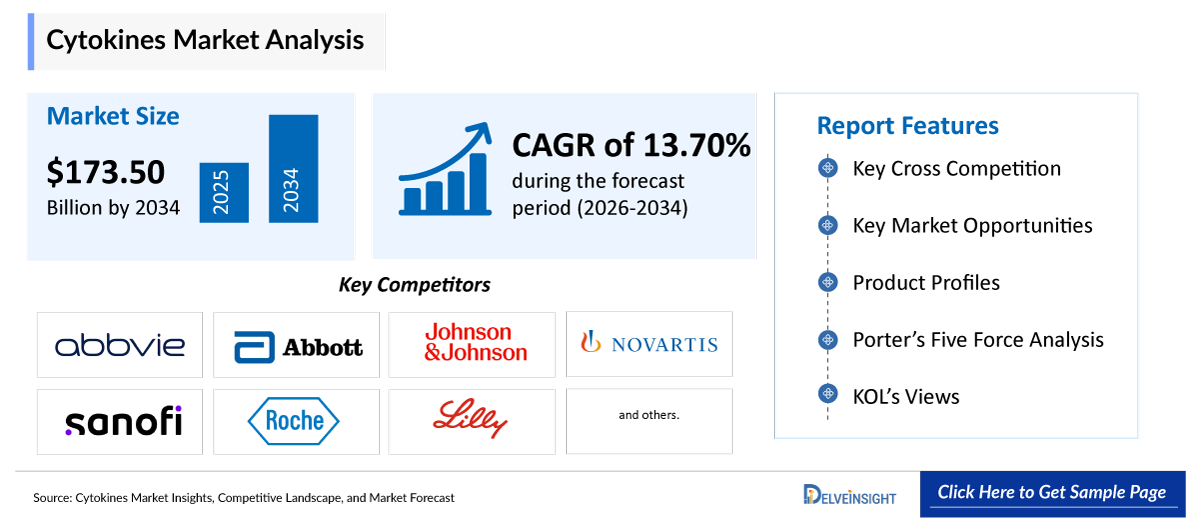
- The global cytokines market size was valued at USD 102 billion in 2025 and is projected to reach USD 173.50 billion by 2034.
- The market is expected to expand at a CAGR of 5.9% during the forecast period 2026-2034, supported by the rising burden of autoimmune and inflammatory diseases, indication expansion for anti-cytokine biologics, and the emergence of engineered cytokine therapeutics.
- By product type, the tumor necrosis factor (TNF) segment dominated the cytokines market with a 57% share in 2025.
- By therapeutic application, the autoimmune and inflammatory disorders segment dominated the cytokines market with a 46% share in 2025.
- By route of administration, the subcutaneous segment dominated the cytokines market with a 58% share in 2025.
- By distribution channel, the hospital pharmacies segment dominated the cytokines market with a 49% share in 2025.
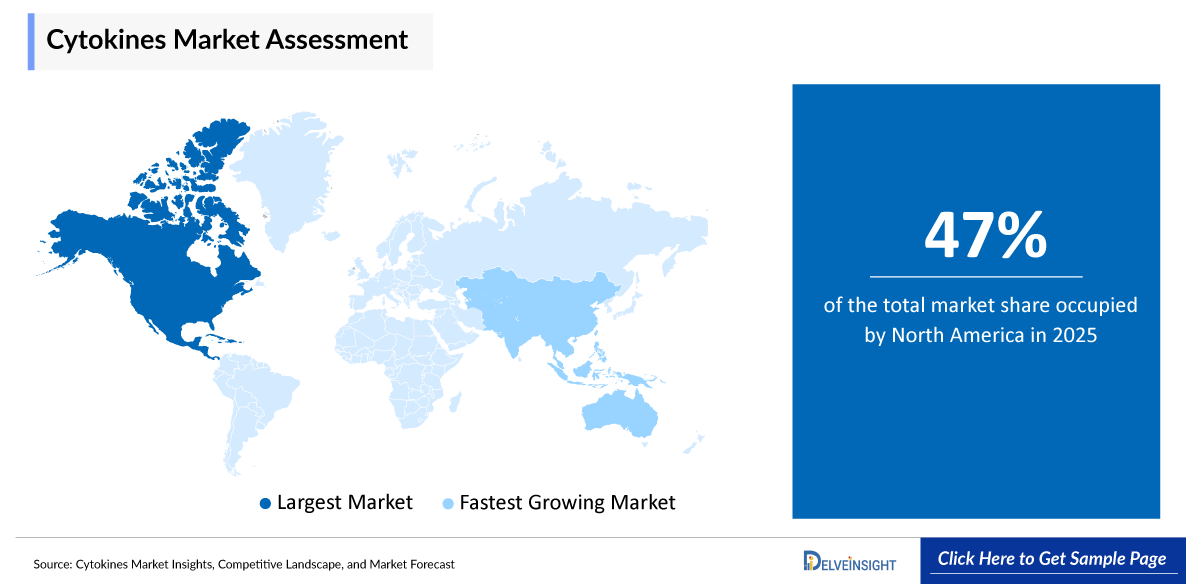
- North America accounted for the largest share of the cytokines market at 47% in 2025, while Asia-Pacific is anticipated to register the fastest growth through 2034.
Cytokines are small, short-lived signaling proteins secreted by immune and non-immune cells that regulate inflammation, immune activation, hematopoiesis, and tissue repair through binding to specific cell-surface receptors. As a therapeutic category, the market encompasses two complementary classes. The first is recombinant cytokines administered as drugs, including interferons used in multiple sclerosis and viral hepatitis, interleukins such as aldesleukin, colony-stimulating factors such as filgrastim and pegfilgrastim used to manage chemotherapy-induced neutropenia, and erythropoiesis-stimulating agents. The second, and by far the larger by revenue, is cytokine inhibitors and antagonists, comprising monoclonal antibodies and fusion proteins that block pathogenic cytokine signaling, including tumor necrosis factor inhibitors, interleukin-17 and interleukin-23 inhibitors, interleukin-4 and interleukin-13 inhibitors, interleukin-6 inhibitors, and interleukin-1 inhibitors.
These agents form the therapeutic backbone of modern management for rheumatoid arthritis, psoriasis and psoriatic arthritis, inflammatory bowel disease, asthma, atopic dermatitis, and a widening range of immune-mediated conditions. The contemporary market is defined by three dynamics: the continued expansion of approved indications for established anti-cytokine biologics, the entry of biosimilars following loss of exclusivity on the largest brands, and the emergence of engineered cytokine therapeutics, including interleukin-2 muteins, interleukin-15 superagonists, and tumor-targeted immunocytokines, that seek to widen the therapeutic window of cytokine-based immunotherapy in oncology and autoimmune disease.
Cytokines Market Key Growth Drivers
- Rising global prevalence of autoimmune and chronic inflammatory diseases, including rheumatoid arthritis, psoriasis, inflammatory bowel disease, asthma, and atopic dermatitis.
- Increasing global cancer incidence, with the International Agency for Research on Cancer projecting a rise from 20 million new cases in 2022 to 35 million by 2050, driving cytokine immunotherapy.
- Continued indication expansion for established anti-cytokine biologics, exemplified by the first approval of an interleukin-4 and interleukin-13 inhibitor for chronic obstructive pulmonary disease.
- Emergence of engineered cytokine therapeutics, including interleukin-2 muteins, interleukin-15 superagonists, and tumor-targeted immunocytokines with improved therapeutic windows.
- Expansion of biosimilar competition following loss of exclusivity on leading tumor necrosis factor inhibitors, which broadens patient access and treated volume.
- Growth of biomarker-guided precision medicine, particularly the targeting of type 2 inflammation across multiple co-morbid respiratory and dermatological conditions.
- Expanding use of cytokines in cell and gene therapy manufacturing, where interleukins support the expansion and activation of therapeutic immune cells.
Key Companies in Cytokines Market
The competitive field is led by large biopharmaceutical companies that hold the anchor anti-cytokine biologic franchises, supported by specialized immunology and immuno-oncology developers advancing engineered cytokine constructs. The leading participants in the cytokines market include the following:
- AbbVie Inc.
- Amgen Inc.
- Johnson & Johnson
- Novartis AG
- Sanofi
- F. Hoffmann-La Roche Ltd
- Eli Lilly and Company
- Pfizer Inc.
- UCB S.A.
- Regeneron Pharmaceuticals Inc., and others
For illustrative purposes, only the top 10 companies are listed in the Table of Contents. The report may include analysis and references to additional companies relevant to the market assessment.
Cytokines Market Size
The following table summarizes the headline market metrics for the global cytokines market across the base year and the forecast horizon.
|
Report Metrics |
Details |
|
2025 Market Size |
USD 102.00 billion |
|
2034 Projected Market Size |
USD 173.50 billion |
|
Growth Rate (2026-2034) |
5.9% CAGR |
|
Largest Market |
North America (47% share in 2025) |
|
Fastest Growing Market |
Asia-Pacific |
|
Market Structure |
Moderately Concentrated |
All market values are expressed in USD and represent DelveInsight estimates synthesized from primary and secondary research.
Factors Contributing to the Growth of the Cytokines Market
Cytokines Market Drivers
- Rising Burden of Autoimmune and Inflammatory Disease: The largest structural driver of the cytokine market is the growing global burden of autoimmune and chronic inflammatory disease, which constitutes the primary therapeutic domain for anti-cytokine biologics. Conditions such as rheumatoid arthritis, psoriasis and psoriatic arthritis, ankylosing spondylitis, inflammatory bowel disease, asthma, chronic rhinosinusitis, and atopic dermatitis affect a large and expanding share of the population across developed and emerging markets, and their prevalence is rising with population aging, urbanization, and changing environmental exposures. These diseases are driven by dysregulated cytokine signaling, and the therapeutic strategy of blocking specific pathogenic cytokines has transformed their management over the past two decades. Tumor necrosis factor inhibitors established the paradigm, and subsequent classes targeting interleukin-17, interleukin-23, interleukin-4 and interleukin-13, interleukin-6, and interleukin-1 have extended it across an expanding range of indications. Because these are chronic conditions requiring continuous therapy, each treated patient represents a durable, recurring source of demand rather than a single course of treatment, and improving diagnosis and access steadily enlarge the treated population. The clinical superiority of targeted biologics over conventional systemic agents, combined with expanding treatment guidelines that position them earlier in the treatment algorithm, sustains a demand base that is largely independent of economic cycles. This epidemiological foundation underpins the majority of current market value and anchors the forecast.
- Rising Cancer Incidence and Cytokine Immunotherapy: The growing global cancer burden is a second major driver, sustaining demand for both established and next-generation cytokine therapeutics in oncology. The International Agency for Research on Cancer estimated 20 million new cancer cases in 2022 and projects annual incidence to rise to 35 million by 2050 as populations age. Cytokines occupy a distinctive position in cancer care. Colony-stimulating factors such as filgrastim and pegfilgrastim are standard supportive-care agents used to manage chemotherapy-induced neutropenia and represent a large, stable component of the market. Therapeutic cytokines that directly stimulate anti-tumor immunity, historically limited by systemic toxicity, are being reinvigorated through protein engineering: interleukin-15 superagonists, interleukin-2 muteins, and tumor-targeted immunocytokines are designed to concentrate immune activation at the tumor while sparing healthy tissue. The approval of an interleukin-15 receptor agonist for bladder cancer demonstrated that engineered cytokine therapeutics can succeed where native cytokines failed, opening a pathway beyond checkpoint inhibition. Cytokines are also integral to cell therapy, where interleukins drive the expansion and activation of natural killer and T cells both in manufacturing and in vivo. As oncology pipelines increasingly combine cytokine-based agents with checkpoint inhibitors, cell therapies, and antibody-drug conjugates, the addressable oncology segment of the cytokine market expands correspondingly.
- Continued Indication Expansion for Anti-Cytokine Biologics: The commercial trajectory of the largest products in the market is defined less by new molecular entities than by the continuous expansion of approved indications for established anti-cytokine biologics. The interleukin-4 and interleukin-13 inhibitor dupilumab illustrates the pattern most clearly, having accumulated over a dozen approvals spanning atopic dermatitis, asthma, chronic rhinosinusitis with nasal polyps, eosinophilic esophagitis, prurigo nodularis, and, in a landmark 2024 decision, becoming the first biologic approved for chronic obstructive pulmonary disease with an eosinophilic phenotype. Interleukin-17 and interleukin-23 inhibitors have similarly expanded from plaque psoriasis into psoriatic arthritis, axial spondyloarthritis, hidradenitis suppurativa, and inflammatory bowel disease. Each new indication adds a distinct, addressable patient population without requiring a new manufacturing platform, and the underlying biology of shared inflammatory pathways across co-morbid conditions supports a systematic strategy of lifecycle expansion. This dynamic is commercially powerful because it extends the revenue horizon of a successful biologic well beyond its initial launch indication and because it deepens the clinical evidence base, reinforcing guideline adoption and payer support. The recognition that a single cytokine pathway may drive multiple related diseases has become a central organizing principle of immunology drug development. Source:
- Engineered and Next-Generation Cytokine Therapeutics: A wave of protein-engineering innovation is expanding the therapeutic potential of cytokines beyond what native molecules could achieve, and this pipeline is a significant forward-looking driver. Native cytokines are limited by short half-lives, pleiotropic effects, and narrow therapeutic windows; interleukin-2, for example, activates both effector and regulatory T cells and causes dose-limiting toxicity. Engineered constructs address these limitations through several strategies. Interleukin-2 muteins are designed to bias signaling toward either effector cells for oncology or regulatory cells for autoimmune disease. Interleukin-15 superagonist complexes extend persistence and enhance anti-tumor activity. Tumor-targeted immunocytokines fuse a cytokine payload to an antibody that directs it to the tumor microenvironment, concentrating immune stimulation where it is needed. Conditionally activated cytokines remain inert until cleaved by tumor-associated proteases. Antibody-based platforms redirect endogenous cytokines to specific tissues. These approaches are advancing across oncology and autoimmune indications, with several in late-stage development and one interleukin-15 agonist already approved. For the market, engineered cytokines represent the principal source of premium-priced, patent-protected innovation capable of offsetting the value erosion from biosimilar competition in the established anti-cytokine segment.
- Biosimilar Competition and Access Expansion: The entry of biosimilars following loss of exclusivity on the largest anti-cytokine biologics is a driver of treated volume even as it compresses per-unit value. The tumor necrosis factor inhibitor adalimumab, historically the single largest-selling pharmaceutical product in the world, lost United States exclusivity and now faces ten approved biosimilars, the majority of which have secured interchangeability designation. Biosimilar competition has expanded across the tumor necrosis factor class and is extending to interleukin inhibitors as additional originator products lose protection. The effect on the market is twofold. Lower prices and broader formulary access enlarge the eligible patient population and increase treated volume, particularly in cost-sensitive health systems and emerging markets where originator pricing had constrained uptake. At the same time, price erosion on the largest legacy brands reduces the value contribution of the mature anti-cytokine segment, shifting the growth burden toward newer mechanisms and engineered products. The net effect on total market value is moderating rather than contracting, because volume gains partially offset price declines and because the newer, differentiated products command premium pricing. This dynamic is the principal reason the forecast anticipates steady rather than rapid value growth over the horizon.
- Biomarker-Guided Precision Medicine: The increasing use of biomarkers to guide cytokine-directed therapy is improving clinical outcomes, strengthening payer support, and expanding the treated population in a controlled manner. The clearest example is the concept of type 2 inflammation, a shared immunological signature driven by interleukin-4, interleukin-13, interleukin-5, and related mediators that underlies atopic dermatitis, asthma, chronic rhinosinusitis, eosinophilic esophagitis, and a subset of chronic obstructive pulmonary disease. Identifying patients with this signature, through blood eosinophil counts, fractional exhaled nitric oxide, and related markers, allows anti-cytokine biologics to be directed to those most likely to respond, which improves the efficacy demonstrated in pivotal trials and supports reimbursement at premium prices. Comparable biomarker strategies are emerging across other cytokine pathways, and companion diagnostic development is increasingly integrated into immunology drug development. Precision targeting also enables the systematic pursuit of the indication-expansion strategy described above, because a biomarker-defined population can be identified across multiple anatomical diseases that share a common inflammatory mechanism. In oncology, biomarkers of immune status guide the deployment of engineered cytokine therapeutics and their combination with checkpoint inhibitors. The maturation of biomarker-guided prescribing is therefore both a driver of value, by improving outcomes and justifying pricing, and a driver of volume, by systematically identifying new eligible populations.
- Cytokine Demand from Cell and Gene Therapy: The rapid growth of cell and gene therapy is generating a distinct and expanding source of cytokine demand that bridges the therapeutic and manufacturing dimensions of the market. Chimeric antigen receptor T-cell therapies, natural killer cell therapies, tumor-infiltrating lymphocyte therapies, and stem cell products all depend on cytokines to expand and activate therapeutic cells during manufacturing, with interleukin-2, interleukin-7, interleukin-15, and interleukin-21 among the most widely used. As the number of approved cell therapies grows and as manufacturing scales from clinical to commercial volumes, demand for high-purity, regulatory-compliant cytokines used as ancillary materials increases correspondingly. Beyond manufacturing, cytokines are administered in vivo to support the persistence and function of adoptively transferred cells, and engineered cytokines are being developed specifically to enhance cell therapy efficacy. This intersection positions the cytokine market as an enabling input to one of the fastest-growing segments of biopharmaceuticals, and it creates demand that is relatively insulated from the pricing pressures affecting the mature anti-cytokine biologic segment. The proliferation of cell therapy manufacturing facilities, contract development and manufacturing capacity, and academic cell therapy centers reinforces this driver across all major regions.
Cytokines Market Restraints
Despite a broad and durable demand base, the cytokine market faces material constraints that temper the pace of value growth. The most significant is biosimilar-driven price erosion. The loss of exclusivity on the largest anti-cytokine biologics, led by adalimumab and extending across the tumor necrosis factor class and into interleukin inhibitors, is compressing the per-unit value of the mature segment that still accounts for the majority of market revenue, so that treated volume grows faster than value over the forecast period. The second constraint is the cost and reimbursement environment. Anti-cytokine biologics are high-cost therapies, and health systems operating under fixed budgets impose restrictive prior authorization, step-therapy requirements, and formulary preferences that channel patients toward lower-cost options, while statutory price negotiation for high-expenditure biologics places a durable ceiling on realized net price for the leading brands. The third constraint is biological and safety-related. Anti-cytokine therapy suppresses components of the immune response and carries risks of serious infection, and agonist cytokine therapeutics face a narrow therapeutic window, with native interleukin-2 and related agents historically limited by dose-dependent toxicity including vascular leak and cytokine release. Immunogenicity can reduce efficacy and durability over time. The fourth constraint is competitive intensity: the immunology and inflammation space is crowded, with multiple mechanisms competing within the same indications, which pressures pricing and raises the evidentiary bar for differentiation. Finally, access remains uneven, as the high cost and cold-chain requirements of biologics limit availability in lower-income settings even as biosimilars begin to narrow the gap. Together, these factors support a forecast of steady, moderate value growth rather than the rapid expansion characteristic of earlier stages of the class.
Cytokines Market Segment Analysis
The global cytokines market is segmented by product type into tumor necrosis factor (TNF), interleukins, interferons, colony-stimulating factors, and other cytokines; by therapeutic application into autoimmune and inflammatory disorders, oncology, infectious diseases, and others; by route of administration into subcutaneous, intravenous, and others; by distribution channel into hospital pharmacies, retail pharmacies, and specialty and online pharmacies; and by geography into North America, Europe, Asia-Pacific, and the Rest of the World.
By Product Type
Dominant Subsegment: Tumor Necrosis Factor (TNF).
The tumor necrosis factor category is expected to dominate the market.
Dominant: Tumor Necrosis Factor (TNF) ~ 57%
The tumor necrosis factor segment accounted for a 57% share of the cytokines market in 2025. The tumor necrosis factor segment dominates because agents targeting this cytokine established the anti-cytokine paradigm and remain the most widely prescribed biologic class across the largest immune-mediated indications. Tumor necrosis factor is a central mediator of inflammation implicated in rheumatoid arthritis, psoriatic arthritis, ankylosing spondylitis, plaque psoriasis, Crohn disease, and ulcerative colitis, and inhibitors of this pathway, including adalimumab, etanercept, infliximab, certolizumab pegol, and golimumab, have accumulated the deepest evidence base and the broadest guideline endorsement of any biologic mechanism. The scale of the installed patient population, built over two decades of use across multiple chronic indications, sustains the segment leadership even as newer mechanisms capture incremental share in specific diseases. The segment is now the focal point of biosimilar competition, with adalimumab alone facing ten approved biosimilars in the United States, which is expanding treated volume while compressing per-unit value and gradually shifting the revenue mix. Interleukin-targeting agents, encompassing interleukin-17, interleukin-23, interleukin-4 and interleukin-13, interleukin-6, and interleukin-1 inhibitors, constitute the fastest-growing product category as they displace tumor necrosis factor inhibitors in dermatology and expand into respiratory and other indications. Interferons and colony-stimulating factors represent established, stable segments anchored in neurology, virology, and oncology supportive care. Over the forecast period, the tumor necrosis factor segment is expected to retain leadership by volume while ceding value share to interleukin inhibitors and engineered cytokines.
By Therapeutic Application
Dominant Subsegment: Autoimmune and Inflammatory Disorders.
The autoimmune and inflammatory disorders category is expected to dominate the market.
Dominant: Autoimmune and Inflammatory Disorders ~ 46%
The autoimmune and inflammatory disorders segment accounted for a 46% share of the cytokines market in 2025. Autoimmune and inflammatory disorders constitute the largest therapeutic application because this domain is where anti-cytokine biologics deliver the greatest clinical value and generate the majority of class revenue. The category spans rheumatology, dermatology, gastroenterology, and respiratory medicine, including rheumatoid arthritis, psoriatic arthritis, ankylosing spondylitis, plaque psoriasis, hidradenitis suppurativa, Crohn disease, ulcerative colitis, asthma, chronic rhinosinusitis, and atopic dermatitis. These conditions share the common feature of dysregulated cytokine signaling, which makes them uniquely amenable to targeted cytokine blockade, and they are typically chronic, requiring continuous therapy that generates durable recurring demand. The breadth of the category is continually expanded by the indication-expansion strategy, in which a biologic proven in one disease is systematically developed across other conditions driven by the same cytokine pathway, and by biomarker-guided identification of responsive sub-populations such as those with type 2 inflammation. Oncology forms the second-largest application, encompassing colony-stimulating factors used in chemotherapy supportive care and the growing class of engineered cytokine immunotherapies, and it is projected to be a faster-growing segment as next-generation constructs mature. Infectious diseases, principally the use of interferons in viral hepatitis and the historical role of cytokines in immune modulation, form a smaller and more stable segment. The autoimmune and inflammatory segment is expected to retain its leading position throughout the forecast period.
By Route of Administration
Dominant Subsegment: Subcutaneous.
The subcutaneous category is expected to dominate the market.
Dominant: Subcutaneous ~ 58%
The subcutaneous segment accounted for a 58% share of the cytokines market in 2025. Subcutaneous administration dominates because the leading anti-cytokine biologics used in chronic autoimmune and inflammatory disease are formulated for subcutaneous self-injection, which supports the long-term, ambulatory treatment that characterizes these conditions. Products such as adalimumab, etanercept, secukinumab, ixekizumab, dupilumab, and certolizumab pegol are delivered by prefilled syringe or autoinjector on schedules ranging from weekly to every several weeks, allowing patients to administer therapy at home without infusion infrastructure. This route is central to the value proposition of modern immunology biologics, because convenience and independence from clinic-based administration improve adherence and quality of life over the extended treatment courses these chronic diseases require. Manufacturers have invested heavily in device innovation, high-concentration formulations, and citrate-free presentations to reduce injection burden, and biosimilar developers have prioritized matching the subcutaneous presentations of reference products to enable substitution. The intravenous segment retains an important role for infusion-based agents such as infliximab and tocilizumab, for products used in acute and hospital settings, for colony-stimulating factors and interleukins administered under supervision, and for engineered cytokine therapeutics in oncology that require monitored delivery. Other routes, including intravesical administration of an interleukin-15 agonist in bladder cancer, occupy specialized niches. Over the forecast period, subcutaneous administration is expected to retain and modestly extend its majority as device innovation and patient preference continue to favor self-administration.
By Distribution Channel
Dominant Subsegment: Hospital Pharmacies.
The hospital pharmacies category is expected to dominate the market.
Dominant: Hospital Pharmacies ~ 49%
The hospital pharmacies segment accounted for a 49% share of the cytokines market in 2025. Hospital pharmacies dominate distribution because they serve as the point of dispensing and administration for infused anti-cytokine biologics, for cytokine therapeutics used in oncology and acute care, and for the initiation of specialty biologic therapy under clinical supervision. Hospital and hospital-affiliated outpatient pharmacies manage the cold-chain handling, benefits verification, prior authorization, and pharmacovigilance that high-cost biologics require, and in many health systems they are the mandated channel for products administered by infusion or for treatment initiation in complex immune-mediated disease. Institutional procurement under national tender and reimbursement frameworks in Europe and Asia-Pacific reinforces the concentration of biologic distribution through hospital channels. Specialty and online pharmacies form the fastest-growing channel, reflecting the predominance of subcutaneous self-administered biologics that are increasingly dispensed through specialty pharmacy networks offering patient support, adherence programs, and home delivery, particularly in the United States where specialty pharmacy is central to the distribution of chronic-use immunology products. Retail pharmacies occupy a secondary role focused on lower-complexity products and refills. The expansion of biosimilars is reshaping channel economics, as payers and pharmacy benefit managers steer volume toward preferred lower-cost products across all channels. Over the forecast period, the growth of specialty pharmacy is expected to erode the hospital pharmacy share gradually as self-administered biologics account for a rising proportion of treated volume.
Cytokines Market Region Analysis
Dominant Region: North America
Dominant: North America ~ 47% (Largest)
North America accounted for a 47% share of the global cytokines market in 2025. The region combines the highest per-capita pharmaceutical expenditure in the world with premium biologic pricing, early and broad regulatory authorization for anti-cytokine agents, and the presence of the leading originator companies, making it the launch market and the principal value center for the class. The United States contributes the overwhelming majority of regional value, reflecting a payer environment that reimburses innovative immunology biologics at net prices well above those realized elsewhere, a large prevalent population across rheumatoid arthritis, psoriasis, inflammatory bowel disease, asthma, and atopic dermatitis, and near-universal access to the biomarker testing that guides type 2 inflammation targeting. The U.S. Food and Drug Administration has authorized anti-cytokine biologics across a wider range of indications and treatment settings than any other regulator, and it approved the first interleukin-15 receptor agonist and the first biologic for chronic obstructive pulmonary disease, underscoring regional leadership in cytokine innovation. Regional dominance is reinforced by the location of major originators, with AbbVie, Amgen, Johnson & Johnson, Eli Lilly, Pfizer, and Regeneron headquartered in the United States and other leaders maintaining substantial United States operations. Countervailing forces are emerging: the loss of exclusivity on adalimumab has introduced ten biosimilars and initiated a period of value erosion, and statutory price negotiation for high-expenditure biologics applies downward pressure to net realized price. On balance, North America is expected to retain leadership throughout the forecast period while Asia-Pacific grows more rapidly.
Fastest Growing Region: Asia-Pacific
Asia-Pacific is projected to register the fastest compound annual growth rate in the cytokines market through 2034. The region combines very large and aging populations, a rising prevalence of autoimmune and inflammatory disease, expanding diagnosis and treatment access, and sustained government investment in domestic biopharmaceutical capacity. China has become the principal engine, supported by policies that prioritize biotechnology self-sufficiency, rapid approvals of domestically developed cytokine biologics, and national reimbursement listing that expands treated volume at price points far below Western levels. Chinese and other regional developers are advancing both biosimilars of established anti-cytokine agents and novel interleukin-targeting antibodies, positioning the region as a growing source of innovation as well as volume. Japan and South Korea combine universal health coverage with mature rheumatology and dermatology practice and rapid guideline adoption, and South Korea in particular hosts globally significant biosimilar manufacturers. India is expanding access through domestic biologics manufacturing and a large prevalent population, while Australia contributes a high-value, guideline-driven market. The relative affordability of regionally manufactured biologics and biosimilars accelerates uptake across the region, and rising healthcare expenditure and expanding specialty care infrastructure reinforce the trajectory. Regional growth rates are expected to exceed the global average across every major product and application segment throughout the forecast period.
Cytokines Market Regional Commentary
North America
North America leads on value, premium pricing, and regulatory precedence. The United States is the first market for essentially every new anti-cytokine indication and the setting where engineered cytokine therapeutics such as the interleukin-15 agonist and the first COPD biologic were first approved. The region hosts the majority of leading originators and the most developed specialty pharmacy infrastructure. Near-term dynamics are shaped by the adalimumab biosimilar wave, which is expanding volume while eroding value, and by statutory price negotiation on high-expenditure biologics. Canada follows with provincial reimbursement and active biosimilar substitution policy, while Mexico is an expanding but access-constrained market.
Europe
Europe represents the second-largest regional market, with Germany, the United Kingdom, France, Italy, and Spain accounting for the majority of regional value. The European Medicines Agency has largely mirrored United States authorizations for the leading anti-cytokine biologics, though national health technology assessment bodies gate reimbursement and produce heterogeneous access timelines. Europe has been an early and aggressive adopter of biosimilars, with tender-based hospital procurement and mandatory substitution policies in several markets driving rapid uptake of tumor necrosis factor inhibitor biosimilars and compressing regional value per patient while broadening access. The region combines strong specialty care infrastructure with cost-containment pressure.
Asia-Pacific
Asia-Pacific is the fastest-growing region, propelled by demographic scale, rising autoimmune and inflammatory disease prevalence, expanding access, and government support for domestic biopharmaceutical capacity. China contributes the largest incremental volume through national reimbursement listing of domestic biologics and biosimilars and hosts a rapidly maturing innovation pipeline. South Korea is a globally significant biosimilar manufacturing hub, Japan combines universal coverage with mature specialty practice, and India expands access through domestic manufacturing and a large prevalent population. Regionally manufactured biologics and biosimilars accelerate uptake, and growth exceeds the global average across every segment.
Rest of World
The Rest of the World comprises the Middle East, Africa, and South America. Access is highly stratified. Gulf Cooperation Council states and the larger South American markets, particularly Brazil, reimburse anti-cytokine biologics through public and private schemes and have adopted major immunology indications, while much of Africa and Central America remains outside the treated market owing to cost, cold-chain logistics, and limited specialty care capacity. Regional growth will be driven by expanding biosimilar supply from Asian manufacturers, managed entry agreements, and rising investment in specialty care, which together offer the most credible pathway to broadening access in resource-constrained health systems.
Cytokines Market Competitive Landscape
The global cytokines market is classified as Moderately Concentrated. A group of large biopharmaceutical companies holds the anchor anti-cytokine biologic franchises that account for the majority of market value, but no single company dominates, and the market is progressively fragmenting as biosimilar developers enter the tumor necrosis factor and interleukin segments and as specialized biotechnology companies advance engineered cytokine therapeutics. Competition varies markedly by cytokine pathway, therapeutic indication, and geography.
The competitive landscape is evaluated across the following dimensions:
- Market concentration: Moderately concentrated among large originators in the branded segment, with the leading anti-cytokine franchises held by a handful of companies, but fragmenting as biosimilars and specialized developers enter.
- Leading players: AbbVie Inc., Johnson & Johnson, Novartis AG, and Eli Lilly and Company lead in immunology, with Sanofi and Regeneron Pharmaceuticals Inc. anchoring the type 2 inflammation franchise and Amgen Inc. strong in tumor necrosis factor and colony-stimulating factors.
- Geographic reach: Leading originators operate global commercial organizations across North America, Europe, Japan, and China, while South Korean and Chinese developers are converting biosimilar and domestic franchises into international registrations.
- Product portfolio strength: Incumbents combine multiple anti-cytokine mechanisms across tumor necrosis factor, interleukin-17, interleukin-23, and interleukin-4 and interleukin-13, enabling franchise strategies that span rheumatology, dermatology, gastroenterology, and respiratory medicine.
- Pipeline strength: Late-stage activity is concentrated in interleukin-targeting antibodies, engineered interleukin-2 muteins, interleukin-15 superagonists, tumor-targeted immunocytokines, and anti-interleukin-33 and thymic stromal lymphopoietin agents for respiratory disease.
- Strategic partnerships: Cross-company collaboration is central, exemplified by the Sanofi and Regeneron alliance on dupilumab and itepekimab and by licensing of engineered cytokine assets from specialized biotechnology developers.
- M&A activity: Acquisition of engineered cytokine and immunology assets is active, as large companies seek differentiated mechanisms to offset biosimilar erosion of legacy anti-cytokine franchises.
- Manufacturing capabilities: All leading participants operate large-scale mammalian cell culture capacity, and South Korean and Chinese firms have built globally significant biologics and biosimilar manufacturing infrastructure.
- Innovation focus: Innovation is shifting from established anti-cytokine antibodies toward engineered cytokine agonists, tumor-targeted delivery, conditionally activated constructs, and biomarker-guided precision targeting of shared inflammatory pathways.
Cytokines Market Recent Developmental Activities
- In April 2024, ImmunityBio Inc. received U.S. Food and Drug Administration approval for ANKTIVA, nogapendekin alfa inbakicept, a first-in-class interleukin-15 receptor superagonist, in combination with Bacillus Calmette-Guerin for the treatment of patients with BCG-unresponsive non-muscle invasive bladder cancer with carcinoma in situ. The agent is an interleukin-15 mutant fused with an interleukin-15 receptor alpha component that activates and proliferates natural killer and CD8 T cells. Strategic significance: the approval demonstrated that engineered cytokine therapeutics can succeed where native cytokines were limited by toxicity, validating a therapeutic pathway beyond checkpoint inhibition and opening a new segment of the market.
- In September 2024, Sanofi and Regeneron Pharmaceuticals Inc. received U.S. Food and Drug Administration approval for Dupixent (dupilumab) as the first biologic medicine for adults with inadequately controlled chronic obstructive pulmonary disease and an eosinophilic phenotype, based on the BOREAS and NOTUS Phase III studies. Dupilumab inhibits signaling of the interleukin-4 and interleukin-13 pathways. Strategic significance: the approval extended an established anti-cytokine biologic into a large new respiratory indication, exemplifying the indication-expansion strategy that defines the commercial trajectory of the leading products and reinforcing the type 2 inflammation franchise.
- In September 2024, UCB S.A. secured U.S. Food and Drug Administration approvals expanding bimekizumab, marketed as Bimzelx, into psoriatic arthritis, non-radiographic and radiographic axial spondyloarthritis, and hidradenitis suppurativa, following its initial approval in plaque psoriasis. Bimekizumab is distinctive in inhibiting both interleukin-17A and interleukin-17F. Strategic significance: the dual interleukin-17 mechanism and rapid multi-indication expansion positioned UCB to compete directly with established interleukin-17A inhibitors and demonstrated the continued vitality of the interleukin-targeting segment against a backdrop of tumor necrosis factor biosimilar competition.
- In June 2025, ImmunityBio Inc. received U.S. Food and Drug Administration Expanded Access authorization for its Cancer BioShield platform, anchored by the interleukin-15 agonist ANKTIVA, to treat lymphopenia in adult patients with refractory or relapsed solid tumors, supported by overall survival data presented at the American Society of Clinical Oncology annual meeting in metastatic pancreatic cancer. Strategic significance: the authorization advanced the first therapy with a defined mechanism to restore lymphocyte levels depleted by cancer treatment, extending the engineered-cytokine franchise into supportive oncology care and broadening the addressable population.
- In January 2023, Amgen Inc. launched Amjevita, adalimumab-atto, the first biosimilar of the tumor necrosis factor inhibitor adalimumab in the United States, initiating the loss of exclusivity of the largest-selling pharmaceutical product in the world. Strategic significance: the launch opened the era of anti-cytokine biosimilar competition, and the subsequent entry of additional adalimumab biosimilars has expanded patient access and treated volume while compressing per-unit value across the tumor necrosis factor segment that anchors the market.
- In February 2024, Alvotech and Teva Pharmaceutical Industries received U.S. Food and Drug Administration approval for Simlandi, adalimumab-ryvk, a high-concentration, citrate-free, interchangeable biosimilar of adalimumab. Strategic significance: the approval of a high-concentration interchangeable presentation addressed the format that accounts for the majority of adalimumab use and strengthened the substitutability of biosimilars in the tumor necrosis factor segment, accelerating the shift of volume away from the originator brand.
- In April 2025, Celltrion Inc. obtained interchangeability designation for Yuflyma, adalimumab-aaty, a high-concentration biosimilar of adalimumab, expanding the set of interchangeable tumor necrosis factor inhibitor biosimilars available for automatic substitution. Strategic significance: the growing number of interchangeable adalimumab biosimilars intensified price competition and formulary switching in the largest anti-cytokine segment, reinforcing the volume-over-value dynamic that shapes the market forecast.
- In June 2025, Celltrion Inc. received U.S. Food and Drug Administration approval for a new single-dose vial formulation of Steqeyma, ustekinumab-stba, a biosimilar of the interleukin-12 and interleukin-23 inhibitor ustekinumab, expanding dosing options for pediatric patients. Strategic significance: the extension of biosimilar competition from the tumor necrosis factor class into the interleukin segment signaled that value erosion is beginning to affect newer anti-cytokine mechanisms, broadening the structural pressure on originator pricing across the market.
- In March 2025, Nektar Therapeutics reported positive Phase 2b results for rezpegaldesleukin, an engineered interleukin-2 conjugate designed to preferentially expand regulatory T cells, in atopic dermatitis, with additional development in alopecia areata. Strategic significance: the data supported the thesis that biased interleukin-2 signaling can be harnessed to restore immune tolerance in autoimmune and inflammatory disease, representing a differentiated engineered-cytokine approach distinct from the anti-cytokine antibodies that dominate the current market.
- In 2025, Sanofi and Regeneron Pharmaceuticals Inc. reported Phase III results for itepekimab, a monoclonal antibody targeting interleukin-33, in chronic obstructive pulmonary disease, with the AERIFY program producing a positive result in one pivotal study and a missed primary endpoint in the other. Strategic significance: the mixed readout illustrated both the promise and the risk of extending cytokine-directed therapy to upstream alarmin targets in respiratory disease, and it underscored the strategic importance of the type 2 inflammation and broader inflammation pipeline to the leading immunology franchises.
- In April 2025, Rice University researchers reported an implantable interleukin-12 cytokine factory designed to deliver localized cytokine therapy to hard-to-treat cancers including melanoma, pancreatic, and colorectal tumors while limiting systemic exposure. Strategic significance: the platform exemplified the engineering strategies being pursued to widen the narrow therapeutic window of potent inflammatory cytokines, and it reflected the growing academic and translational investment in localized and tumor-targeted cytokine delivery.
- In November 2023, Reverb Therapeutics launched its Amplifier platform, an antibody-based technology designed to redirect endogenous cytokines to a specific tumor, immune cell, or tissue using elements of new and existing antibodies, financed by Amplitude Ventures and the Myeloma Investment Fund. Strategic significance: the platform illustrated the emergence of a new class of cytokine-modulating approaches that harness the body's naturally occurring cytokines rather than administering exogenous protein, expanding the technological frontier of the cytokine field.
Cytokines Market Segmentation
- Cytokines Market Assessment by Product Type
- Tumor Necrosis Factor (TNF)
- Interleukins
- Interferons
- Colony-Stimulating Factors
- Other Cytokines
- Cytokines Market Assessment by Therapeutic Application
- Autoimmune and Inflammatory Disorders
- Oncology
- Infectious Diseases
- Others
- Cytokines Market Assessment by Route of Administration
- Subcutaneous
- Intravenous
- Others
- Cytokines Market Assessment by Distribution Channel
- Hospital Pharmacies
- Retail Pharmacies
- Specialty and Online Pharmacies
Cytokines Market Assessment by Geography
- North America Cytokines Market Segmentation
- United States Cytokines Market Size in USD million (2023-2034)
- Canada Cytokines Market Size in USD million (2023-2034)
- Mexico Cytokines Market Size in USD million (2023-2034)
- Europe Cytokines Market Segmentation
- Germany Cytokines Market Size in USD million (2023-2034)
- United Kingdom Cytokines Market Size in USD million (2023-2034)
- France Cytokines Market Size in USD million (2023-2034)
- Italy Cytokines Market Size in USD million (2023-2034)
- Spain Cytokines Market Size in USD million (2023-2034)
- Rest of Europe Cytokines Market Size in USD million (2023-2034)
- Asia-Pacific Cytokines Market Segmentation
- China Cytokines Market Size in USD million (2023-2034)
- Japan Cytokines Market Size in USD million (2023-2034)
- India Cytokines Market Size in USD million (2023-2034)
- Australia Cytokines Market Size in USD million (2023-2034)
- South Korea Cytokines Market Size in USD million (2023-2034)
- Rest of Asia-Pacific Cytokines Market Size in USD million (2023-2034)
- Rest of the World Cytokines Market Segmentation
- Middle East Cytokines Market Size in USD million (2023-2034)
- Africa Cytokines Market Size in USD million (2023-2034)
- South America Cytokines Market Size in USD million (2023-2034)
Cytokines Market Recent Industry Trends and Milestones (2023-2026):
|
Category |
Key Developments |
|
Cytokines Market Product Approval |
The 2023 to 2026 period combined landmark novel approvals with an accelerating wave of biosimilar entry. ImmunityBio secured approval of the first-in-class interleukin-15 superagonist ANKTIVA for BCG-unresponsive non-muscle invasive bladder cancer in April 2024, and Sanofi and Regeneron obtained the first-ever biologic approval for chronic obstructive pulmonary disease with dupilumab in September 2024. UCB expanded the dual interleukin-17A and interleukin-17F inhibitor bimekizumab across psoriatic arthritis, axial spondyloarthritis, and hidradenitis suppurativa in September 2024. In parallel, biosimilar approvals proliferated: ten adalimumab biosimilars reached the United States market following the January 2023 launch of Amjevita, the high-concentration interchangeable Simlandi was approved in February 2024, and biosimilar competition extended into the interleukin-12 and interleukin-23 class with ustekinumab biosimilars. |
|
Cytokines Market Product Expansion |
Product expansion advanced primarily through indication broadening of established anti-cytokine biologics. The interleukin-4 and interleukin-13 inhibitor dupilumab accumulated over a dozen approvals spanning atopic dermatitis, asthma, chronic rhinosinusitis, eosinophilic esophagitis, prurigo nodularis, and chronic obstructive pulmonary disease. Interleukin-17 and interleukin-23 inhibitors expanded from plaque psoriasis into psoriatic arthritis, axial spondyloarthritis, hidradenitis suppurativa, and inflammatory bowel disease. Engineered cytokine franchises expanded into new settings, with the interleukin-15 agonist extending from bladder cancer into supportive treatment of lymphopenia. The systematic pursuit of shared inflammatory pathways across co-morbid conditions, guided by type 2 inflammation biomarkers, became the central mechanism of lifecycle expansion for the leading products. |
|
Cytokines Market Investment |
Investment concentrated on engineered cytokine therapeutics and biosimilar manufacturing. Specialized biotechnology companies attracted capital to advance interleukin-2 muteins, interleukin-15 superagonists, tumor-targeted immunocytokines, and conditionally activated cytokine constructs designed to widen the therapeutic window of potent cytokines. Large originators invested in acquiring and licensing differentiated engineered assets to offset biosimilar erosion of legacy franchises. South Korean and Chinese manufacturers invested in large-scale biologics and biosimilar production capacity, and academic and translational research advanced localized cytokine delivery platforms including implantable cytokine factories. Cross-company alliances, exemplified by the Sanofi and Regeneron collaboration, channeled substantial investment into the type 2 inflammation and respiratory pipeline. |
|
Company Strategy |
AbbVie is defending and rebuilding its immunology franchise upon the interleukin-23 inhibitor risankizumab and the oral agent upadacitinib as adalimumab faces biosimilar erosion. Johnson & Johnson, Novartis, and Eli Lilly compete across interleukin-17 and interleukin-23 in dermatology and rheumatology. Sanofi and Regeneron are extending the dupilumab type 2 inflammation franchise while advancing anti-interleukin-33 therapy. Amgen combines tumor necrosis factor and colony-stimulating factor franchises with a biosimilar portfolio. UCB is differentiating through dual interleukin-17A and interleukin-17F inhibition. Specialized developers including ImmunityBio, Nektar Therapeutics, and others pursue engineered cytokine agonists, while South Korean and Chinese firms scale biosimilar and domestic innovation. The unifying strategic theme is the pivot from established anti-cytokine antibodies toward differentiated, engineered, and biomarker-guided approaches. |
|
Emerging Technologies |
The defining emerging technologies are engineered cytokine agonists that overcome the limitations of native molecules. Interleukin-2 muteins bias signaling toward effector cells for oncology or regulatory cells for autoimmune disease; interleukin-15 superagonist complexes extend persistence and enhance anti-tumor immunity; tumor-targeted immunocytokines fuse cytokine payloads to tumor-directed antibodies; and conditionally activated cytokines remain inert until cleaved in the tumor microenvironment. Antibody-based platforms redirect endogenous cytokines to specific tissues, and localized delivery systems including implantable cytokine factories concentrate potent cytokines at disease sites. On the anti-cytokine side, dual-targeting antibodies such as dual interleukin-17A and interleukin-17F inhibitors and upstream alarmin targets including interleukin-33 and thymic stromal lymphopoietin extend the mechanistic repertoire. Biomarker-guided precision targeting of type 2 inflammation underpins the systematic expansion of established biologics across co-morbid conditions. |
Cytokines Market Startup Funding and Investment Trends
Investment in the cytokine field has shifted decisively away from additional anti-cytokine antibodies, where the competitive field is crowded and biosimilar erosion is intensifying, and toward engineered cytokine agonists that promise to widen the narrow therapeutic window that historically limited cytokine-based therapy. The dominant thesis is protein engineering that biases or localizes cytokine signaling, encompassing interleukin-2 muteins, interleukin-15 superagonists, tumor-targeted immunocytokines, and conditionally activated constructs. The table below summarizes representative companies advancing the next generation of cytokine therapeutics.
|
Company |
Total Funding |
Funding Stage |
Main Product/Offering |
Core Technology |
|
Nektar Therapeutics |
Publicly listed |
Public company financing |
Rezpegaldesleukin |
Regulatory T-cell biased IL-2 |
|
ImmunityBio Inc. |
Publicly listed |
Public company financing |
ANKTIVA (N-803) |
IL-15 receptor superagonist |
|
Request for unlocking the report of the @ Cytokines Market Insights | ||||
Capital formation in this field is concentrated on companies with clinical-stage engineered cytokine assets, where randomized data demonstrating an improved therapeutic window is the principal value inflection point. Oncology-focused engineered interleukin-2 and interleukin-15 programs have attracted the most sustained investor attention, reflecting the large addressable population and the demonstrated proof of concept from the approved interleukin-15 agonist. Autoimmune-directed regulatory T-cell agonists represent a distinct and growing thesis targeting the restoration of immune tolerance. For established pharmaceutical companies, licensing and acquisition of these assets provides a differentiated growth vector to offset biosimilar erosion of legacy franchises, creating a well-defined exit pathway that sustains venture and public-market investment. The principal risk to the funding environment is the demanding clinical bar for demonstrating both efficacy and tolerability advantages over existing therapies in crowded indications.
Key Takeaways from the Cytokines Market Report Study
- Market size analysis for the current cytokines market size (2025), and market forecast for 9 years (2026 to 2034).
- Top key product/technology developments, mergers, acquisitions, partnerships, and joint ventures that happened over the last 3 years.
- Key companies dominating the global cytokines market.
- Various opportunities available for competitors in the cytokines market space.
- What are the top-performing segments in 2025? How will these segments perform in 2034?
- Which are the top-performing regions and countries in the current cytokines market scenario?
- Which are the regions and countries where companies should concentrate their opportunities for cytokines market growth in the future?
Target audience who can benefit from this cytokines market report study
- Cytokines product providers
- Research organizations and consulting companies
- Cytokines-related organizations, associations, forums, and other alliances
- Government and corporate offices
- Start-up companies, venture capitalists, and private equity firms
- Distributors and traders dealing in cytokines
- Various end-users who want to know more about the cytokines market and the latest technological developments in the cytokines market.
Frequently Asked Questions
Q1. At what rate is the cytokines market expected to grow?
The global cytokines market is projected to grow at a compound annual growth rate of 5.9% during the forecast period from 2026 to 2034.
Q2. What is the current and projected size of the cytokines market?
The global cytokines market size was valued at USD 102 billion in 2025 and is projected to reach USD 173.50 billion by 2034.
Q3. Which region dominates the cytokines market?
North America dominated the cytokines market with a 47% share in 2025, driven by the highest per-capita pharmaceutical expenditure globally, premium biologic pricing, the broadest set of regulatory authorizations, and the concentration of leading originators. Asia-Pacific is projected to record the fastest compound annual growth rate through 2034, propelled by demographic scale, rising disease prevalence, expanding access, and government support for domestic biopharmaceutical and biosimilar manufacturing. Published regional shares vary with scope, with some biologics-pricing-weighted analyses placing North America notably higher.
Q4. What are the key factors driving growth in the cytokines market?
The principal drivers are the rising prevalence of autoimmune and inflammatory disease; growing cancer incidence, with the International Agency for Research on Cancer projecting an increase from 20 million new cases in 2022 to 35 million by 2050; continued indication expansion for anti-cytokine biologics; the emergence of engineered cytokine therapeutics such as interleukin-15 superagonists and interleukin-2 muteins; biosimilar-driven access expansion; biomarker-guided precision targeting of type 2 inflammation; and growing cytokine demand from cell and gene therapy.
Q5. Who are the major players in the cytokines market?
The market is moderately concentrated and leading Cytokines companies include - AbbVie Inc., Amgen Inc., Johnson & Johnson, Novartis AG, Sanofi, F. Hoffmann-La Roche Ltd, Eli Lilly and Company, Pfizer Inc., UCB S.A., and Regeneron Pharmaceuticals Inc. Additional participants including Bristol Myers Squibb Company, ImmunityBio Inc., Nektar Therapeutics, Kyowa Kirin Co. Ltd., and Bio-Techne Corporation are advancing differentiated anti-cytokine and engineered cytokine therapeutics expected to reshape competitive positioning over the forecast period.

