Diabetes Drugs Market
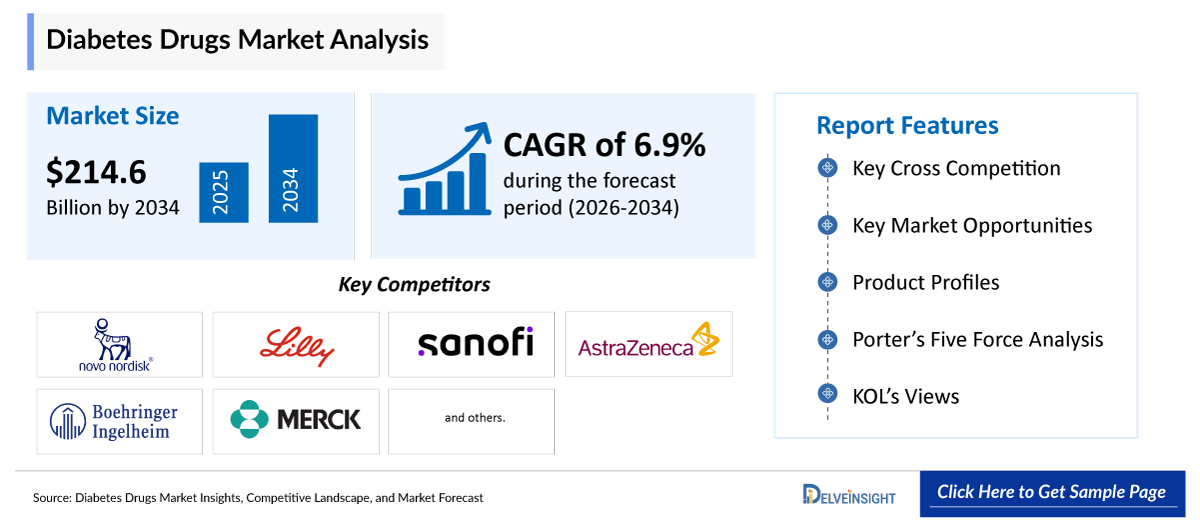
- The global diabetes drugs market size was valued at USD 118.4 billion in 2025 and is projected to reach USD 214.6 billion by 2034.
- The market is expected to expand at a CAGR of 6.9% during the forecast period 2026-2034, supported by the rising global prevalence of type 2 diabetes and obesity, the commercial transformation of the market led by GLP-1 receptor agonists and dual GIP/GLP-1 agonists, the launch of oral formulations of previously injectable drug classes, and continued expansion of cardiovascular and renal indications for leading drug classes.
- By drug class, the GLP-1 receptor agonist and dual/triple agonist segment dominated the diabetes drugs market with a 52% share in 2025.
- By diabetes type, the type 2 diabetes segment dominated the diabetes drugs market with an 88% share in 2025.
- By route of administration, the subcutaneous/injectable segment dominated the diabetes drugs market with a 64% share in 2025, while the oral segment represented the fastest-growing route of administration.
- By distribution channel, the retail pharmacy segment dominated the diabetes drugs market with a 58% share in 2025.
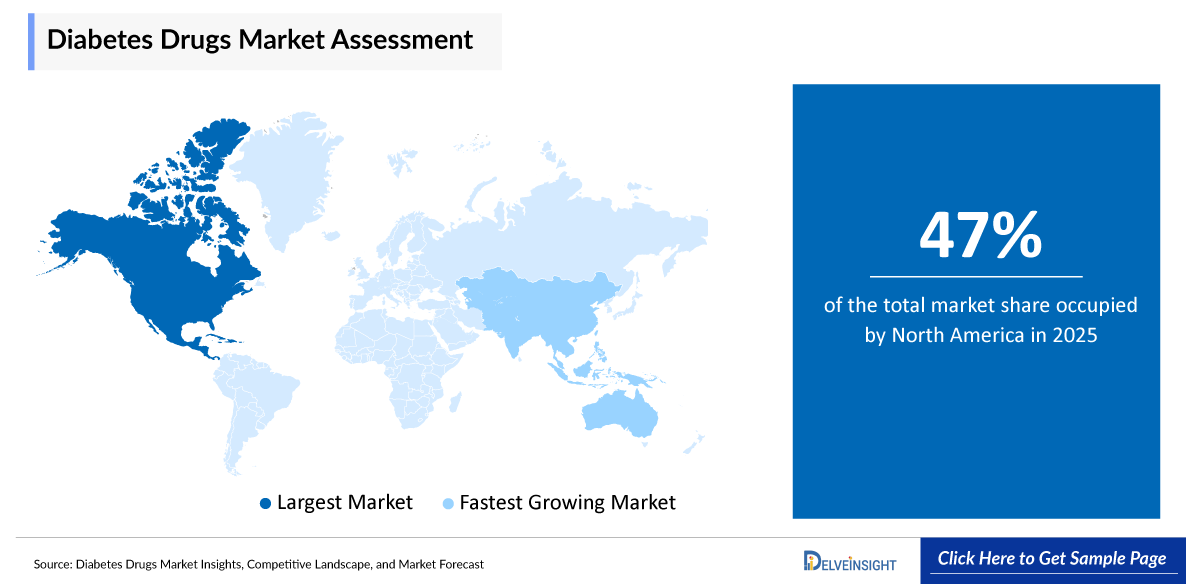
- North America accounted for the largest share of the diabetes drugs market at 47% in 2025, while Asia-Pacific is anticipated to register the fastest growth through 2034.
Diabetes drugs are pharmacological agents used to manage blood glucose levels in people with diabetes, delivered orally, subcutaneously, or intravenously. The scope encompasses GLP-1 receptor agonists and dual or triple agonists, including Novo Nordisk's semaglutide franchise (Ozempic, Rybelsus) and Eli Lilly's tirzepatide franchise (Mounjaro); insulins, including Novo Nordisk's Tresiba and NovoLog, Eli Lilly's Humalog and Basaglar, and Sanofi's Lantus and Toujeo, alongside biosimilar insulins from Biocon and Viatris; SGLT2 inhibitors, including AstraZeneca's Farxiga, Boehringer Ingelheim and Eli Lilly's Jardiance, Johnson & Johnson's Invokana, and Merck's Steglatro; DPP-4 inhibitors, including Merck's Januvia, Boehringer Ingelheim and Eli Lilly's Tradjenta, and Takeda's Nesina; biguanides, led by generic metformin; sulfonylureas, led by generic glimepiride and glipizide alongside Sanofi's originator Amaryl; fixed-dose combination drugs, including Merck's Janumet, Boehringer Ingelheim's Synjardy and Glyxambi, and Sanofi's Soliqua and Novo Nordisk's Xultophy insulin-GLP-1 co-formulations; and other classes, including thiazolidinediones, alpha-glucosidase inhibitors, meglitinides, and amylin analogs. The market spans type 1 and type 2 diabetes populations across oral, subcutaneous, and intravenous routes of administration.
Diabetes Drugs Market Key Growth Drivers
- Rising global prevalence of type 2 diabetes and obesity, with the International Diabetes Federation estimating approximately 591 million people living with diabetes worldwide in 2025, sustaining broad-based demand for pharmacological glucose management.
- Commercial transformation of the market led by GLP-1 receptor agonists and dual GIP/GLP-1 agonists, exemplified by Eli Lilly's tirzepatide franchise generating USD 39.1 billion in diabetes sales in 2025, a 67.1% increase over the prior year.
- Launch of oral formulations of previously injectable drug classes, including Novo Nordisk's oral semaglutide (Rybelsus) and Eli Lilly's investigational oral GLP-1 orforglipron, expanding patient access beyond injection-tolerant populations.
- Continued expansion of cardiovascular and renal indications for leading drug classes, strengthening clinical guideline recommendations and payer coverage for SGLT2 inhibitors and GLP-1 receptor agonists.
- Growing biosimilar insulin competition from manufacturers including Biocon and Viatris, improving affordability and access in price-sensitive and emerging markets.
- Rising obesity prevalence, with the World Obesity Federation projecting approximately 1 billion people living with obesity by 2030, expanding the population at elevated risk of progressing to type 2 diabetes.
- Sustained pharmaceutical industry investment in next-generation incretin therapies, including triple agonists and combination formulations, extending the innovation pipeline beyond currently marketed drug classes.
Key Companies in Diabetes Drugs Market
The leading participants in the diabetes drugs market include the following:
- Novo Nordisk A/S
- Eli Lilly and Company
- Sanofi
- AstraZeneca plc
- Boehringer Ingelheim International GmbH
- Merck & Co., Inc.
- Johnson & Johnson (Janssen Pharmaceuticals)
- Takeda Pharmaceutical Company Limited
- Novartis AG
- Biocon Ltd., and others
For illustrative purposes, only the top 10 companies are listed in the Table of Contents. The report may include analysis and references to additional companies relevant to the market assessment.
Diabetes Drugs Market Size
The following table summarizes the headline market metrics for the global diabetes drugs market across the base year and the forecast horizon.
|
Report Metrics |
Details |
|
2025 Market Size |
USD 118.4 billion |
|
2034 Projected Market Size |
USD 214.6 billion |
|
Growth Rate (2026-2034) |
6.9% CAGR |
|
Largest Market |
North America (47% share in 2025) |
|
Fastest Growing Market |
Asia-Pacific |
|
Base Year |
2025 |
|
Forecast Period |
2026-2034 |
All market values are expressed in USD and represent DelveInsight estimates synthesized from primary and secondary research.
Factors Contributing to the Growth of the Diabetes Drugs Market
Diabetes Drugs Market Drivers
- Rising Global Prevalence of Type 2 Diabetes and Obesity: The foundational driver of the diabetes drugs market is the rising global prevalence of type 2 diabetes and obesity, with the International Diabetes Federation estimating approximately 591 million people living with diabetes worldwide in 2025, more than 90% of whom have type 2 diabetes. Obesity is a principal risk factor for type 2 diabetes, and the World Obesity Federation has projected that approximately 1 billion people worldwide, including 1 in 5 women and 1 in 7 men, will be living with obesity by 2030. As the diagnosed diabetic and pre-diabetic population continues to grow, driven by aging populations, urbanization, and sedentary lifestyles, the base of patients requiring pharmacological glucose management expands correspondingly, sustaining demand across every major diabetes drug class throughout the forecast period.
- Commercial Transformation Led by GLP-1 and Dual GIP/GLP-1 Agonists: The commercial transformation of the diabetes drugs market by GLP-1 receptor agonists and dual GIP/GLP-1 agonists represents the single most significant structural shift in the therapeutic landscape in over a decade. Eli Lilly's tirzepatide franchise, marketed as Mounjaro for type 2 diabetes, generated USD 39.1 billion in sales in 2025, a 67.1% increase over the prior year, making it the fastest-growing drug in the diabetes incretin category, while Novo Nordisk's semaglutide franchise, marketed as Ozempic for type 2 diabetes and Rybelsus in oral form, continues to command a leading share of new incretin prescriptions. This growth reflects the superior glycemic control, weight loss, and cardiovascular benefit demonstrated by these agents relative to older diabetes drug classes. As Novo Nordisk and Eli Lilly continue to invest in next-generation incretin therapies, including triple agonists and improved oral formulations, GLP-1 and dual agonist drugs are expected to sustain their position as both the largest and fastest-growing drug class across the forecast period.
- Launch of Oral Formulations of Previously Injectable Drug Classes: The launch of oral formulations of previously injectable drug classes is expanding patient access to advanced diabetes therapy beyond injection-tolerant populations. Novo Nordisk's Rybelsus, an oral formulation of semaglutide, received expanded FDA approval in October 2025 to reduce the risk of major adverse cardiovascular events in adults with type 2 diabetes at high cardiovascular risk, reinforcing the clinical positioning of oral incretin therapy. Eli Lilly's investigational oral GLP-1 receptor agonist orforglipron is expected to reach the market during 2026, offering a non-peptide, small-molecule alternative to injectable therapy. As oral formulations of GLP-1 and other advanced diabetes drug classes reach the market, patient populations who are hesitant to use injectable therapy gain access to the same drug classes driving the market's structural transformation, expanding the addressable patient base across the forecast period.
- Expansion of Cardiovascular and Renal Indications: The continued expansion of cardiovascular and renal indications for leading drug classes strengthens clinical guideline recommendations and payer coverage, driving earlier and broader prescribing. SGLT2 inhibitors, including AstraZeneca's Farxiga and Boehringer Ingelheim and Eli Lilly's Jardiance, have secured indications extending well beyond glycemic control into heart failure and chronic kidney disease management, while GLP-1 receptor agonists have accumulated cardiovascular outcomes trial data supporting reduced major adverse cardiovascular event risk. As regulatory approvals and clinical guidelines increasingly position these drug classes as standard-of-care therapy for cardiometabolic risk reduction, not merely glycemic control, prescribing volume grows beyond the traditional diabetes-only indication across the forecast period.
- Growing Biosimilar Insulin Competition: Growing biosimilar insulin competition from manufacturers including Biocon and Viatris improves affordability and access to insulin therapy in price-sensitive and emerging markets. As biosimilar insulin products continue to secure regulatory approvals and achieve broader payer and formulary acceptance, particularly in markets where originator insulin pricing has constrained access, the insulin category sustains volume growth even as GLP-1 and dual agonist drugs capture a growing share of overall market revenue, ensuring continued demand for insulin therapy among patients who require it as a matter of clinical necessity, particularly the type 1 diabetes population.
- Sustained Innovation Pipeline Investment: Sustained pharmaceutical industry investment in next-generation incretin therapies extends the innovation pipeline beyond currently marketed drug classes. Development programs include triple agonists targeting GLP-1, GIP, and glucagon receptors simultaneously, and competitive candidates from companies including Innovent Biologics, whose investigational drug mazdutide outperformed Eli Lilly's Trulicity in glycemic control and cardiometabolic benefit in a Phase 3 trial reported in 2024. As pharmaceutical companies continue to invest in differentiated mechanisms of action and improved dosing convenience, the diabetes drugs pipeline sustains a robust flow of new product launches and label expansions across the forecast period.
Diabetes Drugs Market Restraints
The diabetes drugs market faces several interrelated restraints that temper its growth. The high cost of branded GLP-1 receptor agonists and dual GIP/GLP-1 agonists, combined with variable insurance coverage for these therapies outside core indications, constrains broader adoption and has driven significant patient out-of-pocket cost burden in markets without comprehensive reimbursement. Periodic supply constraints affecting high-demand incretin therapies, as experienced with semaglutide products before supply normalization in February 2025, can limit treatment continuity and access during periods of constrained manufacturing capacity. The availability of alternative, non-pharmacological approaches to diabetes and obesity management, including bariatric surgery and intensive lifestyle intervention programs, provides a competing pathway for a subset of patients. Patient adherence and persistence challenges affect the diabetes drugs market broadly, with real-world data indicating that a meaningful share of patients discontinue GLP-1 therapy within the first year of treatment, often related to side effects, cost, or supply interruption. Pricing pressure and government drug pricing negotiation programs in the United States and other major markets create commercial uncertainty for branded diabetes drug manufacturers. Together, these factors moderate the pace of adoption and require manufacturers to demonstrate affordability, supply reliability, and long-term adherence support to sustain growth.
Diabetes Drugs Market Segment Analysis
The global diabetes drugs market is segmented by drug class (GLP-1 receptor agonists and dual/triple agonists, insulins [basal, bolus/rapid-acting, premixed, and biosimilar], SGLT2 inhibitors, DPP-4 inhibitors, biguanides, sulfonylureas, fixed-dose combination drugs, and others), by diabetes type (type 1 diabetes and type 2 diabetes), by route of administration (oral, subcutaneous/injectable, and intravenous), by distribution channel (retail pharmacy, hospital pharmacy, and online pharmacy), and by geography (North America, Europe, Asia-Pacific, and the Rest of the World).
By Drug Class
Dominant Subsegment: GLP-1 Receptor Agonists and Dual/Triple Agonists.
The GLP-1 receptor agonist and dual/triple agonist category is expected to dominate the market. The segment accounted for a 52% share of the diabetes drugs market in 2025. This class, including Novo Nordisk's semaglutide franchise (Ozempic, Rybelsus) and Eli Lilly's tirzepatide franchise (Mounjaro), is the leading drug class because it delivers superior glycemic control, substantial weight loss, and demonstrated cardiovascular benefit relative to older oral and injectable diabetes drug classes, commanding premium pricing and rapidly expanding prescription volume. The dominance of the segment reflects the scale of commercial investment by Novo Nordisk and Eli Lilly, the depth of cardiovascular and renal outcomes evidence supporting broad clinical guideline endorsement, and the rapid expansion of the prescriber base beyond endocrinology into primary care and cardiology. While insulins, SGLT2 inhibitors, and DPP-4 inhibitors remain substantial and clinically essential categories, particularly insulin for the type 1 diabetes population that requires it as a matter of clinical necessity, the scale of GLP-1 and dual agonist commercial revenue and continued pipeline investment in next-generation agents sustain the leadership of the segment across the forecast period.
By Diabetes Type
Dominant Subsegment: Type 2 Diabetes.
The type 2 diabetes category is expected to dominate the market. The type 2 diabetes segment accounted for an 88% share of the diabetes drugs market in 2025, reflecting the epidemiological reality that more than 90% of the global diabetic population has type 2 diabetes and that the large majority of approved diabetes drug classes, including GLP-1 receptor agonists, SGLT2 inhibitors, DPP-4 inhibitors, biguanides, and sulfonylureas, are indicated specifically for type 2 diabetes management. The dominance of the segment reflects both the scale of the type 2 diabetes patient population and the breadth of pharmacological options available for this population relative to type 1 diabetes, where insulin therapy remains the near-universal standard of care. While type 1 diabetes continues to account for the substantial majority of insulin drug volume, given the universal insulin dependence of type 1 patients from diagnosis, the sheer scale of the type 2 diabetes population and the breadth of drug classes indicated for it sustain the leadership of the segment across the forecast period.
By Route of Administration
Dominant Subsegment: Subcutaneous/Injectable.
The subcutaneous/injectable category is expected to dominate the market. The subcutaneous/injectable segment accounted for a 64% share of the diabetes drugs market in 2025. Injectable therapy, including all insulin products and the majority of currently marketed GLP-1 and dual agonist drugs such as Ozempic and Mounjaro, is the leading route of administration because injectable delivery remains the standard formulation for the highest-revenue drug classes in the market, and because most GLP-1 and dual agonist drugs continue to be prescribed in their injectable form despite the availability of oral alternatives. The dominance of the segment reflects the continued predominance of injectable formulations among the top-selling branded diabetes drugs. The oral route of administration represented the fastest-growing route in 2025, driven by the expanded cardiovascular indication for oral semaglutide (Rybelsus) and the anticipated 2026 launch of Eli Lilly's oral GLP-1 orforglipron, and is expected to gain share progressively as additional oral incretin therapies reach the market across the forecast period.
By Distribution Channel
Dominant Subsegment: Retail Pharmacy.
The retail pharmacy category is expected to dominate the market. The retail pharmacy segment accounted for a 58% share of the diabetes drugs market in 2025. Retail pharmacies are the principal distribution channel for diabetes drugs because the large majority of diabetes therapy, whether oral or self-injectable, is dispensed for chronic, long-term self-administration by patients rather than administered in clinical or hospital settings. The dominance of the segment reflects the chronic, outpatient nature of diabetes drug therapy and the well-established retail pharmacy distribution infrastructure for both branded and generic diabetes medications. While hospital pharmacies remain significant for inpatient insulin management and online and direct-to-consumer pharmacy channels are growing rapidly, particularly for GLP-1 therapy amid rising telehealth-based prescribing, the scale of established retail pharmacy distribution sustains the leadership of the segment across the forecast period.
Diabetes Drugs Market Region Analysis
Dominant Region: North America
North America accounted for a 47% share of the global diabetes drugs market in 2025, representing the highest regional market share globally. The leadership of the region reflects the concentration of GLP-1 and dual agonist revenue, with the United States generating a disproportionate share of global GLP-1 receptor agonist revenue relative to its share of the world's diabetes population, driven by US drug pricing structures, broad commercial insurance coverage, and the aggressive commercial operations Novo Nordisk and Eli Lilly have built around their incretin franchises. The United States is the largest national market, supported by high healthcare expenditure, the concentration of leading manufacturers, and the presence of organizations such as the American Diabetes Association that sponsor diabetes research and awareness initiatives. The concentration of GLP-1 commercial revenue, reimbursement structures, and manufacturer investment reinforce the position of North America as the largest regional market across the forecast period.
Fastest Growing Region: Asia-Pacific
Asia-Pacific is projected to register the fastest compound annual growth rate through 2034. The region faces a rapidly escalating diabetes and obesity burden, with China and India representing the largest diabetic populations globally, and is increasingly adopting advanced drug classes including GLP-1 receptor agonists as regional manufacturers, including China's Innovent Biologics, develop and commercialize competitive incretin therapies. China, Japan, and India are the principal national markets, supported by expanding healthcare access, government diabetes awareness initiatives, and the growing presence of both global and domestic pharmaceutical manufacturers pursuing regulatory approvals and local partnerships. As diagnosis rates rise and as advanced drug classes become more accessible and affordable through domestic manufacturing and biosimilar competition, the region increases its adoption of diabetes drugs from a growing base, positioning Asia-Pacific as the fastest-growing regional market across the forecast period.
Diabetes Drugs Market Regional Commentary
North America
North America leads the market, supported by the concentration of GLP-1 and dual agonist commercial revenue, high healthcare expenditure, and broad insurance coverage. The United States dominates the region through its concentration of manufacturers and its outsized share of global incretin therapy revenue.
Europe
Europe is a significant market shaped by national health technology assessment pathways, rising diabetes prevalence, and the presence of leading manufacturers including Sanofi, AstraZeneca, Boehringer Ingelheim, and Novartis. Germany, the United Kingdom, France, Italy, and Spain are the principal national markets, and the region continues to see expanding access to GLP-1 therapy alongside pricing negotiations, exemplified by ongoing adjustments to branded incretin pricing in the United Kingdom.
Asia-Pacific
Asia-Pacific is the fastest-growing region, driven by the scale of the diabetic population in China and India, expanding healthcare access, and the growing presence of domestic incretin drug developers competing alongside global manufacturers.
Rest of World
The Rest of World, spanning Latin America, the Middle East, and Africa, represents an emerging opportunity as diabetes prevalence rises and healthcare access expands, though adoption of advanced, higher-cost drug classes remains concentrated in leading urban centers and private healthcare systems.
Diabetes Drugs Market Competitive Landscape
The global diabetes drugs market is classified as Consolidated. Novo Nordisk and Eli Lilly together control the large majority of GLP-1 and dual agonist commercial revenue, effectively forming a duopoly at the center of the market's fastest-growing and highest-value category, while a broader group of diversified pharmaceutical companies compete across insulin, SGLT2 inhibitor, DPP-4 inhibitor, and other established drug classes. Competition centers on the breadth and depth of the incretin drug pipeline, clinical evidence supporting cardiovascular and renal indications, manufacturing capacity to meet incretin drug demand, and the pace of oral formulation development.
The competitive landscape is evaluated across the following dimensions:
- Market concentration: Consolidated, with Novo Nordisk and Eli Lilly together dominating the GLP-1 and dual agonist category, alongside Sanofi, AstraZeneca, Boehringer Ingelheim, Merck, Johnson & Johnson, Takeda, Novartis, and Biocon competing across insulin and other established drug classes.
- Leading players: Novo Nordisk leads through its semaglutide franchise (Ozempic, Rybelsus) and long-standing insulin portfolio; Eli Lilly leads through its tirzepatide franchise (Mounjaro), the fastest-growing drug in the diabetes incretin category; AstraZeneca and Boehringer Ingelheim lead in SGLT2 inhibitors through Farxiga and Jardiance, respectively; and Merck leads in DPP-4 inhibitors through Januvia.
- Geographic reach: Novo Nordisk, Eli Lilly, Sanofi, and AstraZeneca operate global commercial and regulatory organizations, while regional and biosimilar manufacturers including Biocon, Glenmark Pharmaceuticals, and Cadila Pharmaceuticals maintain more concentrated footprints centered on emerging and price-sensitive markets.
- Product portfolio strength: Competitive advantage rests on the breadth across GLP-1 and dual agonist therapy, insulin, and oral small-molecule drug classes, and on the depth of clinical evidence supporting expanded cardiovascular, renal, and weight management indications.
- Pipeline strength: Development is concentrated in oral GLP-1 and dual agonist formulations, triple agonist candidates targeting GLP-1, GIP, and glucagon receptors, and next-generation biosimilar insulin products.
- Strategic partnerships: Collaboration spans licensing and co-development agreements for next-generation incretin candidates and manufacturing capacity partnerships intended to address sustained global demand for GLP-1 and dual agonist therapy.
- M&A activity: Consolidation and licensing activity has shaped the field, with pharmaceutical companies pursuing in-licensing of incretin and metabolic disease candidates from smaller biotechnology companies to establish or expand a competitive position in the fastest-growing segment of the market.
- Innovation focus: Innovation is concentrated in oral small-molecule GLP-1 agonists, triple agonist candidates, and combination formulations that integrate glycemic control with weight management and cardiovascular risk reduction.
- Regulatory standing: FDA and EMA approval of expanded cardiovascular and renal indications, exemplified by Rybelsus's October 2025 cardiovascular risk reduction approval, are decisive competitive credentials that extend prescribing beyond glycemic control alone.
Diabetes Drugs Market Recent Developmental Activities
- In October 2025, the FDA approved an expanded indication for Novo Nordisk's Rybelsus (oral semaglutide) to reduce the risk of major adverse cardiovascular events in adults with type 2 diabetes at high cardiovascular risk. Strategic significance: the approval reinforced the clinical and commercial positioning of oral incretin therapy beyond glycemic control alone.
- In 2025, Eli Lilly's tirzepatide franchise, marketed as Mounjaro for type 2 diabetes, generated USD 39.1 billion in sales, a 67.1% increase over the prior year, establishing it as the fastest-growing drug in the diabetes incretin category. Strategic significance: the growth cemented Eli Lilly's position as the leading commercial competitor to Novo Nordisk in the GLP-1 and dual agonist category.
- In February 2025, supply constraints affecting semaglutide products were resolved, reflecting stabilization of Novo Nordisk's manufacturing and distribution capacity. Strategic significance: the resolution supported treatment continuity for patients and improved overall market access to incretin therapy.
- Eli Lilly's investigational oral GLP-1 receptor agonist orforglipron is expected to reach the market during 2026. Strategic significance: the anticipated launch would introduce the first small-molecule, non-peptide oral GLP-1 therapy, expanding patient access beyond injection-tolerant populations.
- In May 2024, Innovent Biologics reported that its investigational drug mazdutide outperformed Eli Lilly's Trulicity (dulaglutide) in glycemic control and cardiometabolic benefit in a Phase 3 trial. Strategic significance: the result signaled the emergence of competitive incretin candidates from China-based biopharmaceutical companies.
- In January 2024, Glenmark Pharmaceuticals launched a biosimilar of liraglutide, marketed as Lirafit, in India following approval from the Drug Controller General of India. Strategic significance: the launch expanded affordable access to GLP-1 therapy in a major emerging market.
- In March 2023, Sanofi received marketing authorization from India's Central Drugs Standard Control Organization for Soliqua, its fixed-ratio combination of insulin glargine and lixisenatide. Strategic significance: the approval extended Sanofi's fixed-dose combination insulin-GLP-1 franchise into a major emerging market.
Diabetes Drugs Market Segmentation
- Diabetes Drugs Market Assessment by Drug Class
- GLP-1 Receptor Agonists and Dual/Triple Agonists
- Single GLP-1 Receptor Agonists
- Dual GIP/GLP-1 and Triple Agonists
- Insulins
- Basal Insulins
- Bolus/Rapid-Acting Insulins
- Premixed Insulins
- Biosimilar Insulins
- SGLT2 Inhibitors
- DPP-4 Inhibitors
- Biguanides
- Sulfonylureas
- Fixed-Dose Combination Drugs
- Others
- GLP-1 Receptor Agonists and Dual/Triple Agonists
- Diabetes Drugs Market Assessment by Diabetes Type
- Type 1 Diabetes
- Type 2 Diabetes
- Diabetes Drugs Market Assessment by Route of Administration
- Oral
- Subcutaneous/Injectable
- Intravenous
- Diabetes Drugs Market Assessment by Distribution Channel
- Retail Pharmacy
- Hospital Pharmacy
- Online Pharmacy
Diabetes Drugs Market Assessment by Geography
- North America Diabetes Drugs Market Assessment
- United States Diabetes Drugs Market Size in USD million (2023-2034)
- Canada Diabetes Drugs Market Size in USD million (2023-2034)
- Mexico Diabetes Drugs Market Size in USD million (2023-2034)
- Europe Diabetes Drugs Market Assessment
- Germany Diabetes Drugs Market Size in USD million (2023-2034)
- United Kingdom Diabetes Drugs Market Size in USD million (2023-2034)
- France Diabetes Drugs Market Size in USD million (2023-2034)
- Italy Diabetes Drugs Market Size in USD million (2023-2034)
- Spain Diabetes Drugs Market Size in USD million (2023-2034)
- Rest of Europe Diabetes Drugs Market Size in USD million (2023-2034)
- Asia-Pacific Diabetes Drugs Market Assessment
- China Diabetes Drugs Market Size in USD million (2023-2034)
- Japan Diabetes Drugs Market Size in USD million (2023-2034)
- India Diabetes Drugs Market Size in USD million (2023-2034)
- Australia Diabetes Drugs Market Size in USD million (2023-2034)
- South Korea Diabetes Drugs Market Size in USD million (2023-2034)
- Rest of Asia-Pacific Diabetes Drugs Market Size in USD million (2023-2034)
- Rest of the World Diabetes Drugs Market Assessment
- Middle East Diabetes Drugs Market Size in USD million (2023-2034)
- Africa Diabetes Drugs Market Size in USD million (2023-2034)
- South America Diabetes Drugs Market Size in USD million (2023-2034)
Diabetes Drugs Market Recent Industry Trends and Milestones (2023-2026):
|
Category |
Key Developments |
|
Diabetes Drugs Market Product Advancement |
The period was defined by the commercial ascent of GLP-1 and dual GIP/GLP-1 agonist therapy. Eli Lilly advanced its tirzepatide franchise to USD 39.1 billion in 2025 diabetes sales, Novo Nordisk secured expanded cardiovascular approval for oral semaglutide, and both companies advanced next-generation oral and triple agonist candidates toward market. |
|
Diabetes Drugs Market Product Expansion |
Product expansion advanced along three axes. The first is oral formulation development for previously injectable drug classes, led by Rybelsus and the anticipated 2026 launch of orforglipron. The second is cardiovascular and renal indication expansion for SGLT2 inhibitors and GLP-1 receptor agonists. The third is biosimilar insulin expansion improving affordability in price-sensitive markets. |
|
Diabetes Drugs Market Investment |
Investment was shaped by intensive pharmaceutical industry commitment to incretin drug development and manufacturing capacity. Novo Nordisk and Eli Lilly both expanded manufacturing capacity to address sustained GLP-1 and dual agonist demand, while competitive candidates from Innovent Biologics and other biopharmaceutical companies advanced through clinical development, signaling continued capital flow into the incretin therapeutic class. |
|
Company Strategy |
The unifying strategic theme is the capture and defense of leadership in the GLP-1 and dual agonist category, which has become the commercial center of gravity for the entire diabetes drugs market. Novo Nordisk and Eli Lilly are advancing broad incretin portfolios spanning injectable and oral formulations, while Sanofi, AstraZeneca, Boehringer Ingelheim, Merck, Johnson & Johnson, Takeda, and Novartis compete across insulin, SGLT2 inhibitor, DPP-4 inhibitor, and combination drug categories, and Biocon and other biosimilar manufacturers compete on insulin affordability. |
|
Emerging Technology |
The defining emerging technologies are oral small-molecule GLP-1 receptor agonists that eliminate the need for injection; triple agonist candidates targeting GLP-1, GIP, and glucagon receptors simultaneously for enhanced glycemic and weight management benefit; fixed-dose insulin-incretin combination formulations; and biosimilar insulin platforms that expand affordable access. Across these, the trajectory is toward diabetes drugs that are more convenient, more metabolically comprehensive, and increasingly positioned as cardiometabolic risk-reduction therapy rather than glycemic control alone. |
Diabetes Drugs Market Startup Funding and Investment Trends
Investment in the diabetes drugs field has concentrated on technologies that extend incretin therapy into new formulations and mechanisms, namely oral small-molecule GLP-1 agonists, triple agonist candidates, and next-generation biosimilar insulin platforms. Because the market's fastest-growing category is effectively a duopoly between Novo Nordisk and Eli Lilly, innovators pursue differentiated oral formulation, novel mechanism, or biosimilar technology that serves defined patient needs or that a larger company can license or acquire. The table below summarizes representative companies advancing diabetes drug innovation.
|
Company |
Total Funding |
Funding Stage |
Main Product/Offering |
Core Technology |
|
Innovent Biologics, Inc. |
Publicly held (HKEX) |
Late-stage clinical/commercial |
Mazdutide |
Dual GLP-1/glucagon receptor agonist for type 2 diabetes and obesity |
|
Request for unlocking the report of the @ Diabetes Drugs Market Insights | ||||
Key Takeaways from the Diabetes Drugs Market Report Study
- Market size analysis for the current diabetes drugs market size (2025), and market forecast for 9 years (2026 to 2034).
- Top key research, clinical, and commercial developments, mergers, acquisitions, partnerships, and joint ventures that happened over the last 3 years.
- Key companies dominating the global diabetes drugs market.
- Various opportunities available for competitors in the diabetes drugs market space.
- What are the top-performing segments in 2025? How will these segments perform in 2034?
- Which are the top-performing regions and countries in the current diabetes drugs market scenario?
- Which are the regions and countries where companies should concentrate their opportunities for diabetes drugs market growth in the future?
Target audience who can benefit from this diabetes drugs market report study
- Diabetes drug manufacturers
- Research organizations and consulting companies
- Diabetes and endocrinology-related organizations, associations, forums, and other alliances
- Government and corporate offices
- Start-up companies, venture capitalists, and private equity firms
- Distributors and traders dealing in diabetes drugs
- Various end-users who want to know more about the diabetes drugs market and the latest research developments in the diabetes drugs market.