-market.png&w=256&q=75)
Diabetic Neuropathic Pain (DNP) Market
- The Diabetic Neuropathic Pain (DNP) market is projected to experience a rise in Compound Annual Growth Rate (CAGR) during the forecast period. The growth in market revenue is primarily driven by increase in prevalence of diabetic patients, growing aging population, and increase in awareness about the consequences of uncontrolled diabetes and its complications.
- The dynamics of the Diabetic Neuropathic Pain (DNP) market are anticipated to change in the coming years owing to the improvement in novel treatment options to treat DNP, increasing healthcare spending across the world. Key players in the emerging landscape are AstraZeneca, Centrexion Therapeutics, and others.
- Despite advancements in treatment options, several unmet needs persist in the management of diabetic neuropathic pain which include personalized treatment approaches, early diagnosis methods, and comprehensive patient education
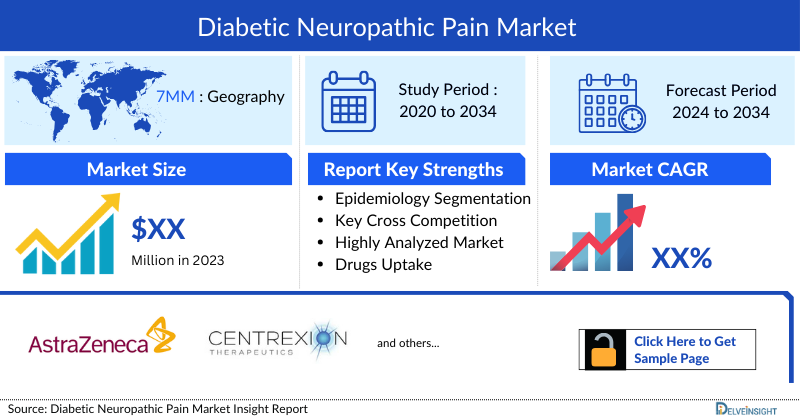
DelveInsight’s comprehensive report titled “Diabetic Neuropathic Pain Market Insights, Epidemiology, and Market Forecast – 2036” offers a detailed analysis of Diabetic Neuropathic Pain (DNP). The report presents historical and projected epidemiological data covering Total Prevalent Cases of Diabetic Neuropathic Pain (DNP), Gender-specific Cases of Diabetic Neuropathic Pain (DNP), Age-specific Cases of Diabetic Neuropathic Pain (DNP) and Diagnosed and Treatable Cases of Diabetic Neuropathic Pain (DNP). In addition to epidemiology, the market report encompasses various aspects related to the patient population. These aspects include the diagnosis process, prescription patterns, physician perspectives, market accessibility, treatment options, and prospective developments in the market across seven major markets: the United States, EU4 (Germany, France, Italy, and Spain), the United Kingdom, and Japan, spanning from 2022-2036.
The report analyzes the existing treatment practices and unmet medical requirements in Diabetic Neuropathic Pain (DNP). It evaluates the market potential and identifies potential business prospects for enhancing therapies or interventions. This valuable information enables stakeholders to make well-informed decisions regarding product development and strategic planning for the market.
Key Market Drivers
Increasing Prevalence of Diabetes: The continuously rising prevalence of diabetes worldwide is significantly increasing the patient pool susceptible to diabetic neuropathic pain.
Growing Aging Population: Older individuals are more susceptible to diabetic neuropathy and associated pain complications, thereby increasing treatment demand.
Emerging Therapies and Pipeline Advancements: Late-stage pipeline therapies such as Suzetrigine and LX9211 are expected to improve future treatment outcomes and drive market growth.
Increasing Awareness and Diagnosis: Improved awareness regarding diabetic complications and advancements in diagnostic approaches are supporting earlier diagnosis and treatment initiation.
Technological Advancements: Advancements in pain management strategies and drug development technologies are expected to positively impact market growth during the forecast period.
Diabetic Neuropathic Pain Overview
Diabetic neuropathic pain is a well-known complication of diabetes and the most common cause of all neuropathic pain. About one-third of all diabetes patients suffer from DNP. It is defined as the presence of signs and/or symptoms of nerve dysfunction in patients with diabetes after the exclusion of other causes. Prolonged high blood sugar (glucose) levels can injure nerves throughout your body however, legs and feet are the most affected by DNP.
Diabetic neuropathic pain (DNP) is characterized by tingling, burning, sharpness, shooting, and lancinating or even electric shock sensations. It is usually considered moderate to severe and often worse at night, causing sleeping disturbance. The pain can be constant and accompanied by cutaneous allodynia, which can substantially affect the quality of life of patients, impacting the ability to perform daily activities and having a negative influence on mood. The pain may also be a reason for withdrawal from recreational and social activities and may be associated with depression.
Approximately 463 million adults (20-79 years) are living with diabetes and by 2045 this will rise to 700 million. According to the CDC, 60–70% of people suffering from diabetes are expected to have diabetic neuropathy.
Diabetic Neuropathic Pain (DNP) Diagnosis and Treatment Algorithm
Diagnosing diabetic neuropathic pain requires a combination of clinical assessment, neurological examination, and diagnostic tests. Patients may experience symptoms such as burning, tingling, or shooting pain in their extremities, along with sensory abnormalities and loss of sensation. Obtaining a detailed medical history, including the duration of diabetes and glycemic control, is crucial. The neurological examination evaluates sensory perception, reflexes, and muscle strength. Diagnostic tests may include nerve conduction studies, electromyography, quantitative sensory testing, and imaging studies to confirm neuropathy and rule out other causes of pain. Accurate diagnosis and management often require collaborative evaluation by healthcare providers, including primary care physicians, neurologists, and pain specialists.
The current treatment for DNP involves two major aims: To target the underlying pathophysiological processes to prevent nerve fiber loss, and symptomatic treatments aim to alleviate the painful symptoms of PDN to normalize physical and psychological functioning. Most guidelines, generally suggest the use of tricyclic agents (TCAs), serotonin-norepinephrine reuptake inhibitors (SNRIs), or γ-aminobutyric acid (GABA) analogs (gabapentin or pregabalin) as first-line agents, followed by opioids and topical treatments. TCAs, SNRIs, and GABA analogs are commonly used for the treatment of DNP.
Diabetic Neuropathic Pain Epidemiology
The epidemiology section on the Diabetic Neuropathic Pain (DNP) market report offers information on the patient populations, including historical and projected trends for each of the seven major markets. Examining key opinion leader views from physicians or clinical experts can assist in identifying the reasons behind historical and projected trends. The diagnosed patient pool, their trends, and the underlying assumptions are all included in this section of the report.
This section also presents the data with relevant tables and graphs, offering a clear and concise view of the prevalence of Diabetic Neuropathic Pain (DNP). Additionally, the report discloses the assumptions made during the analysis, ensuring data interpretation and presentation transparency. This epidemiological data is valuable for understanding the disease burden and its impact on the patient population across various regions.
Key Findings
- The neuropathic pain is present in 13–26% of diabetic patients. From a survey in Augsburg, Germany, the prevalence of painful polyneuropathy was found to be 13.3% in diabetic subjects.
- As per the insights, a significantly greater proportion of females (38%) than males (31%) reported painful neuropathy symptoms. DNP is more common in females as compared to males due to hormonal variances, smaller nerve fibers, and genetic influences, potentially elevating its prevalence.
- The risk of painful neuropathy symptoms in type 2 diabetic patients was 83% higher than in type 1 patients; this risk doubled after adjusting for differences in age and diabetes duration.
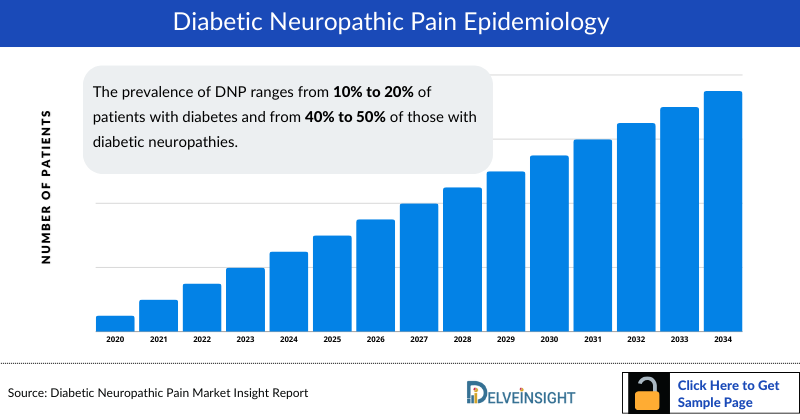
- The prevalence of DNP ranges from 10% to 20% of patients with diabetes and from 40% to 50% of those with diabetic neuropathies.
- An increasing age categories in type 1 diabetic patients showed an almost doubling in prevalence of painful symptoms (Neuropathy Symptom Score (NSS) ≥5) (aged <35 years, 17.2%; 35–54 years, 26.4%; 55+ years, 33.1%; p < 0.0001), with a similar, but less marked, association in type 2 diabetic patients (aged <35 years, 30.6%; 35–54 years, 32.7%; 55+ years, 35.7%; p < 0.01).
- The prevalence of painful symptoms (NSS ≥5) and DNP (NSS ≥5 and NDS ≥3) was 34 and 21%, respectively in the UK. Painful symptoms occurred in 26% of patients without neuropathy (NDS ≤2) and 60% of patients with severe neuropathy (NDS >8).
Diabetic Neuropathic Pain (DNP) Market Outlook
Duloxetine - In September 2004, the SNRI duloxetine (Cymbalta, Eli Lilly) became the first drug to be approved for the treatment of the neuropathic pain associated with DPN. Duloxetine is a potent inhibitor of neuronal serotonin and norepinephrine reuptake. Although the exact mechanism of action of the drug’s central pain-inhibitory activity is unknown, it is believed to be related to the potentiation of serotonergic and noradrenergic activity in the central nervous system (CNS). The blockade of norepinephrine reuptake, in particular, is known to have a beneficial effect on neuropathic pain.
Traditional anticonvulsants have been used to treat neuropathy since the 1960s. However, in 2004, newer anticonvulsants like, pregabalin were approved by the FDA specifically to treat the neuropathic pain of DPN. AAN guidelines recommend pregabalin as first-line therapy for DPN because of its effectiveness in reducing pain and pain-related sleep interference
With ongoing research and continued dedication, the future holds hope for even more effective treatments and, ultimately, a cure for this challenging condition. According to DelveInsight, the Diabetic Neuropathic Pain (DNP) market in the 7MM is projected to grow significantly during the study period 2022–2036.
Diabetic Neuropathic Pain (DNP) Drug Chapters
Emerging Diabetic Neuropathic Pain (DNP) Drugs
Suzetrigine (VX-548): Vertex Pharmaceuticals
Suzetrigine, developed by Vertex Pharmaceuticals, is an oral NaV1.8 inhibitor with high selectivity for NaV1.8 over other sodium channels. NaV1.8, a voltage-gated sodium channel, plays a key role in pain signaling in the peripheral nervous system.
In April 2024, following the release of positive Phase II results in December 2023, Vertex announced the successful completion of an end-of-Phase II meeting with the US FDA. Following the completion of the Phase II study, the company initiated its Phase III pivotal trial of suzetrigine in patients with painful DPN. Additionally, suzetrigine has been granted Breakthrough Therapy designation by the US FDA for the treatment of pain associated with DPN.
Pilavapadin (LX9211): Lexicon Pharmaceuticals/Bristol-Myers Squibb
LX9211 is an orally administered small molecule being developed by Lexicon for the treatment of DPN pain. Preclinical studies demonstrated that LX9211 effectively penetrates the central nervous system and reduces pain behavior in neuropathic models without affecting opioid pathways. Discovered in a drug discovery alliance between Lexicon Pharmaceuticals and Bristol-Myers Squibb, Lexicon holds exclusive rights to its development and commercialization.
LX9211 has received Fast Track designation from the US FDA for DPN pain. In June 2024, Lexicon published a research paper on its Phase II RELIEF-DPN-1 trial investigating LX9211 for DPN pain. In October 2024, Lexicon completed screening for the PROGRESS trial and expects to finish enrollment ahead of schedule. The company also updated its timeline for top-line data release, moving it from the second quarter to the first quarter of 2025. LX9211 is currently in Phase II of clinical development for DPN pain. Full PROGRESS data anticipated in Q2
Note: Detailed emerging therapies assessment will be provided in the final report...
|
Drug |
MoA |
RoA |
Company |
Phase |
|
MEDI7352 |
NGF/TNF bispecific mAb |
IV |
AstraZeneca |
II |
|
CNTX6016 |
CB2 agonist |
IV |
Centrexion Therapeutics |
Ib/ IIa |
|
XXX |
XX |
X |
XXX |
X |
Latest Updates
- In March 2026, Eli Lilly and Company, Vertex Pharmaceuticals, and Lexicon Pharmaceuticals were identified among key companies actively developing innovative therapies for Diabetic Peripheral Neuropathy. The update emphasized growing industry focus on sodium channel modulators, neuroprotective agents, and disease-modifying approaches to improve long-term neuropathic pain management.
- In January 2026, Lexicon Pharmaceuticals was highlighted among the leading companies advancing diabetic neuropathy therapies through its investigational AAK1 inhibitor LX9211 (Pilavapadin). The update noted continued advancement of the diabetic neuropathy pipeline, with LX9211 remaining one of the notable mid-stage therapies targeting neuropathic pain through a non-opioid mechanism.
Diabetic Neuropathic Pain (DNP) Market Segmentation
DelveInsight’s ‘Diabetic Neuropathic Pain (DNP) Market Insights, Epidemiology, and Market Forecast – 2036’ report provides a detailed outlook of the current and future Diabetic Neuropathic Pain (DNP) market, segmented within countries, by therapies, and by classes. Further, the market of each region is then segmented by each therapy to provide a detailed view of the current and future market share of all therapies.
Diabetic Neuropathic Pain (DNP) Market Size by Countries
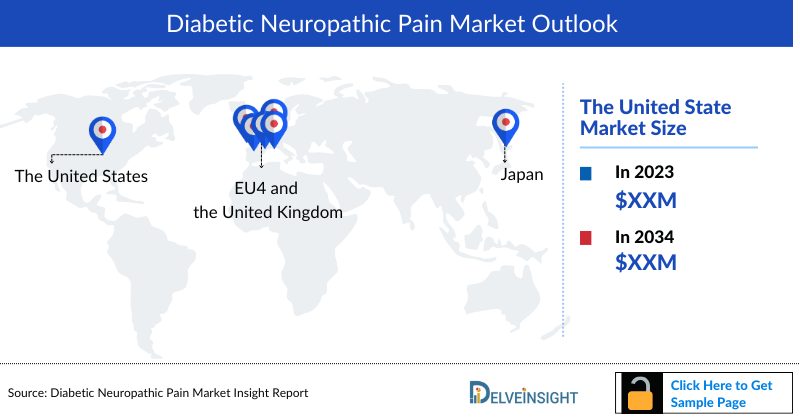
The Diabetic Neuropathic Pain (DNP) market size is assessed separately for various countries, including the United States, EU4 (Germany, France, Italy, and Spain), the UK, and Japan. In 2023, the United States held a significant share of the overall 7MM (Seven Major Markets) Diabetic Neuropathic Pain (DNP) market, primarily attributed to the country's higher prevalence of the condition and the elevated cost of the available treatments. This dominance is projected to persist, especially with the potential early introduction of new products.
Diabetic Neuropathic Pain (DNP) Market Size by Therapies
Diabetic Neuropathic Pain (DNP) Market Size by Therapies is categorized into current and emerging markets for the study period 2022–2036. One of the emerging drugs anticipated to launch during the forecast period is MEDI7352 under the developmental pipeline of AstraZeneca.
Note: Detailed market segment assessment will be provided in the final report....
Diabetic Neuropathic Pain (DNP) Drugs Uptake
This section focuses on the sales uptake of potential Diabetic Neuropathic Pain (DNP) drugs that have recently been launched or are anticipated to be launched in the Diabetic Neuropathic Pain (DNP) market between 2022 and 2036. It estimates the market penetration of Diabetic Neuropathic Pain (DNP) drugs for a given country, examining their impact within and across classes and segments. It also touches upon the financial and regulatory decisions contributing to the probability of success (PoS) of the drugs in the Diabetic Neuropathic Pain (DNP) market.
Note: Detailed assessment of drug uptake and attribute analysis will be provided in the full report on Diabetic Neuropathic Pain (DNP)...
Diabetic Neuropathic Pain (DNP) Market Access and Reimbursement
DelveInsight’s ‘Diabetic Neuropathic Pain (DNP) – Market Insights, Epidemiology, and Market Forecast – 2036’ report provides a descriptive overview of the market access and reimbursement scenario of Diabetic Neuropathic Pain (DNP).
This section includes a detailed analysis of the country-wise healthcare system for each therapy, enlightening the market access, reimbursement policies, and health technology assessments.
KOL Views
To keep up with current Diabetic Neuropathic Pain (DNP) market trends and fill gaps in secondary findings, we interview KOLs and SMEs working in the Diabetic Neuropathic Pain (DNP) domain. Their opinion helps understand and validate current and emerging therapies and treatment patterns or Diabetic Neuropathic Pain (DNP) market trends. This will support the clients in potential upcoming novel treatments by identifying the overall scenario of the market of Diabetic Neuropathic Pain (DNP) unmet needs.
Diabetic Neuropathic Pain (DNP): KOL Insights
DelveInsight’s analysts connected with 50+ KOLs to gather insights; however, interviews were conducted with 15+ KOLs in the 7MM. These KOLs were from organizations, institutes, and hospitals, such as Department of Pathology, University of California, San Diego, US, Department of Neurophysiology, Mannheim Center for Translational Neuroscience (MCTN), Medical Faculty Mannheim, University of Heidelberg, Germany, Nuffield Department of Clinical Neuroscience, University of Oxford, UK, Department of Neurology, University of Michigan, Ann Arbor, US, Department of Neurogenetics, Max Planck Institute for Experimental Medicine, Germany, Department of Neurosurgery, Albany Medical College, Albany, New York, USA, Division of Diabetes, Metabolism, and Endocrinology, Department of Medicine, Toho University School of Medicine, Japan.
“The rising prevalence of Diabetic Neuropathy and awareness regarding its early diagnosis plays a key factor impacting DNP industry.”
Note: Detailed assessment of KOL Views will be provided in the full report on Diabetic Neuropathic Pain (DNP)...
Competitive Intelligence Analysis
We conduct a Competitive and Market Intelligence analysis of the Diabetic Neuropathic Pain (DNP) Market, utilizing various Competitive Intelligence tools such as SWOT analysis, Conjoint Analysis, and Market entry strategies. The inclusion of these analyses is contingent upon data availability, ensuring a comprehensive and well-informed assessment of the market landscape and competitive dynamics.
The emerging Diabetic Neuropathic Pain (DNP) therapies are analyzed based on various attributes such as safety and efficacy in randomized clinical trials, order of entry and other market dynamics, and the unmet need they fulfill in the Diabetic Neuropathic Pain (DNP) market.
Diabetic Neuropathic Pain (DNP) Pipeline Development Activities
The report offers an analysis of therapeutic candidates in Phase II and III stages and examines companies involved in developing targeted therapeutics for Diabetic Neuropathic Pain (DNP). It provides valuable insights into the advancements and progress of potential treatments in clinical development for this condition.
Pipeline Development Activities
The report covers information on collaborations, acquisition and merger, licensing, patent details, and other information for emerging Diabetic Neuropathic Pain (DNP).
Diabetic Neuropathic Pain (DNP) Report Insights
- Diabetic Neuropathic Pain (DNP) Patient Population
- Therapeutic Approaches
- Diabetic Neuropathic Pain (DNP) Pipeline Analysis
- Diabetic Neuropathic Pain (DNP) Market Size and Trends
- Diabetic Neuropathic Pain (DNP) Market Opportunities
- Impact of Upcoming Therapies
Diabetic Neuropathic Pain (DNP) Report Key Strengths
- 11 Years Forecast
- The 7MM Coverage
- Diabetic Neuropathic Pain (DNP) Epidemiology Segmentation
- Key Cross Competition
- Highly Analyzed Diabetic Neuropathic Pain (DNP) Market
- Diabetic Neuropathic Pain (DNP) Drugs Uptake
Diabetic Neuropathic Pain (DNP) Report Assessment
- Diabetic Neuropathic Pain (DNP) Current Treatment Practices
- Unmet Needs
- Diabetic Neuropathic Pain (DNP) Pipeline Product Profiles
- Diabetic Neuropathic Pain (DNP) Market Attractiveness
Key Questions
- How common is Diabetic Neuropathic Pain (DNP)?
- What are the key findings of Diabetic Neuropathic Pain (DNP) epidemiology across the 7MM, and which country will have the highest number of patients during the study period (2022–2036)?
- What are the currently available treatments for Diabetic Neuropathic Pain (DNP)?
- What is the disease risk, burden, and unmet needs of Diabetic Neuropathic Pain (DNP)?
- At what CAGR is the Diabetic Neuropathic Pain (DNP) market and its epidemiology expected to grow in the 7MM during the forecast period (2026–2036)?
- How would the unmet needs impact the Diabetic Neuropathic Pain (DNP) market dynamics and subsequently influence the analysis of the related trends?
- What would be the forecasted patient pool of Diabetic Neuropathic Pain (DNP) in the 7MM covering the United States, EU4 (Germany, France, Italy, and Spain), the UK, and Japan?
- Among EU4 and the UK, which country will have the highest number of patients during the forecast period (2022–2036)?
- How many companies are currently developing therapies for the treatment of Diabetic Neuropathic Pain (DNP)?
Frequently Asked Questions
1. Is Diabetic Neuropathic Pain (DNP) hereditary?
Diabetic Neuropathic Pain (DNP) is not directly hereditary but is influenced by diabetes, which can have genetic predispositions but is not solely inherited.
2. Are there any treatments for Diabetic Neuropathic Pain (DNP)?
Yes, the first-line treatment options available for Diabetic Neuropathic Pain include anticonvulsants like pregabalin and antidepressants like duloxetine, etc.
3. Are there any clinical trials for Diabetic Neuropathic Pain (DNP) treatments?
Research and clinical trials are ongoing to explore potential treatments for Diabetic Neuropathic Pain (DNP). Some experimental treatments have shown promise in slowing disease progression.
4. How is the market size estimated in the forecast report?
The market size is estimated through data analysis, statistical modeling, and expert opinions. It may consider factors such as incident cases, treatment costs, revenue generated, and market trends.
5. Is there an analysis of the market’s competitive landscape in the report?
The market forecast report will likely offer insights into key market players, their product offerings, partnerships, and strategies, providing stakeholders with a comprehensive understanding of the competitive dynamics in the Diabetic Neuropathic Pain (DNP) market.

