Diffuse Cutaneous Systemic Sclerosis Market
Key Highlights
- Advances in understanding the key pathogenic pathways of systemic sclerosis have led to the development of several novel therapies aimed at managing both cutaneous and pulmonary manifestations of the disease.
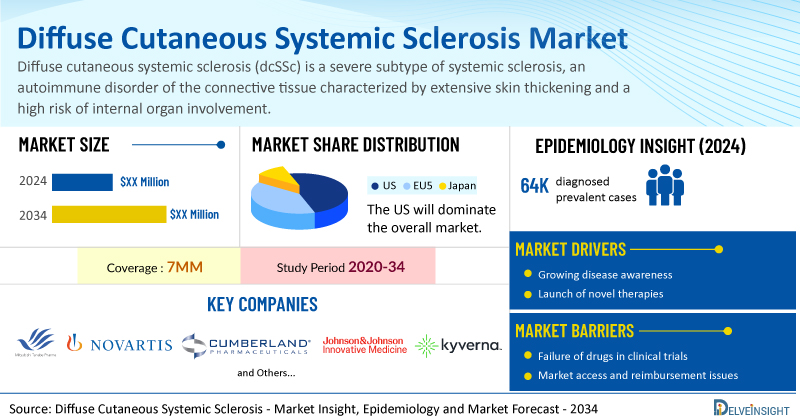
- Among the type-specific cases of systemic sclerosis in the 7MM, diffuse systemic sclerosis accounted for ~64,260, limited systemic sclerosis accounted for ~154,900, and systemic sclerosis sine scleroderma accounted for ~12,050 cases in 2024.
- At present, no curative or disease-modifying therapy exists. Furthermore, long-term treatment often shows diminishing efficacy and is associated with notable adverse effects. Consequently, therapeutic strategies focus primarily on symptomatic management of the affected organs, tailored to disease severity, progression, and duration.
- Biologic therapies hold promise as potential alternatives, either as add-on or adjunctive options, particularly when combined with agents that possess anti-fibrotic activity.
- In July 2025, Novartis began a Phase II multicenter clinical study to assess the effectiveness, safety, and tolerability of Ianalumab in individuals with dcSSc.
- In May 2025, Mitsubishi Tanabe Pharma America Announces Completion of Enrollment for its Phase III INSPIRE Study of Investigational Dersimelagon in Patients with EPP and XLP.
- Drugs approved for the treatment of systemic sclerosis include OFEV (nintedanib, Boehringer Ingelheim), ACTEMRA (tocilizumab, Roche), RITUXAN (rituximab, Zenyaku Kogyo/Chugai Pharmaceutical).
- The treatment pipeline for dcSSc reflects a significant unmet medical need. A prominent key player, Mitsubishi Tanabe Pharma (MT-7117), Cumberland Pharmaceuticals (ifetroban), Johnson & Johnson (Guselkumab), Kyverna Therapeutics (KYV-101), and others.
Download the Sample PDF to Get More Insight @ Diffuse Cutaneous Systemic Sclerosis (dcSSc) Market
DelveInsight's “Diffuse Cutaneous Systemic Sclerosis (dcSSc) Market– Market Insight, Epidemiology and Market Forecast – 2034” report delivers an in-depth analysis of dcSSc epidemiology, market, and clinical development in dcSSc. In addition to this, the report provides historical and forecasted epidemiology and market data as well as a detailed analysis of the dcSSc market trends in the United States, EU4 (Germany, France, Italy, and Spain), and the United Kingdom, and Japan.
The dcSSc market report provides real-world prescription pattern analysis, emerging drugs assessment, market share, and uptake/adoption pattern of individual therapies, as well as historical and forecasted dcSSc market size from 2020 to 2034 in 7MM. The report also covers current dcSSc treatment practices/algorithms and unmet medical needs to curate the best opportunities and assess the market’s underlying potential.
Geography Covered
- The United States
- EU4 (Germany, France, Italy, and Spain) and the United Kingdom
- Japan
|
Study Period |
2020–2034 |
|
Forecast Period |
2025–2034 |
|
Geographies Covered |
US, EU4 (Germany, France, Italy, and Spain) and the UK, and Japan |
|
Diffuse Cutaneous Systemic Sclerosis Epidemiology
|
Segmented by:
|
|
Diffuse Cutaneous Systemic Sclerosis Key Companies |
|
|
Diffuse Cutaneous Systemic Sclerosis Key Therapies |
|
|
Diffuse Cutaneous Systemic Sclerosis Market |
Segmented by:
|
|
Analysis |
|
Diffuse Cutaneous Systemic Sclerosis (dcSSc) Understanding and Treatment Algorithm
Diffuse Cutaneous Systemic Sclerosis (dcSSc) Overview
dcSSc is a severe form of systemic sclerosis, an autoimmune connective tissue disorder marked by widespread skin thickening and significant risk of internal organ involvement. The disease is driven by immune system activation, vascular injury, and excessive collagen deposition, leading to fibrosis of the skin and organs. Skin changes progress rapidly, affecting the face, trunk, and extremities, often preceded by Raynaud’s phenomenon. Internal complications may include interstitial lung disease, pulmonary arterial hypertension, scleroderma renal crisis, cardiac dysfunction, and gastrointestinal motility disorders.
Diffuse Cutaneous Systemic Sclerosis (dcSSc) Diagnosis
Diagnosing systemic sclerosis can be challenging because its symptoms resemble many other conditions. It becomes easier when key signs like Raynaud’s phenomenon or sudden skin swelling/thickening are present. There is no single test diagnosis relies on a detailed medical history, physical examination, and specialized tests. A rheumatologist will check for skin tightening or swelling and may order a skin biopsy, blood tests (including ANA for autoantibodies), and organ assessments. Additional investigations can include lung function tests, CT chest scans, ECGs, echocardiograms, X-rays, and gastrointestinal motility studies to detect internal organ involvement. Diagnosis is always made by considering all findings together, not just a single test.
Further details related to country-based variations in diagnosis are provided in the report.
Diffuse Cutaneous Systemic Sclerosis (dcSSc) Treatment
Systemic sclerosis is a chronic autoimmune disease with a poor prognosis, and treatment mainly targets organ-related complications. Patients require long-term follow-up with multiple specialists. Immunosuppressants like methotrexate, mycophenolate mofetil, and azathioprine are commonly used, while glucocorticoids are used cautiously. Vasoactive therapies include endothelin receptor antagonists (bosentan, ambrisentan, macitentan), PDE5 inhibitor (sildenafil), prostacyclin analog (iloprost), and calcium channel blockers. For systemic sclerosis-associated interstitial lung disease (SSc-ILD), approved treatments include nintedanib (OFEV), tocilizumab (ACTEMRA), and rituximab, with rituximab being the only one showing significant skin improvement (mRSS). Despite the lack of curative therapies and high healthcare costs, ongoing research has improved patient care.
Further details related to treatment are provided in the report….
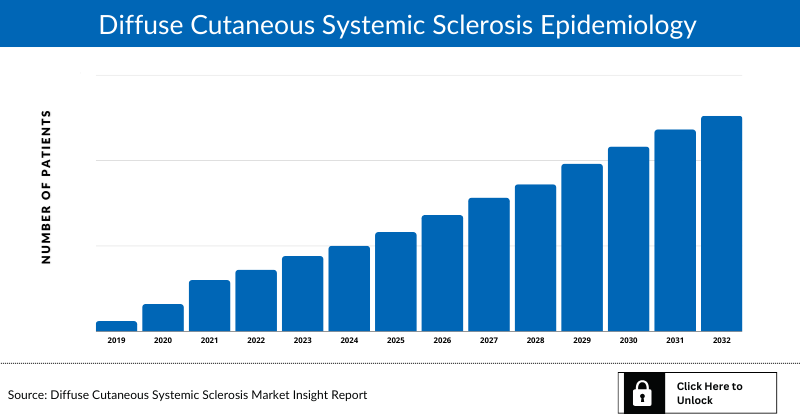 Get detailed insights into the historical as well as forecasted epidemiology trends in the 7MM, at: Diffuse Cutaneous Systemic Sclerosis (dcSSc) Epidemiology Forecast
Diffuse Cutaneous Systemic Sclerosis (dcSSc) Epidemiology
As the market is derived using a patient-based model, the dcSSc epidemiology chapter in the report provides historical as well as forecasted epidemiology segmented by total diagnosed prevalent cases of systemic sclerosis, systemic sclerosis by disease subset, age-specific cases of systemic sclerosis, systemic sclerosis with organ involvement, systemic sclerosis severity by organ damage, systemic sclerosis severity by skin thickness, in the 7MM covering the United States, EU4 countries (Germany, France, Italy, and Spain), and the United Kingdom, and Japan from 2020 to 2034.
- The total number of diagnosed prevalent cases of dcSSc in the 7MM were about ~ 64,250 in 2024.
- Among EU4 and the UK, Germany had the highest number of diagnosed prevalent cases of dcSSc, while the UK had the lowest number of diagnosed prevalent cases.
- Patients with dcSSc tend to have a more aggressive clinical course and eventually develop visceral complications (usually within the first 3 to 5 years), which, if severe, can lead to death.

Diffuse Cutaneous Systemic Sclerosis (dcSSc) Drug Chapters
The drug chapter segment of the dcSSc report encloses the detailed analysis of dcSSc marketed drugs and mid and late-stage pipeline drugs. It also helps understand the dcSSc clinical trial details, expressive pharmacological action, agreements and collaborations, approval and patent details of each included drug, and the latest news and press releases.
Explore more about the emerging therapies and key companies actively working in the market: Diffuse Cutaneous Systemic Sclerosis (dcSSc) Pipeline Insight
Diffuse Cutaneous Systemic Sclerosis (dcSSc) Drug Chapters
The drug chapter segment of the dcSSc report encloses the detailed analysis of dcSSc marketed drugs and mid and late-stage pipeline drugs. It also helps understand the dcSSc clinical trial details, expressive pharmacological action, agreements and collaborations, approval and patent details of each included drug, and the latest news and press releases.
Marketed Drugs
OFEV (nintedanib): Boehringer Ingelheim
Nintedanib is in a class of medications called kinase inhibitors and works by blocking the action of enzymes involved in causing fibrosis. It is used to treat idiopathic pulmonary fibrosis (IPF) and certain types of chronic fibrosing interstitial lung diseases (ILD). In addition, it is used to slow the rate of decline in lung function in people with SSc-ILD, a disease in which there is scarring of the lungs that is often fatal.
In September 2019, the US FDA approved OFEV capsules to slow the rate of decline in pulmonary function in adults with SSc-ILD.
ACTEMRA (tocilizumab): Roche
ACTEMRA is an anti-IL-6 receptor biologic and is available in both intravenous (IV) and subcutaneous (SC) formulations. The drug is part of a co-development agreement with Chugai Pharmaceutical and has been approved in Japan since April 2005. It is approved for the treatment of various conditions such as Castleman’s disease, rheumatoid arthritis, systemic juvenile idiopathic arthritis (SJIA), polyarticular juvenile idiopathic arthritis, giant cell arteritis, CAR T cell-induced cytokine release syndrome, active polyarticular juvenile idiopathic arthritis, Still's disease, SSc-ILD, and for COVID-19.
In March 2021, the US FDA approved ACTEMRA subcutaneous injection for slowing the rate of decline in pulmonary function in adult patients with SSc-ILD. The FDA approval was based on data from the focuSSced trial. Supportive information was also used from the faSScinate trial.
Emerging Drugs
Dersimelagon (MT-7117): Mitsubishi Tanabe Pharma
Dersimelagon is a synthetic, orally administered, non-peptide small molecule being developed for multiple indications that acts as a selective agonist of MC1R. It reduces inflammation, vascular dysfunction, and fibrosis through its pleiotropic effects on inflammatory cells, endothelial cells, and fibroblasts and is a potential therapeutic agent for the treatment of systemic sclerosis.
In April 2020, Mitsubishi Tanabe Pharma was granted Fast Track Designation for MT-7117 for the treatment of diffuse cutaneous systemic sclerosis.
Ianalumab: Novartis
Ianalumab developed by Novartis, is a novel monoclonal antibody targeting the B-cell activating factor receptor (BAFF-R), designed to deplete B cells through antibody-dependent cellular cytotoxicity (ADCC) and inhibition of B-cell survival signals. Given the central role of B cells in the pathogenesis of dcSSc—including autoantibody production and profibrotic signaling—Ianalumab offers a targeted immunomodulatory approach.
|
Drug Name |
Company |
Phase |
Indication |
RoA |
MoA |
|
Dersimelagon (MT-7117) |
Mitsubishi Tanabe Pharma |
III |
Diffuse cutaneous systemic sclerosis |
Oral |
MC1R agonist |
|
Ianalumab |
Novartis |
II |
Diffuse cutaneous systemic sclerosis |
SC |
Targeting BAFF |
|
Vasculan (ifetroban) |
Cumberland Pharmaceuticals |
II |
Diffuse cutaneous systemic sclerosis |
Oral |
Targeting TxA2 and PGH2 |
|
Guselkumab |
Johnson & Johnson Innovative Medicine |
II |
Diffuse cutaneous systemic sclerosis |
IV |
IL 23 inhibitor |
|
KYV 101 |
Kyverna Therapeutics |
I/II |
Diffuse cutaneous systemic sclerosis |
IV infusion |
Targeting CD19 |
Note: Detailed emerging therapies assessment will be provided in the final report.
Drug Class Insights
In dcSSc, investigational therapies target different pathogenic mechanisms through distinct drug classes. MC1R agonists act on the melanocortin 1 receptor to regulate inflammation, vascular dysfunction, and fibrosis. BAFF inhibitors block B-cell activating factor, reducing abnormal B-cell survival and autoantibody production. TxA2/PGH2 antagonists inhibit thromboxane and prostaglandin signaling to decrease vasoconstriction, platelet aggregation, and fibrosis. IL-23 inhibitors modulate the IL-23/Th17 axis to suppress pro-inflammatory responses linked to disease progression. CD19-directed therapies deplete pathogenic B-cell populations, aiming to reset immune balance and limit autoimmune activity. These novel classes aim to move beyond traditional immunosuppressants by addressing key drivers of dcSSc pathogenesis.
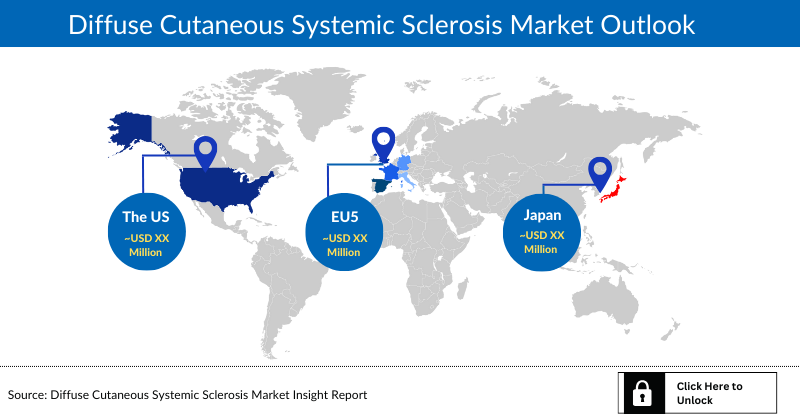
Diffuse Cutaneous Systemic Sclerosis (dcSSc) Market Outlook
The dcSSc treatment landscape is transitioning from traditional symptom management to more target antifibrotic and immunomodulatory approaches, addressing a high unmet need. Approved options include OFEV (nintedanib, Boehringer Ingelheim), the first antifibrotic to slow lung decline in SSc-ILD, ACTEMRA (tocilizumab, Roche), which modulates IL-6–driven inflammation and lung outcomes, and RITUXAN (rituximab, Zenyaku Kogyo/Chugai), a B-cell–depleting therapy used increasingly in practice. The pipeline is diverse, with Mitsubishi Tanabe Pharma’s MT-7117 (melanocortin agonist), Cumberland’s ifetroban (thromboxane receptor antagonist), Johnson & Johnson’s guselkumab (IL-23 inhibitor), and Kyverna’s KYV-101 (engineered T-cell therapy) among leading candidates. The market is expected to shift toward earlier targeted use, combination regimens, and precision-based care, though access and long-term durability remain challenges.
Diffuse Cutaneous Systemic Sclerosis (dcSSc) Drugs Uptake
This section focuses on the uptake rate of potential drugs expected to be launched in the market during 2025–2034, which depends on the competitive landscape, safety, and efficacy data, along with the order of entry. It is important to understand that the key players evaluating their novel therapies in the pivotal and confirmatory trials should remain vigilant when selecting appropriate comparators to stand the greatest chance of a positive opinion from regulatory bodies, leading to approval, smooth launch, and rapid uptake.
Further detailed analysis of emerging therapies drug uptake in the report…
Diffuse Cutaneous Systemic Sclerosis (dcSSc) Pipeline Activities
The report provides insights into different therapeutic candidates in Phase III and Phase II stages. It also analyzes key players involved in developing targeted therapeutics.
Pipeline Development Activities
The report covers information on collaborations, acquisitions and mergers, licensing, and patent details for dcSSc emerging therapies.
KOL Views
To keep up with the real-world scenario in current and emerging market trends, we take opinions from Key Industry Leaders working in the domain through primary research to fill the data gaps and validate our secondary research. Industry Experts contacted for insights on the evolving treatment landscape, patient reliance on conventional therapies, patient therapy switching acceptability, and drug uptake along with challenges related to accessibility, including Medical/scientific writers, Professors, and Others.
DelveInsight’s analyst dcSSc connected with 15+ KOLs to gather insights; however, interviews were conducted with 10+ KOLs in the 7MM. Centers such as Harvard Medical School, University of Michigan, and Sarcoma Oncology Center etc., were contacted. Their opinion helps understand and validate current and emerging therapy treatment patterns or dcSSc market trends.
|
KOL Views |
|
“For systemic sclerosis, most patients are treated with mycophenolate mofetil, which really has become our go-to for softening the skin. As we come to understand better what's happening, not just in the skin but in the systemic immune response, those targeted treatments are going to advance.“ MD, Harvard Medical School, USA |
Qualitative Analysis
We perform Qualitative and market Intelligence analysis using various approaches, such as SWOT analysis and Conjoint Analysis. In the SWOT analysis, strengths, weaknesses, opportunities, and threats in terms of gaps in disease diagnosis, patient awareness, physician acceptability, competitive landscape, cost-effectiveness, and geographical accessibility of therapies are provided.
Conjoint Analysis analyzes multiple approved and emerging therapies based on relevant attributes such as safety, efficacy, frequency of administration, route of administration, and order of entry. Scoring is given based on these parameters to analyze the effectiveness of therapy.
In efficacy evaluation for dcSSc, both primary and secondary outcome measures are assessed; for instance, primary endpoints often include reduction in infarct size, improvement in tissue viability, and preservation of organ function, while secondary outcomes may involve biomarkers of oxidative stress, inflammatory response, and overall survival rates.
Further, the therapies’ safety is evaluated wherein the acceptability, tolerability, and adverse events are majorly observed, and it sets a clear understanding of the side effects posed by the drug in the trials. In addition, the scoring is also based on the probability of success, and the addressable patient pool for each therapy. According to these parameters, the final weightage score and the ranking of the emerging therapies are decided.
Market Access and Reimbursement
Reimbursement may be referred to as the negotiation of a price between a manufacturer and payer that allows the manufacturer access to the market. It is provided to reduce the high costs dcSSc and make the essential drugs affordable. Health technology assessment (HTA) plays an important role in reimbursement decision-making and recommending the use of a drug. These recommendations vary widely throughout the seven major markets, even for the same drug. In the US healthcare system, both Public and Private health insurance coverage are included. Also, Medicare and Medicaid are the largest government-funded programs in the US. The major healthcare programs including Medicare, Medicaid, Health Insurance Program (CHIP), and the state and federal health insurance marketplaces are overseen by the Centers for Medicare & Medicaid Services (CMS). Other than these, Pharmacy Benefit Managers (PBMs), and third-party organizations that provide services, and educational programs to aid patients are also present.
The report further provides detailed insights on the country-wise accessibility and reimbursement scenarios, cost-effectiveness scenario of currently used therapies, programs making accessibility easier and out-of-pocket costs dcSSc more affordable, insights on patients insured under federal or state government prescription drug programs, etc.
Scope of the Report
- The report covers a segment of key events, an executive summary, descriptive overview of dcSSc, explaining its causes, signs and symptoms, pathogenesis, and currently available therapies.
- Comprehensive insight has been provided into the epidemiology segments and forecasts dcSSc, the future growth potential of diagnosis rate, and disease progression along treatment guidelines.
- Additionally, an all-inclusive account of both the current and emerging therapies, along with the elaborative profiles of late-stage and prominent therapies, will have an impact on the current treatment landscape.
- A detailed review of the dcSSc market, historical and forecasted market size, market share by therapies, detailed assumptions, and rationale behind our approach is included in the report, covering the 7MM drug outreach.
- The report provides an edge while developing business strategies, by understanding trends, through SWOT analysis and expert insights/KOL views, patient journey, and treatment preferences that help in shaping and driving the 7MM dcSSc market.
Diffuse Cutaneous Systemic Sclerosis (dcSSc) Report Insights
- Patient Population
- Therapeutic Approaches
- dcSSc Pipeline Analysis
- dcSSc Market Size and Trends
- Existing and future Market Opportunity
Diffuse Cutaneous Systemic Sclerosis (dcSSc) Report Key Strengths
- 10-Years Forecast
- 7MM Coverage
- dcSSc Epidemiology Segmentation
- Key Cross Competition
- Conjoint analysis
- Drugs Uptake and Key Market Forecast Assumptions
Diffuse Cutaneous Systemic Sclerosis (dcSSc) Report Assessment
- Current Treatment Practices
- Unmet Needs
- Pipeline Product Profiles
- Market Attractiveness
- Qualitative Analysis (SWOT and Conjoint Analysis)
FAQs
- What is the historical and forecasted dcSSc patient pool/patient burden in the United States, EU4 (Germany, France, Italy, and Spain), the United Kingdom, and Japan?
- Which combination treatment approaches will have a significant impact on the dcSSc drug treatment market size?
- How would the market drivers, barriers, and future opportunities affect the market dynamics and subsequent analysis of the associated trends?
- What are the current and emerging options for the treatment of dcSSc?
- What are the recent novel therapies, targets, mechanisms of action, and technologies developed to overcome the limitations of existing therapies?
- Patient acceptability in terms of preferred treatment options as per real-world scenarios?
- What are the country-specific accessibility issues of expensive, recently approved therapies?
Reasons to buy
- The report will help in developing business strategies by understanding the latest trends and changing treatment dynamics driving the dcSSc market.
- Insights on patient burden/disease Incidence, evolution in diagnosis, and factors contributing to the change in the epidemiology of the disease during the forecast years.
- Understand the existing market opportunities in varying geographies and the growth potential over the coming years.
- Distribution of historical and current patient share based on real-world prescription data along with reported sales of approved products in the US, EU4 (Germany, France, Italy, and Spain), the United Kingdom, and Japan.
- Identifying strong upcoming players in the market will help devise strategies to help get ahead of competitors.
- Detailed analysis and ranking of class-wise potential current and emerging therapies under the conjoint analysis section to provide visibility around leading classes.
- Highlights of access and reimbursement policies of approved therapies, barriers to accessibility of expensive off-label therapies, and patient assistance programs.
- To understand Key Opinion Leaders’ perspectives around the accessibility, acceptability, and compliance-related challenges of existing treatment to overcome barriers in the future.
- Detailed insights on the unmet needs of the existing market so that the upcoming players can strengthen their development and launch strategy.
-pipeline.png&w=256&q=75)