
Digital Pathology Market Summary
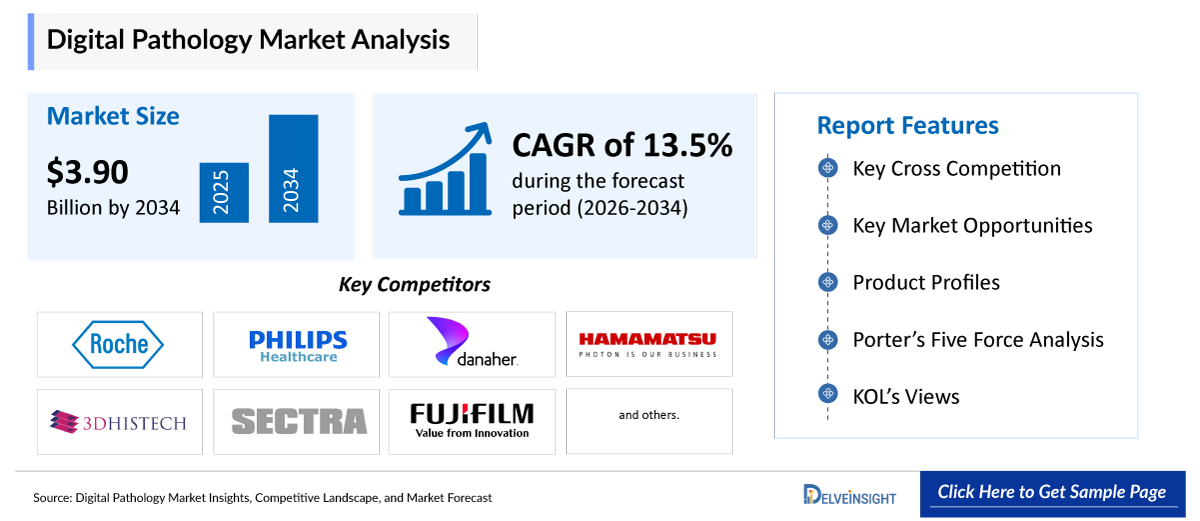
- The global digital pathology market size was valued at USD 1.25 billion in 2025 and is projected to reach USD 3.90 billion by 2034.
- The market is expected to expand at a CAGR of 13.5% during the forecast period 2026-2034, supported by regulatory clearance of whole slide imaging for primary diagnosis, the global pathologist shortage, and the integration of artificial intelligence into the pathology workflow.
- By product, the hardware (scanners) segment dominated the digital pathology market with a 47% share in 2025.
- By technology, the whole slide imaging segment dominated the digital pathology market with a 55% share in 2025.
- By application, the disease diagnosis segment dominated the digital pathology market with a 56% share in 2025.
- By end user, the hospitals and diagnostic laboratories segment dominated the digital pathology market with a 46% share in 2025.
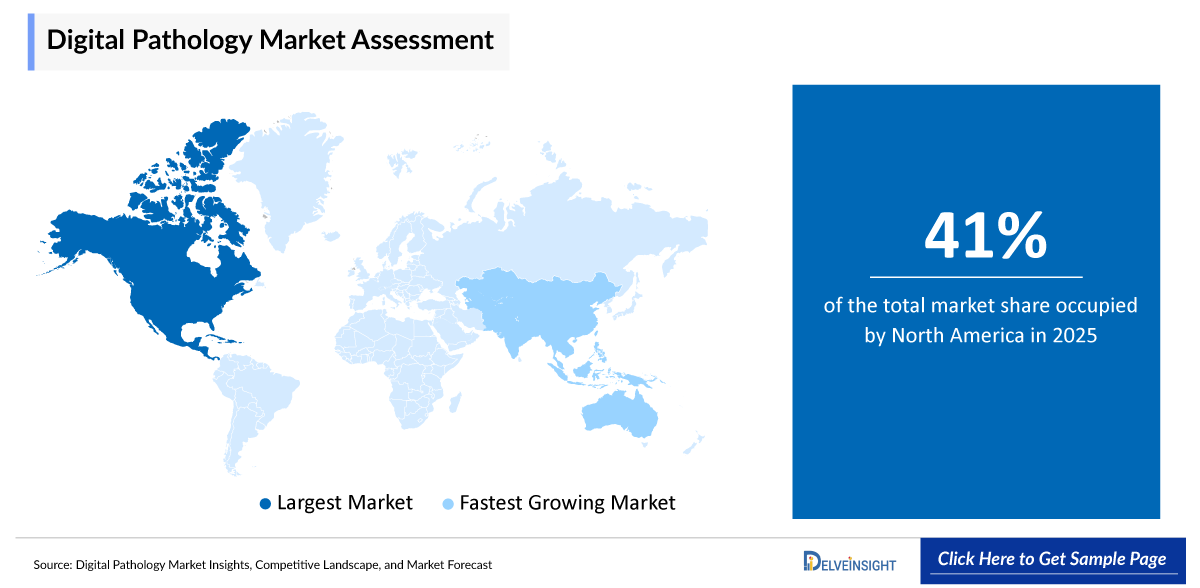
- North America accounted for the largest share of the digital pathology market at 41% in 2025, while Asia-Pacific is anticipated to register the fastest growth through 2034.
Digital pathology is the discipline of converting glass microscope slides into high-resolution digital images that can be viewed, analyzed, shared, and archived electronically, transforming a workflow that has relied on the light microscope for over a century. The core technology is whole slide imaging, in which a scanner digitizes an entire stained tissue section at diagnostic resolution to create a whole slide image that a pathologist reviews on a display rather than under a microscope. The market comprises the hardware required to digitize slides, principally whole slide scanners of varying throughput; the software used to store, manage, view, annotate, and analyze images, including image management systems and increasingly artificial intelligence applications; and the storage, communication, and services layers that support enterprise deployment.
Digital pathology enables telepathology and remote consultation, standardized quantitative analysis, integration with laboratory information systems and the electronic health record, and the application of computational and artificial intelligence tools that assist in detection, classification, biomarker scoring, and, most recently, prognosis and therapy-response prediction. The category is transitioning from early-stage digitization confined to research and education toward full-scale clinical adoption for primary diagnosis, a shift catalyzed by regulatory clearance of whole slide imaging systems for diagnostic use, by an acute and worsening shortage of pathologists, and by the maturation of computational pathology from single-disease detection tools toward multimodal foundation models that integrate tissue images with clinical and molecular data.
Digital Pathology Market Key Growth Drivers
- Rising global cancer incidence, with the International Agency for Research on Cancer projecting a rise from 20 million new cases in 2022 to 35 million by 2050, increasing biopsy and histopathology volumes.
- A worsening global shortage of pathologists, which compels laboratories to adopt digital tools that improve productivity without compromising diagnostic accuracy.
- Regulatory clearance of whole slide imaging systems for primary diagnosis, which has removed the principal barrier to routine clinical adoption.
- Integration of artificial intelligence and computational pathology for detection, biomarker scoring, companion diagnostics, and prognosis.
- Expansion of telepathology and remote diagnosis, improving access to subspecialty expertise in underserved and rural settings.
- Growing adoption by pharmaceutical and biotechnology companies for drug development, clinical trials, and companion diagnostic standardization.
- Integration of digital pathology with laboratory information systems, the electronic health record, and enterprise imaging, supported by cloud infrastructure.
Key Companies in Digital Pathology Market
The competitive field combines diagnostics and imaging companies that supply whole slide scanners and workflow software with a growing set of computational pathology and artificial intelligence developers. The leading participants in the digital pathology market include the following:
- F. Hoffmann-La Roche Ltd
- Koninklijke Philips N.V.
- Danaher Corporation
- Hamamatsu Photonics K.K.
- 3DHISTECH Ltd.
- Sectra AB
- FUJIFILM Holdings Corporation
- Tempus AI Inc.
- Proscia Inc.
- Indica Labs Inc., and others
For illustrative purposes, only the top 10 companies are listed in the Table of Contents. The report may include analysis and references to additional companies relevant to the market assessment.
Digital Pathology Market Size
The following table summarizes the headline market metrics for the global digital pathology market across the base year and the forecast horizon.
|
Report Metrics |
Details |
|
2025 Market Size |
USD 1.25 billion |
|
2034 Projected Market Size |
USD 3.90 billion |
|
Growth Rate (2026-2034) |
13.5% CAGR |
|
Largest Market |
North America (41% share in 2025) |
|
Fastest Growing Market |
Asia-Pacific |
|
Market Structure |
Moderately Concentrated |
All market values are expressed in USD and represent DelveInsight estimates synthesized from primary and secondary research.
Factors Contributing to the Growth of the Digital Pathology Market
Digital Pathology Market Assessment Market Drivers
- Rising Cancer Incidence and Histopathology Volume: The foundational driver of the digital pathology market is the rising global burden of cancer, which directly increases the volume of biopsies and histopathology specimens that must be examined. The International Agency for Research on Cancer estimated 20 million new cancer cases in 2022 and projects annual incidence to rise to 35 million by 2050 as populations age and cumulative risk exposure accumulates. Every cancer diagnosis and treatment decision depends on the microscopic examination of tissue, and the expansion of screening programs, the growth of biomarker-driven treatment selection, and the increasing complexity of oncology diagnostics all multiply the number and sophistication of the pathology tests performed per patient. This expanding workload places pathology laboratories under sustained pressure, and digital pathology offers a direct response by enabling faster review, remote access to specimens, quantitative and reproducible analysis, and the application of computational tools that assist with high-volume tasks. The rising prevalence of other chronic conditions that require tissue diagnosis, including inflammatory, infectious, and degenerative diseases, reinforces the same dynamic. Because this demand is rooted in demographic and epidemiological trends, it provides a durable, non-cyclical foundation for the adoption of digital pathology across clinical and research settings worldwide, and it is particularly acute in the oncology segment, where the value of standardized, artificial-intelligence-assisted analysis is greatest.
- Global Shortage of Pathologists: A structural and worsening shortage of pathologists is among the most powerful drivers of digital pathology adoption, because it converts efficiency from a convenience into a necessity. The number of trained pathologists is growing far more slowly than diagnostic workload in most developed markets and is severely limited in much of the developing world, where large populations may be served by very few specialists. As experienced pathologists retire and case complexity increases, laboratories face lengthening turnaround times and rising per-case pressure. Digital pathology addresses this constraint on several fronts. It enables workload balancing across sites and time zones, allowing a distributed group of pathologists to share cases through a single digital platform. It supports telepathology, giving laboratories in underserved regions access to subspecialty expertise that would otherwise be unavailable locally. Most importantly, it provides the substrate for artificial intelligence tools that pre-screen, prioritize, and quantify cases, with reported productivity improvements that allow pathologists to work substantially more efficiently without compromising accuracy. For health systems confronting a fixed or shrinking specialist workforce and a rising caseload, digitization is the principal available lever for expanding diagnostic capacity, which makes the pathologist shortage a demand driver that intensifies over time rather than one that resolves.
- Regulatory Clearance for Primary Diagnosis: The regulatory clearance of whole slide imaging systems for primary diagnosis has removed the single largest barrier to routine clinical adoption and is a decisive driver of market growth. For years, digital pathology was confined largely to research, education, and secondary consultation because regulators had not cleared whole slide imaging for making the primary diagnosis on which patient care depends. That barrier has now fallen: by early 2025 a growing number of whole slide imaging systems with unique scanners had received United States Food and Drug Administration clearance for primary diagnostic use, and clinical validation studies have demonstrated that digital reading is comparable to conventional microscopy in diagnostic accuracy. Clearance transforms the value proposition, because a laboratory can now digitize its entire primary workflow rather than maintaining parallel glass and digital processes, which is the condition under which the efficiency and quality benefits of digital pathology are fully realized. Regulatory progress has also extended to the artificial intelligence tools that operate on digital images, with a growing number of computational pathology applications receiving clearance, including high-value applications that inform clinical decision-making rather than merely accelerating workflow. The expanding regulatory foundation gives laboratories, health systems, and their financial stakeholders the confidence to commit to full-scale digitization, converting a long-anticipated transition into an active procurement cycle.
- Artificial Intelligence and Computational Pathology: The integration of artificial intelligence into the pathology workflow is both a driver of digital pathology adoption and the principal source of its long-term value, because whole slide images are the substrate on which computational tools operate. Early computational pathology applications focused on detection and efficiency, flagging suspicious regions and automating repetitive quantification such as cell counting and biomarker scoring. The field has since advanced toward higher-value applications that alter clinical decision-making, including prognostic models that predict disease outcome and therapy-response models that guide treatment selection, several of which have received breakthrough or de novo regulatory designations. The frontier is now the multimodal foundation model, trained on millions of digitized slides together with associated clinical and molecular data, which promises to move pathology from slide-level detection toward patient-level insight. This trajectory reinforces digital pathology adoption in a self-sustaining cycle: laboratories digitize to access artificial intelligence tools, and the accumulation of digital images and outcomes data enables the next generation of models. The strategic importance of image data has driven major acquisitions in which the underlying value was the digitized slide archive rather than the software itself. Artificial intelligence also strengthens the economic case for digitization by improving throughput, standardizing interpretation, and supporting companion diagnostic applications that connect a tissue finding to a specific therapy.
- Telepathology and Remote Diagnosis: The expansion of telepathology is a significant driver, extending the reach of scarce diagnostic expertise and enabling new models of collaborative and distributed care. Because a whole slide image can be reviewed anywhere with appropriate software and connectivity, digital pathology decouples the location of the specimen from the location of the pathologist. This enables laboratories to obtain rapid second opinions and subspecialty consultation regardless of geography, to centralize interpretation across a network of collection sites, and to serve remote and rural populations that lack local pathology services. Telepathology proved its value during periods when on-site work was constrained, and it has since become a permanent feature of laboratory operations, supporting intraoperative consultation, cross-institutional tumor boards, and international expert review. For large reference laboratories and integrated health systems, digital workflows allow cases to be routed to the most appropriate available pathologist across multiple sites, improving both turnaround time and subspecialty match. The growth of remote diagnosis also supports the entry of digital pathology into emerging markets, where it can partially compensate for limited local specialist capacity. As connectivity, image compression, and cloud infrastructure continue to improve, the practical barriers to remote pathology continue to fall, reinforcing adoption across settings of every size.
- Pharmaceutical and Biotechnology Adoption: Adoption by pharmaceutical and biotechnology companies is a substantial and fast-growing driver, distinct from the clinical diagnostic market and often ahead of it in the use of advanced computational tools. Drug developers use digital pathology throughout the research and development cycle, from preclinical toxicology and target discovery to the analysis of tissue samples in clinical trials. Quantitative, reproducible image analysis is especially valuable in this setting, because it standardizes the assessment of biomarkers across large multi-site studies and generates the objective, auditable data that regulatory submissions require. The rise of biomarker-driven oncology has made companion diagnostics a central concern, and digital pathology with artificial intelligence supports the development and standardization of the tissue-based tests that determine patient eligibility for targeted therapies. Pharmaceutical companies also partner with computational pathology developers to build proprietary algorithms that identify responders, stratify patients, and generate evidence of mechanism. Because the research market is less constrained by the reimbursement and regulatory requirements that gate clinical adoption, it has been an early and willing adopter of foundation models and multimodal analysis, and it provides a stable revenue base for digital pathology vendors that complements the emerging clinical market. This segment is projected to grow rapidly as trial complexity and biomarker dependence increase.
- Integration with Laboratory and Enterprise Systems: The integration of digital pathology with laboratory information systems, the electronic health record, and broader enterprise imaging is an increasingly important driver, because it determines whether digitization delivers workflow value at scale rather than functioning as an isolated island of technology. As the conversation in the field shifts from scanner resolution toward interoperability and enterprise deployment, the ability to embed whole slide images and computational results directly into the systems clinicians already use has become central to the value proposition. Integration with the laboratory information system connects digital images to specimen accessioning, tracking, and reporting; integration with the electronic health record places pathology results and images alongside radiology and clinical data for holistic patient review; and enterprise imaging strategies bundle pathology with radiology and other image-generating specialties under common infrastructure and governance. This systems integration reduces manual handoffs, supports multidisciplinary tumor boards, and enables the longitudinal data aggregation on which artificial intelligence depends. Cloud infrastructure is a key enabler, providing the elastic storage and compute required for very large image files and for national-scale deployments. As health systems pursue enterprise-wide digitization strategies, the demand shifts from standalone scanners toward integrated platforms, favoring vendors that can deliver interoperable, enterprise-grade solutions and reinforcing adoption across the health system rather than within a single laboratory.
Digital Pathology Market Assessment Market Restraints
Despite strong structural tailwinds, the digital pathology market faces material constraints that shape the pace and evenness of adoption. The most significant is the high cost and complexity of digitization. Whole slide scanners, the information technology infrastructure required to move and store very large image files, and the software and integration work needed to embed digital pathology into laboratory operations together represent a substantial capital and operating commitment, which strains the budgets of community and smaller laboratories and slows adoption outside large, well-resourced institutions. The second constraint is reimbursement. In many health systems, digital pathology and the artificial intelligence tools that operate on digital images lack dedicated reimbursement pathways, so laboratories must justify investment on efficiency and quality grounds rather than incremental revenue, which lengthens the return-on-investment horizon. The third constraint is interoperability. The regulatory clearance of whole slide imaging under a closed-loop model, in which specific software is tied to specific scanners, together with the use of proprietary image formats, complicates the assembly of best-of-breed systems and can lock laboratories into single-vendor stacks, while integration with legacy laboratory information systems remains technically demanding. The fourth constraint is data management: whole slide images are extremely large, and the storage, transmission, archiving, and cybersecurity requirements of a fully digital pathology operation are considerable and ongoing. Finally, adoption is gated by human and organizational factors, including the need to retrain pathologists, redesign long-established workflows, validate digital reading against microscopy, and manage the change across an entire department. Together, these factors ensure that adoption, while structurally assured, proceeds unevenly across laboratory size, geography, and care setting, and they explain why a technology validated years ago is only now entering full-scale clinical deployment.
Digital Pathology Market Segment Analysis
The global digital pathology market is segmented by product into hardware (scanners), software (image analysis and viewing), and storage and communication systems; by technology into whole slide imaging, virtual microscopy, and artificial intelligence and image analysis; by application into disease diagnosis, drug discovery and development, and research and education; by end user into hospitals and diagnostic laboratories, pharmaceutical and biotechnology companies, and academic and research institutes; and by geography into North America, Europe, Asia-Pacific, and the Rest of the World.
By Product
Dominant Subsegment: Hardware (Scanners).
The hardware category is expected to dominate the market.
Dominant: Hardware (Scanners) ~ 47%
The hardware segment accounted for a 47% share of the digital pathology market in 2025. Hardware, principally whole slide scanners, dominates the product structure because scanner hardware is the required infrastructure for every digital pathology program: no slide can be viewed, analyzed, or shared digitally until it has been scanned. Whole slide scanners range from low-throughput desktop units suited to research and small laboratories to high-capacity clinical systems capable of processing hundreds of slides in a batch, and the transition of laboratories toward full primary-diagnosis digitization is driving demand for high-throughput, high-reliability clinical scanners. The regulatory clearance of specific scanner-and-software systems for primary diagnosis has concentrated clinical demand on the cleared platforms, and the capital-intensive nature of scanner acquisition means that hardware accounts for a substantial share of total program cost, particularly in the early phase of a digitization initiative. The software segment, encompassing image management systems, viewers, and artificial intelligence applications, is the fastest-growing product category, because once slides are digitized the recurring value increasingly resides in the analytical and workflow software, and because software carries higher margins and generates recurring subscription revenue. Storage and communication systems form an essential supporting segment, reflecting the very large size of whole slide image files and the archiving and transmission infrastructure a digital operation requires. Over the forecast period, hardware is expected to retain the largest share while software grows fastest, so that the revenue mix shifts gradually toward software and services as installed scanner bases mature and analytical adoption deepens.
By Technology
Dominant Subsegment: Whole Slide Imaging.
The whole slide imaging category is expected to dominate the market.
Dominant: Whole Slide Imaging ~ 55%
The whole slide imaging segment accounted for a 55% share of the digital pathology market in 2025. Whole slide imaging dominates because it is the foundational technology of digital pathology and the basis on which every other capability depends. In whole slide imaging, a scanner captures an entire stained tissue section at diagnostic resolution to produce a single high-resolution digital file that reproduces, and in navigation and measurement can exceed, the experience of the glass slide under a microscope. It is the technology cleared by regulators for primary diagnosis, the format on which artificial intelligence algorithms operate, and the enabler of telepathology, archiving, and quantitative analysis. Its dominance reflects the fact that clinical adoption is fundamentally a transition to whole slide imaging as the working substrate of diagnosis. The artificial intelligence and image analysis category is the fastest-growing technology segment, because computational tools deliver the incremental value, from detection and biomarker scoring to prognosis, that justifies digitization beyond simple workflow efficiency, and because the field is advancing rapidly toward multimodal foundation models. Virtual microscopy, which encompasses the remote viewing and navigation of digitized slides, forms an established supporting segment closely tied to telepathology and education. The three technologies are complementary rather than competing, since artificial intelligence and virtual microscopy both operate on whole slide images. Over the forecast period, whole slide imaging is expected to retain its leading share as the enabling substrate while artificial intelligence grows fastest as the primary source of differentiated clinical value.
By Application
Dominant Subsegment: Disease Diagnosis.
The disease diagnosis category is expected to dominate the market.
Dominant: Disease Diagnosis ~ 56%
The disease diagnosis segment accounted for a 56% share of the digital pathology market in 2025. Disease diagnosis dominates the application structure because the primary purpose of pathology is to render the tissue-based diagnoses on which patient care depends, and the clearance of whole slide imaging for primary diagnostic use has opened this largest application to full digital adoption. The segment encompasses the routine histopathological diagnosis of cancer and other diseases, biomarker assessment that guides treatment selection, and the second-opinion and subspecialty consultation that digital workflows facilitate. The rising burden of cancer and other conditions requiring tissue diagnosis, the growing complexity of biomarker-driven oncology, and the pressure of the pathologist shortage all concentrate demand in this application, and the regulatory and clinical validation of digital primary diagnosis has converted it from an aspiration into an active adoption cycle. Drug discovery and development forms the second-largest and fastest-growing application, reflecting the intensive use of quantitative digital pathology by pharmaceutical and biotechnology companies in preclinical research, clinical trials, and companion diagnostic development, an environment less constrained by the reimbursement and regulatory barriers that gate clinical diagnosis. Research and education constitute an established supporting application, encompassing academic investigation, biobanking, and the training of pathologists on digital platforms. Over the forecast period, disease diagnosis is expected to retain its leading position as clinical digitization accelerates, while drug discovery grows rapidly on the strength of biomarker-driven development. Source scope varies by application definition across published analyses.
By End User
Dominant Subsegment: Hospitals and Diagnostic Laboratories.
The hospitals and diagnostic laboratories category is expected to dominate the market.
Dominant: Hospitals and Diagnostic Laboratories ~ 46%
The hospitals and diagnostic laboratories segment accounted for a 46% share of the digital pathology market in 2025. Hospitals and diagnostic laboratories dominate end-user demand because they perform the large majority of clinical pathology and are the setting in which primary diagnosis, the largest application, is rendered. Hospital pathology departments, integrated health system laboratories, and independent reference laboratories process the enormous volume of biopsies and resection specimens generated by clinical care, and they are the organizations whose workflow is most directly transformed by the transition to digital primary diagnosis. These users are the principal purchasers of high-throughput clinical scanners, enterprise image management systems, and the integration services required to connect digital pathology to laboratory information systems and the electronic health record. Their adoption is driven by the pathologist shortage, by the efficiency and quality benefits of digital workflow, and increasingly by the availability of regulatory-cleared systems and artificial intelligence tools. Pharmaceutical and biotechnology companies form a substantial and technologically advanced end-user segment, often ahead of clinical users in deploying computational pathology for drug development and companion diagnostics, and this segment provides a stable, less regulated revenue base for vendors. Academic and research institutes constitute an important segment for early adoption, algorithm development, and training, and in some scope definitions account for a leading share of research-oriented demand. Over the forecast period, the clinical hospital and laboratory segment is expected to remain dominant and to grow strongly as primary-diagnosis digitization scales across health systems worldwide.
Digital Pathology Market Region Analysis
Dominant Region: North America
Dominant: North America ~ 41% (Largest)
North America accounted for a 41% share of the global digital pathology market in 2025. The region combines advanced healthcare and digital infrastructure, high per-capita diagnostic expenditure, early adoption of artificial intelligence in medicine, and the presence of the leading computational pathology developers, making it the principal center of digital pathology innovation and clinical adoption. The United States contributes the overwhelming majority of regional value, supported by a large and rising cancer burden, a well-capitalized network of academic medical centers and reference laboratories, and a regulatory environment that has cleared a growing number of whole slide imaging systems for primary diagnosis and an expanding set of artificial intelligence applications for clinical use. The removal of the primary-diagnosis barrier has been especially consequential in the United States, where it has converted a long-anticipated transition into an active procurement cycle, and where the leading artificial intelligence pathology developers, including the companies behind the most prominent computational pathology platforms, are predominantly based. Regional leadership is reinforced by the concentration of research funding, venture capital, and the digitized slide archives that anchor foundation-model development, as well as by the presence of large integrated health systems capable of enterprise-scale deployment. Canada contributes through provincial health system digitization and academic research, while Mexico represents an earlier-stage market. Countervailing considerations include the capital intensity of digitization and the absence of dedicated reimbursement, which temper the pace of adoption among smaller laboratories. On balance, North America is expected to retain leadership throughout the forecast period while Asia-Pacific grows more rapidly.
Fastest Growing Region: Asia-Pacific
Asia-Pacific is projected to register the fastest compound annual growth rate in the digital pathology market through 2034. The region combines very large and rapidly aging populations, a rising cancer and chronic disease burden, expanding healthcare infrastructure, and government initiatives to digitize and modernize diagnostic systems, producing growth rates that exceed the global average. China, India, Japan, and South Korea are investing heavily in advanced diagnostic technologies, and the rapid expansion of healthcare capacity across the region is creating demand for high-throughput, scalable diagnostic solutions capable of managing large and growing caseloads. Japan is a particularly notable market, combining one of the world oldest populations, with a large share of citizens aged sixty-five and older, with a strong culture of technological adoption and a rising volume of age-related disease requiring tissue diagnosis. The region also faces an acute pathologist shortage relative to its population, which makes the productivity and telepathology benefits of digital pathology especially valuable, and it is seeing strong growth in remote diagnostics that improve access in underserved areas. Government programs to digitize healthcare systems and modernize laboratory infrastructure support adoption across China, India, and South Korea, and the relative immaturity of the existing installed base allows many laboratories to adopt current-generation digital and artificial-intelligence-enabled systems without the burden of legacy migration. Chinese computational pathology developers are also entering partnerships to embed tumor-detection models into established platforms, adding regional innovation to regional volume.
Digital Pathology Market Assessment Regional Commentary
North America
North America leads on innovation, regulatory progress, and clinical adoption. The United States is the reference market for primary-diagnosis clearance and for artificial intelligence pathology, hosting the leading computational pathology developers and the digitized slide archives that anchor foundation-model development. Adoption is driven by the cancer burden, the pathologist shortage, and enterprise health system digitization, and tempered by capital intensity and the absence of dedicated reimbursement. Canada advances through provincial digitization and academic research, while Mexico is an earlier-stage market. The region is the focal point of the industry investment and merger activity.
Europe
Europe represents a large and mature regional market and in several analyses leads on the share of clinical installations, reflecting early national-scale deployments and strong academic pathology. Germany, the United Kingdom, France, Italy, Spain, and the Nordic countries account for the majority of regional value, and widespread electronic health record infrastructure supports the integration of imaging, annotations, and artificial-intelligence-driven insights into patient records. Several European health systems have pursued laboratory-wide and national digitization programs, and the region combines strong data protection requirements with ambitious modernization targets. Sweden-based and other European vendors hold significant positions in image management and enterprise imaging.
Asia-Pacific
Asia-Pacific is the fastest-growing region, propelled by demographic scale, rising disease burden, expanding healthcare infrastructure, and government digitization initiatives across China, India, Japan, and South Korea. Japan combines an exceptionally aged population with strong technology adoption, while China and India expand capacity and adopt current-generation systems without legacy constraints. An acute regional pathologist shortage makes the productivity and telepathology benefits especially valuable, and regional computational pathology developers are increasingly embedding tumor-detection models into established platforms, adding innovation to volume.
Rest of World
The Rest of the World comprises the Middle East, Africa, and South America. Adoption is stratified. The Gulf Cooperation Council states and the larger South American markets, particularly Brazil, are investing in digital healthcare infrastructure and represent growing markets, while much of Africa faces limited access to advanced technology and a severe shortage of pathologists, precisely the conditions under which telepathology offers the greatest potential benefit. Regional growth will be driven by healthcare infrastructure investment, government digitization initiatives, and the use of cloud-based and remote diagnostic models that reduce the barriers to adoption in resource-constrained settings.
Digital Pathology Market Competitive Landscape
The global digital pathology market is classified as Moderately Concentrated. A small number of diagnostics and imaging companies dominate the whole slide scanner and enterprise workflow segment, where regulatory clearance and capital intensity create high barriers, while the computational pathology and artificial intelligence segment is more fragmented and rapidly consolidating through acquisition. Competition differs markedly between the hardware layer, the image management and enterprise imaging layer, and the artificial intelligence application layer, and the boundaries between them are blurring as hardware vendors add software and as diagnostics companies acquire artificial intelligence developers.
The competitive landscape is evaluated across the following dimensions:
- Market concentration: Moderately concentrated in the whole slide scanner segment, where a limited number of cleared systems compete, and more fragmented in the artificial intelligence software segment, which is consolidating rapidly through acquisition.
- Leading players: F. Hoffmann-La Roche Ltd, Koninklijke Philips N.V., Danaher Corporation through Leica Biosystems, and Hamamatsu Photonics K.K. lead in scanners and workflow, while Tempus AI Inc., PathAI Inc., Proscia Inc., and Indica Labs Inc. lead in computational pathology.
- Geographic reach: The diagnostics and imaging leaders operate globally, while artificial intelligence developers are concentrated in North America and Europe and are expanding through health system and reference laboratory partnerships.
- Product portfolio strength: Competitive advantage increasingly rests on the breadth of an integrated offering spanning scanners, image management, artificial intelligence, and enterprise integration, rather than on any single component.
- Pipeline strength: Innovation is concentrated in artificial intelligence applications that move from detection toward prognosis and therapy-response prediction, and in multimodal foundation models trained on very large digitized slide archives.
- Strategic partnerships: Collaboration between scanner vendors and artificial intelligence developers, and between vendors and reference laboratories and health systems, is central to competitive positioning and to expanding cleared scanner-and-software combinations.
- M&A activity: Acquisition is the defining competitive dynamic, exemplified by the agreement for Roche to acquire PathAI for up to USD 1.05 billion, the acquisition of Paige by Tempus AI, and the acquisition of scanner vendors by microscopy companies.
- Regulatory standing: United States Food and Drug Administration clearance of whole slide imaging systems for primary diagnosis and of artificial intelligence applications for clinical use has become a decisive competitive credential.
- Innovation focus: Competitive differentiation is shifting from scanner specifications toward interoperability, enterprise deployment, and artificial intelligence that delivers patient-level clinical insight rather than slide-level efficiency.
Digital Pathology Market Recent Developmental Activities
- In May 2026, F. Hoffmann-La Roche Ltd announced an agreement to acquire the computational pathology company PathAI for a transaction value of up to USD 1.05 billion, with completion expected in the second half of 2026. Roche had partnered with PathAI since 2021, expanding the collaboration in 2024 to develop artificial-intelligence-enabled companion diagnostic algorithms, and intends to combine the PathAI platform with its oncology diagnosis systems and scale it globally. Strategic significance: the acquisition unites a leading whole slide imaging hardware franchise with a leading artificial intelligence software capability, exemplifying the vertical integration of hardware and computational pathology that is reshaping the competitive landscape.
- In January 2025, F. Hoffmann-La Roche Ltd received an additional United States Food and Drug Administration 510(k) clearance for the Roche Digital Pathology Dx whole slide imaging system, adding the high-capacity VENTANA DP 600 slide scanner to the previously cleared VENTANA DP 200. The DP 600 offers substantially greater throughput, processing up to 240 slides, and modifies the clearance Roche received in June 2024. Strategic significance: the high-capacity scanner clearance positioned Roche to expand its commercial presence in the United States clinical market and to support the high-volume primary-diagnosis workflows that full laboratory digitization requires.
- In August 2025, Tempus AI Inc. agreed to acquire the digital pathology company Paige for a transaction value of USD 81 million, gaining control of a digitized archive of some 7 million whole slide images and associated clinical and molecular data spanning 45 countries, together with Paige regulatory assets including de novo clearances and breakthrough device designations. Strategic significance: the acquisition was principally a data play to strengthen a multimodal oncology artificial intelligence platform, underscoring that the strategic value in computational pathology increasingly resides in large, well-annotated image archives rather than in software alone.
- In January 2025, Paige received United States Food and Drug Administration 510(k) clearance for its FullFocus digital pathology image viewer for use with two additional scanners, the Leica Aperio GT 450 DX and the Hamamatsu NanoZoomer S360MD, having previously been cleared for the Philips scanner. Strategic significance: because clearance operates under a closed-loop model that ties specific software to specific scanners, expanding the cleared scanner combinations broadened the addressable clinical base for the viewer and illustrated the interoperability challenges that shape competition in the cleared clinical market.
- In February 2025, Epredia received United States Food and Drug Administration 510(k) clearance for the E1000 whole slide imaging system, becoming the seventh whole slide imaging system with a unique scanner to be cleared for primary diagnostic use. Strategic significance: the steady expansion of cleared whole slide imaging systems, from six as of late 2024 to seven by early 2025, demonstrates the maturation of the regulatory pathway that underpins clinical adoption and widens the range of validated hardware available to digitizing laboratories.
- In February 2026, Laboratory Corporation of America expanded its collaboration with PathAI to roll out a digital pathology platform across its anatomic pathology laboratories and hospital sites in the United States. Strategic significance: the adoption of an integrated digital pathology platform by one of the largest reference laboratories signaled the transition of digital pathology from pilot deployments toward large-scale, production clinical use across a national laboratory network.
- In August 2025, Evident acquired the artificial-intelligence-enabled scanner vendor Pramana, the first notable acquisition of a scanner vendor by a microscopy company in the recent period. Strategic significance: the transaction reflected the consolidation of hardware and artificial intelligence capabilities within the digital pathology stack and raised questions across the industry about how scanner and software layers would combine as the market matured.
- In 2025, Thorough Future announced a strategic partnership with Leica Biosystems to bring its multi-organ tumor-detection model, spanning lung, stomach, prostate, intestine, and lymph nodes, into the Leica software environment. Strategic significance: the collaboration illustrated the entry of Chinese computational pathology developers into partnerships with established Western platform vendors and the growing role of Asia-Pacific innovation in the global market.
- In January 2025, Deciphex Ltd. reported that its artificial-intelligence-powered digital pathology platform enabled pathologists to work substantially more efficiently without compromising accuracy, and raised 31 million euros in Series C funding to support its growth. Strategic significance: the funding and the reported productivity gains reinforced the investment thesis that artificial intelligence can directly address the pathologist shortage, one of the principal structural drivers of digital pathology adoption.
- In 2025, ArteraAI and Modella AI advanced high-value computational pathology applications that received breakthrough or de novo regulatory designations, moving beyond workflow efficiency toward tools that fundamentally inform clinical decision-making, including prognosis and therapy-response prediction. Strategic significance: the shift from efficiency-focused clearances toward prognostic and predictive designations marked the maturation of computational pathology from slide-level detection toward patient-level clinical insight.
- In 2025, the digital pathology sector recorded venture capital funding of USD 168 million across ten vendors, with investment prioritizing multimodal platforms and foundation models over the single-disease point solutions that characterized earlier funding cycles. Strategic significance: the concentration of capital on foundation models and multimodal platforms reflected the industry conviction that patient-level, multi-data-type artificial intelligence, rather than narrow detection tools, represents the durable source of value in digital pathology.
- In September 2025, a peer-reviewed clinical study published in a major pathology journal reported that the Roche Digital Pathology Dx whole slide imaging system was comparable to traditional microscopy for primary diagnosis in surgical pathology across over two thousand clinical cases. Strategic significance: robust published evidence of diagnostic equivalence between digital reading and conventional microscopy strengthened the clinical and regulatory foundation for full-scale primary-diagnosis digitization and supported laboratory confidence in the transition.
Digital Pathology Market Segmentation
- Digital Pathology Market Assessment by Product
- Hardware (Scanners)
- Software (Image Analysis and Viewing)
- Storage and Communication Systems
- Whole Slide Scanners
- Image Management Systems
- Artificial Intelligence Applications
- Digital Pathology Market Assessment by Technology
- Whole Slide Imaging
- Virtual Microscopy
- Artificial Intelligence and Image Analysis
- Digital Pathology Market Assessment by Application
- Disease Diagnosis
- Drug Discovery and Development
- Research and Education
- Digital Pathology Market Assessment by End User
- Hospitals and Diagnostic Laboratories
- Pharmaceutical and Biotechnology Companies
- Academic and Research Institutes
Digital Pathology Market Assessment by Geography
- North America Digital Pathology Market Assessment
- United States Digital Pathology Market Size in USD million (2023-2034)
- Canada Digital Pathology Market Size in USD million (2023-2034)
- Mexico Digital Pathology Market Size in USD million (2023-2034)
- Europe Digital Pathology Market Assessment
- Germany Digital Pathology Market Size in USD million (2023-2034)
- United Kingdom Digital Pathology Market Size in USD million (2023-2034)
- France Digital Pathology Market Size in USD million (2023-2034)
- Italy Digital Pathology Market Size in USD million (2023-2034)
- Spain Digital Pathology Market Size in USD million (2023-2034)
- Rest of Europe Digital Pathology Market Size in USD million (2023-2034)
- Asia-Pacific Digital Pathology Market Assessment
- China Digital Pathology Market Size in USD million (2023-2034)
- Japan Digital Pathology Market Size in USD million (2023-2034)
- India Digital Pathology Market Size in USD million (2023-2034)
- Australia Digital Pathology Market Size in USD million (2023-2034)
- South Korea Digital Pathology Market Size in USD million (2023-2034)
- Rest of Asia-Pacific Digital Pathology Market Size in USD million (2023-2034)
- Rest of the World Digital Pathology Market Assessment
- Middle East Digital Pathology Market Size in USD million (2023-2034)
- Africa Digital Pathology Market Size in USD million (2023-2034)
- South America Digital Pathology Market Size in USD million (2023-2034)
Digital Pathology Market Recent Industry Trends and Milestones (2023-2026):
|
Category |
Key Developments |
|
Digital Pathology Market Product Approval and Clearance |
The 2024 to 2026 period was defined by the maturation of the regulatory pathway for whole slide imaging and computational pathology. Roche received United States Food and Drug Administration clearance for the VENTANA DP 200 in June 2024 and added the high-capacity VENTANA DP 600 in January 2025, while Epredia obtained clearance for the E1000 in February 2025, bringing the number of cleared whole slide imaging systems with unique scanners to seven by early 2025 from six in late 2024. Paige expanded the cleared scanner combinations for its FullFocus viewer to include Leica and Hamamatsu systems. On the artificial intelligence side, clearances shifted from efficiency-focused 510(k) tools toward high-value breakthrough and de novo designations for prognostic and therapy-response applications, exemplified by ArteraAI and Modella AI, building on the over one thousand artificial intelligence and machine learning devices cleared across medicine by 2024. |
|
Digital Pathology Market Product Expansion |
Product expansion advanced along three axes. The first is throughput and enterprise readiness, as vendors introduced high-capacity clinical scanners and enterprise image management systems capable of supporting national-scale go-lives rather than departmental pilots. The second is artificial intelligence, as platforms expanded from single-disease detection toward multi-organ tumor detection, biomarker scoring, and multimodal foundation models integrating tissue images with clinical and molecular data. The third is interoperability and integration, as the industry conversation shifted from scanner resolution toward laboratory information system and enterprise imaging integration, cleared scanner-and-software combinations, and the embedding of digital pathology into the broader diagnostic and clinical record. Virtual staining and other computational augmentation of images emerged as an additional expansion vector in research settings. |
|
Digital Pathology Market Investment |
Investment concentrated on artificial intelligence, foundation models, and vertical integration. The sector recorded venture capital funding of USD 168 million across ten vendors in 2025, prioritizing multimodal platforms and foundation models over single-disease point solutions. Strategic acquisitions reshaped the landscape, including the agreement for Roche to acquire PathAI for up to USD 1.05 billion, the acquisition of Paige by Tempus AI for its large digitized slide archive, and the acquisition of scanner vendor Pramana by Evident. Reference laboratories and health systems invested in large-scale platform deployments, exemplified by the expansion of the Labcorp collaboration with PathAI. Growth-stage financings such as the Deciphex Series C funded artificial intelligence platforms targeting pathologist productivity. |
|
Company Strategy |
Roche is pursuing vertical integration, combining its VENTANA whole slide imaging hardware with the PathAI computational platform and its oncology diagnostics to build an end-to-end offering. Tempus AI is executing a data-centric multimodal strategy, using the Paige slide archive to strengthen its oncology artificial intelligence platform. Philips, Leica Biosystems, Hamamatsu, and Sectra compete on scanners, image management, and enterprise imaging, increasingly partnering with artificial intelligence developers. Computational pathology specialists including Proscia, Indica Labs, Aiforia, and Visiopharm compete on platform breadth and algorithm quality, while Chinese developers such as Thorough Future enter partnerships with established vendors. The unifying strategic theme is the convergence of hardware, image management, and artificial intelligence into integrated, enterprise-grade platforms. |
|
Emerging Technologies |
The defining emerging technology is the multimodal foundation model, trained on millions of digitized whole slide images together with clinical and molecular data, which moves pathology from slide-level detection toward patient-level prognosis and therapy-response prediction. Adjacent innovations include multi-organ tumor-detection models that generalize across cancer types, artificial-intelligence-based virtual staining that generates additional stains computationally from a single scanned slide, and companion diagnostic algorithms that connect tissue findings to specific therapies. Enterprise imaging integration, cloud-native deployment for very large image files, and laboratory information system interoperability underpin these capabilities at scale. The trajectory across 2025 and into 2026 is a shift from pixel-based detection and workflow efficiency toward patient-level clinical insight, prognosis, and therapy selection, positioning artificial intelligence as the primary source of durable value in digital pathology. |
Digital Pathology Market Startup Funding and Investment Trends
Investment in the digital pathology field has concentrated on computational pathology and artificial intelligence, where the durable value of the market increasingly resides, and within that domain has shifted from single-disease detection tools toward multimodal foundation models and enterprise platforms. The dominant thesis is that artificial intelligence trained on large, well-annotated whole slide image archives can move pathology from workflow efficiency toward patient-level prognosis and therapy selection, and that the underlying image data is itself a strategic asset. The table below summarizes representative companies advancing the next generation of digital and computational pathology.
|
Company |
Total Funding |
Funding Stage |
Main Product/Offering |
Core Technology |
|
PathAI Inc. |
Acquired for up to USD 1.05 billion |
Acquired by Roche |
AISight platform |
AI diagnostic pathology |
|
Paige |
Acquired for USD 81 million |
Acquired by Tempus AI |
Foundation model and viewer |
Computational pathology and data |
|
Request for unlocking the report of the @ Digital Pathology Market Insights | ||||
Capital formation in this field increasingly favors acquisition over independent scaling, as diagnostics and technology companies buy computational pathology developers to secure both their algorithms and their proprietary image archives. The Roche agreement for PathAI and the Tempus AI acquisition of Paige illustrate the pattern, in which the strategic value lies as much in the data and regulatory assets as in the software. Independent venture funding remains active but is concentrated on foundation-model and multimodal platform companies rather than single-disease point solutions, reflecting the industry conviction that patient-level artificial intelligence is the durable value layer. For scanner and image management vendors, partnership with or acquisition of artificial intelligence developers has become essential to competing on the integrated, enterprise-grade offerings that health systems now demand. The principal risk to the funding environment is the concentration of the most valuable image archives and the largest foundation models within a small number of well-capitalized acquirers, which may compress the independent opportunity for point-solution developers over the forecast period.
Key Takeaways from the Digital Pathology Market Report Study
- Market size analysis for the current digital pathology market size (2025), and market forecast for 9 years (2026 to 2034).
- Top key product/technology developments, mergers, acquisitions, partnerships, and joint ventures that happened over the last 3 years.
- Key companies dominating the global digital pathology market.
- Various opportunities available for competitors in the digital pathology market space.
- What are the top-performing segments in 2025? How will these segments perform in 2034?
- Which are the top-performing regions and countries in the current digital pathology market scenario?
- Which are the regions and countries where companies should concentrate their opportunities for digital pathology market growth in the future?
Target audience who can benefit from this digital pathology market report study
- Digital Pathology product providers
- Research organizations and consulting companies
- Digital Pathology-related organizations, associations, forums, and other alliances
- Government and corporate offices
- Start-up companies, venture capitalists, and private equity firms
- Distributors and traders dealing in digital pathology
- Various end-users who want to know more about the digital pathology market and the latest technological developments in the digital pathology market.
Frequently Asked Questions
Q1. At what rate is the digital pathology market expected to grow?
The global digital pathology market is projected to grow at a compound annual growth rate of 13.5% during the forecast period from 2026 to 2034.
Q2. What is the current and projected size of the digital pathology market?
The global digital pathology market size was valued at USD 1.25 billion in 2025 and is projected to reach USD 3.90 billion by 2034.
Q3. Which region dominates the digital pathology market?
North America dominated the digital pathology market with a 41% share in 2025, driven by advanced digital infrastructure, early adoption of artificial intelligence in medicine, regulatory clearance of whole slide imaging for primary diagnosis, and the concentration of leading computational pathology developers. Asia-Pacific is projected to record the fastest compound annual growth rate through 2034, propelled by demographic scale, a rising disease burden, expanding healthcare infrastructure, an acute pathologist shortage, and government digitization initiatives. Some analyses place Europe first on the share of clinical installations, reflecting early national-scale deployments.
Q4. What are the key factors driving growth in the digital pathology market?
The principal drivers are rising cancer incidence, with the International Agency for Research on Cancer projecting an increase from 20 million new cases in 2022 to 35 million by 2050; a worsening global shortage of pathologists; regulatory clearance of whole slide imaging for primary diagnosis; the integration of artificial intelligence and computational pathology; the expansion of telepathology and remote diagnosis; growing adoption by pharmaceutical and biotechnology companies; and the integration of digital pathology with laboratory information systems, the electronic health record, and enterprise imaging.
Q5. Who are the major players in the digital pathology market?
The market is moderately concentrated and leading Digital Pathology companies - includes F. Hoffmann-La Roche Ltd, Koninklijke Philips N.V., Danaher Corporation through Leica Biosystems, Hamamatsu Photonics K.K., 3DHISTECH Ltd., Sectra AB, FUJIFILM Holdings Corporation, Tempus AI Inc., Proscia Inc., and Indica Labs Inc. Additional participants including PathAI Inc., Epredia, Aiforia Technologies Plc, Visiopharm A/S, and Deciphex Ltd. are active across the scanner, image management, and artificial intelligence segments, with acquisition activity actively reshaping the competitive field.

