ECG Telemetry Devices Market
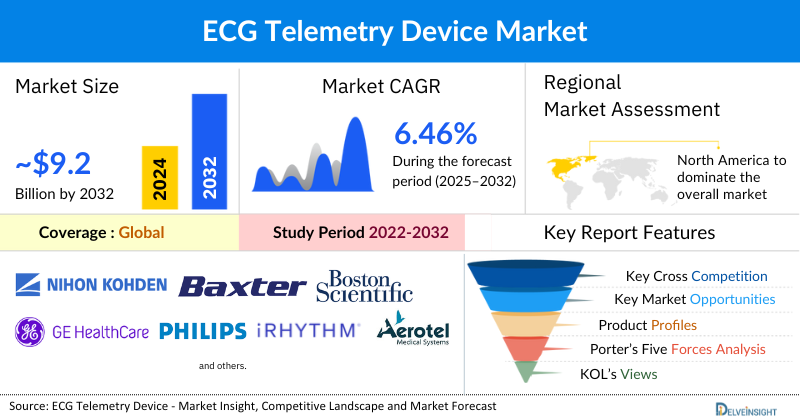
- The global ECG telemetry devices market is expected to increase from USD 5,596.50 million in 2024 to USD 9,202.44 million by 2032, reflecting strong and sustained growth.
- The global ECG telemetry devices market is growing at a CAGR of 6.46% during the forecast period from 2025 to 2032.
- The global ECG telemetry devices market is driven by increasing prevalence of cardiovascular disorders around the globe, increasing risk factors associated with cardiovascular disorders, and growing adoption of remote patient monitoring.
- The leading companies operating in the ECG telemetry devices market include NIHON KOHDEN CORPORATION, Baxter, Boston Scientific Corporation, GE HealthCare, Koninklijke Philips N.V., iRhythm Technologies, Inc., Aerotel Medical Systems Ltd, Medtronic, Mindray Medical India Pvt. Ltd., Medicalgorithmics, Scottcare cardiovascular solution, ZOLL Medical Corporation, CONTEC MEDICAL SYSTEMS CO., LTD., Monarch Meditech, Perlong Medical Equipment Co., Ltd., and others.
- The North America ECG Telemetry Devices market is driven by the high prevalence of cardiovascular diseases, a growing aging population, and the adoption of advanced technologies such as AI-powered wearables, wireless telemetry, and remote monitoring systems. Market growth is further supported by strong healthcare infrastructure, favorable reimbursement frameworks, FDA approvals for innovative devices, and a focus on preventive, patient-centric cardiac care, reinforcing the region’s leading position globally.
- In the product type segment of the ECG telemetry devices market, the Holter monitors category is estimated to account for the largest market share in 2024.
Request for unlocking the report of the @ ECG Telemetry Devices Market Forecast
ECG Telemetry Devices Market Size and Forecasts
|
Report Metrics |
Details |
|
2024 Market Size |
USD 5,596.50 million |
|
2032 Projected Market Size |
USD 9,202.44 million |
|
Growth Rate (2025-2032) |
6.46% CAGR |
|
Largest Market |
North America |
|
Fastest Growing Market |
Asia-Pacific |
|
Market Structure |
Moderately Consolidated |
Factors Contributing to the Growth of the ECG Telemetry Devices Market
- Increasing prevalence of cardiovascular disorders around the globe leading to a surge in the ECG telemetry devices market: Cardiovascular disorders have become one of the most pressing health challenges worldwide, with their incidence continuing to climb steadily across both developed and developing nations. Conditions such as arrhythmias, coronary artery disease, and heart failure often require vigilant, round-the-clock monitoring, which traditional diagnostic tools like periodic ECGs cannot always provide. This unmet need is being fulfilled by ECG telemetry devices, which enable continuous surveillance and rapid detection of life-threatening abnormalities. By offering physicians a stream of real-time cardiac data, these devices help prevent adverse events, reduce hospital readmissions, and improve clinical outcomes. As the global patient pool expands, so too does the reliance on telemetry systems, positioning them as a critical component of modern cardiology.
- Increasing risk factors associated with cardiovascular disorders: The growing burden of cardiovascular disease is not just the result of genetic predispositions but also the outcome of widespread and increasingly prevalent lifestyle-related risk factors. Rising rates of obesity, diabetes, hypertension, physical inactivity, smoking, and elevated stress levels are pushing more individuals into high-risk categories for heart complications. Moreover, demographic shifts, particularly the rapid expansion of the elderly population, further amplify the need for long-term cardiac monitoring, as aging naturally increases susceptibility to cardiovascular dysfunctions. ECG telemetry devices address this risk landscape by enabling continuous assessment of cardiac rhythm and function, offering a proactive approach to managing patients who may not yet display severe symptoms but are vulnerable to sudden complications. This makes them highly valuable in preventive care as well as in chronic disease management.
- Growing adoption of remote patient monitoring: The global healthcare landscape is witnessing a paradigm shift toward remote patient monitoring, fueled by technological advancements, patient preferences, and cost pressures on healthcare systems. ECG telemetry devices are at the forefront of this shift, enabling seamless transmission of real-time cardiac data from patients to healthcare providers through wireless networks and cloud-based platforms. This allows physicians to make timely clinical decisions without requiring patients to remain in hospital settings, thereby reducing hospitalization costs and freeing up critical resources. For patients, the appeal lies in greater comfort, mobility, and the reassurance of being continuously monitored while recovering at home or leading their daily lives. Additionally, the integration of ECG telemetry devices with telehealth platforms and AI-driven analytics enhances diagnostic accuracy and supports predictive care models, making them central to the future of cardiac care delivery.
ECG Telemetry Devices Market Report Segmentation
This ECG telemetry devices market report offers a comprehensive overview of the global ECG Telemetry Devices market, highlighting key trends, growth drivers, challenges, and opportunities. It covers detailed market segmentation of the ECG Telemetry Devices Market by Product Type (Holter Monitors, Resting ECG Devices, Stress ECG Devices, and Others), Type (Wired and Wireless), Application (Arrhythmias, Myocardial Ischemia, and Others), End-Users (Hospitals, Ambulatory Surgical Centers, Home Care Settings, and Others), and Geography. The report provides valuable insights into the competitive landscape, regulatory environment, and market dynamics across major markets, including North America, Europe, and Asia-Pacific. Featuring in-depth profiles of leading industry players and recent product innovations, this report equips businesses with essential data to identify market potential, develop strategic plans, and capitalize on emerging opportunities in the rapidly growing ECG telemetry devices market.
The ECG Telemetry Devices are advanced cardiac monitoring systems designed to continuously record and transmit a patient’s electrocardiogram (ECG) data to healthcare providers in real time. These devices typically consist of wearable sensors or electrodes connected to a telemetry transmitter, enabling remote monitoring of heart rate, rhythm, and other vital cardiac parameters. By facilitating real-time data transmission to hospital monitoring stations or cloud-based platforms, ECG telemetry devices allow for early detection of arrhythmias, ischemic events, and other cardiovascular abnormalities, improving patient outcomes. Widely used in hospitals, ambulatory care, and home settings, these devices play a crucial role in modern cardiac care by combining convenience, accuracy, and continuous surveillance for both acute and chronic cardiac conditions.
The ECG Telemetry Devices market is experiencing robust growth, driven by multiple converging factors. The rising prevalence of cardiovascular disorders such as arrhythmias, heart failure, and ischemic conditions has created a pressing need for continuous and reliable cardiac monitoring solutions beyond traditional diagnostic methods. This demand is further intensified by the growing presence of risk factors, including obesity, diabetes, hypertension, sedentary lifestyles, and the rapid increase in the aging population, all of which heighten susceptibility to cardiac complications and underscore the importance of real-time monitoring. At the same time, the accelerating adoption of remote patient monitoring is transforming cardiac care delivery, as ECG telemetry devices allow seamless transmission of heart data to healthcare providers, reducing hospital stays while ensuring timely medical intervention. Collectively, these drivers are strengthening the role of ECG telemetry devices in both preventive and long-term cardiac care, positioning them as indispensable tools in addressing the global burden of cardiovascular disease.
Get More Insights into the Report @ ECG Telemetry Devices Market Trends
What are the latest ECG Telemetry Devices Market Dynamics and Trends?
The ECG telemetry devices market is experiencing strong and sustained growth, driven by a combination of epidemiological, technological, and healthcare delivery factors. At the forefront is the rising global prevalence of cardiovascular disorders, which represents one of the most significant public health challenges. Conditions such as coronary artery disease, heart failure, and arrhythmias are increasing steadily, fueled by lifestyle-related risk factors including hypertension, diabetes, obesity, smoking, and sedentary behavior. The growing incidence of these risk factors has heightened clinical awareness of the importance of continuous cardiac monitoring, as timely diagnosis and intervention are critical to preventing life-threatening complications such as myocardial infarction, stroke, and sudden cardiac death.
According to DelveInsight's estimates, over half a billion people worldwide are currently living with cardiovascular diseases, highlighting the substantial clinical and economic burden. Moreover, projections indicate that by 2030, more than 12.5 million individuals globally will be affected by atrial fibrillation alone, emphasizing the urgent need for advanced monitoring and diagnostic solutions capable of delivering precise, real-time insights.
Parallel to these epidemiological trends is the increasing adoption of remote patient monitoring (RPM) and telehealth services, which are transforming the traditional cardiac care landscape. ECG telemetry devices are now being deployed not only in hospitals and diagnostic centers but also in outpatient clinics, home care, and ambulatory settings, enabling continuous monitoring without the limitations of conventional hospital-bound systems. This expansion is further accelerated by technological innovations such as wireless telemetry, wearable devices, and AI-powered analytics, which facilitate accurate detection of arrhythmias, ischemic events, and other cardiac abnormalities. These advancements improve patient comfort, allow for real-time data transmission to healthcare providers, and enable proactive clinical interventions, thereby reducing hospital readmissions and improving overall outcomes.
Therefore, the stated factors, the escalating disease burden, growing prevalence of risk factors, expanding telehealth adoption, and rapid technological innovation are synergistically driving widespread market adoption. ECG telemetry devices are increasingly being recognized as essential tools in modern cardiovascular care, bridging the gap between preventive monitoring, early detection, and timely clinical intervention. As healthcare systems globally continue to emphasize patient-centric care and value-based outcomes, the demand for these devices is expected to grow robustly, solidifying their position as a cornerstone of both hospital-based and remote cardiac care.
Despite the increasing adoption of ECG Telemetry Devices, the market faces several challenges that could impede its growth. One significant limitation is the technological constraints associated with these devices, including issues with signal accuracy, limited battery life, and the need for frequent calibration, which can affect reliability and continuous monitoring. Another major concern involves data security and privacy, as sensitive patient cardiac data transmitted via wireless networks or cloud platforms is vulnerable to cyberattacks, unauthorized access, and regulatory scrutiny. Together, these factors pose obstacles for manufacturers, complicating product development and market expansion while influencing the overall competitive landscape of the ECG telemetry industry.
ECG Telemetry Devices Market Segment Analysis
ECG Telemetry Devices Market by Product Type (Holter Monitors, Resting ECG Devices, Stress ECG Devices, and Others), Type (Wired and Wireless), Application (Arrhythmias, Myocardial Ischemia, and Others), End-Users (Hospitals, Ambulatory Surgical Centers, Home Care Settings, and Others), and Geography (North America, Europe, Asia-Pacific, and Rest of the World)
By Product Type: Holter monitors Category Dominates the Market
In 2024, the Holter monitors and category accounted for a significant share of approximately 35%. The Holter monitors market is witnessing robust growth, fueled by the rising instances of cardiovascular disorders, the need for continuous rhythm surveillance, and the shift toward ambulatory patient monitoring. Holter monitors remain a vital diagnostic tool for capturing 24–48 hours of uninterrupted heart rhythm data, enabling the detection of intermittent arrhythmias, silent ischemia, palpitations, and syncope that may not be visible during short-term ECG assessments.
The market is further accelerated by innovations in portability, wireless connectivity, and AI-driven analytics that enhance diagnostic yield and support remote patient care. Key products shaping this segment include Philips DigiTrak XT, which offers lightweight, patient-friendly monitoring with extended memory capacity; GE Healthcare’s SEER 1000, designed for streamlined setup, secure data transfer, and high-fidelity recordings; iRhythm’s Zio XT patch, a discreet wearable device providing up to 14 days of continuous monitoring with cloud-based analysis; and BardyDx’s Carnation Ambulatory Monitor (CAM patch), which delivers superior P-wave clarity in a patch-based form factor optimized for arrhythmia detection.
Collectively, these advances in wearability, accuracy, and connectivity are expanding adoption across hospitals, outpatient centers, and telehealth platforms, firmly positioning Holter monitors as a cornerstone of long-term cardiac diagnostics and preventive cardiology.
By Type: Wireless Dominates the Market
The wireless category is the dominant force in the ECG telemetry devices market. In 2024, wireless accounted for a significant share of approximately 54%. The Wireless devices segment has established itself as a key growth driver in the ECG Telemetry Devices market, owing to increasing demand for mobility, remote patient monitoring, and integration with telehealth platforms.
Unlike traditional wired systems, wireless ECG devices allow patients to undergo continuous cardiac monitoring in ambulatory settings or at home, enabling real-time transmission of ECG data to healthcare providers. This capability is particularly valuable for detecting intermittent arrhythmias, monitoring post-operative patients, and managing chronic cardiovascular conditions without requiring prolonged hospital stays. Technological innovations, including compact wearable designs, AI-powered arrhythmia detection, and cloud connectivity, are further enhancing the accuracy, convenience, and usability of wireless devices.
Additionally, the rise of home-based care, growing patient awareness, and supportive telemedicine initiatives are accelerating adoption across outpatient clinics and home care settings. While wired ECG devices continue to hold the largest market share in hospitals and diagnostic centers, wireless systems are emerging as a key growth driver in the Resting ECG Devices market, addressing the evolving needs of patient-centric and remote cardiac care.
By Application: Arrhythmias Dominate the Market
The arrhythmias category is the dominant force in the ECG telemetry devices market. The arrhythmias category is significantly boosting the ECG telemetry devices market, as these conditions represent one of the most common and clinically critical cardiac disorders worldwide. Among them, atrial fibrillation (AFib) holds the largest share due to its high and rising prevalence, particularly in aging populations, with millions of patients requiring continuous monitoring to prevent serious complications such as stroke, heart failure, and sudden cardiac arrest. Unlike other conditions that can often be detected through standard hospital-based ECGs, arrhythmias are frequently intermittent and unpredictable, making continuous and real-time rhythm monitoring through telemetry devices essential for timely diagnosis and intervention. The growing integration of remote patient monitoring and telehealth services further amplifies demand, as wearable ECG telemetry devices enable long-term, at-home tracking and immediate reporting of abnormal rhythms.
Moreover, advancements such as AI-powered algorithms, wearable patches, and wireless telemetry systems have enhanced diagnostic accuracy, user convenience, and clinical decision-making, reinforcing the role of telemetry in arrhythmia management. Collectively, the high disease burden, need for proactive monitoring, and rapid technological progress position arrhythmias as the leading application area driving growth in the ECG Telemetry Devices market.
By End-Users: Hospitals Dominate the Market
The hospitals category represents a critical application area for ECG telemetry devices, driven by the need for continuous, accurate, and large-scale cardiac monitoring in clinical settings. Hospitals serve as the primary sites for managing high-risk cardiovascular patients, post-operative monitoring, and emergency care, where uninterrupted telemetry plays a vital role in detecting arrhythmias, ischemic events, and other life-threatening conditions. ECG telemetry devices used in hospitals range from bedside monitors and central telemetry stations to advanced wearable and wireless systems that ensure mobility without compromising monitoring accuracy.
The increasing prevalence of cardiovascular diseases, rising hospital admissions for cardiac conditions, and the growing demand for early detection and timely intervention are key factors propelling growth in this segment. In addition, the integration of AI-driven analytics, cloud connectivity, and automated alert systems is enhancing diagnostic accuracy, reducing response times, and improving patient outcomes in critical care environments. Consequently, the hospital segment remains a cornerstone of the ECG telemetry devices market, underscoring the indispensable role of continuous cardiac monitoring in modern clinical care.
ECG Telemetry Devices Market Regional Analysis
North America ECG Telemetry Devices Market Trends
North America, led by the United States, dominates the global ECG telemetry devices market, accounting for approximately 43% of the total market share in 2024. The North America ECG telemetry devices market is marked by the high prevalence of cardiovascular diseases, a large aging population, and the early adoption of advanced technologies such as AI-powered wearables, wireless telemetry, and remote monitoring systems. Strong healthcare infrastructure, supportive reimbursement frameworks, and a steady stream of FDA approvals for innovative devices further reinforce market growth. The presence of leading market players, combined with an increasing focus on preventive healthcare and patient-centric monitoring, continues to solidify the region’s dominant position.
According to the DelveInsight analysis (2024), around 4.0% of U.S. adults were diagnosed with coronary heart disease, while by 2023, an estimated 12.2 million people were living with atrial fibrillation. Both conditions significantly contribute to heart failure, stroke, and other life-threatening complications, underscoring the critical demand for advanced cardiac monitoring devices to improve survival rates and long-term patient outcomes. Awareness initiatives such as American Heart Month, led by organizations including the American Heart Association (AHA) and the CDC, further highlight the importance of prevention, early detection, continuous monitoring, and regular screenings, thereby accelerating device adoption across hospitals and home care settings.
Product development remains a key driver in shaping the competitive landscape. In November 2024, Fourth Frontier received 510(k) clearance for its Frontier X Plus, a chest-worn, single-lead continuous ECG monitor. The device is designed to wirelessly transmit ECG data to remote dashboards and employs advanced algorithms to classify cardiac rhythms, including bradycardia, tachycardia, normal sinus rhythm, and atrial fibrillation. Such innovations highlight the industry’s shift toward compact, user-friendly, and AI-enabled monitoring solutions that address both clinical and lifestyle needs.
Collectively, the combination of high disease prevalence, supportive regulatory frameworks, strong awareness campaigns, and continuous product innovation is creating a highly conducive environment for the North America ECG Telemetry Devices market. With robust expansion anticipated, the region is expected to remain at the forefront of global adoption, driven by its integration of advanced technology and emphasis on improving patient outcomes.
Europe ECG Telemetry Devices Market Trends
The Europe ECG Telemetry Devices market is experiencing steady growth, supported by a strong healthcare infrastructure, widespread adoption of digital health solutions, and increasing emphasis on preventive cardiac care. The region has a high prevalence of cardiovascular disorders, particularly among the aging population, which is driving demand for continuous monitoring solutions across both hospital and home care settings. Countries such as Germany, the U.K., France, and Italy are leading in terms of adoption, fueled by advanced clinical practices, robust reimbursement frameworks, and growing integration of telehealth services. The market is also witnessing a rising shift toward wearable and wireless telemetry devices that support patient mobility and long-term monitoring, aligning with Europe’s broader push for patient-centric care. Furthermore, regulatory support for medical technology innovation, combined with significant investments in research and development, is encouraging the introduction of AI-powered diagnostic tools and cloud-based platforms for remote monitoring. At the same time, healthcare providers across the region are increasingly leveraging ECG telemetry devices to reduce hospital readmissions and optimize resource utilization, further strengthening adoption. With a balance of established multinational companies and innovative startups, Europe remains a mature yet dynamic market where technological advancements and aging demographics are the key growth catalysts.
Asia-Pacific ECG Telemetry Devices Market Trends
The Asia-Pacific ECG telemetry devices market is witnessing rapid expansion, reflecting a robust CAGR of 7.58% during the forecast period from 2025 to 2032, driven by a combination of rising cardiovascular disease prevalence, expanding healthcare infrastructure, and increasing awareness about early diagnosis and continuous cardiac monitoring. Countries such as China, India, and Japan are experiencing a surge in demand for advanced cardiac care technologies, driven by large patient populations, rapid urbanization, and lifestyle-related risk factors like diabetes, hypertension, and obesity. The region is also benefiting from growing investments in digital health and telemedicine platforms, which are accelerating the adoption of remote cardiac monitoring solutions, particularly in rural and underserved areas. Local and international manufacturers are increasingly introducing cost-effective, compact, and wearable telemetry devices tailored to the price-sensitive Asian markets, making advanced cardiac monitoring more accessible.
Furthermore, government initiatives to strengthen healthcare delivery, coupled with rising healthcare expenditure and private-sector investments, are supporting market expansion. At the same time, the integration of artificial intelligence and mobile health applications is enhancing diagnostic accuracy and patient engagement, positioning Asia-Pacific as one of the fastest-growing and most promising regions for ECG telemetry device adoption.
Who are the major players in the ECG Telemetry Devices Market?
The following are the leading companies in the ECG telemetry devices market. These companies collectively hold the largest market share and dictate industry trends.
- NIHON KOHDEN CORPORATION
- Baxter
- Boston Scientific Corporation
- GE HealthCare
- Koninklijke Philips N.V.
- iRhythm Technologies, Inc.
- Aerotel Medical Systems Ltd
- Medtronic
- Mindray Medical India Pvt. Ltd.
- Medicalgorithmics
- Scottcare cardiovascular solution
- ZOLL Medical Corporation
- CONTEC MEDICAL SYSTEMS CO., LTD.
- Monarch Meditech
- Perlong Medical Equipment Co., Ltd.
How is the competitive landscape shaping the ECG Telemetry Devices Market?
The ECG telemetry devices market is moderately concentrated, with a few leading multinational companies dominating global revenues while a growing number of mid-sized and emerging players are carving out space with specialized technologies and regional strengths. Established leaders such as Philips Healthcare, GE Healthcare, Medtronic, and Nihon Kohden hold strong positions owing to their extensive product portfolios, global distribution networks, and continuous investment in R&D. These companies are increasingly prioritizing innovation in areas such as AI-enabled arrhythmia detection, wireless data transmission, cloud integration, and wearable formats to deliver more accurate, reliable, and user-friendly solutions. Alongside them, specialized firms and startups are entering the market with compact, cost-effective, and patient-centric devices, particularly targeting home-based care and ambulatory monitoring segments. Strategic collaborations, acquisitions, and partnerships remain central to competitive strategies, as players seek to expand technological capabilities, strengthen data analytics platforms, and penetrate emerging markets.
Moreover, competition is intensifying around data privacy and cybersecurity compliance, interoperability with telehealth platforms, and differentiation through advanced software-driven analytics, all of which are becoming critical factors for success. While larger companies benefit from economies of scale and brand trust, smaller innovators are reshaping the competitive dynamics by introducing disruptive solutions tailored to underserved populations and regional healthcare demands. As a result, the market is marked by both consolidation at the top and continuous innovation at the base, creating a dynamic environment where leadership depends not only on technological advancement but also on affordability, clinical reliability, and the ability to adapt to evolving models of patient care.
|
Report Metrics |
Details |
|
Study Period |
2022 to 2032 |
|
Base Year |
2024 |
|
Forecast Period |
2025 to 2032 |
|
ECG Telemetry Devices Market CAGR |
6.46% |
|
Key Companies in the ECG Telemetry Devices Market |
NIHON KOHDEN CORPORATION, Baxter, Boston Scientific Corporation, GE HealthCare, Koninklijke Philips N.V., iRhythm Technologies, Inc., Aerotel Medical Systems Ltd, Medtronic, Mindray Medical India Pvt. Ltd., Medicalgorithmics, Scottcare cardiovascular solution, ZOLL Medical Corporation, CONTEC MEDICAL SYSTEMS CO., LTD., Monarch Meditech, Perlong Medical Equipment Co., Ltd., and others |
|
ECG Telemetry Devices Market Segments |
by Product Type, by Type, by Application, by End-Users, and by Geography |
|
ECG Telemetry Devices Regional Scope |
North America, Europe, Asia Pacific, Middle East, Africa, and South America |
|
ECG Telemetry Devices Country Scope |
U.S., Canada, Mexico, Germany, United Kingdom, France, Italy, Spain, China, Japan, India, Australia, South Korea, and key Countries |
ECG Telemetry Devices Market Segmentation
ECG Telemetry Devices by Product Type Exposure
- Holter Monitors
- Resting ECG Devices
- Stress ECG Devices
- Others
ECG Telemetry Devices by Type Exposure
- Wired
- Wireless
- ECG Telemetry Devices by Application Exposure
- Arrhythmias
- Myocardial Ischemia
- Others
ECG Telemetry Devices End-Users Exposure
- Hospitals
- Ambulatory Surgical Centers
- Home Care Settings
- Others
ECG Telemetry Devices Geography Exposure
- North America ECG Telemetry Devices Market
- United States ECG Telemetry Devices Market
- Canada ECG Telemetry Devices Market
- Mexico ECG Telemetry Devices Market
- Europe ECG Telemetry Devices Market
- United Kingdom ECG Telemetry Devices Market
- Germany ECG Telemetry Devices Market
- France ECG Telemetry Devices Market
- Italy ECG Telemetry Devices Market
- Spain ECG Telemetry Devices Market
- Rest of Europe ECG Telemetry Devices Market
- Asia-Pacific ECG Telemetry Devices Market
- China ECG Telemetry Devices Market
- Japan ECG Telemetry Devices Market
- India ECG Telemetry Devices Market
- Australia ECG Telemetry Devices Market
- South Korea ECG Telemetry Devices Market
- Rest of Asia-Pacific ECG Telemetry Devices Market
- Rest of the World ECG Telemetry Devices Market
- South America ECG Telemetry Devices Market
- Middle East ECG Telemetry Devices Market
- Africa ECG Telemetry Devices Market
ECG Telemetry Devices Market Recent Industry Trends and Milestones (2022-2025)
|
Category |
Key Developments |
|
ECG Telemetry Devices Product Launches |
Philips launched the IntelliVue MX40 wearable telemetry monitor for continuous cardiac monitoring; GE Healthcare introduced the CARESCAPE Telemetry solution with enhanced remote monitoring capabilities. |
|
ECG Telemetry Devices Regulatory Approvals |
FDA granted clearance for BioTelemetry’s Mobile Cardiac Telemetry system with AI-enabled arrhythmia detection; CE mark obtained for AliveCor KardiaMobile 6L for six-lead ECG monitoring |
|
Partnerships in the ECG Telemetry Devices Market |
Hillrom (now Baxter) collaborated with Biofourmis to integrate predictive analytics into hospital telemetry systems; Medtronic partnered with Eko Devices to enhance remote cardiac monitoring solutions. |
|
Acquisitions in the ECG Telemetry Devices Market |
Philips acquired BioTelemetry, expanding its remote cardiac monitoring portfolio; iRhythm acquired Arcadia Science to strengthen its AI-driven ECG analytics capabilities. |
|
Company Strategy |
GE Healthcare is focusing on AI-enabled telemetry solutions for real-time cardiac risk assessment; Philips is investing in remote patient monitoring ecosystems and cloud-based telemetry platforms; Medtronic is expanding wearable cardiac monitoring devices. |
|
Setbacks in the ECG Telemetry Devices Market |
Supply chain issues are causing delays in telemetry device production; cybersecurity concerns over wireless ECG data transmission; occasional false-positive arrhythmia alerts leading to device recalls |
|
Emerging Technology |
Increasing adoption of AI-powered arrhythmia detection; wearable continuous ECG monitors with cloud integration; development of compact, multi-lead portable telemetry devices; integration with telehealth platforms for remote patient management |
Impact Analysis
AI-Powered Innovations and Applications:
AI-powered innovations are rapidly transforming the ECG telemetry devices market by enhancing the accuracy, efficiency, and clinical utility of cardiac monitoring. Advanced algorithms integrated into these devices enable real-time analysis of heart rhythms, early detection of arrhythmias, and predictive insights that can guide timely medical interventions. Machine learning models also facilitate personalized monitoring, allowing devices to adapt to individual patient patterns and reduce false alarms. Beyond diagnostics, AI applications are improving workflow efficiency for healthcare providers by automating data interpretation, generating actionable reports, and integrating seamlessly with electronic health records.
Additionally, AI-driven remote monitoring solutions are expanding the reach of cardiac care, enabling continuous surveillance of patients outside traditional hospital settings. Thus, the incorporation of AI not only strengthens the clinical performance of ECG telemetry devices but also supports proactive patient management, reduces healthcare costs, and paves the way for more connected, data-driven cardiac care.
U.S. Tariff Impact Analysis on the ECG Telemetry Devices Market:
The imposition of U.S. tariffs has had a notable impact on the ECG telemetry devices market, influencing both cost structures and supply chain dynamics. Tariffs on imported medical components and finished devices have led to increased production costs for manufacturers who rely on overseas suppliers, which in turn has affected pricing strategies and profit margins. For domestic companies, these tariffs have created a mixed scenario: while some benefit from reduced competition from imported devices, others face higher costs for raw materials and components sourced internationally.
Additionally, the increased costs are often passed on to healthcare providers, potentially slowing adoption rates in cost-sensitive segments such as smaller clinics and outpatient centers. The tariffs have also prompted several market players to explore alternative sourcing strategies, including nearshoring and diversifying supplier networks, to mitigate reliance on tariff-affected imports. Thus, the U.S. ECG telemetry devices market continues to grow due to rising cardiovascular disease prevalence and technological advancements; tariff policies remain a significant factor shaping market pricing, supply chains, and strategic planning for both domestic and international manufacturers.
How This Analysis Helps Clients
- Cost Management: By understanding the tariff landscape, clients can anticipate cost increases and adjust pricing strategies accordingly, ensuring profitability.
- Supply Chain Optimization: Clients can identify alternative sourcing options and diversify their supply chains to reduce dependency on high-tariff regions, enhancing resilience.
- Regulatory Navigation: Expert guidance on navigating the evolving regulatory environment helps clients maintain compliance and avoid potential legal challenges.
- Strategic Planning: Insights into tariff impacts enable clients to make informed decisions about manufacturing locations, partnerships, and market entry strategies.
Startup Funding & Investment Trends
|
Company Name |
Total Funding |
Main Products |
Stage of Development |
Core Technology |
|
iRhythm Technologies (USA) |
USD 500M+ |
Zio® Patch – wearable ECG monitoring patch |
Late clinical/market approval stage |
Continuous ambulatory ECG monitoring with AI-based arrhythmia detection |
Key takeaways from the ECG Telemetry Devices market report study
- Market size analysis for the current ECG telemetry devices market size (2024), and market forecast for 8 years (2025 to 2032)
- Top key product/technology developments, mergers, acquisitions, partnerships, and joint ventures happened over the last 3 years.
- Key companies dominating the ECG telemetry devices market.
- Various opportunities available for the other competitors in the ECG telemetry devices market space.
- What are the top-performing segments in 2024? How these segments will perform in 2032?
- Which are the top-performing regions and countries in the current ECG telemetry devices market scenario?
- Which are the regions and countries where companies should have concentrated on opportunities for the ECG telemetry devices market growth in the future?

