Epidermal Growth Factor Receptor-Non Small Cell Lung Cancer (EGFR-NSCLC) Market Summary
Epidermal Growth Factor Receptor (EGFR) Non-small Cell Lung Cancer (NSCLC) Market Insights and Trends
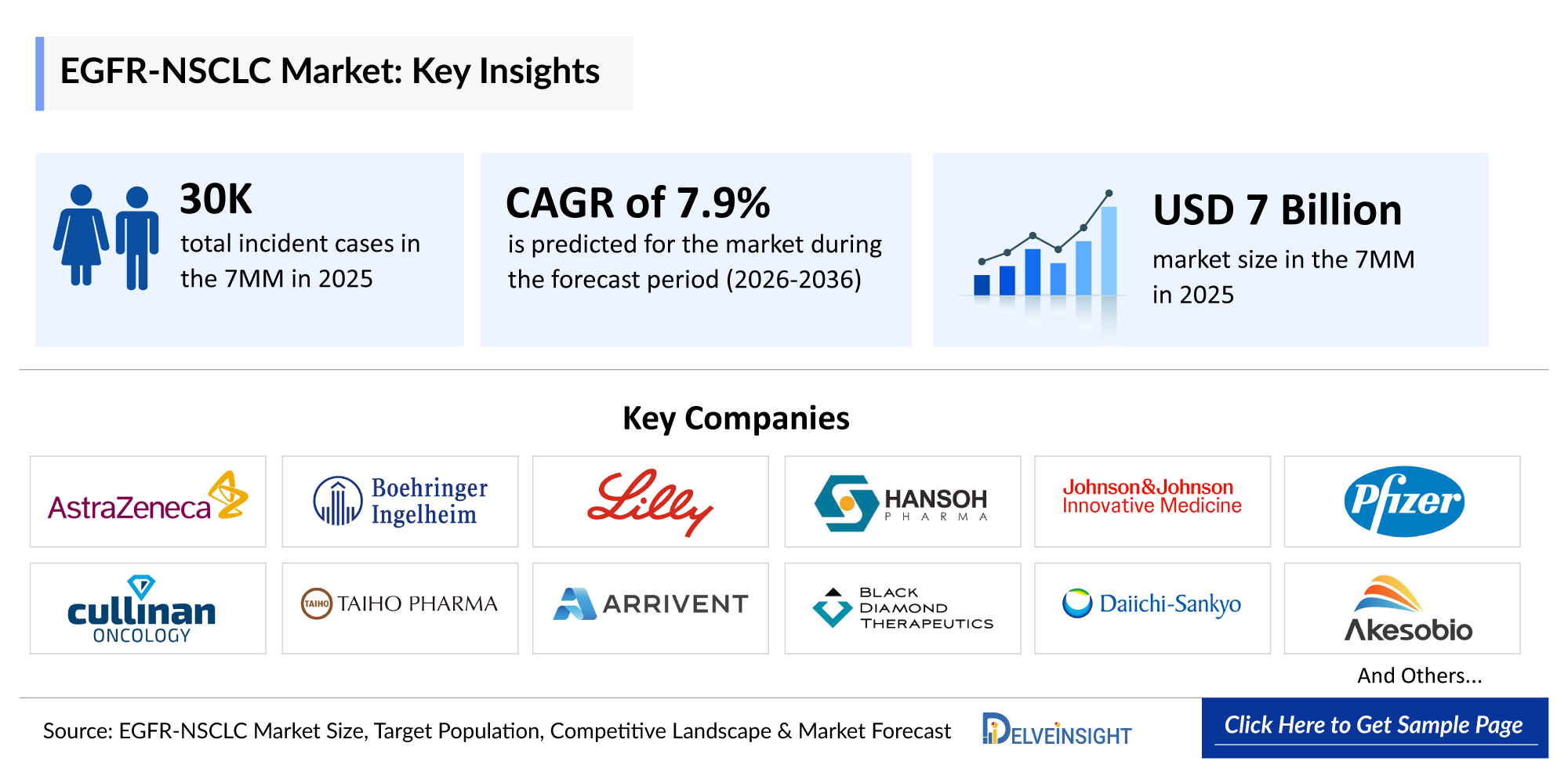
- According to DelveInsight’s analysis, EGFR NSCLC market size was found to be ~USD 6,600 million in the leading markets (the United States, the EU4 (Germany, France, Italy, and Spain), the United Kingdom, and Japan) in 2025.
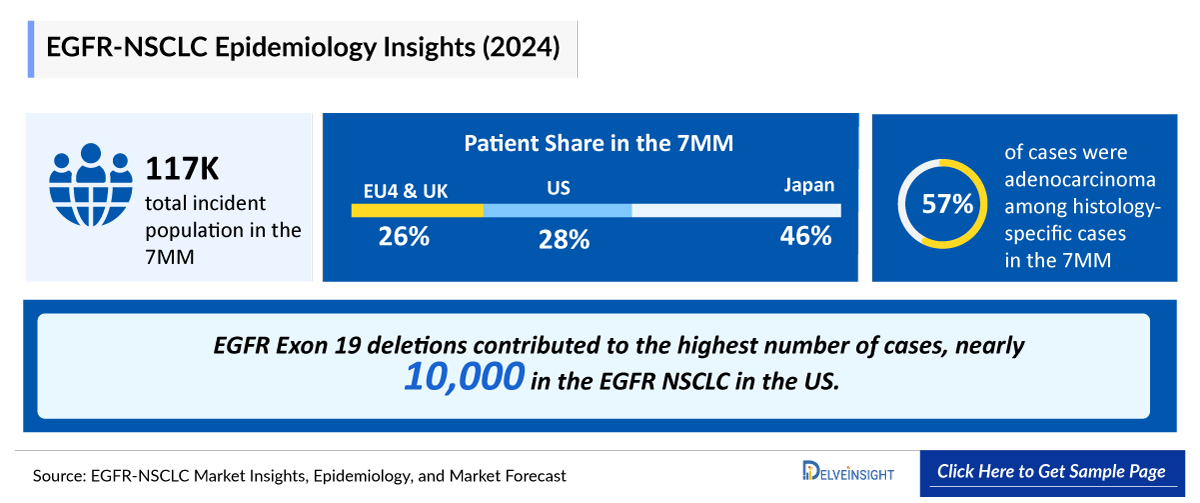
- EGFR-mutated NSCLC is more prevalent in Asian counties such as Japan, with mutation rates estimated at 45%, compared to 15% in Western countries. Majorly due to genetic predisposition, lower smoking rates among Asian patients, and distinct environmental factors that contribute to a higher likelihood of oncogenic driver mutations.
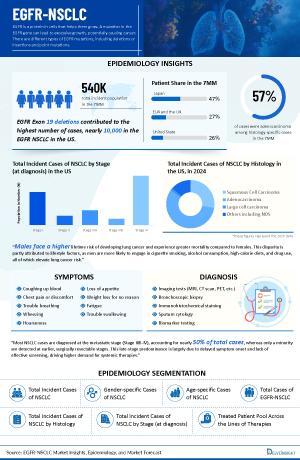
- Males face a higher lifetime risk of developing lung cancer and experience greater mortality compared to females. This disparity is partly attributed to lifestyle factors, as men are more likely to engage in cigarette smoking, alcohol consumption, high-calorie diets, and drug use, all of which elevate lung cancer risk.
- NSCLC is increasingly becoming a biomarker-driven market, and EGFR is one of the most profitable biomarker segments, led by blockbuster therapies such as osimertinib (TAGRISSO), which now generates nearly USD 6 billion annually. The prevalence of patients with this resistance mutation has increased since TAGRISSO was authorized for use in the first line. The post-TAGRISSO setting is one of the highest areas of unmet need.
- The ADC space in EGFR NSCLC awaits more launches down the road, with several compounds under development in pivotal studies. The ADC space in EGFR NSCLC awaits more launches down the road, with several compounds under development in pivotal studies. After the approval of Dato-Dxd, leading pharma players drive ADC innovation with agents such as izalontamab brengitecan (BMS), telisotuzumab adizutecan (AbbVie), and sacituzumab tirumotecan (Merck).
- Convergence of TKIs, ADCs, bispecifics, CDAC, and gene-therapy combinations signals a densely crowded and competitive future, where differentiation by efficacy, resistance coverage, administration route, and combination potential will define market winners.
- From last few years, exon 20 insertions EGFR mutations have received the most attention and this space has become competitive. In EGFR NSCLC, uncommon/atypical EGFR mutations (G719X, S768I, as well as PACC mutations), represent another frontier in this segment.
Epidermal Growth Factor Receptor (EGFR) Non-small Cell Lung Cancer (NSCLC) Market Size and Forecast
- 2025 EGFR NSCLC Market Size: ~USD 6,600 million
- 2036 Projected EGFR NSCLC Market Size: ~USD 14,200 million
- EGFR NSCLC Growth Rate (2026–2036): 7.3% CAGR
DelveInsight's ‘Epidermal Growth Factor Receptor (EGFR) Non-small Cell Lung Cancer (NSCLC) – Market Insights, Epidemiology and Market Forecast – 2036’ report delivers an in-depth understanding of the EGFR NSCLC, historical and forecasted epidemiology, as well as the EGFR NSCLC market trends in the United States, EU4 (Germany, Spain, Italy, and France) and the United Kingdom, and Japan.
The Epidermal Growth Factor Receptor (EGFR) Non-small Cell Lung Cancer (NSCLC) market report delivers a comprehensive analysis of the current treatment landscape, including standards of care, clinical practices, and evolving therapeutic algorithms. It evaluates, EGFR NSCLC patient burden trends, revenue & market share dynamics, peak patient share & therapy uptake analysis, and provides an in-depth market size assessment, and growth rate projections (Historical & Forecast 2022–2036) across global regions. The report highlights key unmet medical needs in EGFR NSCLC and maps the competitive and clinical landscape to uncover high-value opportunities, providing a clear outlook on future market growth potential.
|
Study Period |
2022–2036 |
|
Historical Year |
2022–2025 |
|
Forecast Period |
2026–2036 |
|
Base Year |
2026 |
|
Geographies Covered |
|
|
EGFR NSCLC Market CAGR (Study period/Forecast period) |
7.3% (2026-2036) |
|
EGFR NSCLC Epidemiology Segmentation Analysis |
Patient Burden Assessment
|
|
EGFR NSCLC Companies |
|
|
EGFR NSCLC Therapies |
|
|
EGFR NSCLC Market |
Segmented by
|
|
Analysis |
|
Factors Affecting the EGFR-NSCLC Market Growth
- Rising Prevalence of EGFR-Mutated NSCLC: The increasing global incidence of Non-Small Cell Lung Cancer (NSCLC), which accounts for nearly 85% of all lung cancer cases, is a primary driver of the EGFR-NSCLC market. A significant proportion of NSCLC patients harbor EGFR mutations, particularly in Asian populations. The growing patient pool directly increases the demand for targeted EGFR therapies and precision diagnostics.
- Advancements in Targeted Therapies: The introduction of first-, second-, and third-generation EGFR tyrosine kinase inhibitors (TKIs) has significantly improved patient outcomes compared to conventional chemotherapy. Continuous innovation in next-generation EGFR inhibitors designed to overcome resistance mutations is expanding treatment options and driving market growth.
- Growing Adoption of Precision Medicine: The increasing use of molecular diagnostics, including next-generation sequencing (NGS) and liquid biopsy, has enhanced the identification of EGFR mutations. Improved diagnostic capabilities enable personalized treatment strategies, boosting the uptake of targeted therapies and supporting market expansion.
- Expanding Clinical Research and Regulatory Approvals: Ongoing clinical trials evaluating novel EGFR inhibitors and combination regimens are strengthening the treatment landscape. Regulatory approvals for new therapies and expanded indications are further accelerating market penetration and commercial growth.
- Increasing Healthcare Awareness and Infrastructure: Improved healthcare infrastructure, better access to oncology care, and rising awareness among physicians and patients about biomarker-driven treatments are positively influencing market demand, especially in emerging economies.
- High Cost of Targeted Therapies: Despite clinical advancements, the high cost of EGFR-targeted therapies remains a major restraint. Limited reimbursement coverage and affordability issues in low- and middle-income countries can restrict treatment adoption and overall market growth.
- Development of Drug Resistance: Acquired resistance to EGFR-TKIs, including secondary mutations, poses a significant clinical and commercial challenge. Resistance reduces long-term treatment effectiveness and necessitates the development of new therapeutic strategies.
- Competitive Treatment Landscape: The presence of alternative treatment approaches, including immunotherapies, chemotherapy, and other targeted therapies, intensifies market competition. Companies must continuously innovate and differentiate their products to maintain and grow market share.
- Growth Opportunities in Emerging Markets: Rapid improvements in healthcare access, diagnostic capabilities, and reimbursement frameworks in Asia-Pacific and other developing regions present substantial growth opportunities for the EGFR-NSCLC market.
Epidermal Growth Factor Receptor (EGFR) Non-small Cell Lung Cancer (NSCLC) Understanding and Treatment Algorithm
Epidermal Growth Factor Receptor (EGFR) Non-small Cell Lung Cancer (NSCLC) Overview and Diagnosis
EGFR is a protein in cells that helps them grow. A mutation in the gene for EGFR can make it grow too much, which can cause cancer. There are different types of EGFR mutations, including deletions or insertions and point mutations. In test results, individuals may be identified as having an EGFR 19 deletion or an EGFR L858R point mutation, which are the most common types of EGFR mutations. These mutations are typically treated the same way. Amongst the EGFR mutations that are tested for in lung cancer, a few rare types are treated differently than the more common EGFR mutations. The major example of this in lung cancer is EGFR exon 20 insertions. This is a type of EGFR mutation that does not respond to the typical treatment for EGFR-positive lung cancer, which are called tyrosine kinase inhibitors, or TKIs.
In general, there are two ways to detect EGFR mutations. The best way is through comprehensive next-generation sequencing (NGS). This type of testing places tissue from a patient’s tumor (gathered from a biopsy) in a machine that looks for a large number of possible biomarkers at one time. There may be some situations where a patient cannot undergo the biopsy needed to perform NGS, so liquid biopsy is recommended. A liquid biopsy can look for certain biomarkers in a patient’s blood.
Further details are provided in the report.
Current Epidermal Growth Factor Receptor (EGFR) Non-small Cell Lung Cancer (NSCLC) Treatment Landscape
Treatment of EGFR-mutated NSCLC mainly involves targeted therapies called EGFR tyrosine kinase inhibitors (TKIs), which block the abnormal EGFR signaling that drives tumor growth. Commonly used TKIs include first-, second-, and third-generation agents such as osimertinib, erlotinib, and afatinib. For patients with specific resistant mutations like EGFR exon 20 insertions, alternative targeted therapies or newer agents may be used instead of standard TKIs. In some cases, chemotherapy, immunotherapy, or combination therapies may also be considered depending on the mutation type and disease stage.
Further details related to country-based variations are provided in the report.
Epidermal Growth Factor Receptor (EGFR) Non-small Cell Lung Cancer (NSCLC) Unmet Needs
The section “unmet needs of Epidermal Growth Factor Receptor (EGFR) Non-small Cell Lung Cancer (NSCLC)” outlines the critical gaps between the current state of patient care, diagnosis, and the ideal & effective management of the disease. It highlights the obstacles experienced by patients, clinicians, and researchers and identifies potential solutions for future progress.
- Problem of Resistance Development
- CNS Metastases and Limited Brain Penetration
- Limited Access and Affordability
- Therapy Gaps after Targeted Therapy Progression, and others…..
Note: Comprehensive unmet needs insights in EGFR NSCLC and their strategic implications are provided in the full report.
Epidermal Growth Factor Receptor (EGFR) Non-small Cell Lung Cancer (NSCLC) Epidemiology
Key Findings from EGFR NSCLC Epidemiological Analysis and Forecast
- According to DelveInsight’s estimates, the total number of incident cases of NSCLC in the 7MM was nearly 540,000 cases in 2025 and is projected to increase during the forecasted period.
- The total number of incident cases of NSCLC in the United States was nearly 202,900 in 2025.
- In 2025, adenocarcinoma (~116,000 cases) accounted for the largest share of incident NSCLC cases in the United States, followed by squamous cell carcinoma, while large cell carcinoma comprised the smallest proportion.
- The total number of cases of EGFR NSCLC in the United States was estimated to be nearly 30,400 in 2025.
- NSCLC shows a slight male predominance and is most common in individuals aged =65 years. However, cases among people younger than 65 are increasing, likely due to changing smoking patterns, environmental and occupational exposures, air pollution, and improved early diagnostic detection.
Epidermal Growth Factor Receptor (EGFR) Non-small Cell Lung Cancer (NSCLC) Drug Analysis & Competitive Landscape
The EGFR NSCLC drug chapter provides a detailed, market-focused review of approved therapies and the emerging pipeline across Phase I/II–II clinical trials. It covers mechanism of action, clinical trial data, regulatory approvals, patents, collaborations, strategic partnerships upcoming Key catalyst for each therapy, along with their advantages, limitations, and recent developments. This section offers critical insights into the EGFR NSCLC treatment landscape, supporting market assessment, competitive analysis, and growth forecasting for the EGFR NSCLC therapeutics market.
Approved Therapies for EGFR NSCLC
Osimertinib (TAGRISSO): AstraZeneca
Osimertinib is a prescription medicine for adults with NSCLC with abnormal EGFR genes. It is used to prevent recurrence after surgery, as a first-line treatment for metastatic NSCLC, or when previous EGFR TKI treatments have failed. Osimertinib is a kinase inhibitor that targets mutant EGFR forms (T790M, L858R, exon 19 deletions) at lower concentrations than wild-type EGFR. In November 2015, it was initially approved 80mg once-daily tablets for the treatment of patients with metastatic EGFR T790M mutation-positive NSCLC. In February 2024, the FDA approved osimertinib with platinum-based chemotherapy for patients with locally advanced or metastatic NSCLC whose tumors have EGFR exon 19 deletions or exon 21 L858R mutations.
|
EGFR NSCLC Marketed/Approved Therapies | ||||||
|
Drug/Therapy |
Company |
Indication |
Molecule Type |
MoA |
RoA |
Marketed Region (First approval) |
|
Osimertinib (TAGRISSO) |
AstraZeneca |
EGFR T790M mutation-positive metastatic NSCLC |
Small molecule |
EGFR-TKi |
Oral |
US: Conditional approval: November 2015, Full approval: March 2017 |
|
Sunvozertinib (ZEGFROVY) |
Dizal Pharmaceutical |
EGFR exon 20 insertion NSCLC |
Small molecule |
Irreversible EGFR inhibitor |
Oral |
US: July 2025 |
Epidermal Growth Factor Receptor (EGFR) Non-small Cell Lung Cancer (NSCLC) Pipeline Analysis
Osimertinib: Cullinan Oncology/Taiho Pharmaceutical
Zipalertinib (CLN-081/TAS6417) is a novel, orally bioavailable, irreversible EGFR inhibitor that, based on preclinical models, selectively and potently targets cells expressing EGFRex20ins mutations while relatively sparing cells expressing wild-type EGFR to avoid the toxicities associated with inhibition of wild-type EGFR. This was rationally designed with a distinct chemical scaffold to be highly selective for mutant vs. wild-type EGFR and to avoid inhibiting the closely related receptor human epidermal growth factor receptor 2 (HER2). Zipalertinib demonstrates the potential to become a new standard of care to treat non-small cell lung cancer harboring EGFRex20ins mutations.
|
Competitive Landscape of Pipeline Drugs | ||||||
|
Drug Name |
Company |
Highest Phase |
Indication |
RoA |
MoA |
Anticipated Launch in the US |
|
Zipalertinib (CLN-081) |
Cullinan Oncology/ Taiho Pharmaceutical |
III |
EGFR Exon 20 ins NSCLC |
Oral |
Irreversible EGFR inhibitor |
2027 |
|
Firmonertinib |
ArriVent BioPharma |
III |
EGFR Exon 20 ins NSCLC, EGFR PACC NSCLC |
Oral |
EGFR inhibitor |
Information is available in the full report |
|
Ivonescimab (SMT112) |
Akeso Biopharma/Summit Therapeutics |
III |
Advanced NSCLC/EGFR mutant advanced NSCLC |
IV infusion |
PD-1/VEGF inhibitor |
Information is available in the full report |
|
Note: Launch insights are provisional and may change with future report updates or the occurrence of major key catalysts. | ||||||
Epidermal Growth Factor Receptor (EGFR) Non-small Cell Lung Cancer (NSCLC) Key Players, Market Leaders and Emerging Companies
Cullinan Oncology
- Taiho Pharmaceuticals
- ArriVent BioPharma
- Akeso Biopharma
- Summit Therapeutics
- Pfizer
- Daiichi Sankyo
- AstraZeneca
- Merck
- Kelun-Biotech
- CSPC Pharmaceutical
- Shanghai JMT-Bio
- Bristol-Myers Squibb, and others
Epidermal Growth Factor Receptor (EGFR) Non-small Cell Lung Cancer (NSCLC) Drug Updates
-
In February 2026, the FDA received a Biologics License Application (BLA) for ivonescimab in combination with chemotherapy for the treatment of advanced or metastatic EGFR-mutated non-small cell lung cancer (NSCLC). Ivonescimab is a first-in-class bispecific antibody targeting both PD-1 and VEGF. The application is supported by data demonstrating that the combination significantly improved progression-free survival compared to current standards of care for patients who have progressed following TKI therapy.
-
In February 2026, the FDA approved the subcutaneous formulation of amivantamab (RYBREVANT) for patients with EGFR-mutated NSCLC. This new delivery method, combined with recombinant human hyaluronidase, significantly reduces administration time from several hours to approximately five minutes. The approval was based on the Phase 3 PALOMA-3 study, which showed that the subcutaneous version offered comparable efficacy to the intravenous formulation with a lower rate of infusion-related reactions.
-
In February 2026, Johnson & Johnson confirmed the FDA approval of RYBREVANT FASPPRO (amivantamab-vmjw and hyaluronidase-zyjk). This subcutaneous injection is approved for use as a monotherapy or in combination regimens across multiple EGFR-mutated lung cancer indications. This milestone is expected to greatly enhance the patient experience by offering a more convenient treatment option that can be administered in a fraction of the time required for traditional IV infusions.
-
In January 2026, the US FDA accepted for filing Summit’s Biologics License Application (BLA) for the HARMONi Phase III trial and assigned a Prescription Drug User Fee Act (PDUFA) goal action date of November 14, 2026.
-
In November 2025, a New Drug Application (NDA) was submitted for zipalertinib for the treatment of EGFR exon 20–mutant NSCLC, with completion and priority review planned for Q1 2026, based on data from the REZILIENT1 Phase I/II study.
- Silvertinib is being evaluated for 1L NSCLC, with Phase II DOR/PFS data expected in Q2 2026 and subsequent FDA feedback. Final Phase II data in 2L/3L NSCLC are also expected in Q2 2026, and the drug has received FDA Fast Track Designation (FTD) for C797S+ patients while partnering options for pivotal development are being explored.
Epidermal Growth Factor Receptor (EGFR) Non-small Cell Lung Cancer (NSCLC) Market Outlook
Treatment of EGFR-mutant NSCLC has improved with targeted EGFR TKIs over the past two decades. First-generation TKIs (erlotinib, gefitinib), second-generation TKIs (afatinib, dacomitinib), and the third-generation TKI (osimertinib) have progressively improved response and survival compared with chemotherapy. Osimertinib is also effective against the T790M resistance mutation; however, drug resistance still develops and optimal treatment after TKI failure remains challenging.
Osimertinib remains the global standard of care for EGFR-mutant NSCLC, supported by strong overall survival (OS) and progression-free survival (PFS) data and broad approvals across disease stages. Amivantamab is emerging as a key competitor, expanding beyond EGFR exon 20 mutations through combination regimens with lazertinib and chemotherapy. The landscape is becoming more competitive with new entrants such as Datopotamab deruxtecan, Sunvozertinib, and Aumolertinib. Real-world data from the 7MM show that EGFR TKIs dominate treatment, with osimertinib widely used as first-line therapy, while chemotherapy and immunotherapy remain options in later lines or for rare mutations (e.g., exon 20 insertions).
EGFR exon 20 insertion NSCLC is difficult to treat with standard TKIs. Amivantamab was the main approved therapy after mobocertinib was withdrawn. In 2025, Sunvozertinib was approved, increasing competition, while TKIs like Furmonertinib and Zipalertinib are in development. Emerging ADCs and next-generation therapies are further intensifying competition in the EGFR NSCLC market.
Overall, the launch of first-in-class therapies, improved genetic testing, and rising disease awareness are expected to drive steady growth in the 7MM EGFR NSCLC market from 2022–2036, with strong commercial implications for both marketed products and emerging pipelines.
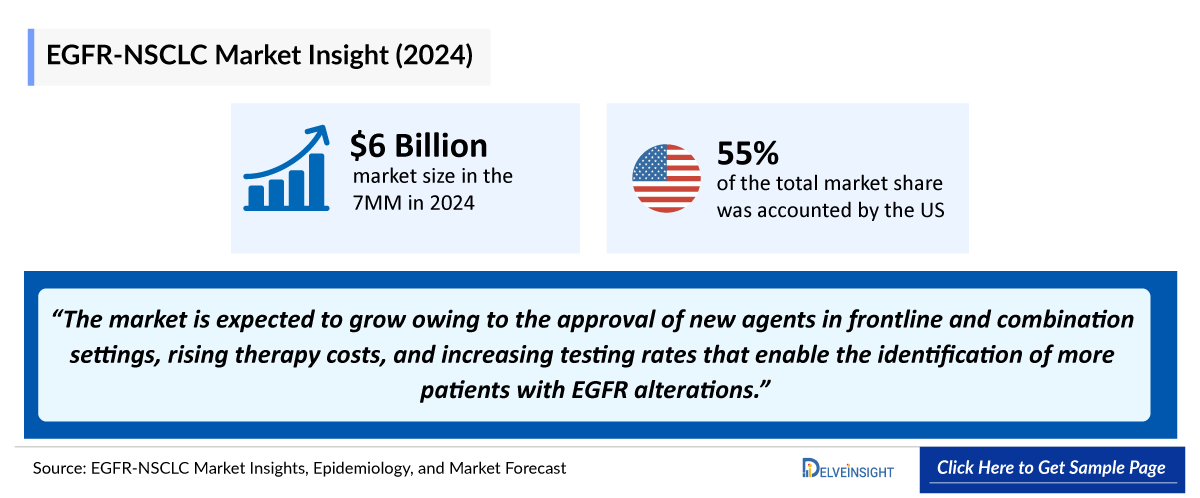
- Among the 7MM, the US accounted for the largest market size of EGFR NSCLC. i.e., USD ~3,800 million in 2025.
- In 2036, among all the therapies for EGFR NSCLC, the highest revenue is estimated to be generated by amivantamab (RYBREVANT) ± lazertinib (LAZCLUZE) followed by osimertinib (TAGRISSO), in the US.
- The entry of late-stage candidates such as zipalertinib, furmonertinib is expected to intensify competition in the EGFR NSCLC treatment landscape during the latter forecast period.
Further details will be provided in the report….
Drug Class/Insights into Leading Emerging and Marketed Therapies in EGFR NSCLC (2022–2036 Forecast)
The EGFR NSCLC market comprises monoclonal/bispecific antibody, ADC, and small molecules, each targeting different aspects of EGFR NSCLC.
Small molecules: Small-molecule therapies in development for EGFR-mutant NSCLC include zipalertinib (CLN-081) by Cullinan Oncology/Taiho Pharma, firmonertinib by ArriVent BioPharma, and LP-300 by Lantern Pharma.
ADCs: Key ADCs in the pipeline include PF-08046054 (Pfizer), patritumab deruxtecan (Daiichi Sankyo/AstraZeneca), sacituzumab tirumotecan (MK-2870) (Merck/Kelun-Biotech), SYS6010 (CSPC Pharmaceutical), izalontamab brengitecan (BMS-986507) (Bristol-Myers Squibb), and telisotuzumab adizutecan (ABB-400) (AbbVie).
Small molecules and ADCs defines the core innovation landscape, with monoclonal and bispecific antibodies currently commercially validated and small molecules driving pipeline growth.
Recent Development
- InJune 2026, Racura Oncology announced the first patient was successfully dosed in its Phase 1 HARNESS-1 clinical trial evaluating RC220. The study is investigating whether RC220 (E,E-bisantrene) can safely combine with the standard-of-care TKI osimertinib to combat treatment resistance in patients with EGFR-mutant non-small cell lung cancer. Administered at Monash Health in Victoria, the initial 50 mg/m² dose resulted in no adverse events, launching a staged dose-escalation phase before progressing to larger expansion cohorts.
Epidermal Growth Factor Receptor (EGFR) Non-small Cell Lung Cancer (NSCLC) Drug Uptake
This section focuses on the uptake rate of potential drugs expected to be launched in the market during the forecast period (2026–2036). The analysis covers the EGFR NSCLC drug’s uptake, performance at peak, factors affecting performance during prime years of growth, patient uptake by therapy, and anticipated sales generated by each drug.
The uptake of therapies in EGFR NSCLC is expected to vary based on clinical positioning, mechanism of action, and stage of development. Adoption of amivantamab (RYBREVANT) + chemotherapy and amivantamab (RYBREVANT) + lazertinib (LAZCLUZE) in EGFR NSCLC is expected to occur at a moderate uptake rate, supported by their targeted approach, favorable clinical data, and increasing integration into earlier lines of therapy.
The adoption of emerging therapies in EGFR-mutant NSCLC is expected to vary based on clinical maturity, combination strategies, and differentiation from existing standards of care. Furmonertinib/firmonertinib may achieve relatively faster uptake due to encouraging clinical data and potential positioning in targeted therapy settings. In contrast, pamvatamig (MCLA-129) ± osimertinib and telisotuzumab adizutecan (Temab-A) + TAGRISSO are likely to experience gradual uptake, reflecting their earlier clinical positioning and the need for stronger comparative evidence against established EGFR TKIs.
Detailed insights of emerging therapies' drug uptake is included in the report
Market Access and Reimbursement of Approved therapies in Epidermal Growth Factor Receptor (EGFR) Non-small Cell Lung Cancer (NSCLC)
The report further provides detailed insights on the country-wise accessibility and reimbursement scenarios, cost-effectiveness scenario of approved therapies, programs making accessibility easier and out-of-pocket costs more affordable, insights on patients insured under federal or state government prescription drug programs, etc.
Reimbursement is a crucial factor that affects the drug’s access to the market. Often, the decision to reimburse comes down to the price of the drug relative to the benefit it produces in treated patients. To reduce the healthcare burden of these high-cost therapies, many payment models are being considered by payers and other industry insiders.
NOTE: Further Details are provided in the final report….
Epidermal Growth Factor Receptor (EGFR) Non-small Cell Lung Cancer (NSCLC) Therapies Price Scenario & Trends
Pricing and analogue assessment of EGFR NSCLC therapies highlights evolving price dynamics structures. This section summarizes the cost of approved treatments, closest and most approproiate analogue selection for emerging therapies, and understanding of how pricing influences market access, adherence, and long-term uptake.
Pricing of EGFR NSCLC Approved Drugs
In the first-line setting, treatment costs vary significantly, with platinum-based chemotherapy estimated at USD 8,747, first- and second-generation TKIs at USD 27,943, and osimertinib reaching approximately USD 212,580, reflecting the higher cost associated with targeted therapies.
Industry Experts and Physician Views for Epidermal Growth Factor Receptor (EGFR) Non-small Cell Lung Cancer (NSCLC)
To keep up with EGFR NSCLC market trends, we take Key Opinion Leaders (KOLs) and Subject Matter Experts (SMEs) opinions working in the domain through primary research to fill the data gaps and validate our secondary research. Industry Experts were contacted for insights on the EGFR NSCLC emerging therapies, evolving treatment landscape, patient adherence to conventional therapies, therapy switching trends, drug adoption and uptake, accessibility challenges, and epidemiology and real-world prescription patterns in EGFR NSCLC, including MD, Ph.D, Instructor, Postdoctoral Researcher, Professor, Researcher, and others.
DelveInsight’s analysts connected with 15+ KOLs to gather insights at country level. Centers such as the Ohio State University, Norris Comprehensive Cancer Center, and University of Southern California, etc. were contacted. Their opinion helps understand and validate current and emerging EGFR NSCLC therapies, highlight unmet medical needs, provide epidemiological context, and support strategic decisions for market access, therapy adoption, and pipeline prioritization in EGFR NSCLC.
|
Region |
Key Opinion Leaders (KOLs) and Subject Matter Experts (SMEs) |
|
United States |
“Patients with EGFR Exon 20 insertion mutations need more effective therapies. Although second-line agents are approved for this population, they are associated with toxicities, and the mechanism of disease progression on these agents is unclear.” |
|
Germany |
“Even in a contemporary era with prevalent osimertinib use, the baseline and longitudinal risk of BM development was high. The ongoing risk of developing BM, together with the associated survival detriment, argues for routine surveillance of the brain through magnetic resonance imaging for patients with EGFR-mutated NSCLC, which is not currently included in the guidelines.” |
Qualitative Analysis: SWOT and Conjoint Analysis
We perform qualitative and market Intelligence analysis using various approaches, such as SWOT analysis and conjoint analysis.
In the SWOT analysis of EGFR NSCLC, strengths, weaknesses, opportunities, and threats in terms of disease diagnosis, patient awareness, patient burden, competitive landscape, cost-effectiveness, and geographical accessibility of therapies are provided.
Conjoint analysis analyzes emerging therapies based on relevant attributes such as safety, efficacy, frequency of administration, route of administration, and order of entry. Scoring is given based on these parameters to analyze the effectiveness of therapy.
The team of analysts analyzes promising emerging therapies based on relevant attributes such as safety, efficacy, frequency of administration, route of administration, and order of entry. In efficacy, the trial’s primary and secondary outcome measures are evaluated, whereas the therapies’ safety is evaluated, wherein the acceptability, tolerability, and adverse events are majorly observed. In addition, the scoring is also based on the route of administration, order of entry, probability of success, and the addressable patient pool for each therapy. According to these parameters, the final weightage score and the ranking of the emerging therapies are decided.
Scope of the Report
- The report covers a segment of key events, an executive summary, a descriptive overview of Epidermal Growth Factor Receptor (EGFR) Non-small Cell Lung Cancer (NSCLC), explaining their causes, signs and symptoms, pathogenesis, and currently available treatments.
- Comprehensive insight has been provided into the epidemiology segments and forecasts, the future growth potential of the diagnosis rate, and disease progression along treatment guidelines.
- Additionally, an all-inclusive account of both the current and emerging treatments, along with the elaborative profiles of late-stage and prominent therapies, will have an impact on the current treatment landscape.
- A detailed review of the Epidermal Growth Factor Receptor (EGFR) Non-small Cell Lung Cancer (NSCLC) market, historical and forecasted market size, market share by therapies, detailed assumptions, and rationale behind our approach is included in the report, covering the 7MM drug outreach.
- The report provides an edge while developing business strategies by understanding trends through SWOT analysis and expert insights/KOL views, patient journey, and treatment preferences that help in shaping and driving the 7MM Epidermal Growth Factor Receptor (EGFR) Non-small Cell Lung Cancer (NSCLC) market.
Report Insights
- EGFR NSCLC Patient Population Forecast
- EGFR NSCLC Therapeutics Market Size
- EGFR NSCLC Pipeline Analysis
- EGFR NSCLC Market Size and Trends
- EGFR NSCLC Market Opportunity (Current and forecasted)
Report Key Strengths
- Epidemiology-based (Epi-based) Bottom-up Forecasting
- Artificial Intelligence (AI)-enabled Market Research Report
- 11-year forecast
- EGFR NSCLC Market Outlook (North America, Europe, Asia-Pacific)
- Patient Burden Trends (by geography)
- EGFR NSCLC Treatment Addressable Market (TAM)
- EGFR NSCLC Competitive Landscape
- EGFR NSCLC Major Companies Insights
- EGFR NSCLC Price Trends and Analogue Assessment
- EGFR NSCLC Therapies Drug Adoption/Uptake
- EGFR NSCLC Therapies Peak Patient Share Analysis
Report Assessment
- EGFR NSCLC Current Treatment Practices
- EGFR NSCLC Unmet Needs
- EGFR NSCLC Clinical Development Analysis
- EGFR NSCLC Emerging Drugs Product Profiles
- EGFR NSCLC Market Attractiveness
- EGFR NSCLC Qualitative Analysis (SWOT and conjoint analysis)
FAQs
Market Insights
- What was the EGFR NSCLC market size, the market size by therapies, market share (%) distribution in 2025, and what would it look like by 2036? What are the contributing factors for this growth?
- What are the anticipated pricing variations among different geographies for the emerging therapies in the future?
- What can be the future treatment paradigm of EGFR NSCLC?
- What impact will patent expiry have on the EGFR therapy market?
- What are the disease risks, burdens, and unmet needs of EGFR NSCLC? What will be the growth opportunities across the 7MM concerning the patient population with EGFR NSCLC?
- Who is the major future competitor in the market, and how will the competitors affect their market share?
- What are the current options for the treatment of EGFR NSCLC? What are the current guidelines for treating EGFR NSCLC in the US, Europe, and Japan?
Reasons to Buy
- The report will help in developing business strategies by understanding the latest trends and changing treatment dynamics driving the EGFR NSCLC market.
- Bottom up forecasting builds from the affected population to product forecasts, delivering a robust, data driven approach ideal for new therapies and novel classes.
- Insights on patient burden/disease incidence, evolution in diagnosis, and factors contributing to the change in the epidemiology of the disease during the forecast years.
- Understand the existing market opportunities in varying geographies and the growth potential over the coming years.
- Identifying strong upcoming players in the market will help devise strategies to help get ahead of competitors.
- Detailed analysis and ranking of class-wise potential current and emerging therapies under the conjoint analysis section to provide visibility around leading classes.
- To understand KOLs’ perspectives on the accessibility, acceptability, and compliance-related challenges of existing treatment to overcome barriers in the future.
- Detailed insights on the unmet needs of the existing market so that the upcoming players can strengthen their development and launch strategy.
- This Artificial Intelligence (AI) enabled report summarize and simplify complex datasets within the report into clear, actionable insights for stakeholders, investors, and healthcare providers, enabling faster, data driven decisions.