
Epigenetics Market Summary
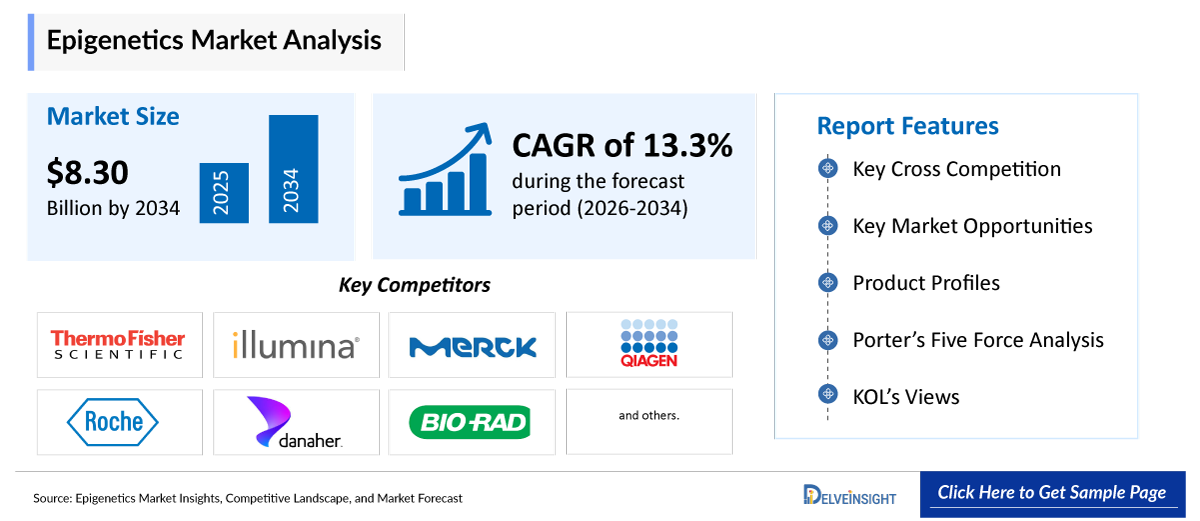
- The Epigenetics market is estimated at USD 2.70 billion in 2025 and is projected to reach USD 8.30 billion by 2034. Growth is anchored in the rising cancer burden, the expansion of precision medicine and liquid-biopsy methylation biomarkers, and rapid advances in sequencing, single-cell, and epigenetic-editing technologies.
- The global Epigenetics market is growing at a CAGR of 13.3% during the forecast period from 2026 to 2034.
- By product, the kits and reagents segment dominated the Epigenetics market with a 41% share in 2025.
- By technology, the DNA methylation segment dominated the Epigenetics market with a 48% share in 2025.
- By application, the oncology segment dominated the Epigenetics market with a 60% share in 2025.
- By end user, the pharmaceutical and biotechnology companies segment dominated the Epigenetics market with a 44% share in 2025.
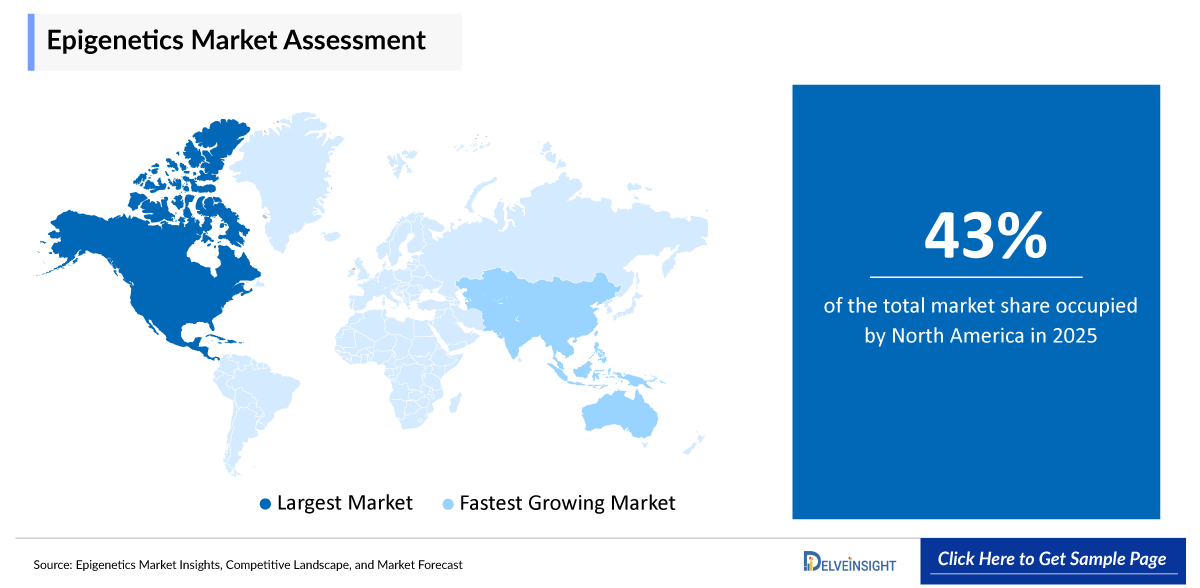
- North America dominated the global Epigenetics market revenue with a 43% share in 2025, representing the highest regional market share globally.
Epigenetics is the study of heritable changes in gene expression that occur without alterations to the underlying DNA sequence, mediated by mechanisms such as DNA methylation, histone modification, chromatin remodeling, and non-coding RNA regulation. The epigenetics market comprises the products, technologies, and services used to analyze and manipulate these modifications, including kits and reagents, enzymes, antibodies, instruments, software, and specialized services for chromatin immunoprecipitation, bisulfite and enzymatic methylation sequencing, methylation arrays, chromatin accessibility, and related workflows. Detection and profiling rely on next-generation sequencing, polymerase chain reaction, mass spectrometry, and microarray platforms, increasingly augmented by single-cell epigenomics, multi-omics integration, and artificial-intelligence-enabled data interpretation. Applications span oncology, immunology and autoimmune disease, developmental biology, cardiovascular and metabolic disease, and neurology, supporting biomarker discovery, drug development, precision medicine, and diagnostics, and the field is now extending into epigenetic editing and epigenetic therapeutics. Propelled by the rising cancer burden, the maturation of liquid-biopsy methylation biomarkers, falling sequencing costs, expanding research funding, and a wave of innovation in sequencing and epigenetic editing, epigenetics has become a foundational pillar of modern biomedical research and precision medicine.
Epigenetics Market Key Growth Drivers
- The rising global cancer burden is driving demand for epigenetic biomarkers and methylation testing, with the International Agency for Research on Cancer projecting cancer cases to rise from 20 million in 2022 to 35 million by 2050.
- The expansion of precision medicine and liquid-biopsy methylation biomarkers is driving adoption of epigenetic profiling for early detection, patient stratification, and minimal residual disease monitoring.
- Falling sequencing costs and advances in next-generation sequencing, single-cell epigenomics, and multi-omics integration are expanding the scale and accessibility of epigenetic research.
- Rising research and development funding from government, academic, and pharmaceutical sources is accelerating epigenetic biomarker and drug discovery.
- A growing pipeline of epigenetic drugs and the emergence of epigenetic editing, including therapies that silence or modulate gene expression without changing DNA sequence, are broadening the field.
- The recurring consumption of kits, reagents, and enzymes across methylation, chromatin, and sequencing workflows sustains durable, high-frequency demand.
- The convergence of cancer burden, precision medicine, sequencing innovation, and epigenetic editing is expected to sustain strong double-digit growth in the market through 2034.
Key Companies in Epigenetics Market
The competitive landscape is led by the following active developers and providers:
- Thermo Fisher Scientific Inc.
- Illumina, Inc.
- Merck KGaA
- QIAGEN N.V.
- F. Hoffmann-La Roche Ltd
- Danaher Corporation
- Bio-Rad Laboratories, Inc.
- Revvity, Inc.
- New England Biolabs, Inc.
- Active Motif, Inc.
For illustrative purposes, only the top 10 companies are listed in the Table of Contents. The report may include analysis and references to additional companies, where relevant to the market assessment.
Epigenetics Market Size
The following snapshot summarizes the principal report metrics for the Epigenetics market.
|
Report Metrics |
Details |
|---|---|
|
2025 Market Size |
USD 2.70 billion |
|
2034 Projected Market Size |
USD 8.30 billion |
|
Growth Rate (2026-2034) |
13.3% CAGR |
|
Largest Market |
North America |
|
Fastest Growing Market |
Asia-Pacific |
|
Market Structure |
Moderately Concentrated |
All market values are expressed in USD and represent DelveInsight estimates synthesized from primary and secondary research.
Factors Contributing to the Growth of the Epigenetics Market
Market Drivers
Rising Global Cancer Burden and Epigenetic Biomarkers
The most powerful driver of the epigenetics market is the rising global cancer burden, since aberrant DNA methylation and histone modification are hallmarks of cancer and provide some of the most clinically useful epigenetic biomarkers. The International Agency for Research on Cancer recorded 20 million new cancer cases in 2022 and projects 35 million by 2050, and the World Health Organization anticipates a substantial rise in cancer incidence over the coming decades. Epigenetic alterations enable early detection, molecular classification, patient stratification, prognosis, and monitoring of minimal residual disease, and methylation signatures underpin a growing number of cancer screening and diagnostic tests. Oncology is by far the largest application of epigenetics, drawing on methylation profiling, chromatin analysis, and biomarker discovery across the drug-development and diagnostic value chain. As cancer incidence climbs and epigenetic biomarkers prove their clinical value, demand for epigenetic tools, reagents, and services expands, anchoring market growth through the forecast period.
Expansion of Precision Medicine and Liquid-Biopsy Methylation Biomarkers
The expansion of precision medicine and the rise of liquid-biopsy methylation biomarkers are central growth engines. As medicine shifts toward molecularly guided diagnosis and therapy, epigenetic profiles increasingly inform patient stratification, therapy selection, and response monitoring, complementing genetic and transcriptomic data. Blood-based methylation biomarkers are a particularly powerful application, enabling non-invasive cancer detection, tissue-of-origin prediction, and recurrence monitoring from circulating tumor DNA, and methylation-based multi-cancer and single-cancer tests are advancing through development and clinical use. The integration of methylation analysis into sequencing workflows, including concurrent genetic and epigenetic variant calling, is embedding epigenetics into routine precision-oncology pipelines. As precision medicine programs scale and methylation biomarkers move from research into diagnostics, demand for epigenetic profiling tools, kits, and services grows steadily, reinforcing market expansion across the forecast period.
Falling Sequencing Costs and Technological Innovation
Falling sequencing costs and rapid technological innovation are expanding the scale, resolution, and accessibility of epigenetic research. Advances in next-generation sequencing, long-read and nanopore sequencing, enzymatic and bisulfite methylation sequencing, and methylation arrays continue to lower the cost and raise the throughput of genome-wide epigenetic profiling. Direct detection of modified bases, real-time methylation calling on high-throughput sequencers, and single-cell epigenomics enable richer, more comprehensive analysis, while multi-omics integration links epigenetic data with genomic, transcriptomic, and proteomic information. Artificial-intelligence-enabled interpretation improves data quality and biological insight, and standardized assay kits enhance reproducibility and workflow efficiency. As these technologies mature and costs decline, epigenetic profiling becomes more powerful, affordable, and widely adopted across research, drug development, and clinical applications, driving demand for instruments, kits, and reagents throughout the forecast period.
Rising Research Funding and Drug Discovery Investment
Rising research and development funding and drug-discovery investment are accelerating the field. Government, academic, and philanthropic programs, including major national cancer and genomics initiatives and large multinational research frameworks, channel substantial funding into epigenetic research, biomarker validation, and translational projects. Pharmaceutical and biotechnology companies are investing heavily in epigenetics-driven drug discovery, particularly in oncology and immunology, where epigenetic enzymes and chromatin regulators are validated therapeutic targets. Collaborations between academic institutions and pharmaceutical companies to identify and validate epigenetic biomarkers and targets are expanding, and venture and strategic capital are flowing into epigenetic-editing and epigenetic-therapeutics startups. This sustained investment funds the consumption of tools, reagents, instruments, and services and expands the pipeline of epigenetic diagnostics and therapies, reinforcing demand and market growth across the forecast period.
Emergence of Epigenetic Editing and Epigenetic Therapeutics
The emergence of epigenetic editing and epigenetic therapeutics is broadening the field beyond research tools into a new therapeutic frontier. Building on a foundation of approved epigenetic drugs, including inhibitors of histone deacetylases and DNA methyltransferases used in oncology, a new generation of programmable epigenetic editors can silence or modulate gene expression without altering the DNA sequence, offering potentially durable and reversible therapeutic effects. Startups are advancing epigenetic-editing candidates for indications such as chronic hepatitis B and other diseases, supported by significant venture funding and compact delivery systems, and several have raised substantial capital or merged to scale their platforms. This therapeutic momentum increases demand for epigenetic research tools, target-validation reagents, and profiling services, while attracting investment and talent to the field. As epigenetic editing and therapeutics advance, they expand the long-term addressable market and reinforce growth across the forecast period.
Recurring Consumption of Kits, Reagents, and Enzymes
The recurring consumption of kits, reagents, antibodies, and enzymes is a durable structural driver of the epigenetics market. Epigenetic workflows, including chromatin immunoprecipitation, bisulfite and enzymatic methylation sequencing, methylation arrays, chromatin accessibility assays, and library preparation, depend on protocol-specific consumables used repeatedly across experiments, screening campaigns, and validation studies. Kits and reagents are consumed at high frequency by pharmaceutical and biotechnology companies, academic institutes, clinical laboratories, and contract research organizations, and their critical role in ensuring assay reproducibility supports steady demand. Enzymes such as methyltransferases, demethylases, and chromatin-modifying enzymes underpin both research and target validation. As the number and scale of epigenetic studies grow with precision medicine and multi-omics, consumable demand deepens with every experiment, generating recurring, high-margin revenue that anchors the market and reinforces growth across the forecast period.
Growing Applications in Neurology, Immunology, and Beyond
Expanding applications beyond oncology are opening new avenues of growth. Epigenetic mechanisms are increasingly implicated in neurological and neurodegenerative disorders, autoimmune and inflammatory diseases, cardiovascular and metabolic conditions, developmental biology, and infectious disease, broadening the range of research and clinical use cases. Research into the epigenetic regulation of immune-cell differentiation is supporting new therapies for autoimmune conditions, while neurological applications explore epigenetic signatures of disease onset and progression. Single-cell and spatial epigenomics deepen understanding of cell lineage and tissue heterogeneity, supporting regenerative medicine and developmental research, and non-coding RNA platforms add new dimensions to gene-regulation studies. As epigenetics extends across an expanding set of diseases and biological questions, the diversity of applications multiplies demand for tools, reagents, and services, supporting durable, diversified market growth across the forecast period.
Market Restraints
Despite strong momentum, the epigenetics market faces material constraints. The technical complexity of epigenetic analysis is a significant barrier, as workflows such as chromatin immunoprecipitation, bisulfite and enzymatic methylation sequencing, and chromatin accessibility assays require specialized expertise, careful optimization, and rigorous quality control, and variability across protocols, reagents, and platforms complicates reproducibility and comparability. High costs of advanced instruments, sequencing, and consumables limit adoption, particularly among smaller laboratories and in lower-resource settings, and the substantial data-storage, computing, and bioinformatics requirements of genome-wide and single-cell epigenomics add further cost and complexity. A shortage of skilled professionals able to design, execute, and interpret epigenetic experiments and analyze large, complex datasets constrains capacity. Standardization and harmonization gaps across assays, reference materials, and analytical pipelines hinder clinical translation and regulatory acceptance, and the path from research-grade epigenetic findings to validated, reimbursed clinical tests remains long and uncertain. Regulatory pathways for epigenetic diagnostics and the emerging field of epigenetic therapeutics are still evolving, adding uncertainty and lengthening timelines, and reimbursement for epigenetic tests is uneven. Data-privacy and ethical considerations involving epigenetic information add complexity. Together, these complexity, cost, workforce, standardization, and regulatory barriers temper the pace of growth, even as the underlying drivers of cancer burden, precision medicine, and technological innovation remain firmly intact.
Epigenetics Market Segment Analysis
The Epigenetics Market by Product (Kits and Reagents, Enzymes, Instruments and Accessories, Software and Services), Technology (DNA Methylation, Histone Modification, Chromatin Structure and Accessibility, Non-Coding RNA Analysis, Others), Application (Oncology, Immunology and Autoimmune Diseases, Developmental Biology, Cardiovascular and Metabolic Diseases, Others), End User (Pharmaceutical and Biotechnology Companies, Academic and Research Institutes, Clinical Research Organizations, Hospitals and Diagnostic Laboratories), and Geography (North America, Europe, Asia-Pacific, Rest of World).
By Product
Dominant Subsegment: Kits and Reagents. The kits and reagents category is expected to dominate the market.
Dominant: Kits and Reagents ~ 41%
The kits and reagents segment accounted for 41% of the Epigenetics market in 2025. Kits and reagents are the leading product because they are consumed repeatedly across the full range of epigenetic workflows, including DNA methylation analysis, histone modification studies, chromatin immunoprecipitation, bisulfite and enzymatic methylation sequencing, chromatin accessibility assays, and library preparation. Their protocol-specific nature, high consumption frequency, and critical role in ensuring assay reproducibility make them the core revenue-generating segment, used heavily by pharmaceutical and biotechnology companies, academic institutes, clinical laboratories, and contract research organizations for sample preparation, target enrichment, biomarker discovery, and validation. The expansion of precision medicine, cancer epigenetics, liquid-biopsy methylation testing, and multi-omics workflows continually deepens demand. Enzymes form a strategically important segment underpinning methylation and chromatin studies and target validation, while instruments and accessories anchor the installed base and software and services are the fastest-growing segment as bioinformatics and analytics scale. Nonetheless, the recurring, high-frequency consumption of kits and reagents secures their clear leadership across the forecast period.
By Technology
Dominant Subsegment: DNA Methylation. The DNA methylation category is expected to dominate the market.
Dominant: DNA Methylation ~ 48%
The DNA methylation segment accounted for 48% of the Epigenetics market in 2025. DNA methylation is the leading technology because it is the most established, clinically validated, and widely applied epigenetic modification, central to gene-expression regulation and to cancer diagnostics and biomarker discovery. Decades of research familiarity, a deep base of methylation arrays, bisulfite and enzymatic methylation sequencing, and methylation-specific assays, and a growing number of approved or advancing methylation-based blood tests reinforce its dominance. Methylation signatures underpin early cancer detection, tissue-of-origin prediction, molecular classification, and minimal residual disease monitoring, and methylation analysis is increasingly embedded directly into sequencing workflows. Histone modification, including acetylation and methylation, is a large and important technology, particularly for drug discovery targeting chromatin regulators, while chromatin structure and accessibility methods and non-coding RNA analysis are fast-growing, the latter advancing rapidly as the regulatory roles of non-coding RNAs gain appreciation. Nonetheless, the clinical familiarity, breadth, and biomarker value of DNA methylation secure its leadership across the forecast period.
By Application
Dominant Subsegment: Oncology. The oncology category is expected to dominate the market.
Dominant: Oncology ~ 60%
The oncology segment accounted for 60% of the Epigenetics market in 2025. Oncology is the dominant application because aberrant DNA methylation and histone modification are hallmarks of cancer, providing some of the most clinically actionable epigenetic biomarkers for early detection, molecular classification, prognosis, therapy selection, and minimal residual disease monitoring. The rising global cancer burden, the maturation of methylation-based liquid biopsy, and intensive epigenetics-driven oncology drug discovery anchor the segment's large share, and oncology draws on methylation profiling, chromatin analysis, and biomarker discovery across both diagnostics and therapeutics. Immunology and autoimmune diseases form a fast-growing application, propelled by research into epigenetic regulation of immune-cell differentiation and epigenetic therapies for conditions such as lupus and rheumatoid arthritis, while neurology, developmental biology, and cardiovascular and metabolic diseases expand as epigenetic mechanisms are increasingly implicated across these areas. Nonetheless, the scale, clinical value, and research and drug-discovery intensity of oncology secure its clear leadership across the forecast period.
By End User
Dominant Subsegment: Pharmaceutical and Biotechnology Companies. The pharmaceutical and biotechnology companies category is expected to dominate the market.
Dominant: Pharmaceutical and Biotechnology Companies ~ 44%
The pharmaceutical and biotechnology companies segment accounted for 44% of the Epigenetics market in 2025. Pharmaceutical and biotechnology companies are the leading end user because they invest heavily in epigenetics-driven drug discovery, biomarker development, and companion diagnostics, consuming large volumes of kits, reagents, enzymes, instruments, and services across their pipelines. Epigenetic enzymes and chromatin regulators are validated therapeutic targets in oncology and immunology, and the emergence of epigenetic editing and epigenetic therapeutics is intensifying corporate investment in the field. These companies use epigenetic profiling for target identification and validation, patient stratification, and biomarker discovery, and they increasingly partner with academic institutions and tool providers. Academic and research institutes are a very large and foundational end user, driving basic discovery and the validation of new biomarkers and methods, while contract research organizations and clinical and diagnostic laboratories grow rapidly as epigenetic testing scales. Nonetheless, the scale, investment, and pipeline-driven consumption of pharmaceutical and biotechnology companies secure their leadership across the forecast period.
Epigenetics Market Region Analysis
Dominant Region: North America
North America accounted for 43% of the global Epigenetics market revenue in 2025, representing the highest regional market share globally. The region's dominance reflects strong research funding, a robust healthcare and life-sciences infrastructure, advanced precision-medicine and genomics programs, and the concentration of leading epigenetics tool and technology companies, particularly in the United States. North America hosts the headquarters and primary markets of Thermo Fisher Scientific, Illumina, Danaher, Bio-Rad, Revvity, New England Biolabs, and Active Motif, and benefits from major national initiatives in cancer and genomics research, deep academic and pharmaceutical research activity, and significant venture investment in epigenetic editing and therapeutics. The region leads in methylation-based diagnostics, sequencing innovation, and epigenetics-driven drug discovery, and it is the focus of much of the field's product launches and capital. Strong funding, infrastructure, and innovation anchor the region's continued leadership across the forecast period.
Dominant: North America ~ 43% (Largest)
Fastest Growing Region: Asia-Pacific
Asia-Pacific is the fastest-growing region in the Epigenetics market. The region's elevated CAGR is driven by rising research investment, a large and growing burden of cancer and chronic disease, expanding genomics and precision-medicine programs, and growing academic and biopharmaceutical research across China, Japan, India, South Korea, and Australia. Governments are investing in genomics infrastructure and population-scale research, and regional pharmaceutical, biotechnology, and academic activity in epigenetics is expanding rapidly, supported by improving laboratory capacity and a growing base of skilled researchers. Increasing adoption of next-generation sequencing, methylation testing, and multi-omics, alongside cost-effective local manufacturing and services, is accelerating uptake. Rising disease burden, expanding research investment, and growing infrastructure position Asia-Pacific as the principal source of incremental growth over the forecast period.
Regional Commentary
North America
North America accounted for 43% of the global Epigenetics market revenue in 2025. The United States dominates on the strength of strong research funding, advanced precision-medicine and genomics programs, a dense base of epigenetics tool and technology companies, leading academic and pharmaceutical research, and significant investment in epigenetic editing and therapeutics, while Canada contributes through academic and clinical research activity.
Europe
Europe is a large and advanced regional market, led by Germany, the United Kingdom, France, Switzerland, and the Netherlands. Growth is supported by strong academic and clinical research, major multinational research-funding frameworks, and a robust base of epigenetics companies including Merck KGaA, QIAGEN, and Diagenode, alongside active epigenetic biomarker and drug-discovery research across the region.
Asia-Pacific
Asia-Pacific is the fastest-growing region, propelled by rising research investment, a growing burden of cancer and chronic disease, expanding genomics and precision-medicine programs, and growing academic and biopharmaceutical research across China, Japan, India, South Korea, and Australia. Government genomics initiatives, improving laboratory capacity, and cost-effective local manufacturing and services broaden access and accelerate adoption.
Rest of World
The Rest of World region, spanning Latin America, the Middle East, and Africa, is an emerging contributor. Growing investment in health research, gradual modernization of healthcare and laboratory infrastructure, and rising interest in genetic and epigenetic testing are creating early opportunities, while partnerships, capacity building, and expanding access to advanced diagnostics gradually extend the reach of epigenetics across these markets over the forecast period.
Epigenetics Market Competitive Landscape
The Epigenetics market is classified as Moderately Concentrated. A group of large life-sciences and genomics leaders, including Thermo Fisher Scientific, Illumina, Merck KGaA, and QIAGEN, holds a substantial share through broad portfolios of sequencing platforms, kits, reagents, and enzymes, while a dynamic field of specialized reagent, antibody, and emerging epigenetic-editing companies, including New England Biolabs, Active Motif, Zymo Research, Abcam, Diagenode, and editing startups, intensifies competition through focused innovation, keeping the long tail of the market competitive.
The competitive landscape can be evaluated across the following dimensions:
- Market concentration: Moderately concentrated, with a few large genomics and life-sciences leaders alongside many specialized reagent, antibody, and editing innovators.
- Leading players: Thermo Fisher Scientific, Illumina, Merck KGaA, and QIAGEN anchor the top tier through broad platforms and consumables.
- Geographic reach: Leaders operate global commercial and distribution networks, with strong positions across North America, Europe, and Asia-Pacific.
- Product portfolio strength: Top players hold integrated portfolios spanning sequencing platforms, methylation and chromatin kits, enzymes, antibodies, and bioinformatics.
- Pipeline and innovation strength: Real-time methylation sequencing, enzymatic methyl-seq, single-cell epigenomics, and epigenetic editing are decisive competitive assets.
- Strategic partnerships: Collaborations between tool providers, pharmaceutical companies, and academic institutions accelerate biomarker and assay development.
- M&A activity: Active consolidation as leaders acquire methylation, digital PCR, and epigenetics technologies, and editing startups merge to scale.
- Consumables and recurring revenue: Consumables-heavy revenue models and installed-base lock-in are central competitive and financial advantages.
- Innovation focus: Methylation sequencing, single-cell and spatial epigenomics, multi-omics integration, AI-enabled analysis, and epigenetic editing.
Epigenetics Market Recent Developmental Activities
- In February 2025, Illumina, Inc., released 5-base methylation analysis kits that enable concurrent genetic and epigenetic variant calls, with a broad commercial rollout planned for 2026. Strategic significance: Embedded methylation analysis directly into mainstream sequencing workflows and strengthened Illumina's epigenomics position.
- In January 2025, New England Biolabs, Inc., launched EM-seq v2, an updated enzymatic methyl-sequencing kit for more sensitive detection of 5-methylcytosine and 5-hydroxymethylcytosine, enabling accurate DNA methylation analysis. Strategic significance: Advanced enzymatic methylation sequencing as a high-sensitivity alternative to bisulfite methods and expanded reagent adoption.
- In October 2025, Pacific Biosciences of California, announced innovations to its Revio and Vega sequencing platforms designed to lower sequencing costs, add multiomic capabilities, and expand support for regulated research environments. Strategic significance: Broadened access to long-read epigenetic profiling and supported clinical and regulated applications.
- In November 2024, Illumina, Inc., expanded its TruSight Oncology 500 assay for faster and deeper variant detection in solid tumors, incorporating methylation-informed analysis to refine therapy selection. Strategic significance: Integrated epigenetic information into a widely used oncology profiling assay and reinforced precision-oncology workflows.
- In July 2025, Thermo Fisher Scientific Inc., received FDA approval for the Oncomine Dx Express Test on the Ion Torrent Genexus Dx Integrated Sequencer, an in vitro diagnostic for companion-diagnostic tumor profiling. Strategic significance: Strengthened Thermo Fisher's regulated genomic and epigenomic profiling capabilities for precision oncology.
- In August 2023, Thermo Fisher Scientific Inc., completed the acquisition of an epigenetics firm focused on DNA methylation technologies, broadening its epigenomics capabilities. Strategic significance: Expanded Thermo Fisher's methylation analysis portfolio and reinforced its leadership in epigenomic research tools.
- In January 2025, Tune Therapeutics, raised USD 175 million to progress TUNE-401, an epigenetic-editing candidate designed to silence the hepatitis B epigenome for chronic hepatitis B. Strategic significance: Advanced epigenetic editing into a clinical therapeutic and validated investor appetite for the modality.
- In January 2025, Chroma Medicine and Nvelop Therapeutics, merged to form nChroma Bio, securing USD 75 million to advance CRMA-1001, an epigenetic-editing candidate for viral hepatitis. Strategic significance: Consolidated epigenetic-editing platforms and accelerated development of programmable gene-silencing therapeutics.
- In 2025, Oxford Nanopore Technologies, advanced direct detection of modified DNA bases, including additional methylation marks, with ultra-long reads, broadening epigenetic and infectious-disease applications. Strategic significance: Differentiated long-read sequencing for native epigenetic detection and expanded use cases.
- In 2024 and 2025, QIAGEN N.V., expanded its methylation-specific assay and digital PCR portfolio for epigenetic research and molecular diagnostics through a consumables-focused strategy. Strategic significance: Strengthened QIAGEN's recurring-revenue position in methylation testing and sample-to-insight workflows.
- In 2025, Thermo Fisher Scientific Inc. (with the myeloMATCH trial), aligned its next-generation sequencing platforms with regulatory-grade companion diagnostics in a precision-oncology trial. Strategic significance: Linked sequencing hardware to clinical-grade diagnostics and supported adoption in hospital and oncology settings.
- In 2025, Illumina, Inc., embedded real-time 5-base methylation detection across its NextSeq and NovaSeq sequencing systems, integrating epigenetic profiling into standard sequencing runs. Strategic significance: Made concurrent genetic and epigenetic analysis a routine capability and reinforced platform stickiness.
Epigenetics Market Segmentation
Epigenetics Market by Product
- Kits and Reagents
- Antibodies
- ChIP-Sequencing Kits
- Bisulfite Conversion Kits
- Methylation Analysis Kits
- Other Kits and Reagents
- Enzymes
- Instruments and Accessories
- Software and Services
Epigenetics Market by Technology
- DNA Methylation
- Histone Modification
- Chromatin Structure and Accessibility
- Non-Coding RNA Analysis
- Others
Epigenetics Market by Technique
- Next-Generation Sequencing
- Polymerase Chain Reaction and qPCR
- Mass Spectrometry
- Microarray
- Others
Epigenetics Market by Application
- Oncology
- Immunology and Autoimmune Diseases
- Developmental Biology
- Cardiovascular and Metabolic Diseases
- Others
Epigenetics Market by End User
- Pharmaceutical and Biotechnology Companies
- Academic and Research Institutes
- Clinical Research Organizations
- Hospitals and Diagnostic Laboratories
Epigenetics Market by Geography
- North America Epigenetics Market
- United States Epigenetics Market Size in USD million (2023-2034)
- Canada Epigenetics Market Size in USD million (2023-2034)
- Mexico Epigenetics Market Size in USD million (2023-2034)
- Europe Epigenetics Market
- Germany Epigenetics Market Size in USD million (2023-2034)
- United Kingdom Epigenetics Market Size in USD million (2023-2034)
- France Epigenetics Market Size in USD million (2023-2034)
- Italy Epigenetics Market Size in USD million (2023-2034)
- Spain Epigenetics Market Size in USD million (2023-2034)
- Rest of Europe Epigenetics Market Size in USD million (2023-2034)
- Asia-Pacific Epigenetics Market
- China Epigenetics Market Size in USD million (2023-2034)
- Japan Epigenetics Market Size in USD million (2023-2034)
- India Epigenetics Market Size in USD million (2023-2034)
- South Korea Epigenetics Market Size in USD million (2023-2034)
- Australia Epigenetics Market Size in USD million (2023-2034)
- Rest of Asia-Pacific Epigenetics Market Size in USD million (2023-2034)
- Rest of the World (RoW) Epigenetics Market
- Middle East Epigenetics Market Size in USD million (2023-2034)
- Africa Epigenetics Market Size in USD million (2023-2034)
- South America Epigenetics Market Size in USD million (2023-2034)
Epigenetics Market Recent Industry Trends and Milestones (2023-2026):
|
Category |
Key Developments |
|---|---|
|
Epigenetics Market Product Launches |
Product innovation accelerated across methylation and sequencing. Illumina released 5-base methylation analysis kits enabling concurrent genetic and epigenetic variant calls and embedded real-time methylation detection across its NextSeq and NovaSeq systems. New England Biolabs launched EM-seq v2 for sensitive enzymatic methylation detection, and PacBio advanced its Revio and Vega platforms with lower costs and multiomic capabilities. Illumina expanded its TruSight Oncology 500 assay with methylation-informed analysis, and Oxford Nanopore advanced direct detection of modified bases, broadening native epigenetic profiling across research and clinical applications. |
|
Epigenetics Market Regulatory and Diagnostics |
Epigenetic and genomic diagnostics advanced toward the clinic. Thermo Fisher received FDA approval for the Oncomine Dx Express Test on its Ion Torrent Genexus Dx sequencer for companion-diagnostic tumor profiling, and its myeloMATCH trial partnership aligned sequencing with regulatory-grade companion diagnostics. Methylation-based blood tests for cancer detection and tissue-of-origin prediction continued to advance through development and clinical use, while evolving regulatory frameworks for epigenetic diagnostics and the emerging field of epigenetic therapeutics shaped the path from research to validated, reimbursed clinical tests. |
|
Epigenetics Market Investment |
Investment surged into epigenetic editing and therapeutics. Tune Therapeutics raised USD 175 million to advance TUNE-401 for chronic hepatitis B epigenome silencing, and Chroma Medicine and Nvelop Therapeutics merged to form nChroma Bio with USD 75 million to advance an epigenetic-editing candidate for viral hepatitis. Established tool leaders pursued acquisitions and partnerships in methylation, digital PCR, and epigenomics, exemplified by Thermo Fisher's earlier acquisition of a DNA-methylation firm, while venture and strategic capital flowed into editing platforms, AI analytics, and single-cell epigenomics. |
|
Company Strategy |
Thermo Fisher Scientific Inc.: Broad epigenomics portfolio across sequencing, mass spectrometry, reagents, and regulated diagnostics. Illumina, Inc.: Methylation integrated into mainstream sequencing through 5-base detection and assay expansion. Merck KGaA: Reagents, enzymes, and epigenetic drug-development collaborations. QIAGEN N.V.: Consumables-heavy methylation and digital PCR strategy. F. Hoffmann-La Roche Ltd and Danaher Corporation: Sequencing, diagnostics, and reagents. New England Biolabs, Active Motif, Bio-Rad, and Revvity: Specialized enzymes, antibodies, chromatin biology, and epigenetic research tools. |
|
Emerging Technologies |
Real-time and enzymatic methylation sequencing, long-read native modified-base detection, and single-cell and spatial epigenomics are deepening resolution and accessibility. Multi-omics integration links epigenetic data with genomic, transcriptomic, and proteomic information, and artificial intelligence enhances data interpretation and biomarker discovery. Liquid-biopsy methylation biomarkers are advancing toward clinical use, and programmable epigenetic editing, using compact delivery systems to silence or modulate gene expression without altering DNA, is opening a new therapeutic frontier across oncology, infectious disease, and other indications. |
Epigenetics Market Startup Funding and Investment Trends
Investment in the epigenetics ecosystem has concentrated on epigenetic editing and therapeutics, single-cell and spatial epigenomics, and AI-enabled analysis. The following companies illustrate recent funding and investment activity and technology focus.
|
Company |
Total Funding |
Funding Stage |
Main Product |
Core Technology |
|---|---|---|---|---|
|
Tune Therapeutics, Inc. |
USD 350 million and above |
Late-stage venture |
TUNE-401 |
Epigenetic editing and silencing |
|
nChroma Bio, Inc. |
USD 215 million and above |
Growth venture |
CRMA-1001 |
Epigenetic editing |
|
Request for unlocking the report of the @ Epigenetics Market Insights | ||||
Capital is flowing toward the therapeutic frontier of epigenetics alongside continued investment in research tools. Tune Therapeutics and nChroma Bio, formed through the merger of Chroma Medicine and Nvelop Therapeutics, are advancing programmable epigenetic-editing candidates for chronic hepatitis B and viral hepatitis, illustrating strong investor conviction in epigenetic silencing as a durable therapeutic modality. Element Biosciences is scaling next-generation sequencing and multiomics that underpin epigenetic profiling, while established reagent specialists such as Zymo Research deepen methylation workflows. Established tool leaders continue to invest through acquisitions and partnerships in methylation, digital PCR, and epigenomics. Collectively, these investments signal conviction that epigenetic editing, advanced sequencing, single-cell epigenomics, and AI-enabled analysis will define the next phase of competitive advantage in the global Epigenetics market.
Key Takeaways from the Epigenetics Market Report Study
- Market size analysis for the current epigenetics market size (2025), and market forecast for 9 years (2026 to 2034).
- Top key product/technology developments, mergers, acquisitions, partnerships, and joint ventures that happened over the last 3 years.
- Key companies dominating the global epigenetics market.
- Various opportunities available for competitors in the epigenetics market space.
- What are the top-performing segments in 2025? How will these segments perform in 2034?
- Which are the top-performing regions and countries in the current epigenetics market scenario?
- Which are the regions and countries where companies should concentrate their opportunities for epigenetics market growth in the future?
Target audience who can benefit from this epigenetics market report study
- Epigenetics product providers
- Research organizations and consulting companies
- Epigenetics-related organizations, associations, forums, and other alliances
- Government and corporate offices
- Start-up companies, venture capitalists, and private equity firms
- Distributors and traders dealing in epigenetics
- Various end-users who want to know more about the epigenetics market and the latest technological developments in the epigenetics market.

