
Eye Health Supplements Market Summary
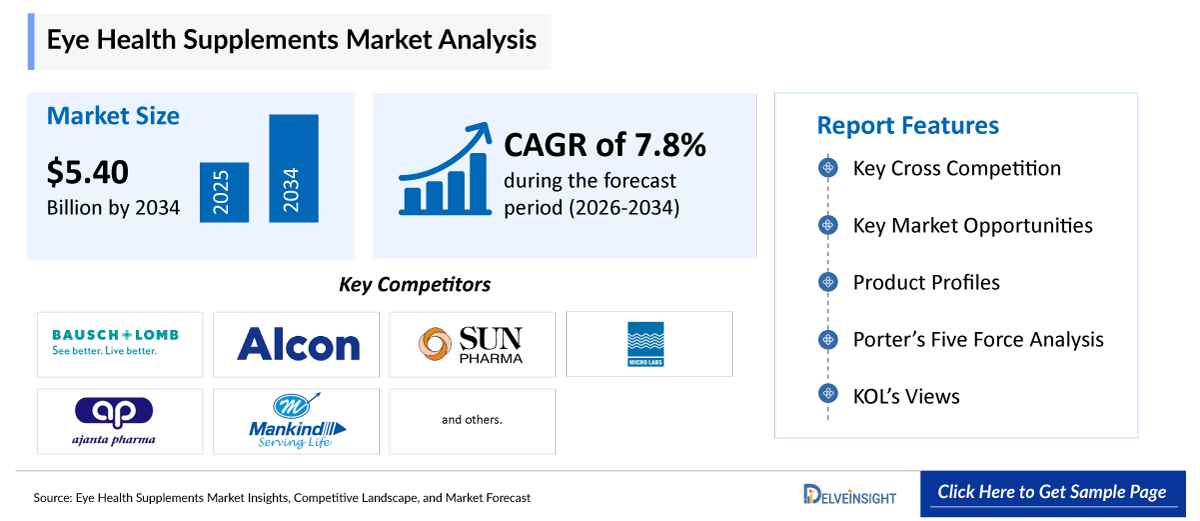
- The Eye Health Supplements market is estimated at USD 2.75 billion in 2025 and is projected to reach USD 5.40 billion by 2034. Growth is anchored in the rising global prevalence of age-related eye disorders, increasing screen-driven digital eye strain, and growing consumer preference for preventive, nutrition-based eye care.
- The global Eye Health Supplements market is growing at a CAGR of 7.8% during the forecast period from 2026 to 2034.
- By product type, the macular health supplements segment dominated the Eye Health Supplements market with a 38% share in 2025.
- By ingredient type, the carotenoids segment dominated the Eye Health Supplements market with a 36% share in 2025.
- By dosage form, the softgels segment dominated the Eye Health Supplements market with a 33% share in 2025.
- By formulation, the multi-ingredient supplements segment dominated the Eye Health Supplements market with a 57% share in 2025.
- By distribution channel, the home care settings segment dominated the Eye Health Supplements market with a 52% share in 2025.
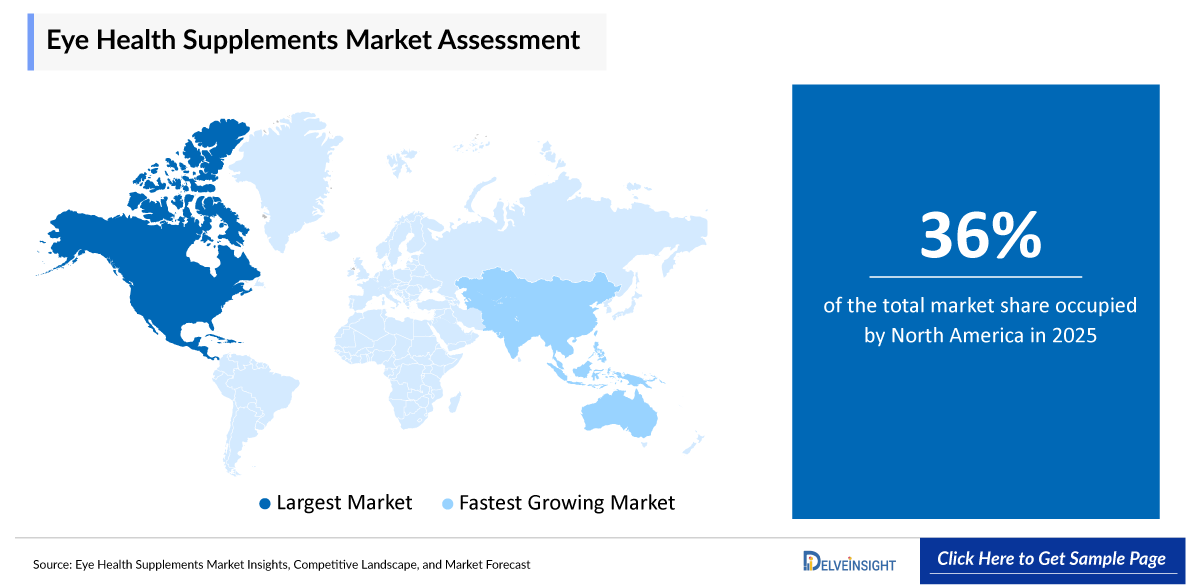
- North America dominated the global Eye Health Supplements market revenue with a 36% share in 2025, representing the highest regional market share globally.
Eye health supplements are dietary and nutraceutical products formulated with carotenoids such as lutein and zeaxanthin, omega-3 fatty acids, vitamins and minerals including vitamin A, vitamin C, vitamin E, zinc, and copper, and botanical ingredients such as bilberry and saffron extract, designed to support macular health, visual function, and ocular comfort. Because age-related macular degeneration, cataract, and dry eye disease are progressive and largely irreversible once advanced, clinicians and consumers increasingly turn to nutritional supplementation, anchored by the National Eye Institute-backed AREDS2 formulation, as a preventive and disease-modifying complement to clinical care. The market is organized by product type across macular health, vision support, dry eye support, and other specialty supplements; by ingredient type across carotenoids, omega-3 fatty acids, vitamins and minerals, botanical ingredients, and others; by dosage form spanning tablets, liquids, capsules, softgels, gummies, powders, and others; by formulation spanning single-ingredient supplements, multi-ingredient supplements, combination antioxidant formulations, and others; and by distribution channel across hospitals, specialty clinics, and home care settings. Driven by an aging global population, rising screen-time-related digital eye strain, clinically validated AREDS2-style formulations, and an expanding preventive self-care culture, eye health supplements have become an increasingly mainstream category within consumer nutraceuticals and ophthalmic wellness.
Eye Health Supplements Market Key Growth Drivers
- The rising global prevalence of vision impairment and age-related eye disorders is driving demand, with the World Health Organization estimating that more than 2.2 billion people worldwide live with some form of vision impairment, a substantial share of which is preventable through early nutritional intervention.
- Rapidly increasing screen time and digital device usage across all age groups is expanding demand for lutein- and zeaxanthin-rich formulations that address digital eye strain and support long-term macular health.
- The clinically proven efficacy of AREDS2-type formulations in slowing the progression of intermediate age-related macular degeneration continues to reinforce ophthalmologist recommendations, exemplified by Bausch + Lomb's May 2026 U.S. launch of PreserVision AREDS3, which combines AREDS2 nutrients with a proprietary B-vitamin complex.
- Product innovation across new formats, including gummies, liquids, and enhanced-bioavailability softgels using liposomal lutein and algae-derived DHA, is broadening the consumer base beyond traditional tablet users.
- The rapid growth of e-commerce and direct-to-consumer End-Users is expanding access and reach to younger, mobile-first consumers seeking preventive eye care solutions.
- Growing recommendation and dispensing of eye health supplements by ophthalmologists, optometrists, and specialty eye-care clinics is reinforcing clinical credibility and driving category trust.
- Rising investment, new product launches, and portfolio expansion by both global consumer health majors and specialized nutraceutical players are broadening product availability and accelerating category growth across developed and emerging markets.
Key Companies in Eye Health Supplements Market
The competitive landscape is led by the following active manufacturers:
- Bausch + Lomb
- Alcon
- Sun Pharmaceutical Industries
- Micro Labs
- Ajanta Pharma
- Mankind Pharma
- Indoco Remedies
- MacuHealth
- ZeaVision
- Vitabiotics
For illustrative purposes, only the top 10 companies are listed in the Table of Contents. The report may include analysis and references to additional companies relevant to the market assessment.
Eye Health Supplements Market Size
The following snapshot summarizes the principal report metrics for the Eye Health Supplements market.
|
Report Metrics |
Details |
|
2025 Market Size |
USD 2.75 billion |
|
2034 Projected Market Size |
USD 5.40 billion |
|
Growth Rate (2026-2034) |
7.8% CAGR |
|
Largest Market |
North America |
|
Fastest Growing Market |
Asia-Pacific |
|
Market Structure |
Fragmented |
All market values are expressed in USD and represent DelveInsight estimates synthesized from primary and secondary research.
Factors Contributing to the Growth of the Eye Health Supplements Market
Market Drivers
Rising Global Prevalence of Age-Related Eye Disorders
The most powerful driver of the Eye Health Supplements market is the rising global burden of age-related eye disorders, including age-related macular degeneration, cataract, and glaucoma. The World Health Organization estimates that more than 2.2 billion people worldwide live with some form of vision impairment, with a substantial proportion linked to preventable or nutritionally modifiable conditions. As the global population ages and life expectancy increases, the pool of consumers at risk of progressive macular and retinal decline expands steadily. Clinical evidence supporting the AREDS2 formulation, comprising lutein, zeaxanthin, vitamin C, vitamin E, zinc, and copper, in slowing the progression of intermediate AMD has become a cornerstone of ophthalmologist recommendations. As diagnosis rates improve and awareness of preventive nutrition grows, demand for clinically anchored macular health supplements is expected to expand steadily through 2034.
Increasing Screen Time and Digital Eye Strain
The proliferation of smartphones, laptops, and other digital devices has sharply increased daily screen exposure across all age groups, from students to working professionals to older adults. Extended screen time is closely associated with digital eye strain, dry eye symptoms, and disrupted blinking patterns, prompting rising consumer interest in lutein, zeaxanthin, and omega-3-based supplements marketed specifically for digital wellness and eye comfort. Millennials and Gen Z consumers, who are especially prone to prolonged device use, are increasingly adopting eye health supplements as part of broader self-care and wellness routines. This behavioral shift is broadening the addressable consumer base for the category well beyond the traditional older-adult demographic historically associated with AMD-focused nutrition, sustaining demand growth across the forecast period.
Clinically Validated AREDS2-Style Formulations
The clinically proven effectiveness of AREDS2-type formulations in slowing the progression of intermediate age-related macular degeneration continues to anchor category credibility and drive physician recommendation. Recent innovation is extending this scientific foundation: in May 2026, Bausch + Lomb launched PreserVision AREDS3 in the United States, combining established AREDS2 nutrients with a proprietary B-vitamin complex informed by research linking B-vitamin supplementation to reduced AMD risk. Such evidence-based product development reinforces consumer and clinician trust in the category, differentiates leading brands from generic alternatives, and supports premium pricing for clinically substantiated formulations, sustaining demand through the forecast period.
Product Innovation Across New Formats and Bioavailable Ingredients
Manufacturers are increasingly diversifying beyond traditional tablets into liquids, gummies, and enhanced-bioavailability softgels to broaden consumer appeal and improve nutrient absorption. Advances such as liposomal lutein delivery and algae-derived DHA and EPA, which offer higher bioavailability than conventional fish-oil sources, are improving efficacy while addressing consumer preference for sustainable, plant-based formulations. Gummies and liquid formats are gaining particular traction among younger consumers and those with swallowing difficulties, expanding the addressable population for eye health supplementation. This wave of formulation innovation is expected to sustain premiumization and support continued category expansion across the forecast period.
Expansion of E-Commerce and Direct-to-Consumer Channels
The rapid growth of online retail and direct-to-consumer digital brands is reshaping distribution economics within the Eye Health Supplements market. Digital channels enable brands to reach mobile-first, health-conscious consumers directly, capture stronger margins, and reinvest in research and formulation innovation. E-commerce platforms also facilitate targeted marketing around digital eye strain and preventive wellness, accelerating consumer discovery and trial of new brands and formats. As online penetration deepens across both developed and emerging markets, digital and direct-to-consumer channels are expected to grow faster than traditional retail and hospital-linked distribution, broadening market access throughout the forecast period.
Growing Ophthalmologist and Optometrist Recommendations
Increasing endorsement and dispensing of eye health supplements by ophthalmologists, optometrists, and specialty eye-care clinics is reinforcing the clinical credibility of the category and differentiating evidence-based brands from mass-market alternatives. Specialty clinics are increasingly incorporating nutritional counseling into standard eye examinations, particularly for patients with early-stage AMD, dry eye disease, or high-risk lifestyle factors such as prolonged screen exposure. This clinical channel, while smaller in volume than home care and retail distribution, commands strong consumer trust and supports premium positioning, and its growing role is expected to reinforce category credibility and drive incremental demand across the forecast period.
Rising Investment and Portfolio Expansion by Global and Regional Players
Sustained investment and new product launches by both global consumer health majors and specialized nutraceutical players are broadening product availability and intensifying competitive innovation. Established ophthalmic and pharmaceutical companies are expanding branded eye-care nutraceutical portfolios alongside prescription and OTC ophthalmic products, while specialized players continue to deepen clinical evidence and ingredient sourcing for macular-health-focused formulations. This broadening base of committed manufacturers, spanning global consumer health companies, regional pharmaceutical majors, and dedicated eye-health nutraceutical specialists, is expanding distribution reach and accelerating category awareness across developed and emerging markets alike.
Market Restraints
Despite strong momentum, the Eye Health Supplements market faces material constraints. Regulatory frameworks governing nutraceutical and dietary supplement claims vary substantially across geographies, creating compliance complexity and limiting the marketing claims manufacturers can make outside clinically substantiated formulations such as AREDS2. Many non-AREDS formulations lack robust, large-scale clinical substantiation, which can limit physician endorsement and consumer confidence relative to pharmaceutical alternatives. Because eye health supplements are predominantly out-of-pocket, over-the-counter purchases with limited insurance or reimbursement coverage, price sensitivity constrains adoption among lower-income consumers, particularly in emerging markets. The category also faces intense competition from low-cost generic and private-label alternatives that compete primarily on price rather than clinical evidence, pressuring margins for premium branded players. Counterfeit and substandard products in fragmented, less-regulated markets raise quality and safety concerns that can undermine consumer trust in the broader category. Additionally, potential interactions between high-dose supplements, such as beta-carotene, and certain patient populations, including smokers, require careful formulation and labeling. Together, these regulatory, clinical-evidence, affordability, and quality-assurance barriers temper the pace of growth, even as the underlying drivers of aging demographics, digital eye strain, and preventive self-care remain firmly intact.
Eye Health Supplements Market Segment Analysis
The eye health supplements market by product type (macular health supplements, vision support supplements, dry eye support supplements, and others), ingredient type (carotenoids, omega-3 fatty acids, vitamins & minerals, botanical ingredients, and others), dosage forms (tablets, liquids, capsules, softgels, gummies, powders, and others), formulation (single-ingredient supplements, multi-ingredient supplements, combination antioxidant formulations, and others), end-users (hospitals, specialty clinics, and home care settings), and geography (North America, Europe, Asia-Pacific, and Rest of World).
By Product Type
Dominant Subsegment: Macular Health Supplements.
The macular health supplements segment accounted for 38% of the Eye Health Supplements market in 2025. Macular health supplements lead the market because age-related macular degeneration is the most clinically established and widely diagnosed condition addressed by nutritional supplementation, backed by the National Eye Institute's AREDS2 formulation and decades of longitudinal clinical evidence. The aging global population, combined with growing screening and early diagnosis of AMD, sustains great and dependable demand for lutein-, zeaxanthin-, and antioxidant-based macular formulations. Recent innovation, including Bausch + Lomb's May 2026 launch of PreserVision AREDS3, reinforces category leadership through expanded clinical positioning. While dry eye support supplements are the fastest-growing product type, propelled by rising digital eye strain, the depth of clinical evidence and scale of the AMD-affected population secure the macular health segment's leadership across the forecast period.
By Ingredient Type
Dominant Subsegment: Carotenoids.
The carotenoids segment accounted for 36% of the Eye Health Supplements market in 2025. Carotenoids, principally lutein and zeaxanthin, are the leading ingredient type because they form the clinically validated core of the AREDS2 formulation and are the most extensively studied nutrients for macular pigment density and AMD risk reduction. Their established safety profile, broad regulatory acceptance, and strong consumer recognition make carotenoid-based formulations the default choice for both clinicians and manufacturers. Omega-3 fatty acids are the fastest-growing ingredient type, supported by rising evidence linking DHA and EPA to dry eye relief and by innovation in algae-derived, plant-based sources offering higher bioavailability than conventional fish oil. Vitamins and minerals remain essential co-formulants within multi-nutrient blends, and botanical ingredients such as bilberry and saffron extract are gaining niche traction. Nonetheless, the breadth of clinical evidence and consumer familiarity keep carotenoids the dominant ingredient type across the forecast period.
By Dosage Forms
Dominant Subsegment: Softgels.
The softgels segment accounted for 33% of the Eye Health Supplements market in 2025. Softgels are the leading dosage form because they offer superior encapsulation of lipid-soluble carotenoids and omega-3 fatty acids, improving nutrient stability and absorption relative to standard tablets. Softgels are also the format used in most AREDS2-based clinical trials and branded macular health products, reinforcing clinical credibility and physician recommendation. Premium softgel formulations command retail prices meaningfully above tablet equivalents, supporting healthy category margins for manufacturers. Gummies are the fastest-growing dosage form, gaining strong traction among younger consumers and those seeking more palatable, easy-to-swallow alternatives, while liquids are expanding among older adults with swallowing difficulties. Despite this format diversification, the absorption advantages and clinical pedigree of softgels secure their leadership across the forecast period.
By Formulation
Dominant Subsegment: Multi-Ingredient Supplements.
The multi-ingredient supplements segment accounted for 57% of the Eye Health Supplements market in 2025. Multi-ingredient supplements dominate the market because most clinically validated eye health regimens, led by the AREDS2 formulation, combine multiple carotenoids, vitamins, and minerals to address several biological pathways implicated in AMD progression and broader ocular health. Consumers and clinicians increasingly favor comprehensive, all-in-one formulations that simplify daily supplementation while delivering synergistic nutrient combinations. Combination antioxidant formulations, which pair carotenoids with omega-3 fatty acids and botanical antioxidants, are the fastest-growing formulation type as manufacturers develop next-generation products targeting both macular health and dry eye comfort simultaneously. Single-ingredient supplements retain a smaller, targeted niche among consumers seeking specific nutrients. The breadth of clinical evidence supporting multi-nutrient regimens secures the segment's leadership across the forecast period.
By End-Users
Dominant Subsegment: Home Care Settings.
The home care settings segment accounted for 52% of the Eye Health Supplements market in 2025. Home care settings lead distribution because eye health supplements are predominantly self-administered, over-the-counter products purchased through retail pharmacies, supermarkets, and increasingly e-commerce platforms for daily home use, without requiring clinical supervision. The rapid growth of online retail and direct-to-consumer brands has further reinforced home-based consumption by making a wide range of formulations accessible to consumers nationwide. Specialty clinics are the fastest-growing distribution channel as ophthalmologists and optometrists increasingly incorporate nutritional counseling and in-clinic dispensing into routine eye examinations, particularly for patients with diagnosed AMD or dry eye disease, lending strong clinical credibility to recommended brands. Hospitals represent a smaller channel tied to inpatient and post-surgical ophthalmic care. The scale and convenience of home-based, self-directed consumption secure the leadership of home care settings across the forecast period.
Eye Health Supplements Market Region Analysis
Dominant Region: North America
North America accounted for 36% of the global Eye Health Supplements market revenue in 2025, representing the highest regional market share globally. The region's dominance reflects high awareness of AMD and preventive eye nutrition, strong ophthalmologist and optometrist recommendation of AREDS2-based formulations, an established retail pharmacy and e-commerce infrastructure, and the presence of leading branded manufacturers such as Bausch + Lomb and Alcon. The United States leads the region on the strength of its aging population, high per-capita healthcare spending, and deep clinical evidence base supporting nutritional AMD management. Continued new product launches, including Bausch + Lomb's PreserVision AREDS3, alongside expanding direct-to-consumer distribution, reinforce the region's continued leadership across the forecast period.
Fastest Growing Region: Asia-Pacific
Asia-Pacific is the fastest-growing region in the Eye Health Supplements market. The region's elevated CAGR is driven by rising myopia and digital eye strain linked to intensive smartphone and screen use, expanding middle-class healthcare spending, and rapid growth of e-commerce channels across China, Japan, India, South Korea, and Australia. India's price-competitive manufacturing base and growing domestic nutraceutical industry, led by companies such as Sun Pharmaceutical Industries, Micro Labs, Ajanta Pharma, Mankind Pharma, and Indoco Remedies, is expanding access to affordable eye health formulations, while Japan continues to pioneer advanced bioavailable ingredient technologies. Rising awareness of preventive eye care and growing government health initiatives are accelerating adoption, positioning Asia-Pacific as the principal source of incremental growth over the forecast period.
Regional Commentary
North America
North America accounted for 36% of the global Eye Health Supplements market revenue in 2025. The United States dominates on the strength of its aging population, strong ophthalmology infrastructure, high consumer awareness of AMD nutrition, and the presence of leading branded manufacturers, while robust e-commerce penetration and continued product innovation reinforce its leadership.
Europe
Europe is a large and mature regional market, supported by strong consumer health awareness, established regulatory frameworks for nutraceutical claims, and a well-developed pharmacy and specialty retail infrastructure. Growing adoption of clinically substantiated formulations and expanding online retail are reinforcing the region's role in supplying eye health products across Germany, the United Kingdom, France, Italy, and Spain.
Asia-Pacific
Asia-Pacific is the fastest-growing region, propelled by rising digital eye strain, expanding healthcare investment, and growing nutraceutical manufacturing capacity across China, Japan, India, South Korea, and Australia. China's expanding wellness retail sector, Japan's advanced ingredient innovation, and India's cost-competitive domestic manufacturing base are accelerating regional category growth and e-commerce penetration.
Rest of World
The Rest of World region, spanning Latin America, the Middle East, and Africa, is an emerging growth frontier. Expanding retail pharmacy and e-commerce infrastructure, rising awareness of preventive eye nutrition, and gradually improving regulatory clarity for nutraceutical products are broadening access, while international partnerships and distributor networks support the build-out of regional market presence.
Eye Health Supplements Market Competitive Landscape
The Eye Health Supplements market is classified as Fragmented. A group of established global consumer health and ophthalmic majors, including Bausch + Lomb, Alcon, and Vitabiotics, anchor the branded, clinically substantiated tier of the market, while regional pharmaceutical companies such as Sun Pharmaceutical Industries, Micro Labs, Ajanta Pharma, Mankind Pharma, and Indoco Remedies compete through affordable branded generics and expanding domestic distribution, and specialized nutraceutical players such as MacuHealth and ZeaVision compete through deep clinical evidence, physician channel relationships, and premium, condition-specific formulations.
The competitive landscape can be evaluated across the following dimensions:
- Market concentration: Fragmented, with global branded majors, regional pharmaceutical companies, and specialized clinical-nutrition players all competing for share.
- Leading players: Bausch + Lomb, Alcon, and Vitabiotics anchor the branded, clinically substantiated tier through decades of ophthalmic and consumer health expertise.
- Geographic reach: Leaders operate global distribution networks spanning retail pharmacy, specialty eye-care clinics, and e-commerce across developed and emerging markets.
- Product portfolio strength: Top players offer multi-format portfolios spanning softgels, gummies, liquids, and tablets across macular health, dry eye, and general vision support.
- Clinical evidence and ingredient sourcing: Ownership of proprietary, clinically studied formulations and secured sourcing of high-purity lutein, zeaxanthin, and algae-derived omega-3 ingredients is a decisive advantage.
- Strategic partnerships: Collaborations with ophthalmology associations, optometry networks, and research institutions extend clinical credibility and reach.
- M&A and portfolio activity: Ongoing brand and portfolio expansion, including new AREDS-based product launches and geographic distribution agreements, characterizes competitive activity.
- Manufacturing capabilities: GMP-certified nutraceutical manufacturing, encapsulation technology, and quality-control systems for lipid-soluble actives are key competitive moats.
- Innovation focus: Liposomal and enhanced-bioavailability delivery systems, algae-derived omega-3 sourcing, combination antioxidant formulations, and expansion into gummies and liquid formats.
Eye Health Supplements Market Recent Developmental Activities
In May 2026, Bausch + Lomb launched PreserVision AREDS3 eye vitamins in the United States, combining the clinically established AREDS2 nutrient formula with a proprietary B-vitamin complex intended to support macular health earlier in the progression of age-related macular degeneration. Strategic significance: Strengthens Bausch + Lomb's clinical leadership in AMD nutrition and extends its addressable patient population to earlier disease stages.
In 2026, Alcon continued to expand its consumer eye-care portfolio alongside its core surgical and vision-care businesses, broadening its presence in nutritional and ocular-comfort product categories. Strategic significance: Reinforces Alcon's positioning as a full-spectrum eye-care company spanning surgical, contact lens, and consumer nutrition offerings.
In 2025, Sun Pharmaceutical Industries expanded its ophthalmology-focused product portfolio in India and international markets, building on its established prescription ophthalmic franchise. Strategic significance: Leverages Sun Pharma's existing ophthalmology distribution and prescriber relationships to broaden its eye-care nutraceutical footprint.
In 2025, Micro Labs strengthened its domestic ophthalmology and nutraceutical portfolio in India, expanding availability of branded eye health formulations through its pharmacy distribution network. Strategic significance: Extends Micro Labs' branded generics strength into the growing Indian eye health supplements category.
In 2025, Ajanta Pharma continued to build on its established ophthalmology specialty franchise, expanding branded formulations across its core Indian and emerging-market territories. Strategic significance: Reinforces Ajanta Pharma's long-standing specialization in ophthalmology as a platform for eye health nutraceutical growth.
In 2025, Mankind Pharma expanded its consumer healthcare and nutraceutical portfolio in India, broadening its presence across vitamin and wellness supplement categories including eye health. Strategic significance: Leverages Mankind Pharma's strong domestic retail and consumer brand reach to scale eye health supplement distribution.
In 2025, Indoco Remedies expanded its ophthalmic formulation portfolio, building on its established manufacturing expertise in eye-care pharmaceuticals to support adjacent nutraceutical offerings. Strategic significance: Extends Indoco Remedies' ophthalmic manufacturing expertise into the adjacent eye health nutraceutical category.
In 2024 and 2025, MacuHealth continued to expand distribution of its clinically studied macular carotenoid formulation through optometry and ophthalmology practice channels in North America and international markets. Strategic significance: Reinforces MacuHealth's positioning as a clinically differentiated, practitioner-channel-focused macular health brand.
In 2024 and 2025, ZeaVision expanded its clinically backed carotenoid supplement portfolio and continued to deepen relationships with eye-care practitioners across the United States. Strategic significance: Strengthens ZeaVision's clinical-channel distribution model centered on practitioner recommendation and evidence-based formulation.
In 2024 and 2025, Vitabiotics expanded its Vision-branded eye health supplement range across the United Kingdom, Europe, and international export markets, broadening its multi-format portfolio. Strategic significance: Reinforces Vitabiotics' position as a leading European branded vitamins and eye health nutraceutical company.
Eye Health Supplements Market Segmentation
Eye Health Supplements Market by Product Type
- Macular Health Supplements
- Vision Support Supplements
- Dry Eye Support Supplements
- Others
Eye Health Supplements Market by Ingredient Type
- Carotenoids
- Omega-3 Fatty Acids
- Vitamins & Minerals
- Botanical Ingredients
- Others
Eye Health Supplements Market by Dosage Forms
- Tablets
- Liquids
- Capsules
- Softgels
- Gummies
- Powders
- Others
Eye Health Supplements Market by Formulation
- Single-Ingredient Supplements
- Multi-Ingredient Supplements
- Combination Antioxidant Formulations
- Others
Eye Health Supplements Market by End-Users
- Hospitals
- Specialty Clinics
- Home Care Settings
- Others
Eye Health Supplements Market by Geography
- North America Eye Health Supplements Market
- United States Eye Health Supplements Market Size in USD million (2023-2034)
- Canada Eye Health Supplements Market Size in USD million (2023-2034)
- Mexico Eye Health Supplements Market Size in USD million (2023-2034)
- Europe Eye Health Supplements Market
- Germany Eye Health Supplements Market Size in USD million (2023-2034)
- United Kingdom Eye Health Supplements Market Size in USD million (2023-2034)
- France Eye Health Supplements Market Size in USD million (2023-2034)
- Italy Eye Health Supplements Market Size in USD million (2023-2034)
- Spain Eye Health Supplements Market Size in USD million (2023-2034)
- Rest of Europe Eye Health Supplements Market Size in USD million (2023-2034)
- Asia-Pacific Eye Health Supplements Market
- China Eye Health Supplements Market Size in USD million (2023-2034)
- Japan Eye Health Supplements Market Size in USD million (2023-2034)
- India Eye Health Supplements Market Size in USD million (2023-2034)
- Australia Eye Health Supplements Market Size in USD million (2023-2034)
- South Korea Eye Health Supplements Market Size in USD million (2023-2034)
- Rest of Asia-Pacific Eye Health Supplements Market Size in USD million (2023-2034)
- Rest of the World (RoW) Eye Health Supplements Market
- Middle East Eye Health Supplements Market Size in USD million (2023-2034)
- Africa Eye Health Supplements Market Size in USD million (2023-2034)
- South America Eye Health Supplements Market Size in USD million (2023-2034)
Eye Health Supplements Market Recent Industry Trends and Milestones (2023-2026)
|
Category |
Key Developments |
|
Eye Health Supplements Market Product Approval |
Innovation momentum is expanding clinically differentiated product launches. Bausch + Lomb launched PreserVision AREDS3 in the United States in May 2026, combining established AREDS2 nutrients with a proprietary B-vitamin complex. Regional players including Sun Pharmaceutical Industries, Micro Labs, Ajanta Pharma, Mankind Pharma, and Indoco Remedies expanded branded eye health nutraceutical portfolios across India and emerging markets, while specialty brands MacuHealth and ZeaVision deepened practitioner-channel distribution. |
|
Eye Health Supplements Market Expansion |
Manufacturers broadened dosage-form portfolios to capture new consumer segments. Growth in gummies and liquid formulations expanded accessibility for younger consumers and those with swallowing difficulties, while enhanced-bioavailability softgels using liposomal lutein and algae-derived DHA improved absorption. Vitabiotics expanded its Vision-branded range across the United Kingdom, Europe, and export markets, and Alcon broadened its consumer eye-care category presence. |
|
Eye Health Supplements Market Investment |
Digital commerce reshaped category economics, with online and direct-to-consumer channels growing faster than traditional pharmacy and supermarket channels as brands captured stronger margins and reached mobile-first consumers. Specialty eye-care clinics increasingly incorporated nutritional counseling and in-clinic dispensing into routine examinations, reinforcing clinical credibility for evidence-based brands. |
|
Company Strategy |
Bausch + Lomb: Clinical leadership through AREDS-based innovation and the PreserVision AREDS3 launch. Alcon: Broadening consumer eye-care category presence alongside its surgical and vision-care core. Sun Pharmaceutical Industries, Micro Labs, Ajanta Pharma, Mankind Pharma, and Indoco Remedies: Leveraging established Indian ophthalmology and consumer-health distribution to scale branded eye health nutraceuticals. MacuHealth and ZeaVision: Practitioner-channel-focused, clinically differentiated carotenoid formulations. Vitabiotics: Multi-format European branded vitamins leadership. |
|
Emerging Technologies |
Enhanced-bioavailability delivery systems, including liposomal lutein and algae-derived omega-3 sourcing, are the leading edge of innovation, alongside combination antioxidant formulations pairing carotenoids with omega-3 fatty acids and botanical antioxidants. Personalized nutrition approaches informed by retinal imaging and genetic risk assessment are emerging, while sustainability initiatives in ingredient sourcing and packaging are expanding across the category. |
Eye Health Supplements Market Startup Funding and Investment Trends
Investment in the Eye Health Supplements ecosystem has concentrated on clinically differentiated macular health formulations, enhanced-bioavailability delivery systems, and direct-to-consumer digital brands. The following companies illustrate recent funding and investment activity and technology focus.
|
Company |
Total Funding |
Funding Stage |
Main Offering |
Core Technology |
|
MacuHealth |
Privately Held / Growth |
Clinically studied macular carotenoid supplement |
Practitioner-dispensed macular pigment formulation |
MacuHealth |
|
Request for unlocking the report of the @ Eye Health Supplements Market | ||||
Capital and strategic investment are flowing toward providers that combine clinical evidence with differentiated delivery technology. Established branded players such as Bausch + Lomb, Alcon, and Vitabiotics continue to reinvest in formulation science and new product launches, while specialized practitioner-channel brands such as MacuHealth and ZeaVision scale distribution through clinical endorsement. Regional pharmaceutical companies including Sun Pharmaceutical Industries, Micro Labs, Ajanta Pharma, Mankind Pharma, and Indoco Remedies are expanding branded nutraceutical portfolios across price-sensitive emerging markets. Collectively, these investments signal conviction that clinical differentiation, bioavailability innovation, and digital distribution will define the next phase of competitive advantage in the global Eye Health Supplements market.
Key Takeaways from the Eye Health Supplements Market Report Study
- Market size analysis for the current Eye Health Supplements market size (2025), and market forecast for 9 years (2026 to 2034).
- Top key product/technology developments, mergers, acquisitions, partnerships, and joint ventures that happened over the last 3 years.
- Key companies dominating the global Eye Health Supplements market.
- Various opportunities available for competitors in the Eye Health Supplements market space.
- What are the top-performing segments in 2025? How will these segments perform in 2034?
- Which are the top-performing regions and countries in the current Eye Health Supplements market scenario?
- Which are the regions and countries where companies should concentrate their opportunities for Eye Health Supplements market growth in the future?
Target audience who can benefit from this Eye Health Supplements market report study
- Eye Health Supplements product providers
- Research organizations and consulting companies
- Eye Health Supplements -related organizations, associations, forums, and other alliances
- Government and corporate offices
- Start-up companies, venture capitalists, and private equity firms
- Distributors and traders dealing in Eye Health Supplements
- Various end-users who want to know more about the Eye Health Supplements market and the latest technological developments in the Eye Health Supplements market.

