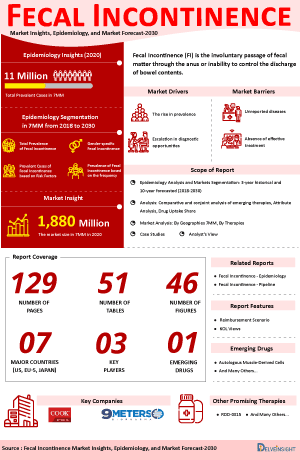
Fecal Incontinence Market Summary
- The Fecal Incontinence Market expansion is anticipated to be driven by a combination of established therapies and a gradually advancing pipeline.
- Approved interventions such as dextranomer/hyaluronic acid (SOLESTA) and sacral nerve stimulation currently form the foundation of treatment for patients with persistent symptoms, while emerging regenerative therapies, including Iltamiocel by Cook MyoSite and BioSphincter by Cellf BIO, are expected to broaden therapeutic options by targeting the underlying causes of sphincter dysfunction and continence impairment.
- The Fecal Incontinence Therapeutics Market Landscape is increasingly shifting toward therapies that address the underlying structural and neuromuscular drivers of disease, reflecting a broader move from symptom mitigation to functional restoration and durable continence outcomes.
- The leading Fecal Incontinence Companies include CookMyosite, Palette Life Sciences, EVERSANA, Cellf BIO, and others.
Fecal Incontinence Market and Epidemiology Analysis
- Fecal incontinence is a distressing and often underreported condition characterized by the recurrent involuntary passage of liquid or solid stool. Anal incontinence is a broader term that encompasses fecal incontinence as well as the involuntary leakage of flatus and mucus.
- A large proportion of patients have coexisting pelvic floor disorders, neurological conditions, or bowel dysfunction, highlighting the multifactorial nature of the disease and the need for individualized management approaches.
- Urge fecal incontinence is generally reported as the most common subtype, accounting for approximately 40–60% of cases, followed by mixed fecal incontinence, while passive fecal incontinence represents a smaller proportion of the patient population.
- Despite the availability of multiple therapeutic options, long-term disease control remains challenging for many Fecal Incontinence Patients, highlighting the need for interventions capable of delivering sustained functional improvement and reducing recurrence rates.
Fecal Incontinence Market Size and Forecast in the 7MM
| 2025 Fecal Incontinence Market Size | ~USD XX million |
| 2036 Projected Fecal Incontinence Market Size | ~USD XX million |
|
Fecal Incontinence Growth Rate (2026–2036) | ~XX% CAGR |
Key Factors Driving the Fecal Incontinence Market Growth
-
Increasing Awareness and Diagnosis of Fecal Incontinence
Growing awareness among healthcare providers and patients is improving the recognition and diagnosis of fecal incontinence, a condition that has historically been underreported due to social stigma and embarrassment. This is contributing to a larger identified patient population and increasing demand for effective management strategies.
-
Advancements in Diagnostic Evaluation and Patient Assessment
Improvements in anorectal physiology testing, imaging techniques, and clinical assessment tools are enabling more accurate identification of the underlying causes of fecal incontinence. Enhanced diagnostic capabilities support personalized treatment approaches and facilitate earlier intervention.
-
Emergence of Novel Therapeutic and Regenerative Approaches
The fecal incontinence treatment landscape is evolving beyond symptomatic management, with increasing interest in neuromodulation technologies, regenerative therapies, and sphincter-restoring approaches. These emerging modalities aim to address underlying functional deficits and improve long-term patient outcomes, driving innovation in the market.
DelveInsight's ‘Fecal Incontinence Market Insights, Epidemiology and Market Forecast – 2036’ report delivers an in-depth understanding of the fecal incontinence, historical and forecasted epidemiology, as well as the fecal incontinence market trends in the United States, EU4 (Germany, Spain, Italy, and France) and the United Kingdom, and Japan.
The Fecal Incontinence market report delivers a comprehensive analysis of the current treatment landscape, including standards of care, clinical practices, and evolving therapeutic algorithms. It evaluates fecal incontinence patient burden trends, revenue & market share dynamics, peak patient share & therapy uptake analysis, and provides an in-depth market size assessment, and growth rate projections (historical & forecast 2022–2036) across global regions. The report highlights key unmet medical needs in Fecal Incontinence and maps the competitive and clinical landscape to uncover high‑value opportunities, providing a clear outlook on future market growth potential.
Scope of the Fecal Incontinence Market Report | |
|
Study Period |
2022–2036 |
|
Historical Year |
2022–2025 |
|
Forecast Period |
2026–2036 |
|
Base Year |
2026 |
|
Geographies Covered |
|
|
Fecal Incontinence Market CAGR (Forecast period) |
~XX% (2026–2036) |
|
Fecal Incontinence Epidemiology Segmentation Analysis |
Patient Burden Assessment
|
|
Fecal Incontinence Companies |
|
|
Fecal Incontinence Therapies |
|
|
Fecal Incontinence Market |
Segmented by
|
|
Analysis |
|
Fecal Incontinence Understanding
Fecal Incontinence Overview and Diagnosis
Fecal incontinence is the inability to control bowel movements, resulting in the accidental leakage of stool. The condition can range from occasional leakage during the passage of gas to complete loss of bowel control. Fecal incontinence is often associated with factors such as anal sphincter dysfunction, nerve damage, reduced rectal compliance, pelvic floor disorders, aging, and chronic gastrointestinal conditions.
Despite its significant impact on quality of life, emotional well-being, and social functioning, fecal incontinence remains underreported and undertreated due to stigma and embarrassment surrounding the condition.
The diagnosis of fecal incontinence involves a comprehensive clinical evaluation, including a detailed medical history, assessment of symptom severity and frequency, and physical examination. Diagnostic investigations may include anorectal manometry to assess sphincter function, endoanal ultrasonography or magnetic resonance imaging (MRI) to evaluate structural abnormalities, and additional tests to assess rectal sensation and pelvic floor function. Identifying the underlying cause of fecal incontinence is critical for appropriate patient management and treatment selection.
Further details are provided in the report.
Current Fecal Incontinence Treatment Landscape
Fecal incontinence remains a significantly underrecognized and undertreated condition despite its substantial impact on quality of life, mental health, and social functioning. Disease burden is expected to increase with the aging population and rising prevalence of risk factors such as pelvic floor disorders, neurological conditions, and colorectal surgeries.
Growing awareness among healthcare providers and patients, along with improvements in diagnostic evaluation and referral pathways, is facilitating earlier identification of affected individuals. Furthermore, increasing recognition of the limitations of symptom-based management is driving interest in restorative and regenerative approaches that aim to improve long-term continence outcomes and address the underlying mechanisms of disease.
Further details related to country-based variations are provided in the report.
Fecal Incontinence Unmet Needs
The section “unmet needs of Fecal Incontinence” outlines the critical gaps between the current state of patient care, diagnosis, and the ideal & effective management of the disease. It highlights the obstacles experienced by patients, clinicians, and researchers and identifies potential solutions for future progress.
- Underdiagnoses and Delayed Treatment
- Limited Disease-Modifying Therapies
- Variable Long-Term Efficacy
- Impact on Quality of Life, and others…..
Note: Comprehensive unmet needs insights in Fecal Incontinence and their strategic implications are provided in the full report.
Fecal Incontinence Epidemiology
Key Findings from Fecal Incontinence Epidemiological Analysis and Forecast
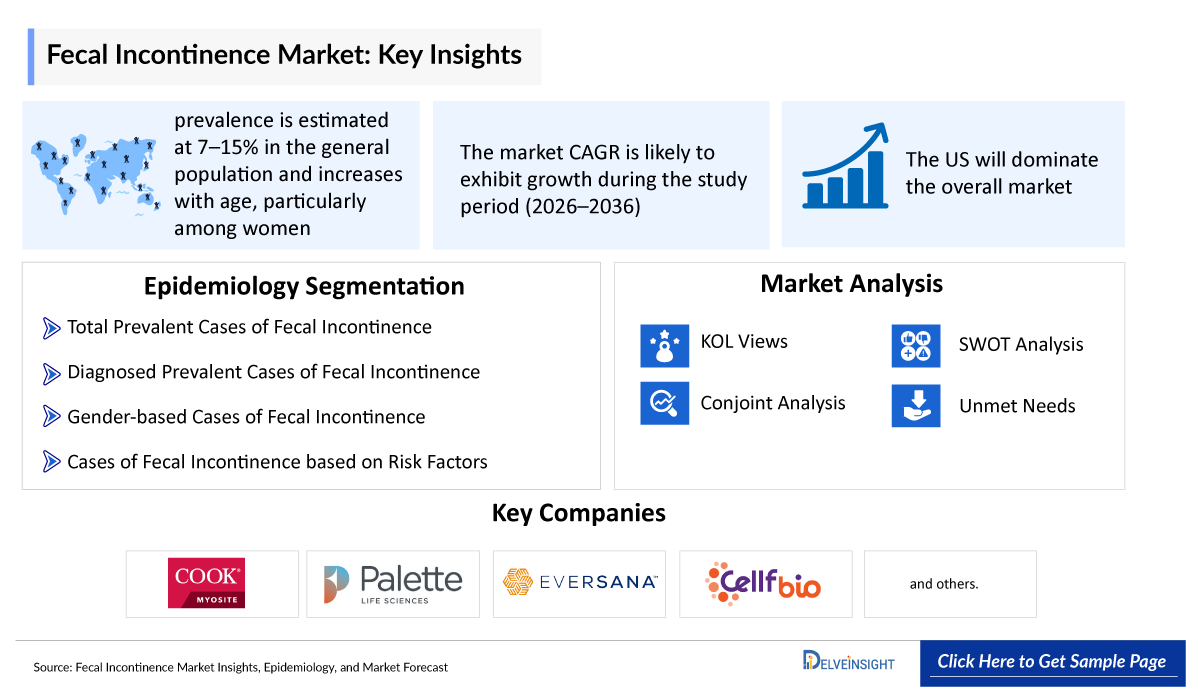
- Fecal incontinence is a chronic and often stigmatized disorder involving the involuntary passage of stool, which can significantly impair quality of life. Its prevalence is estimated at 7–15% in the general population and increases with age, particularly among women.
- The prevalence of fecal incontinence is estimated at approximately 9% among women compared with 8% among men in the adult population.
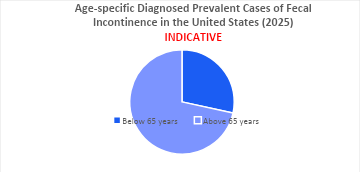
- The prevalence of fecal incontinence increases with age, making older adults the most affected population. Large population-based surveys estimate a prevalence of 3–7% among individuals aged 65 years and older, while rates may reach up to 50% among elderly residents of nursing homes, highlighting the substantial burden of the condition in advanced age groups.
Fecal Incontinence Epidemiology Segmentation
- Total Fecal Incontinence Diagnosed Prevalent Cases
- Fecal Incontinence Gender-specific Diagnosed Prevalent Cases
- Fecal Incontinence Age-Specific Diagnosed Prevalent Cases
- Fecal Incontinence Severity-specific Diagnosed Prevalent Cases
- Fecal Incontinence Etiology-Specific Diagnosed Prevalent Cases
- Total Fecal Incontinence Treated Cases
Fecal Incontinence Market Recent Breakthroughs and Developments
- On July 2, 2026, Sakura Biotherapeutics announced the successful completion of the US FDA's IND review, allowing the global FIDELIA Trial for a regenerative cell therapy targeting fecal incontinence to continue, with patient enrollment in the US expected to proceed in 2026.
- On June 1, 2026, researchers published real-world evidence demonstrating that a prescription digital therapeutic pelvic health system significantly improved symptoms in women with fecal incontinence, highlighting the growing role of digital therapeutics in disease management.
Fecal Incontinence Drug Analysis & Competitive Landscape
The fecal incontinence drug chapter provides a detailed, market-focused review of approved therapies and the emerging Fecal Incontinence Pipeline across Phase I–III clinical trials. It covers the mechanism of action, clinical trial data, patents, collaborations, and strategic partnerships, upcoming key catalysts for each therapy, along with their advantages, limitations, and recent developments. This section offers critical insights into the fecal incontinence treatment landscape, supporting market assessment, competitive analysis, and growth forecasting for the fecal incontinence therapeutics market.
Fecal Incontinence Approved Therapies
-
Dextranomer/hyaluronic acid; NASHA/Dx (SOLESTA): Palette Life Sciences and EVERSANA
SOLESTA, developed by Palette Life Sciences and commercialized in the US through a partnership with EVERSANA, is an FDA-approved injectable bulking agent for adults with fecal incontinence who have failed conservative therapy. Administered as a minimally invasive outpatient procedure, SOLESTA is designed to improve anal canal function and bowel control by augmenting tissue volume, offering a nonsurgical treatment option with demonstrated long-term efficacy.
Fecal Incontinence Pipeline Analysis
-
Iltamiocel: Cook MyoSite
Iltamiocel is an investigational autologous muscle-derived cell therapy being developed by Cook MyoSite for the treatment of chronic fecal incontinence. The therapy involves harvesting a patient's own muscle cells, expanding them ex vivo, and injecting them into the external anal sphincter to promote muscle regeneration and restore sphincter function. Iltamiocel is currently being evaluated in the Phase III DigniFI trial in women with fecal incontinence associated with obstetric anal sphincter injury, representing a potential regenerative approach that targets the underlying cause of the disease rather than providing symptomatic relief alone.
-
BioSphincter: Cellf BIO
It is an investigational tissue-engineered regenerative therapy for fecal incontinence designed to restore anal sphincter function rather than simply manage symptoms. The therapy utilizes autologous muscle and nerve cells to create a bioengineered sphincter construct that is surgically implanted around the anal canal to regenerate functional sphincter tissue, improve continence, and provide durable long-term benefit for patients with severe sphincter dysfunction.
|
Comparison of Fecal Incontinence Emerging Drugs Under Development | ||||||
|
Drug Name |
Company |
Highest Phase |
Indication |
RoA |
Molecule Type |
Anticipated Launch in the US |
|
Iltamiocel |
CookMyosite |
III |
Chronic fecal incontinence |
Perianal Injection |
Cellular Therapy |
US: 2030 |
|
BioSphincter |
Cellf BIO |
NA |
Fecal incontinence |
Surgical implantation |
Cellular Therapy |
Information is available in the full report |
|
Note: Launch insights are provisional and may change with future report updates or the occurrence of major key catalysts. | ||||||
Fecal Incontinence Companies
- CookMyosite
- Palette Life Sciences
- EVERSANA
- Cellf BIO and others
Fecal Incontinence Market Outlook
The Fecal Incontinence Treatment landscape remains largely centered on symptom management, with current approaches focusing on improving bowel control, reducing leakage episodes, and enhancing patient quality of life. First-line management typically includes dietary modifications, pelvic floor rehabilitation, bowel training, and pharmacologic agents such as antidiarrheal and fiber supplements.
For patients with persistent symptoms, minimally invasive interventions, including injectable bulking agents and sacral nerve stimulation, have become important therapeutic options, offering improvements in continence and functional outcomes.
Despite the availability of multiple treatment modalities, significant unmet needs remain, as many patients continue to experience inadequate symptom control, recurrence of symptoms, and reduced quality of life. Furthermore, the condition remains underdiagnosed and undertreated due to social stigma, delayed healthcare-seeking behavior, and variability in clinical presentation.
Current therapies primarily address symptom control rather than the underlying neuromuscular or structural abnormalities responsible for fecal incontinence.
Consequently, the treatment landscape is gradually evolving toward regenerative and restorative approaches aimed at addressing the root causes of the disease. Emerging therapies such as Iltamiocel, an autologous muscle-derived cell therapy designed to regenerate anal sphincter function, and BioSphincter, a tissue-engineered regenerative therapy intended to restore sphincter integrity, represent promising advances in the field. In parallel, continued innovation in neuromodulation technologies and sphincter-repair strategies is expected to expand treatment options and support a shift toward more durable and function-restoring therapeutic approaches over the forecast period.
Overall, increasing disease awareness, improved diagnosis rates, and growing recognition of the substantial quality-of-life burden associated with fecal incontinence are expected to support steady market growth across the major markets through 2036. However, the treatment landscape is likely to remain dominated by established conservative, procedural, and neuromodulation-based approaches until emerging regenerative therapies demonstrate long-term clinical benefit and achieve broader adoption.
Key Findings from Fecal Incontinence Market Forecast Report
- In 2025, the United States accounted for the largest share of the 7MM Fecal Incontinence market and is expected to maintain its dominance, with continued growth projected through 2036.
- Established treatment modalities, including pelvic floor rehabilitation, sacral nerve stimulation,
- In the long term, regenerative and restorative therapies such as Iltamiocel and BioSphincter have the potential to gradually capture market share by addressing underlying sphincter dysfunction and offering more durable improvements in continence, particularly in patients with moderate-to-severe disease who have limited treatment options.
Fecal Incontinence Drug Class/Insights into Leading Emerging and Marketed Therapies (2022-2036)
The fecal incontinence pipeline comprises regenerative therapies, injectable bulking agents, neuromodulation technologies, and tissue-engineering approaches aimed at restoring anal sphincter integrity, enhancing neuromuscular function, and improving bowel control. Unlike conventional treatments that primarily provide symptomatic relief, emerging therapies increasingly focus on addressing the underlying structural and functional deficits responsible for fecal incontinence.
- Autologous Muscle-Derived Cell Therapies: These regenerative therapies utilize a patient's own muscle-derived cells to repair and strengthen damaged anal sphincter muscles. By promoting muscle regeneration and improving sphincter contractility, these therapies aim to restore continence and provide durable functional improvement. In fecal incontinence, where sphincter injury is a major contributor to disease burden, cell-based therapies represent a promising disease-modifying approach. Iltamiocel is a leading example of this class currently in late-stage development.
- Injectable Bulking Agents: Injectable bulking agents are designed to augment tissue volume within the anal canal, thereby improving sphincter coaptation and reducing stool leakage. These minimally invasive therapies enhance anorectal closure mechanisms and are particularly beneficial for patients with mild-to-moderate fecal incontinence who have not responded adequately to conservative management. SOLESTA is the leading marketed therapy in this category.
Fecal Incontinence Drug Uptake
This section focuses on the uptake rate of potential Fecal Incontinence therapies expected to be available in the fecal incontinence market during the forecast period (2026–2036). The analysis covers therapy uptake, peak-year performance, factors influencing adoption during the growth phase, patient acceptance, and the potential market contribution of both emerging and established treatment options.
Overall, therapy uptake in this space is expected to be moderate, driven by the significant unmet need for durable and restorative treatment approaches. Regenerative therapies such as Iltamiocel and BioSphincter are anticipated to demonstrate medium-to-fast uptake due to their potential to address underlying sphincter dysfunction and provide long-term functional improvement. Established therapies such as SOLESTA are expected to maintain steady adoption owing to their minimally invasive administration and established clinical experience.
However, uptake of emerging regenerative therapies may initially be moderated by factors such as procedural complexity, specialist availability, treatment costs, and the need for long-term clinical evidence demonstrating sustained efficacy and safety.
Detailed insights into emerging therapies' drug uptake are included in the report.
Fecal Incontinence Market Access and Reimbursement of Approved Therapies
Reimbursement is a crucial factor that affects the drug’s access to the market. Often, the decision to reimburse comes down to the price of the drug relative to the benefit it produces in treated patients. To reduce the healthcare burden of these high-cost therapies, many payment models are being considered by payers and other industry insiders.
The programs available in the US are:
- Vaccines for Children Program (VFC)
- Children’s Health Insurance Program (CHIP)
- Medicare and Medicaid Coverage
NOTE: Further Details are provided in the final report….
Fecal Incontinence Therapies Price Scenario & Trends
Pricing and analogue assessment of fecal incontinence therapies highlights evolving price dynamics structures. This section summarizes the cost of approved treatments, the closest and most appropriate analogue selection for emerging therapies, and the understanding of how pricing influences market access, adherence, and long-term uptake.
Fecal Incontinence Industry Experts and Physician Views
To keep up with fecal incontinence market trends, we take Key Opinion Leaders (KOLs) and Subject Matter Experts (SMEs) opinions working in the domain through primary research to fill the data gaps and validate our secondary research. Industry Experts were contacted for insights on fecal incontinence emerging therapies, evolving treatment landscape, patient adherence to conventional therapies, therapy switching trends, drug adoption and uptake, accessibility challenges, and epidemiology and real-world prescription patterns in fecal incontinence, including MD, PhD, Instructor, Postdoctoral Researcher, Professor, Researcher, and others.
DelveInsight’s analysts connected with 10+ KOLs to gather insights; however, interviews were conducted with 6+ KOLs in the 7MM. Centers such as the University of Minnesota Medical School, Bambino Gesù Children's Hospital, the University of Nottingham, etc., were contacted. Their opinion helps understand and validate current and emerging fecal incontinence therapies, highlight unmet medical needs, provide epidemiological context, and support strategic decisions for market access, therapy adoption, and pipeline prioritization in Fecal Incontinence.
|
Region |
Key Opinion Leaders (KOLs) and Subject Matter Experts (SMEs) |
|
United States |
“One of the biggest challenges in fecal incontinence is that many patients continue to live with symptoms for years before seeking medical attention. As awareness improves and patients are identified earlier, we are likely to see better outcomes through timely intervention. Looking ahead, regenerative approaches that aim to restore sphincter function rather than simply manage symptoms could represent a meaningful shift in how this condition is treated.” |
|
Spain |
“The clinical course of fecal incontinence can vary considerably across patients due to differences in sphincter integrity, neuromuscular function, and underlying comorbidities. This highlights the importance of comprehensive evaluation to identify the key drivers of disease and optimize long-term management strategies." |
Fecal Incontinence Report Qualitative Analysis: SWOT and Conjoint Analysis
We perform qualitative and Fecal Incontinence Therapeutics Market Intelligence analysis using various approaches, such as SWOT analysis and conjoint analysis. In the SWOT analysis of fecal incontinence, strengths, weaknesses, opportunities, and threats in terms of disease diagnosis, patient awareness, patient burden, competitive landscape, cost-effectiveness, and geographical accessibility of therapies are provided.
Conjoint analysis analyzes emerging therapies based on relevant attributes such as safety, efficacy, frequency of administration, route of administration, and order of entry. Scoring is given based on these parameters to analyze the effectiveness of therapy.
The team of analysts analyzes promising emerging Fecal Incontinence therapies based on relevant attributes such as safety, efficacy, frequency of administration, route of administration, and order of entry. In efficacy, the trial’s primary and secondary outcome measures are evaluated, whereas the therapies’ safety is evaluated, wherein the acceptability, tolerability, and adverse events are mainly observed. In addition, the scoring is also based on the route of administration, order of entry, probability of success, and the addressable patient pool for each therapy. According to these parameters, the final weightage score and the ranking of the emerging therapies are decided.
Scope of the Fecal Incontinence Market Report
- The Fecal Incontinence Therapeutics Market Report covers a segment of key events, an executive summary, a descriptive overview, explaining its causes, signs and symptoms, pathogenesis, and currently available treatments.
- Comprehensive insight has been provided into the epidemiology segments and forecasts, the future growth potential of the diagnosis rate, and disease progression along Fecal Incontinence Treatment guidelines.
- Additionally, an all-inclusive account of both the current and emerging treatments, along with the elaborate profiles of prominent therapies, will have an impact on the current Fecal Incontinence Treatment landscape.
- A detailed review of the Fecal Incontinence Therapeutics Market, historical and forecasted market size, Fecal Incontinence Drugs Market Share by therapies, detailed assumptions, and rationale behind our approach is included in the report, covering the 7MM drug outreach.
- The Fecal Incontinence Therapeutics Market Report provides an edge while developing business strategies by understanding trends through SWOT analysis and expert insights/KOL views, patient journey, and treatment preferences that help in shaping and driving the 7MM Fecal Incontinence Drugs Market.
Fecal Incontinence Market Report Insights
- Fecal Incontinence Patient Population Forecast
- Fecal Incontinence Therapeutics Market Size
- Fecal Incontinence Pipeline Analysis
- Fecal Incontinence Market Size and Trends
- Fecal Incontinence Therapeutics Market Opportunity (Current and forecasted)
Fecal Incontinence Market Report Key Strengths
- Epidemiology‑based (Epi‑based) Bottom‑up Forecasting
- Artificial Intelligence (AI)-Enabled Market Research Report
- 11-Year Forecast
- Fecal Incontinence Market Outlook (North America, Europe, Asia-Pacific)
- Patient Burden Trends (By Geography)
- Fecal Incontinence Treatment Addressable Market (TAM)
- Fecal Incontinence Competitive Landscape
- Fecal Incontinence Major Companies Insights
- Fecal Incontinence Price Trends and Analogue Assessment
- Fecal Incontinence Therapies Drug Adoption/Uptake
- Fecal Incontinence Therapies Peak Patient Share Analysis
Fecal Incontinence Market Report Assessment
- Current Fecal Incontinence Treatment Practices
- Fecal Incontinence Unmet Needs
- Fecal Incontinence Clinical Development Analysis
- Fecal Incontinence Emerging Drugs Product Profiles
- Fecal incontinence Therapeutics Market attractiveness
- Fecal incontinence Qualitative Analysis (SWOT and Conjoint analysis)
Key Questions Answered in the Fecal Incontinence Market Report
Fecal Incontinence Treatment Market Insights
- What was the fecal incontinence treatment market size, the market size by therapies, the Fecal Incontinence drugs market share (%) distribution in 2025, and what would it look like by 2036? What are the contributing factors for this growth?
- What are the anticipated pricing variations among different geographies for the emerging therapies in the future?
- What can be the future treatment paradigm of fecal incontinence?
- What are the disease risks, burdens, and unmet needs of fecal incontinence?
- What will be the growth opportunities across the 7MM concerning the patient population with fecal incontinence?
- Who is the major future competitor in the market, and how will the competitors affect their market share?
- What are the current options for the treatment of fecal incontinence? What are the current guidelines for treating fecal incontinence in the US, Europe, and Japan?
Reasons to Buy the Fecal Incontinence Market Report
- The Fecal Incontinence Therapeutics Market Report will help in developing business strategies by understanding the latest trends and changing treatment dynamics driving the Fecal Incontinence Drugs Market.
- Bottom-up forecasting builds from the affected population to product forecasts, delivering a robust, data-driven approach ideal for new therapies and novel classes.
- Insights on patient burden/disease Fecal Incontinence Incidence, evolution in diagnosis, and factors contributing to the change in the epidemiology of the disease during the forecast years.
- Understand the existing Fecal Incontinence Drugs Market opportunities in varying geographies and the growth potential over the coming years.
- Identifying strong upcoming players in the Fecal Incontinence Drugs Market will help devise strategies to help get ahead of competitors.
- Detailed analysis and ranking of class-wise potential emerging therapies under the conjoint analysis section to provide visibility around leading classes.
- To understand KOLs’ perspectives on the accessibility, acceptability, and compliance-related challenges of existing treatment to overcome barriers in the future.
- Detailed insights into the unmet needs of the existing Fecal Incontinence Drugs Market so that the upcoming players can strengthen their development and launch strategy.
- This Artificial Intelligence (AI)-enabled report summarizes and simplifies complex datasets within the report into clear, actionable insights for stakeholders, investors, and healthcare providers, enabling faster, data-driven decisions.
Stay updated with us for Recent Articles