
Fetal & Neonatal Care Equipment Market Summary
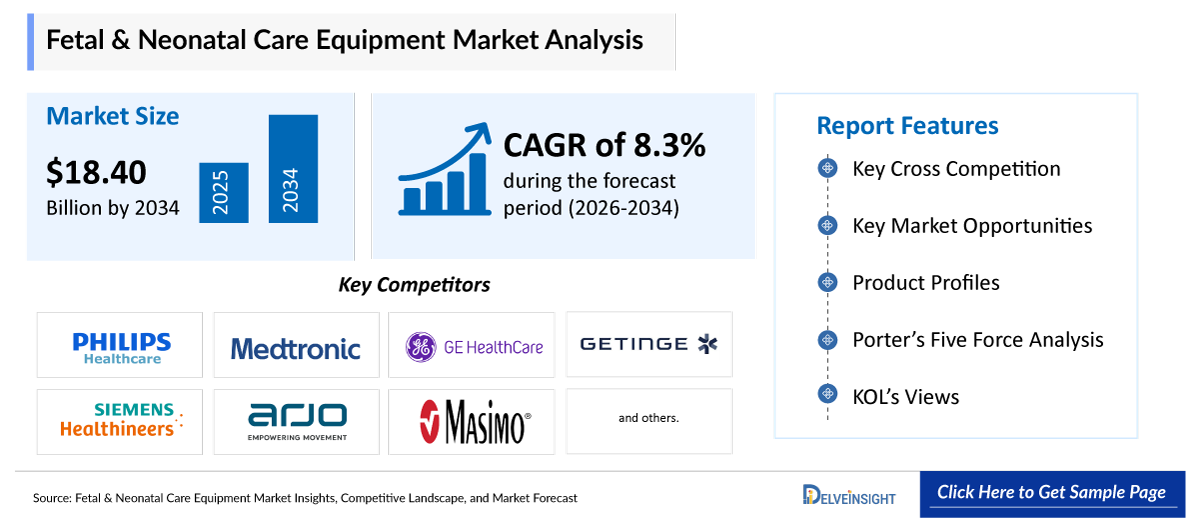
- The Fetal & Neonatal Care Equipment market size is estimated at USD 8.95 billion in 2025 and is projected to reach USD 18.40 billion by 2034. Growth is anchored in the rising global incidence of preterm birth, the expanding burden of congenital and neonatal complications, and sustained investment in NICU and labor-and-delivery infrastructure.
- The global Fetal & Neonatal Care Equipment market is growing at a CAGR of 8.3% during the forecast period from 2026 to 2034.
- By product type, the fetal care equipment segment dominated the Fetal & Neonatal Care Equipment market with a 63% share in 2025.
- By portability, the fixed equipment segment dominated the Fetal & Neonatal Care Equipment market with a 61% share in 2025.
- By end-user, the hospitals segment dominated the Fetal & Neonatal Care Equipment market with a 58% share in 2025.
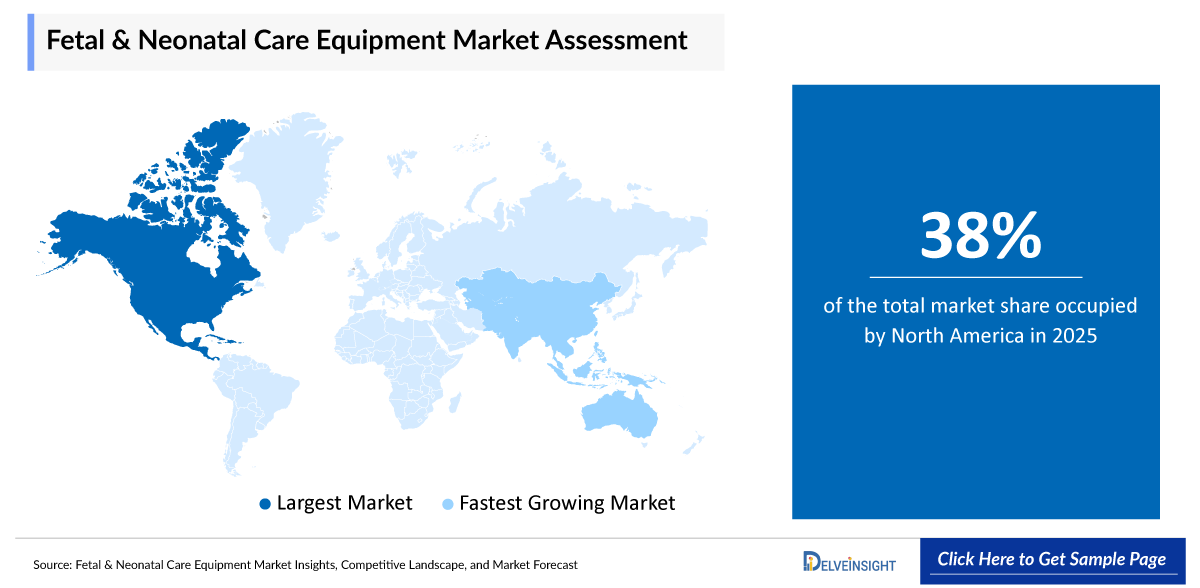
- North America dominated the global Fetal & Neonatal Care Equipment market revenue with a 38% share in 2025, representing the highest regional market share globally.
Fetal and neonatal care equipment encompasses the medical devices used to monitor, diagnose, and support unborn and newborn babies across pregnancy, labor and delivery, and the neonatal intensive care unit (NICU). Fetal care equipment, including ultrasound systems, fetal Dopplers, fetal MRI systems, and fetal monitors, enables clinicians to track fetal growth, heart rate, and well-being throughout gestation and labor. Neonatal care equipment, including infant warmers, neonatal ventilators, neonatal resuscitators, infant SpO2 sensors, and integrated monitoring systems, supports thermoregulation, respiration, and continuous vital-sign surveillance for newborns, particularly those born preterm or with low birth weight.
The market is organized by product type across fetal care equipment and neonatal care equipment; by portability across fixed, portable, and transport equipment; and by end-user across hospitals, specialty clinics, and other care settings. Driven by rising preterm birth rates, the growing prevalence of congenital anomalies, expanding NICU infrastructure, and continuous innovation in wireless and AI-enabled monitoring, fetal and neonatal care equipment has become foundational infrastructure underpinning maternal-infant health systems worldwide.
Fetal & Neonatal Care Equipment Market Key Growth Drivers
- The rising global incidence of preterm birth is a primary demand driver, with an estimated one in ten babies worldwide born before 37 weeks of gestation, requiring immediate access to warming, respiratory, and monitoring equipment.
- The persistent global burden of neonatal mortality, with an estimated 2.3 million newborn deaths occurring in the first 28 days of life in 2022, is reinforcing government and hospital investment in NICU equipment.
- The growing prevalence of congenital anomalies and high-risk pregnancies is expanding demand for advanced fetal diagnostic and monitoring technologies.
- Rapid technological advancement, including AI-enabled ultrasound, wireless and cableless fetal monitoring, and non-adhesive neonatal SpO2 sensors, is accelerating equipment replacement cycles and adoption.
- Expanding NICU capacity and government-led maternal-and-child-health initiatives across developed and emerging markets are increasing procurement of fixed and portable care equipment.
- Rising healthcare expenditure, broader insurance coverage, and growing institutional and out-of-pocket spending on maternal-infant health are supporting equipment upgrades in hospitals and specialty clinics.
- Frequent product launches and portfolio expansion by leading manufacturers, spanning ultrasound platforms, neonatal ventilators, and integrated monitoring systems, are sustaining competitive innovation and replacement demand.
- The convergence of rising birth-risk factors, NICU infrastructure build-out, and continuous device innovation is expected to sustain steady, high-single-digit growth in the market through 2034.
Key Companies in Fetal & Neonatal Care Equipment Market
The competitive landscape is led by the following active device manufacturers:
- Koninklijke Philips N.V.
- Medtronic
- GE HealthCare
- Getinge
- Siemens Healthineers AG
- Arjo
- Masimo
- VYAIRE
- Hamilton Medical
- Fisher & Paykel Healthcare Limited, and others
For illustrative purposes, only the top 10 companies are listed in the Table of Contents. The report may include analysis and references to additional companies relevant to the market assessment.
Fetal & Neonatal Care Equipment Market Size
The following snapshot summarizes the principal report metrics for the fetal & neonatal care equipment market.
|
Report Metrics |
Details |
|
2025 Market Size |
USD 8.95 billion |
|
2034 Projected Market Size |
USD 18.40 billion |
|
Growth Rate (2026-2034) |
8.3% CAGR |
|
Largest Market |
North America |
|
Fastest Growing Market |
Asia-Pacific |
|
Market Structure |
Moderately Fragmented |
All market values are expressed in USD and represent DelveInsight estimates synthesized from primary and secondary research.
Factors Contributing to the Growth of the Fetal & Neonatal Care Equipment Market
Fetal & Neonatal Care Equipment Market Drivers
- Rising Incidence of Preterm Birth and Neonatal Complications: The single most powerful driver of the Fetal & Neonatal Care Equipment market is the persistently high global rate of preterm birth. An estimated one in ten babies worldwide is born before 37 completed weeks of gestation, and preterm and low-birth-weight infants require immediate, continuous access to thermoregulation, respiratory support, and vital-sign monitoring. Neonatal mortality remains a significant global health burden, with an estimated 2.3 million newborns dying within the first 28 days of life in 2022, underscoring the clinical urgency of equipping delivery rooms and neonatal intensive care units (NICUs) with reliable warmers, ventilators, resuscitators, and monitoring systems. As health systems in both developed and emerging markets prioritize newborn survival, demand for fetal and neonatal care equipment expands directly, anchoring market growth through 2034.
- Growing Prevalence of Congenital Anomalies and High-Risk Pregnancies: The rising prevalence of congenital anomalies and high-risk pregnancies, driven in part by increasing maternal age and the growing incidence of gestational conditions such as hypertension and diabetes, is expanding demand for advanced fetal diagnostic and monitoring technologies. Ultrasound systems, fetal Dopplers, and fetal MRI systems allow clinicians to detect structural and functional abnormalities early in gestation, supporting timely intervention and delivery planning. As obstetric care increasingly emphasizes early detection and risk stratification, hospitals and specialty clinics are expanding their fetal imaging and monitoring capacity, sustaining consistent demand for fetal care equipment across the forecast period.
- Technological Advancements in AI-Enabled and Wireless Monitoring: Continuous innovation is reshaping the competitive landscape and accelerating equipment replacement cycles. Leading manufacturers are integrating artificial intelligence into ultrasound workflow and fetal heart-rate interpretation, deploying cableless and wireless fetal and maternal monitors that improve patient mobility and comfort during labor, and introducing non-adhesive neonatal SpO2 sensors designed for the fragile skin of preterm infants. These advances improve diagnostic accuracy, reduce clinician workload, and support integration with hospital-wide monitoring networks, encouraging hospitals to upgrade legacy equipment and adopt next-generation platforms.
- Expanding NICU Infrastructure and Government Maternal-Health Initiatives: Governments and health systems worldwide are investing in the expansion of neonatal intensive care capacity and maternal-health infrastructure, particularly in regions with historically limited access to specialized newborn care. New and upgraded NICUs require comprehensive equipment packages spanning infant warmers, neonatal ventilators, resuscitators, and integrated monitoring systems, while national maternal-and-child-health programs are funding equipment procurement in public hospitals and community health centers. This sustained infrastructure build-out, particularly across Asia-Pacific and parts of the Rest of World region, is broadening the addressable market for fetal and neonatal care equipment.
- Rising Healthcare Expenditure and Broader Insurance Coverage: Growing healthcare expenditure and the gradual broadening of insurance coverage for maternal and newborn services are increasing institutional capacity to invest in advanced fetal and neonatal care equipment. Hospitals are allocating greater capital budgets toward labor-and-delivery and NICU modernization, while private and specialty clinics are expanding maternal-fetal medicine service lines to meet rising patient demand. This financial capacity supports both the replacement of aging equipment and the adoption of premium, technologically advanced systems.
- Frequent Product Launches and Portfolio Expansion by Key Players: Leading manufacturers, including Koninklijke Philips N.V., GE HealthCare, Medtronic, Getinge, Siemens Healthineers, Masimo, and Fisher & Paykel Healthcare, continue to expand their fetal and neonatal care portfolios through new product launches, partnerships, and clinical validation studies. Recent introductions spanning AI-assisted ultrasound platforms, optical fetal oxygen-sensing technology, auto-leveling neonatal CPAP systems, and clinically validated neonatal pulse oximetry sensors illustrate the pace of innovation. This continuous cycle of product refresh sustains replacement demand and intensifies competitive differentiation across the forecast period.
Fetal & Neonatal Care Equipment Market Restraints
Despite favorable growth prospects, the Fetal & Neonatal Care Equipment market faces material constraints. The high cost of advanced fetal and neonatal monitoring and life-support equipment remains a significant barrier, particularly for smaller hospitals and providers in low- and middle-income countries, where capital budgets are limited and reimbursement for maternal-infant services remains uneven. Infrastructure limitations, including inconsistent power supply, insufficient trained NICU staff, and limited cold-chain and maintenance support, constrain adoption in resource-constrained settings. Regulatory approval timelines for new fetal and neonatal devices, particularly those incorporating AI-based diagnostic features, can be lengthy and add to development costs. A global shortage of neonatal nurses and trained maternal-fetal medicine specialists limits the pace at which new equipment can be effectively deployed and utilized. Pricing pressure from hospital procurement consolidation and the presence of lower-cost regional manufacturers further pressures margins for premium equipment providers. Together, these cost, infrastructure, regulatory, and workforce barriers temper the pace of growth, even as the underlying drivers of preterm birth prevalence, NICU expansion, and technological innovation remain firmly intact.
Fetal & Neonatal Care Equipment Market Segment Analysis
The Fetal & Neonatal Care Equipment by Product Type (Fetal Care Equipment [Ultrasound Systems, Fetal Dopplers, Fetal MRI Systems, Fetal Monitors, Others], Neonatal Care Equipment [Infant Warmers, Neonatal Ventilators, Neonatal Resuscitators, Infant SpO2 Sensors, Integrated Monitoring Systems, Others]), Portability (Fixed Equipment, Portable Equipment, Transport Equipment), End-User (Hospitals, Specialty Clinics, Others), and Geography (North America, Europe, Asia-Pacific, and Rest of World).
By Product Type
Dominant Subsegment: Fetal Care Equipment.
Dominant: Fetal Care Equipment ~ 42%
The fetal care equipment segment accounted for 63% of the Fetal & Neonatal Care Equipment market in 2025. Fetal care equipment, led by ultrasound systems, is the leading product category because obstetric ultrasound has become the clinical standard for pregnancy confirmation, fetal growth assessment, and anomaly screening, generating very high, recurring procedure volumes across hospitals and specialty clinics worldwide. Fetal monitors and fetal Dopplers extend this surveillance into labor and delivery, while fetal MRI systems support advanced diagnostic evaluation of complex or high-risk pregnancies. The breadth of established clinical use, combined with continuous innovation in AI-assisted and portable ultrasound platforms, sustains great and dependable demand for fetal care equipment. While neonatal care equipment is growing quickly on the back of NICU expansion and rising preterm birth rates, the sheer frequency, ubiquity, and clinical centrality of fetal imaging and monitoring secure the fetal care equipment segment's leadership across the forecast period.
By Portability
Dominant Subsegment: Fixed Equipment.
Dominant: Fixed Equipment ~ 61%
The fixed equipment segment accounted for 61% of the Fetal & Neonatal Care Equipment market in 2025. Fixed equipment, including stationary ultrasound systems, incubators, and bedside neonatal monitors, is the leading portability category because hospitals and NICUs continue to anchor the majority of fetal and neonatal care around dedicated, permanently installed diagnostic and life-support platforms that offer the highest precision, connectivity, and integration with hospital information systems. These fixed installations remain the backbone of labor-and-delivery suites and neonatal intensive care units, where continuous, high-acuity monitoring is required. Portable and transport equipment, by contrast, are the fastest-growing categories, propelled by the rise of point-of-care obstetric ultrasound, ambulance-based neonatal transport, and home-monitoring devices, but the scale and clinical dependence on fixed hospital infrastructure keep this segment dominant through 2034.
By End-User
Dominant Subsegment: Hospitals.
Dominant: Hospitals ~ 58%
The hospitals segment accounted for 58% of the Fetal & Neonatal Care Equipment market in 2025. Hospitals are the leading end-user because they house the overwhelming majority of labor-and-delivery units and neonatal intensive care units, and because complex, high-risk deliveries and preterm births are almost always managed in hospital settings equipped with comprehensive fetal and neonatal monitoring and life-support infrastructure. The concentration of skilled maternal-fetal medicine and neonatology specialists within hospitals reinforces this dominance. Specialty clinics, including standalone obstetric and maternal-fetal medicine practices, are the fastest-growing end-user category as routine prenatal screening and low-risk delivery care increasingly shift toward outpatient and clinic-based settings, but the depth of hospital-based NICU and delivery infrastructure secures the hospitals segment's clear leadership across the forecast period.
Fetal & Neonatal Care Equipment Market Region Analysis
Dominant Region: North America
Dominant: North America ~ 38% (Largest)
North America accounted for 38% of the global Fetal & Neonatal Care Equipment market revenue in 2025, representing the highest regional market share globally. The region's dominance reflects a mature maternal-fetal medicine ecosystem, high NICU density, strong reimbursement frameworks, and the concentrated presence of leading manufacturers, including Koninklijke Philips N.V., Medtronic, GE HealthCare, and Masimo. The United States leads regional demand on the strength of its hospital infrastructure, widespread adoption of advanced fetal monitoring and neonatal life-support technologies, and continuous product innovation from domestically headquartered device makers. Sustained investment in NICU modernization, combined with strong institutional purchasing power and regulatory clarity from the FDA, anchors the region's continued leadership across the forecast period.
Fastest Growing Region: Asia-Pacific
Asia-Pacific is the fastest-growing region in the Fetal & Neonatal Care Equipment market. The region's elevated CAGR is driven by high birth volumes, rising preterm birth rates, rapid expansion of NICU and maternal-health infrastructure, and growing healthcare investment across China, Japan, India, South Korea, and Australia. China and India are expanding hospital-based NICU capacity and public maternal-health programs, Japan is advancing adoption of technologically sophisticated fetal and neonatal monitoring systems, and South Korea and Australia are investing in specialized perinatal centers. Government healthcare spending, expanding insurance coverage, and rising awareness of neonatal health are accelerating equipment adoption, positioning Asia-Pacific as the principal source of incremental growth over the forecast period.
Fetal & Neonatal Care Equipment Market Regional Commentary
North America
North America accounted for 38% of the global Fetal & Neonatal Care Equipment market revenue in 2025. The United States dominates on the strength of its hospital and NICU infrastructure, strong reimbursement environment, and the concentrated presence of leading device manufacturers, while Canada and Mexico contribute a growing share through expanding maternal-health programs and hospital modernization initiatives.
Europe
Europe is a large and advanced regional market, supported by well-established public healthcare systems, strong regulatory frameworks under the EU Medical Device Regulation, and high NICU standards across Germany, the United Kingdom, France, Italy, and Spain. Continued investment in fetal monitoring and neonatal respiratory technologies by regional and multinational manufacturers reinforces the region's role as a mature, innovation-driven market.
Asia-Pacific
Asia-Pacific is the fastest-growing region, propelled by high birth volumes, rising preterm birth incidence, and rapid expansion of NICU and maternal-health infrastructure across China, Japan, India, South Korea, and Australia. Government-led maternal-and-child-health initiatives and growing private hospital investment are accelerating regional equipment adoption and clinical capacity build-out.
Rest of World
The Rest of World region, spanning Latin America, the Middle East, and Africa, is an emerging growth frontier. Expanding hospital and maternal-health infrastructure, rising awareness of neonatal survival, and international and non-governmental support for NICU capacity building are gradually broadening access, while affordability and availability of trained neonatal care staff remain key considerations shaping the pace of adoption.
Fetal & Neonatal Care Equipment Market Competitive Landscape
The Fetal & Neonatal Care Equipment market is classified as Moderately Fragmented. A group of diversified global medtech leaders, including Koninklijke Philips N.V., GE HealthCare, Medtronic, and Siemens Healthineers AG, compete across both fetal imaging and neonatal life-support categories through broad, integrated device portfolios, while specialized providers such as Getinge, Arjo, Masimo, VYAIRE, Hamilton Medical, and Fisher & Paykel Healthcare Limited compete through deep expertise in specific device categories such as neonatal ventilation, pulse oximetry, and infant warming, intensifying competition across individual product lines.
The competitive landscape can be evaluated across the following dimensions:
- Market concentration: Moderately fragmented, with diversified global medtech leaders competing alongside specialized category-focused manufacturers.
- Leading players: Koninklijke Philips N.V., GE HealthCare, Medtronic, and Siemens Healthineers AG anchor the top tier through broad fetal and neonatal device portfolios.
- Geographic reach: Leaders operate global sales, service, and clinical-support networks spanning hospitals and NICUs across North America, Europe, and Asia-Pacific.
- Product portfolio strength: Top players offer end-to-end fetal imaging, fetal monitoring, neonatal ventilation, thermoregulation, and integrated monitoring solutions.
- Technology differentiation: AI-enabled ultrasound interpretation, wireless and cableless fetal monitoring, and non-adhesive neonatal SpO2 sensors are decisive competitive advantages.
- Strategic partnerships: Collaborations between device makers and technology innovators, such as GE HealthCare's partnerships with Raydiant Oximetry and Diagnoly, extend clinical and AI capability.
- Clinical validation: Investment in large-scale clinical studies, such as Masimo's neonatal pulse oximetry accuracy research, strengthens regulatory positioning and clinician trust.
- Manufacturing capabilities: Precision sensor manufacturing, radiation-shielded and cleanroom production for imaging components, and rigorous biocompatibility testing are key competitive moats.
- Innovation focus: AI-assisted diagnostics, wireless and wearable monitoring, non-invasive neonatal respiratory support, and integrated NICU monitoring platforms.
Fetal & Neonatal Care Equipment Market Recent Developmental Activities
- In March 2026, GE HealthCare expanded its AI-enabled ultrasound portfolio with advanced imaging and workflow automation capabilities to support maternal and neonatal monitoring applications.
- In February 2026, GE HealthCare collaborated with Diagnoly to integrate AI-driven fetal ultrasound analysis into its imaging workflow, aiming to improve diagnostic precision in prenatal assessments.
- In February 2026, Fisher & Paykel Healthcare Limited introduced the F&P Bubble CPAP System, which uses an auto-leveling generator to deliver consistent respiratory pressure support for neonatal patients.
- In April 2026, Masimo presented findings from its large-scale prospective NeoPODS study demonstrating accurate pulse oximetry performance across skin tones in critically ill neonates.
- In 2025 and 2026, Siemens Healthineers AG continued to expand adoption of its ACUSON Maple ultrasound platform in obstetric and maternal-fetal medicine imaging applications.
- In 2025, Arjo (Huntleigh) continued to expand deployment of its Smartsigns SC500 series fetal and maternal monitors across hospital labor-and-delivery units.
- In 2025, Medtronic continued to expand adoption of its Nellcor OxySoft SpO2 sensor technology in neonatal monitoring applications.
- In May 2025, GE HealthCare partnered with Raydiant Oximetry to integrate optical fetal oxygen-saturation sensing technology with GE's clinical fetal monitoring platform.
- In March 2025, Koninklijke Philips N.V. expanded deployment of its Avalon CL cableless fetal and maternal monitoring system together with IntelliSpace connectivity across hospital networks.
- In January 2025, Hamilton Medical received regulatory clearance for a neonatal ventilation option on its Hamilton-MR1 ventilator platform.
- In 2025, VYAIRE continued to expand its bellavista neonatal ventilation platform to support respiratory care for premature and critically ill newborns.
- In 2025, Getinge continued to expand clinical adoption of its Servo-n neonatal ventilator featuring Neurally Adjusted Ventilatory Assist (NAVA) technology to support weaning of premature infants from mechanical ventilation.
Fetal & Neonatal Care Equipment Market Segmentation
- Fetal & Neonatal Care Equipment Market by Product Type
- Fetal Care Equipment
- Ultrasound Systems
- Fetal Dopplers
- Fetal MRI Systems
- Fetal Monitors
- Others
- Fetal Care Equipment
- Neonatal Care Equipment
- Infant Warmers
- Neonatal Ventilators
- Neonatal Resuscitators
- Infant SpO2 Sensors
- Integrated Monitoring Systems
- Others
- Fetal & Neonatal Care Equipment Market by Portability
- Fixed Equipment
- Portable Equipment
- Transport Equipment
- Fetal & Neonatal Care Equipment Market by End User
- Hospitals
- Specialty Clinics
- Others
Fetal & Neonatal Care Equipment Market by Geography
- North America Fetal & Neonatal Care Equipment Market
- United States Fetal & Neonatal Care Equipment Market Size in USD million (2023-2034)
- Canada Fetal & Neonatal Care Equipment Market Size in USD million (2023-2034)
- Mexico Fetal & Neonatal Care Equipment Market Size in USD million (2023-2034)
- Europe Fetal & Neonatal Care Equipment Market
- Germany Fetal & Neonatal Care Equipment Market Size in USD million (2023-2034)
- United Kingdom Fetal & Neonatal Care Equipment Market Size in USD million (2023-2034)
- France Fetal & Neonatal Care Equipment Market Size in USD million (2023-2034)
- Italy Fetal & Neonatal Care Equipment Market Size in USD million (2023-2034)
- Spain Fetal & Neonatal Care Equipment Market Size in USD million (2023-2034)
- Rest of Europe Fetal & Neonatal Care Equipment Market Size in USD million (2023-2034)
- Asia-Pacific Fetal & Neonatal Care Equipment Market
- China Fetal & Neonatal Care Equipment Market Size in USD million (2023-2034)
- Japan Fetal & Neonatal Care Equipment Market Size in USD million (2023-2034)
- India Fetal & Neonatal Care Equipment Market Size in USD million (2023-2034)
- Australia Fetal & Neonatal Care Equipment Market Size in USD million (2023-2034)
- South Korea Fetal & Neonatal Care Equipment Market Size in USD million (2023-2034)
- Rest of Asia-Pacific Fetal & Neonatal Care Equipment Market Size in USD million (2023-2034)
- Rest of the World (RoW) Fetal & Neonatal Care Equipment Market
- Middle East Fetal & Neonatal Care Equipment Market Size in USD million (2023-2034)
- Africa Fetal & Neonatal Care Equipment Market Size in USD million (2023-2034)
- South America Fetal & Neonatal Care Equipment Market Size in USD million (2023-2034)
Fetal & Neonatal Care Equipment Market Recent Industry Trends and Milestones (2023-2026):
|
Category |
Key Developments |
|
Fetal & Neonatal Care Equipment Market Product Approval |
Regulatory momentum continues to expand device availability. Hamilton Medical received clearance for a neonatal ventilation option on its Hamilton-MR1 platform in January 2025, while Fisher & Paykel Healthcare introduced its F&P Bubble CPAP System for neonatal respiratory support in February 2026. Continued clinical validation, including Masimo's large-scale NeoPODS neonatal pulse oximetry accuracy study, reinforces regulatory confidence in newer monitoring technologies. |
|
Fetal & Neonatal Care Equipment Market Expansion |
Manufacturers broadened capability across the fetal and neonatal care continuum. GE HealthCare expanded its AI-enabled ultrasound portfolio and partnered with Diagnoly and Raydiant Oximetry to integrate AI-driven analysis and optical oxygen-sensing technology. Philips expanded deployment of its cableless Avalon CL fetal monitoring system, while Getinge and VYAIRE continued to advance neonatal ventilation platforms incorporating NAVA and other advanced respiratory technologies. |
|
Fetal & Neonatal Care Equipment Market Investment |
Capital investment concentrated on AI-enabled diagnostics, wireless monitoring, and NICU infrastructure expansion. Strategic technology partnerships, including GE HealthCare's collaborations with Raydiant Oximetry and Diagnoly, illustrate the sector's shift toward software-enabled differentiation. Hospitals across Asia-Pacific and the Rest of World region increased capital allocation toward NICU modernization and maternal-health infrastructure. |
|
Company Strategy |
Koninklijke Philips N.V.: Wireless fetal and maternal monitoring leadership through the Avalon CL platform. GE HealthCare: AI-enabled ultrasound and fetal monitoring innovation through external technology partnerships. Medtronic: Neonatal SpO2 sensor technology via its Nellcor portfolio. Getinge: Advanced NAVA-enabled neonatal ventilation. Siemens Healthineers AG: Obstetric ultrasound imaging through the ACUSON platform. Arjo: Fetal and maternal monitoring through its Huntleigh Smartsigns portfolio. Masimo: Clinically validated neonatal pulse oximetry. VYAIRE and Hamilton Medical: Specialized neonatal ventilation platforms. Fisher & Paykel Healthcare Limited: Neonatal respiratory humidification and CPAP innovation. |
|
Emerging Technologies |
AI-powered ultrasound interpretation, wireless and cableless fetal monitoring, wearable neonatal sensors, and automated fetal assessment tools are the leading edge of innovation. Non-adhesive neonatal pulse oximetry sensors designed for fragile preterm skin, optical fetal oxygen-saturation sensing, and neurally adjusted ventilatory assist (NAVA) technology for neonatal ventilators are expanding clinical capability, while growing integration between fetal and neonatal monitoring platforms and hospital-wide digital health systems is accelerating earlier detection and intervention. |
Fetal & Neonatal Care Equipment Market Startup Funding and Investment Trends
Investment in the Fetal & Neonatal Care Equipment ecosystem has concentrated on AI-enabled fetal ultrasound analysis, optical and wireless fetal monitoring, and next-generation neonatal respiratory and sensor technologies. The following companies illustrate recent partnership and technology-focused activity.
|
Company |
Total Funding |
Funding Stage |
Main Offering |
Core Technology |
|
Raydiant Oximetry |
Venture-backed |
Growth / Strategic Partnership |
Fetal oxygen-saturation monitoring |
Optical fetal SpO2 sensing |
|
Diagnoly |
Venture-backed |
Growth / Strategic Partnership |
AI-driven fetal ultrasound analysis |
AI imaging software |
|
Request for unlocking the report of the @ Fetal & Neonatal Care Equipment Market Insights | ||||
Capital and strategic partnership activity is flowing toward companies that combine novel sensing technology with clinical validation. GE HealthCare's partnerships with Raydiant Oximetry and Diagnoly illustrate the strategic value of optical fetal oxygenation sensing and AI-enabled ultrasound analysis to established device manufacturers. Established players including Masimo, Philips, and Fisher & Paykel Healthcare continue to invest in clinical studies and next-generation neonatal sensor and respiratory technology. Collectively, these investments signal conviction that AI-enabled diagnostics, wireless and optical monitoring, and advanced neonatal respiratory support will define the next phase of competitive advantage in the global Fetal & Neonatal Care Equipment market.
Key Takeaways from the Fetal & Neonatal Care Equipment Market Report Study
- Market size analysis for the current fetal & neonatal care equipment market size (2025), and market forecast for 9 years (2026 to 2034).
- Top key product/technology developments, mergers, acquisitions, partnerships, and joint ventures that happened over the last 3 years.
- Key companies dominating the global fetal & neonatal care equipment market.
- Various opportunities available for competitors in the fetal & neonatal care equipment market space.
- What are the top-performing segments in 2025? How will these segments perform in 2034?
- Which are the top-performing regions and countries in the current fetal & neonatal care equipment market scenario?
- Which are the regions and countries where companies should concentrate their opportunities for fetal & neonatal care equipment market growth in the future?
Target audience who can benefit from this fetal & neonatal care equipment market report study
- Fetal & neonatal care equipment product providers
- Research organizations and consulting companies
- Fetal & neonatal care equipment-related organizations, associations, forums, and other alliances
- Government and corporate offices
- Start-up companies, venture capitalists, and private equity firms
- Distributors and traders dealing in fetal & neonatal care equipment
- Various end-users who want to know more about the fetal & neonatal care equipment market and the latest technological developments in the fetal & neonatal care equipment market.

