Foot Drop Treatment Devices Market Summary
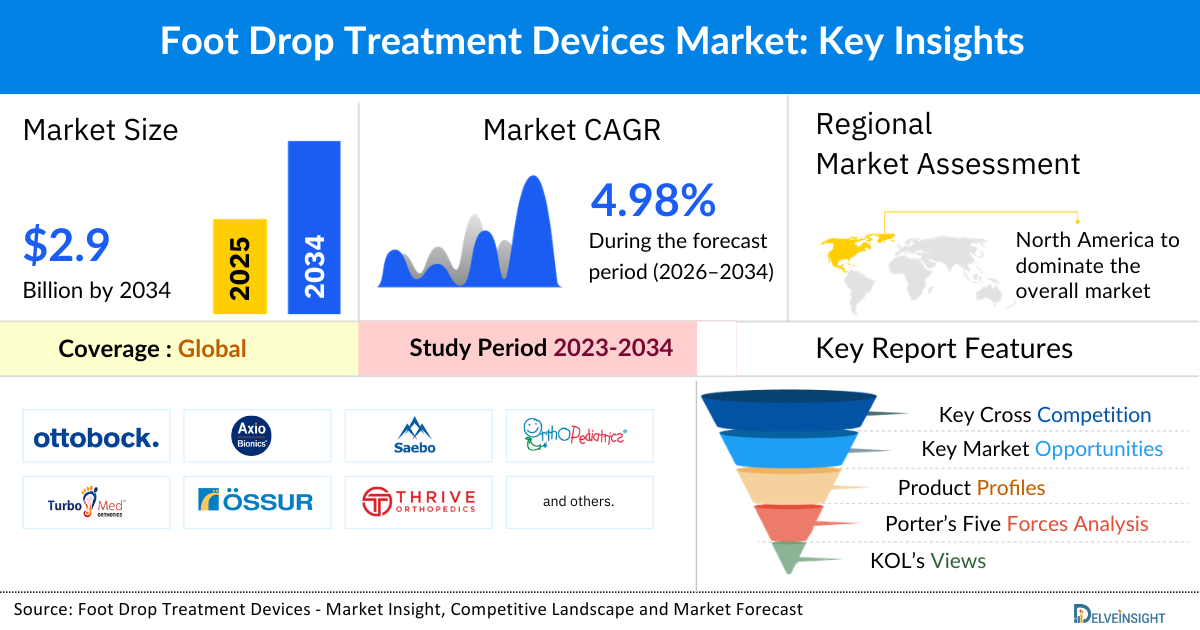
- The global foot drop treatment devices market size is expected to increase from USD 1,917.55 million in 2025 to USD 2,954.85 million by 2034, reflecting strong and sustained growth.
- The global foot drop treatment devices market is growing at a CAGR of 4.98% during the forecast period from 2026 to 2034.
- The foot drop treatment devices market is largely driven by the rising prevalence of neurological disorders, including stroke, multiple sclerosis, cerebral palsy, and spinal cord injuries that often lead to muscle weakness or nerve damage affecting foot movement. The expanding elderly population further contributes to market growth, as age-related neuromuscular decline increases the risk of foot drop. Moreover, ongoing technological advancements in implantable systems, functional electrical stimulation (FES) devices, and lightweight, user-friendly orthotic solutions are improving treatment efficacy, patient comfort, and mobility. Together, these factors are fueling the global adoption of innovative foot drop treatment devices.
- The leading companies operating in the foot drop treatment devices market include Ottobock, AxioBionics, Saebo, OrthoPediatrics Corp., Turbomed Orthotics, Ossur, Thrive Orthopedics, Allard USA Inc., NextStep Robotics, Arthrex, Inc., Evolution Devices, Narang Medical Limited, AliMed, Cionic, Tynor Orthotics Pvt. Ltd., Shanghai Siyi Intelligence Technology Co. Ltd., ShenzhenXFT Medical Limited, MyndTec Inc., Ktwo Healthacre Pvt. Ltd., Rope Neuro Rehabilitation, and others.
- North America is expected to dominate the global foot drop treatment devices market, primarily driven by the rising prevalence of neurological disorders such as stroke, multiple sclerosis, and peripheral nerve injuries. The region’s growing aging population, which is more susceptible to these conditions, further fuels demand for effective treatment solutions. Additionally, continuous technological advancements in implants, wearable devices, and functional electrical stimulation (FES) systems are enhancing treatment effectiveness and patient compliance, reinforcing North America’s leading position in the market.
- In the product type segment of the foot drop treatment devices market, the electrical stimulator category is estimated to account for the largest market share in 2025.
Request for unlocking the report of the @ Foot Drop Treatment Devices Market Insights
Foot Drop Treatment Devices Market Size and Forecasts
|
Report Metrics |
Details |
|
2025 Market Size |
USD 1,917.55 million |
|
2034 Projected Market Size |
USD 2,954.85 million |
|
Growth Rate (2026-2034) |
4.98% CAGR |
|
Largest Market |
North America |
|
Fastest Growing Market |
Asia-Pacific |
|
Market Structure |
Moderately Concentrated |
Factors Contributing to the Growth of the Foot Drop Treatment Devices Market
- Rising prevalence of neurological disorders such as stroke, multiple sclerosis, and others: The increasing prevalence of neurological disorders, including stroke, multiple sclerosis, cerebral palsy, and peripheral nerve injuries, is a major factor driving the growth of the foot drop treatment devices market. These conditions often lead to weakened or paralyzed muscles in the lower limbs, resulting in foot drop and impaired mobility. As the number of patients affected by these neurological disorders continues to rise globally, there is a growing need for effective treatment solutions such as ankle-foot orthoses (AFOs), functional electrical stimulation (FES) devices, and wearable neuromuscular stimulators.
- Expansion of rehabilitation facilities, physiotherapy services, and home-based care programs supporting the use of foot drop devices: The expansion of rehabilitation facilities, physiotherapy services, and home-based care programs is an important driver of the foot drop treatment devices market. As more rehabilitation centers and physical therapy clinics are being established, patients with nerve injuries, stroke, or neurological disorders are gaining better access to structured recovery programs. These facilities often recommend and use foot drop devices such as braces and functional electrical stimulation systems to improve walking ability and muscle strength. Additionally, the growing focus on home-based care is encouraging patients to continue their rehabilitation outside hospitals, increasing the demand for easy-to-use and portable foot drop devices. Furthermore, rising awareness about early rehabilitation and long-term mobility support is supporting the adoption of these devices, thereby contributing to overall market growth.
- Technological advancements in implants: Technological advancements in implants are playing a crucial role in driving the growth of the foot drop treatment devices market. Modern implantable solutions, including functional electrical stimulation (FES) systems and neuroprosthetic devices, are becoming increasingly sophisticated, offering more precise stimulation, improved durability, and customizable settings tailored to individual patient needs. These innovations enhance mobility, gait, and overall quality of life for patients suffering from neurological disorders such as stroke, multiple sclerosis, and peripheral nerve injuries. Additionally, the integration of smart sensors, wireless connectivity, and AI-based algorithms in implantable devices allows real-time monitoring and adaptive therapy, improving treatment effectiveness and patient compliance. As a result, continuous advancements in implant technology are significantly expanding therapeutic options and reinforcing market growth for foot drop treatment devices.
Foot Drop Treatment Devices Market Report Segmentation
This foot drop treatment devices market report offers a comprehensive overview of the global foot drop treatment devices market, highlighting key trends, growth drivers, challenges, and opportunities. It covers detailed market segmentation by Product Type (Electrical Stimulator and Braces/Splints), Application (Neuropathy, Muscle Disorders, Brain & Spinal Disorders, and Others), End-Users (Hospitals and Clinics, Homecare Settings, and Others), and geography. The report provides valuable insights into the competitive landscape, regulatory environment, and market dynamics across major markets, including North America, Europe, and Asia-Pacific. Featuring in-depth profiles of leading industry players and recent product innovations, this report equips businesses with essential data to identify market potential, develop strategic plans, and capitalize on emerging opportunities in the rapidly growing foot drop treatment devices market.
Foot drop treatment devices are specialized medical and rehabilitative tools designed to assist individuals who have difficulty lifting the front part of their foot due to neurological, muscular, or anatomical conditions. These devices help restore normal gait, improve mobility, and prevent complications such as tripping or falls.
The foot drop treatment devices market is primarily driven by the increasing prevalence of neurological disorders, including stroke, multiple sclerosis, and peripheral nerve injuries, which often result in impaired foot dorsiflexion and mobility challenges. Additionally, the growing aging population, who are more susceptible to neurological and musculoskeletal conditions, is further boosting demand for effective treatment solutions. Technological advancements, particularly in implants, functional electrical stimulation (FES) systems, and smart wearable orthoses, are also enhancing device effectiveness, comfort, and patient compliance, contributing to the overall growth of the market.
Get More Insights into the Report @ Foot Drop Treatment Devices Market Trends
What are the latest foot drop treatment devices market dynamics and trends?
The global foot drop treatment devices market is primarily driven by the increasing prevalence of neurological disorders, including stroke, multiple sclerosis, and peripheral nerve injuries, which often lead to foot drop. Additionally, the growing aging population, who are more susceptible to such conditions, is fuelling demand for effective treatment solutions. According to the World Health Organization (2023), an estimated 1.8 million people worldwide were living with multiple sclerosis (MS) in 2019. More recent epidemiological data published in 2025 indicate that the global prevalence has risen to approximately 2.9 million people, reflecting improved diagnosis, expanded reporting, and a growing disease burden worldwide. One of the common mobility complications in MS patients is foot drop, caused by disrupted nerve signals to the muscles responsible for dorsiflexion. As the global prevalence of MS continues to rise and diagnosis improves, a growing number of patients require long-term mobility support and rehabilitation. This directly increases demand for ankle-foot orthoses (AFOs), functional electrical stimulation (FES) devices, gait training systems, and wearable neuro-rehabilitation technologies. Additionally, MS is a progressive condition, meaning many patients require assistive devices for extended periods, creating sustained and recurring demand in both clinical and homecare settings.
Additionally, according to the World Health Organization in 2024, over 15 million people were living with spinal cord injury (SCI) globally. Spinal cord injuries (SCIs) damage the neural pathways responsible for controlling lower-limb movement, particularly ankle dorsiflexion. When the spinal cord is partially injured, patients often retain limited motor function but experience muscle weakness, spasticity, and gait abnormalities, with foot drop being a common complication. As global cases of traumatic injuries from road accidents, sports injuries, falls, and violence continue to rise, the number of individuals requiring long-term rehabilitation and mobility support also increases. This drives strong demand for ankle-foot orthoses (AFOs), functional electrical stimulation (FES) devices, neuromuscular stimulators, and advanced gait rehabilitation systems.
Thus, the factors mentioned above are expected to boost the overall market of foot drop treatment devices during the forecast period.
However, one major concern is the risks associated with implanted devices, such as infections at the surgical site, metal sensitivity, pain, swelling, or device rejection in some patients. These risks can make patients hesitant to choose implantable solutions. Additionally, side effects related to prolonged use of external devices, such as skin irritation, discomfort, muscle fatigue, and pressure sores, can limit long-term adoption. Thus, these factors may limit the future market of foot drop treatment devices during the forecast period.
Foot Drop Treatment Devices Market Segment Analysis
Foot Drop Treatment Devices Market by Product Type (Electrical Stimulator and Braces/Splints), Application (Neuropathy, Muscle Disorders, Brain & Spinal Disorders, and Others), End-Users (Hospitals and Clinics, Homecare Settings, and Others), and Geography (North America, Europe, Asia-Pacific, and Rest of the World)
By Product Type: Electrical Stimulator Projected to Register Highest Revenue Share
In the product type segment of the foot drop treatment devices market, the electrical stimulator category is projected to grow at the fastest CAGR of 75% during the forecast period from 2026 to 2034. Electrical stimulators, particularly functional electrical stimulation (FES) devices, play a crucial role in the treatment of foot drop by delivering low-level electrical impulses to the peroneal nerve or associated muscles. These impulses stimulate dorsiflexion during the walking cycle, helping patients lift their foot and maintain a more natural gait. FES devices are widely used in individuals with neurological conditions such as stroke, multiple sclerosis, cerebral palsy, and peripheral nerve injuries, where voluntary muscle control is impaired.
The advantages of electrical stimulators in foot drop treatment are substantial. They help improve walking speed, balance, and overall mobility, reducing the risk of falls and enhancing independence in daily activities. Unlike traditional braces, FES devices actively engage muscles, preventing disuse atrophy and promoting long-term neuromuscular re-education. Many modern stimulators are lightweight, wearable, and programmable, allowing patients to use them comfortably at home or in clinical settings. Additionally, some devices integrate wireless connectivity and sensors, enabling real-time monitoring, adjustment, and personalized therapy. Overall, electrical stimulators not only restore functional movement but also improve patient confidence, quality of life, and adherence to rehabilitation programs, making them a key segment in the growing foot drop treatment devices market.
However, the increase in product development activities is further boosting the overall market of foot drop treatment devices. For instance, in September 2025, Cionic, the pioneering developer of the first FDA-cleared wearable neurotechnology for mobility, announced that the U.S. Food and Drug Administration (FDA) had granted clearance for its second-generation device, the Neural Sleeve 2. It is a second-generation wearable device designed to improve mobility for individuals with neurological conditions, such as multiple sclerosis (MS), stroke, cerebral palsy, and spinal cord injuries.
As a result, the electrical stimulator category is projected to witness substantial growth within the overall foot drop treatment devices market throughout the forecast period.
By Application: Neuropathy Category Dominates the Market
The neuropathy segment dominates the foot drop treatment devices market, primarily due to the high prevalence of peripheral neuropathies caused by conditions such as diabetes, nerve injuries, and other neurological disorders. Foot drop often results from nerve damage that impairs the ability to lift the foot, making effective management critical to maintaining mobility and preventing falls. Devices targeting neuropathy-related foot drop, including functional electrical stimulation (FES) systems, ankle-foot orthoses (AFOs), and wearable Neurostimulation devices, are in high demand because they help restore gait function, improve balance, and enhance patient independence. Additionally, the growing awareness among healthcare providers and patients about the importance of early intervention, combined with ongoing technological advancements in wearable and portable devices, continues to strengthen the neuropathy segment’s leading position within the overall foot drop treatment devices market.
By End-Users: Hospitals and Clinics Category Dominates the Market
The hospitals and clinics segment dominates the foot drop treatment devices market, as these healthcare settings serve as the primary centers for diagnosis, treatment, and rehabilitation of patients with neurological or musculoskeletal conditions. Hospitals and clinics are equipped with specialized medical professionals, advanced rehabilitation facilities, and access to a wide range of devices such as functional electrical stimulation (FES) systems, ankle-foot orthoses (AFOs), and wearable neurostimulation solutions. These institutions play a critical role in prescribing, fitting, and monitoring foot drop devices to ensure effective therapy and improved patient outcomes. Furthermore, the growing emphasis on post-stroke rehabilitation, neuromuscular disorder management, and early intervention programs in clinical settings continues to drive strong demand for foot drop treatment devices within hospitals and clinics, reinforcing their dominant position in the market.
Foot Drop Treatment Devices Market Regional Analysis
North America Foot Drop Treatment Devices Market Trends
North America is expected to account for the highest proportion of 41% of the foot drop treatment devices market in 2025, out of all regions. North America is projected to lead the global foot drop treatment devices market, largely due to the increasing prevalence of neurological disorders, including stroke, multiple sclerosis, and peripheral nerve injuries. The region’s expanding aging population, which is particularly vulnerable to these conditions, further drives the demand for effective treatment solutions. Additionally, ongoing technological innovations in implants, wearable devices, and functional electrical stimulation (FES) systems are improving treatment outcomes and patient adherence, further strengthening North America’s dominance in the market.
According to Rare Disease Advisor in 2025, the United States had a prevalence of multiple sclerosis of 126 cases per 100,000 population. Foot drop is a common mobility issue in multiple sclerosis (MS) due to impaired nerve signals affecting ankle movement. As MS prevalence rises and early diagnosis improves, more patients require long-term mobility support and rehabilitation. This increases demand for ankle-foot orthoses (AFOs), functional electrical stimulation (FES) devices, and gait rehabilitation technologies. Since MS is progressive, patients often use these devices for extended periods, creating sustained demand in both clinical and homecare settings.
Moreover, according to the data provided by the Parkinson’s Foundation (2026), nearly 90,000 people in the U.S. were diagnosed with Parkinson’s disease each year, representing a 50% increase from previous estimates. Additionally, by 2030, an estimated 1.2 million people in the U.S. will be living with Parkinson’s. Parkinson’s patients commonly experience bradykinesia (slowness of movement), rigidity, shuffling gait, and impaired ankle dorsiflexion, which can contribute to foot drag or functional foot drop. As the global prevalence of Parkinson’s continues to rise, particularly among the aging population, the number of patients requiring mobility assistance and structured rehabilitation is increasing, thereby escalating the overall market of foot drop treatment devices across the region.
Thus, all the above-mentioned factors are anticipated to propel the market for foot drop treatment devices in North America during the forecast period.
Europe Foot Drop Treatment Devices Market Trends
Europe is expected to lead the global foot drop treatment devices market due to the rising prevalence of neurological disorders such as stroke, multiple sclerosis, and peripheral nerve injuries. The region’s growing aging population increases demand for effective treatments, while technological advancements in implants, wearable devices, and functional electrical stimulation (FES) systems are enhancing outcomes and patient compliance, reinforcing Europe’s market leadership.
According to the recent data published by the DelveInsight Business Research LLP (2025), in 2024, the diagnosed prevalent cases of MS in EU4 and the UK showed a clear gender disparity, with approximately 205 thousand cases in males and 490 thousand in females. These numbers are projected to increase over the forecast period from 2026 to 2034. Additionally, in 2024, Germany recorded the highest number of MS cases across EU4 and the UK, with approximately 257 thousand cases. Multiple sclerosis (MS) often causes muscle weakness, poor coordination, and mobility problems, with foot drop being a common complication. Foot drop makes it difficult to lift the front part of the foot, affecting walking, balance, and independence. As the number of MS cases continues to increase worldwide, the demand for effective mobility support is also rising. This is boosting the need for foot drop treatment devices such as ankle-foot orthoses (AFOs), functional electrical stimulation (FES) systems, and wearable braces.
Additionally, according to the Stroke Alliance for Europe in 2024, approximately 1.1 million strokes occurred in Europe each year, and nearly 10 million people were living with the effects of stroke across the region. Stroke is a serious neurological condition that occurs when blood flow to the brain is disrupted, causing brain damage and physical disabilities. One common complication of stroke is foot drop, where patients are unable to lift the front part of the foot due to muscle weakness or paralysis. This condition affects walking, balance, and independence, making everyday activities challenging. As the number of stroke cases continues to increase worldwide, the demand for foot drop treatment devices such as ankle-foot orthoses (AFOs), functional electrical stimulation (FES) systems, and wearable braces is also rising, as these devices help improve mobility and overall quality of life.
Hence, all the factors mentioned above are expected to drive the market for foot drop treatment devices in Europe during the forecast period.
Asia-Pacific Foot Drop Treatment Devices Market Trends
Asia-Pacific is anticipated to lead the global foot drop treatment devices market, driven by the increasing prevalence of neurological disorders, including stroke, multiple sclerosis, and peripheral nerve injuries. The region’s expanding aging population further fuels the demand for effective treatment solutions. Additionally, technological advancements in implants, wearable devices, and functional electrical stimulation (FES) systems are improving treatment outcomes and patient adherence, solidifying Asia-Pacific’s position as a key market leader.
According to an article published by the National Library of Medicine in 2024, the incidence of spinal injuries in China had increased by 89.91%, while the prevalence had risen by 98.20%. Spinal injuries damage the spinal cord and can cause loss of movement and sensation below the injury site. Foot drop is a common result, making it difficult to lift the front part of the foot and affecting mobility and independence. Furthermore, the growing number of spinal injury cases is driving demand for foot drop treatment devices such as ankle-foot orthoses (AFOs), functional electrical stimulation (FES) systems, and wearable braces to improve mobility and quality of life.
Additionally, according to an article published by Springer Nature in 2024, approximately 20 million individuals in China were affected by peripheral nerve injury (PNI), with around 2 million new cases reported annually. Peripheral nerve injury (PNI) happens when peripheral nerves are damaged due to trauma, medical conditions, or surgery, leading to muscle weakness or loss of function. One common result of PNI is foot drop, where patients cannot lift the front part of the foot properly. This affects walking ability and daily activities, creating a strong need for rehabilitation support. As PNI cases continue to increase worldwide, the demand for foot drop treatment devices such as ankle-foot orthoses (AFOs), functional electrical stimulation (FES) systems, and wearable braces is also growing to help patients improve mobility and regain independence.
Hence, all the factors mentioned above are expected to drive the market for foot drop treatment devices in the Asia-Pacific during the forecast period.
Who are the major players in the foot drop treatment devices market?
The following are the leading companies in the foot drop treatment devices market. These companies collectively hold the largest market share and dictate industry trends.
- Ottobock
- AxioBionics
- Saebo
- OrthoPediatrics Corp.
- Turbomed Orthotics
- Össur
- Thrive Orthopedics
- Allard USA Inc.
- NextStep Robotics
- Arthrex, Inc.
- Evolution Devices
- Narang Medical Limited
- AliMed
- Cionic
- Tynor Orthotics Pvt Ltd:
- Shanghai Siyi Intelligent Technology Co., Ltd.
- Shenzhen XFT Medical Limited
- MyndTec Inc
- Ktwo Healthcare Pvt. Ltd
- Rope Neuro RehabilitationKoninklijke Philips N.V., and others
How is the competitive landscape shaping the foot drop treatment devices market?
The competitive landscape of the foot drop treatment devices market is becoming increasingly dynamic as manufacturers focus on innovation, differentiation, and strategic expansion to capture growing demand. Established orthotics and prosthetics companies are enhancing their product portfolios with advanced functional electrical stimulation (FES) systems, smart wearable devices, and lightweight ankle‑foot orthoses (AFOs) that offer improved comfort, usability, and clinical effectiveness. At the same time, technology‑driven startups are entering the market with AI‑enabled solutions, sensor‑based gait analysis, and remote monitoring capabilities, intensifying competition and broadening choices for clinicians and patients.
Partnerships, collaborations, and licensing agreements between device developers and rehabilitation centers or research institutions are becoming more common, helping to accelerate product validation, clinical evidence generation, and market adoption. Companies are also pursuing geographic expansion into emerging regions such as Asia‑Pacific and Latin America, where the rising prevalence of neurological disorders and improving healthcare infrastructure present new growth opportunities. Overall, the competitive landscape is marked by rapid technological advancement, increased focus on user‑centric design, and strategic initiatives that aim to strengthen market presence and meet the evolving needs of patients living with foot drop.
Recent Developmental Activities in the Foot Drop Treatment Devices Market
- In September 2025, Cionic, the pioneering developer of the first FDA-cleared wearable neurotechnology for mobility, announced that the U.S. Food and Drug Administration (FDA) had granted clearance for its second-generation device, the Neural Sleeve 2.
- In December 2025, BoseGrow, a medical technology company focused on improving mobility through innovative design, officially launched its BoseGrow Ankle-Foot Support System (Gait Assistance Drop Foot Support). The product was designed to provide individuals with foot drop caused by stroke, nerve injury, or other neurological conditions with a more comfortable, user-friendly, and equally effective mechanical support alternative to traditional ankle-foot orthoses (AFOs).
- In January 2024, Evolution Devices, Inc. announced that the EvoWalk 1.0 System had been granted FDA 510(k) clearance, allowing the device to be commercially sold in the United States. The EvoWalk was a non-invasive, wearable functional electrical stimulation (FES) device designed to provide ankle dorsiflexion and assist with knee flexion or extension in adults with foot drop or muscle weakness resulting from upper motor neuron diseases or injuries.
|
Report Metrics |
Details |
|
Study Period |
2023 to 2034 |
|
Base Year |
2025 |
|
Forecast Period |
2026 to 2034 |
|
Foot Drop Treatment Devices Market CAGR |
4.98% |
|
Key Companies in the Foot Drop Treatment Devices Market |
Ottobock, AxioBionics, Saebo, OrthoPediatrics Corp., Turbomed Orthotics, Ossur, Thrive Orthopedics, Allard USA Inc., NextStep Robotics, Arthrex, Inc., Evolution Devices, Narang Medical Limited, AliMed, Cionic, Tynor Orthotics Pvt. Ltd., Shanghai Siyi Intelligence Technology Co. Ltd., ShenzhenXFT Medical Limited, MyndTec Inc., Ktwo Healthacre Pvt. Ltd., Rope Neuro Rehabilitation, and others. |
|
Foot Drop Treatment Devices Market Segments |
by Product Type, by Application, by End-Users, and by Geography |
|
Foot Drop Treatment Devices Regional Scope |
North America, Europe, Asia Pacific, Middle East, Africa, and South America |
|
Foot Drop Treatment Devices Country Scope |
U.S., Canada, Mexico, Germany, United Kingdom, France, Italy, Spain, China, Japan, India, Australia, South Korea, and key Countries |
Foot Drop Treatment Devices Market Segmentation
- Foot Drop Treatment Devices by Product Type Exposure
- Electrical Stimulator
- Braces/Splints
- Foot Drop Treatment Devices Application Exposure
- Neuropathy
- Muscle Disorders
- Brain & Spinal Disorders
- Others
- Foot Drop Treatment Devices End-Users Exposure
- Hospitals and Clinics
- Homecare Settings
- Others
Foot Drop Treatment Devices Geography Exposure
- North America Foot Drop Treatment Devices Market
- United States Foot Drop Treatment Devices Market
- Canada Foot Drop Treatment Devices Market
- Mexico Foot Drop Treatment Devices Market
- Europe Foot Drop Treatment Devices Market
- United Kingdom Foot Drop Treatment Devices Market
- Germany Foot Drop Treatment Devices Market
- France Foot Drop Treatment Devices Market
- Italy Foot Drop Treatment Devices Market
- Spain Foot Drop Treatment Devices Market
- Rest of Europe Foot Drop Treatment Devices Market
- Asia-Pacific Foot Drop Treatment Devices Market
- China Foot Drop Treatment Devices Market
- Japan Foot Drop Treatment Devices Market
- India Foot Drop Treatment Devices Market
- Australia Foot Drop Treatment Devices Market
- South Korea Foot Drop Treatment Devices Market
- Rest of Asia-Pacific Foot Drop Treatment Devices Market
- Rest of the World Foot Drop Treatment Devices Market
- South America Foot Drop Treatment Devices Market
- Middle East Foot Drop Treatment Devices Market
- Africa Foot Drop Treatment Devices Market
Foot Drop Treatment Devices Market Recent Industry Trends and Milestones (2022-2026):
|
Category |
Key Developments |
|
Foot Drop Treatment Devices Product Approvals |
Cionic- Neural Sleeve 2 (FDA), Evolution Devices- EvoWalk 1.0 System (FDA) |
|
Acquisition in the Foot Drop Treatment Devices Market |
OrthoPediatrics Corp. announced the acquisition of Boston Orthotics & Prosthetics. |
|
Product launch in the Foot Drop Treatment Devices Market |
BoseGrow launched the Ankle-Foot Support System. |
|
Company Strategy |
Ottobock – The company prioritizes the development of high-quality, evidence-based orthotic solutions, such as advanced ankle-foot orthoses (AFOs) and supportive rehabilitation technologies tailored for patients with neurological impairments. Ottobock invests significantly in research and development to incorporate innovative materials, ergonomic designs, and enhanced functionalities into its products, delivering improved comfort, durability, and overall performance for users. |
|
Emerging Technology |
Intelligent FES and Bionic Devices, Implantable Neuroprosthetics, Smart Wearable Orthoses, Home-Based and Remote Rehabilitation, and Lightweight and Wearable Solutions. |
Impact Analysis
AI-Powered Innovations and Applications:
AI‑powered innovations are having a significant impact on the foot drop treatment devices market by enhancing device performance, personalization, and clinical outcomes. Artificial intelligence is increasingly being integrated into functional electrical stimulation (FES) systems and wearable orthotic devices to more accurately detect gait patterns, predict foot drop events, and deliver optimal stimulation in real time. With AI‑driven algorithms, devices can adapt to individual movement characteristics, improving the timing and intensity of muscle activation to support a more natural and efficient gait. This not only enhances mobility and balance for users but also reduces the risk of falls and injury. Overall, AI integration is transforming foot drop treatment from static support solutions into intelligent, adaptive, and patient‑centric therapies. These advancements are driving higher adoption rates, improving patient satisfaction, and opening new opportunities for tele‑rehabilitation and home‑based care, thereby strengthening the market’s growth trajectory.
U.S. Tariff Impact Analysis on Foot Drop Treatment Devices Market:
Tariffs on imported medical devices and components have the potential to influence the U.S. foot drop treatment devices market by increasing production and procurement costs for manufacturers that rely on global supply chains. Many device makers source critical parts such as sensors, electronics, plastics, and metals from abroad, and tariffs on these imports can raise input costs, which in turn may compress profit margins or lead companies to pass higher prices on to healthcare providers and patients. As a result, hospitals, clinics, and rehabilitation centers might face increased expenditure when purchasing or adopting foot drop solutions like functional electrical stimulation (FES) systems and advanced wearable orthoses. Tariff pressures have also prompted manufacturers in the broader medtech sector to diversify supply chains or consider reshoring production to mitigate cost volatility and reduce exposure to future trade barriers. At the same time, uncertainty around trade policy can affect investment decisions and supply stability, potentially slowing innovation or delaying product launches in the market. While tariffs could encourage stronger domestic manufacturing over the long term, in the near term, they are likely to raise costs, strain supply chains, and impact accessibility of advanced foot drop treatment devices.
How This Analysis Helps Clients
- Cost Management: By understanding the tariff landscape, clients can anticipate cost increases and adjust pricing strategies accordingly, ensuring profitability.
- Supply Chain Optimization: Clients can identify alternative sourcing options and diversify their supply chains to reduce dependency on high-tariff regions, enhancing resilience.
- Regulatory Navigation: Expert guidance on navigating the evolving regulatory environment helps clients maintain compliance and avoid potential legal challenges.
- Strategic Planning: Insights into tariff impacts enable clients to make informed decisions about manufacturing locations, partnerships, and market entry strategies.
Startup Funding & Investment Trends:
|
Company Name |
Total Funding |
Main Products |
Stage of Development |
Core Technology |
|
Cionic |
$12 million |
AI-powered next-generation IVUS platform |
Neural Sleeve |
Combines Functional Electrical Stimulation (FES), advanced AI-driven sensing, and cloud-based analytics to analyze, predict, and augment human movement |
Key takeaways from the foot drop treatment devices market report study
- Market size analysis for the current foot drop treatment devices market size (2025), and market forecast for 8 years (2026 to 2034)
- Top key product/technology developments, mergers, acquisitions, partnerships, and joint ventures happened over the last 3 years.
- Key companies dominating the foot drop treatment devices market.
- Various opportunities available for the other competitors in the foot drop treatment devices market space.
- What are the top-performing segments in 2025? How these segments will perform in 2034?
- Which are the top-performing regions and countries in the current foot drop treatment devices market scenario?
- Which are the regions and countries where companies should have concentrated on opportunities for the foot drop treatment devices market growth in the future?

