Fragile X Syndrome (FXS) Market
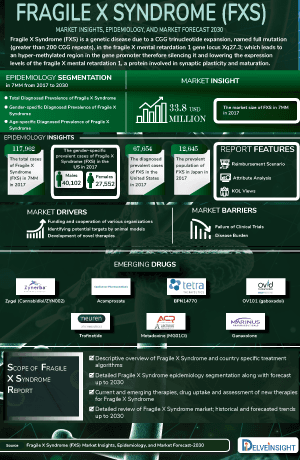
- According to DelveInsight’s estimates, in 2023, there were approximately 122 thousand diagnosed prevalent cases of Fragile X syndrome in the 7MM. Of these, the United States accounted for 58% of the cases, while EU4 and the UK represented 31% and Japan represented 11% of the cases, respectively.
- The Fragile X syndrome market is set for steady growth, with a robust compound annual growth rate (CAGR) anticipated from 2024 to 2034. This expansion in the 7MM is driven by the introduction of innovative therapies such as Zygel, and BPN14770, among others, along with advancements in diagnostic technologies, and ongoing research for novel therapeutic interventions targeting the genetic mechanisms of the disorder.
- Over the forecast period from 2024 to 2034, this market is projected to grow at a CAGR of approximately 7%.
- Despite advancements in understanding Fragile X syndrome, there remains a significant gap in effective, approved therapies specifically targeting its core symptoms. Additionally, timely and accurate diagnosis continues to be a challenge, hindering early intervention and support.
- The market for Fragile X syndrome therapies faces several barriers, including a high failure rate in clinical trials due to the heterogeneity of behavioral phenotypes among patients. Additionally, the absence of approved treatment limits market growth, while regulatory challenges and the need for extensive research further complicate the development of effective therapies.
- The market for Fragile X syndrome is becoming increasingly competitive, as several companies capitalize on orphan drug designations to secure market share. This competitive landscape is driven by ongoing clinical trials and strategic partnerships aimed at introducing innovative treatment options. Notable drugs under development include Zygel, and BPN14770, among others.
- In July 2024, Zatolmilast received fast-track designation from the US FDA for the treatment of Fragile X syndrome, expediting its development and review process to enhance access for patients and families.
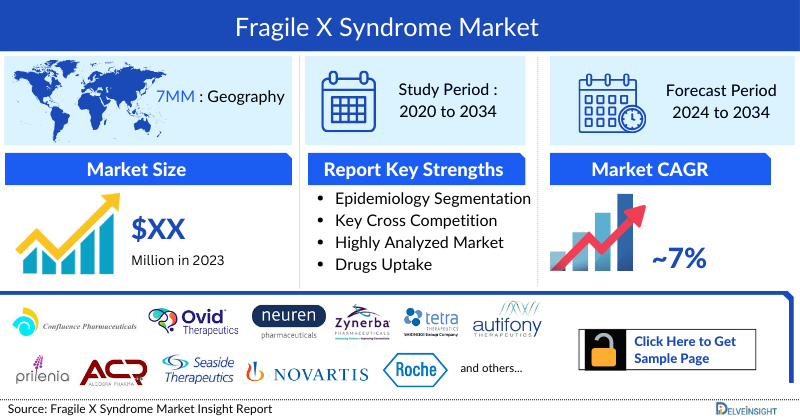
DelveInsight’s “Fragile X Syndrome Market Insights, Epidemiology, and Market Forecast – 2034” report delivers an in-depth understanding of Fragile X syndrome, historical and forecasted epidemiology, as well as the Fragile X syndrome market trends in the United States, EU4 (Germany, France, Italy, and Spain) and the United Kingdom, and Japan.
The Fragile X syndrome market report provides current treatment practices, emerging drugs, market share of individual therapies, and current and forecasted 7MM Fragile X syndrome market size from 2020 to 2034. The report also covers Fragile X syndrome treatment practices/algorithms and unmet medical needs to curate the best opportunities and assess the market’s potential.
|
Study Period |
2020–2034 |
|
Forecast Period |
2024–2034 |
|
Geographies Covered |
US, EU4 (Germany, France, Italy, and Spain) and the UK, and Japan |
|
FXS Epidemiology |
· Total Diagnosed Prevalent Cases of FXS · Gender-Specific Cases of FXS · Age-specific Cases of FXS |
|
FXS Market |
· Total Market Size · Market Size by Therapies |
|
Market Analysis |
· KOL Views · Conjoint Analysis · SWOT Analysis · Unmet Needs |
|
FXS Market players |
· Harmony Biosciences · Tetra Therapeutics · Others |
|
Future opportunity |
The future holds promising opportunities for the FXS market as research advances and new treatment approaches emerge including mGluR7 activation, among others. With ongoing efforts to better understand the genetic, molecular, and cellular underpinnings of FXS, more precise diagnoses and targeted interventions are becoming possible. The rising prevalence of the syndrome and the lack of approved treatments further drive demand for innovative solutions, making this an attractive area for investment and research. |
Fragile X Syndrome Treatment Market
Fragile X syndrome overview
Fragile X Syndrome is a genetic disorder caused by a mutation in the FMR1 gene on the X chromosome, leading to intellectual disability, developmental delays, and behavioral challenges. The mutation results in a lack of the fragile X mental retardation protein (FMRP), essential for normal brain development. Fragile X syndrome is characterized by intellectual disability, ranging from mild to moderate in males and mild in females. Physical features may include a long and narrow face, large ears, flexible fingers, and large testicles in males. Behavioral symptoms include autism spectrum disorder traits, hyperactivity, and seizures.
Fragile X syndrome diagnosis
Diagnosis of Fragile X syndrome involves genetic testing to determine the number of CGG repeats in the FMR1 gene. Normally, there are between 5 and 40 repeats; Fragile X syndrome occurs with more than 200 repeats. Molecular genetic testing is used to determine the number of CGG repeats and methylation status of the FMR1 gene. Prenatal testing options, such as chorionic villus sampling and amniocentesis, are also available to detect Fragile X syndrome in fetuses.
Further details related to country-based variations are provided in the report...
Fragile X syndrome treatment
Treatment for Fragile X syndrome focuses on improving quality of life and managing symptoms, as there is currently no cure.
Pharmacological treatments include stimulants for hyperactivity and attention issues, antidepressants for anxiety and mood disorders, and atypical antipsychotics for aggressive behaviors. Anticonvulsants are also used to manage seizures. These medications aim to alleviate behavioral and psychiatric symptoms associated with Fragile X syndrome, enhancing daily functioning and well-being.
Non-pharmacological treatments encompass therapies such as speech-language therapy, occupational therapy, and behavioral interventions like Applied Behavior Analysis (ABA). These approaches target developmental delays, improve communication skills, and address social deficits, thereby fostering independence and adaptive skills in individuals with Fragile X syndrome. Early intervention is crucial for optimal outcomes.
Fragile X Syndrome Epidemiology
As the market is derived using a patient-based model, the Fragile X syndrome epidemiology chapter in the report provides historical as well as forecasted epidemiology segmented by total diagnosed prevalent cases of Fragile X syndrome, gender-specific cases of Fragile X syndrome, and age-specific cases of Fragile X syndrome in the 7MM covering the United States, EU4 countries (Germany, France, Italy, and Spain) and the United Kingdom, and Japan from 2020 to 2034.
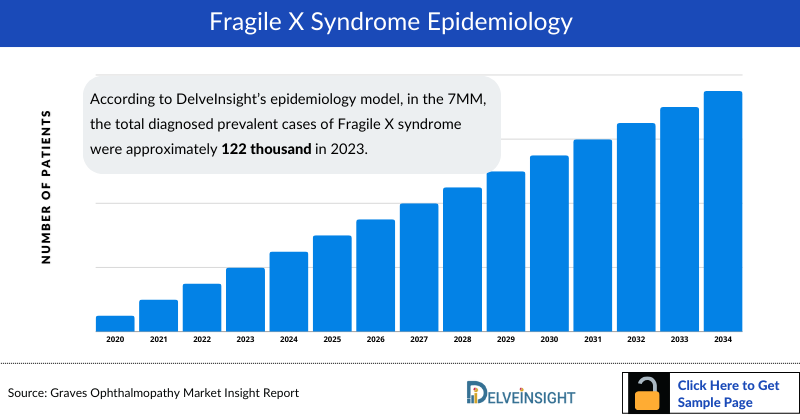
- According to DelveInsight’s epidemiology model, in the 7MM, the total diagnosed prevalent cases of Fragile X syndrome were approximately 122 thousand in 2023. This number is anticipated to rise during the forecast period (2024-2034), driven by increased awareness and screening, along with advancements in genetic testing.
- In 2023, the US accounted for the highest number of diagnosed prevalent cases of Fragile X syndrome, with approximately 71 thousand cases, while Spain accounted for the least, with nearly 59 hundred cases.
- Among the EU4 and the UK, Germany accounted for the highest number of diagnosed prevalent cases of Fragile X syndrome, with approximately 97 hundred cases in 2023, followed by France with approximately 79 hundred cases and the UK with nearly 78 hundred cases.
- In 2023, in the US approximately 42 thousand males and 29 thousand females were diagnosed with Fragile X syndrome, highlighting a higher prevalence in males compared to females.
- In Japan in 2023, there were approximately 57 hundred cases in the 0–11 age group, 23 hundred cases in the 12–17 age group, and 5 thousand cases in those over 18, indicating varying age-related prevalence.
Fragile X Syndrome Recent Developments
- In January 2025, the FDA granted fast-track designation to SPG601, an investigational small molecule by Spinogenix Inc., for treating Fragile X syndrome. SPG601 is a BK channel activator that corrects synaptic dysfunctions associated with the core symptoms of Fragile X.
Fragile X Syndrome Drug Chapters
Fragile X syndrome Emerging Drugs
Zygel (ZYN002 Cannabidiol Gel): Harmony Biosciences
Zygel (ZYN002 Cannabidiol Gel) is the first, and only patent-protected, synthetic cannabidiol (CBD) formulated as a permeation-enhanced gel for transdermal delivery. It is a clear, permeation-enhanced gel that is designed to provide consistent, controlled drug delivery transdermally with convenient once- or twice-daily dosing. CBD has been shown to reduce the metabolism of two endocannabinoids (2-AG and anandamide) in laboratory studies. The reduction in metabolism increases 2-AG and anandamide concentrations, which modulates neurotransmitter release and restores endogenous stimulation of endocannabinoid receptors.
In May 2019, the US FDA granted fast-track designation for cannabidiol gel ZYN002 for the treatment of Fragile X syndrome.
In February 2016, it also received the Orphan Drug Designation from the US FDA for the treatment of Fragile X syndrome.
ZYN002 is currently in the RECONNECT Phase III clinical trial, which aims to evaluate its efficacy in treating behavioral symptoms associated with Fragile X syndrome in patients aged 3–22 years.
In October 2023, Harmony Biosciences announced the completion of its acquisition of Zynerba Pharmaceuticals for approximately USD 60 million. This strategic move enhances Harmony's pipeline, particularly with Zynerba's lead product, Zygel, which is in a pivotal Phase III trial.
BPN14770: Tetra Therapeutics
BPN14770, also known as zatolmilast, is an investigational drug developed by Tetra Therapeutics, targeting the treatment of Fragile X syndrome. It selectively inhibits phosphodiesterase-4D (PDE4D), enhancing memory formation and neuronal connections.
Currently, the drug is in Phase III of clinical development for the treatment of Fragile X syndrome. Tetra Therapeutics has expanded its strategic alliance with Shionogi, enhancing collaboration to develop BPN14770 for Fragile X syndrome.
Zatolmilast has received fast-track designation from the US FDA for the treatment of Fragile X syndrome, expediting its development and review process to enhance access for patients and families.
In April 2018, the US FDA granted Orphan drug designation for BPN14770 for the treatment of Fragile X syndrome.
|
Drug |
MoA |
RoA |
Company |
Phase |
|
Zygel (ZYN002 Cannabidiol Gel) |
Cannabinoid receptor CB1 and CB2 inverse agonist |
Transdermal |
Harmony Biosciences |
III |
|
BPN14770 |
Selective Phosphodiesterase-4D (PDE4D) inhibitor |
Oral |
Tetra Therapeutics |
III |
|
XX |
XX |
XX |
XXX |
X |
Note: Further emerging therapies and their detailed assessment will be provided in the final report...
Drug Class Insights
Stimulant medications like methylphenidate (Ritalin) and dexmethylphenidate (Focalin) are commonly used to manage attention-deficit/hyperactivity disorder (ADHD) symptoms in individuals with Fragile X syndrome. These stimulants work by increasing the availability of dopamine and norepinephrine in the brain, which helps improve focus, concentration, and impulse control. Metabotropic glutamate receptor (mGluR) antagonists, such as mavoglurant and fenobam, aim to restore the balance between excitatory and inhibitory neurotransmission in the brain. By modulating glutamate activity, these medications have the potential to alleviate anxiety, social withdrawal, and other behavioral issues associated with Fragile X syndrome.
N-methyl-D-aspartate (NMDA) receptor antagonists like memantine also target glutamatergic pathways, potentially improving behavioral symptoms in Fragile X syndrome. Additionally, selective serotonin reuptake inhibitors (SSRIs) are used to manage co-occurring anxiety and mood disorders by increasing serotonin levels in the brain. Together, these pharmacological interventions address the multifaceted challenges faced by individuals with Fragile X syndrome, including cognitive deficits, behavioral problems, and emotional dysregulation. The combination of stimulants, mGluR antagonists, NMDA antagonists, and SSRIs provides a comprehensive approach to managing the diverse symptoms associated with Fragile X syndrome.
Several PDE4 Inhibitor therapies are being developed for Fragile X syndrome.
Continued in report...
Fragile X syndrome Market Outlook
The treatment relies on the associated symptoms of the disease which are typically managed using pharmacologic interventions, such as stimulants for attention deficit and hyperactivity, selective serotonin reuptake inhibitors (SSRIs) for anxiety, antipsychotic drugs for aggression and mood instability, and melatonin for sleep.
In boys with Fragile X syndrome, the most frequently used medications are stimulants. These medications are targeted toward the symptoms of hyperactivity, impulsivity, and distractibility and can be quite helpful in these areas. Despite being the most common medication in Fragile X syndrome, the efficacy of these drugs and their side effects vary for each individual. Stimulants may induce irritability and other behavioral problems in children <5 years of age in such cases, non-stimulant medications may be helpful.
Selective serotonin reuptake inhibitors (SSRIs) are used to treat mood disorders, anxiety, and obsessive-compulsive behaviors associated with Fragile X syndrome. They are effective, particularly in alleviating social anxiety, tantrums, and aggression. Fluoxetine can be beneficial for selective mutism.
Other classes of antidepressants, such as Trazodone, Bupropion, and Tricyclic antidepressants may be considered in instances in which SSRIs are not tolerated due to side effects, such as when there is behavioral activation that cannot be managed by dose reduction. Clonidine and guanfacine have also been used to treat anxiety-like symptoms, particularly the ones related to hypersensitivity to environmental sensory stimuli but are probably not meaningfully effective for other forms of anxiety. Buspirone may in some cases reduce anxiety either alone or in combination with an SSRI.
Benzodiazepines can be a treatment of choice in an emotional crisis accompanied by a high level of anxiety/anxiety attacks but should be avoided for long-term treatment as they can interfere with memory, increase confusion, and/or cause paradoxical excitation with a significant increase in hyperactivity and disinhibition.
Continued in report...
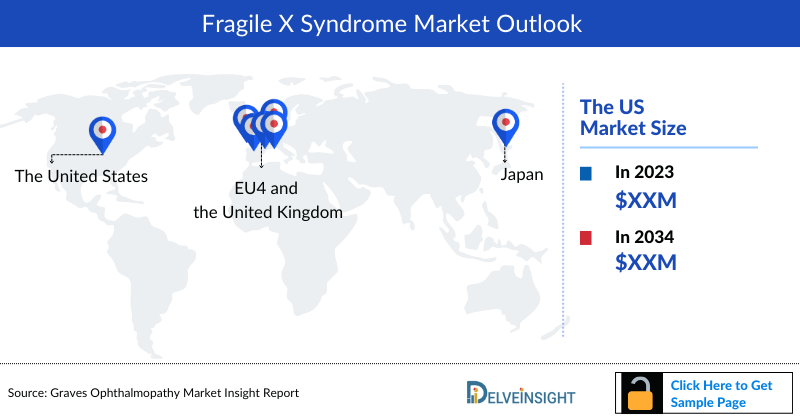
Key players Harmony Biosciences, Tetra Therapeutics, and others are evaluating their lead candidates in different stages of clinical development. They aim to investigate their products to treat Fragile X syndrome.
Fragile X Syndrome Uptake
This section focuses on the uptake rate of potential drugs expected to be launched in the market during 2020–2034.
Further detailed analysis of emerging therapies drug uptake in the report...
Fragile X Syndrome (Fragile X syndrome) Pipeline Development Activities
The report provides insights into different Fragile X syndrome clinical trials within Phase III, Phase II, and Phase I. It also analyzes key players involved in developing targeted therapeutics.
Pipeline development activities
The report covers information on collaborations, acquisitions and mergers, licensing, and patent details for emerging therapies for Fragile X syndrome.
KOL Views
To keep up with current market trends, we take KOLs and SMEs’ opinions working in the domain through primary research to fill the data gaps and validate our secondary research. Industry Experts contacted for insights on Fragile X syndrome's evolving treatment landscape, patient reliance on conventional therapies, patient therapy switching acceptability, and drug uptake, along with challenges related to accessibility, including Medical/scientific writers, Medical Professionals, Professors, Directors, and Others.
DelveInsight’s analysts connected with 50+ KOLs to gather insights; however, interviews were conducted with 15+ KOLs in the 7MM. Centers like the Boston Children’s Hospital, Rush University Medical Center, and Emory University School of Medicine, among others, were contacted. Their opinion helps understand and validate current and emerging therapy treatment patterns or Fragile X syndrome market trends. This will support the clients in potential upcoming novel treatments by identifying the overall scenario of the market and the unmet needs.
Physician’s View
As per the KOLs from the US, most patients have supportive treatment with the treatment of medical problems, educational support with special education, and therapies and some have medications for behavior. There are many things (targeted therapies) in development and they are in trial.
As per the KOLs from the US, gene therapy is difficult due to the nature of the mutation and characteristics of FMRP. Maybe reactivation of the gene has some possibility to reach patients, but this is probably 5 years or more away. Gene therapy is difficult.
Since there is no treatment for Fragile X syndrome, the management of symptoms includes developmental interventions, behavioral interventions, medication as needed, etc. Each patient is different in terms of what services and interventions they are receiving.
Qualitative Analysis
We perform Qualitative and market Intelligence analysis using various approaches, such as SWOT and Conjoint Analysis. In the SWOT analysis, strengths, weaknesses, opportunities, and threats in terms of disease diagnosis, patient awareness, patient burden, competitive landscape, cost-effectiveness, and geographical accessibility of therapies are provided. These pointers are based on the Analyst’s discretion and assessment of the patient burden, cost analysis, and existing and evolving treatment landscape.
Conjoint Analysis analyzes multiple emerging therapies based on relevant attributes such as safety, efficacy, frequency of administration, route of administration, and order of entry. Scoring is given based on these parameters to analyze the effectiveness of therapy.
To analyze the effectiveness of these therapies, have calculated their attributed analysis by giving them scores based on their ability to improve atrial and ventricular dimension/function and ability to regulate heart rate.
Further, the therapies’ safety is evaluated wherein the adverse events are majorly observed, and it sets a clear understanding of the side effects posed by the drug in the trials, which directly affects the safety of the molecule in the upcoming trials. It sets a clear understanding of the side effects posed by the drug in the trials. In addition, the scoring is also based on the route of administration, order of entry and designation, probability of success, and the addressable patient pool for each therapy. According to these parameters, the final weightage score and the ranking of the emerging therapies are decided.
Market Access and Reimbursement
DelveInsight’s ‘Fragile X Syndrome– Market Insights, Epidemiology, and Market Forecast – 2034’ report provides a descriptive overview of the market access and reimbursement scenario of Fragile X syndrome. This section includes a detailed analysis of the country-wise healthcare system for each therapy, enlightening the market access, reimbursement policies, and health technology assessments.
Further details will be provided in the report...
The report provides detailed insights on the country-wise accessibility and reimbursement scenarios, cost-effectiveness scenarios, programs making accessibility easier and out-of-pocket costs more affordable, insights on patients insured under federal or state government prescription drug programs, etc.
Scope of the Fragile X syndrome Market Report
- The report covers a segment of key events, an executive summary, and a descriptive overview of Fragile X syndrome explaining its causes, signs and symptoms, pathogenesis, and currently available therapies.
- Comprehensive insight into the epidemiology segments and forecasts, the future growth potential of diagnosis rate, disease progression, and treatment guidelines have been provided.
- Additionally, an all-inclusive account of the current and emerging therapies and the elaborative profiles of late-stage and prominent therapies will impact the current treatment landscape.
- A detailed review of the Fragile X syndrome market, historical and forecasted market size, market share by therapies, detailed assumptions, and rationale behind our approach is included in the report, covering the 7MM drug outreach.
- The report provides an edge while developing business strategies by understanding trends through SWOT analysis and expert insights/KOL views, patient journey, and treatment preferences that help shape and drive the 7MM Fragile X syndrome market.
Fragile X syndrome report insights
- Fragile X syndrome Patient Population
- Fragile X syndrome Therapeutic Approaches
- Fragile X syndrome Pipeline Analysis
- Fragile X syndrome Market Size and Trends
- Existing and Future Market Opportunity
Fragile X syndrome report key strengths
- 11 years Forecast
- The 7MM Coverage
- Fragile X syndrome Epidemiology Segmentation
- Key Cross Competition
- Attribute analysis
- Fragile X syndrome Drugs Uptake
- Key Fragile X syndrome Market Forecast Assumptions
Fragile X syndrome report assessment
- Current Fragile X syndrome Treatment Practices
- Fragile X syndrome Unmet Needs
- Fragile X syndrome Pipeline Product Profiles
- Fragile X syndrome Market Attractiveness
- Qualitative Analysis (SWOT and Attribute Analysis)
- Fragile X syndrome Market Drivers
- Fragile X syndrome Market Barriers
Key Questions
Fragile X syndrome Market Insights
- What was the total market size of Fragile X syndrome, the market size of Fragile X syndrome by therapies, and market share (%) distribution in 2020, and what would it look like by 2034? What are the contributing factors for this growth?
- How will Zygel affect the treatment paradigm of Fragile X syndrome?
- How will Zygel with other upcoming products and marketed therapies?
- Which drug is going to be the largest contributor by 2034?
- What are the pricing variations among different geographies for approved and marketed therapies?
- How would future opportunities affect the market dynamics and subsequent analysis of the associated trends?
Fragile X syndrome Epidemiology Insights
- What are the disease risks, burdens, and unmet needs of Fragile X syndrome? What will be the growth opportunities across the 7MM with respect to the patient population pertaining to Fragile X syndrome?
- What is the historical and forecasted Fragile X syndrome patient pool in the United States, EU4 (Germany, France, Italy, and Spain) and the United Kingdom, and Japan?
- Out of the countries mentioned above, which country would have the highest diagnosed prevalent Fragile X syndrome population during the forecast period (2024–2034)?
- What factors are contributing to the growth of Fragile X syndrome cases?
Current Fragile X syndrome Treatment Scenario, Marketed Drugs, and Emerging Therapies
- What are the current options for the treatment of Fragile X syndrome? What are the current clinical and treatment guidelines for treating Fragile X syndrome?
- How many companies are developing therapies for the treatment of Fragile X syndrome?
- How many emerging therapies are in the mid-stage and late stage of development for treating Fragile X syndrome?
- What are the recent novel therapies, targets, mechanisms of action, and technologies developed to overcome the limitations of existing therapies?
- What is the cost burden of current treatment on the patient?
- Patient acceptability in terms of preferred treatment options as per real-world scenarios?
- What are the accessibility issues of approved therapy in the US?
- What is the 7MM historical and forecasted market of Fragile X syndrome?
Reasons to Buy Fragile X syndrome Market Forecast Report
- The report will help develop business strategies by understanding the latest trends and changing treatment dynamics driving the Fragile X syndrome market.
- Insights on patient burden/disease prevalence, evolution in diagnosis, and factors contributing to the change in the epidemiology of the disease during the forecast years.
- Understand the existing market opportunities in varying geographies and the growth potential over the coming years.
- The distribution of historical and current patient share is based on real-world prescription data in the US, EU4 (Germany, France, Italy, and Spain) and the United Kingdom, and Japan.
- Identifying upcoming solid players in the market will help devise strategies to help get ahead of competitors.
- Detailed analysis and ranking of class-wise potential current and emerging therapies under the conjoint analysis section to provide visibility around leading classes.
- Highlights of Access and Reimbursement policies for Fragile X syndrome, barriers to accessibility of approved therapy, and patient assistance programs.
- To understand Key Opinion Leaders’ perspectives around the accessibility, acceptability, and compliance-related challenges of existing treatment to overcome barriers in the future.
- Detailed insights on the unmet needs of the existing market so that the upcoming players can strengthen their development and launch strategy.