Frontotemporal Dementia (FTD) Insights and Trends
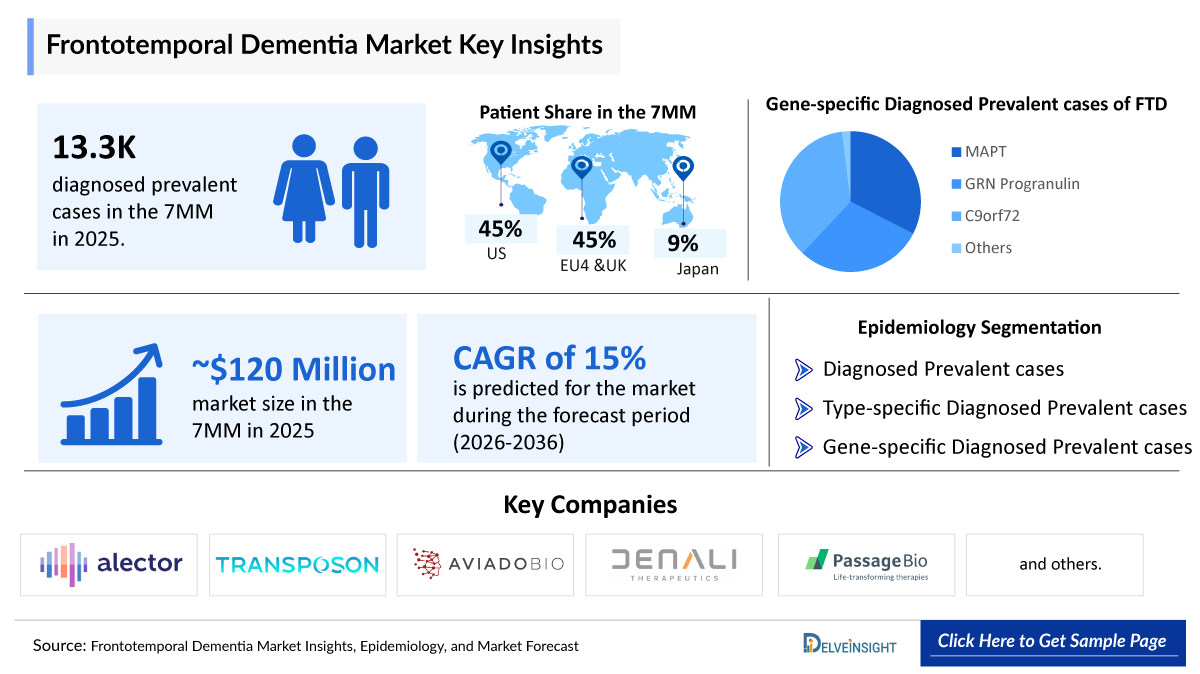
- According to DelveInsight’s analysis, FTD market size was found to be ~USD 120 million in the leading markets (the United States, the EU4 (Germany, France, Italy, and Spain), the United Kingdom, and Japan) in 2025.
- FTD is a neurocognitive condition causing progressive dysfunction in executive functioning, behavior, and language.
- FTD, sometimes called frontotemporal disorders, is rare and tends to occur at a younger age than other dementias. About 60% of people with frontotemporal dementia are 45–64 years old.
- Symptoms can differ significantly, ranging from behavioral and emotional disturbances to difficulties with communication and motor function. Risk is higher in individuals with a family history of FTD, with approximately 15–40% of cases associated with genetic mutations. However, in most cases, the underlying cause remains unknown.
- Behavioral variant Frontotemporal Dementia (bvFTD) causes early personality and behavioral changes, while Primary Progressive Aphasia (PPA) primarily impairs language abilities, both typically presenting in midlife.
- The diagnosed prevalence of FTD shows a higher proportion of non-mutated cases (60%) compared to mutation-associated cases (40%), indicating that most FTD cases are sporadic, though a substantial genetic component remains significant.
- Diagnosing FTD presents challenges due to its varied symptoms that overlap with other conditions, lack of specific biomarkers, and the need for comprehensive clinical assessments. Misdiagnosis is common, as FTD symptoms can mimic psychiatric disorders or other dementias, complicating accurate and timely identification.
- There are currently no FDA-approved, disease-modifying therapies to cure, slow, or reverse FTD. Market approved options are limited strictly to off-label symptomatic management of behaviors like agitation, impulsivity, and depression
- Current treatment of FTD is mainly symptomatic, using medications like antidepressants and antipsychotics, while management focuses on supportive care such as speech therapy, behavioral interventions, and caregiver support to improve quality of life.
- FTD faces key unmet needs, including the lack of disease-modifying therapies, poor understanding of disease mechanisms, and challenges in early diagnosis. These gaps present opportunities for developing targeted treatments, advancing biomarker-based diagnosis, and improving patient care.
Frontotemporal Dementia (FTD) Market Size and Forecast in the 7MM
- 2025 Projected Frontotemporal Dementia (FTD) Market Size: USD 120 million
- 2036 Projected Frontotemporal Dementia (FTD) Market Size: USD XX million
- Frontotemporal Dementia (FTD) Growth Rate (2026–2036): ~15% CAGR
DelveInsight's ‘Frontotemporal Dementia (FTD) – Market Insights, Epidemiology and Market Forecast – 2036’ report delivers an in-depth understanding of the FTD, historical and forecasted epidemiology, as well as the FTD market trends in the United States, EU4 (Germany, Spain, Italy, and France) and the United Kingdom, and Japan.
The Frontotemporal Dementia (FTD) market report delivers a comprehensive analysis of the current treatment landscape, including standards of care, clinical practices, and evolving therapeutic algorithms. It evaluates FTD patient burden trends, revenue & market share dynamics, peak patient share & therapy uptake analysis, and provides an in-depth market size assessment, and growth rate projections (Historical & Forecast 2022–2036) across global regions. The report highlights key unmet medical needs in Frontotemporal Dementia (FTD) and maps the competitive and clinical landscape to uncover high‑value opportunities, providing a clear outlook on future market growth potential.
|
Study Period |
2022–2036 |
|
Historical Year |
2022–2025 |
|
Forecast Period |
2026–2036 |
|
Base Year |
2026 |
|
Geographies Covered |
|
|
FTD Market CAGR (Study period/Forecast period) |
~15% (2026 ̶ 2036) |
|
FTD Epidemiology Segmentation Analysis |
Patient Burden Assessment
|
|
FTD Companies |
|
|
FTD Therapies |
|
|
FTD Market |
Segmented by
|
|
Analysis |
|
Key Factors Driving the Frontotemporal Dementia (FTD) Market
Rising FTD Prevalence
The overall prevalence of FTD is increasing, particularly among middle-aged adults, making it a key driver of market growth. In the US, there were ~130,300 diagnosed prevalent cases of FTD in 2025, which are expected to rise further by 2036 due to improved awareness, diagnosis, and an aging population.
Rising Opportunities in Gene Therapy
Gene therapy offers a promising opportunity in FTD by enabling targeted correction of underlying genetic mutations, such as progranulin and C9orf72, with the potential for long-term disease modification. Emerging research highlights the potential of gene replacement, antisense oligonucleotides, and other precision approaches to address root causes, creating significant opportunities for innovative therapeutic development.
Emerging FTD Competitive Landscape
Some of the FTD drugs in clinical trials include PBFT02, DNL593, VES001, AVB-101, TPN-101, and others.
Frontotemporal Dementia (FTD) Understanding and Treatment Algorithm
Frontotemporal Dementia (FTD) Overview and Diagnosis
FTD is a neurodegenerative disorder characterized by loss of intellectual functions, such as memory problems, impaired abstract thinking, reasoning, and executive function that are severe enough to hamper activities of daily living. The clinical manifestations include behaviour changes, dietary changes, loss of empathy, apathy, and executive function. It is the second most common form of dementia in individuals under 65 years of age.
There are a number of different diseases that cause frontotemporal degeneration. The two most prominent are a group of brain disorders involving the protein tau and a group of brain disorders involving the protein called TDP43.
Frontotemporal Dementia (FTD) Diagnosis
FTD is a complex process due to its symptom overlap with other neurological conditions. Since there is no single definitive test for FTD, healthcare professionals rely on multiple diagnostic approaches. Clinical evaluation plays a crucial role in assessing behavioural and cognitive symptoms, helping to differentiate FTD from other forms of dementia. Blood tests are often conducted to rule out other medical conditions such as liver or kidney disease that might cause similar symptoms. Neuropsychological testing further aids in evaluating reasoning and memory skills, offering additional insight into cognitive impairments specific to FTD. Brain imaging techniques are also fundamental in diagnosis; magnetic resonance imaging (MRI) helps detect structural changes in the frontal and temporal lobes, while fluorodeoxyglucose positron emission tomography (FDG-PET) scans identify areas of decreased metabolism, which can indicate neurodegeneration.
Further details are provided in the report.
Frontotemporal Dementia (FTD) Treatment
FTD treatment is primarily symptomatic, as no disease-modifying therapies are currently approved. Medications such as antidepressants and antipsychotics are commonly used to manage behavioral and emotional symptoms. Speech and language therapy can help patients with communication difficulties, particularly in primary progressive aphasia. Supportive care, including behavioral interventions and occupational therapy, plays a key role in maintaining daily functioning. Caregiver support and counseling are also essential to improve overall patient quality of life.
Further details related to country-based variations are provided in the report.
Frontotemporal Dementia (FTD) Unmet Needs
The section “unmet needs of Frontotemporal Dementia (FTD)” outlines the critical gaps between the current state of patient care, diagnosis, and the ideal & effective management of the disease. It highlights the obstacles experienced by patients, clinicians, and researchers and identifies potential solutions for future progress.
- No disease-modifying therapies or cure available
- Challenges in early and accurate diagnosis
- Lack of reliable biomarkers for disease progression
- High clinical and genetic heterogeneity limiting targeted treatment development
- Frequent Phase III failures and product discontinuations, reflecting challenges in achieving clinical efficacy in FTD, and others…..
Comprehensive unmet needs insights in frontotemporal dementia (FTD) and their strategic implications are provided in the full report.
Frontotemporal Dementia (FTD) Epidemiology
Key Findings from Frontotemporal Dementia (FTD) Epidemiological Analysis and Forecast
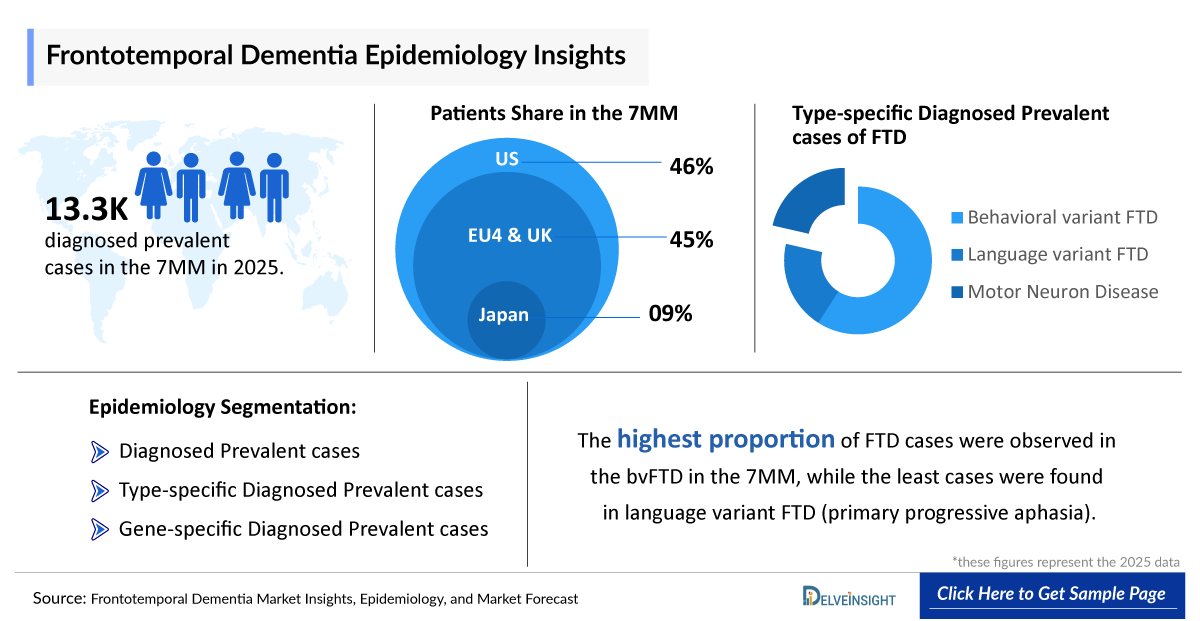
- According to DelveInsight’s analysis, the total diagnosed prevalent cases of FTD in 7MM were found to be ~130,300 in 2025 and are estimated to rise with a significant CAGR throughout the forecast period (2026–2036).
- FTD represents an estimated 10–20% of all dementia cases.
- The highest proportion of FTD cases were observed in the bvFTD in the 7MM, while the least cases were found in language variant FTD (primary progressive aphasia).
- In EU4 and the UK, a decreasing trend in observed for Germany and Italy, where the diagnosed prevalent cases of FTD are expected to decrease throughout the forecast period (2026–2036).
- In 2025, the US recorded the highest number of diagnosed prevalent cases of C9orf72 (~40%) gene-specific FTD, followed by cases associated with the GRN (Progranulin) gene-specific mutation.
Frontotemporal Dementia (FTD) Drug Chapters & Competitive Analysis
The FTD drug chapter provides a detailed, market-focused review of current treatment and the emerging pipeline across Phase I–III clinical trials. It covers the mechanism of action, clinical trial data, regulatory approvals, patents, collaborations, and strategic partnerships for each therapy, along with their advantages, limitations, and recent developments. This section offers critical insights into the FTD treatment landscape, supporting market assessment, competitive analysis, and growth forecasting for the FTD therapeutics market.
Frontotemporal Dementia (FTD) Pipeline Analysis
PBFT02: Passage Bio
PBFT02 developed by Passage Bio is a gene therapy that utilizes an AAV1 viral vector to deliver a modified DNA encoding the granulin (GRN) gene to a patient’s cells. The company has an active IND from the FDA and approved CTAs in multiple countries, it is currently being evaluated in Phase I/II clinical trials for treating FTD and mutations in the progranulin gene. The company received positive regulatory feedback on the clinical pathway to treat FTD-C9orf72 with PBFT02 in the ongoing upliFT-D trial. Passage Bio reported dosing of the first FTD-C9orf72 patient with Dose 2 PBFT02 in Cohort 4 of the upliFT-D study, with initial safety data to be reviewed by the Independent Data Monitoring Committee (IDMC) before proceeding with parallel enrollment of additional patients.
DNL593: Denali Therapeutics
DNL593 developed by Denali Therapeutics is an investigational, IV administered, brain-penetrant progranulin (PGRN) replacement therapy enabled by Denali’s Protein Transport Vehicle (PTV) technology. PGRN is known to promote lysosomal function and have neurotrophic and anti-inflammatory effects. DNL593 uses a “brain shuttle” technology, aka PTV, to restore brain progranulin levels to facilitate the movement of intravenously administered protein across the blood–brain barrier into the central nervous system. Data from the ongoing Phase I/II study of DNL593 had demonstrated dose-dependent increases in CSF progranulin levels, consistent with robust brain delivery of DNL593, in healthy volunteers. Dosing for GRN-related FTD-GRN participants is ongoing.
Comparison of Emerging Drugs Under Development | |||||||
|
Drug Name |
Company |
Highest Phase |
Indication |
RoA |
MoA |
Molecule Type |
Anticipated Launch in the US |
|
PBFT02 |
Passage Bio |
I/II |
FTD-GRN, FTD-C9orf72 |
Intra-cisterna magna (ICM) |
Gene-replacement Therapy |
AAV1 gene therapy |
Information is available in the full report |
|
DNL593
|
Denali Therapeutics |
I/II |
FTD-GRN |
IV infusion |
Protein replacement therapy |
Recombinant progranulin protein |
Information is available in the full report |
|
VES001 |
Vesper Bio |
I/II |
FTD-GRN |
Oral |
Sortilin inhibitor |
Small molecule |
Information is available in the full report |
|
AVB-101 |
AviadoBio |
I/II |
FTD-GRN |
Intrathalamic |
Gene-replacement Therapy |
Gene therapy |
Information is available in the full report |
|
Note: Launch insights are provisional and may change with future report updates or the occurrence of major key catalysts. | |||||||
Note: A detailed emerging therapies assessment will be provided in the final report
Frontotemporal Dementia (FTD) Key Players, Market Leaders and Emerging Companies
- Passage Bio
- Denali Therapeutics
- Vesper Bio
- AviadoBio
- Transposon Therapeutics
- Alector, and others
Frontotemporal Dementia (FTD) Drug Updates
- In April 2026, Denali Therapeutics announced that it had received notification from Takeda of its decision to terminate the collaboration agreement between the two companies to co-develop and co-commercialize DNL593.
- As of April 2026, Denali Therapeutics announced that enrollment in the Phase I/II study of DNL593 in FTD-GRN has been completed with 40 participants, with biomarker and other study data expected by the end of 2026.
- As per Passage Bio’s 2026 annual report, the company plans to report updated interim safety and biomarker data from Dose 2 of the upliFT-D trial for PBFT02 in FTD-GRN patients and seek regulatory feedback on a registrational trial design in the first half of 2026.
- In February 2026, Prevail Therapeutics, a wholly owned subsidiary of Eli Lilly & Co., announced the discontinuation of the PR006 “PROCLAIM” drug development program for FTD with GRN variants due to a lack of compelling efficacy in the studied patient population. They remain committed to developing future programs to address the medical need of FTD interventions.
- In November 2025, Vesper Bio announced a USD 2.5 million strategic investment from the Alzheimer’s Drug Discovery Foundation (ADDF) and The Association for Frontotemporal Degeneration (AFTD) through their Treat FTD Fund.
- In October 2025, Alector announced that its Phase III INFRONT-3 trial of latozinemab (AL001) for progranulin mutation related FTD failed to meet its primary clinical endpoint of slowing disease progression, despite showing biomarker improvement, leading to discontinuation of further studies.
- In June 2025, Passage Bio, Inc. reported updated biomarker data from its ongoing Phase 1/2 upliFT-D trial evaluating PBFT02 for the treatment of FTD associated with GRN mutations, along with anticipated upcoming milestones.
Drug Class Insights
Frontotemporal Dementia (FTD) Market Outlook
FTD represents a heterogeneous group of neurodegenerative disorders with varied clinical presentations and underlying pathologies, primarily involving tau or TDP-43 protein aggregation. Currently, there is no approved disease-modifying therapy or cure, and treatment remains primarily symptomatic, focusing on non-pharmacological interventions (behavioral, speech, and occupational therapy) alongside medications such as SSRIs, antidepressants, and antipsychotics to manage behavioral and psychiatric symptoms. Notably, cholinesterase inhibitors and NMDA receptor antagonists have limited or inconsistent efficacy and may worsen symptoms in some patients.
FTD drug development continues to face significant challenges, as highlighted by late-stage clinical failures and program discontinuations. For instance, Alector’s latozinemab (AL001) failed to meet primary endpoints in a Phase III trial, leading to discontinuation, while Prevail Therapeutics’ PR006 gene therapy program has also been discontinued, underscoring the high attrition risk and difficulty in achieving clinical success in this space.
Despite these setbacks, the pipeline remains active and evolving, with a strong focus on precision medicine and gene-based approaches. Emerging strategies such as antisense oligonucleotides, monoclonal antibodies, and neuroinflammation-targeting therapies, along with advances in genetics and biomarker development, continue to offer future opportunities for disease-modifying treatments in FTD.
Overall, the launch of first-in-class therapies, improved diagnostic approaches, and increasing disease awareness are expected to drive steady growth in the 7MM FTD market from 2022–2036.
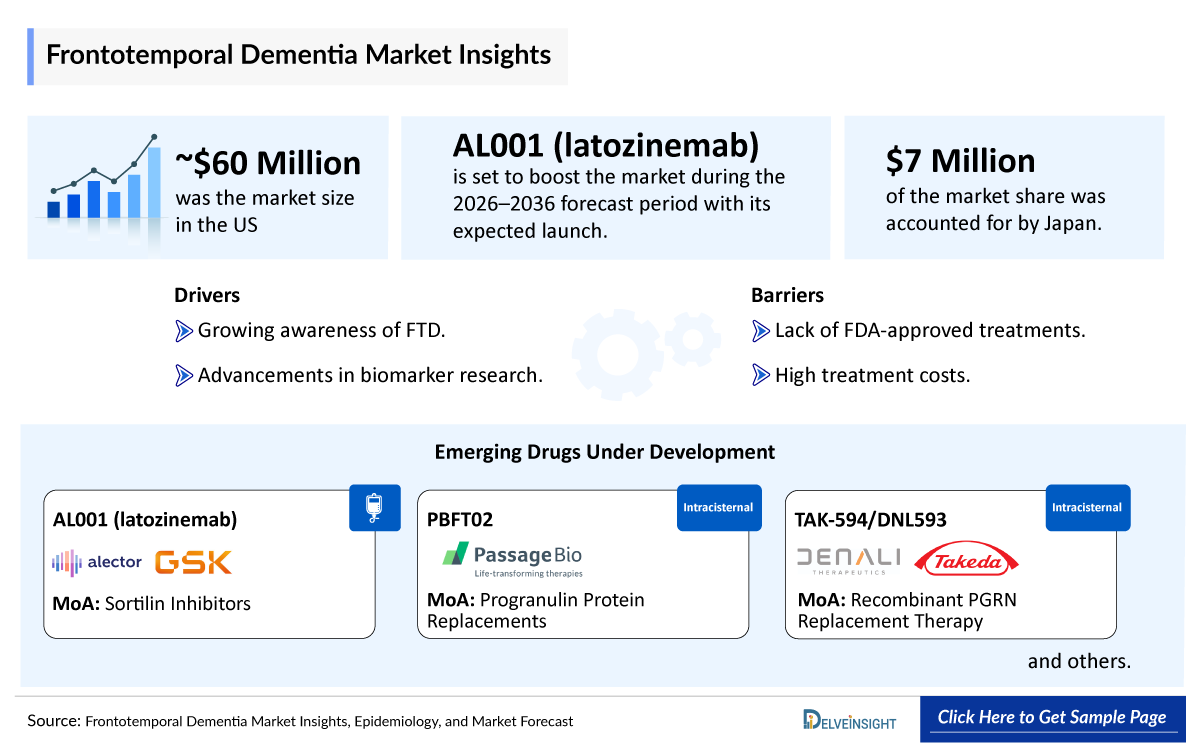
- According to the estimates, the largest market size of FTD was captured by the United States, i.e., ~USD 80 million in 2025.
- The United States accounted for the highest market size of frontotemporal dementia approximately 70% of the total market size in 7MM in 2025, in comparison to the other major markets i.e., EU4 countries (Germany, France, Italy, and Spain), and the United Kingdom, and Japan.
- The FTD market is evolving as research shifts from symptomatic treatments to targeted and gene-based therapies, with growing focus on precision medicine approaches such as antisense oligonucleotides and neuroinflammation-targeting agents, despite ongoing challenges from high clinical failure rates and program discontinuations in late-stage development.
- The entry of early-stage candidates such as PBFT02, DNL593, and other emerging therapies is expected to increase competitive intensity in the FTD treatment landscape over the forecast period.
Further details will be provided in the report….
Drug Class/Insights into Leading Emerging and Marketed Therapies in Frontotemporal Dementia (FTD) (2022–2036 Forecast)
The FTD pipeline is increasingly focused on gene therapies, protein replacement strategies, and targeted small molecules, reflecting a shift toward precision medicine approaches aimed at addressing underlying genetic drivers such as GRN and C9orf72 mutations.
- Gene therapies: Candidates such as PBFT02 (Passage Bio) and AVB-101 (AviadoBio) utilize AAV-based delivery systems to enable progranulin gene replacement, representing a promising approach for long-term disease modification in genetically defined FTD populations.
- Protein replacement therapies: DNL593 (Denali Therapeutics) is designed as a recombinant progranulin protein therapy, administered via IV infusion, aiming to restore deficient protein levels and address disease pathology in FTD-GRN patients.
- Targeted small molecules: VES001 (Vesper Bio), an oral sortilin inhibitor, works by increasing progranulin levels through modulation of intracellular trafficking pathways, highlighting the potential of oral, mechanism-driven therapies in FTD.
Overall, gene and protein replacement therapies dominate early-stage innovation, while small molecules offer scalable and less invasive treatment options, collectively shaping a diversified and evolving FTD therapeutic landscape, despite ongoing clinical and developmental challenges.
Further details will be provided in the report….
Frontotemporal Dementia (FTD) Drug Uptake
This section focuses on the uptake rate of potential drugs expected to be launched in the market during the forecast period (2026–2036). The analysis covers the FTD market's uptake by drugs, patient uptake by therapy, and sales of each drug.
The uptake of therapies in FTD during the forecast period (2026–2036) is expected to be gradual and heterogeneous, reflecting the complexity of the disease and the lack of established disease-modifying treatments. Adoption will be influenced by factors such as clinical efficacy, safety profile, cost, route of administration, and physician familiarity.
Emerging therapies are likely to see incremental uptake, particularly in well-defined patient subgroups, while overall market penetration may remain moderate in the near term due to clinical uncertainties and prior late-stage failures. However, as clinical evidence strengthens and novel therapies demonstrate meaningful benefits, uptake is expected to improve, supporting long-term market growth in FTD.
Further detailed analysis of emerging therapies' drug uptake in the report…
Market Access and Reimbursement of FTD
Reimbursement may be referred to as the negotiation of a price between a manufacturer and payer that allows the manufacturer access to the market. It is provided to reduce the high costs and make the essential drugs affordable. Health technology assessment (HTA) plays an important role in reimbursement decision-making and recommending the use of a drug. These recommendations vary widely throughout the seven major markets, even for the same drug. In the US healthcare system, both Public and Private health insurance coverage are included. Also, Medicare and Medicaid are the largest government-funded programs in the US. The major healthcare programs including Medicare, Medicaid, Health Insurance Program (CHIP), and the state and federal health insurance marketplaces are overseen by the Centers for Medicare & Medicaid Services (CMS). Other than these, Pharmacy Benefit Managers (PBMs), and third-party organizations that provide services, and educational programs to aid patients are also present.
The report further provides detailed insights on the country-wise accessibility and reimbursement scenarios, cost-effectiveness scenario of currently used therapies, programs making accessibility easier and out-of-pocket costs more affordable, insights on patients insured under federal or state government prescription drug programs, etc.
Further details are provided in the final report….
Frontotemporal Dementia (FTD) Therapies Price Scenario & Trends
Pricing and analogue assessment of FTD therapies highlights evolving price dynamics structures. This section summarizes the cost of approved treatments, closest and most appropriate analogue selection for emerging therapies, and understanding of how pricing influences market access, adherence, and long-term uptake.
Further details are provided in the final report….
Industry Experts and Physician Views for Frontotemporal Dementia (FTD)
To keep up with FTD market trends, we take Key Opinion Leaders (KOLs) and Subject Matter Experts (SMEs) opinions working in the domain through primary research to fill the data gaps and validate our secondary research. Industry experts were contacted for insights on the FTD emerging therapies, evolving treatment landscape, patient adherence to conventional therapies, therapy switching trends, drug adoption and uptake, accessibility challenges, and epidemiology and real-world prescription patterns in FTD, including MD, PhD, Instructor, Postdoctoral Researcher, Professor, Researcher, and others.
DelveInsight’s analysts connected with 10+ KOLs to gather insights; however, interviews were conducted with 6+ KOLs in the 7MM. Centers such as the Johns Hopkins University, Berlin Institute of Health at Charité, UCLA School of Medicine, and others etc. were contacted. Their opinion helps understand and validate current and emerging FTD therapies, highlight unmet medical needs, provide epidemiological context, and support strategic decisions for market access, therapy adoption, and pipeline prioritization in FTD.
|
Region |
Key Opinion Leaders (KOLs) and Subject Matter Experts (SMEs) |
|
United States |
“The symptoms of frontotemporal dementia overlap with many other diseases, including Alzheimer’s, Huntington, and others. There are several challenges in diagnosing FTD. It currently takes an average of 3.6 years for people to receive an accurate diagnosis of the condition. Most who have FTD, in particular the behavioral variant, do not realize that a change is taking place and rarely seek medical help.” |
|
Germany |
“The behavioral form of FTD is often confused with a late psychosis. The language for (PPA and semantic) are more characteristics but requires a high level of expertise to have the right diagnosis. Motor neuron symptoms are present in about 10% of the all forms.” |
Qualitative Analysis: SWOT and Conjoint Analysis
We perform qualitative and market Intelligence analysis using various approaches, such as SWOT analysis and conjoint analysis.
In the SWOT analysis of Frontotemporal Dementia (FTD), strengths, weaknesses, opportunities, and threats in terms of disease diagnosis, patient awareness, patient burden, competitive landscape, cost-effectiveness, and geographical accessibility of therapies are provided.
Conjoint analysis analyzes emerging therapies based on relevant attributes such as safety, efficacy, frequency of administration, route of administration, and order of entry. Scoring is given based on these parameters to analyze the effectiveness of therapy.
The team of analysts analyzes promising emerging therapies based on relevant attributes such as safety, efficacy, frequency of administration, route of administration, and order of entry. In efficacy, the trial’s primary and secondary outcome measures are evaluated, whereas the therapies’ safety is evaluated, wherein the acceptability, tolerability, and adverse events are majorly observed. In addition, the scoring is also based on the route of administration, order of entry, probability of success, and the addressable patient pool for each therapy. According to these parameters, the final weightage score and the ranking of the emerging therapies are decided.
Scope of the Report
- The report covers a segment of key events, an executive summary, a descriptive overview of Frontotemporal Dementia (FTD), explaining its causes, signs and symptoms, pathogenesis, and currently available treatments.
- Comprehensive insight has been provided into the epidemiology segments and forecasts, the future growth potential of the diagnosis rate, and disease progression along treatment guidelines.
- Additionally, an all-inclusive account of both the current and emerging treatments, along with the elaborative profiles of prominent therapies, will have an impact on the current treatment landscape.
- A detailed review of the Frontotemporal Dementia (FTD) market, historical and forecasted market size, market share by therapies, detailed assumptions, and rationale behind our approach is included in the report, covering the 7MM drug outreach.
- The report provides an edge while developing business strategies by understanding trends through SWOT analysis and expert insights/KOL views, patient journey, and treatment preferences that help in shaping and driving the 7MM FTD market.
Report Insights
- Frontotemporal Dementia (FTD) Patient Population Forecast
- Frontotemporal Dementia (FTD) Therapeutics Market Size
- Frontotemporal Dementia (FTD) Pipeline Analysis
- Frontotemporal Dementia (FTD) Market Size and Trends
- Frontotemporal Dementia (FTD) Market Opportunity (Current and forecasted)
Report Key Strengths
- Epidemiology‑based (Epi‑based) Bottom‑up Forecasting
- Artificial Intelligence (AI)-enabled Market Research Report
- 11-year forecast
- Frontotemporal Dementia (FTD) Market Outlook (North America, Europe, Asia-Pacific)
- Patient Burden Trends (by geography)
- Frontotemporal Dementia (FTD) Treatment Addressable Market (TAM)
- Frontotemporal Dementia (FTD) Competitive Landscape
- Frontotemporal Dementia (FTD) Major Companies Insights
- Frontotemporal Dementia (FTD) Price Trends and Analogue Assessment
- Frontotemporal Dementia (FTD) Therapies Drug Adoption/Uptake
- Frontotemporal Dementia (FTD) Therapies Peak Patient Share analysis
Report Assessment
- Frontotemporal Dementia (FTD) Current Treatment Practices
- Frontotemporal Dementia (FTD) Unmet Needs
- Frontotemporal Dementia (FTD) Clinical Development Analysis
- Frontotemporal Dementia (FTD) Emerging Drugs Product Profiles
- Frontotemporal Dementia (FTD) Market Attractiveness
- Frontotemporal Dementia (FTD) Qualitative Analysis (SWOT and Conjoint Analysis)
FAQs
Market Insights
- What was the Frontotemporal Dementia (FTD) market size, the market size by therapies, market share (%) distribution in 2025, and what would it look like by 2036? What are the contributing factors for this growth?
- What are the anticipated pricing variations among different geographies for the emerging therapies in the future?
- What can be the future treatment paradigm of Frontotemporal Dementia (FTD)?
- What are the disease risks, burdens, and unmet needs of Frontotemporal Dementia (FTD)? What will be the growth opportunities across the 7MM concerning the patient population with Frontotemporal Dementia (FTD)?
- Who is the major future competitor in the market, and how will the competitors affect their market share?
- What are the current options for the treatment of Frontotemporal Dementia (FTD)? What are the current guidelines for treating Frontotemporal Dementia (FTD) in the US, Europe, and Japan?
Reasons to Buy
- The report will help in developing business strategies by understanding the latest trends and changing treatment dynamics driving the Frontotemporal Dementia (FTD) market.
- Bottom‑up forecasting builds from the affected population to product forecasts, delivering a robust, data‑driven approach ideal for new therapies and novel classes.
- Insights on patient burden/disease incidence, evolution in diagnosis, and factors contributing to the change in the epidemiology of the disease during the forecast years.
- Understand the existing market opportunities in varying geographies and the growth potential over the coming years.
- Identifying strong upcoming players in the market will help devise strategies to help get ahead of competitors.
- Detailed analysis and ranking of class-wise potential emerging therapies under the conjoint analysis section to provide visibility around leading classes.
- To understand KOLs’ perspectives on the accessibility, acceptability, and compliance-related challenges of existing treatment to overcome barriers in the future.
- Detailed insights on the unmet needs of the existing market so that the upcoming players can strengthen their development and launch strategy.
- This Artificial Intelligence (AI)‑enabled report summarize and simplify complex datasets within the report into clear, actionable insights for stakeholders, investors, and healthcare providers, enabling faster, data‑driven decisions.